
From the Rothschild Collection: On Provenance, Collecting, and the Rugs That Outlast Everything
May 4, 2026
Savonnerie, Aubusson, Gobelins: The Three Ateliers That Defined What Europe Believed a Rug Could Be
May 15, 2026
Rug & Kilim Showroom
Every serious designer knows the moment. You walk into a room that is not yet finished; the furniture placed but provisional, the walls painted but unconvinced, the light doing its best with what it has been given and something stops you. Not the chandelier. Not the art. The floor. A carpet lies there with the particular authority of an object that has already decided what the room is going to be, and is waiting, with complete patience, for everything else to catch up. The furniture will be chosen in response to it. The color of the walls will be negotiated against it. The art will be hung at a height that the carpet’s scale has already determined. The room, in the most literal sense, begins underfoot.
It is a design fact, one that the greatest rooms of the past century have demonstrated with a consistency that no other principle in interior design can match. What follows are ten interiors in which the carpet was not the last decision but the first. Ten rooms in which everything else was a response to what the floor had already said. And one collaboration, happening now, in which that truth is being restated for a new generation with the full force of two institutions that have arrived, from entirely different directions, at exactly the same conviction.
One: Brooke Astor’s Library, New York
Albert Hadley believed, with the precision of a man who had spent fifty years looking seriously at rooms, that the best interiors have history. Brooke Astor’s library on Park Avenue had more of it than most; a room assembled with the kind of accumulated intelligence that no single act of decoration can manufacture. The carpet anchored it as foundation, setting the chromatic register and the emotional temperature of a room that felt, as all Hadley rooms did, simultaneously inherited and entirely alive. Hadley never chose the artwork first. He never chose anything first except the floor.
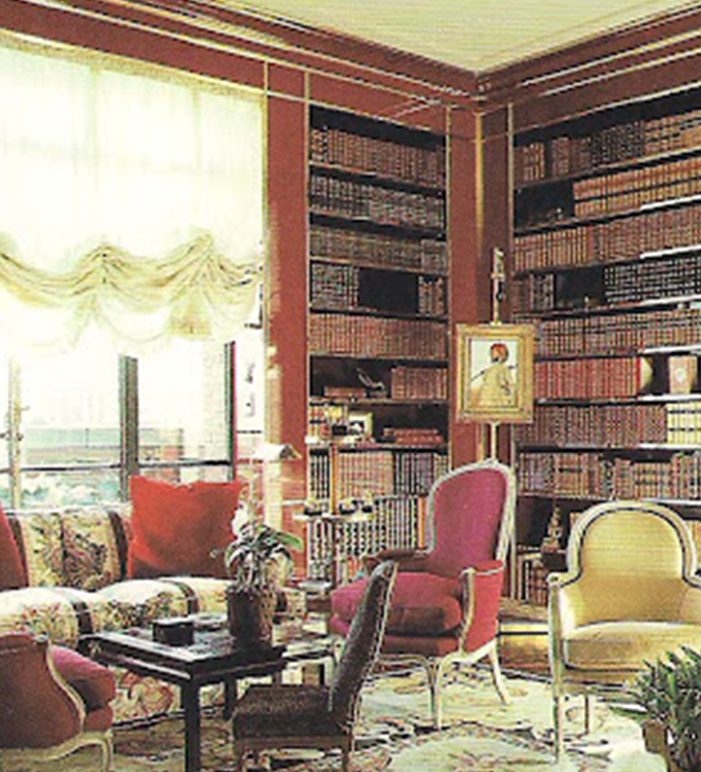
Brooke Astor’s Library, New York
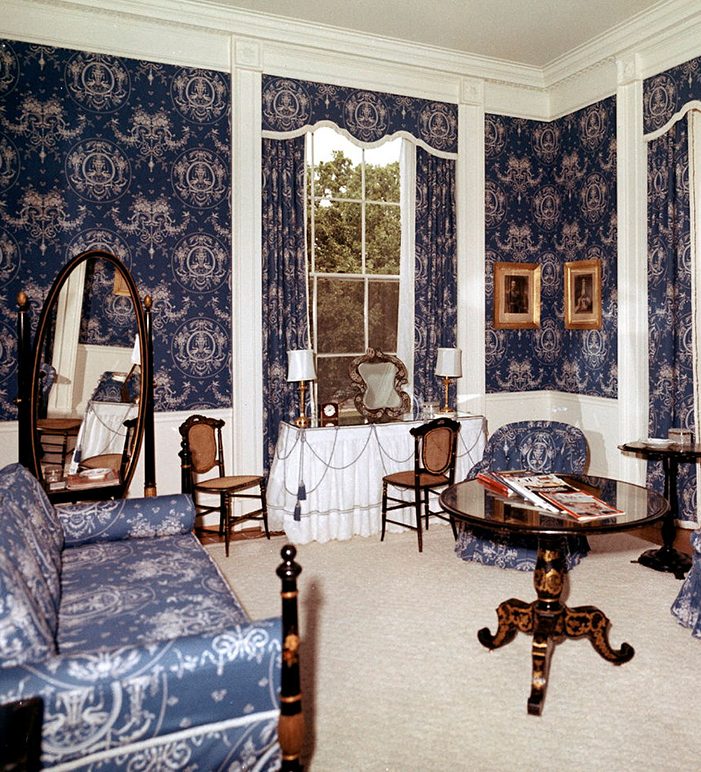
The Kennedy White House, 1962
Two: The Kennedy White House, 1962
Sister Parish was fearless in ways that her reputation for English country house comfort tends to obscure. She would acquire an expensive antique carpet and cut it without hesitation, without sentiment, to fit a room that required a different dimension, saving the pieces for reassembly because she understood that the carpet’s rightness in the room mattered more than its integrity as an object. The breakfast room she and Albert Hadley made for Jackie Kennedy in 1962 demonstrated this fearlessness at its most refined: a room in which the floor set the terms and the rest of the interior followed with the discipline of a well-trained staff.
Three: Peggy Guggenheim’s Palazzo Venier dei Leoni, Venice
Peggy Guggenheim understood, with the instinct of a collector who had spent her life in rooms where art and life coexisted without hierarchy, that the floor was not neutral. The Oriental carpets that lay beneath Calder mobiles and Giacometti sculptures in the palazzo she occupied from 1949 until her death in 1979 were not decorative concessions to comfort. They were part of the visual argument anchoring works of radical abstraction to a surface that carried its own tradition of abstraction, older and no less rigorous than anything on the walls above it.
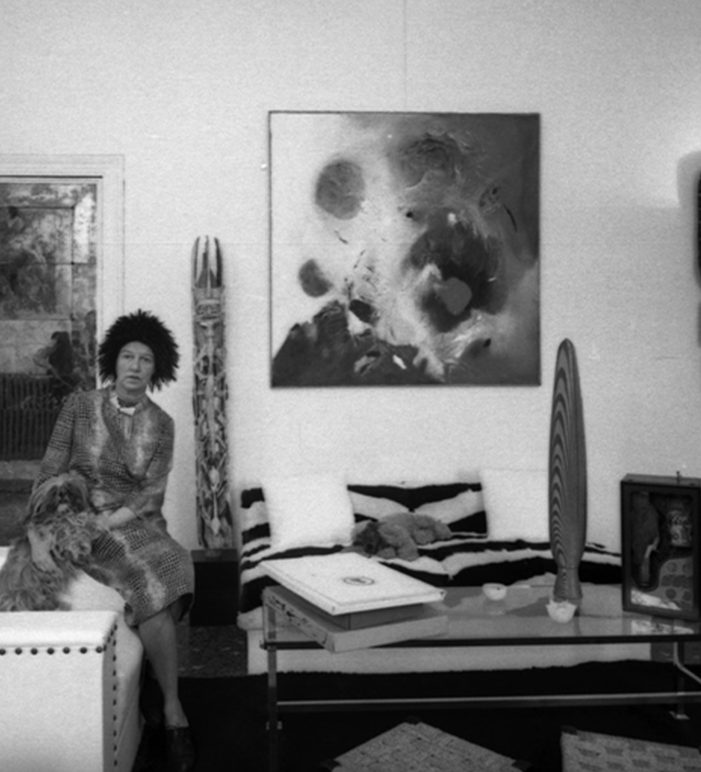
Peggy Guggenheim in the living room of Palazzo Venier dei Leoni.
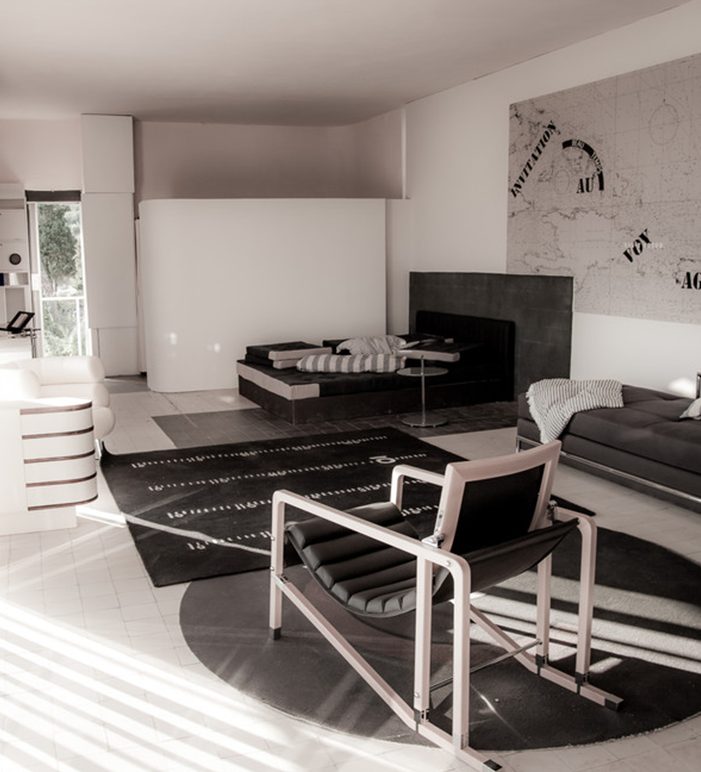
Architectural Icon: The Controversial Villa E1027 by Eileen Gray
Four: Eileen Gray’s E-1027, Cap Martin, 1929
Eileen Gray designed her own carpet for E-1027; the modernist villa she built on the French Riviera that Le Corbusier admired so extravagantly he later vandalized its walls with his own murals, an act of aesthetic aggression that says more about him than about the house. Gray’s carpet was not a decorative element. It was an architectural one designed in relation to the room’s proportions, its light, and its relationship to the sea beyond the windows, with the same precision she brought to the furniture and the built-in storage that made the villa a total work of design intelligence.
Five: The Frick Collection, New York
Henry Clay Frick was not, by temperament, a man given to uncertainty. The Savonnerie and Aubusson carpets that anchor the rooms of the mansion he built on Fifth Avenue now one of the finest small museums in the world were chosen with the same conviction that governed every other acquisition he made: that quality, properly understood, is self-evident, and that the floor of a serious room requires the same level of attention as its walls. The Fragonard Room, the Living Hall, the West Gallery, in each of them, the carpet arrives before you do and tells you what kind of room you are entering before you have looked at anything else.
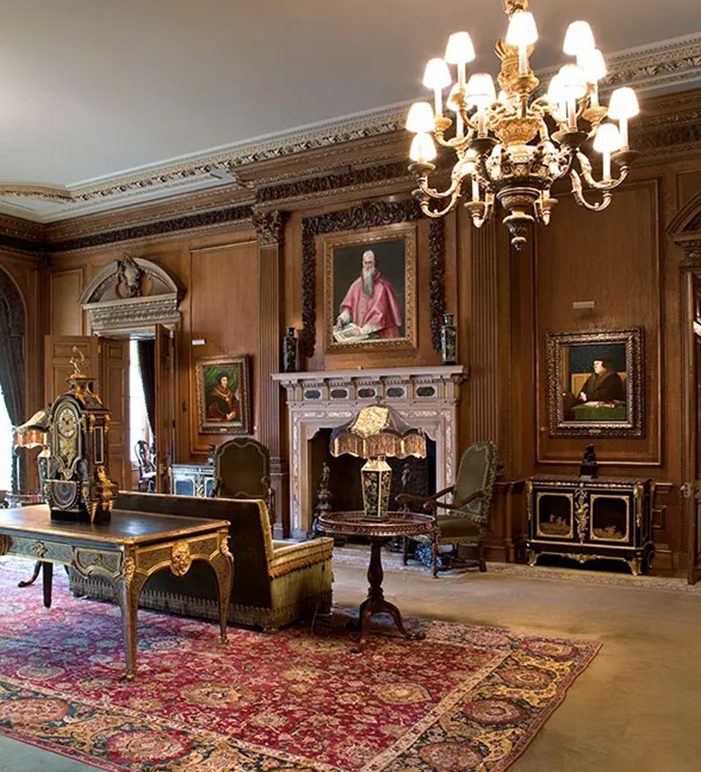
The Frick Collection, New York
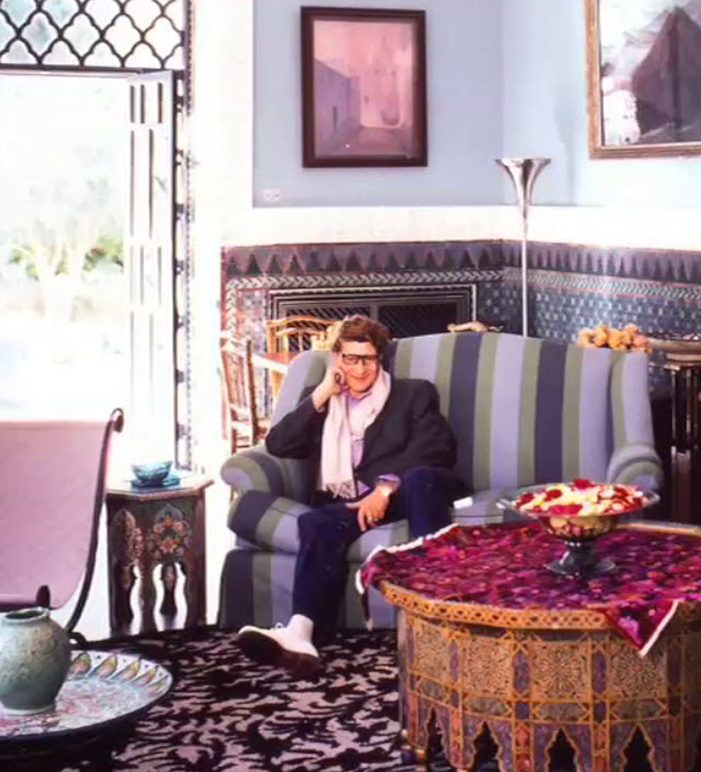
Yves Saint Laurent – Pierre Bergé, A Moroccan Passion – Musée Yves Saint Laurent Paris
Six: Yves Saint Laurent and Pierre Bergé, Paris
The apartment that Yves Saint Laurent and Pierre Bergé assembled on the Rue de Babylone over four decades is the most documented private interior of the late twentieth century and one of the most instructive. Saint Laurent understood color the way the great Safavid court designers understood it — as the primary structural element of any visual composition, the decision from which everything else follows. The Moroccan and Oriental carpets that lay throughout the apartment were not exotic accessories. They were the color system’s foundation; the place where the room’s chromatic argument was first stated and from which every curtain, every lacquered surface, and every object on every shelf took its cue.
Seven: Elsie de Wolfe’s Villa Trianon, Versailles
Elsie de Wolfe, America’s first professional interior designer, the woman who looked at the chaos of the Victorian interior and responded with the clarity of someone who had decided that taste was a discipline rather than an instinct used antique French carpets at Villa Trianon as arguments for a proposition she spent her entire career making: that a room organized around a great floor covering thinks more clearly than one that is not. Her Aubusson and Savonnerie pieces were chosen not for their period correctness but for their formal intelligence; their ability to hold a room together across the full range of its competing visual claims.
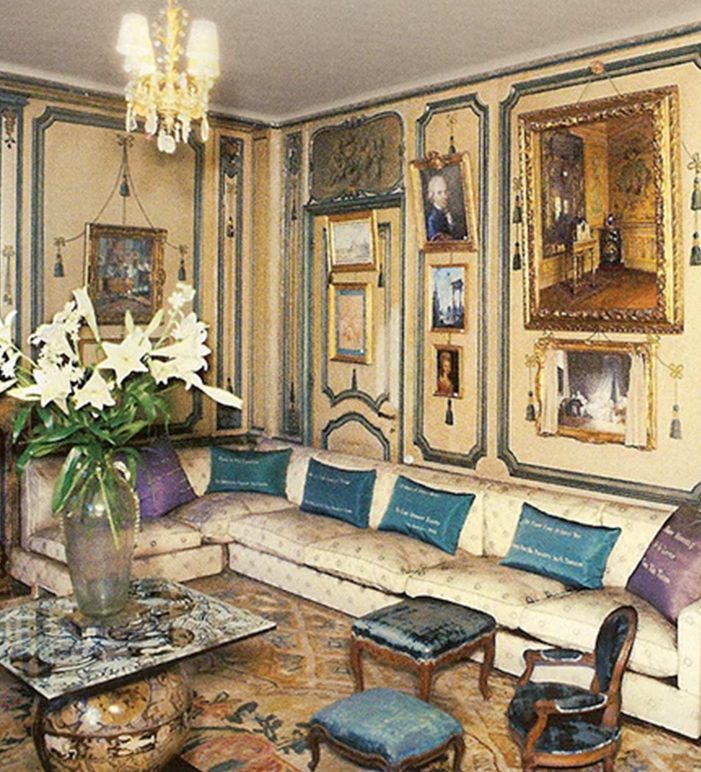
Elsie de Wolfe’s Villa Trianon, Versailles
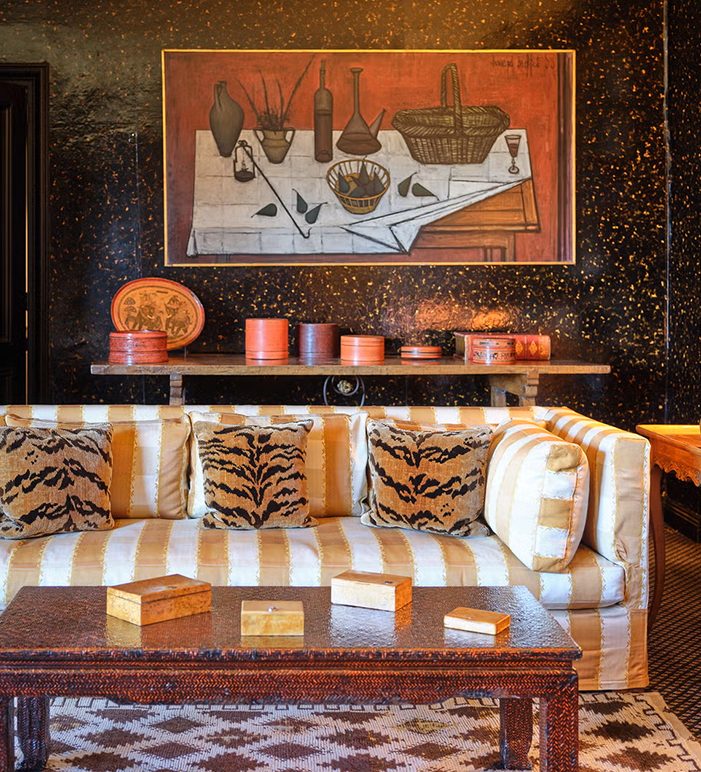
Billy Baldwin’s Own Apartment, New York
Eight: Billy Baldwin’s Own Apartment, New York
Billy Baldwin was the designer’s designer, the man that Albert Hadley admired, that every serious practitioner of the mid-twentieth century American interior studied, and that the rooms of his clients’ houses consistently demonstrated was operating at a level that most of his contemporaries could observe but not replicate. His own apartment in New York was organized around a single antique carpet of such authority that everything else in the room; the lacquered walls, the minimal furniture, the books that lined every available surface existed in conscious, respectful relation to it. Baldwin understood what the carpet was doing. He left it alone to do it.
Nine: The Duke and Duchess of Windsor, Paris
The house that the Duke and Duchess of Windsor occupied on the Route du Champ d’Entraînement in the Bois de Boulogne, decorated with the assistance of Maison Jansen and supervised with obsessive precision by Wallis Windsor herself, is one of the most instructive interiors of the twentieth century not because it is the greatest, but because it demonstrates, with unusual clarity, what happens when someone of genuine visual intelligence directs every decision in a room without deference to anyone else’s opinion. The carpets, Chinese, European, and Oriental, chosen with the specificity of a woman who understood that the floor is the room’s emotional temperature gave each space its particular mood before a single piece of furniture had been placed.
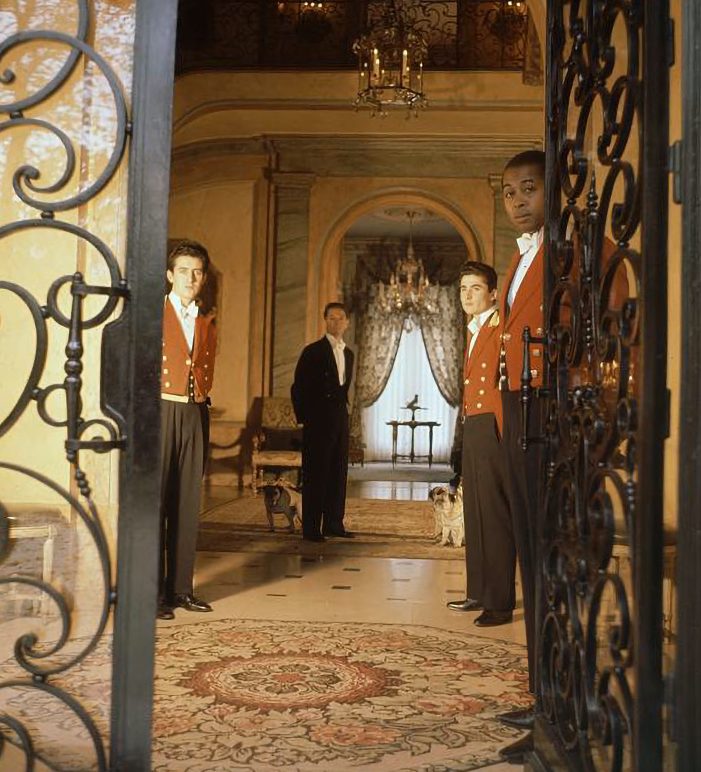
Inside the Duke and Duchess of Windsor’s French Home, “Villa Windsor,” in Bois du Boulogne
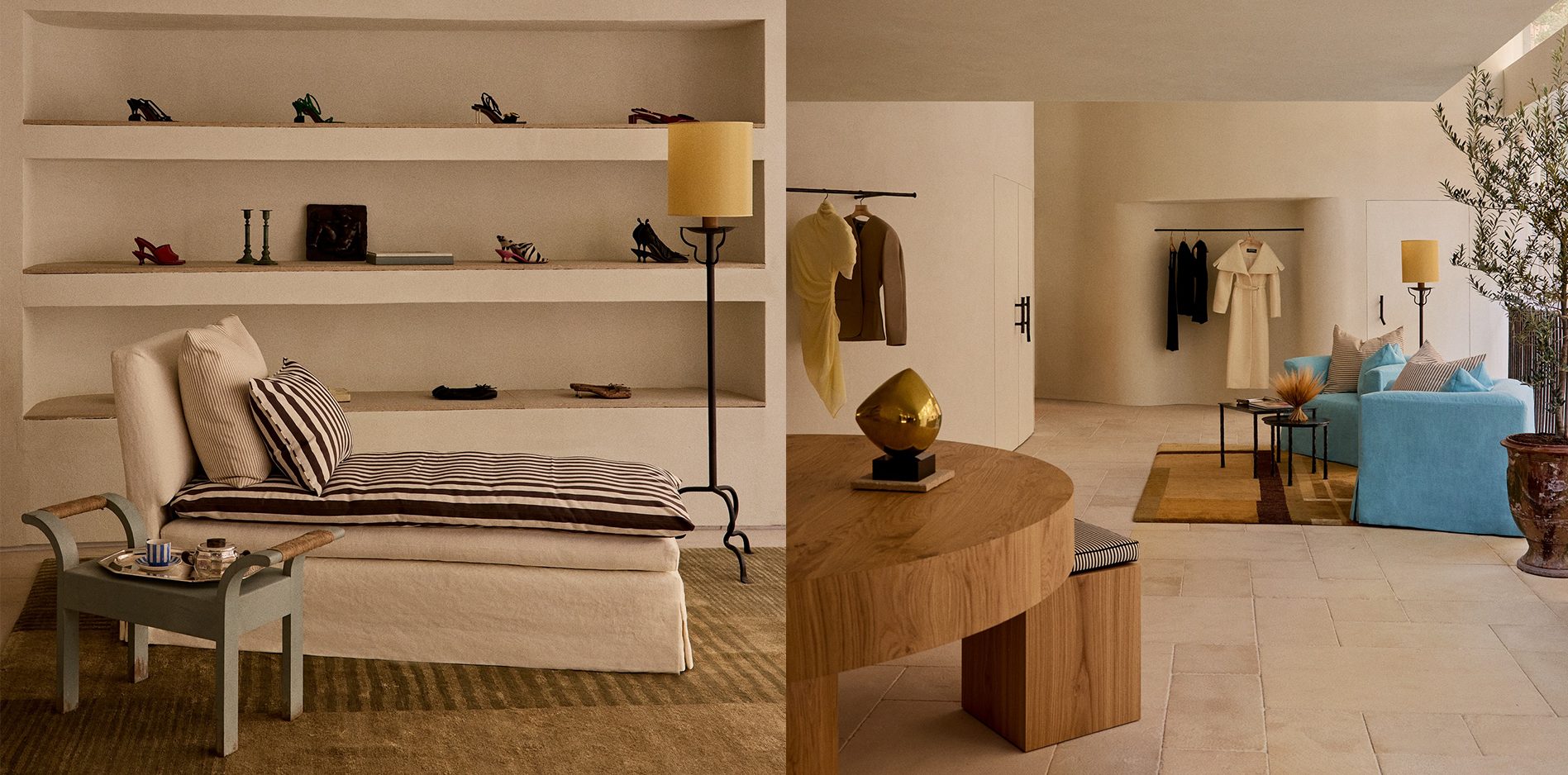
Rug & Kilim x JACQUEMUS
Ten: Rug & Kilim’s French Deco Collection, and a Room That JACQUEMUS Made
Simon Porte Jacquemus builds his visual world the way the great Safavid court designers built theirs: from the surface outward, from color inward, from the ground up. His Le Cabanon farmhouse in Provence, his Paris showroom, his campaign sets in the lavender fields of the Valensole plateau and the salt flats of the Camargue; all of them begin with the floor. All of them understand, with the instinctive certainty of a designer who has never separated fashion from space, that what lies underfoot determines what stands above it.
The collaboration between Rug & Kilim and JACQUEMUS — a French Art Deco rug from our collection placed within a JACQUEMUS interior is a recognition. Two institutions, arriving from entirely different directions across the history of design, discovering that they have been making the same argument all along: that the most transformative decisions in any room are the ones that appear, in retrospect, to have been inevitable.
The French Art Deco rug that anchors the JACQUEMUS space carries with it the full lineage of the tradition this essay has been tracing: the Leleu discipline, the Da Silva Bruhns geometry, the Savonnerie authority, the Aubusson intimacy — four centuries of European weaving intelligence distilled into a single object that knows, with complete certainty, what it is for. It is for the room. It is for the moment when everything else stops improvising and starts responding. It is for the decision that makes all the other decisions possible.
The moment the right carpet enters the right room is not mere chance. It is the result of forty-five years of disciplined looking, accumulated knowledge, and the particular patience of a house that has never confused acquisition with recognition.
The ten rooms in this essay were made by some of the most gifted designers and collectors of the past century. Each of them began with the floor. Each of them understood, before they understood anything else about the room they were making, that the carpet was not a decision among many. It was the decision from which all the others followed.
At Rug & Kilim, we have spent four decades making sure that decision is always available to those who are ready to make it.