
How the World’s Most Serious Art Spaces Are Rewriting the Rules of the Floor and the Contemporary Home
April 29, 2026
The Rug That Made the Room: Ten Interiors Where the Carpet Was the Only Decision That Mattered
May 13, 2026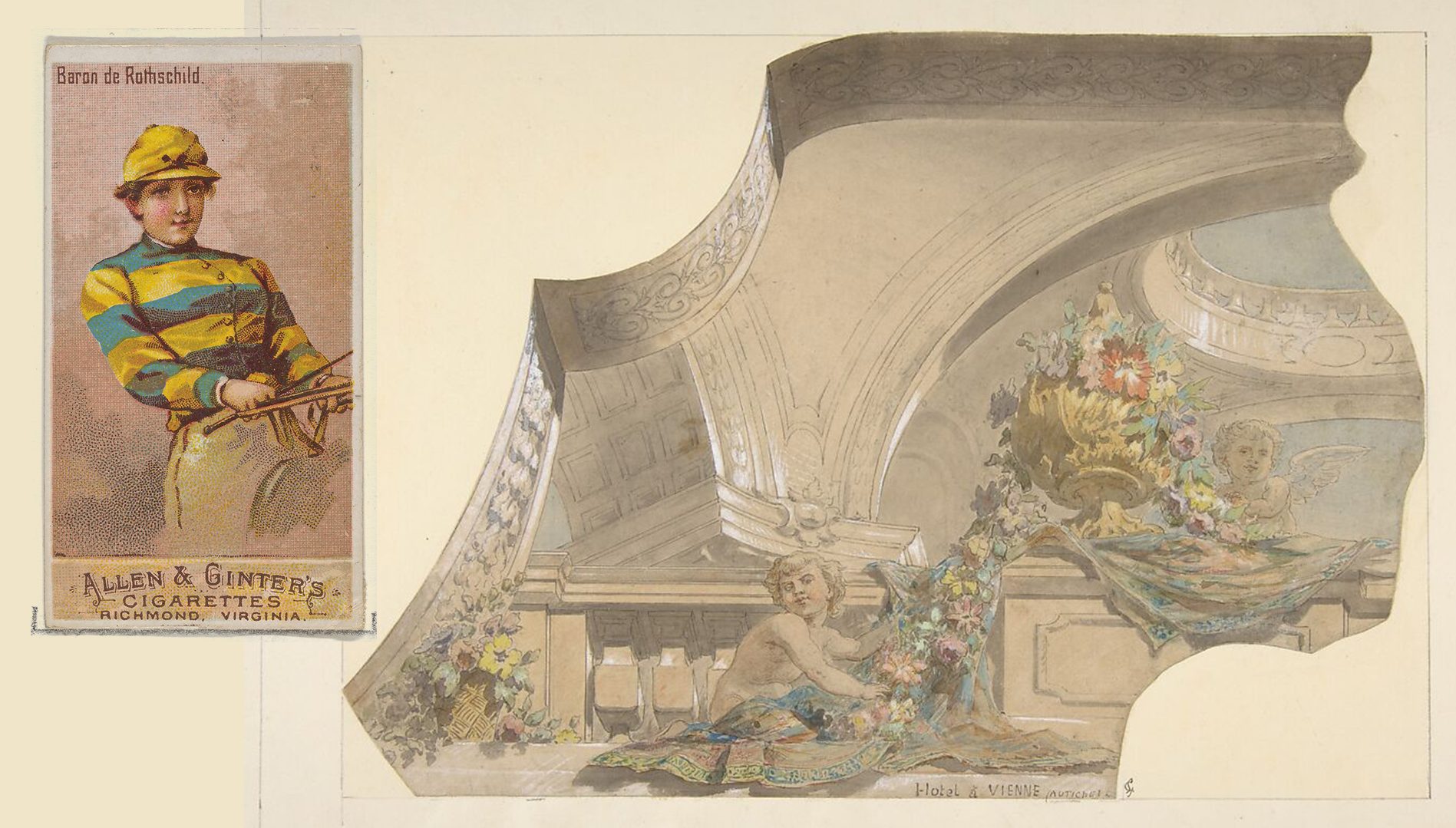
Baron de Rothschild, from the Racing Colors of the World series (N22a) for Allen & Ginter Cigarettes (Left), Ceiling and Cove Designs for Stairway, Hôtel Rothschild, Vienna (Right)
In April 2016, three rugs arrived at Christie’s King Street in London that had not been seen in public for over a century. They had not been exhibited. They had not been published. They had not, so far as the scholarly record indicates, been shown to anyone outside the family that owned them since before the First World War. They were Kerman Vase carpets, woven in southeastern Persia in the seventeenth century, acquired by Ferdinand de Rothschild before his death in 1898, passed to his sister Alice, then by descent to her nephew James, and held quietly, privately, with the particular discretion that distinguishes the greatest collections from merely expensive ones for one hundred and eighteen years.
When Christie’s finally offered them, the catalogue noted that they had never before been published. In the world of antique carpets, where provenance is biography and biography is value, that sentence carried the weight of a revelation. These were not rediscovered objects. They were objects that had been known, held, and deliberately kept. The Rothschilds had not forgotten them. They had protected them from the market, from scholarship, from the particular erosion that public exposure visits on objects not built to withstand it. The silence had been intentional. And intentional silence, in the history of great collecting, is always the loudest statement a collection can make.
What the Rothschilds Understood
The Rothschild family’s relationship with Islamic art and the Oriental carpet was not incidental to their collecting identity. It was central to it. Baron James Mayer de Rothschild, who founded the French branch of the family, and his wife Betty and son Alphonse assembled, across the nineteenth century, a collection of such range and ambition that Christie’s New York described the 2023 dispersal of its works as the first dedicated North American auction of the French branch’s holdings; objects acquired largely before 1900 and held continuously since. Ferdinand de Rothschild built Waddesdon Manor in Buckinghamshire as a setting for his collection, a house conceived from its foundations as a container for objects of consequence. When he died in 1898, he bequeathed the manor and its contents to his sister Alice, who merged her own collection from nearby Eythrope with his to form a unified holding of extraordinary depth.
What made the Rothschild collection remarkable was not its scale, though the scale was significant. It was the quality of attention brought to each object. The Rothschilds were among the most prolific collectors in the field of Islamic art precisely because they understood what serious collecting requires: not the acquisition of the available, but the recognition of the irreplaceable. The three Kerman Vase carpets that arrived at Christie’s in 2016 had not survived a century of family stewardship by accident. They had survived because someone, in each generation, had understood what they were.
The Rothschild Tabriz medallion carpet offered at Christie’s London in 1999, where it set the world auction record for an Oriental carpet at just under two and a half million pounds now lives at the Museum of Islamic Art in Doha, Qatar. Its journey from a Persian court atelier to a Rothschild collection to a Christie’s saleroom to one of the most serious institutional collections in the Islamic world is not a biography of a carpet. It is a biography of a civilization’s understanding of its own finest objects; how they are made, how they are held, how they are released, and where they finally come to rest.
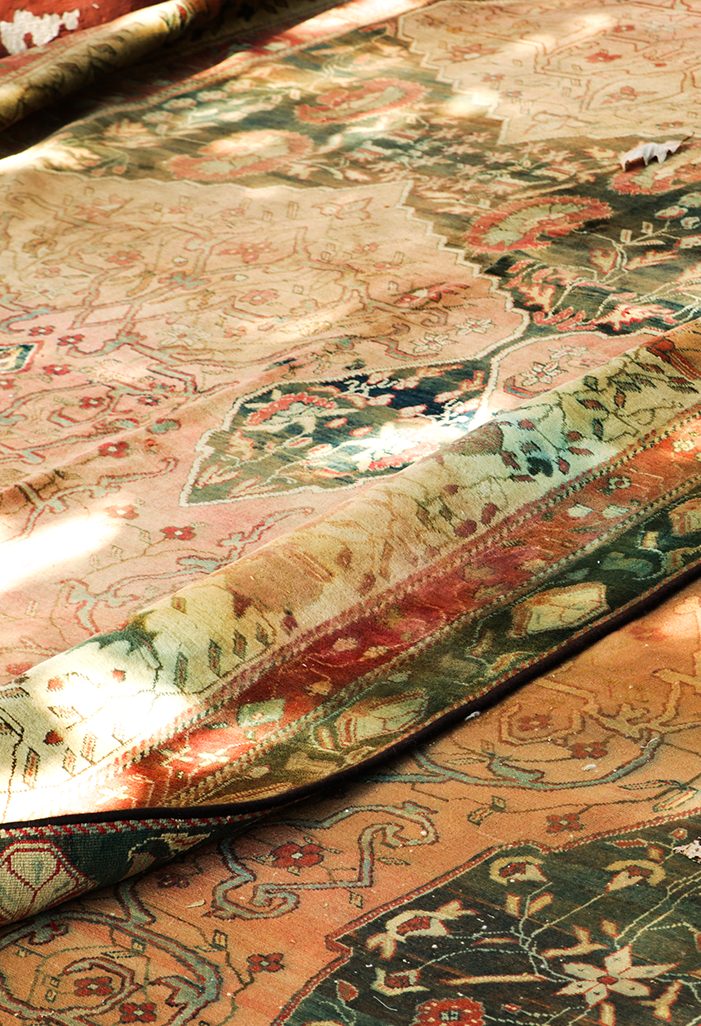
Rug & Kilim
What Provenance Actually Means
The word provenance is used so frequently in the art and antique market that it has begun to lose the precision it requires. In the context of the antique carpet, provenance is not a list of previous owners. It is the object’s argument for its own significance; the accumulated evidence of every hand that recognized its value before yours.
A carpet with a distinguished provenance; a Rothschild collection, a Habsburg imperial holding, a dispersal from one of the great private European assemblies carries that recognition as part of its structure. It is not merely that the carpet was owned by people of taste and resources. It is that those people, across generations and across the full range of their options, chose this object and kept it. That choice, repeated across time, is itself a form of appraisal; more rigorous, in many ways, than any technical analysis, because it has been tested by the actual experience of living with the object and finding it, year after year, still worthy of the space it occupies.
Serious appraisal of an antique carpet asks three questions that no auction estimate can fully answer. Where was it made, and by whose direction — court atelier, tribal encampment, urban workshop, or royal commission? For whom was it conceived, and what does that original purpose tell us about the formal decisions embedded in its structure? And what has it survived politically, physically, and commercially to arrive in the present in the condition it presents?
The answers to these questions are not always recoverable. But the attempt to recover them is what separates a transaction from an act of scholarship, and a dealer from an institution. At the highest level of the antique carpet market; the level at which Christie’s and Sotheby’s operate their specialist sales, and at which the most serious private houses conduct their acquisitions; every object is approached as a historical document before it is approached as a commodity. Condition matters. Dye analysis matters. Cartoon attribution, structural integrity, the relationship between pile and foundation; all of these are legible to the trained eye and constitute the aspects of serious appraisal.
But beyond the technical, there is something that no analysis can measure: the quality of presence that distinguishes a great carpet from a fine one. It is felt before it is understood. It is the reason a room changes when the right object enters it, and the reason that collectors who have spent decades acquiring at the highest level will often say, of their finest pieces, not that they chose them but that they recognized them.
What Rug & Kilim Has Always Believed
The Rug & Kilim archive, one of the largest of its kind in the United States, assembled across forty-five years of disciplined acquisition, sustained scholarship, and relationships with collectors, scholars, and institutions on every continent is built on the same principle that guided the Rothschilds at Waddesdon and Ferdinand at Eythrope: not accumulation, but recognition. Not the acquisition of everything available, but the identification of what is irreplaceable.
Every piece that enters the collection is considered through the triad that has governed serious collecting since the first Safavid carpet left a Persian court atelier for a Habsburg imperial residence: provenance, structure, and historical intelligibility. Provenance establishes the object’s biography. Structure establishes its technical authority. Historical intelligibility; the quality of being legible within the larger narrative of the tradition that produced it, establishes its claim on the present.
This last quality is the hardest to define and the easiest to recognize. It is what the three Rothschild Kerman Vase carpets possessed in such abundance that one hundred and eighteen years of private stewardship felt, to the family that held them, not like concealment but like custodianship. They were not hiding the carpets. They were keeping them in the way that the greatest collections have always kept their finest objects until the moment when releasing them would honor rather than diminish what they were.
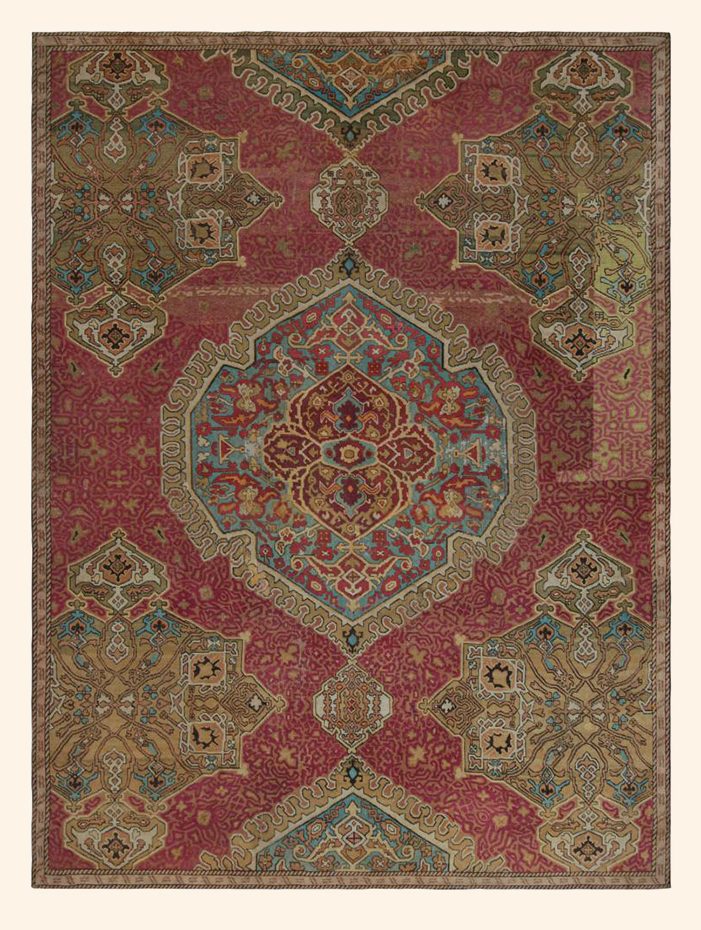
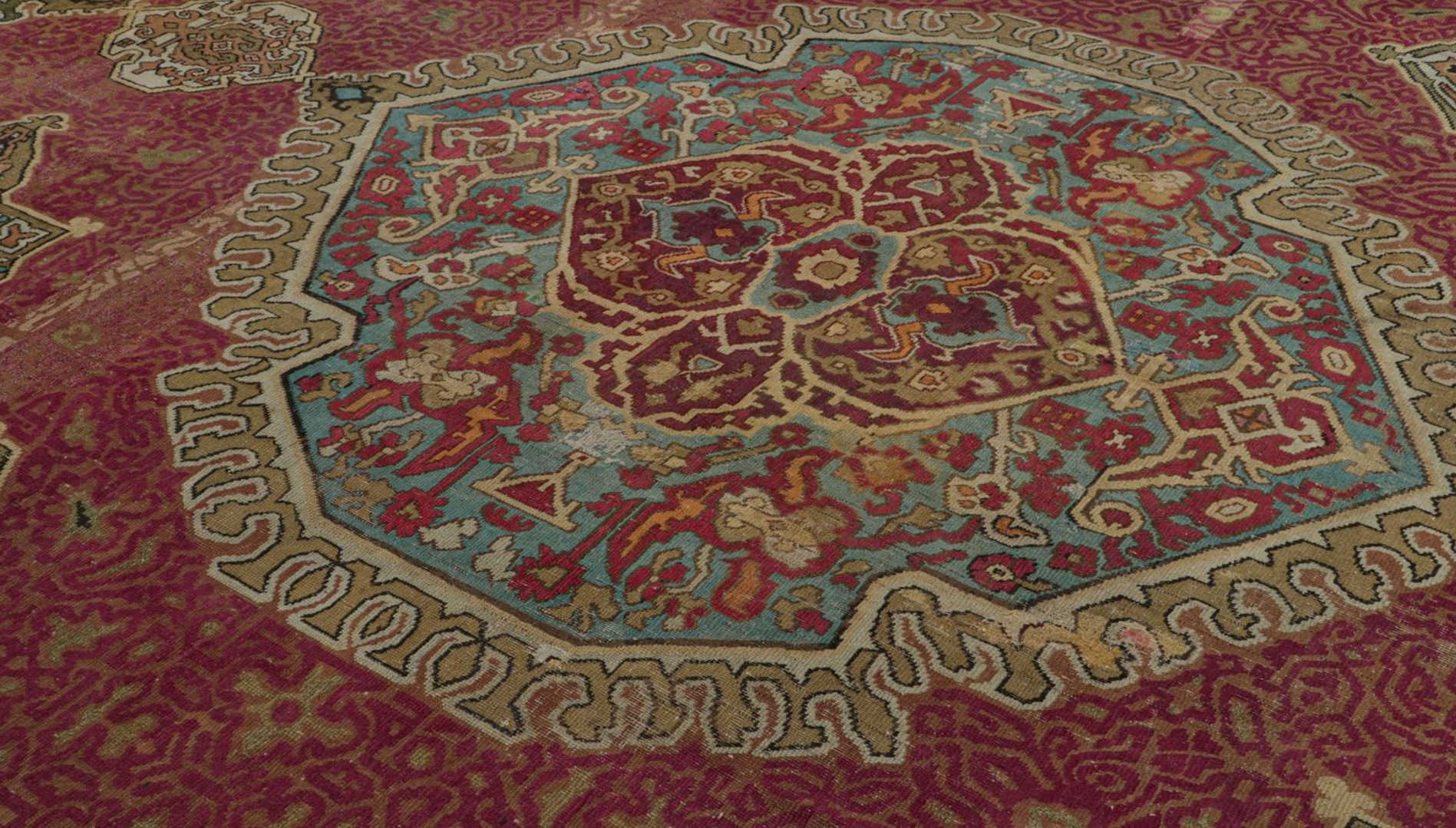
Rug & Kilim
The Collector’s Responsibility
There is a tradition in the history of great collecting that rarely appears in auction catalogues but that every serious collector understands implicitly: the responsibility of the intermediary. Between the maker and the museum, between the court atelier and the permanent collection, between the Safavid weaver and the Christie’s saleroom, there exist generations of collectors whose stewardship either preserves or diminishes what they hold. The Rothschilds were exemplary intermediaries, people who understood that to own a great carpet is not to possess it but to be, for a time, responsible for it.
At Rug & Kilim, the house serves collectors, designers, and connoisseurs who approach these objects with the seriousness they deserve, people who understand that acquiring an antique carpet of genuine distinction is not a purchase but an assumption of responsibility. The object arrives with its history intact. It leaves with that history extended by one more act of recognition. The three Rothschild carpets that appeared at Christie’s King Street in April 2016, after a century of intentional silence, did not diminish in that silence. They gathered it. They arrived in the auction room carrying one hundred and eighteen years of private attention of being looked at, carefully, by people who understood what they were looking at and that attention was as much a part of their value as the precision of their weaving or the depth of their color.
That is what great collecting does. It does not simply preserve objects. It deepens them, adds to their biography, extends their argument, sends them forward into the next generation with more history than they arrived with.
At Rug & Kilim, that is the only kind of collecting we have ever believed in.