Style
Ghiordes
Every piece in this style, across all of our collections. Narrow them down by size and price.
- Under 6 x 9
- Runners
- 6 x 9
- 8 x 10
- 9 x 12
- 10 x 14
- 12 x 15
- Over 12 x 15
Origin ▼
Style ▼
Material ▼
Width
Length
To connect with a specialist, click here
Stories from the Ghiordes Archive
Essays, artist dialogues, and provenance notes drawn from Rug & Kilim’s editorial desk.
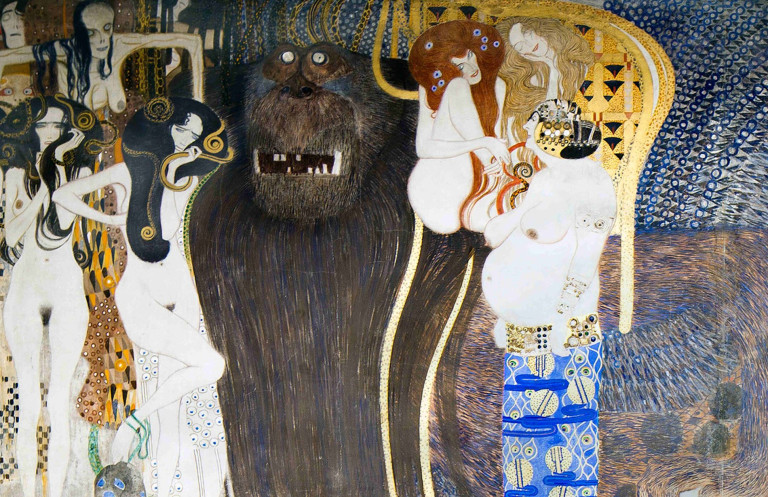
The Total Art: Vienna’s Century, From the Gold Frieze to the Contemporary Era
In the dining room of a banker's house in Brussels there is a wall of gold. Klimt designed it; the Stoclet Frieze, a tree of life branching across marble and enamel and coral, a dancer on one side and an embracing couple on the other, the couple a direct rehearsal for the painting the whole world would later know as The Kiss. But to stand in that room, were one ever permitted to, is to understand that the frieze is not the point of it. The point is that the frieze, the marble, the cutlery, the door handles, and the carpet underfoot were all conceived as a single object by a single mind. The Palais Stoclet, built by Josef Hoffmann between 1905 and 1911 and now sealed as a UNESCO World Heritage Site, is the most complete surviving statement of the idea that organised an entire Viennese century: the Gesamtkunstwerk, the total work of art, in which nothing; not the spoon, not the dress, not the floor, ranks below the painting on the wall.
Read the Feature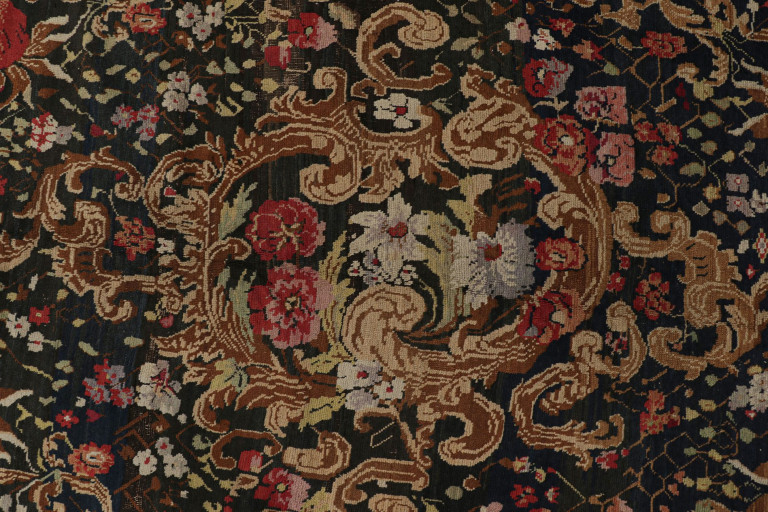
An Abbreviated Guide to Antique and Vintage Karabagh Rugs
NO. 34126 Made with hand-knotted wool and originating in Russia circa 1850-1860, this 8x19 antique Karabagh rug and is a rare extra-long runner and oversized addition to Rug & Kilim’s coveted European collection. For centuries, the Karabagh region—poetically called the “Black Garden”—has been a crossroads of empire, craftsmanship, and cultural memory. Its rugs shimmer with expressive geometry, lyrical florals, and natural dyes that have captivated collectors for generations. Today, designers and connoisseurs seek out these pieces not only for their visual presence, but for the emotional resonance they bring into a room. Karabagh rugs are textiles with pulse— woven memoirs whose artistry continues to evolve in dialogue with contemporary interiors. This guide explores their history, structure, symbolism, and enduring relevance, offering a lens on one of the most intriguing Caucasian weaving traditions.
Read the Feature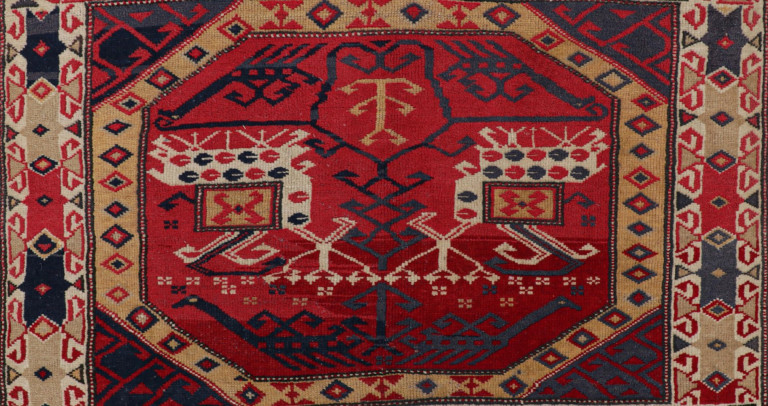
What Are Anatolian Rugs and Kilims? History, Craft, and Significance for Modern Interiors
Hand-knotted in wool, circa 1920-1930, this 3x3 antique Anatolian square rug is a very special piece from Rug & Kilim. Details >> There are few objects in the history of design as quietly eloquent and as insistently enduring as the Anatolian rug or kilim. At once functional textile and living palimpsest, each piece unfolds like a topography—layered with memory, ritual, and geometry—charting the invisible cartographies of empire, migration, and ancestral inheritance. These woven forms are not merely the byproducts of artisanal labor but are instead radical testaments to the entwinement of the spiritual and the material, the domestic and the diplomatic, the feminine and the geopolitical.
Read the Feature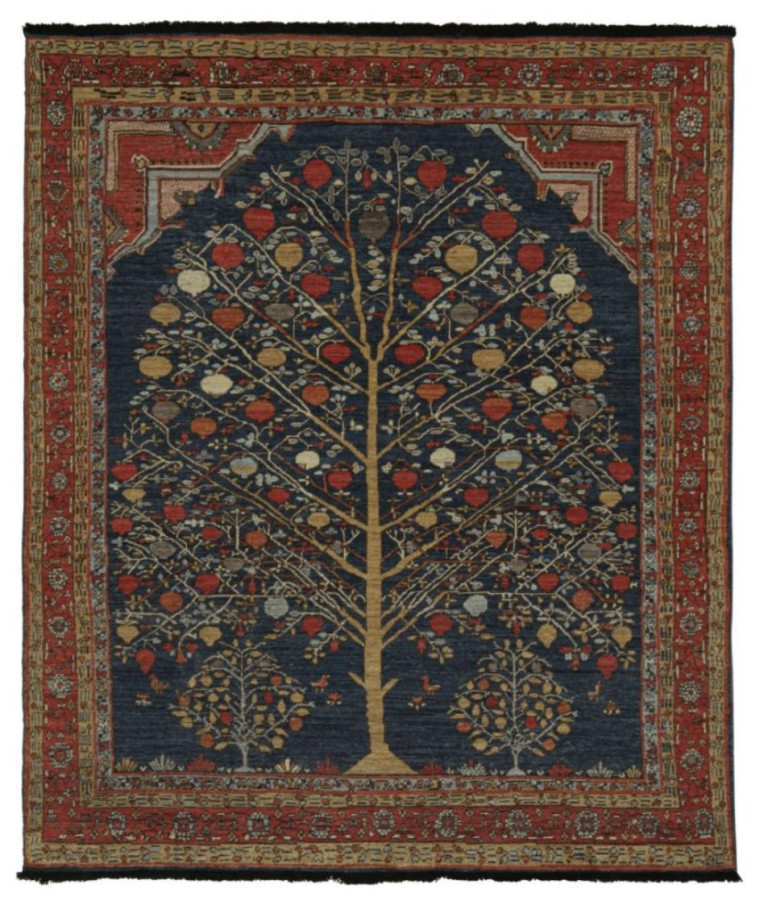
A Guide to “Tree of Life” in Oriental and Persian Rugs
The Tree of Life motif in Oriental carpets stands as one of humanity's most eloquent expressions of the sacred. These masterworks, emerging from the sophisticated weaving traditions of Persia and the East, tell stories that resonate as powerfully today as they did when they first graced the floors of royal courts and sacred spaces. Within their intricate designs lies a universal narrative—one that transcends cultural boundaries and speaks to our shared human experience. The Tree of Life motif emerges from humanity's earliest spiritual consciousness. In Persian weaving traditions, particularly those of the great weaving centers of Tabriz and Isfahan, this cosmic tree – or "درخت زندگی" (Derakht-e Zendegi) – stands as a bridge between earthly existence and divine realms. The earliest extant examples of Tree of Life carpets date to the Safavid period (1501-1736), though the motif's use in Persian art extends far deeper into antiquity.
Read the Feature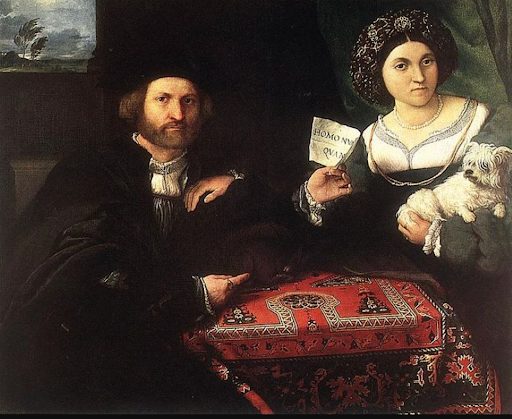
Oushak Rugs – An Oriental Guide to History, Styles and Significance
Originating from western Turkey, the elegance of Oushak rugs traces back to the 15th century Ottoman Empire. These antique masterpieces, first hand-knotted in the city of Usak, were crafted with high-end, lustrous wool in subtle, glowing hues. The hallmark of Oushak rugs lies in their expansive floral designs that radiate from the center, a distinct departure from the intricate florals and geometric shapes of Persian counterparts. The allure of Oushak rugs transcended the Ottoman borders during the Renaissance, captivating European connoisseurs who admired their serene beauty. This surge in demand led to expanded production, ensuring that these exquisite Oushak carpets adorned the finest European country homes and palaces. Notably, their understated colors and harmonious patterns make them a favorite among contemporary designers, evoking a sense of tranquility and timeless sophistication.
Read the Feature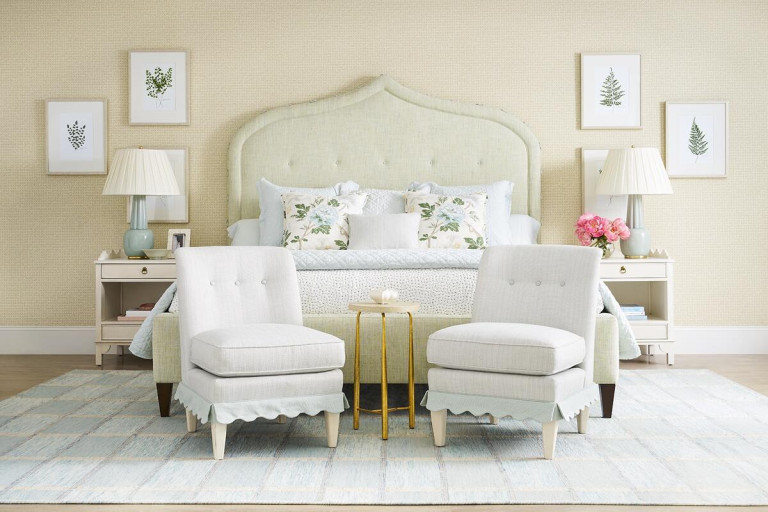
What Defines a Scandinavian Rug?
A bedroom by Phoebe Howard featured in Business of Home includes a custom flatweave from the Scandinavian rug collection by Rug & Kilim. The room's "Feminine, maximalist details" and "subtle Turkish Revival touches" work with the Swedish minimalist style of the rug. Photo courtesy of Sherrill Furniture and the Nellie Jane collection. As the name suggests, Scandinavian rugs hail from Scandinavian countries mainly Denmark, Finland, Norway and Sweden. In the Swedish belt, rug weaving began long after it did in China and Persia. The earliest production was influenced by rug weavers in Anatolia and Asia Minor. It was nearly during the 10th century when the region was densely involved in trade with the Byzantine Empire in Constantinople that the production of rugs began to happen extensively. These rugs were thickly woven to help people fight the bitter cold and harsh weather conditions. This approach not only made the Swedish rugs durable but also comfortable and welcoming. Later, Scandinavian rugs were not just floor rugs but were also used as bedding, wall hangings by the nobility and were an important part of weddings too.
Read the Feature