
A Guide to Contemporary Cowhide Fur Rugs
December 19, 2024
A Guide to 19th Century Antique Hadji Jalili Persian Rugs
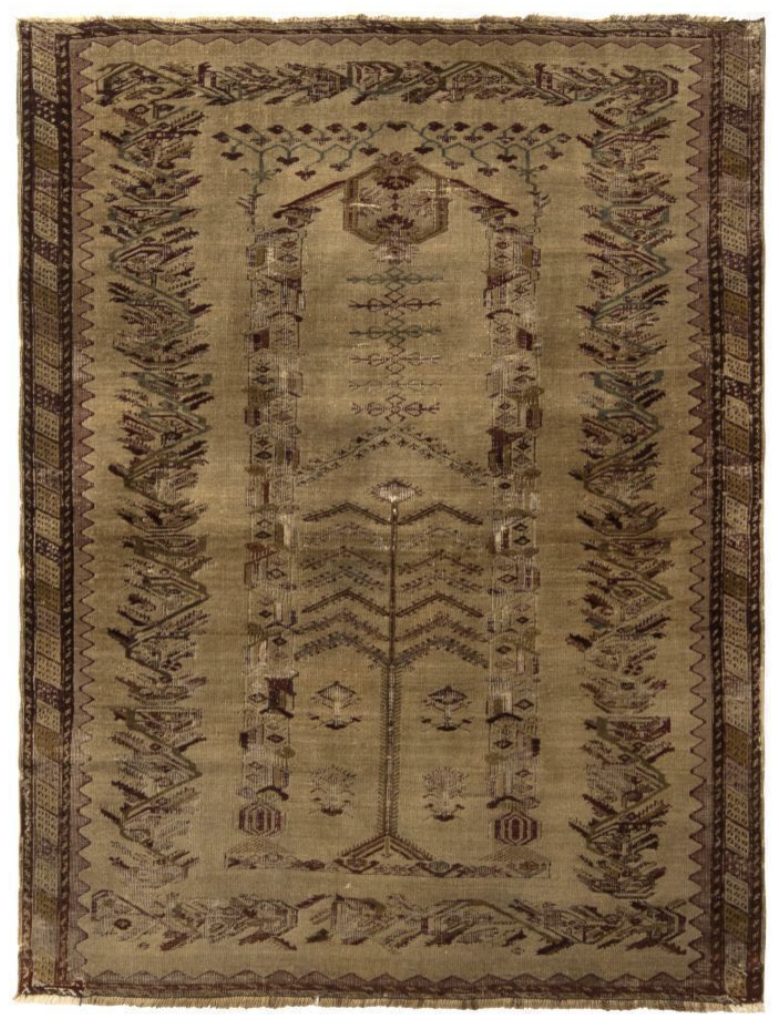
January 6, 2025The Tree of Life motif in Oriental carpets stands as one of humanity’s most eloquent expressions of the sacred.
These masterworks, emerging from the sophisticated weaving traditions of Persia and the East, tell stories that resonate as powerfully today as they did when they first graced the floors of royal courts and sacred spaces. Within their intricate designs lies a universal narrative—one that transcends cultural boundaries and speaks to our shared human experience.
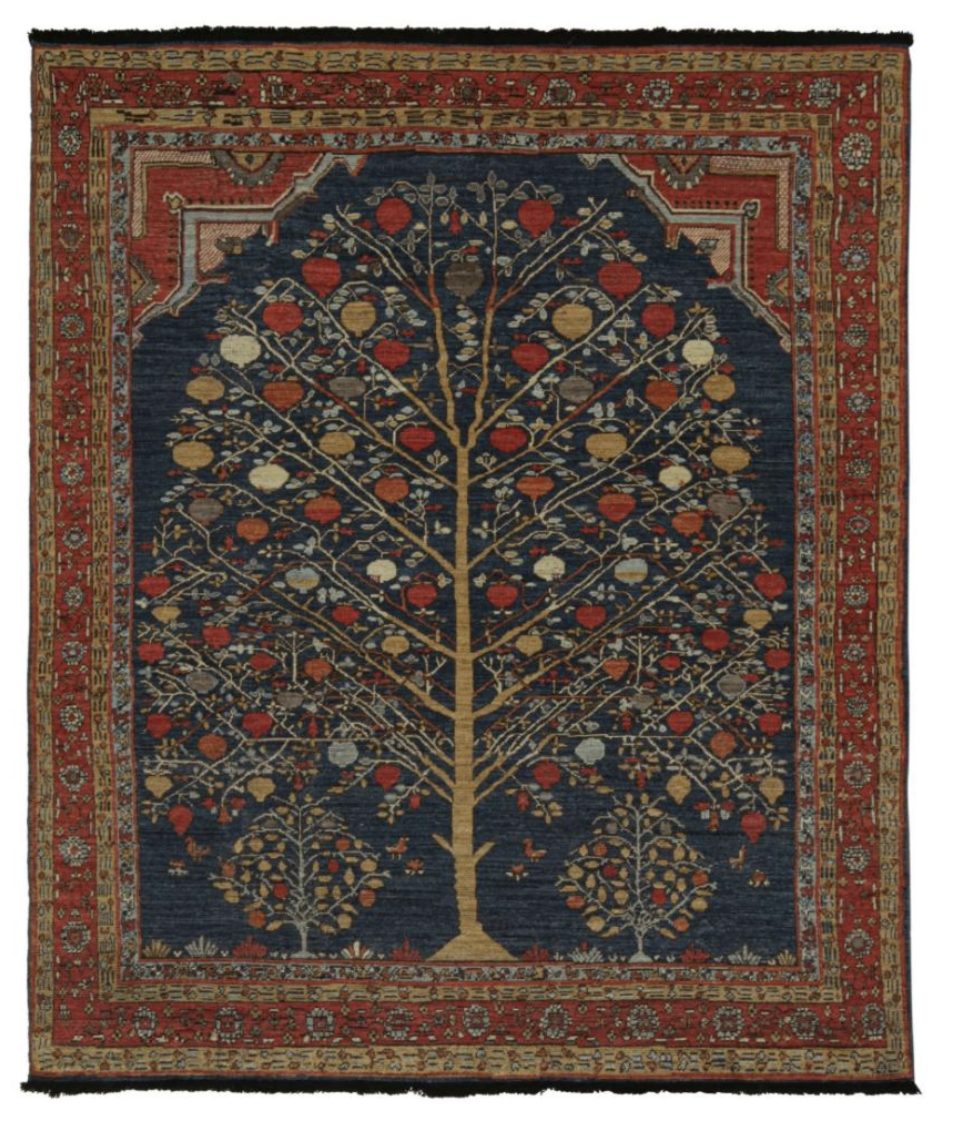
The Tree of Life motif emerges from humanity’s earliest spiritual consciousness. In Persian weaving traditions, particularly those of the great weaving centers of Tabriz and Isfahan, this cosmic tree – or “درخت زندگی” (Derakht-e Zendegi) – stands as a bridge between earthly existence and divine realms. The earliest extant examples of Tree of Life carpets date to the Safavid period (1501-1736), though the motif’s use in Persian art extends far deeper into antiquity.
In these designs, we witness the convergence of multiple spiritual traditions, where ancient Zoroastrian symbolism merges seamlessly with Islamic artistic sensibilities, creating works of transcendent beauty and metaphysical significance.
Symbolic Language of the “Tree of Life” Design
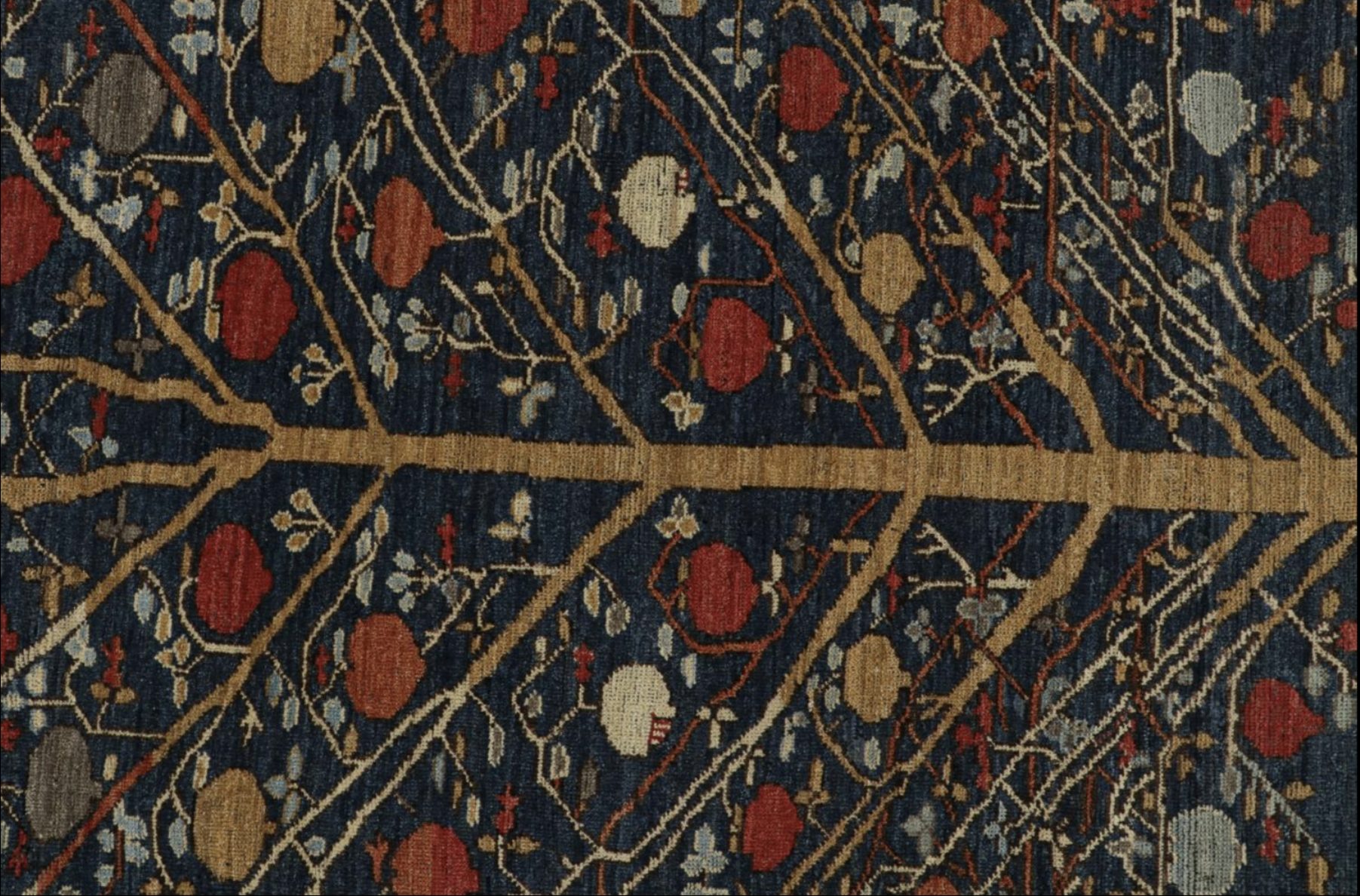
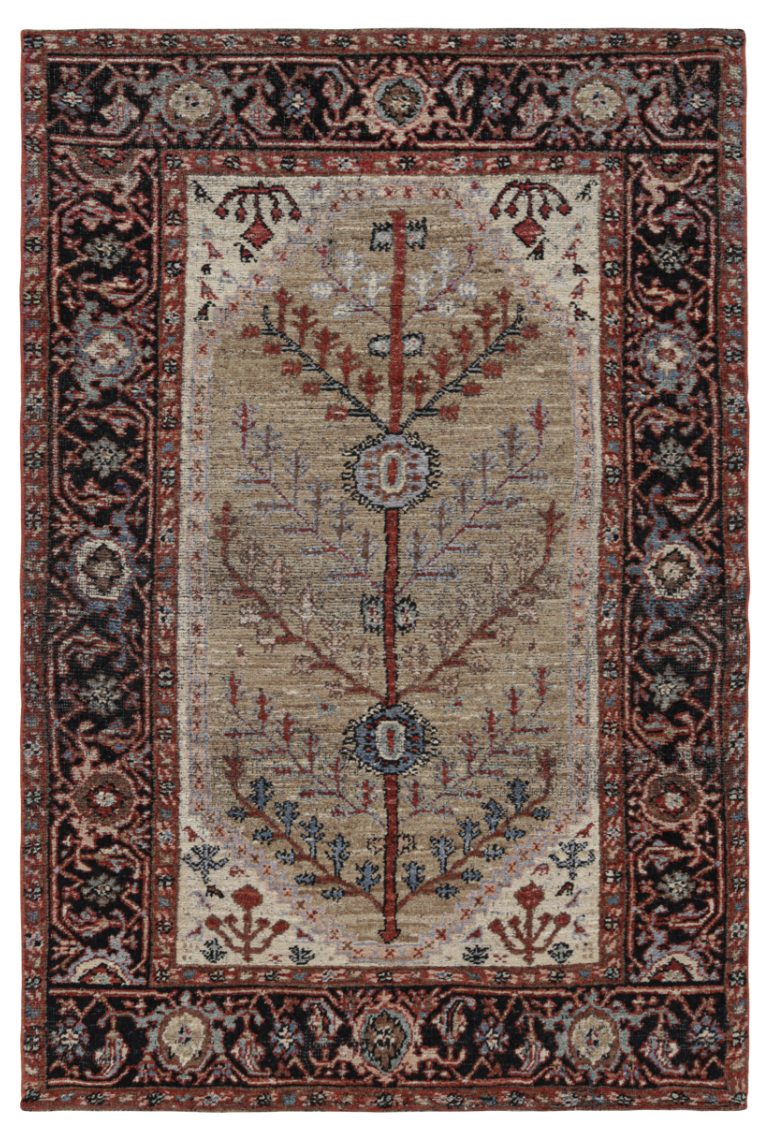
What distinguishes a true Tree of Life carpet is its sophisticated visual hierarchy. The central tree, rising from a water source or garden setting, typically extends its branches across the entire field of the carpet.
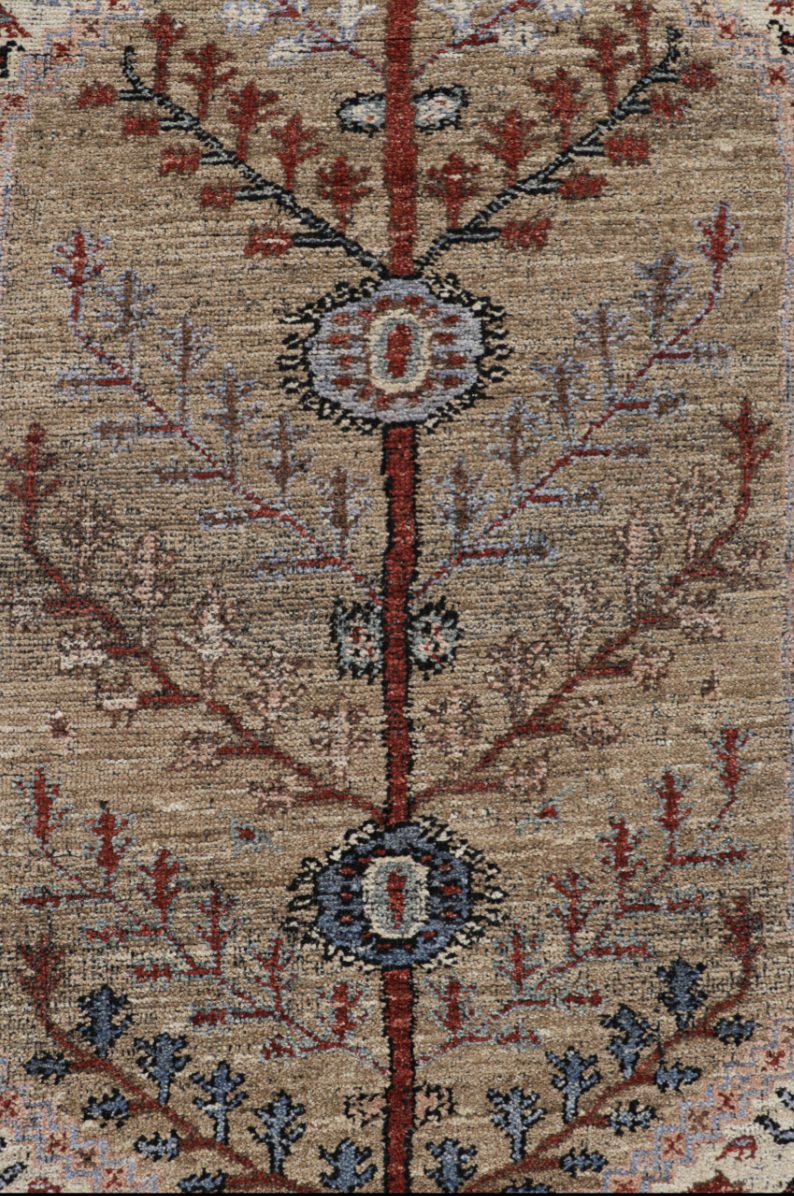
What distinguishes these carpets within the broader canon of Oriental weaving is their remarkable synthesis of naturalistic observation and mystical symbolism. The central tree, often emerging from a richly detailed paradise garden or an ornate vase, reaches toward heaven with branches. This is no simple botanical representation, but rather a sophisticated visual thesis on the nature of existence. The roots, typically depicted emerging from the waters of life, speak to our earthly foundations, while the ascending branches, laden with precisely rendered blossoms and birds, suggest the soul’s journey toward divine understanding.
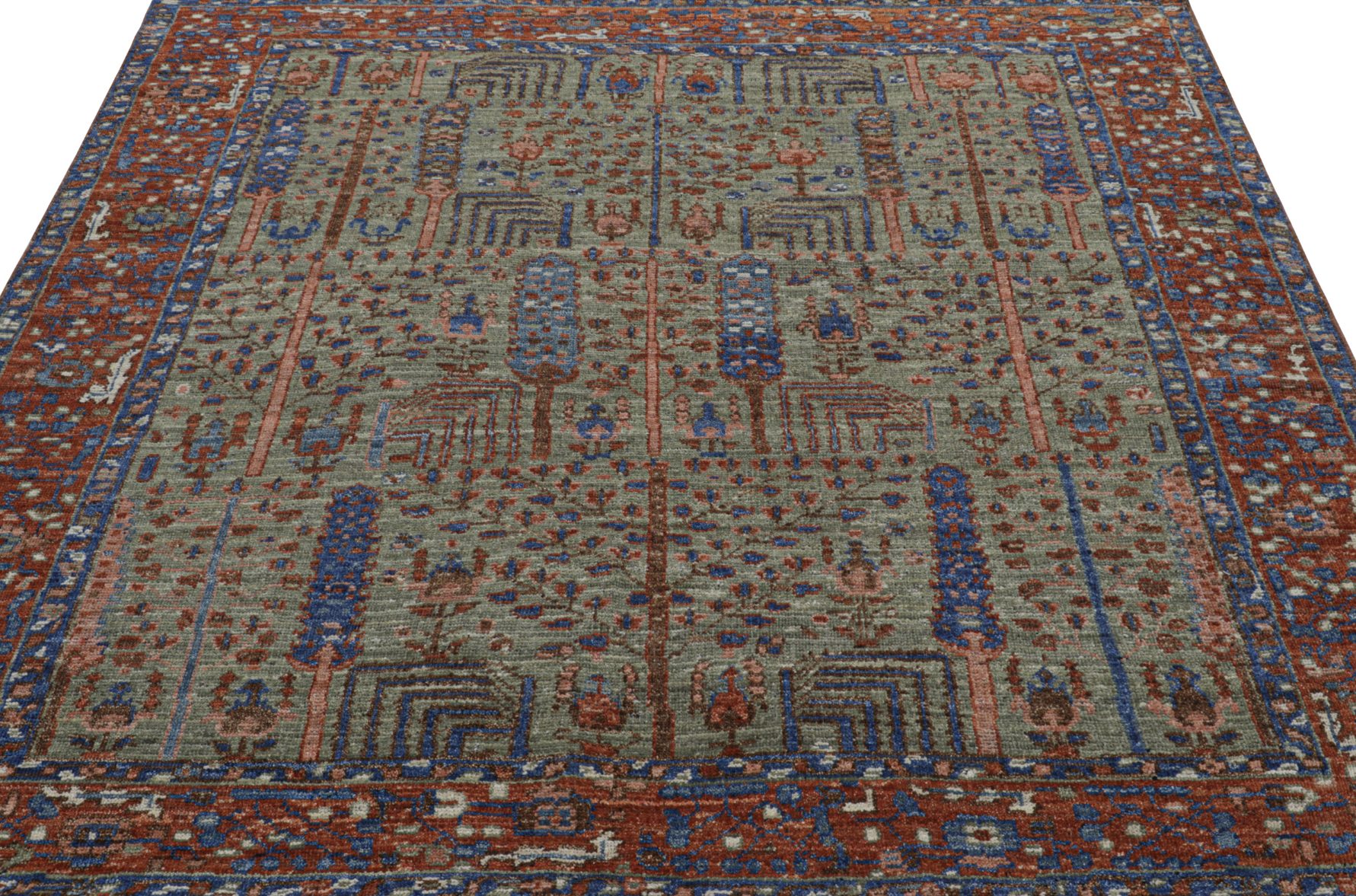
This is not mere decorative fancy – each element carries profound meaning:
The roots, often depicted emerging from a vase or pond, represent the waters of life
The trunk symbolizes the axis mundi, connecting earth to heaven
The branches, laden with blossoms and birds, represent the diversity of creation
The surrounding border, filled with arabesques and floral motifs, contains the entire cosmic drama within its frame
The technical execution of Tree of Life carpets demands extraordinary skill. The finest examples, particularly those from 17th-century Tabriz and Isfahan, can contain up to 800 knots per square inch. This density allows for remarkable detail – individual flower petals, delicate leaf veining, and even the texture of bark can be rendered with painterly precision.
The palette, achieved through natural dyes whose recipes were closely guarded secrets, includes deep lapis lazuli blues, royal crimsons, and luminous emerald greens—colors that, even centuries later, retain their original intensity and symbolic power.
Significance Through Time
While these carpets began as expressions of Persian Islamic spirituality, their appeal has proven universal. By the 17th century, Tree of Life carpets were highly prized in European courts, where they influenced everything from textile design to architectural ornament. Today, they remain among the most sought-after categories of Oriental carpets, both for their aesthetic sophistication and their profound symbolic resonance.
These carpets remind us of humanity’s eternal connection to nature and our role as stewards of creation. In contemporary interior design, they serve as powerful focal points, bringing both historical depth and spiritual dimension to modern spaces.