Style
Heriz
Every piece in this style, across all of our collections. Narrow them down by size and price.
- Under 6 x 9
- Runners
- 6 x 9
- 8 x 10
- 9 x 12
- 10 x 14
- 12 x 15
- Over 12 x 15
Origin ▼
Style ▼
Material ▼
Width
Length
To connect with a specialist, click here
Stories from the Heriz Archive
Essays, artist dialogues, and provenance notes drawn from Rug & Kilim’s editorial desk.
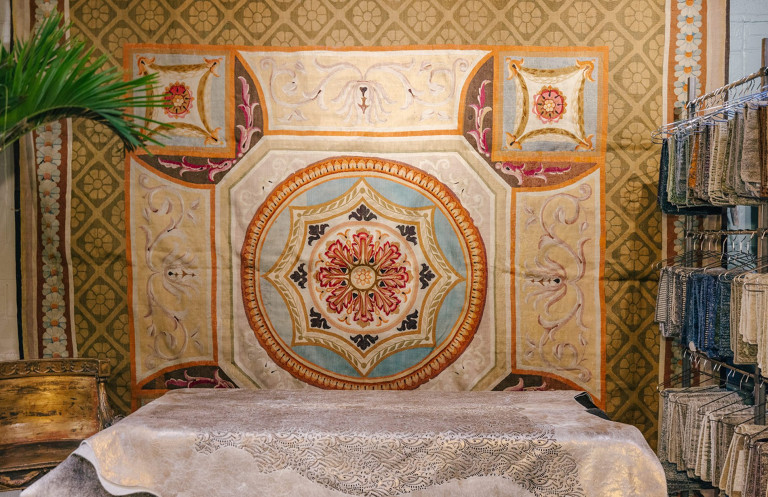
Provenance, Structure, Intelligibility: The Three Pillars of Serious Collecting
Anyone can acquire a rug. To collect one, to bring it into a serious collection with the confidence that it belongs there, requires a discipline, and that discipline rests on three questions. Across four decades of building one of the most significant archives in the country, this house has come to evaluate every object through the same three. They are the difference between buying and collecting, and they are worth setting down plainly, because they apply as readily to a Safavid fragment as to a signed Aubusson, and because they are the same three questions, at bottom, that a curator at the Metropolitan or a specialist at Christie's brings to any object of consequence.
Read the Feature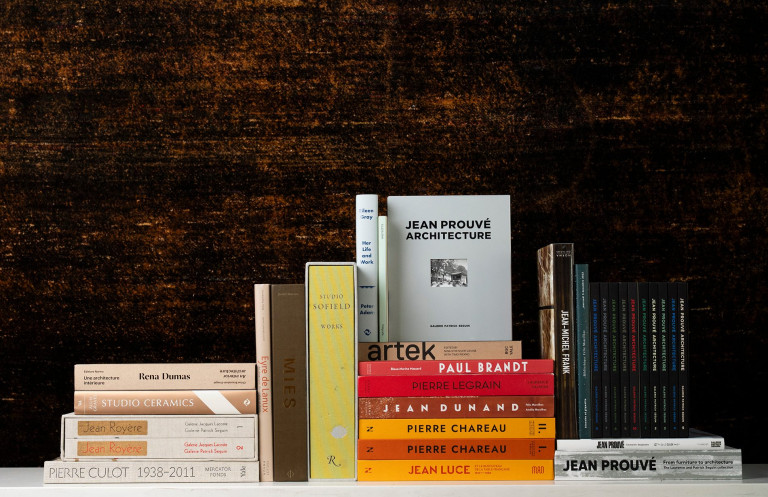
Every Great Collector Owns a Library: On Books, Rugs, and the Knowledge That Connects Them
There has always been a quiet kinship between the rug and the book. Both are objects one lives with rather than merely owns. Both reward the patient return, disclosing more on the tenth encounter than the first. Both are, at their finest, repositories of a civilization's memory; the one held in language, the other in wool. It should surprise no one that the greatest collectors of carpets have almost always been, in the same breath, collectors of the books that explain them. J. Paul Getty kept a scholar's library beside his objects. The Rothschilds, whose carpets now rest in Doha and whose names still move a saleroom, understood a collection as a thing to be studied as much as displayed. To acquire seriously has always meant to read seriously.
Read the Feature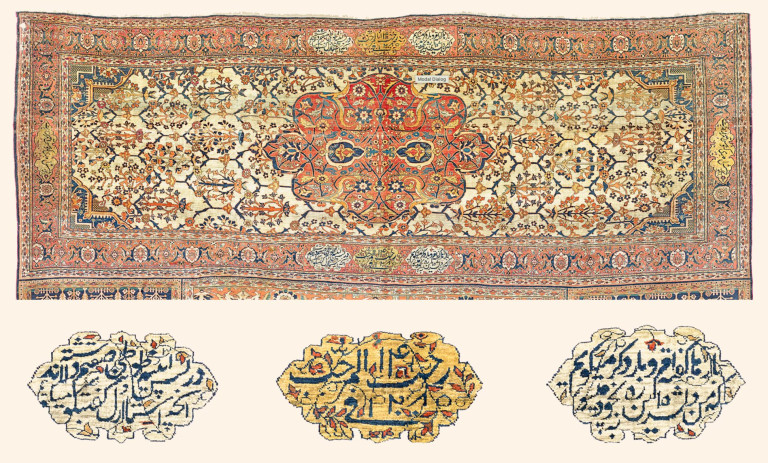
Of Royal Culture and Inheritance: The Silk Heriz Triclinium Carpet of 1868, Perhaps the Finest Surviving Example in the World
Our founder and principal Jahanshah Josh Nazmiyal has been in the carpet industry long enough to have learned that the great pieces announce themselves before one has understood what one is looking at. The light catches the silk a particular way. Some quiet, almost biological recognition runs through the room, the way a wine of consequence stills the table before anyone has spoken its vintage. One has the sense of having interrupted a conversation already in progress. The carpet was here first; one is being received by it. The team welcomed this silk Heriz, the way Jahanshah had unrolled perhaps forty thousand carpets across the better part of his life, and we will tell you honestly that we sat down beside it for a long time before any of us said anything. There is a particular gold in the mian farsh; the great central field, that we all have seen perhaps rarely before in a quarter-century of looking. It is the gold of late-October sun on the dome of the Shah Mosque in Isfahan, the gold the Safavid silk weavers of the seventeenth century pursued and very nearly lost, the gold that the Heriz workshops of the 1860s recovered for a brief generation of patrons before the world turned and they were forgotten. To kneel beside it is to be quiet in the presence of something that does not require your understanding to be what it is.
Read the Feature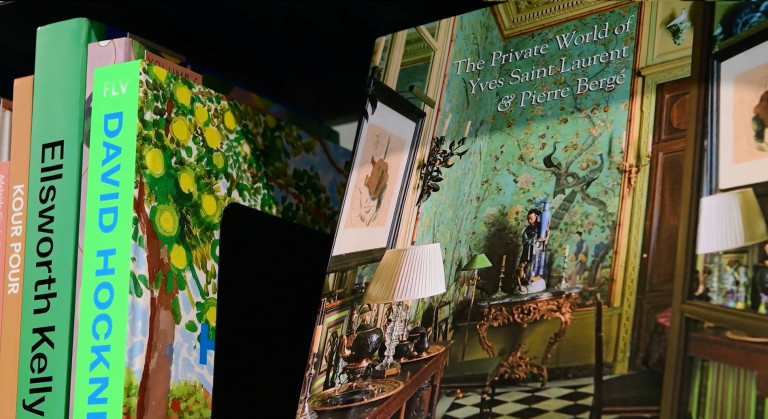
Rugs, Books, and the Fine Art of Living with Intention: Rug & Kilim’s Dialogue with Art and Literature
A great house is measured not only by what lies underfoot, but by what rests within reach. At Rug & Kilim, The Royal Collection and Volumes are not parallel endeavors—they are twin expressions of the same language: that art, design, and intellect belong in continuous dialogue. Both are products of patronage, atelier discipline, and an unwavering belief that beauty must be structured. A serious interior does not begin with furniture. It begins with a position. For centuries, the rug has been the most intellectually charged plane in a room—the only surface that holds architecture, painting, mythology, and diplomacy in a single field. Likewise, the book is not décor; it is declaration. It reveals the mind that inhabits the space.
Read the Feature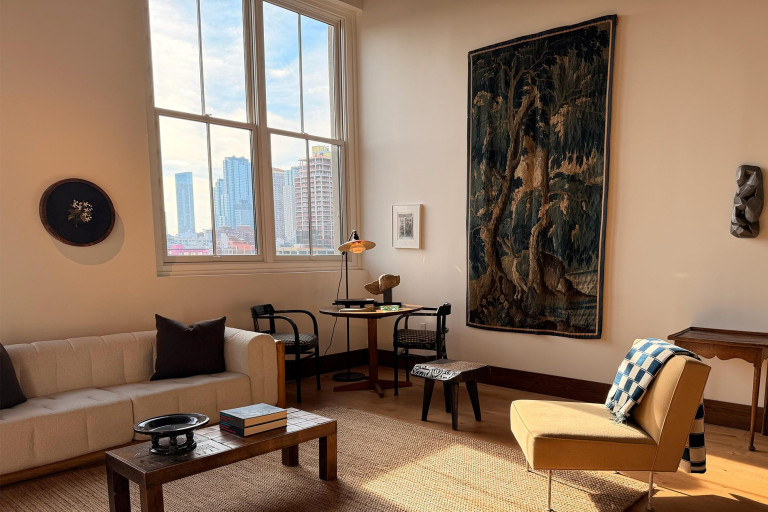
Tapestries in the Language of Contemporary Design: When Walls Speak
Tapestry is the oldest form of spatial storytelling. Before wallpaper became political, before murals were democratized, before art was framed, taxed, traded, or speculated upon, power was woven. Tapestries were the original soft architecture of authority—portable walls for empires on the move, visual treaties between monarchs, and declarations of taste that traveled more freely than armies. They insulated cold stone halls, softened acoustics for diplomacy, and—perhaps most importantly—controlled the narrative. In a world without screens, tapestries were the screens: projecting mythology, ideology, lineage, and aspiration in wool, silk, and gold thread.
Read the Feature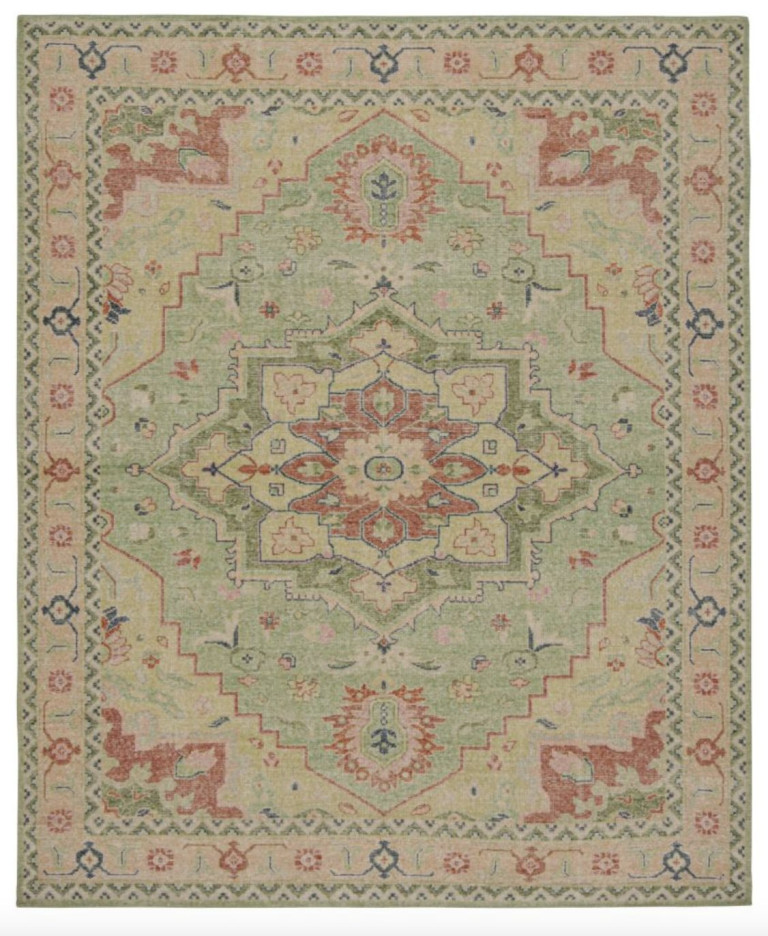
Antique Persian Heriz and Serapi Rugs: Design and Significance
Persian Heriz and Serapi Rugs have always been an integral part of each major exhibition and auction, given the never-ending admiration of art connoisseurs and rug collectors worldwide. They stand out as exquisite works of art among Oriental rugs due to their intricate designs and vibrant natural colors. Made from organic materials like wool, silk, and cotton, these rugs are dyed using natural coloring methods, reflecting a commitment to quality and beauty throughout the production process. Heriz and Serapi rugs, known for their geometric designs, offer a unique contrast to other Persian rug styles. Despite their distinct appearance, these rugs trace their roots back to nature-inspired elements, blending royal court craftsmanship with practical nomadic weaving traditions over centuries. This fusion is evident in the geometric patterns found in Bakhtiar, Hamadan, Nahavand, and especially Heriz rugs, showcasing the evolution and artistry of Persian rug weaving.
Read the Feature