
A Brief Guide to Emilio Pucci “The Prince of Prints” and Mid-Century Modern Designs
October 23, 2024
A Guide to Dhurrie Rugs: Antique, Vintage and Contemporary Indian Flatweaves
October 28, 2024Persian Heriz and Serapi Rugs have always been an integral part of each major exhibition and auction, given the never-ending admiration of art connoisseurs and rug collectors worldwide.
They stand out as exquisite works of art among Oriental rugs due to their intricate designs and vibrant natural colors.
Made from organic materials like wool, silk, and cotton, these rugs are dyed using natural coloring methods, reflecting a commitment to quality and beauty throughout the production process. Heriz and Serapi rugs, known for their geometric designs, offer a unique contrast to other Persian rug styles. Despite their distinct appearance, these rugs trace their roots back to nature-inspired elements, blending royal court craftsmanship with practical nomadic weaving traditions over centuries. This fusion is evident in the geometric patterns found in Bakhtiar, Hamadan, Nahavand, and especially Heriz rugs, showcasing the evolution and artistry of Persian rug weaving.
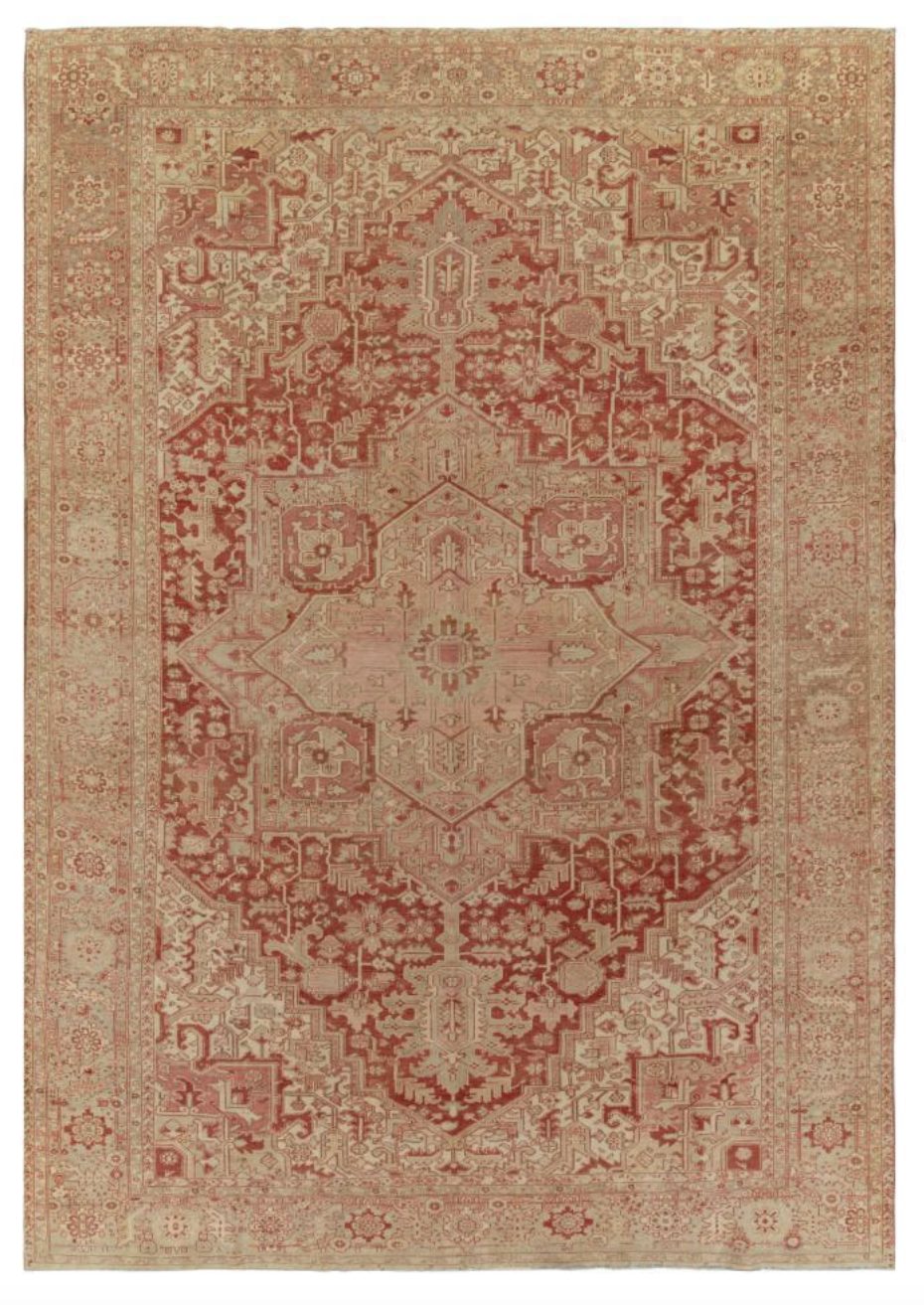
Persian rugs, a hallmark of exquisite craftsmanship, trace their origins to the ancient Persian Empire, where handweaving was revered as a prestigious art form.
Spanning regions across the Caucasus, West Asia, Central Asia, and South Asia, the legacy of Persian rug weaving endures most prominently in present-day Iran. The narrative of Persian Heriz and Serapi Rugs is inextricably linked to the ancient Persian Empire’s weaving traditions, dating back to the 5th century BC. However, it was a pivotal moment in the 1800s that gave birth to what we now revere as the classical Heriz design. When merchants from cosmopolitan Tabriz introduced refined city patterns to the artisans of Heriz—a town commanding over 30 villages—they unknowingly catalyzed a revolutionary fusion of rustic authenticity and aristocratic refinement.
Read more about Persian Rugs here
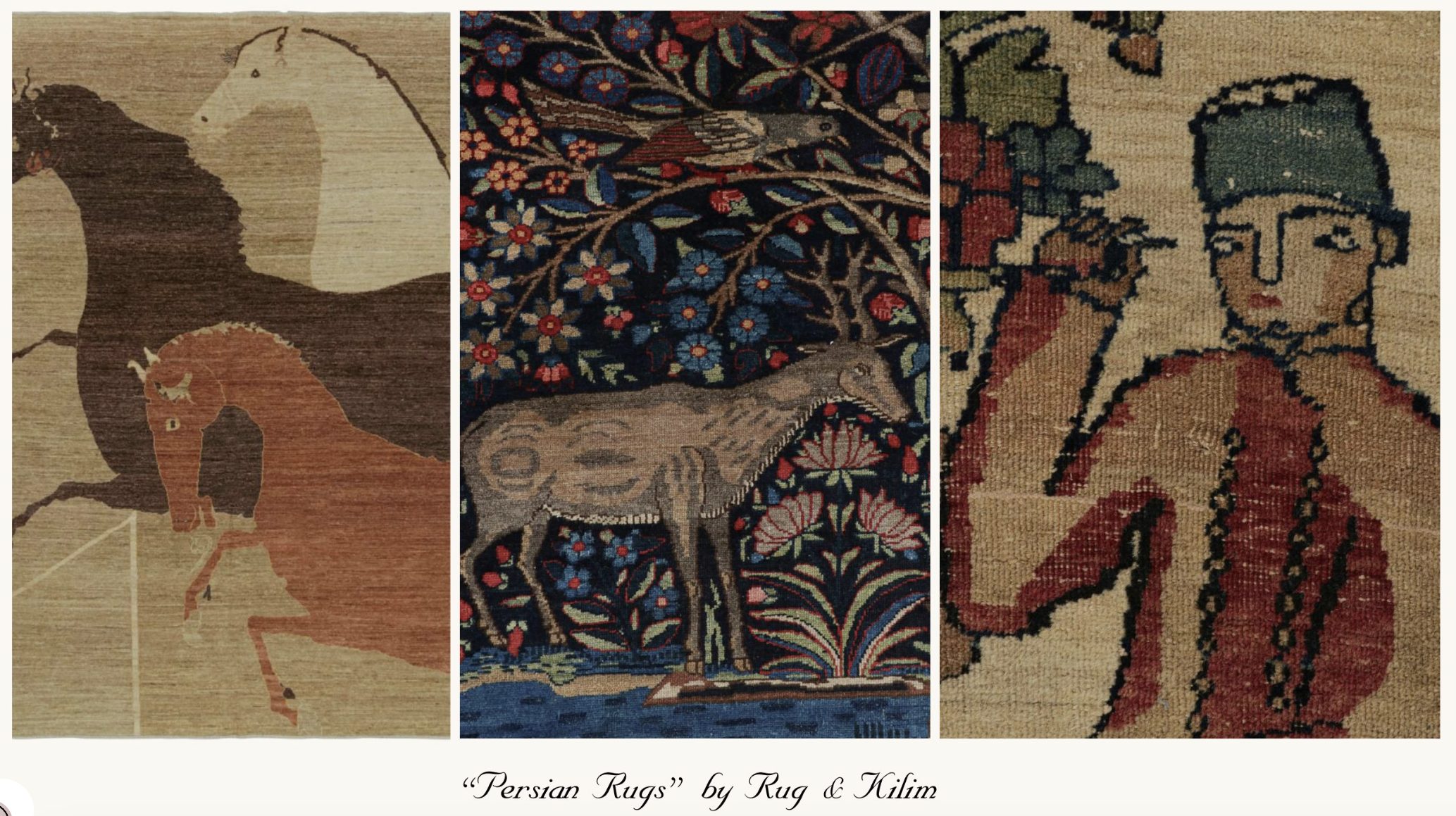
The diverse geographical landscape of the Persian Empire, coupled with the isolation imposed by natural barriers, gave rise to distinct styles of Persian rugs, each bearing unique motifs and design elements. Historians adeptly decipher the origins of antique Persian rugs by analyzing the symbols and motifs intricately woven into their designs, offering invaluable insights into the cultural and regional heritage of these timeless masterpieces. One such category of these masterpieces are the Persian Heriz and Serapi rugs.
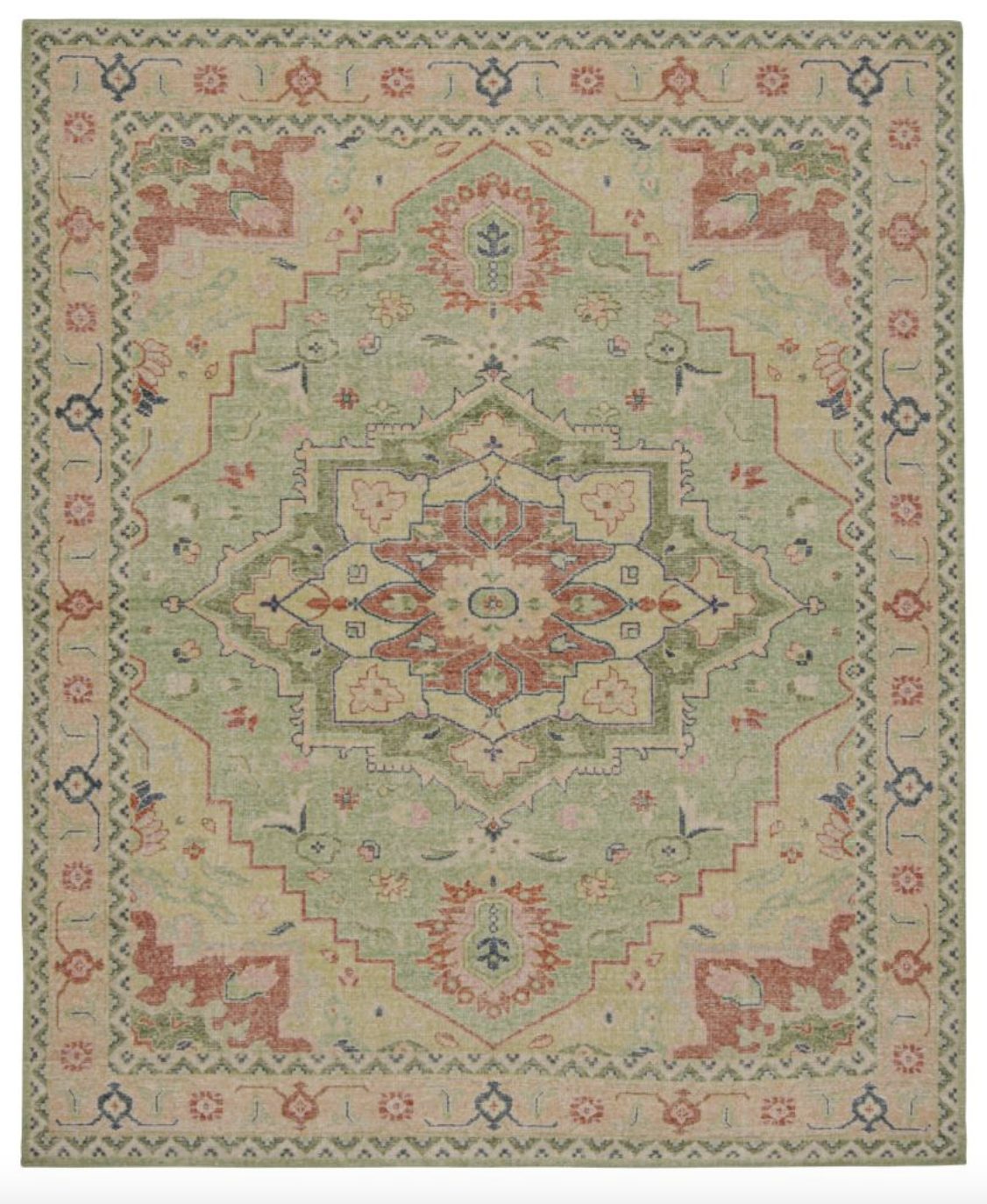
Persian Heriz and Serapi Rug Styles
Heriz, as the largest town in a district with over 30 villages, is the origin provenance of the iconic “diamond on a square” medallion Heriz is believed to have occurred in the third quarter of the nineteenth century. Tabriz merchants presented local weavers with fine city rugs or fabric remnants, urging them to craft larger rugs. Adapting to this challenge, the skilled Persian weavers gave birth to the Heriz carpet—a harmonious fusion of rustic charm and grandeur, bearing an equal measure of opulence to Persian court pieces.
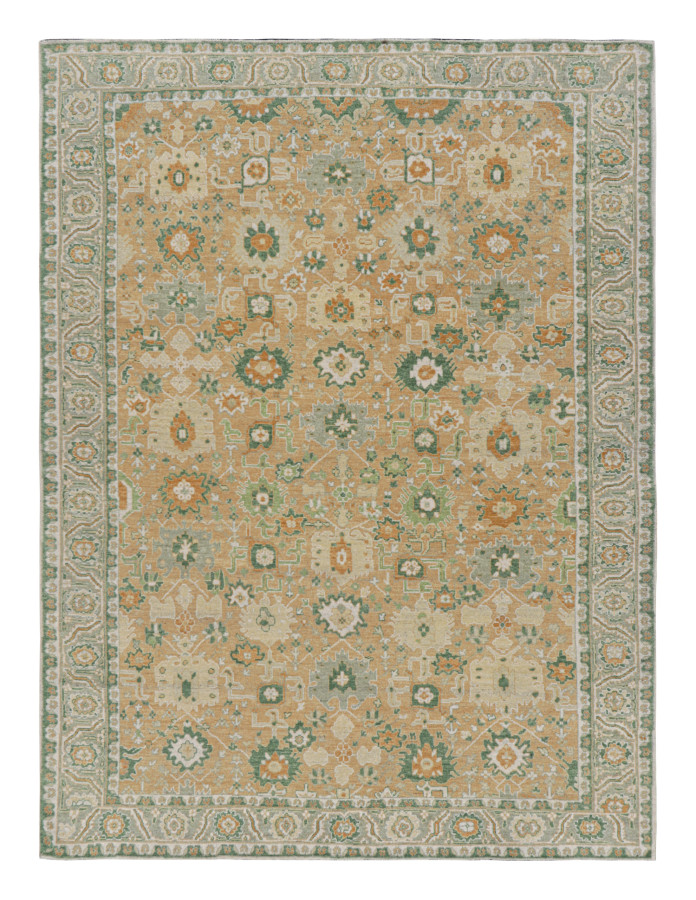
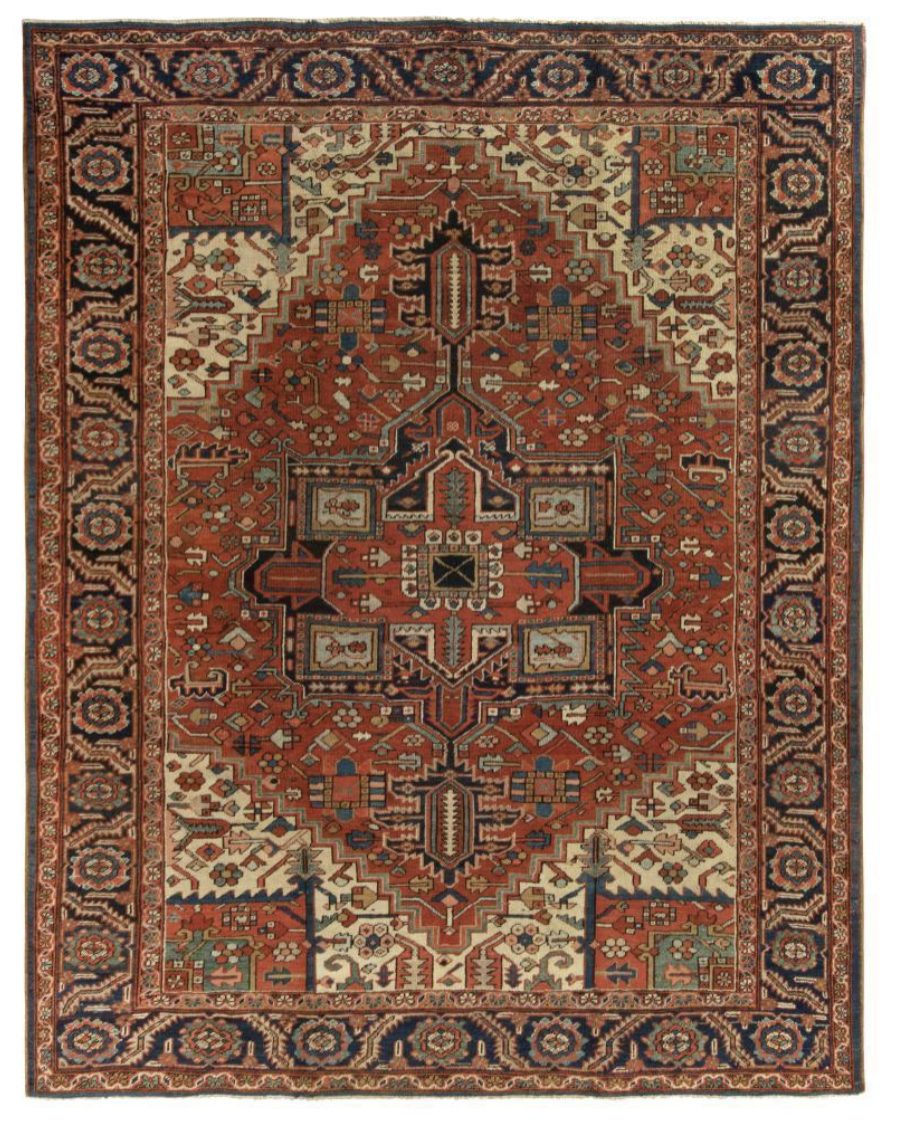
The hallmark of antique Heriz carpets lies in their distinctive design style and vibrant color palette. Featuring a large medallion adorned with overscale cornerpieces teeming with angular oak leaves and foliage, each rug exudes a bold and captivating allure. Older Heriz rugs, reminiscent of the renowned antique Serapi carpets from the same region, tend to boast more spacious designs, while those woven in recent decades exhibit a denser pattern.
Distinction between Persian Heriz and Serapi Rugs
While the classic Heriz motif reigns supreme, variations occasionally emerge, including allover flower or leaf designs, along with sporadic appearances of the “Tree of Life” motif reminiscent of antique Caucasian rugs. Each Heriz carpet stands as a testament to the enduring legacy of Persian craftsmanship. Serapi rugs, a distinct variety of Heriz rug, boast a fascinating lineage. Woven prior to 1910, they garnered immense popularity upon ceasing production in the 1930s. In response to the escalating demand, the term “Serapi” was used to denote a specific subtype of Heriz rug. This moniker originated from the Serab village district within Iran’s Heriz region, where these rugs were meticulously crafted.
While antique Heriz carpets and Serapi rugs share geographic origins and some design elements, they possess unique characteristics discernible upon closer examination. The distinction is not merely chronological—Serapi rugs exhibit a sophisticated use of negative space and lighter tonalities that create an almost ethereal quality, making them particularly coveted among collectors and design professionals.
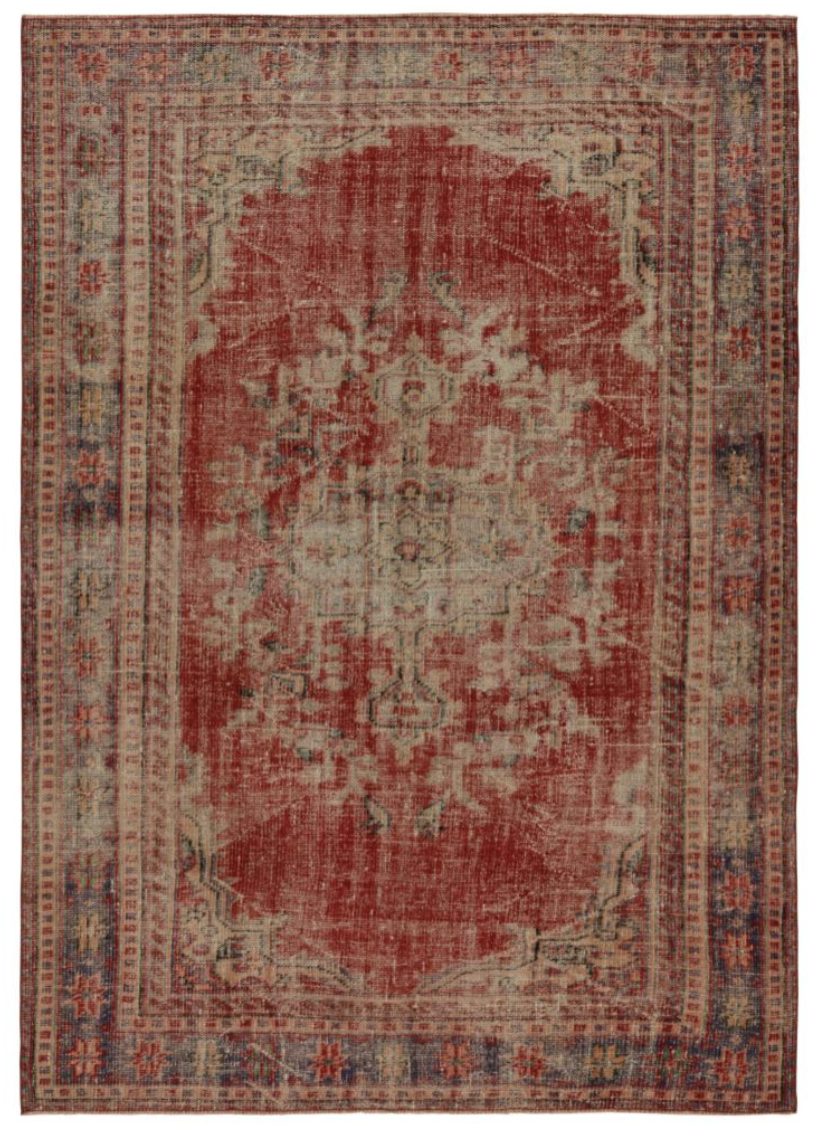
Antique Persian Heriz and Serapi Rugs: Design and Significance
Today’s leading interior designers frequently employ these rugs as foundational elements in their schemes. Their versatility is remarkable:
- In minimalist settings, they provide sophisticated textural and chromatic depth
- Within traditional spaces, they ground furniture groupings while adding historical gravitas
- In transitional interiors, they bridge classical and contemporary elements seamlessly
Antique Heriz carpets typically feature a central medallion design, often resembling a multi-sided star with intricate floral motifs encircling it. Conversely, Serapi rugs exhibit a central medallion outlined by bold lines, diverging from the star-shaped Heriz medallion. Heriz rugs are renowned for their deep, vibrant colors and elaborate designs covering the entire surface. This rich color palette, combined with intricate detailing, creates a visually captivating piece.
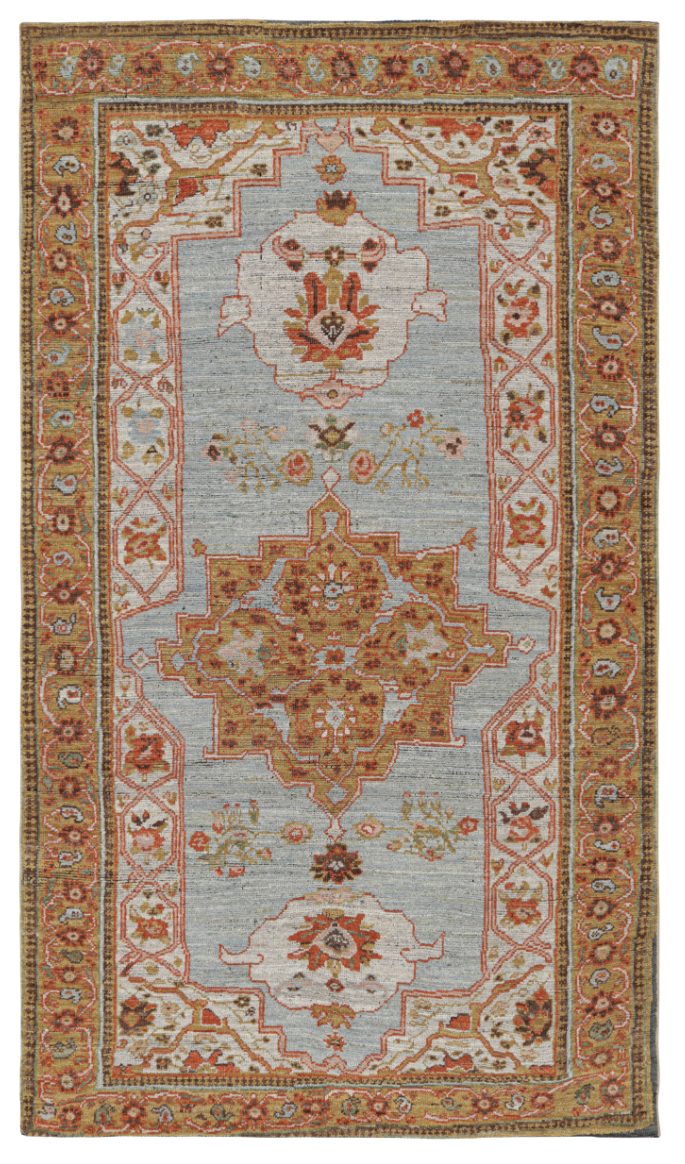
In contrast, Serapi rugs adopt a different aesthetic approach, incorporating more open spaces in their design. Additionally, Serapi rugs typically feature a lighter color palette, imparting a softer visual effect compared to the intense hues of Heriz rugs. Understanding these subtle nuances enables one to appreciate the artistry and heritage embodied in antique Heriz carpets and Serapi rugs alike.
The recent highlighting of Persian Heriz and Serapi rugs at major cultural institutions, including their prominent feature at the Denver Art Museum’s 2023 exhibition, underscores their ongoing cultural significance. This institutional recognition, coupled with strong market performance, suggests continued appreciation in both value and desirability.
Persian Heriz and Serapi Rugs: 21st Century Significance
As we advance further into the 21st century, these masterpieces of Persian weaving assume even greater significance.
They represent not just decorative art, but tangible connections to centuries of artistic tradition and cultural exchange.
Their ability to enhance contemporary spaces while maintaining historical integrity ensures their continued relevance in the evolution of interior design. The enduring allure of Heriz and Serapi rugs lies in their unique combination of artistic sophistication, cultural significance, and practical durability. Whether gracing a modernist penthouse or a traditional manor, they remain powerful statements of discerning taste and appreciation for excellence in design.
View Rug & Kilim’s rich collection of Heriz Serapi rugs – https://rugandkilim.com/shop/?s=heriz%20serapi