
Antique Persian Heriz and Serapi Rugs: Design and Significance
October 25, 2024
Cobalt Blue: The 2025 Color of the Year
October 31, 2024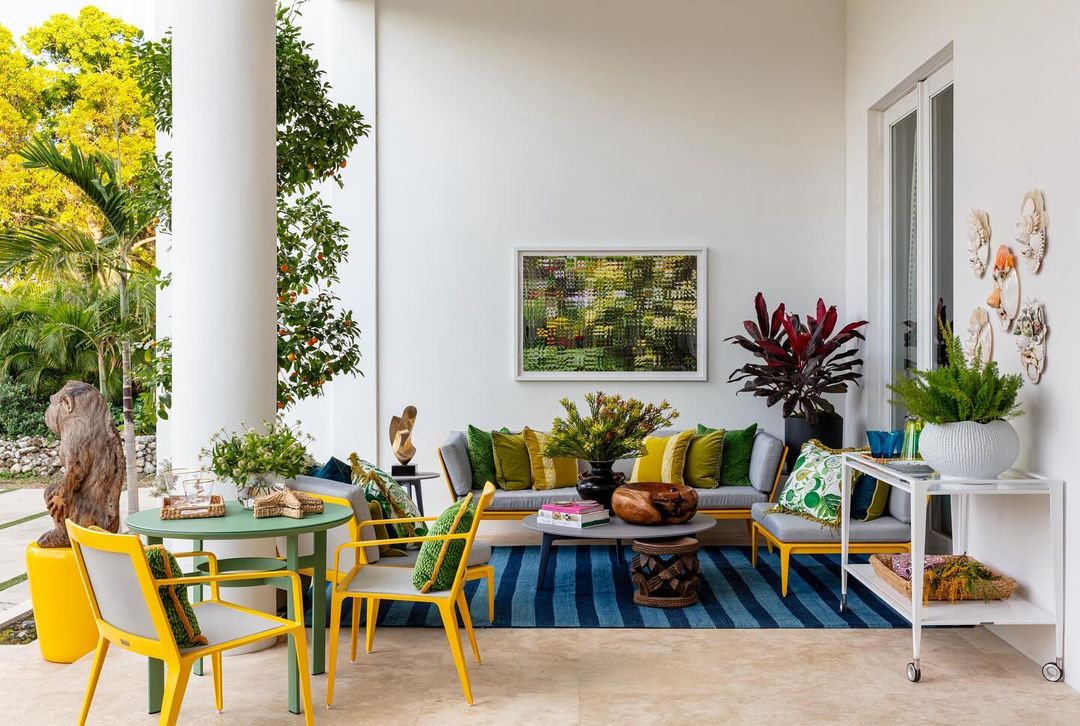
Above, a 14×23 vintage Dhurrie from Rug & Kilim underscores the “Lively Loggia” — the outdoor living space by Nadia Watts Interior Design in 2024’s Kips Bay Decorator Show House at Palm Beach. The oversized rug is one of a limited, special collection of antique and vintage flatweaves of the same provenance, and one of few palace rugs of its kind available in such condition today.
From gracing the halls of Mughal courts to anchoring contemporary Manhattan penthouses, the dhurrie has emerged as the centerpiece of modern interior design.
These masterpieces of Indian weaving tradition are experiencing a remarkable renaissance, proving that true luxury lies in the intersection of heritage and contemporary design.
History of the Dhurrie Rugs
Originally born from the vernacular traditions of rangoli and kolam – those ephemeral floor decorations that have decorated Indian courtyards for millennia — carry within their weave a story that begins in the 2nd century BCE. Archaeological evidence from the Krorainic region of Western China, coupled with representations in the magnificent Ajanta cave murals, tells us of a craft that has survived empires and evolving aesthetics. The Dhurries, often overshadowed by its more ornate cousin, the Persian carpet, have graced everything from nomadic tents to palatial chambers.
Unlike the pile carpets of Central Asia, Dhurries emerge from a distinctive cotton-based weaving tradition through a sophisticated flat-weave technique. The geometric patterns – diamonds, stripes, and chevrons – speak of precision that predates modern minimalism by centuries. The warp-faced weave, creating reversible patterns, exemplifies the Indian philosophical concept of duality – each side complete, yet different. In traditional workshops from Hoshiarpur to Warangal in India, master weavers still employ horizontal pit looms, where the rhythm of shuttle and panja (metal comb) creates what Jean-Louis Deniot calls “atmospheric depth” in contemporary spaces.
Regional Variations in Dhurrie Rugs
Each region brings its distinct voice to the craft:
The multicolored jamkalams of Bhavani, Tamil Nadu
Warangal’s protected GI status pieces with their distinctive geometric vocabulary
The sophisticated nili chitti from Uttar Pradesh
Punjab’s panja dhurries, incorporating phulkari motifs
The celebrated Navalgund jamkhans with their iconic peacock designs
The technical mastery in Dhurrie weaving lies in its deceptive simplicity. The tight weave creates durability that has allowed these pieces to survive centuries. The cotton foundation, unlike wool, adapts to tropical climates – breathing in summer and providing warmth in winter. It aligns with the “rhythm of the loom” – a meditative state where pattern and purpose merge. When examining this remarkable collection of vintage dhurries, particularly the stunning array in indigo and azure hues, we’re reminded of how these versatile textiles continue to captivate modern interiors.
Let’s explore how to style some of our most distinctive Dhurrie rugs:
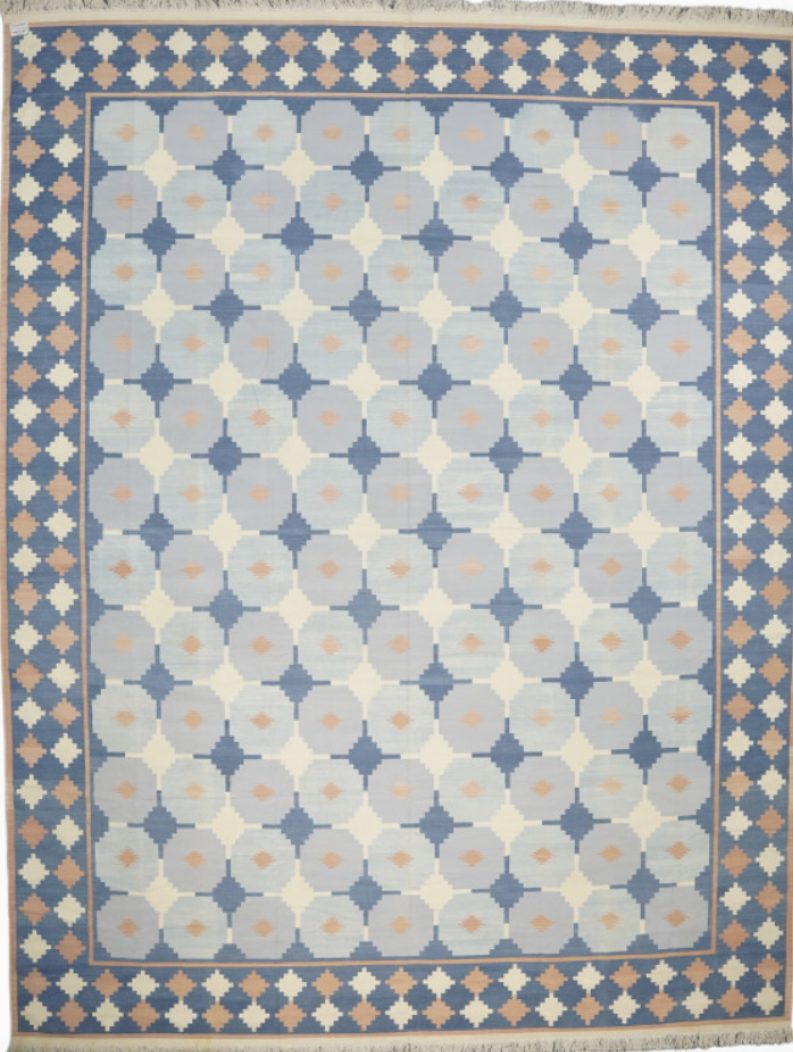
This exceptional piece featuring repetitive motifs in powder blue with navy accents exemplifies mid-century Indian design. Perfect for:
A contemporary living room, anchoring low-profile furniture
Paired with brass accessories and cream upholstery
Centered under a round dining table for geometric harmony
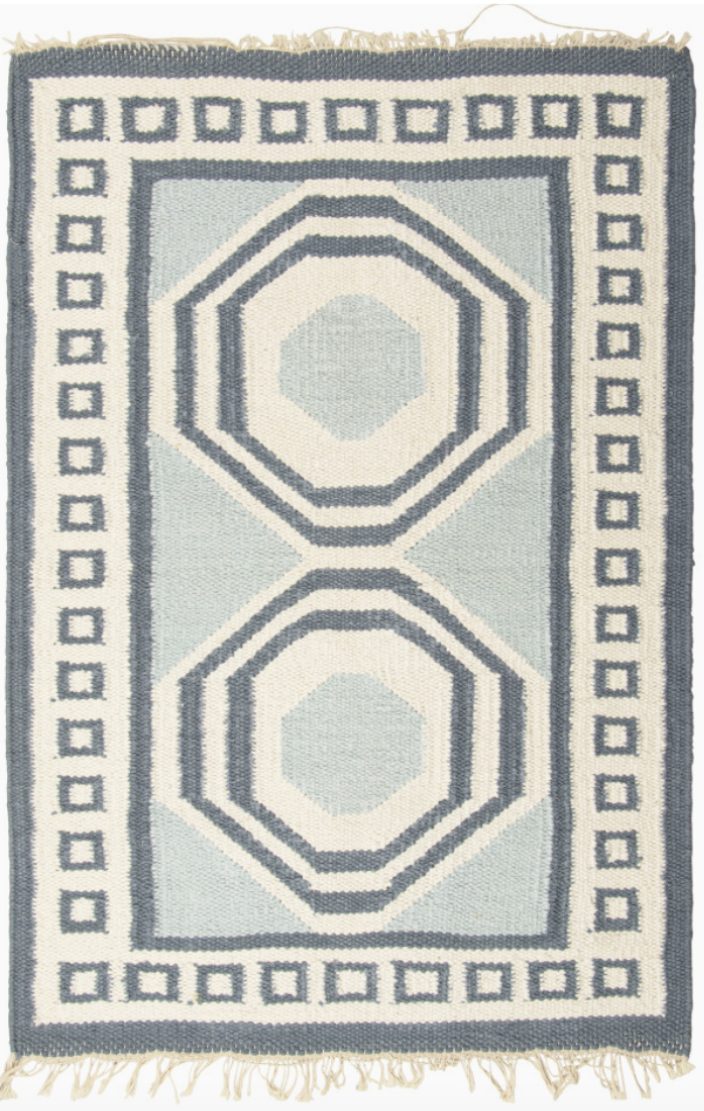
SKU 32408
The striking hexagonal design in gray-blue tones speaks to Art Deco influences. Ideal for:
A minimalist entryway
Small meditation spaces
Home office setting beneath an iconic mid-century desk
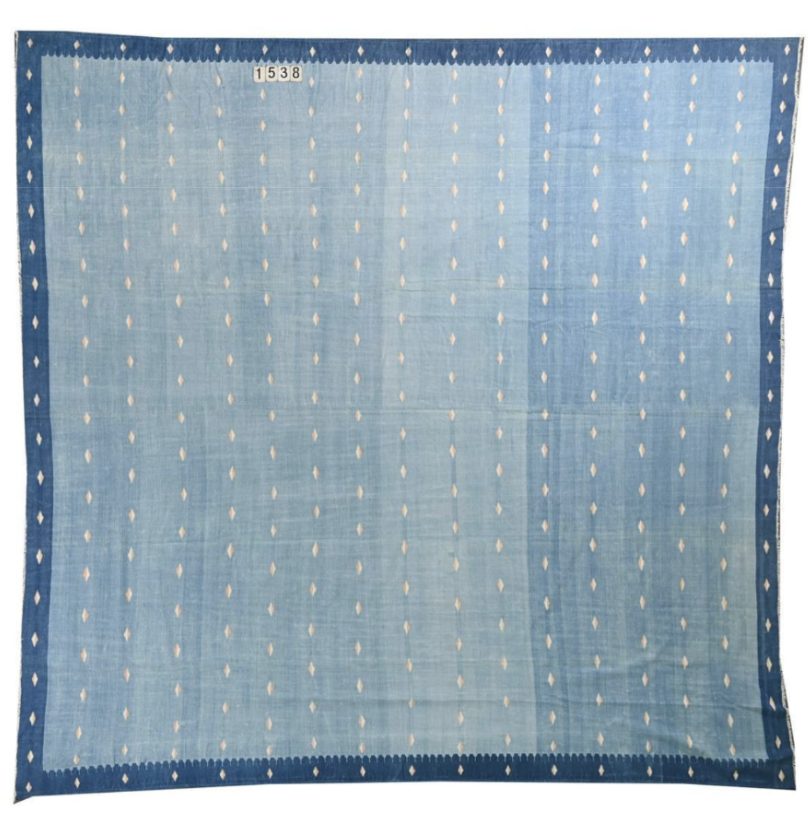
SKU C-2091
This piece’s delicate geometric pattern works beautifully in:
Contemporary bedrooms
Sunrooms with natural rattan furniture
Library settings with leather seating
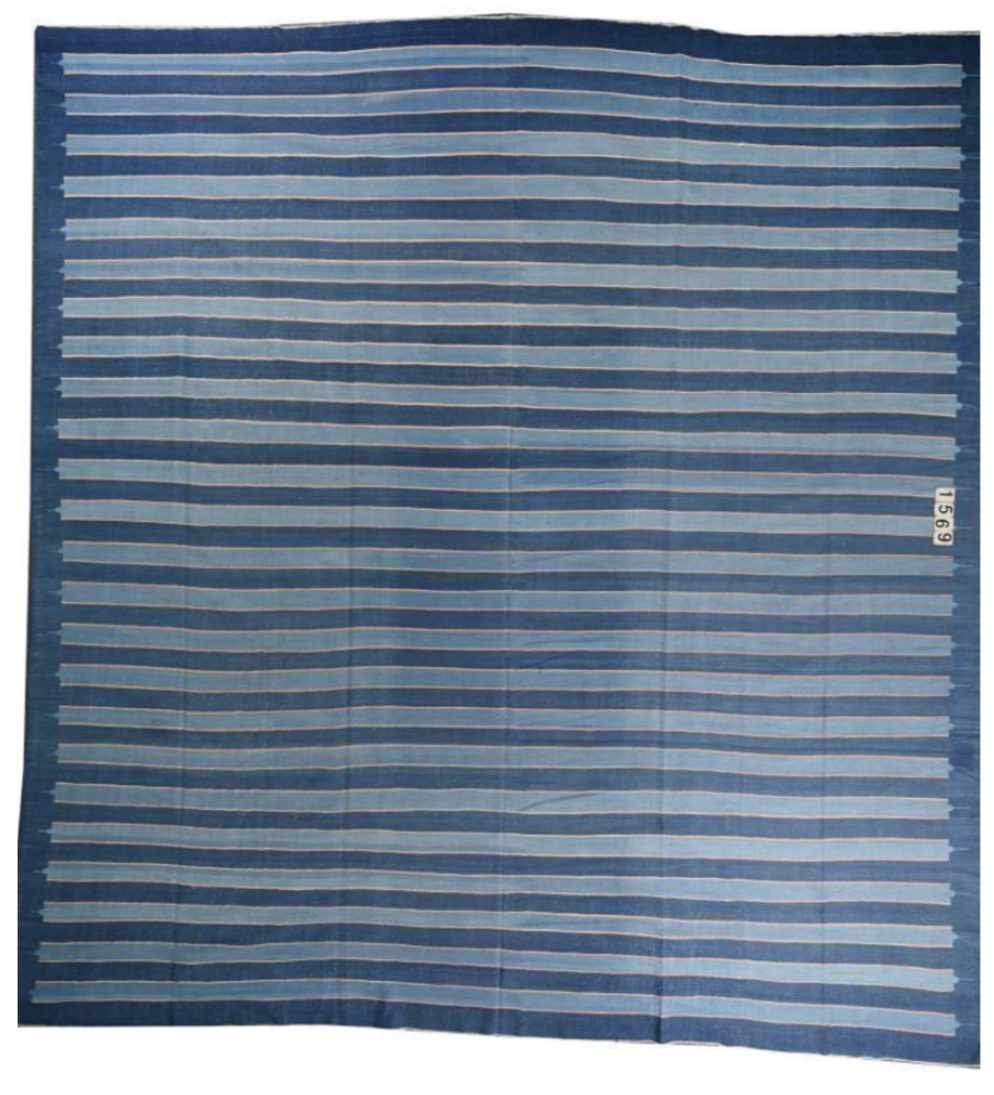
SKU C-1569
These sophisticated stripes in varying blues suggest:
Modern gallery spaces
Coastal-inspired rooms
Long hallways or runners
Styling Tips:
Layer these pieces with natural textures – jute, linen, raw silk
In contemporary spaces, position furniture half-on, half-off for modern asymmetry
Use these dhurries to define zones in open-plan spaces
Consider seasonal rotation – lighter pieces for summer, deeper tones for winter
The beauty of these dhurries lies in their versatility – they’re equally at home in minimalist apartments or maximal country houses. Their flatweave construction makes them ideal for high-traffic areas, while their geometric patterns provide subtle structure to any room. When styling, remember that dhurries are inherently casual – they invite relaxed living while maintaining architectural sophistication. Their reversible nature offers practical flexibility, while their patterns create natural focal points for furniture arrangement.
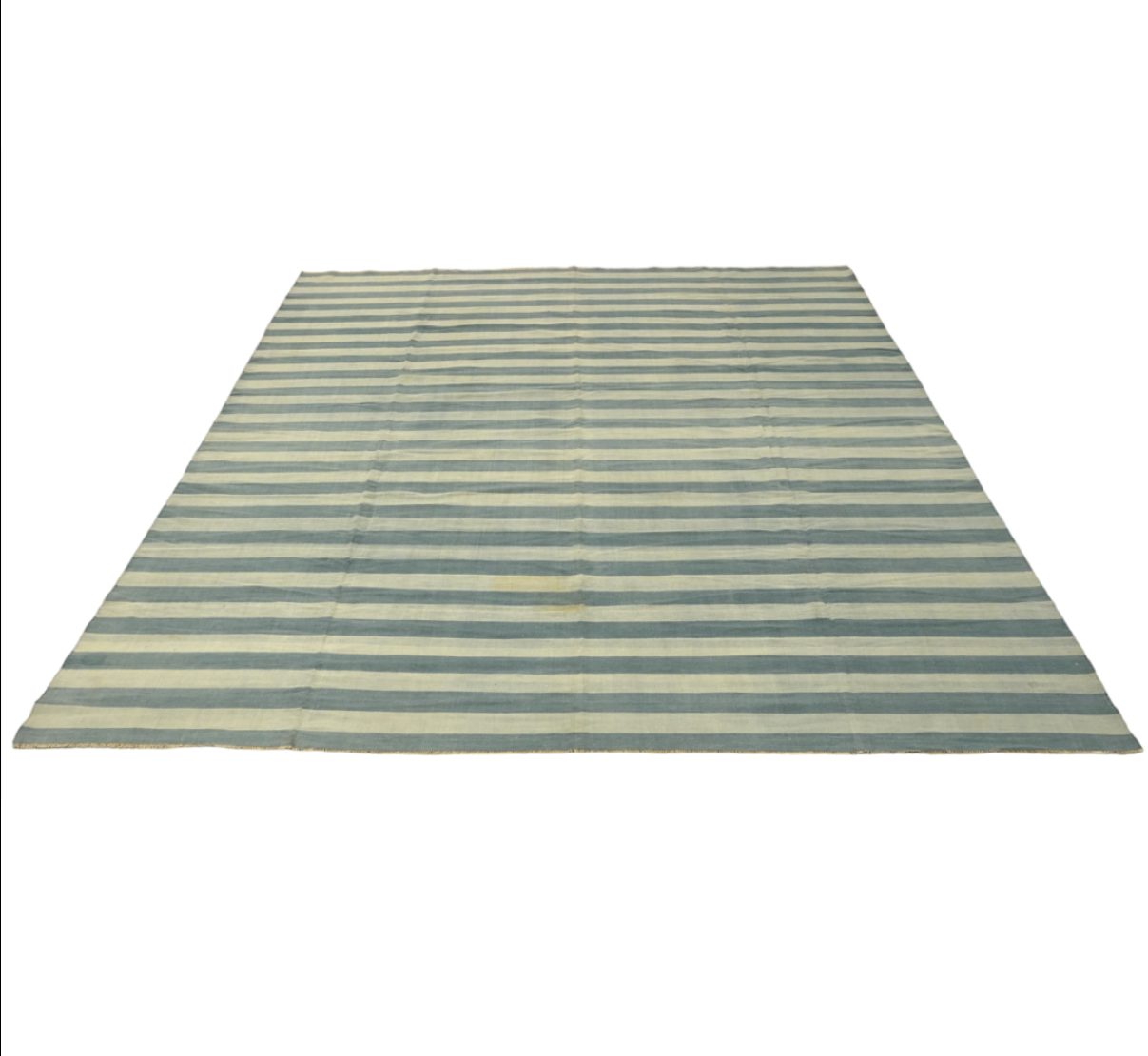
Note: For preservation, rotate these pieces seasonally and avoid direct sunlight to maintain their exquisite colorways.
These pieces work particularly well in what designer Martyn Lawrence Bullard calls “the new international style” – where Eastern craftsmanship meets Western minimalism.
The Re-imagination of Dhurrie Flatweaves
Modern designers are reimagining dhurries in compelling ways:
As wall hangings in double-height spaces
Layered over larger carpets for textural interest
As space definers in open-plan layouts
Integrated into modernist environments for warmth
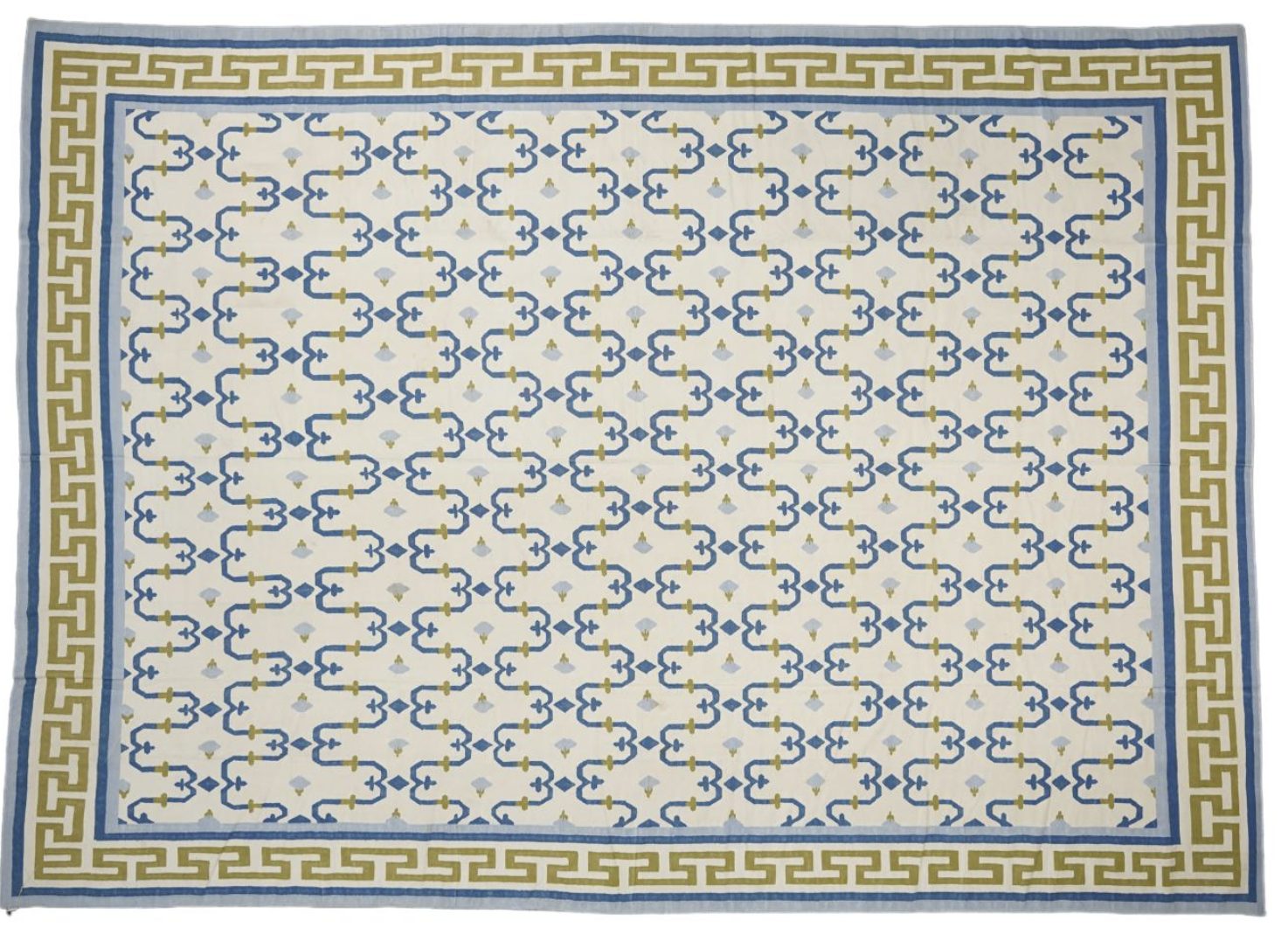
The subtle gradations of indigo and azure seen in our collection – from the pristine geometric pattern to the sophisticated striped piece – demonstrate why these textiles remain relevant.
Vintage dhurries, particularly those with historical provenance, continue to appreciate in value. Their geometric patterns presaged modernist design, while their sustainable production methods align with current environmental concerns.
These pieces remind us that great design transcends time and culture.
In contemporary spaces, we’re witnessing a remarkable revival. Modern designers appreciate Dhurries’ versatility – their ability to anchor minimalist spaces or complement maximalist interiors. Our atelier has observed a particular fondness for vintage Dhurries in unexpected settings. The flatweave’s subtle texture adds depth without overwhelming, making it an ideal foundation for modern interiors.
As guardians of this heritage, we find ourselves not just preserving a craft, but nurturing a living tradition. Each Dhurrie that leaves our workshop carries within its weave centuries of cultural memory, yet speaks fluently to contemporary sensibilities.
For the discerning collector, the dhurrie represents more than a floor covering – it’s a piece of living history, a sustainable choice, and an investment in authentic craft. In today’s interiors, nothing speaks more eloquently of sophisticated design literacy than these contemporary classics.
From our looms and showroom, to your spaces,
Rug & Kilim
Est. 1980