Style
Isfahan
Every piece in this style, across all of our collections. Narrow them down by size and price.
- Under 6 x 9
- Runners
- 6 x 9
- 8 x 10
- 9 x 12
- 10 x 14
- 12 x 15
- Over 12 x 15
Origin ▼
Style ▼
Material ▼
Width
Length
To connect with a specialist, click here
Stories from the Isfahan Archive
Essays, artist dialogues, and provenance notes drawn from Rug & Kilim’s editorial desk.
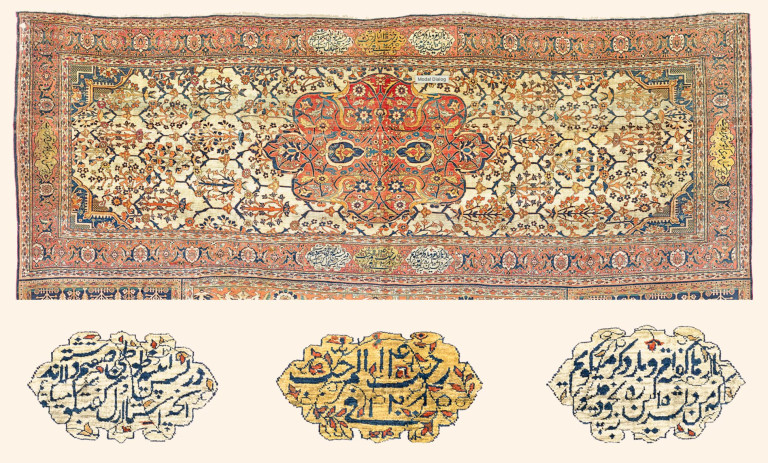
Of Royal Culture and Inheritance: The Silk Heriz Triclinium Carpet of 1868, Perhaps the Finest Surviving Example in the World
Our founder and principal Jahanshah Josh Nazmiyal has been in the carpet industry long enough to have learned that the great pieces announce themselves before one has understood what one is looking at. The light catches the silk a particular way. Some quiet, almost biological recognition runs through the room, the way a wine of consequence stills the table before anyone has spoken its vintage. One has the sense of having interrupted a conversation already in progress. The carpet was here first; one is being received by it. The team welcomed this silk Heriz, the way Jahanshah had unrolled perhaps forty thousand carpets across the better part of his life, and we will tell you honestly that we sat down beside it for a long time before any of us said anything. There is a particular gold in the mian farsh; the great central field, that we all have seen perhaps rarely before in a quarter-century of looking. It is the gold of late-October sun on the dome of the Shah Mosque in Isfahan, the gold the Safavid silk weavers of the seventeenth century pursued and very nearly lost, the gold that the Heriz workshops of the 1860s recovered for a brief generation of patrons before the world turned and they were forgotten. To kneel beside it is to be quiet in the presence of something that does not require your understanding to be what it is.
Read the Feature
How U.S.–Iran Tensions Are Reshaping the World of Fine Rugs: From Safavid Courts to Sanction Regimes
There is a room in the Metropolitan Museum of Art in New York where a sixteenth-century Persian carpet stops people mid-stride. Because something in the object itself; its scale, its silence, the particular authority of a thing that has already outlasted three empires makes the ordinary pace of a museum visit feel suddenly inappropriate. The Emperor's Carpet, as it is known, was commissioned in Safavid Iran, passed to Peter the Great of Russia, gifted to the Habsburg Emperor Leopold I in 1698, held by the Austrian Imperial House until 1921, acquired by the Met in 1941, and displayed publicly only twice in the following sixty years because its condition was too fragile to risk. It has survived more political systems than any collector alive today will ever witness. It knows something about geopolitics that no sanctions framework, no bilateral negotiation, no executive order has yet managed to articulate.
Read the Feature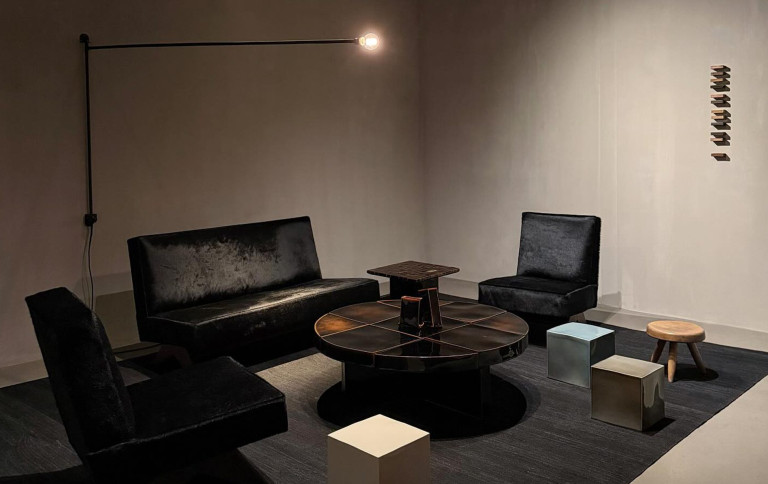
Rooms of Power: Rugs, Art, and the Architecture of Global Interiors
Before There Was Interior Design, There Was Placement Long before interiors were styled, they were composed through objects that carried worlds within them. A Mughal carpet was not simply placed beneath a court; it defined the court. A Savonnerie was not an accessory to Versailles; it was an extension of its order. A Chinese Art Deco rug did not decorate early modernist apartments; it translated an entire cultural vocabulary into a new architectural language. What we now call “interior design” is, at its highest level, a continuation of this lineage: the understanding that certain objects, particularly rugs are not passive. They carry with them histories of empire, trade, philosophy, and labor. They are, in essence, compressed geographies.
Read the Feature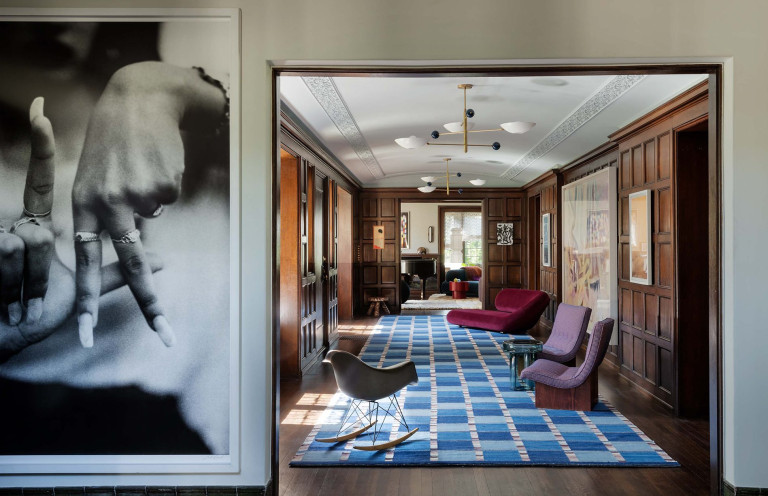
A Rug & Kilim’s Guide to Rug Patterns in Interior Design: A Study of Persian, European, Scandinavian, Art Deco and Modern Styles
There are rooms - rare, disciplined rooms, where nothing is accidental. A salon overlooking Lake Como, where a 19th-century Aubusson anchors parquet floors beneath frescoed ceilings. A Manhattan interior shaped by the restraint of Peter Marino, where a Scandinavian flatweave holds its ground against glass, steel, and silence. A private riad in Marrakech, where tribal geometry converses effortlessly with shadow, plaster, and time. In such spaces, pattern is not simply chosen. To understand pattern at this level is to move beyond decoration into discipline. Great decorators and architects like Jacques-Émile Ruhlmann, Le Corbusier, and Gio Ponti never treated surfaces as passive. Floors, like walls and ceilings, were compositional fields governed by proportion, rhythm, and intellectual clarity.
Read the Feature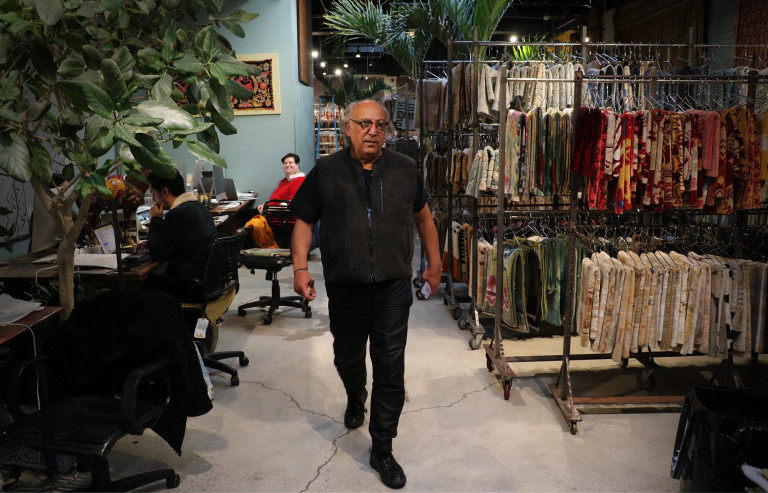
Designing Across Eras: Persian, Art Deco & Scandinavian Influences for the Modern Interior
There is a quiet misconception in contemporary interiors: that rugs belong to style categories, that they serve periods, that they follow trends. At Rug & Kilim, we see something different. We see a continuum — a lineage that begins in imperial courts, evolves through European ateliers, collides with modernism, and extends into the custom future of today’s architectural spaces. Textiles have never merely decorated history. They have shaped it. What follows is not a chronology of rugs. It is a narrative of power, authorship, reform, and reinvention — and why designing across eras, rather than within them, is the most intelligent way forward.
Read the Feature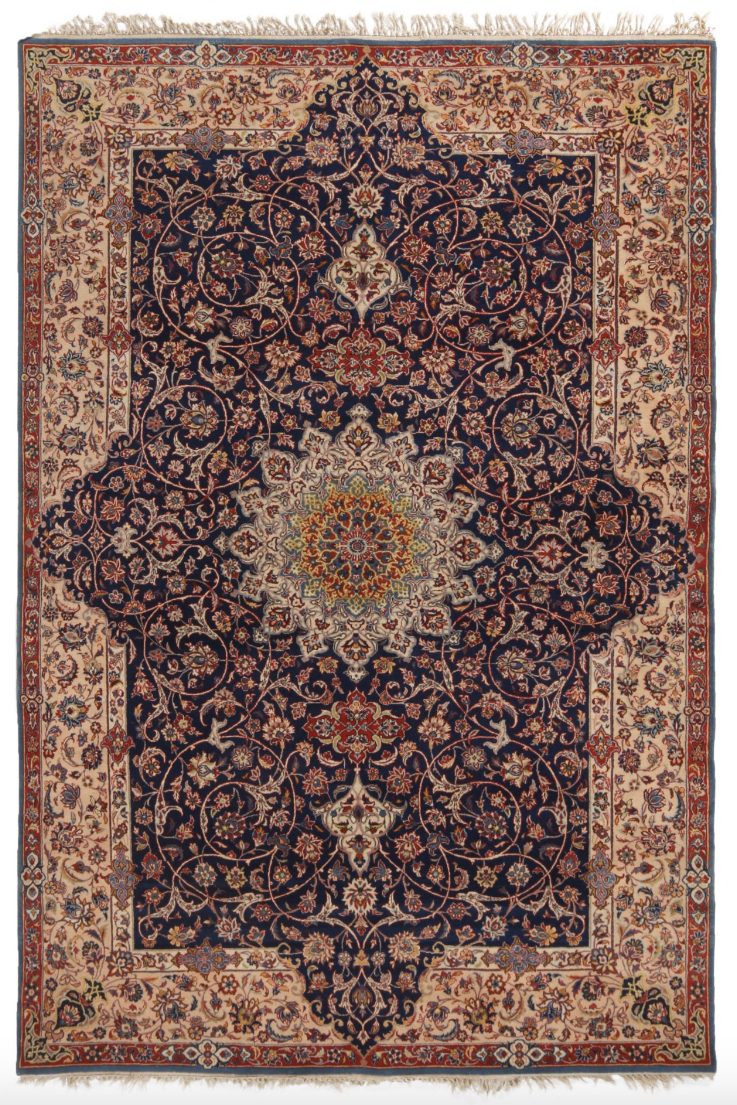
A Guide to Antique Isfahan Rugs
This silk Isfahan rug, from the collection of Christie’s, circa 1600, epitomizes the pinnacle of Safavid artistry during the reign of Shah Abbas (1587 - 1629), showcasing exceptional beauty, intricate design, and masterful construction. Renowned scholars Arthur Upham Pope and Phyllis Ackerman, in their seminal work "A Survey of Persian Art" from 1930, highlighted this rug's significance by praising its refinement, imagination, technique, and captivating color palette. Described as a masterpiece of Safavid art, its rarity, exquisite detailing, and monochromatic variation establish it as one of the most elegant and compelling rugs from the Shah Abbas period.
Read the Feature