Style
Kashan
Every piece in this style, across all of our collections. Narrow them down by size and price.
- Under 6 x 9
- Runners
- 6 x 9
- 8 x 10
- 9 x 12
- 10 x 14
- 12 x 15
- Over 12 x 15
Origin ▼
Style ▼
Material ▼
Width
Length
To connect with a specialist, click here
Stories from the Kashan Archive
Essays, artist dialogues, and provenance notes drawn from Rug & Kilim’s editorial desk.
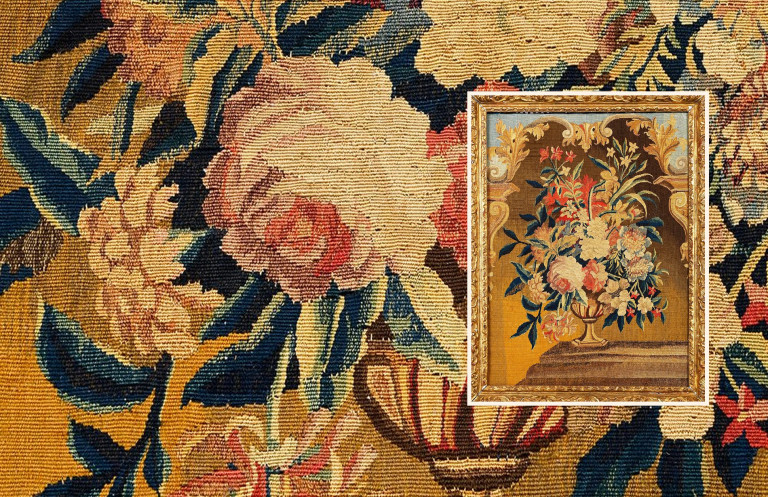
The Evolution of Floral Motifs in Antique Rugs and Kilims: Mapping the Pomegranate, Tulip, and Carnation
Antique 17th Century French Beauvais Tapestry with Floral Vase - Rug & Kilim, NO. 36829 We had a tapestry acquisition unfolding itself in the studio a while ago. Josh and the team just stood there, silently admiring the way the light caught the threads. This was the Antique French Beauvais Tapestry (SKU 36829). It was handwoven in wool, with natural silk accents, circa 1700. When you look at something like that, you do not just see fabric. What you see is the garden of wool and dreams. The precise interlacing of the wefts gives a picture of a gigantic floral vase placed atop an architectural entablature. The botanical imagery is absolutely mesmerizing. There is so much wealth and mystery to it all.
Read the Feature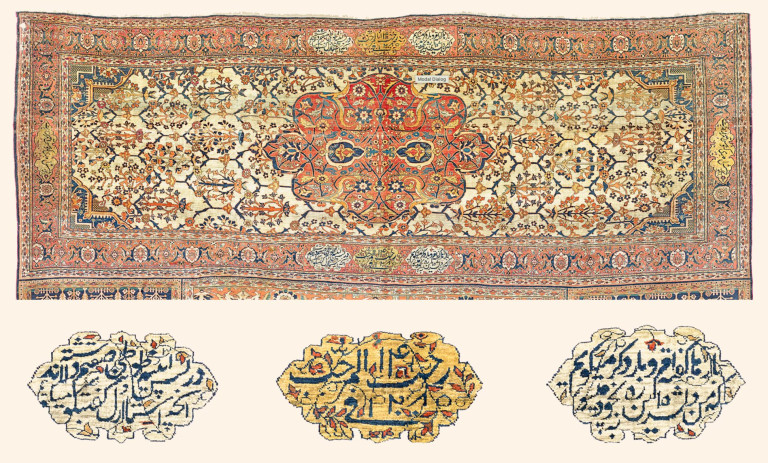
Of Royal Culture and Inheritance: The Silk Heriz Triclinium Carpet of 1868, Perhaps the Finest Surviving Example in the World
Our founder and principal Jahanshah Josh Nazmiyal has been in the carpet industry long enough to have learned that the great pieces announce themselves before one has understood what one is looking at. The light catches the silk a particular way. Some quiet, almost biological recognition runs through the room, the way a wine of consequence stills the table before anyone has spoken its vintage. One has the sense of having interrupted a conversation already in progress. The carpet was here first; one is being received by it. The team welcomed this silk Heriz, the way Jahanshah had unrolled perhaps forty thousand carpets across the better part of his life, and we will tell you honestly that we sat down beside it for a long time before any of us said anything. There is a particular gold in the mian farsh; the great central field, that we all have seen perhaps rarely before in a quarter-century of looking. It is the gold of late-October sun on the dome of the Shah Mosque in Isfahan, the gold the Safavid silk weavers of the seventeenth century pursued and very nearly lost, the gold that the Heriz workshops of the 1860s recovered for a brief generation of patrons before the world turned and they were forgotten. To kneel beside it is to be quiet in the presence of something that does not require your understanding to be what it is.
Read the Feature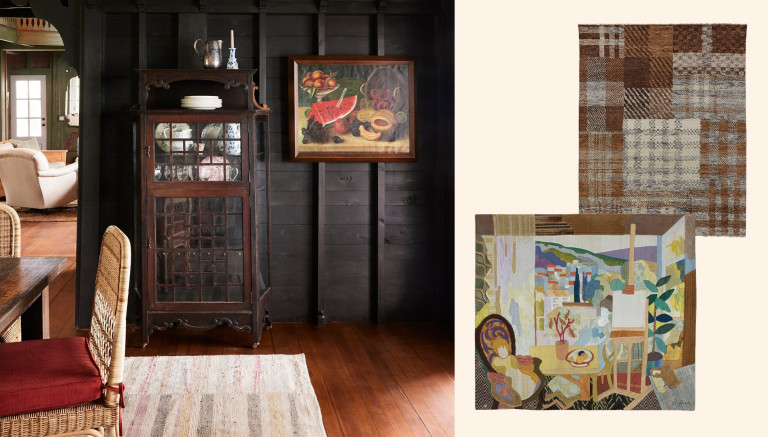
How the World’s Most Serious Art Spaces Are Rewriting the Rules of the Floor and the Contemporary Home
There is a room at Hauser & Wirth Somerset; the gallery that occupies a converted farmhouse in the English countryside, where Pipilotti Rist installations have shared walls with Phyllida Barlow sculptures and where the building itself feels like an argument against the idea that serious art requires a white cube to be taken seriously, where a single large antique textile lies on the stone floor beneath work of radical contemporary ambition. It does not announce itself. It simply holds the room together with the authority of an object that has been doing exactly this, in exactly this way, for several centuries longer than the art above it has existed. The artists whose work hangs on those walls have spent their careers thinking about surface, material, and the relationship between an object and the space it occupies. The carpet understood all of this before any of them picked up a brush.
Read the Feature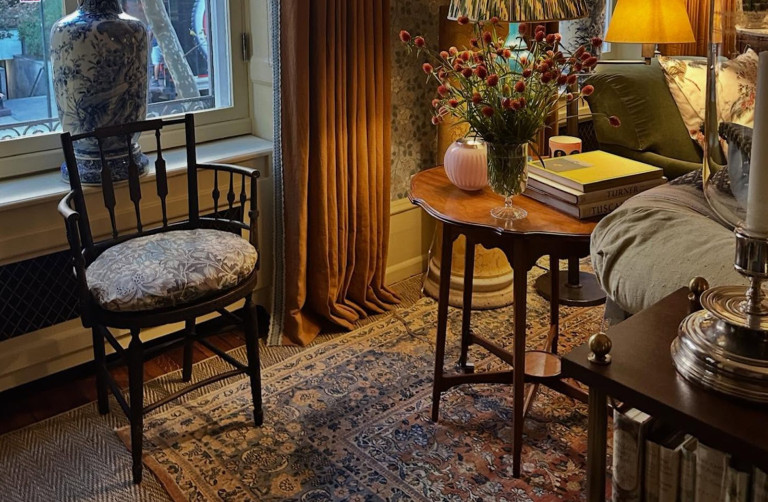
How U.S.–Iran Tensions Are Reshaping the World of Fine Rugs: From Safavid Courts to Sanction Regimes
There is a room in the Metropolitan Museum of Art in New York where a sixteenth-century Persian carpet stops people mid-stride. Because something in the object itself; its scale, its silence, the particular authority of a thing that has already outlasted three empires makes the ordinary pace of a museum visit feel suddenly inappropriate. The Emperor's Carpet, as it is known, was commissioned in Safavid Iran, passed to Peter the Great of Russia, gifted to the Habsburg Emperor Leopold I in 1698, held by the Austrian Imperial House until 1921, acquired by the Met in 1941, and displayed publicly only twice in the following sixty years because its condition was too fragile to risk. It has survived more political systems than any collector alive today will ever witness. It knows something about geopolitics that no sanctions framework, no bilateral negotiation, no executive order has yet managed to articulate.
Read the Feature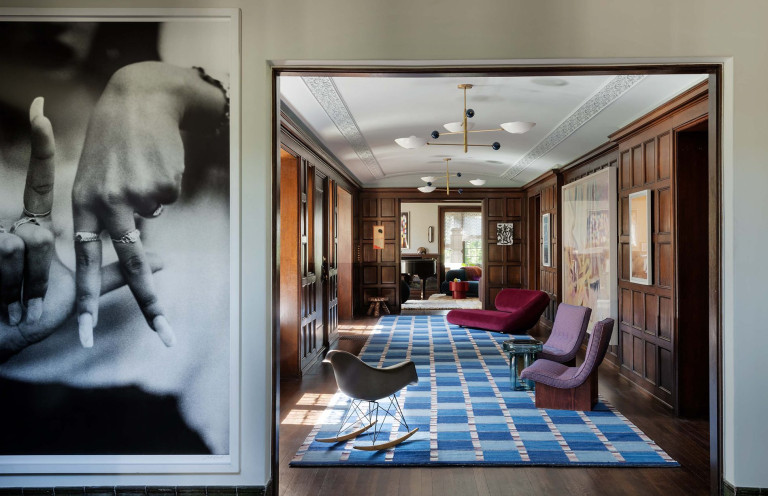
A Rug & Kilim’s Guide to Rug Patterns in Interior Design: A Study of Persian, European, Scandinavian, Art Deco and Modern Styles
There are rooms - rare, disciplined rooms, where nothing is accidental. A salon overlooking Lake Como, where a 19th-century Aubusson anchors parquet floors beneath frescoed ceilings. A Manhattan interior shaped by the restraint of Peter Marino, where a Scandinavian flatweave holds its ground against glass, steel, and silence. A private riad in Marrakech, where tribal geometry converses effortlessly with shadow, plaster, and time. In such spaces, pattern is not simply chosen. To understand pattern at this level is to move beyond decoration into discipline. Great decorators and architects like Jacques-Émile Ruhlmann, Le Corbusier, and Gio Ponti never treated surfaces as passive. Floors, like walls and ceilings, were compositional fields governed by proportion, rhythm, and intellectual clarity.
Read the Feature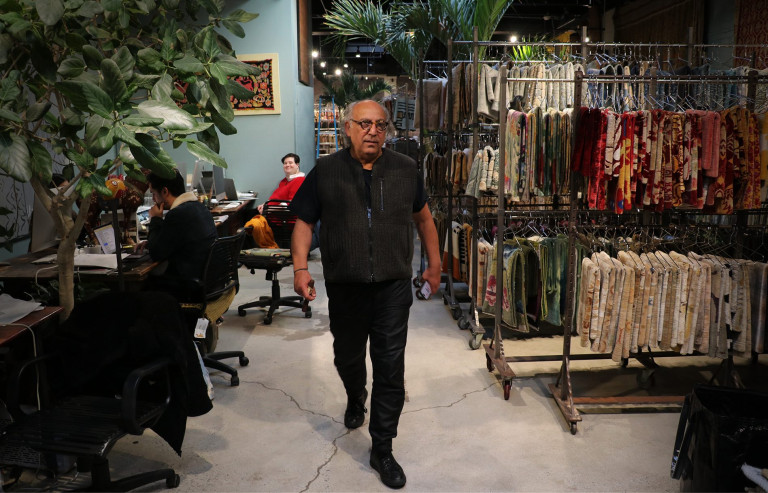
Designing Across Eras: Persian, Art Deco & Scandinavian Influences for the Modern Interior
There is a quiet misconception in contemporary interiors: that rugs belong to style categories, that they serve periods, that they follow trends. At Rug & Kilim, we see something different. We see a continuum — a lineage that begins in imperial courts, evolves through European ateliers, collides with modernism, and extends into the custom future of today’s architectural spaces. Textiles have never merely decorated history. They have shaped it. What follows is not a chronology of rugs. It is a narrative of power, authorship, reform, and reinvention — and why designing across eras, rather than within them, is the most intelligent way forward.
Read the Feature