Style
Needlepoint
Every piece in this style, across all of our collections. Narrow them down by size and price.
- Under 6 x 9
- Runners
- 6 x 9
- 8 x 10
- 9 x 12
- 10 x 14
- 12 x 15
- Over 12 x 15
Origin ▼
Style ▼
Material ▼
Width
Length
To connect with a specialist, click here
Stories from the Needlepoint Archive
Essays, artist dialogues, and provenance notes drawn from Rug & Kilim’s editorial desk.
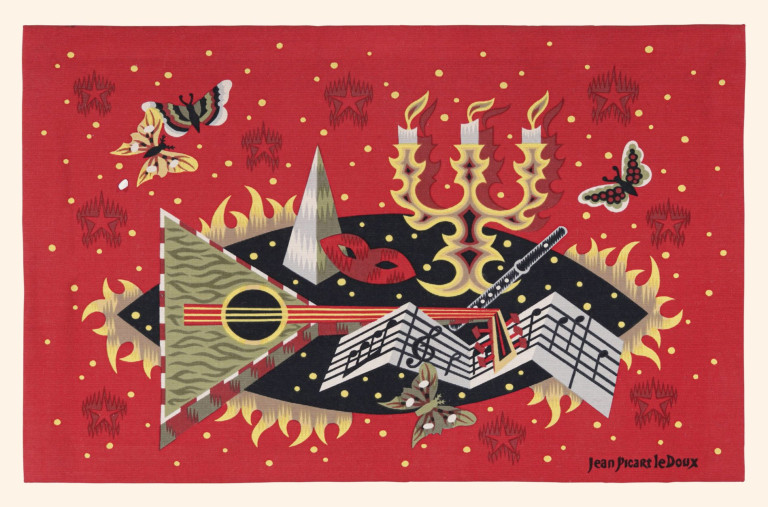
Signatures and the Art of Attribution in Luxury Rugs: Collecting with Provenance and Prestige
A Picasso or a Lalique needs no introduction — the signature itself becomes shorthand for genius, provenance, and prestige. In the world of collectible textiles, authorship is often elusive. Unlike paintings or sculpture, where an artist’s hand is documented and celebrated, rugs were historically anonymous — woven for use, dowry, or devotion, rather than individual fame. Yet over centuries, a quiet tradition of “signatures in thread” has emerged: marks, cartouches, inscriptions, or motifs that elevate a rug from being a functional textile to an authored artwork. These signatures, whether literal or symbolic, have become the connoisseur’s key to provenance, prestige, and value.
Read the Feature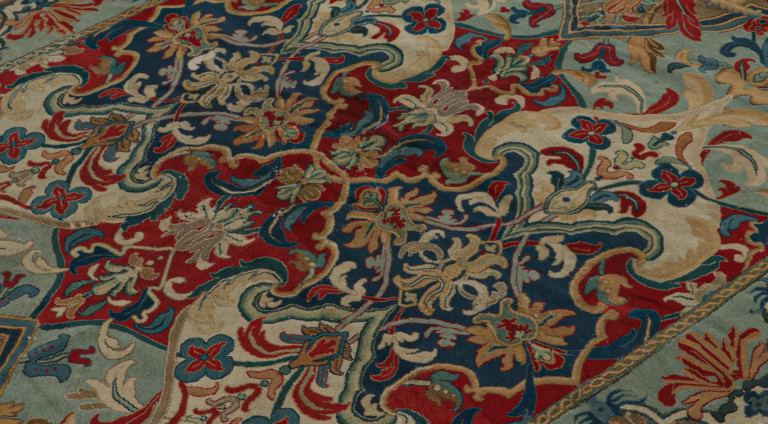
Rug of the Week Series III: Power, Pattern, and Politics in French Needlepoints of the Second Empire
There are objects that decorate, and there are objects that define. This mid-19th century French needlepoint rug—handmade in wool between 1850 and 1860—is firmly of the latter category. At first glance, its medallion-and-floral field, worked in shades of imperial blue, martial red, and softened beige-brown, reads as a refinement of ornament. Yet within its stitches lies the broader cultural program of Napoleon III’s Second Empire, when interiors were designed as orchestrated symbols of hierarchy, order, and political continuity. To understand a textile such as this is to understand the interior not as decoration but as stagecraft: a point where power, domestic life, and aesthetics converged.
Read the Feature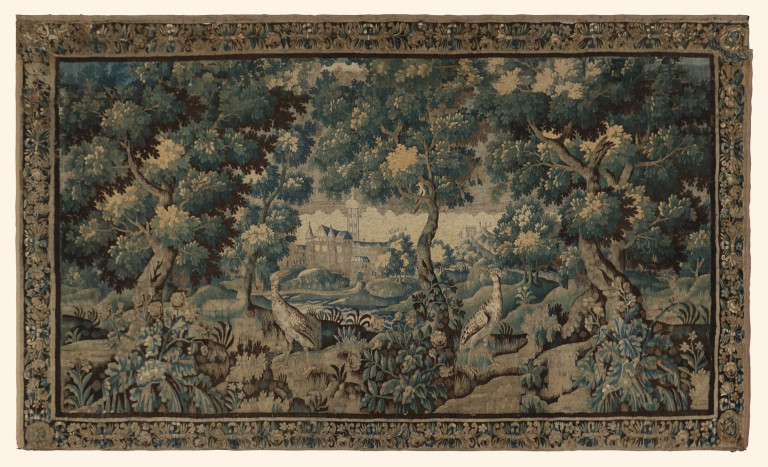
The World of Period Piece Rugs and Kilims: Provenance, Style, and Collecting Masterworks
In the world of fine art and design, the term period piece is not a casual descriptor—it is an assurance of historical integrity, stylistic authenticity, and documented provenance. To speak of period piece rugs and kilims is to speak not simply of textiles, but of time made tangible. From the opulent wool-and-silk Savonneries gracing the salons of Louis XIV, to the restrained architectural harmony of French Aubussons, the modernist clarity of a signed Leleu, or the atmospheric geometry of Chinese Art Deco and Peking carpets—these are not mere floor coverings. They are artefacts of intent, designed to speak to power, status, and the zeitgeist of their era.
Read the Feature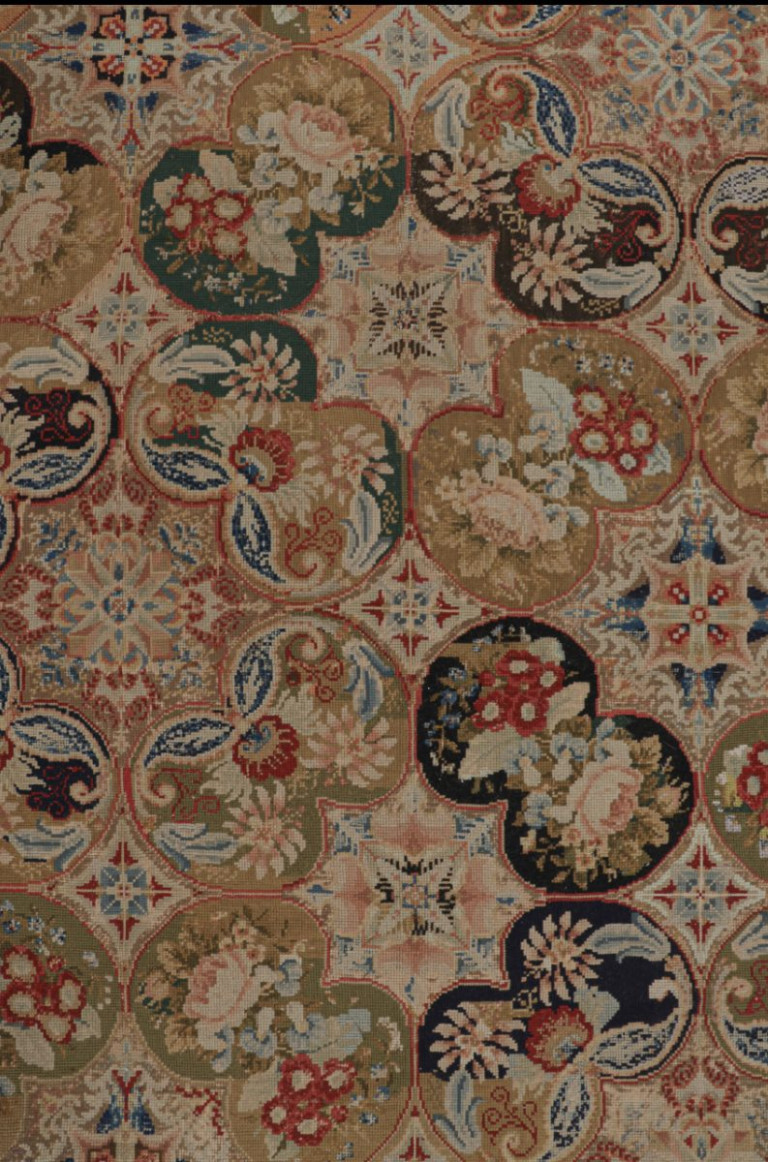
A Guide to Needlepoint Rugs: Aristocratic Art of European Textiles
In the realm of floor coverings, needlepoint rugs occupy a singular position. These laboriously hand-stitched masterpieces, with their characteristically tight petit point and gros point stitches, represent the intersection of European embroidery traditions and the decorative arts. Unlike their knotted or woven counterparts from the Orient, needlepoint rugs emerged from the drawing rooms of 17th and 18th century European nobility. The technique, an extension of tapestry-making traditions, involves working wool yarn through a canvas ground in small, diagonal stitches – creating surfaces of extraordinary definition and precision.
Read the Feature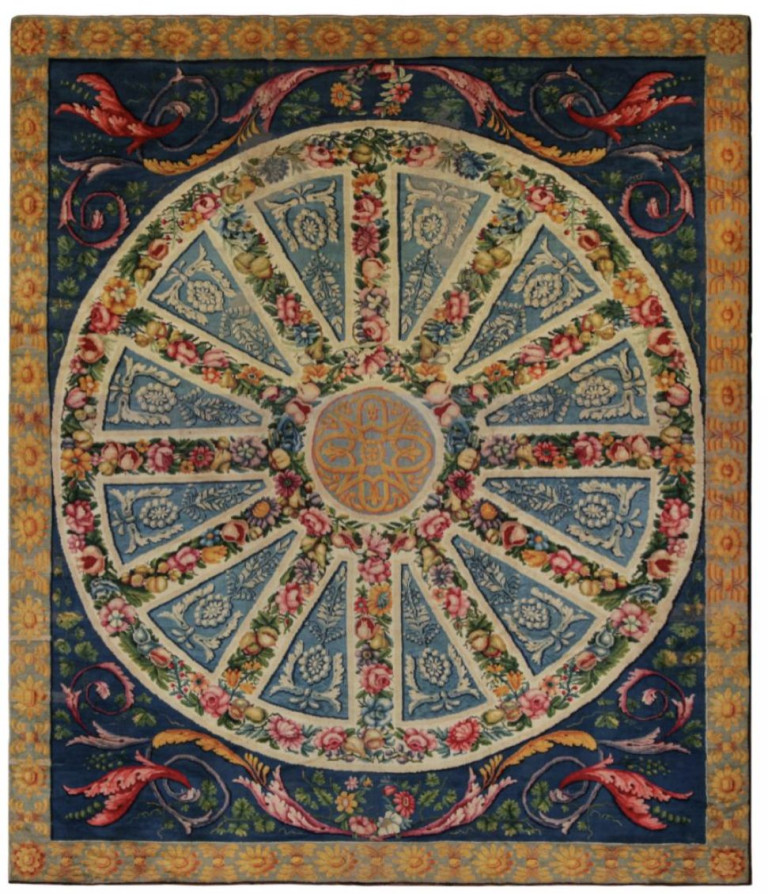
European Rug Medallions: Symbols of Art, Power, and Prestige
Few design elements are as grand in sensibility and presence in European textile art quite like the medallion. More than a decorative addition, the medallion is a visual and conceptual anchor, a motif that echoes across mediums—from the ceilings of Renaissance palaces to the manuscripts of medieval scriptoriums. It appears in the gilded stuccoes of Baroque cathedrals, in the frescoed vaults of Rome, and in the symmetrical tapestries of Flemish masters. Within European rug design, the medallion serves as a bridge between the woven and the built environment; an ornate emblem of high art. To understand the European medallion is to explore its dialogue with architecture, painting, and decorative arts. The arabesques of Savonnerie carpets mirror the aesthetics of Peter Paul Rubens painting; the laurel-framed insignias in English Axminster rugs recall the neoclassical symmetry of a Robert Adam ceiling.
Read the Feature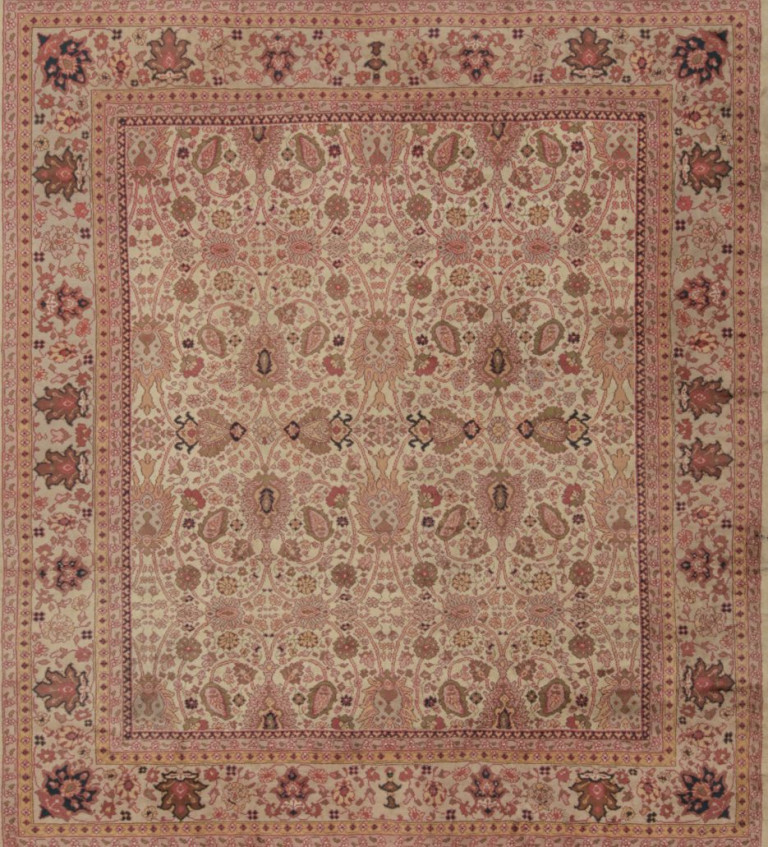
A Guide to Art Needlework of the Arts and Crafts Movement
Our European Collection includes the richest selection of antique rugs, vintage rugs, flatweaves, tapestries and contemporary rugs inspired by an encyclopedia of transitional, Neoclassical, impressionist and period piece designs, and Needlepoint design is one of most significant aesthetic of our ever-growing collection. Today, our classic archive continues to grow with rare, unique European rugs from exclusive workshops accumulated over decades, which have witnessed a resurgence in the 21st century and continue to inspire our modern rugs with new approaches to these sensibilities. The birth of the Arts and Crafts movement in late 19th century Britain heralded a transformative shift in societal attitudes towards craftsmanship and design. Emerging as a response to the adverse effects of industrialization and the undervaluation of decorative arts, this movement sought to reform the creation of everything from architectural structures to intricate jewelry pieces. Although William Morris joined the Arts and Crafts Exhibition Society after its establishment, his ideas profoundly influenced the subsequent generation of decorative artists.
Read the Feature