
Style
Peking
Every piece in this style, across all of our collections. Narrow them down by size and price.
- Under 6 x 9
- Runners
- 6 x 9
- 8 x 10
- 9 x 12
- 10 x 14
- 12 x 15
- Over 12 x 15
Origin ▼
Style ▼
Material ▼
Width
Length
To connect with a specialist, click here
Stories from the Peking Archive
Essays, artist dialogues, and provenance notes drawn from Rug & Kilim’s editorial desk.
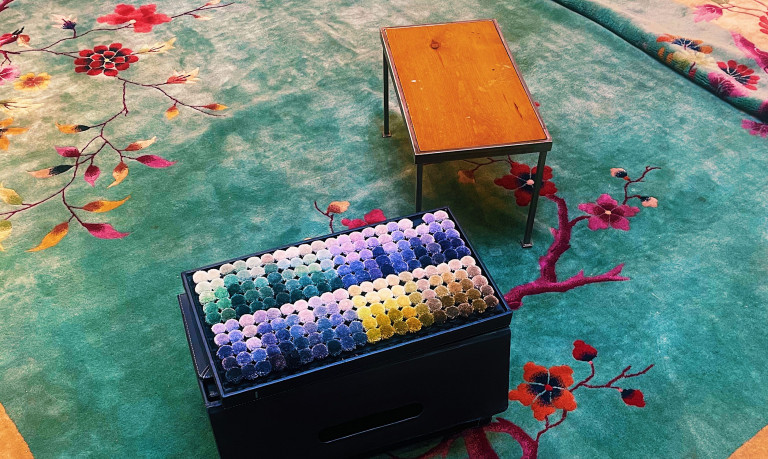
The Politics of Color in Rugs and Kilims: Empire, Trade, and Exchange
Color in rugs has never been neutral. The shades that suffuse carpets — indigo blues, cochineal reds, madder browns, saffron yellows — are more than decorative decisions. They are residues of diplomacy, markers of empire, and the evidence of global networks of exchange. To trace the dyes of rugs is to trace the political economies of trade, colonial ambition, and cultural symbolism. From Persian bazaars to European ateliers, from Qing workshops to Anatolian tribal looms, the politics of color is an intricate part of textile history. The Power of Indigo in Rugs: Monopolies and Empires Indigo, the dye that rendered Chinese Peking rugs in their profound blues and colored Persian carpets with celestial depth, was once the lifeblood of empires. For centuries, India dominated indigo cultivation, with Bengal’s plantations feeding global markets. The British East India Company leveraged indigo as both a commodity and a tool of control, fueling colonial exploitation and sparking resistance — the Indigo Revolt of 1859 being one such outcome. Within rugs, indigo symbolized prestige and endurance, as its colorfastness outlived many natural pigments. A Persian indigo field was not merely aesthetic; it was a statement of access to trade networks under imperial scrutiny.
Read the Feature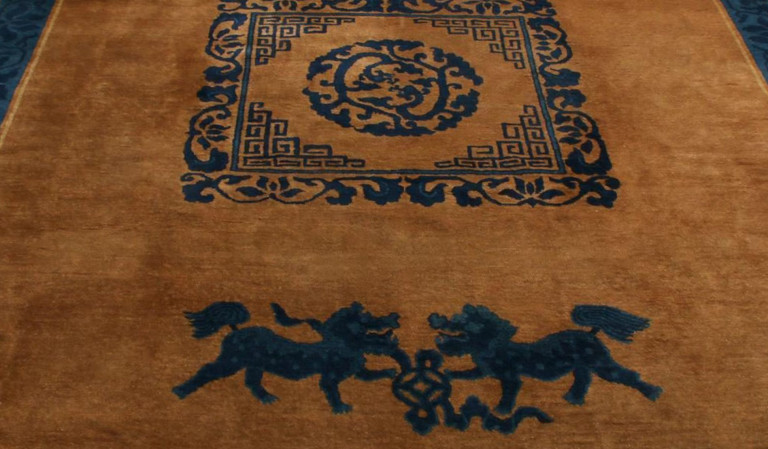
The Art, Politics, and Design of Peking Rugs: From Qing Palaces to Contemporary Interiors
To engage with an antique Peking rug is to step into a dialogue between art, politics, and spatial philosophy. Unlike their Persian or Ottoman counterparts, Peking rugs do not overwhelm with ornament. They persuade quietly, through disciplined geometry, reserved color palettes, and motifs that echo the restrained harmony of Chinese architecture and literati aesthetics. Born in the imperial looms of late Qing Dynasty Beijing and carried into early 20th-century trade ateliers, these rugs embody a convergence: the rigor of Confucian order, the symbolism of Taoist cosmology, and the pragmatism of a China entering global modernity. To own or study a Peking rug is not merely to examine a textile, but to read a palimpsest of political transition, philosophical belief, and design refinement.
Read the Feature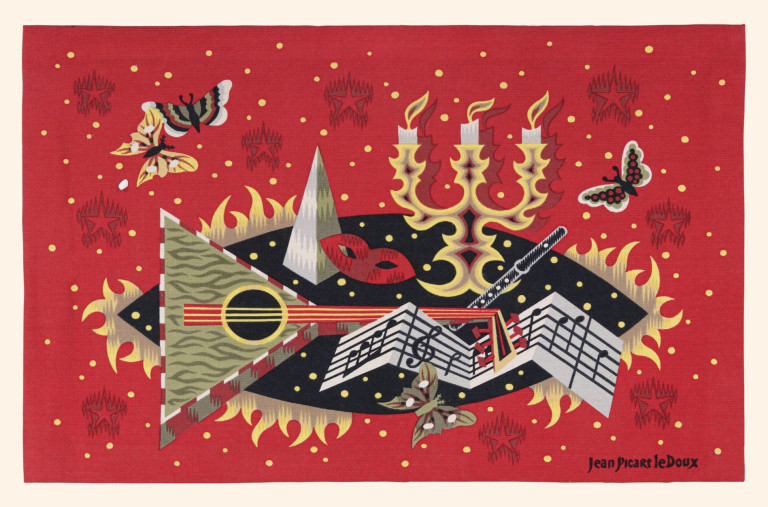
Signatures and the Art of Attribution in Luxury Rugs: Collecting with Provenance and Prestige
A Picasso or a Lalique needs no introduction — the signature itself becomes shorthand for genius, provenance, and prestige. In the world of collectible textiles, authorship is often elusive. Unlike paintings or sculpture, where an artist’s hand is documented and celebrated, rugs were historically anonymous — woven for use, dowry, or devotion, rather than individual fame. Yet over centuries, a quiet tradition of “signatures in thread” has emerged: marks, cartouches, inscriptions, or motifs that elevate a rug from being a functional textile to an authored artwork. These signatures, whether literal or symbolic, have become the connoisseur’s key to provenance, prestige, and value.
Read the Feature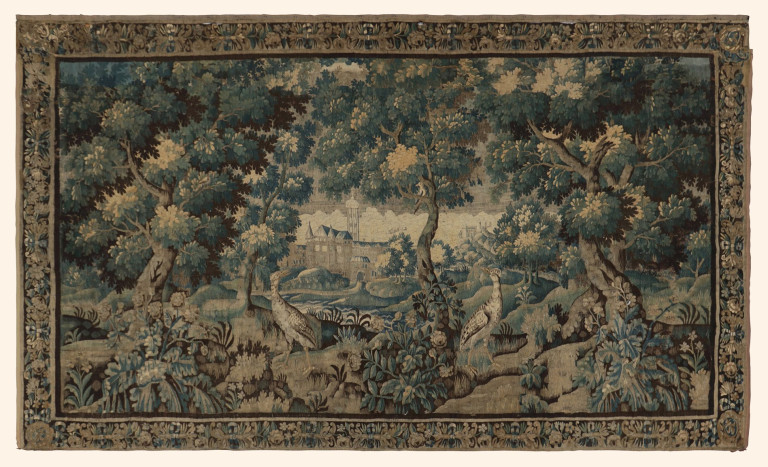
The World of Period Piece Rugs and Kilims: Provenance, Style, and Collecting Masterworks
In the world of fine art and design, the term period piece is not a casual descriptor—it is an assurance of historical integrity, stylistic authenticity, and documented provenance. To speak of period piece rugs and kilims is to speak not simply of textiles, but of time made tangible. From the opulent wool-and-silk Savonneries gracing the salons of Louis XIV, to the restrained architectural harmony of French Aubussons, the modernist clarity of a signed Leleu, or the atmospheric geometry of Chinese Art Deco and Peking carpets—these are not mere floor coverings. They are artefacts of intent, designed to speak to power, status, and the zeitgeist of their era.
Read the Feature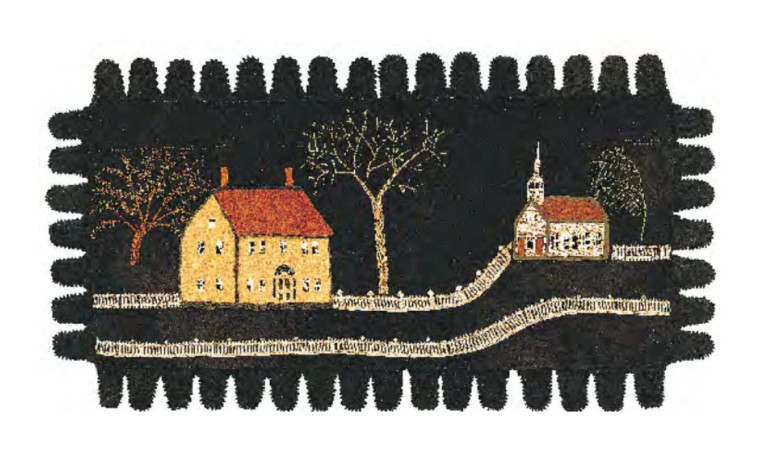
A Profile on Zeruah H. Guernsey Caswell and her Embroidered American Carpets
"The Great Cover-Up: American Rugs on Beds, Tables and Floors", an exceptional exhibition at the American Folk Art Museum, showcased the work of numerous talented artists, most of whom were women and often anonymous or labeled as "unidentified." Embroidered American Carpets Covering interior surfaces has historically served both utilitarian and decorative purposes. Early American rugs, crafted through methods such as yarn sewing, shirring, appliqué, and embroidery, often transcended their functional roles through the graphic power of their color and design. "The Great Cover-up: American Rugs on Beds, Tables, and Floors" showcases around 65 rugs spanning from the late 18th to the mid-20th century, including several monumental masterworks. Highlights include the museum’s impressive 13-foot Appliqued Carpet (c. 1860) and the magnificent Embroidered Carpet (1832–1835) by Zeruah H. Guernsey Caswell, from the collection of the Metropolitan Museum of Art.
Read the Feature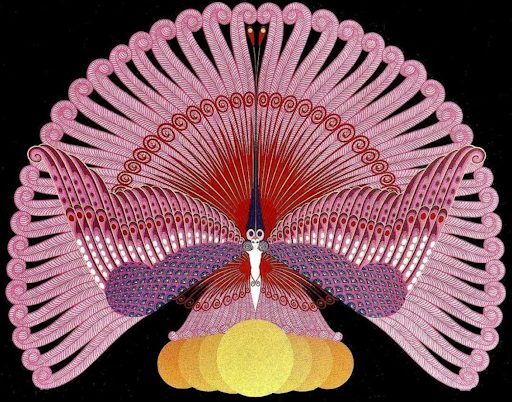
Rug & Kilim’s Art Deco Rugs as Inspired by Romain de Tirtoff “Erte’s” Artworks
Art Deco, often referred to as Streamline Moderne or Style Paquebot ('ocean liner style'), amalgamates a variety of emerging styles from the early 20th century, including Cubism, Expressionism, Futurism, and Vorticism. Rug & Kilim's Art Deco Collection - View More The period saw artists drawing heavily from African art and ancient cultural motifs, especially Egyptian influences, which surged in popularity after the discovery of Tutankhamun's tomb in 1922. The Ballets Russes also played a significant role in shaping the imaginative aesthetic of the Art Deco movement. Born into a distinguished family in St. Petersburg, Romain de Tirtoff “Father of Art Deco” chose a different path from his aristocratic relatives who pursued military careers. At the age of 18, he left Russia for Paris and began a long, illustrious career as an illustrator and costume and set designer under the name Erté, derived from the French pronunciation of his initials, "RT." Erté is particularly renowned for the stunning covers he created for Harper’s Bazaar between 1915 and 1936. Shortly after his first cover design, he secured an exclusive 10-year contract with the magazine. Over the years, he contributed more than 240 covers, each featuring his signature Art Deco style.
Read the Feature