
Signatures and the Art of Attribution in Luxury Rugs: Collecting with Provenance and Prestige
August 29, 2025
The Politics of Color in Rugs and Kilims: Empire, Trade, and Exchange
September 4, 2025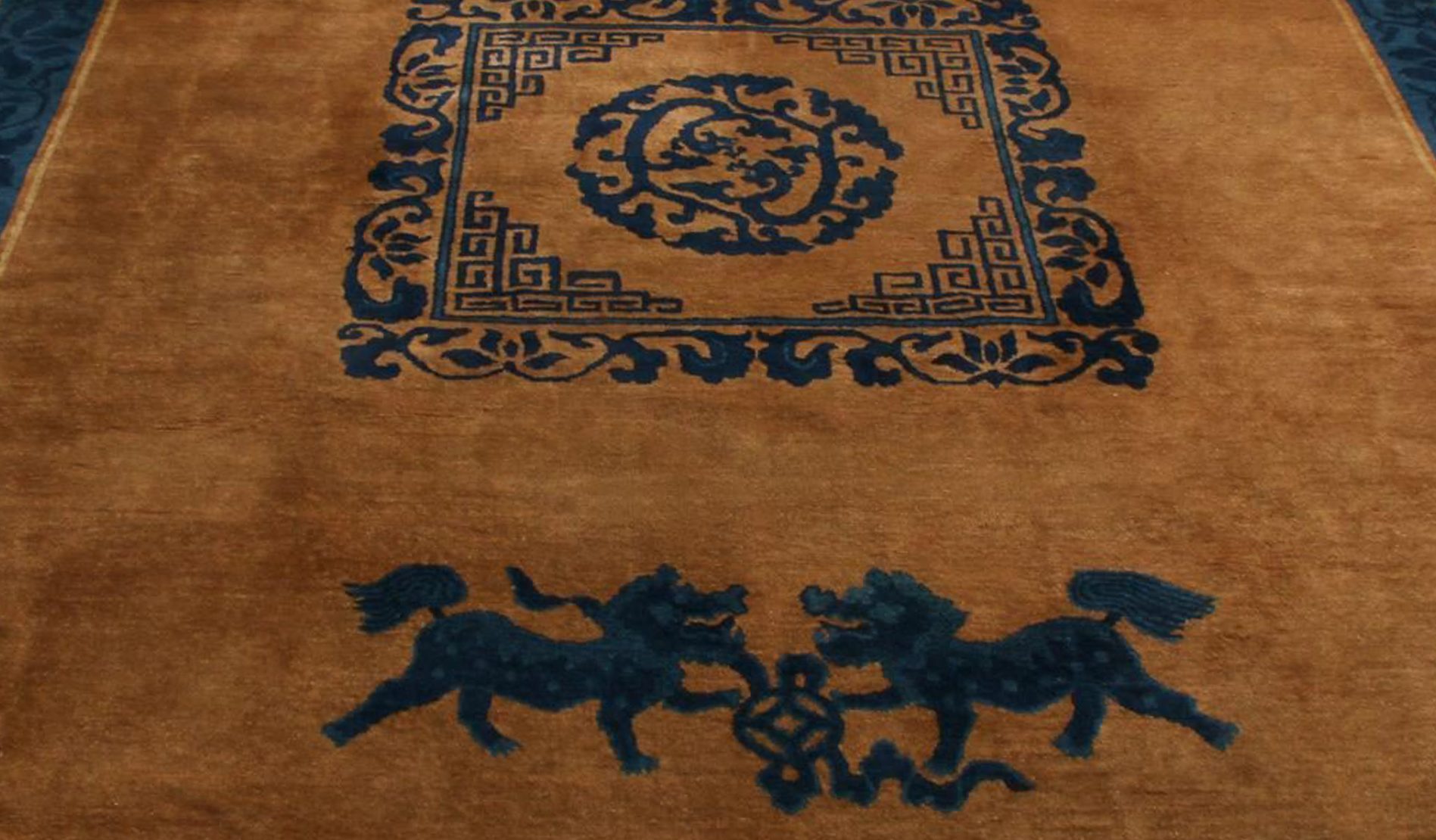
To engage with an antique Peking rug is to step into a dialogue between art, politics, and spatial philosophy. Unlike their Persian or Ottoman counterparts, Peking rugs do not overwhelm with ornament. They persuade quietly, through disciplined geometry, reserved color palettes, and motifs that echo the restrained harmony of Chinese architecture and literati aesthetics.
Born in the imperial looms of late Qing Dynasty Beijing and carried into early 20th-century trade ateliers, these rugs embody a convergence: the rigor of Confucian order, the symbolism of Taoist cosmology, and the pragmatism of a China entering global modernity. To own or study a Peking rug is not merely to examine a textile, but to read a palimpsest of political transition, philosophical belief, and design refinement.
Historical Backdrop: From Courtly Beijing to Global Interiors
The production of Peking rugs emerged in the late 19th century, when Beijing, still the capital of the Qing Dynasty, became a center of workshop-driven weaving. Unlike the nomadic tribal traditions of Central Asia, these rugs were urban products: tied to court patronage, Buddhist monasteries, and the rising demand for export goods as China cautiously opened its ports to international markets.
Designs often reflect the architectural and decorative schemes of Beijing palaces, gardens, and temples. Borders echo the carved wood screens of Forbidden City interiors, while central medallions mirror ceiling motifs or the layout of a scholar’s courtyard. Their minimalism—characterized by uncluttered fields, soft blues, ivories, and camel grounds—stood in stark contrast to the elaborate curvilinear florals of Persian weaving. This difference was not accidental but intentional: it mirrored a Confucian worldview, where balance and restraint held moral weight.
A splendid 4×7 Peking rug of sought-after Chinese antiquity in a traditional Peking style floral pattern. Details >>
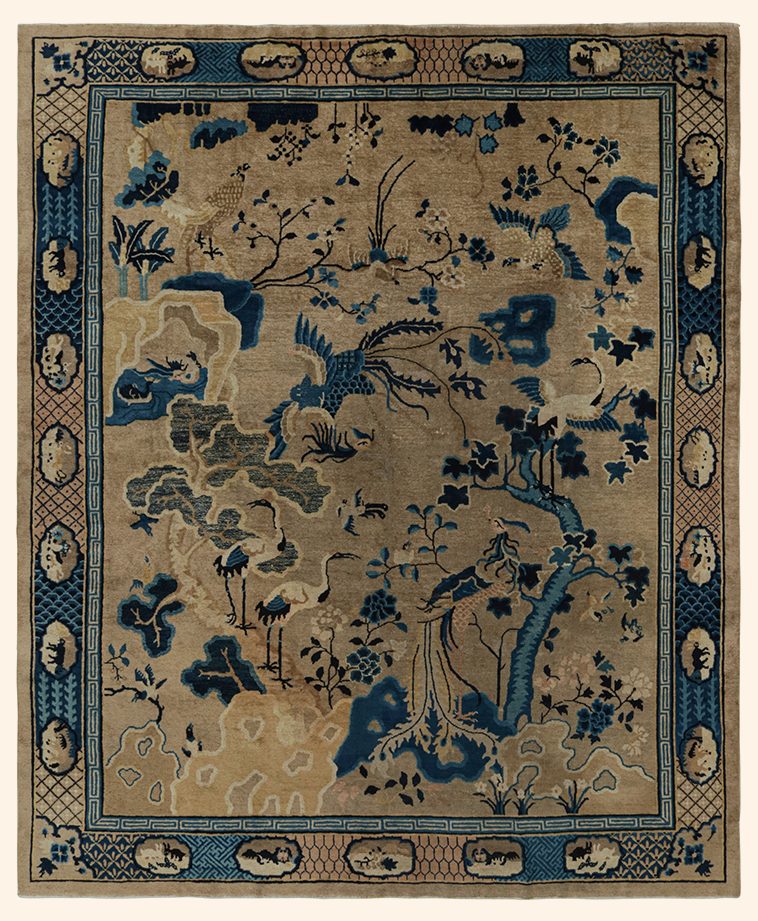
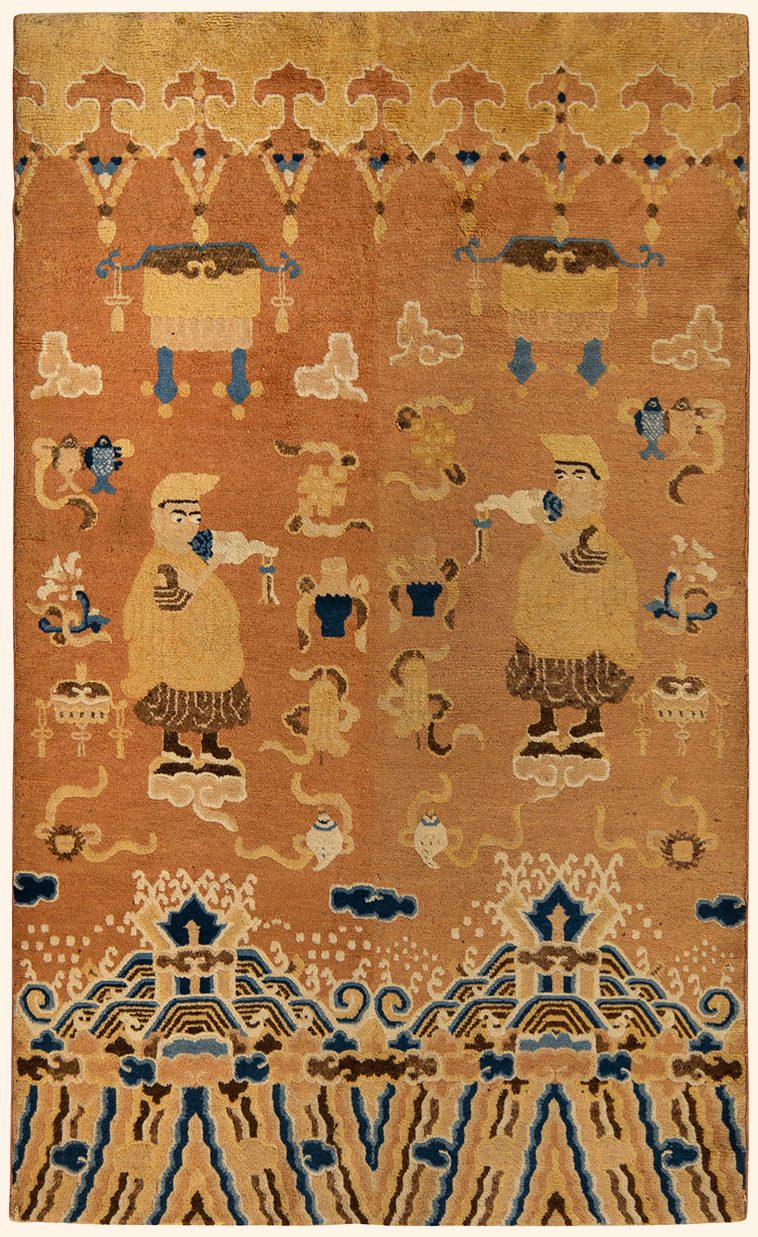
Hand-knotted in wool, this 8×9 rare antique Chinese Peking rug, circa 1850-1860, is one of the provenance’s most special pictorial rugs in the Rug & Kilim collection. Details >>
Design Language: Symmetry, Symbol, and Color
Antique Peking rugs are less narrative than Persian carpets but no less symbolic. Their vocabulary draws heavily on Chinese iconography:
Dragons and Clouds symbolizing imperial authority and cosmic order.
Lotus blossoms and Peonies as emblems of purity, prosperity, and renewal.
Shou medallions representing longevity, framed with meandering fretwork.
Geometric borders that recall the disciplined layout of Ming and Qing courtyards.
The color palette is perhaps their most distinctive feature: a restrained range of soft indigo blues, pale ivories, camel beiges, and muted golds. These shades were not only visually serene but also harmonized with the lacquer, porcelain, and hardwood furniture of elite Chinese interiors. In modern design terms, this chromatic restraint makes Peking rugs profoundly adaptable to contemporary minimalist spaces, where their subtle symbolism offers depth without excess.
Provenance and Collecting
For the seasoned collector, provenance in Peking rugs involves more than age. Workshop origin, knotting density, and wool quality all play critical roles. The finest examples, woven for temples or palace use, often employ luminous, lanolin-rich wool and precision knotting that rivals the best Persian weaves. Rugs made for export, while still aesthetically striking, can sometimes be identified by broader fields designed to accommodate Western furniture arrangements.
Auction records from Christie’s and Sotheby’s show that demand for early Peking rugs has steadily risen, particularly for pieces with rare iconography—such as five-clawed imperial dragons or unusual Buddhist symbols. Many of the best surviving examples come from early 20th-century dispersals of temple treasures and aristocratic estates in Beijing and Tianjin.
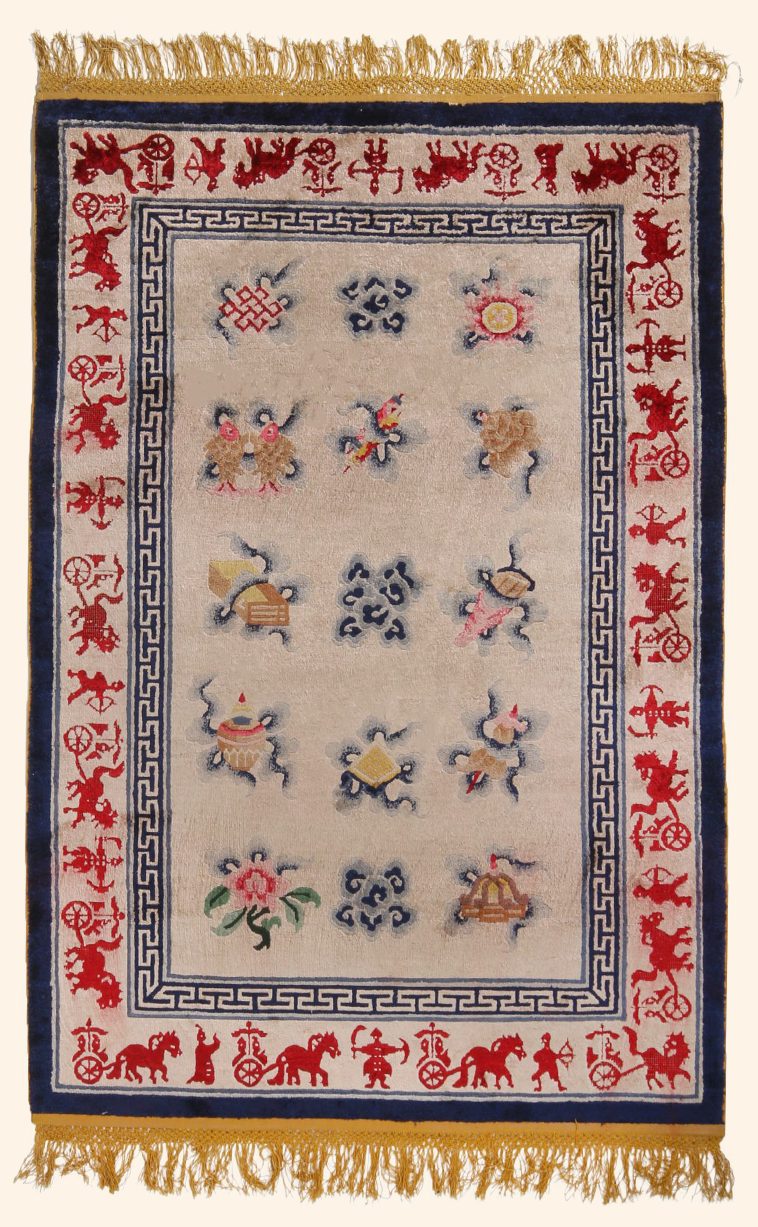
Originating from China between 1960, this antique traditional Peking rug is one of a select design featuring rich, repeated character symbols in its middle border, hand knotted in high quality silk. Details >>
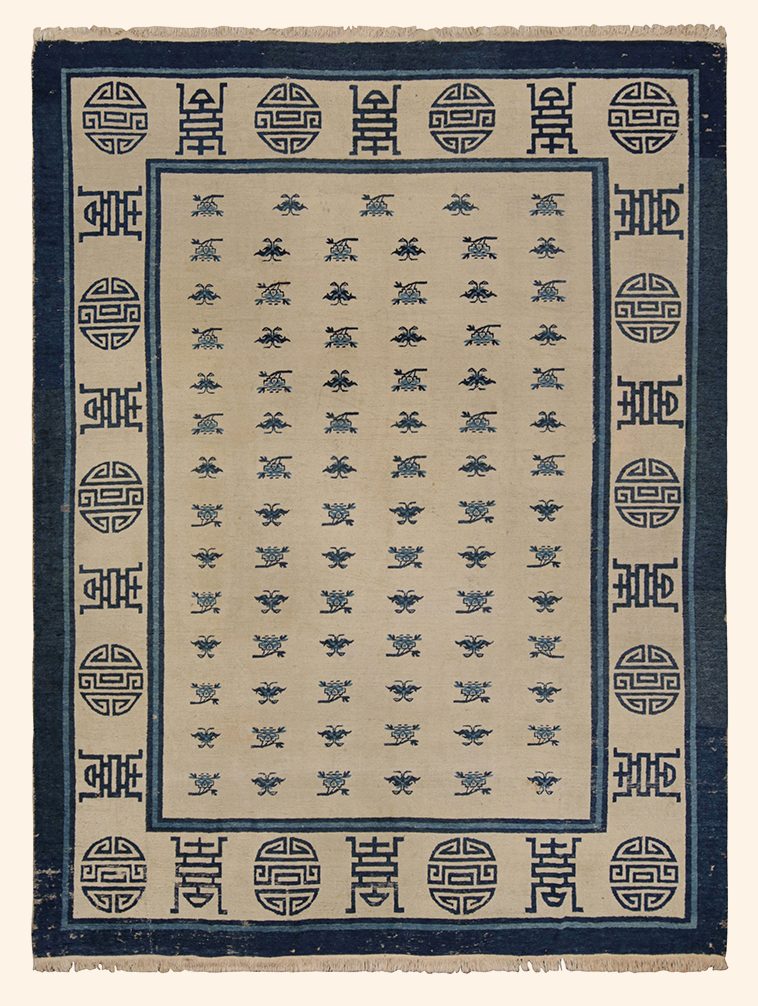
Hand-knotted wool and hailing from 1920s China, this 9×11 antique Chinese Art Deco rug is a one-of-a-kind new curation from Rug & Kilim. Details >>
The Political Dimension: Rugs in Transitioning China
Peking rugs were created at a time of immense flux. The waning years of the Qing Dynasty, the 1911 Revolution, and the subsequent Republican era reshaped China’s artistic output. As Western demand for Chinese goods surged, Peking rug production adapted, creating designs that balanced traditional symbolism with simplified fields for Western interiors.
This adaptive quality reveals how rugs served as instruments of soft power: they carried China’s visual language into Western drawing rooms, where the subtle blues and architectural motifs resonated with modernist taste. In this sense, Peking rugs can be read as textile ambassadors, weaving together the politics of global trade, cultural diplomacy, and design convergence.
Comparative Lens: Peking Rugs and Their Global Counterparts
What distinguishes Peking rugs within the wider canon of period textiles? Consider:
Versus Persian Carpets: Where Persian weaving luxuriates in narrative density, Peking rugs discipline the eye with emptiness and form.
Versus Oushaks: Both share a softness of palette, but Oushaks lean toward earthy warmth, while Peking rugs gravitate to cooler, porcelain-inspired tones.
Versus Art Deco Chinese Rugs: Peking rugs act as precursors. Their restraint laid the foundation for the bold, colorful geometry of 1920s–30s Chinese Art Deco carpets woven in Tianjin.
Versus European Aubussons and Savonneries: While the French tradition celebrates illusionistic florals and Rococo flourish, Peking rugs remain architectural, geometric, and meditative—more akin to voids in ink painting than to painted tapestries.
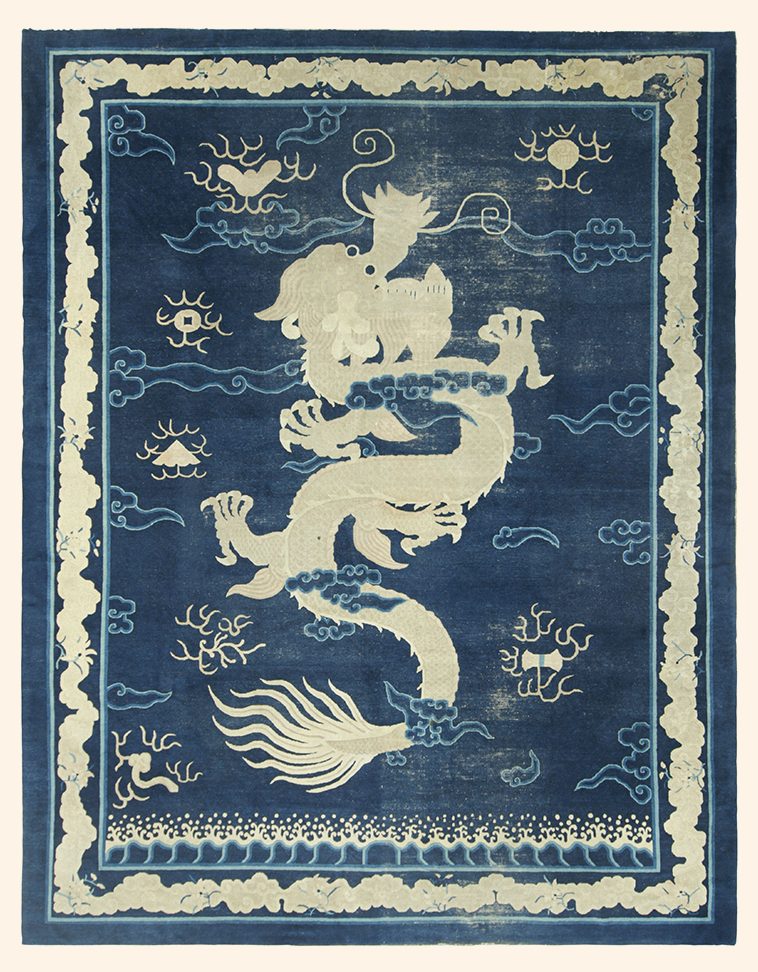
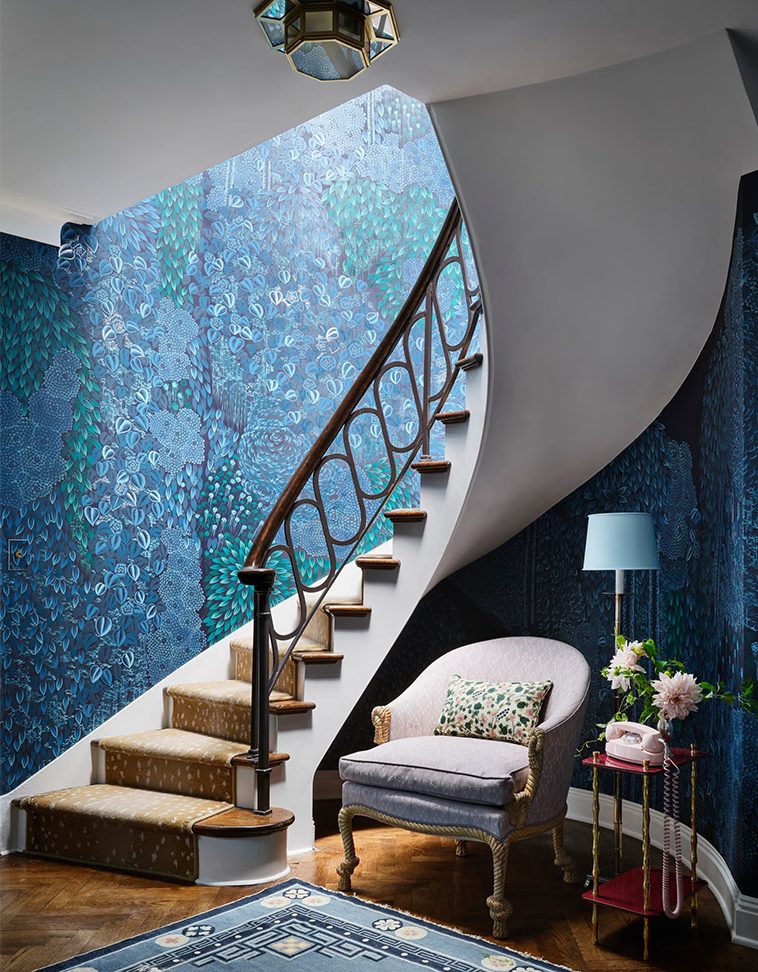
Rug & Kilim’s Antique Chinese rug featured in Veranda.
Why Designers Covet Peking Rugs Today
In contemporary interiors, Peking rugs occupy a unique niche. Their minimalism anticipates modernist principles, making them natural complements to pared-down architecture, concrete surfaces, and Scandinavian furniture. Designers such as Axel Vervoordt and Joseph Dirand have placed antique Peking rugs in otherwise contemporary rooms to anchor space with quiet gravitas.
The neutrality of their palette allows them to coexist with mid-century modern furniture, Japanese wabi-sabi interiors, or even cutting-edge architectural spaces. For collectors and designers alike, they are not historical curiosities but functional design objects—timeless in appeal, endlessly adaptable, and always commanding of attention when placed thoughtfully.
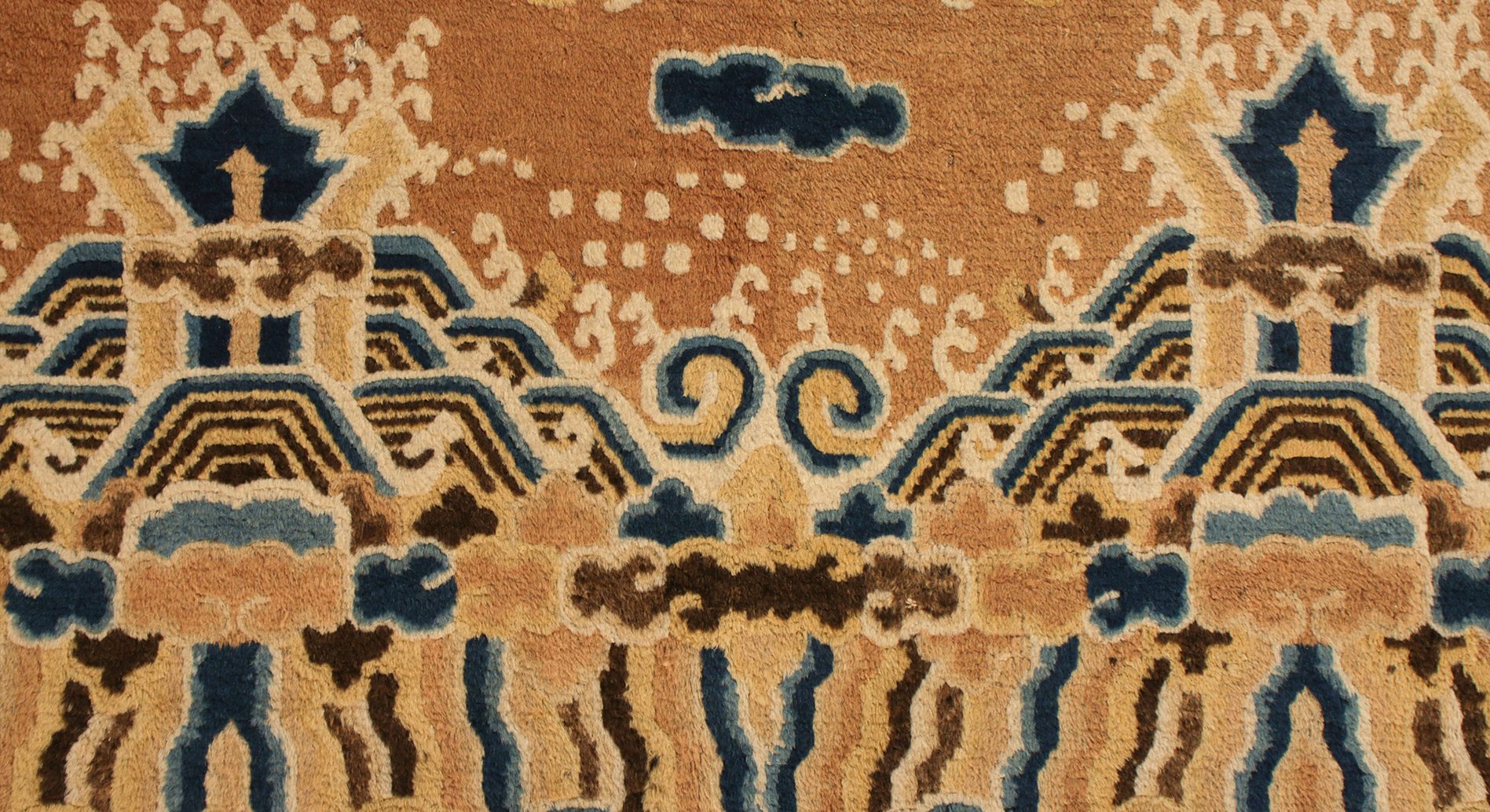
Timekeepers of Serenity
Antique Peking rugs are not simply decorative textiles; they are cultural timekeepers, preserving a vision of harmony from an era of upheaval. They stand at the crossroads of politics, design, and philosophy—objects of empire reimagined for the modern world. For collectors, their appeal lies not only in their rarity but in their duality: deeply rooted in Chinese cosmology yet astonishingly relevant to contemporary design. For designers, they offer a palette of serenity and symbolism that no reproduction can imitate. And for historians, they remain invaluable documents of a China negotiating its identity on the global stage.
The antique Peking rug is an artefact that proves restraint can be as powerful as opulence, and that the truest luxury often lies in silence, space, and timeless design.