
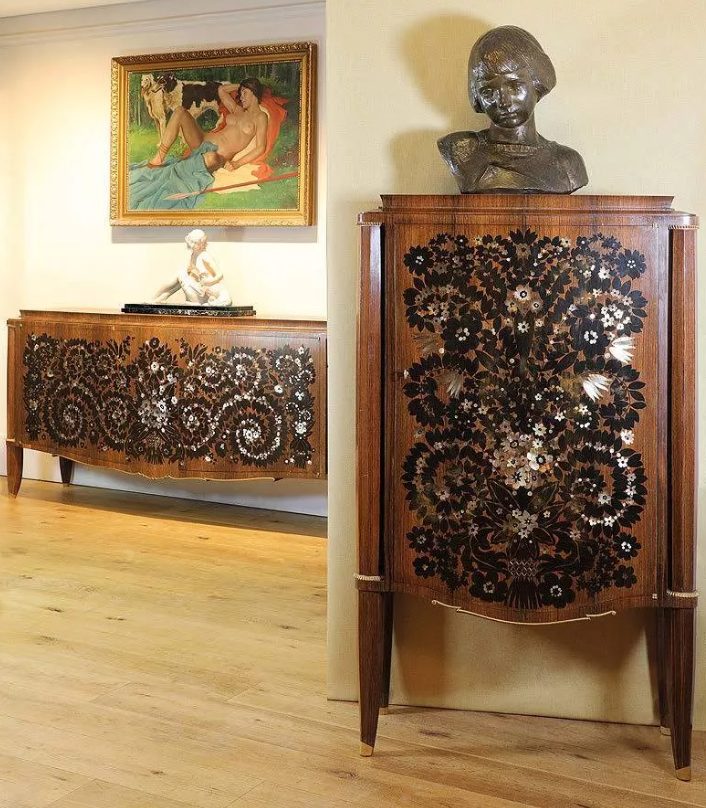
A Profile on Jules Leleu and Paule Leleu and their Contributions to the Art Deco Movement
June 12, 2024
History and Significance of 19th-Century Persian Sultanabad Rugs
June 17, 2024Art Deco, often referred to as Streamline Moderne or Style Paquebot ('ocean liner style'), amalgamates a variety of emerging styles from the early 20th century, including Cubism, Expressionism, Futurism, and Vorticism.
The period saw artists drawing heavily from African art and ancient cultural motifs, especially Egyptian influences, which surged in popularity after the discovery of Tutankhamun’s tomb in 1922. The Ballets Russes also played a significant role in shaping the imaginative aesthetic of the Art Deco movement.
History and Personal Background of Erte – Father of Art Deco
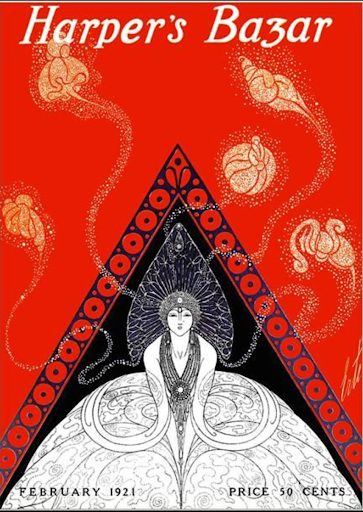
Born into a distinguished family in St. Petersburg, Romain de Tirtoff “Father of Art Deco” chose a different path from his aristocratic relatives who pursued military careers. At the age of 18, he left Russia for Paris and began a long, illustrious career as an illustrator and costume and set designer under the name Erté, derived from the French pronunciation of his initials, “RT.” Erté is particularly renowned for the stunning covers he created for Harper’s Bazaar between 1915 and 1936. Shortly after his first cover design, he secured an exclusive 10-year contract with the magazine. Over the years, he contributed more than 240 covers, each featuring his signature Art Deco style.
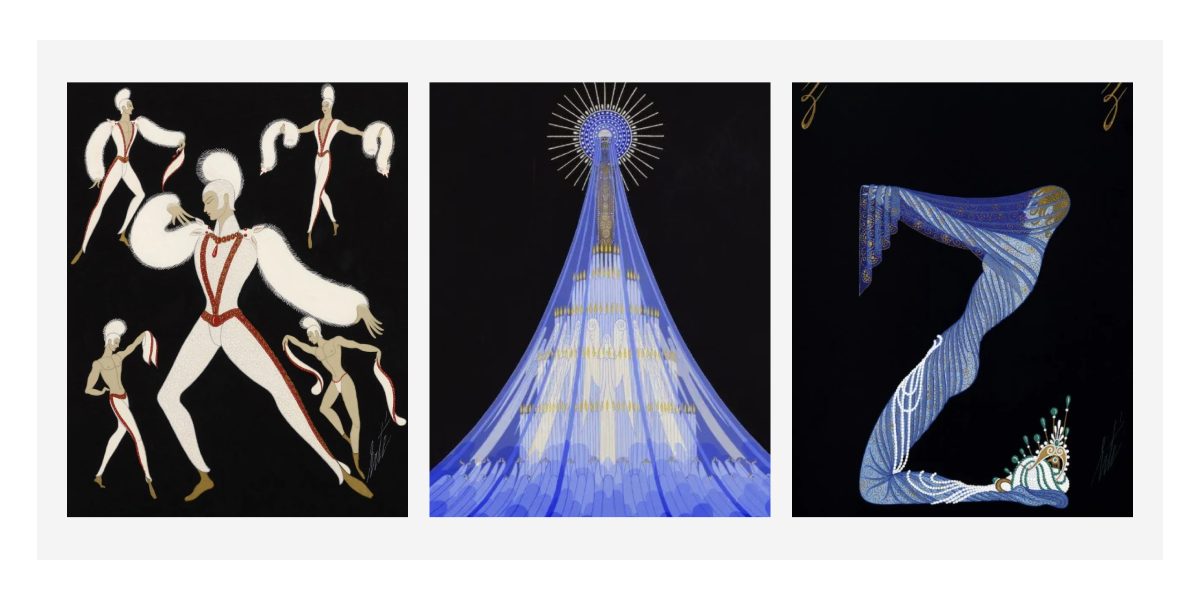
Erté’s elegant and extravagant Art Deco style made him an ideal designer for revue, allowing him to dress showgirls in flowing drapery, glittering jewels, and feathers. He designed a series of lavish shows in Paris and became closely associated with the Folies Bergères. This success led to commissions for creating sets and costumes for the glamorous New York shows of Florenz Ziegfeld and George White. In 1937, Erté began working in Britain, designing costumes and scenery for revues in the West End and seaside towns. For 20 years, he designed shows at the Blackpool Opera House. His jewel-like set models are considered works of art in their own right, serving as both art creations and practical guides for set builders.
Erté’s earlier Art Deco works were highly sought after, and in response to this demand, he created a series of bronze sculptures in 1980 at the age of 88. These sculptures capture the spirit and design ethos of Art Deco, even though they were created long after the period had ended. This fact can sometimes unsettle all but the most knowledgeable collectors. However, it is crucial to understand that these sculptures are not mere replicas of an earlier era. They are significant works by a pioneer of the original Art Deco style. Erté transformed his original drawings and designs into a new medium, creating highly sought-after sculptures. This phase of his art continues an important conversation that began decades earlier, adding a deeply interesting and meaningful chapter to both the Art Deco timeline and Erté’s portfolio.
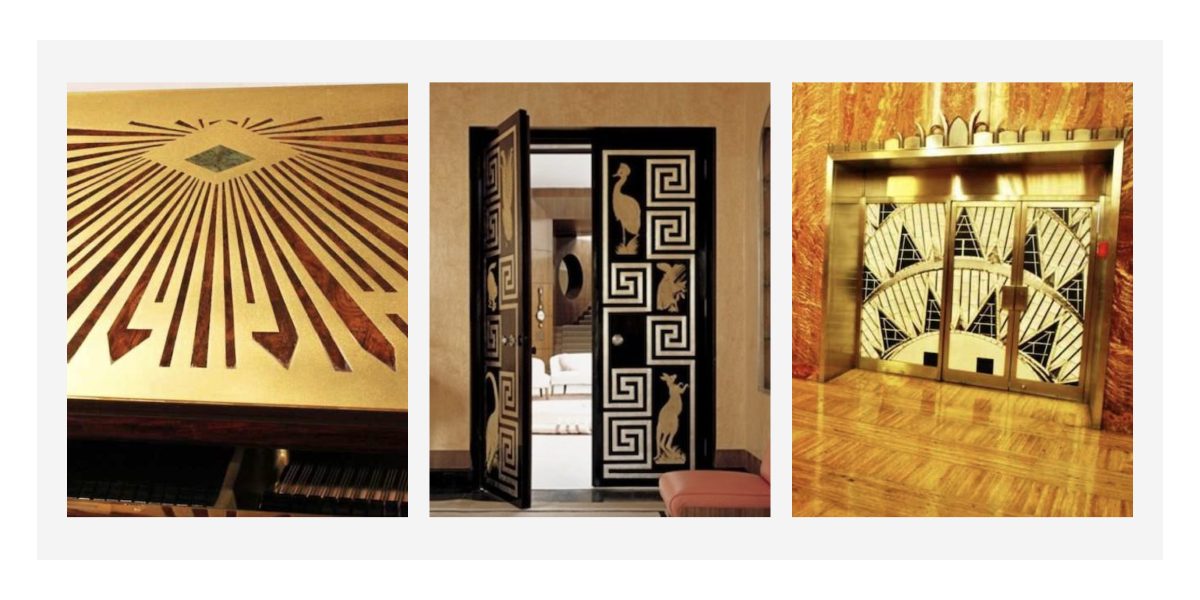
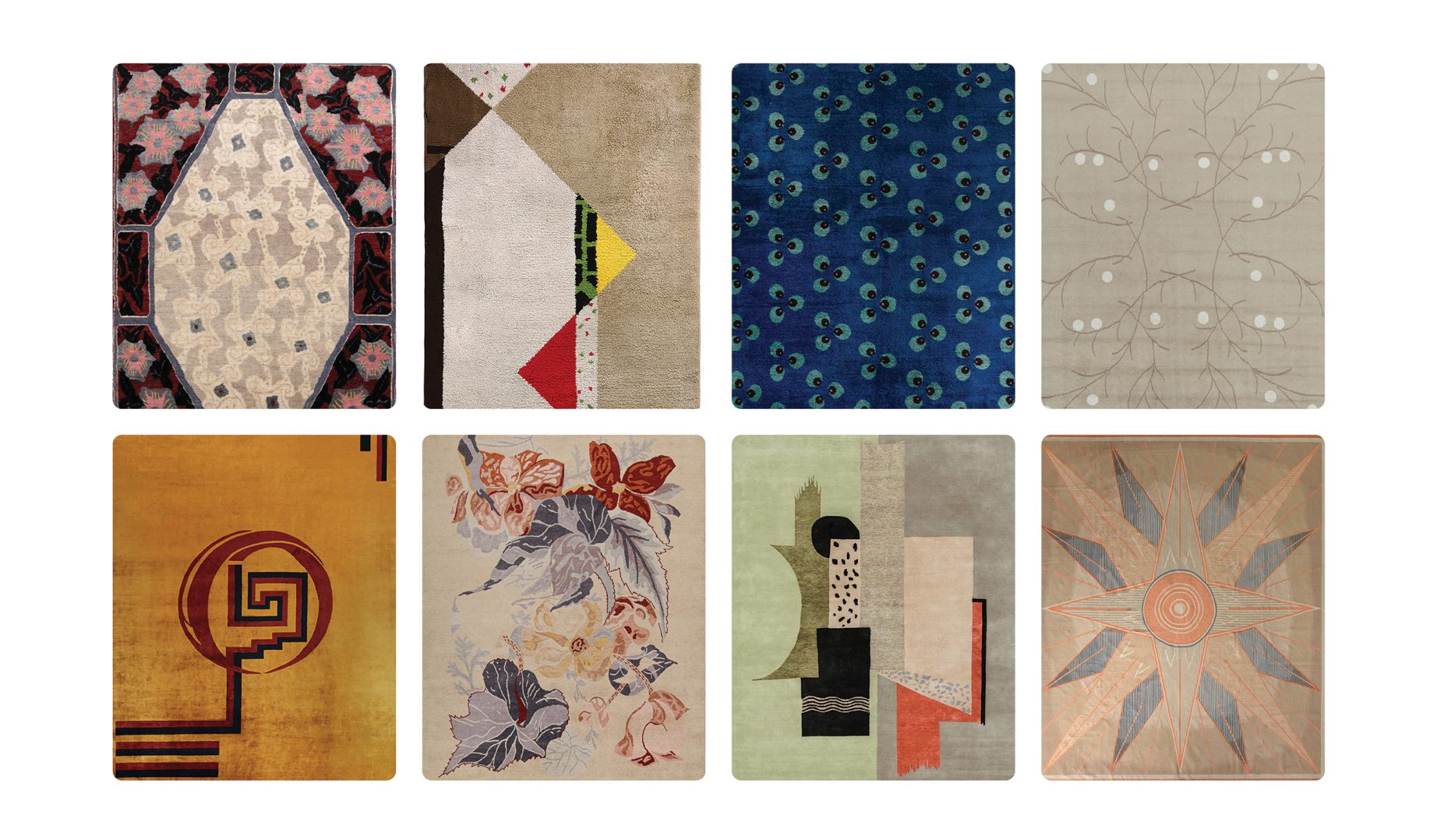
Here are major similar Art Deco design patterns between Rug & Kilim’s art deco rugs and Erte’s artworks –
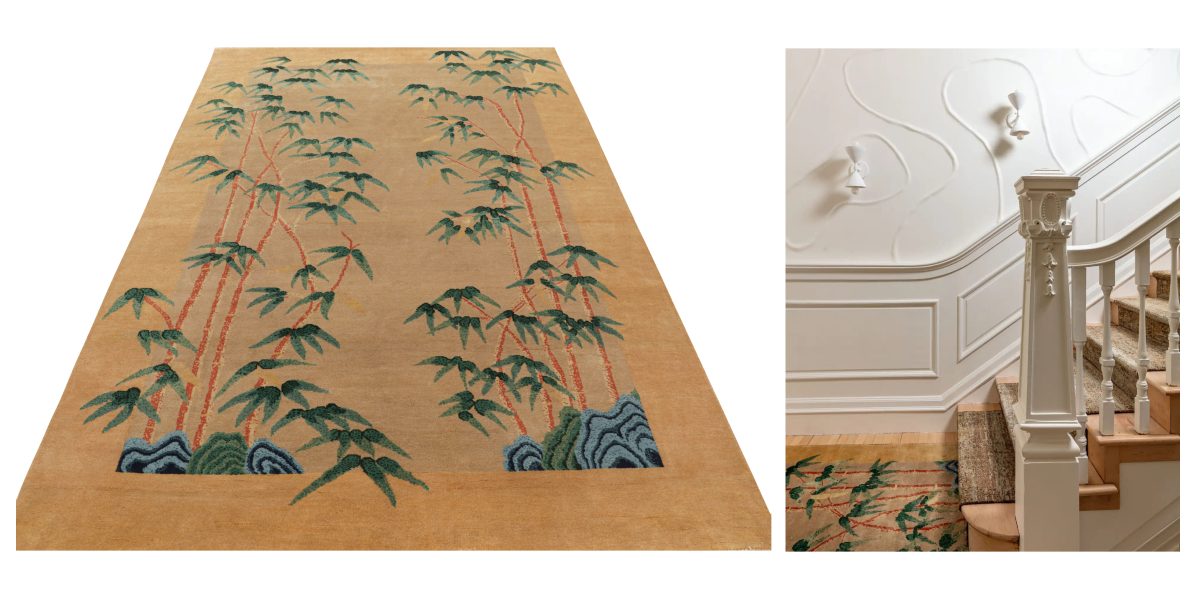
- Fluid Pictorial Patterns, mainly Trees and Clouds
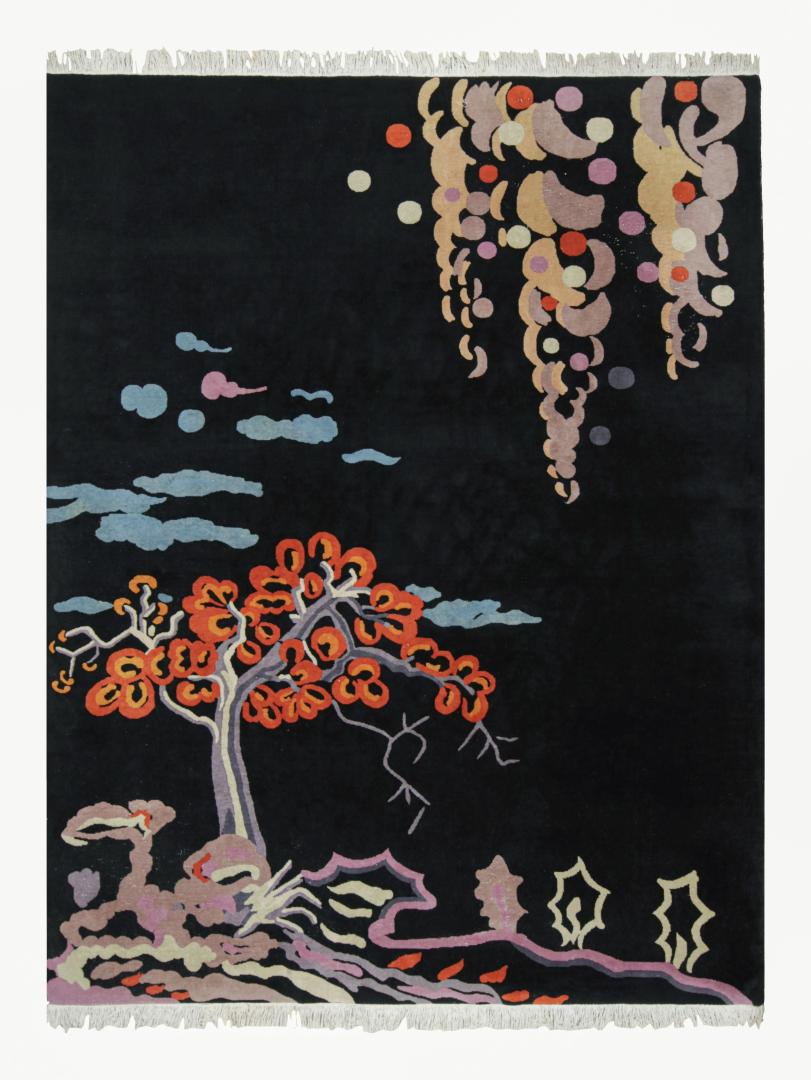
This period piece features a particularly rare design in Chinoiserie rugs of its time, where a midnight blue field underscores a pictorial pattern with some of the most unusual, vibrant colors we’ve seen of this provenance. Admirers of the craft will note the more abstract representation of a sakura tree, floral patterns and clouds over the night sky—a more moody, yet equally regal take on the more daytime-oriented rugs known in Chinese Deco.
Fireflies by Erte
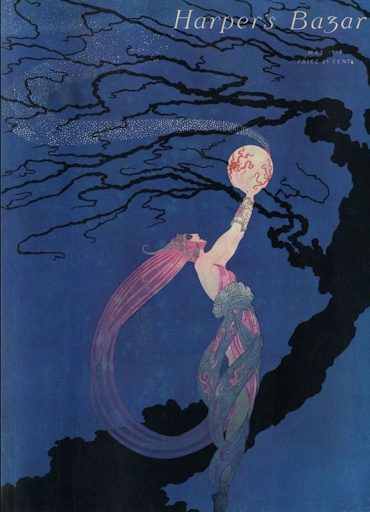
Fireflies by Erte
2. Sunburst Motifs
The sunburst motif, defined by radiating lines emanating from a central point, is a prevalent decorative element in Art Deco design. It symbolizes energy and dynamism, capturing the movement and optimism of the era.
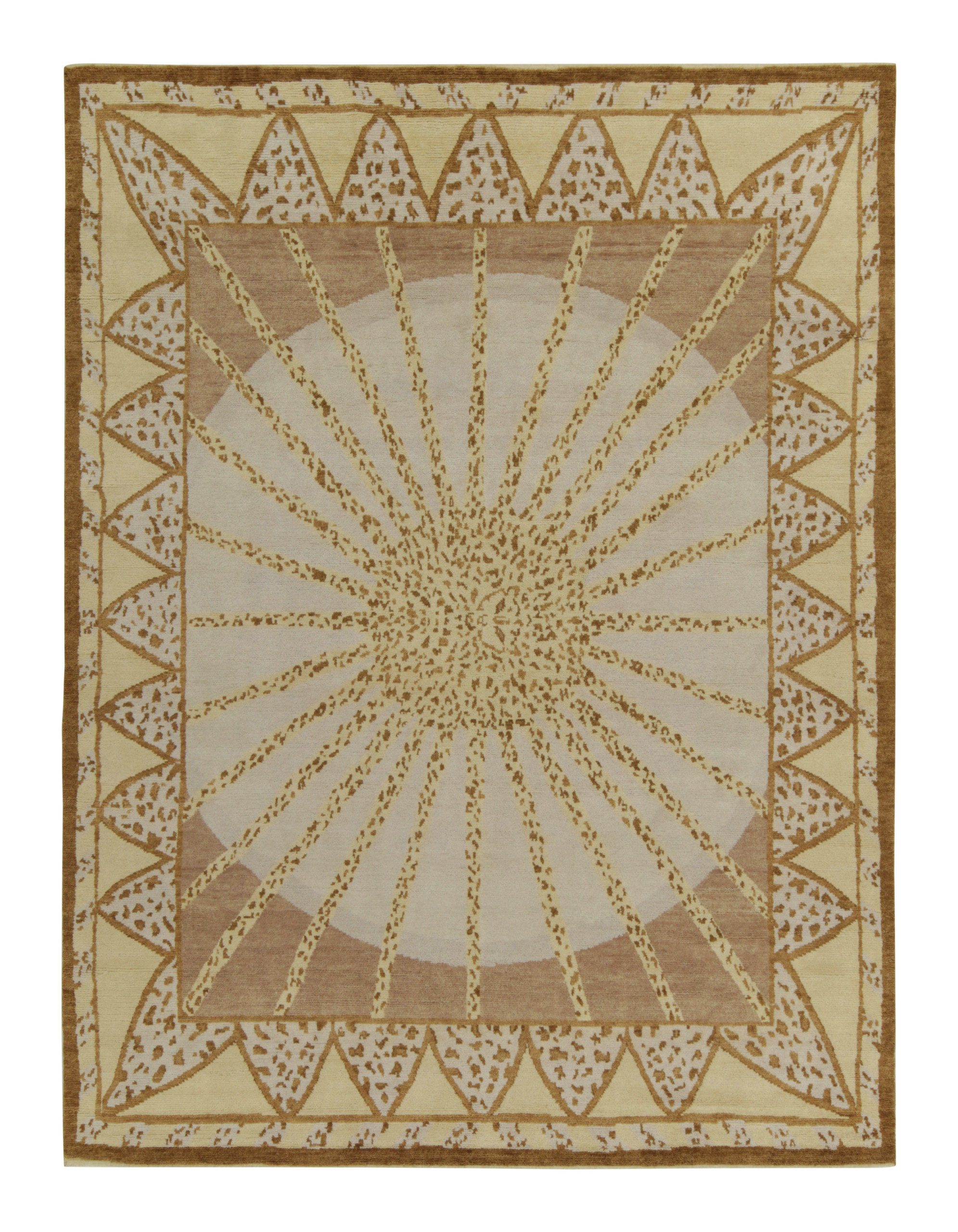
This Art Deco masterpiece enjoys a geometric pattern like that of the rising sun in warm goldenrod & off white with beige-brown accents. An exemplar of our reverence for European Art Deco carpets, reimagined in refined texture, color, and brilliant large scale.
AVE MARIA – Created for a 1928 performance, this magnificent set exemplifies Erté’s mastery in set design. His vision transports the audience to a celestial realm, depicting a multitude of angels within the scene. The vibrant blue tones blend with the warm glow of numerous candles, crafting a transcendent and ethereal atmosphere. Erté’s designs were more than mere backdrops; they elevated the performances, infusing them with heightened emotional and artistic depth.
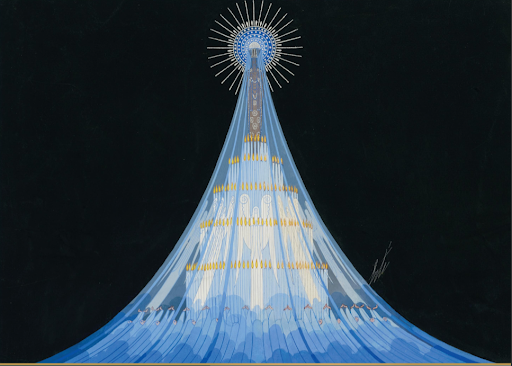
AVE MARIA
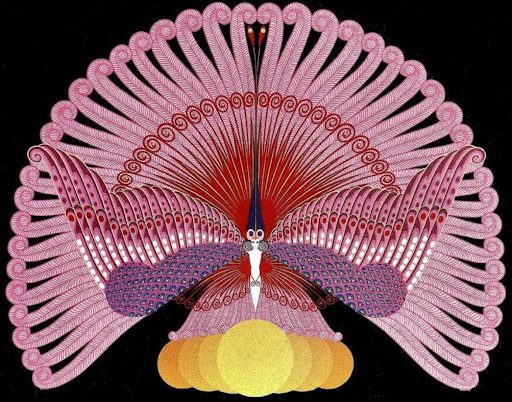
Curtain design for “The Birds,” George White’s Scandals, New York 1926
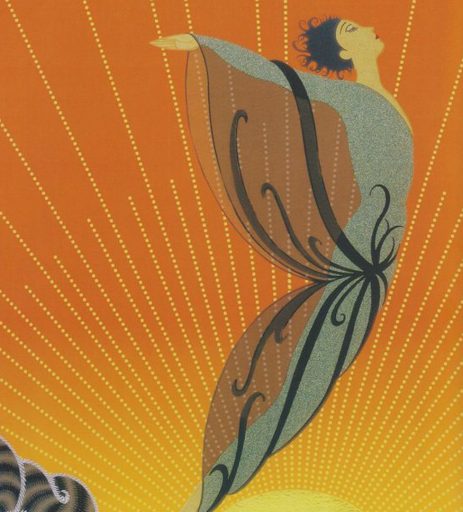
Sunrise 1984
- Sharp Straight Lines and Streamlined Curves
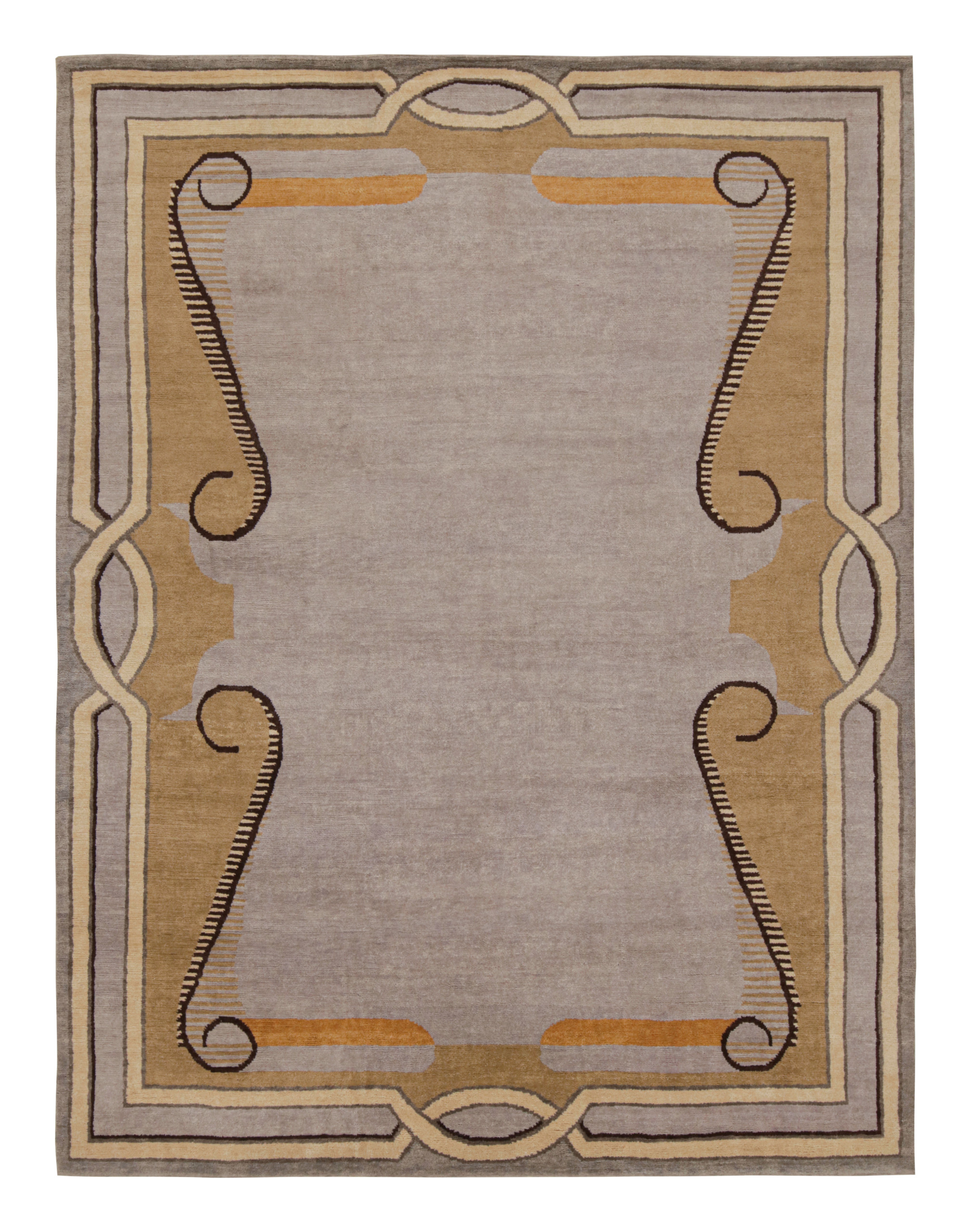
This particular piece draws inspiration from the Arbus French Art Deco style with ‘simple’ geometric patterns and architectural European-style borders that draw the eye to its sense of dimension. Keen eyes will note that the rug has employed the most sublime use of negative space and a humble palette—a reverent work in honor of the iconic Art Deco movement.
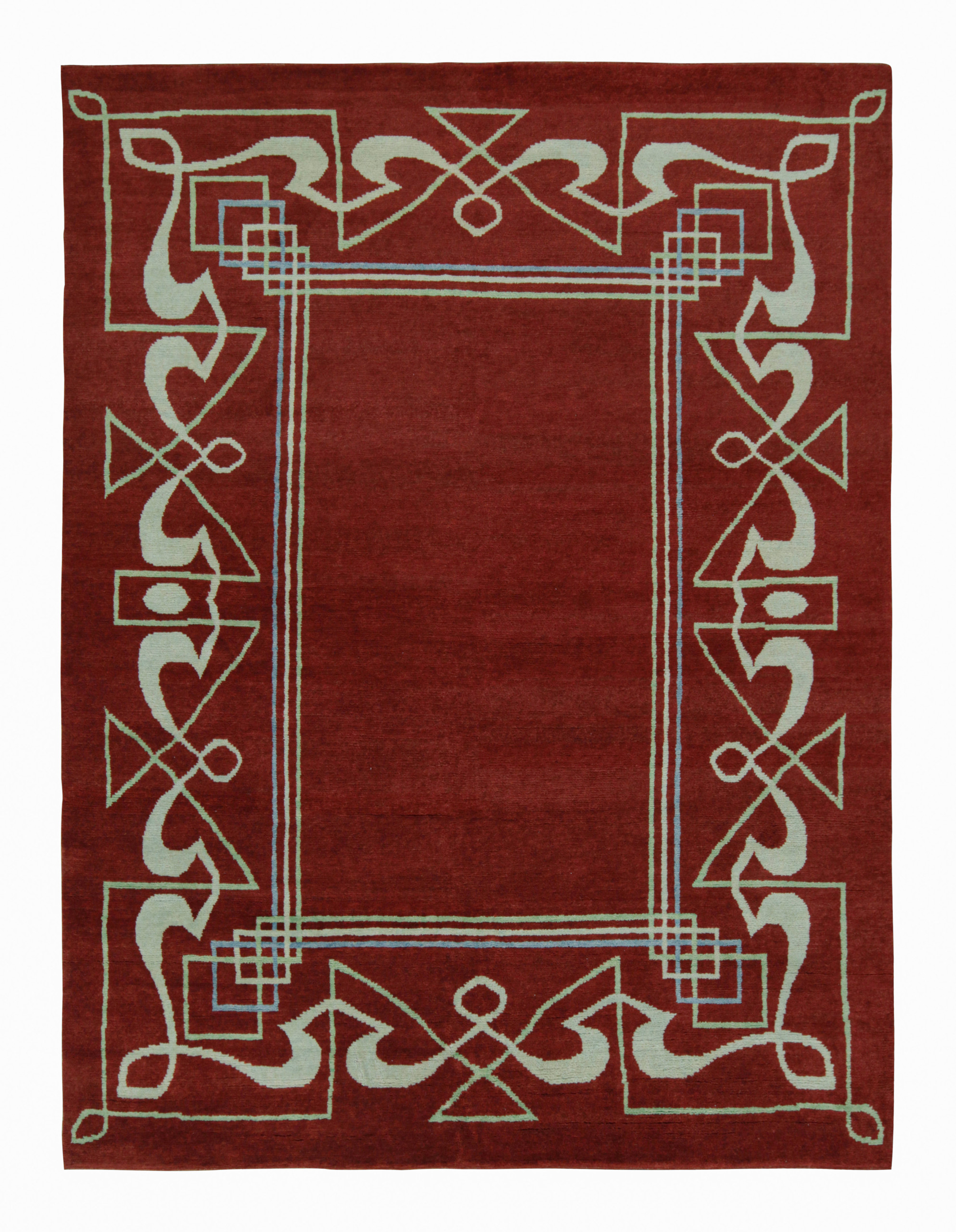
This piece boasts the Deco style of the 1920s and reimagines it with new possibilities in design through its architectural borders.
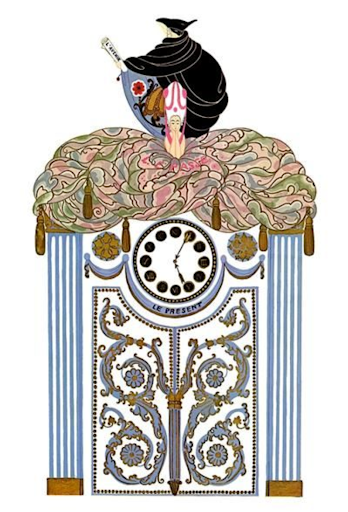
The Clock Awakening the Past
- Concentric Circles
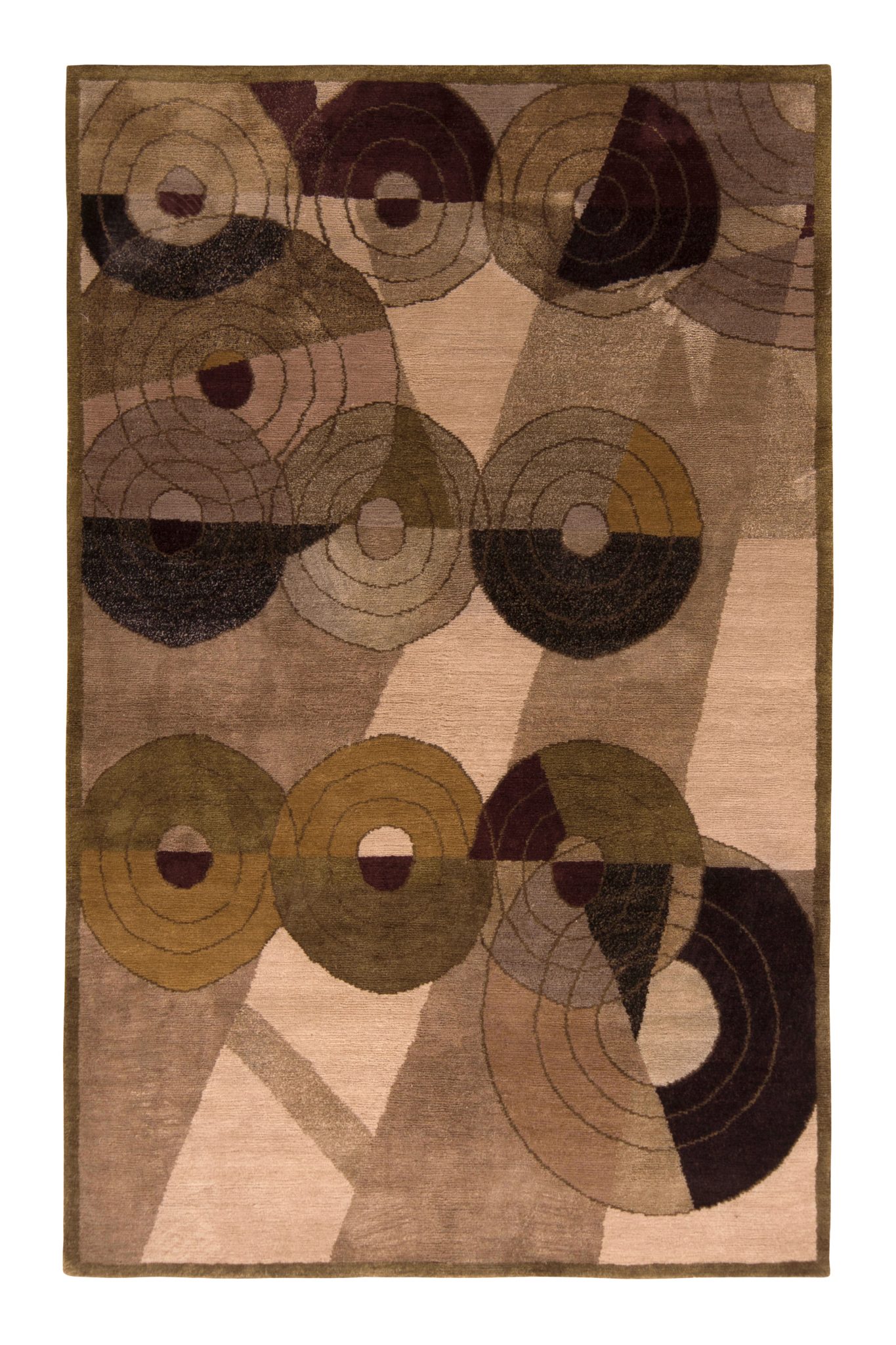
Dubbed “Legrain” in homage to the inspirational work of French designer Pierre Legrain, this 4×6 Art Deco rug joins the latest additions to the Art Deco Collection by Rug & Kilim; remarkable among the classic inspirations with modern appeal akin to this work of art.
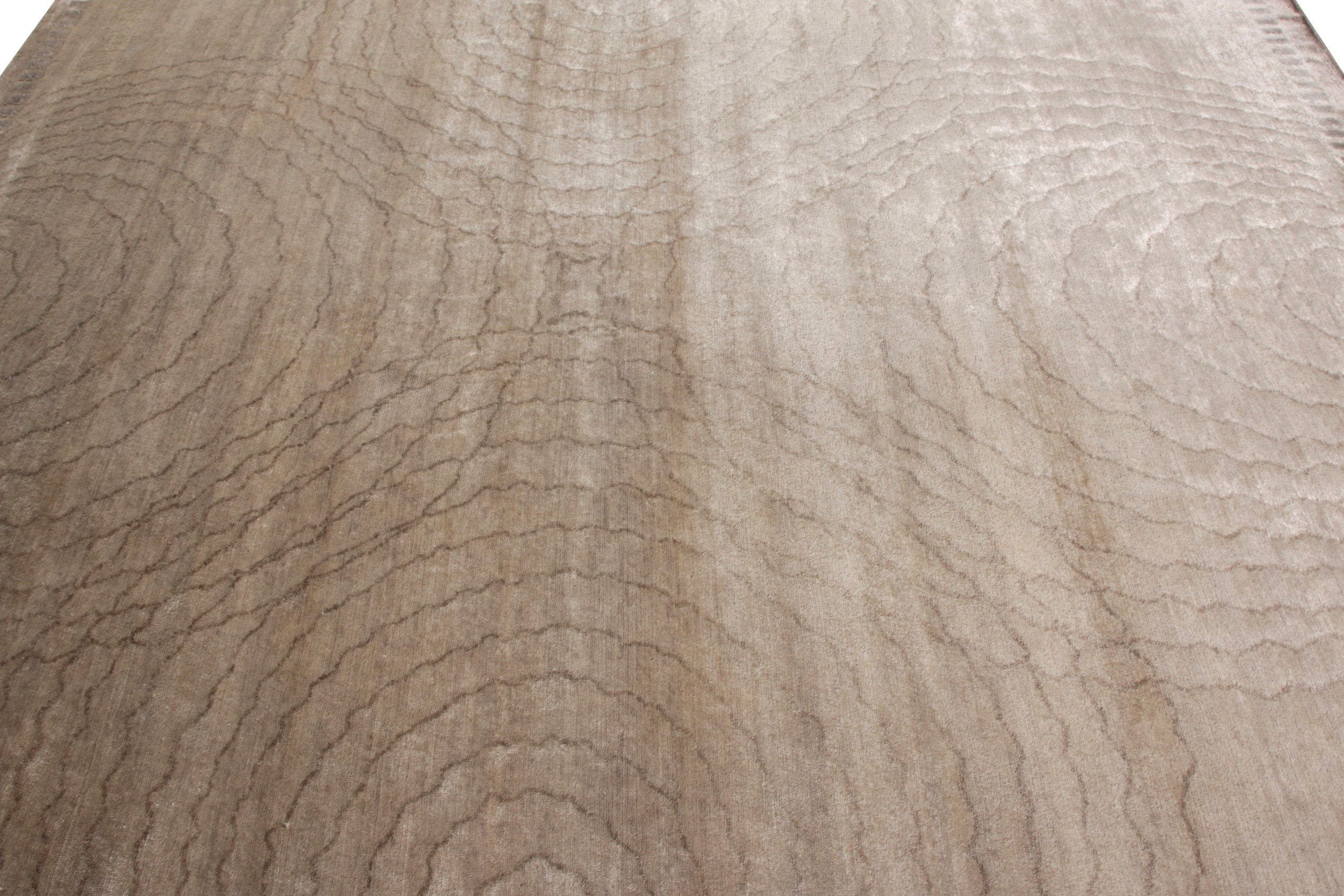
This addition to the Art Deco rug line by Rug & Kilim enjoys a very soft, lush exotic yarn in the wool and silk blend, depicting a rippling circle and wave pattern in soothing, chic beige-brown colorway hues
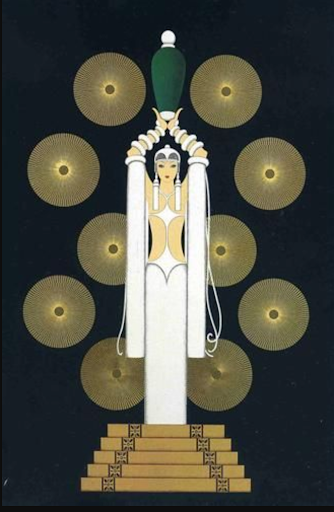
Emerald Vase by Erte
- Geometric Shapes
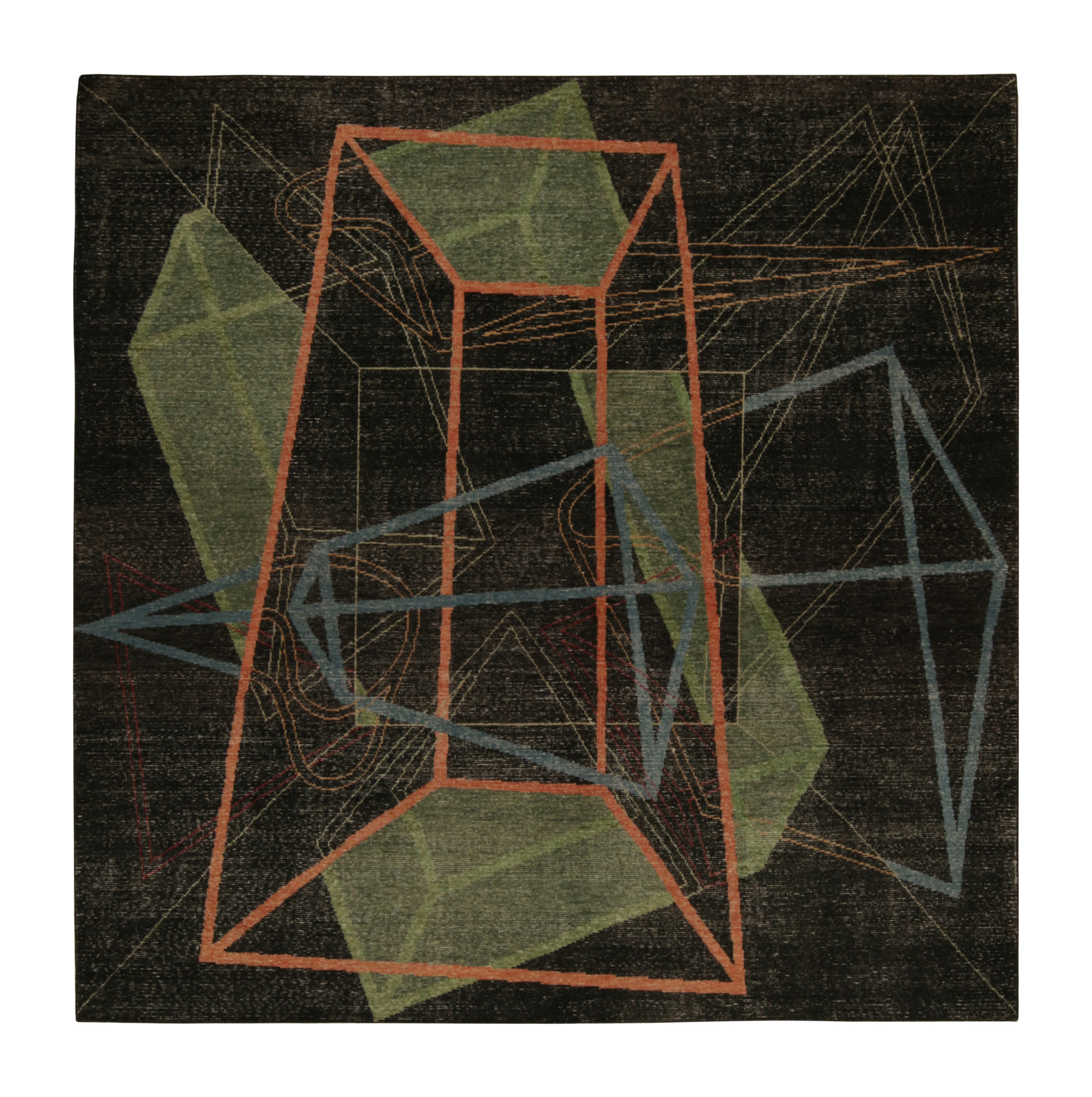
This particular rug recaptures fabulous Art Deco aesthetics in a Rustic Modern fashion. One can’t help but marvel at the bold choice of colors, and the arresting gravity such bright geometric patterns enjoys on a black undertone. The look evokes a painterly, modern vibe, yet sits gorgeous in this new take on distressed texture.
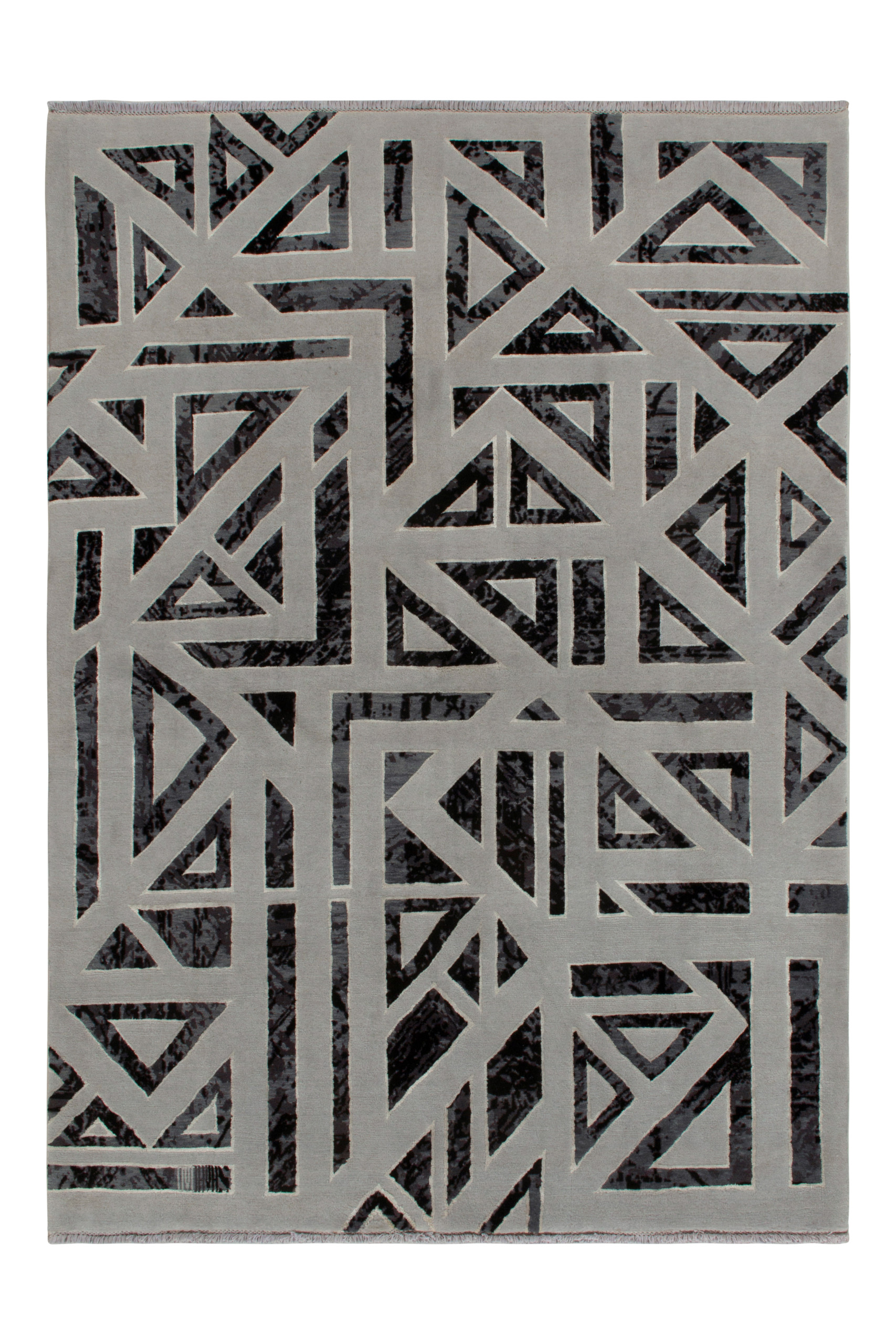
From one of our principal’s finest new partner ateliers in Iran, a bold graphic take on Art Deco rugs with an industrial mood. Featuring geometric patterns in black & gray, the rug witnesses a subtle shift of the hues within the geometry for a visually arresting appeal.
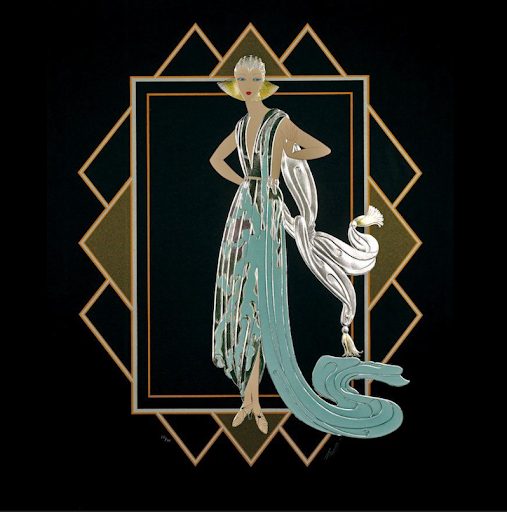
The Theatre Femina provided a significant platform for Erté, born Romain de Tirtoff, to showcase his burgeoning talent. Under the guidance of Madame Rasimi, the theater’s founder, Erté honed his skills while collaborating with Gaby Deslys, a leading French music-hall star of the era. One of Erté’s earliest and most notable costume designs is “Turquoise Dress,” which encapsulates his signature style and innovative use of color. The design features a flowing turquoise gown that cascades gracefully, creating a striking contrast against the dynamic black background and the sparkling silver folds of the dress. The composition is further enhanced by a geometric pattern of rectangles and squares, deeply embossed and metal-foiled to add depth and drama.
Originally titled “Turquoise Dress,” this design later became known as “California (Turquoise Dress)” to reflect its embodiment of American opulence and excess, particularly resonant in California during that era. The piece symbolizes Erté’s creativity and his passion for theatrical design, combining intricate detail with dreamlike fantasy to create a sense of escapism and spectacle. “California (Turquoise Dress)” stands as a testament to Erté’s mastery of technique and his perfectionist approach, showcasing his ability to create small-scale compositions with precision and elegance. This design, like many of Erté’s early theatrical works, survives today only through his meticulous and evocative illustrations, underscoring the genius of his vision.
- Decorative Bold Floral Patterns
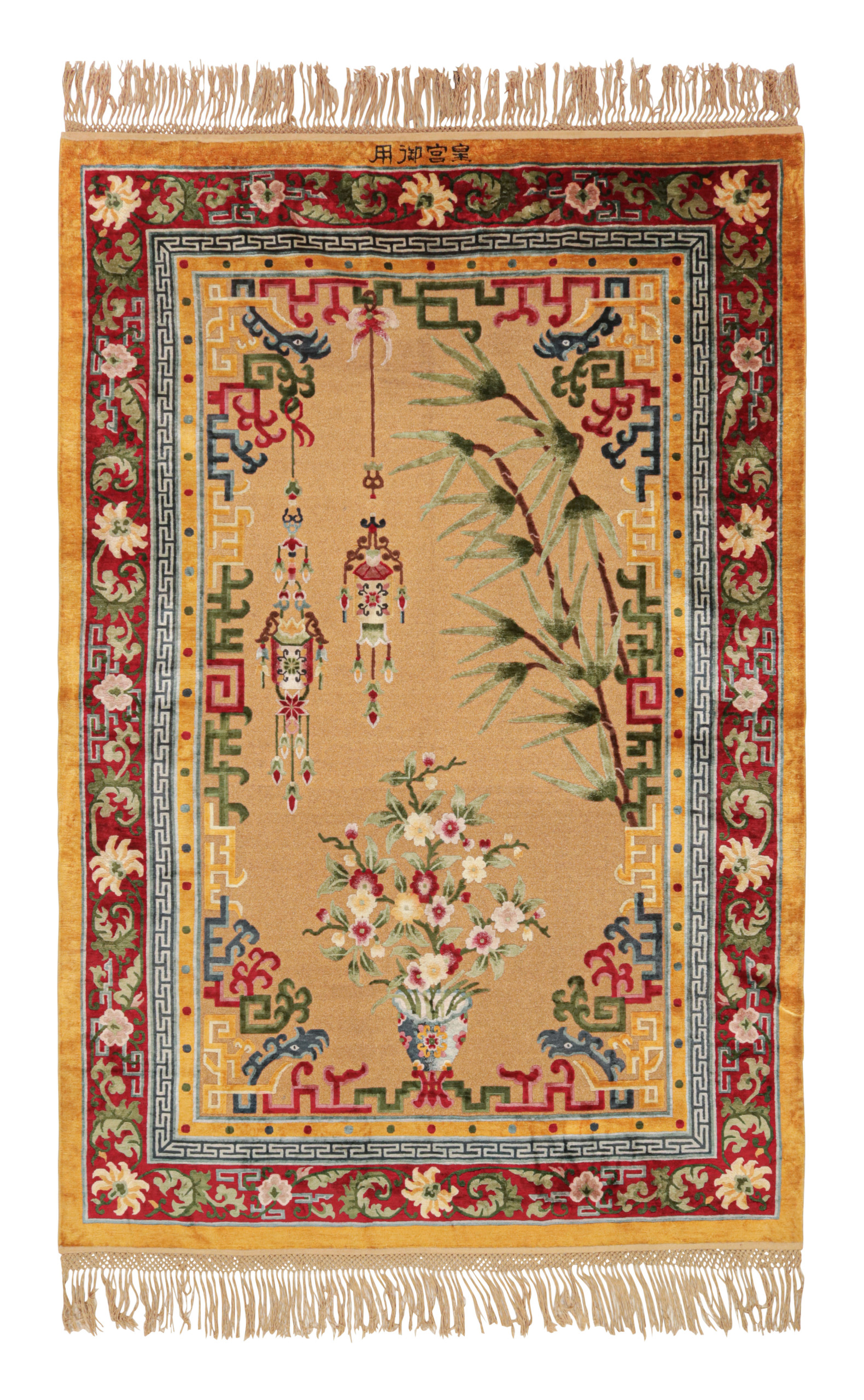
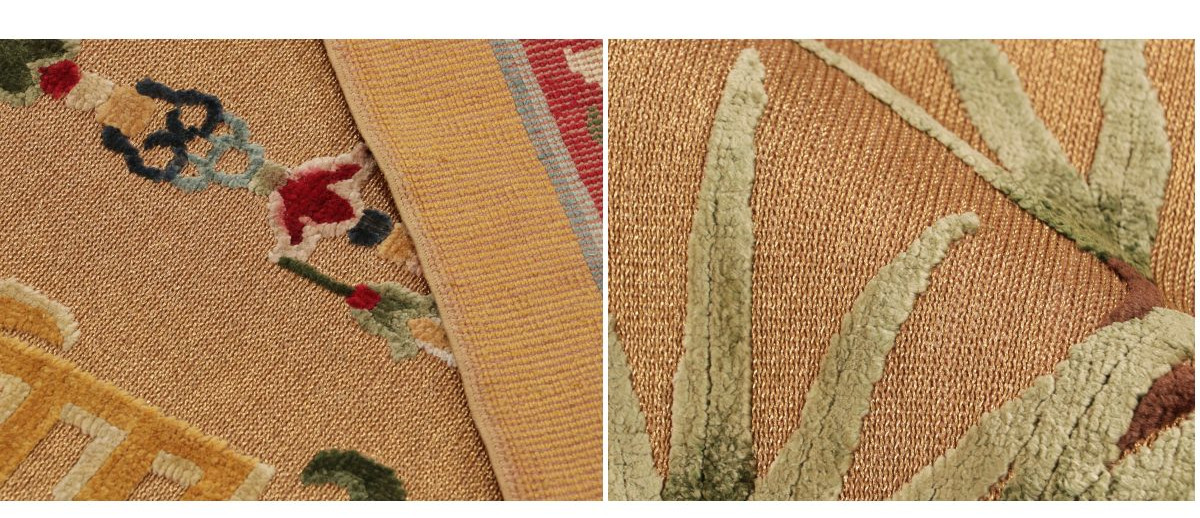
Hand-knotted in a very special new construction blending wool and metallic threads, this 6×9 piece is one of the most luxurious in our textures and a fabulous new look at the Chinoiserie style.The gold field and red border tones underscore a play of pictorials and florals inspired by Nichols pieces.
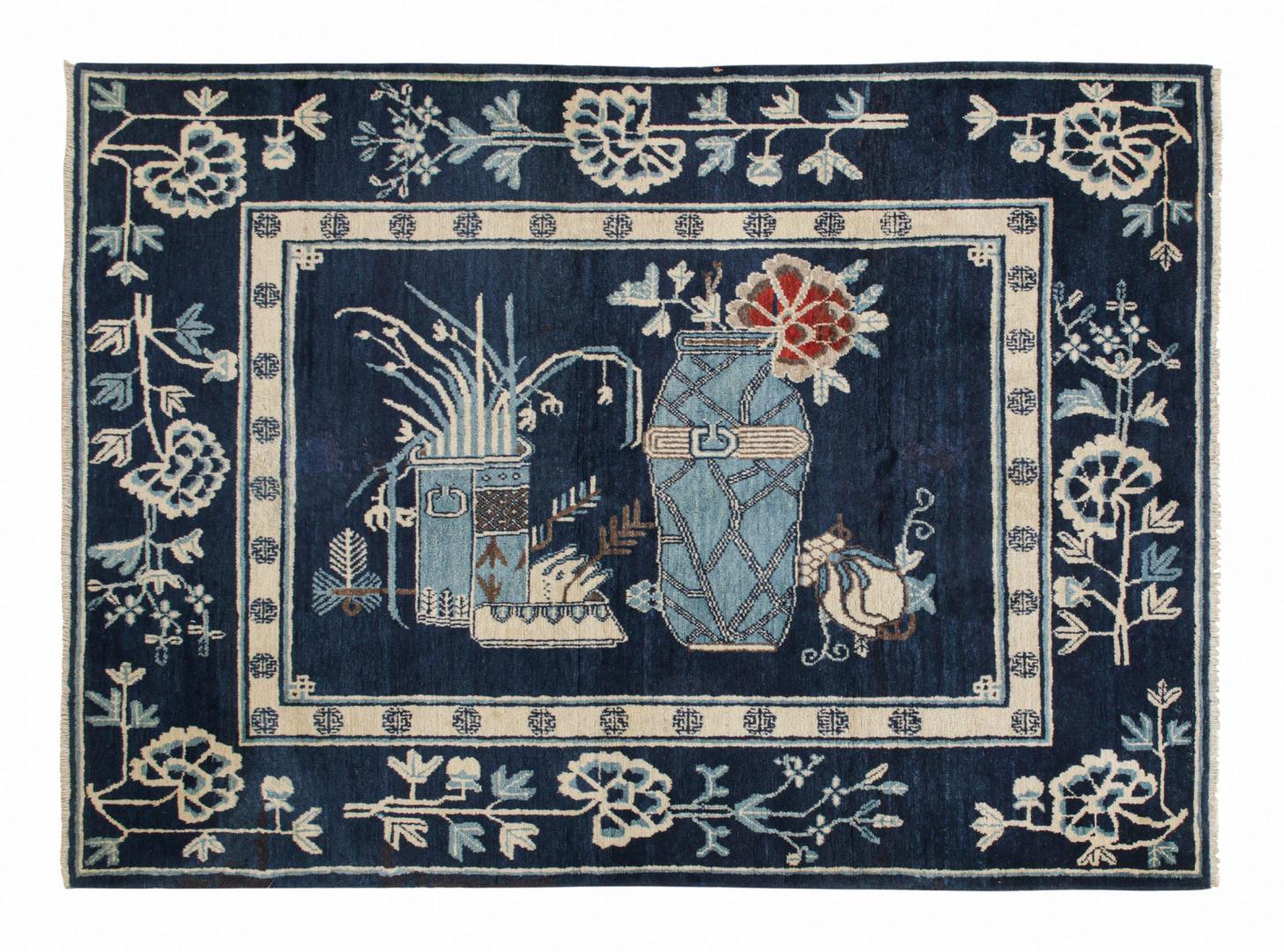
Connoisseurs will admire what an unusual design this art deco piece enjoys—particularly in its play of pattern and color. Its pictorial design with jars and flowers is much like those in Khotan Samarkand rugs, while its navy blues and ivory whites explore a Peking sensibility. The play of these sensibilities together likely remarks a very special, collectible piece from an atelier of this period.
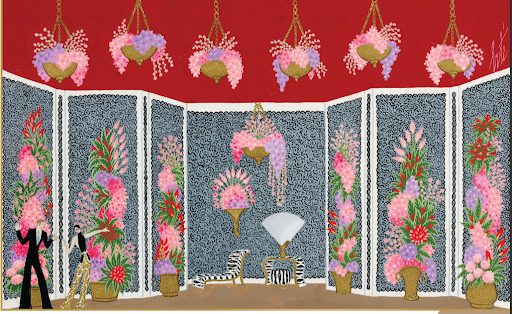
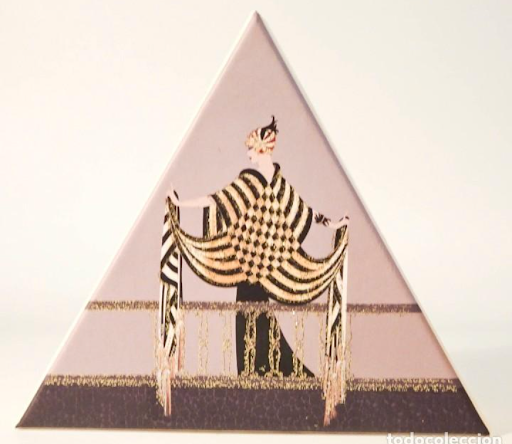
Zizi Jeanmaire, a renowned French ballerina and chanteuse, was both a friend and creative collaborator to Erté. Her illustrious career featured standout performances in the ballet Carmen, the Hollywood film Anything Goes, and numerous Parisian revues. In La Loge, Erté captures an intimate view of Jeanmaire’s dressing room, rendering it with grand flair. The scene is adorned with colorful florals and bold patterns on the walls, with the vanity mirror, where Jeanmaire styled her signature bob hairstyle, taking center stage.