
Style
Peru
Every piece in this style, across all of our collections. Narrow them down by size and price.
- Under 6 x 9
- Runners
- 6 x 9
- 8 x 10
- 9 x 12
- 10 x 14
- 12 x 15
- Over 12 x 15
Origin ▼
Style ▼
Material ▼
Width
Length
To connect with a specialist, click here
Stories from the Peru Archive
Essays, artist dialogues, and provenance notes drawn from Rug & Kilim’s editorial desk.
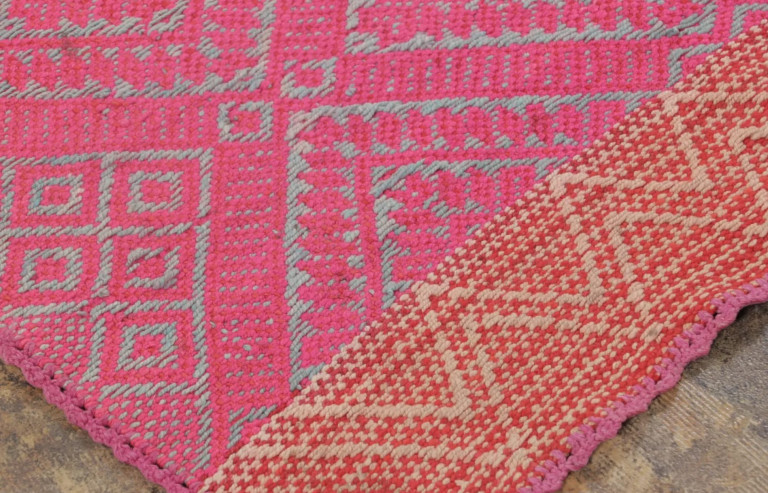
Vintage Andean Frazada Kilim and the Three Thousand Years of Living Memory Held in Its Weave
The most sophisticated rooms in America are being furnished, increasingly, with an object its makers never intended to sell. The Andean frazada, a handwoven kilim produced for centuries in the high villages of Peru and Bolivia for one reason only, to survive the cold, has become one of the most quietly coveted textiles in contemporary design. Collectors who could specify anything are choosing these. The reason has nothing to do with trend, and everything to do with what a frazada actually is. To understand a frazada, you must first understand the altitude. Above four thousand meters in the Andes, higher than any peak in the contiguous United States, in air so thin that newcomers move slowly and sleep poorly for days, the cold is not a season. It is a constant. It arrives every night, regardless of the calendar, and it has arrived every night for as long as people have lived in these mountains. The frazada was the answer to that cold: a thick, dense, hand-woven wool blanket, made not for sale, not for export, not for the floors of distant apartments, but for survival. For warmth. For the bed of a family that would not otherwise make it through the dark.
Read the Feature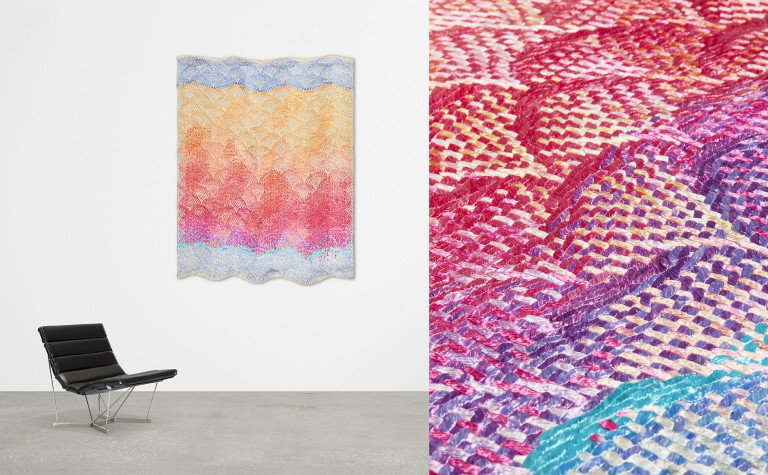
The Layered Home: 5 Ways to Rethink Floor Rugs and Wall Tapestries
The real spatial dimension does not get painted, it gets woven. Begin with hanging a piece such as Signed Vintage Lia Cook Tapestry slightly off-center on one of your main walls. Its intricate Jacquard weave and the friction created between its rayon and linen fibers will require a lot of breathing room, immediately establishing a gravitational pull of the whole room. But to balance this vertical tension, the ground beneath your feet needs to become much more rigorous. With the use of a rigorously beaten warp-faced plane such as cotton Indian Dhurrie or Antique Swedish Röllakan's interlocking tapestry weave, you create a flat but structurally resistant base. A ground made from a rigidly woven material needs to be challenged. The last textural transition will come from placing a Vintage Frazada Kilim with heavy weft interlace across your warp-faced plane. The act of overlapping your heavy weft on a rigorously
Read the Feature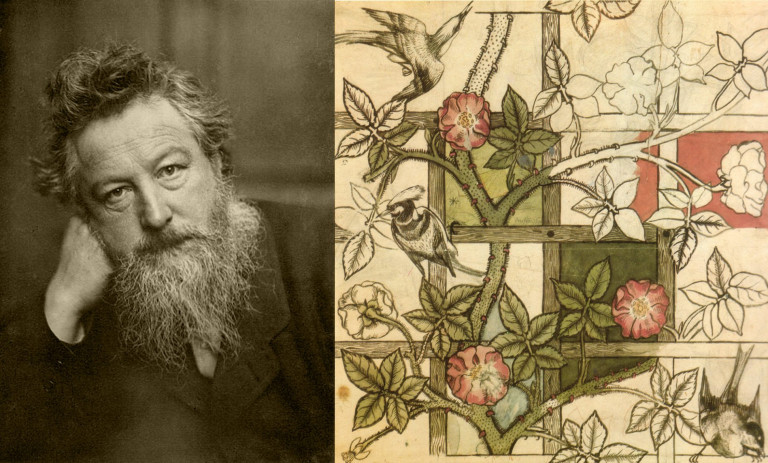
What William Morris, Paul Poiret, and the Bauhaus Each Understood About the Rug and What French Art Deco Proved
In the winter of 1883, William Morris stood before a room full of wool merchants, manufacturers, and assorted Victorian worthies in a lecture hall in Birmingham and said something that no one in that room was prepared to hear. The decorative arts, he told them, were not decorative at all. They were the most serious form of human making and their degradation under industrial production was not an aesthetic problem but a civilizational one. He had brought, as he often did, an Oriental carpet to make his point. Then he said, in effect: this is what we have lost the capacity to make, and until we recover it, we have no business calling ourselves a culture.
Read the Feature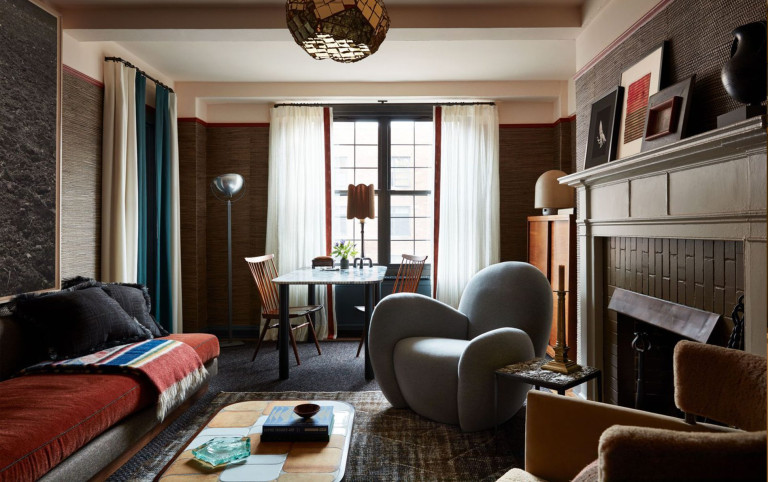
Zeki Müren, Da Silva Bruhns, and Leleu: How These Artists Transformed Rugs into the Language of Modernism
The story of modernism in textiles is often told through architecture, painting, and furniture. Yet, some of the most radical ideas of the 20th century were not framed on walls or set on pedestals—they were laid underfoot. Rugs, once treated as either anonymous craft or as inherited luxury, became a medium for modernist expression. Few figures embody this transformation more than Zeki Müren, Da Silva Bruhns, and Leleu. Each worked in distinct cultural contexts—Müren in postwar Turkey, Da Silva Bruhns in interwar France, and the Leleu firm across early- to mid-century Paris—but together they reframed rugs not as decoration but as a language: one capable of abstraction, geometry, rhythm, and modern life.
Read the Feature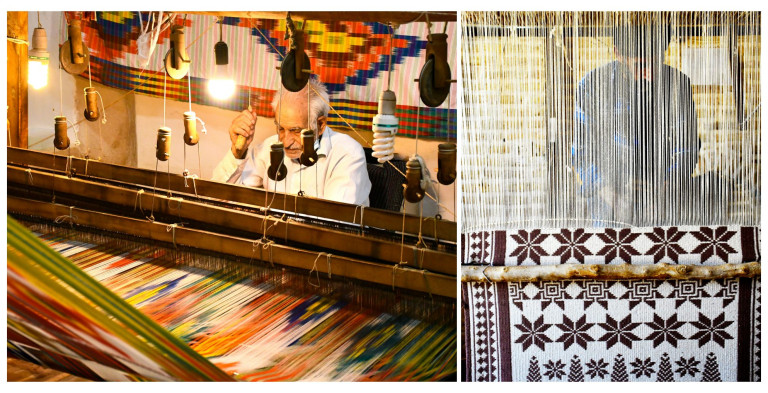
Ikat Textiles and Rugs – A Profile on History, Styles, Patterns and Weaving
The art of ikat weaving spans centuries and continents, producing textiles that range from intricately detailed to boldly abstract. Its blurred, feathered, or jagged patterns can be found across diverse regions—from Japan in the east to Central and South America in the west, encompassing vast areas of Southeast Asia, India, Central Asia, and the Middle East in between. These patterns continue to hold deep cultural significance in the traditional ikat-weaving communities, resonating with historical narratives and societal values. Ikat Samples from our Archive. Shop our 'Ikat' full pieces here >>
Read the Feature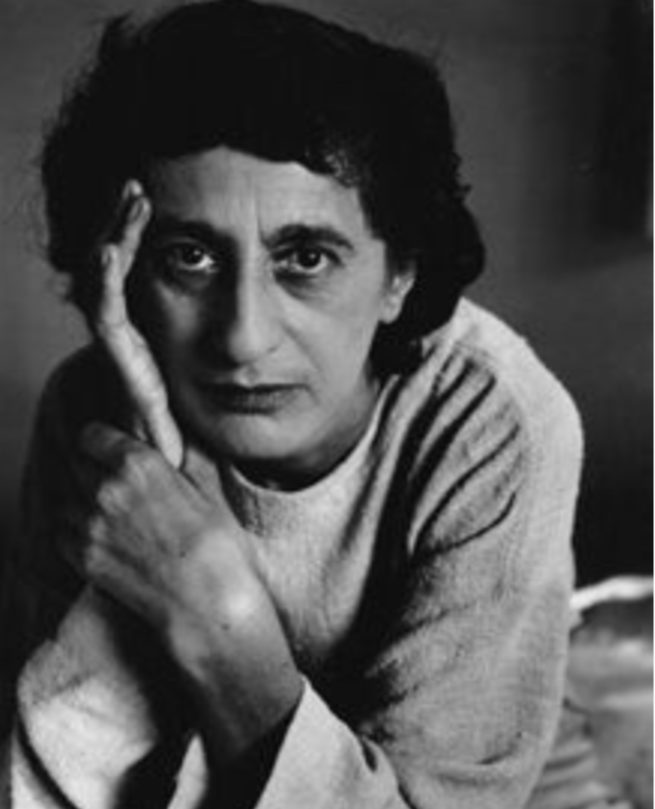
A Profile on Bauhaus Master Anni Albers – The “Godmother of Textile Arts”
Anni Albers's significance lies in her transformative impact on textiles, elevating weaving to the status of an art form. At a time when early 20th-century Western fine art was largely confined to painting and sculpture created by men, Albers broke through the conventional boundaries and introduced textiles as a legitimate medium for artistic expression. Her groundbreaking influence became evident in 1949 when the Museum of Modern Art hosted an exhibition solely dedicated to Albers's work, titled "Anni Albers Textiles" This event marked the first instance of a textile artist being featured in a solo show at the prestigious institution. The exhibition, which showcased Albers's innovative and artistic approach to weaving, traveled to 26 museums across the United States and Canada. Albers coined the term "pictorial weaving" for her intricate woven abstractions, emphasizing thread as a carrier of meaning.
Read the Feature