Style
Qashqai
Every piece in this style, across all of our collections. Narrow them down by size and price.
- Under 6 x 9
- Runners
- 6 x 9
- 8 x 10
- 9 x 12
- 10 x 14
- 12 x 15
- Over 12 x 15
Origin ▼
Style ▼
Material ▼
Width
Length
To connect with a specialist, click here
Stories from the Qashqai Archive
Essays, artist dialogues, and provenance notes drawn from Rug & Kilim’s editorial desk.
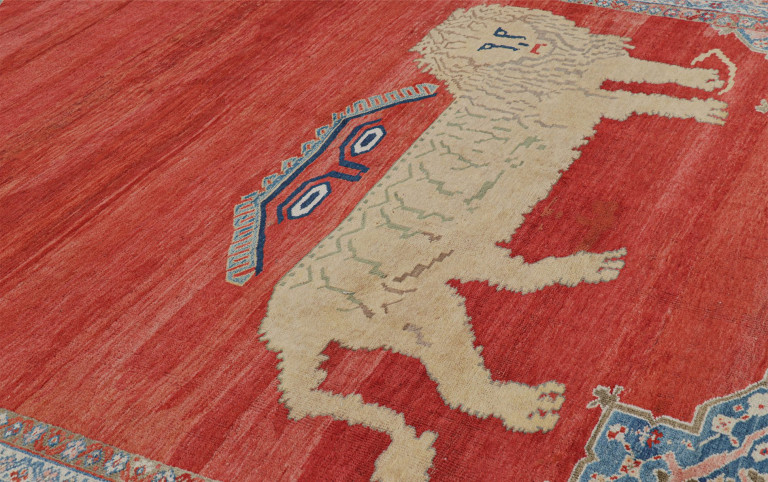
Rug of the Week V: A 1920s Lion Mahal Rug and Persia’s Folk-Imperial Dialogue
Not all rugs whisper beauty. Some confront, some provoke, and some stand strong of their age. This 1920–30 Persian Mahal lion carpet belongs emphatically to the latter. Its scale alone commands attention, but it is its audacity of imagery—two lions poised across a crimson ground, punctuated by talismanic eyes—that distinguishes it from its peers. What could have been another workshop carpet for export markets instead asserts itself as an emblem of power, politics, and folk poetics. It is not only a rug to be admired, but one to be read. The Provenance: Mahal as a Crossroads Mahal rugs occupy a fascinating place in Persian weaving history. Located in northwestern Iran, the Mahal region became particularly significant during the late 19th and early 20th centuries as European demand reshaped Persian textile production. Western markets craved large-scale carpets for townhouses and institutions, and Mahal—situated near Sultanabad, a major weaving hub—supplied. These rugs often combined refined city-border designs with the looser, more organic hand of village weavers.
Read the Feature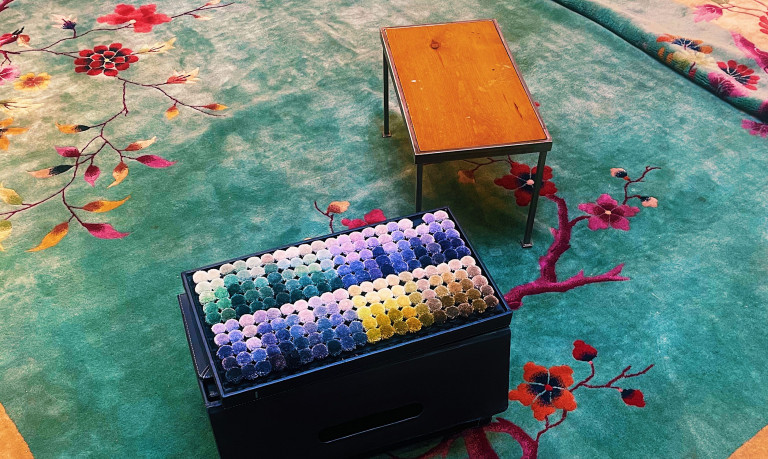
The Politics of Color in Rugs and Kilims: Empire, Trade, and Exchange
Color in rugs has never been neutral. The shades that suffuse carpets — indigo blues, cochineal reds, madder browns, saffron yellows — are more than decorative decisions. They are residues of diplomacy, markers of empire, and the evidence of global networks of exchange. To trace the dyes of rugs is to trace the political economies of trade, colonial ambition, and cultural symbolism. From Persian bazaars to European ateliers, from Qing workshops to Anatolian tribal looms, the politics of color is an intricate part of textile history. The Power of Indigo in Rugs: Monopolies and Empires Indigo, the dye that rendered Chinese Peking rugs in their profound blues and colored Persian carpets with celestial depth, was once the lifeblood of empires. For centuries, India dominated indigo cultivation, with Bengal’s plantations feeding global markets. The British East India Company leveraged indigo as both a commodity and a tool of control, fueling colonial exploitation and sparking resistance — the Indigo Revolt of 1859 being one such outcome. Within rugs, indigo symbolized prestige and endurance, as its colorfastness outlived many natural pigments. A Persian indigo field was not merely aesthetic; it was a statement of access to trade networks under imperial scrutiny.
Read the Feature
Signatures and the Art of Attribution in Luxury Rugs: Collecting with Provenance and Prestige
A Picasso or a Lalique needs no introduction — the signature itself becomes shorthand for genius, provenance, and prestige. In the world of collectible textiles, authorship is often elusive. Unlike paintings or sculpture, where an artist’s hand is documented and celebrated, rugs were historically anonymous — woven for use, dowry, or devotion, rather than individual fame. Yet over centuries, a quiet tradition of “signatures in thread” has emerged: marks, cartouches, inscriptions, or motifs that elevate a rug from being a functional textile to an authored artwork. These signatures, whether literal or symbolic, have become the connoisseur’s key to provenance, prestige, and value.
Read the Feature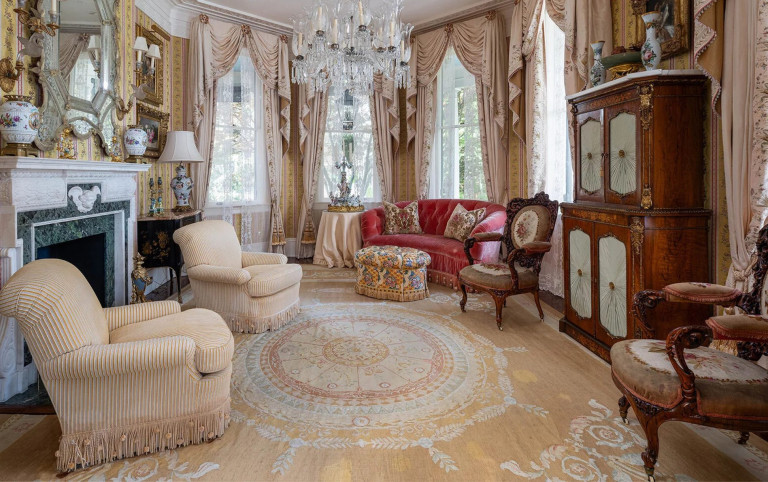
How Rugs Frame and Define the Modern Open Interior: Defining Spaces From Palace Halls to Loft Living
The open-concept space is the modern equivalent of the grand hall and the ceremonial courtyard—a place where boundaries dissolve, yet zones must still be understood. In open-concept interiors—those vast, uninterrupted expanses where living, dining, and work areas coalesce—rugs operate as more than mere surface coverings. They translate the architectural intent of a room into lived experience, delineating invisible borders through proportion, motif, and material. They are architectural anchors, narrative devices, and cultural emissaries. A well-chosen rug brings not only visual cohesion but also historic depth, artisanal integrity, and tactile luxury to a space that might otherwise feel adrift. The placement of a rug in such environments is an act of both design precision and curatorial decision-making—akin to hanging a masterwork in a gallery.
Read the Feature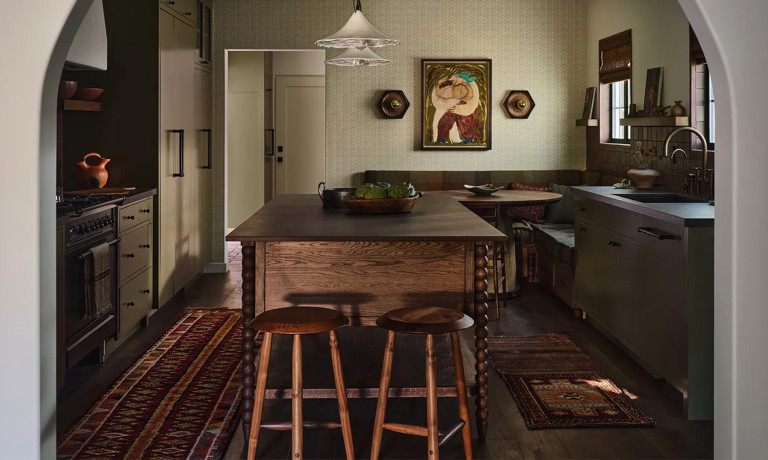
What Makes Qashqai Kilims Unique? Inside the World of Persian Tribal Rugs and Flatweaves
As seen in Domino Magazine, featuring our Kilim rug, designed by Los Angeles design firm A1000XBetter, founded by Kirsten Blazek. Over the last four decades of collecting, studying, and preserving Kilims and Flatweaves, we have come to understand them not simply as tribal textiles, especially Qashqai kilims, which are documents authored by women whose names we will never know, yet whose design decisions resonate across centuries. Every kilim in a collection is a fragment of a larger ethnographic narrative of movement, negotiation, and encoded survival. What begins as a study in tribal design inevitably becomes a reflection on how memory operates in material form. As collectors and custodians, we have come to understand these pieces less as possessions and more as conversations—between past and present, utility and abstraction, territory and transcendence. They speak to the same values that define the most forward-thinking design philosophies: sustainability, material honesty, visual intelligence, and narrative depth.
Read the Feature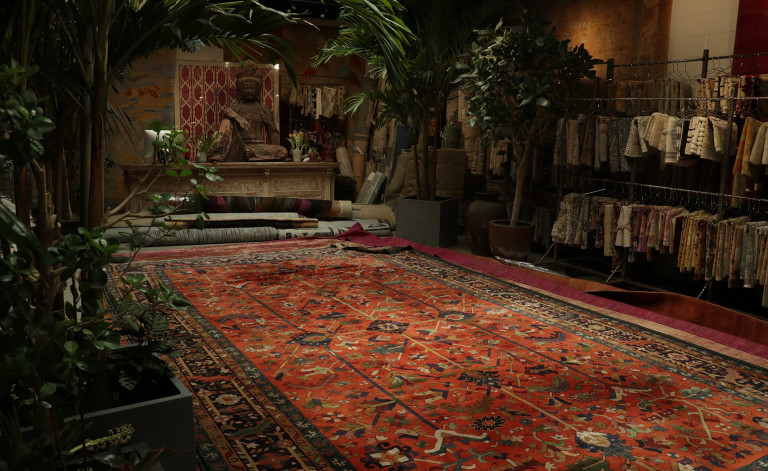
The Persian Afshar Rug as Art, Tribal Artifact, and Archive
Afshar rugs are among the most compelling expressions of nomadic Persian weaving. Originating from the Afshar tribe—a semi-nomadic Turkic-speaking group with roots in Central Asia—these rugs represent a distinct confluence of tribal tradition, migratory culture, and artisanal precision. Today, Afshar rugs are recognized for their deeply saturated natural dyes, structurally sound weaving, and the geometric clarity of their aesthetic—qualities that place them alongside Baluch, Shahsavan, and Qashqai weavings in the taxonomy of Persian tribal carpets. Historical Provenance: From Oghuz Migration to Iranian Plateau The Afshars were originally part of the Oghuz Turkic confederation and migrated into Iran during the Seljuk and later Safavid periods (11th–17th centuries). By the 18th century, Afshar tribes were prominently settled in southeastern Iran, particularly around Kerman, Sirjan, Baft, and Rafsanjan—regions that would become critical nodes of rug production.
Read the Feature