Style
Shahsavan
Every piece in this style, across all of our collections. Narrow them down by size and price.
- Under 6 x 9
- Runners
- 6 x 9
- 8 x 10
- 9 x 12
- 10 x 14
- 12 x 15
- Over 12 x 15
Origin ▼
Style ▼
Material ▼
Width
Length
To connect with a specialist, click here
Stories from the Shahsavan Archive
Essays, artist dialogues, and provenance notes drawn from Rug & Kilim’s editorial desk.
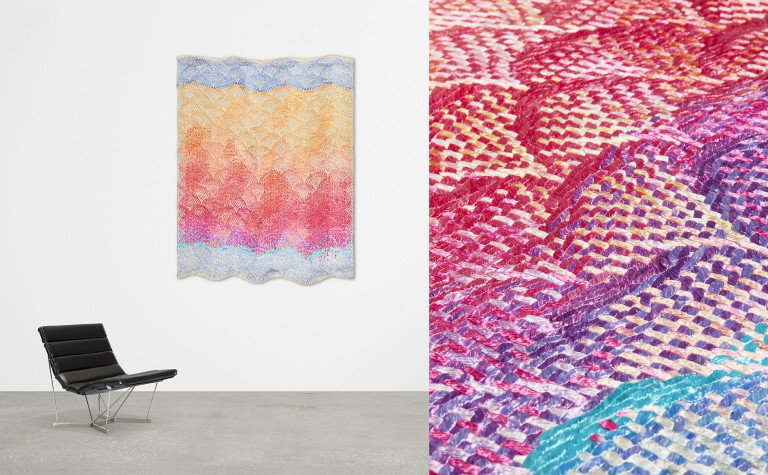
The Layered Home: 5 Ways to Rethink Floor Rugs and Wall Tapestries
The real spatial dimension does not get painted, it gets woven. Begin with hanging a piece such as Signed Vintage Lia Cook Tapestry slightly off-center on one of your main walls. Its intricate Jacquard weave and the friction created between its rayon and linen fibers will require a lot of breathing room, immediately establishing a gravitational pull of the whole room. But to balance this vertical tension, the ground beneath your feet needs to become much more rigorous. With the use of a rigorously beaten warp-faced plane such as cotton Indian Dhurrie or Antique Swedish Röllakan's interlocking tapestry weave, you create a flat but structurally resistant base. A ground made from a rigidly woven material needs to be challenged. The last textural transition will come from placing a Vintage Frazada Kilim with heavy weft interlace across your warp-faced plane. The act of overlapping your heavy weft on a rigorously
Read the Feature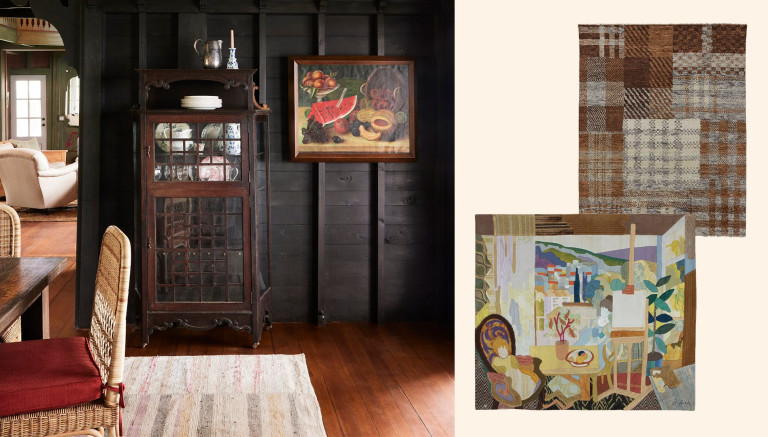
How the World’s Most Serious Art Spaces Are Rewriting the Rules of the Floor and the Contemporary Home
There is a room at Hauser & Wirth Somerset; the gallery that occupies a converted farmhouse in the English countryside, where Pipilotti Rist installations have shared walls with Phyllida Barlow sculptures and where the building itself feels like an argument against the idea that serious art requires a white cube to be taken seriously, where a single large antique textile lies on the stone floor beneath work of radical contemporary ambition. It does not announce itself. It simply holds the room together with the authority of an object that has been doing exactly this, in exactly this way, for several centuries longer than the art above it has existed. The artists whose work hangs on those walls have spent their careers thinking about surface, material, and the relationship between an object and the space it occupies. The carpet understood all of this before any of them picked up a brush.
Read the Feature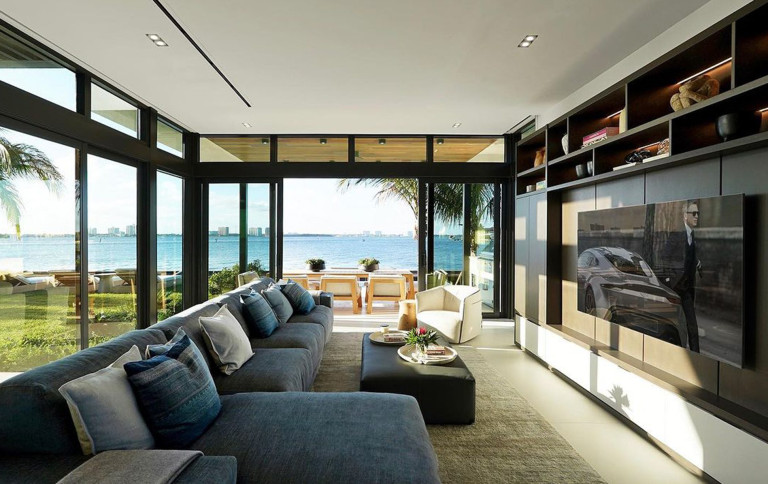
Luxury Coastal Rugs: Styling High-End Interiors from the Hamptons to the French Riviera
The Problem with “Effortless” The most convincing coastal interiors in the world share a peculiar quality: they appear inevitable. Rooms in the Hamptons, along the French Riviera, in Malibu or Mallorca seem to arrive fully formed; light moving freely, materials perfectly resolved, nothing excessive, nothing missing. The effect is so seamless that it risks being misunderstood as ease. Coastal design, at its highest level, is one of the most demanding exercises in interior architecture. It allows for no distraction, no indulgence, and very little forgiveness. When a room is reduced to light, proportion, and material, every decision becomes visible.
Read the Feature
Designing Across Eras: Persian, Art Deco & Scandinavian Influences for the Modern Interior
There is a quiet misconception in contemporary interiors: that rugs belong to style categories, that they serve periods, that they follow trends. At Rug & Kilim, we see something different. We see a continuum — a lineage that begins in imperial courts, evolves through European ateliers, collides with modernism, and extends into the custom future of today’s architectural spaces. Textiles have never merely decorated history. They have shaped it. What follows is not a chronology of rugs. It is a narrative of power, authorship, reform, and reinvention — and why designing across eras, rather than within them, is the most intelligent way forward.
Read the Feature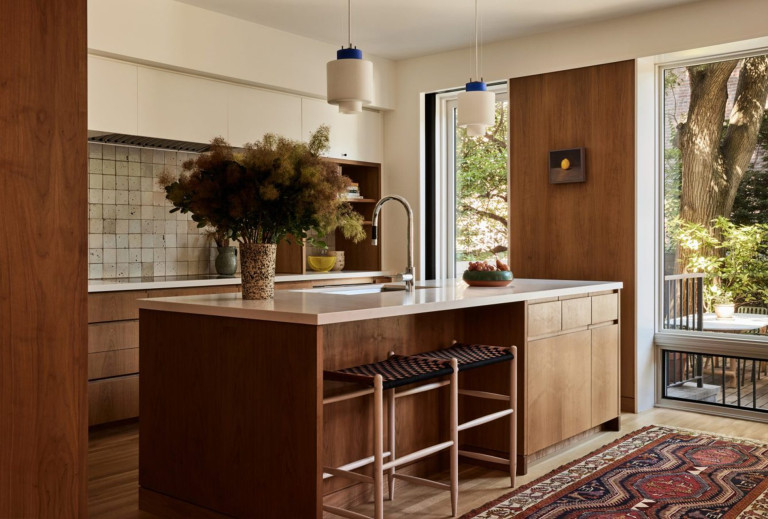
Where Do Gallery Runner Rugs and Kilims Belong Today?
Rug & Kilim's Vintage Persian Shahsavan Kilim at Neo Tudor Townhouse. Featured in 1st Dibs Introspective. Gallery runners—those elegant, elongated rugs once devised for palaces and townhouses—have never felt more contemporary. In a world of hard finishes and open plans, they choreograph movement, soften acoustics, and bring a refined, tactile line through space. Used well, a runner doesn’t decorate; it directs. What we mean by “gallery runner” Historically, narrow carpets sat alongside main room carpets as kenareh (runners) in Persian interiors; related “gallery” formats occupy a wider, longer proportion that reads as an architectural band rather than a mat. In today’s market, “runner” and “gallery” are often used interchangeably, but the difference is scale: runners are typically 2–3 ft wide, while gallery carpets widen out, retaining that elongated axis. (For terminology and proportions, see established dealer glossaries defining kenareh vs. gallery-size rugs. )
Read the Feature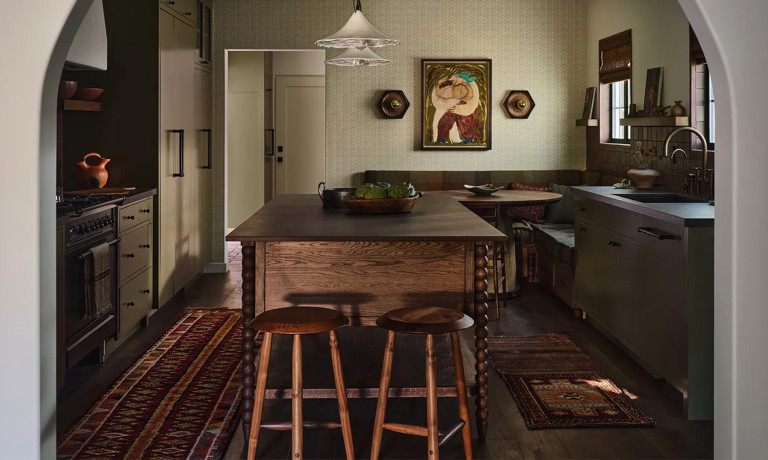
What Makes Qashqai Kilims Unique? Inside the World of Persian Tribal Rugs and Flatweaves
As seen in Domino Magazine, featuring our Kilim rug, designed by Los Angeles design firm A1000XBetter, founded by Kirsten Blazek. Over the last four decades of collecting, studying, and preserving Kilims and Flatweaves, we have come to understand them not simply as tribal textiles, especially Qashqai kilims, which are documents authored by women whose names we will never know, yet whose design decisions resonate across centuries. Every kilim in a collection is a fragment of a larger ethnographic narrative of movement, negotiation, and encoded survival. What begins as a study in tribal design inevitably becomes a reflection on how memory operates in material form. As collectors and custodians, we have come to understand these pieces less as possessions and more as conversations—between past and present, utility and abstraction, territory and transcendence. They speak to the same values that define the most forward-thinking design philosophies: sustainability, material honesty, visual intelligence, and narrative depth.
Read the Feature