Style
Textiles
Every piece in this style, across all of our collections. Narrow them down by size and price.
- Under 6 x 9
- Runners
- 6 x 9
- 8 x 10
- 9 x 12
- 10 x 14
- 12 x 15
- Over 12 x 15
Origin ▼
Style ▼
Material ▼
Width
Length
To connect with a specialist, click here
Stories from the Textiles Archive
Essays, artist dialogues, and provenance notes drawn from Rug & Kilim’s editorial desk.
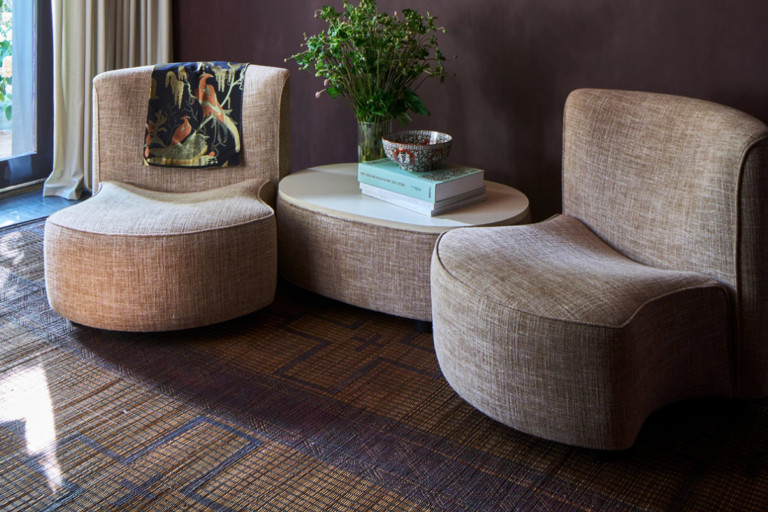
Tuareg Textiles and Design: History, Tribal Craft, and Contemporary Influence
The Sahara has never been short of ideas. It has merely been selective about who hears them. The Tuareg did not set out to create an aesthetic. They created a system. Long before design was professionalized, categorized, or monetized, Tuareg artisans developed a material language governed by movement, restraint, and exacting necessity. What remains today — in textiles, metalwork, and spatial logic — is not folklore but authorship: a coherent design intelligence that continues to inform contemporary practice, whether acknowledged or not. At Rug & Kilim, we approach Tuareg works not as ethnographic specimens, nor as romantic artifacts, but as foundational design objects. They belong not on the margins of decorative history, but firmly within its canon.
Read the Feature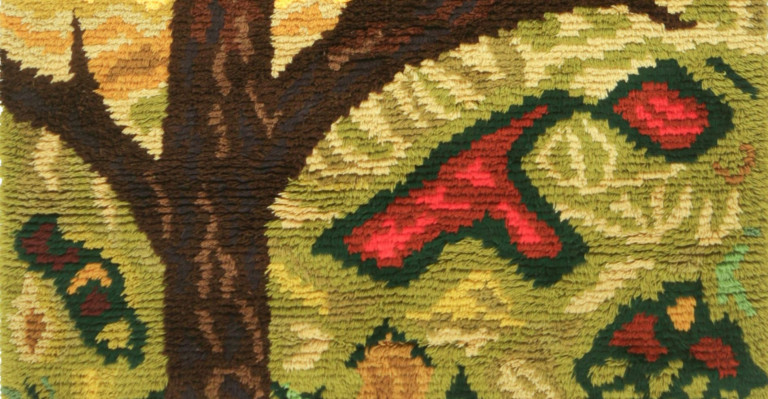
Swedish Rya Rugs in Art, Architecture, and Culture: The High Art of Scandinavian Textiles
There are moments in design history when an object transcends its origins and becomes elemental — a distilled form of cultural continuity, tactile intelligence, and silent authorship. The Swedish Rya rug is one such object. At once sculptural and symbolic, utilitarian and conceptual, it occupies a singular position at the intersection of textile art, Nordic heritage, and the 20th-century design canon. Rya rugs — with their distinctive long pile, deep textural vocabulary, and chromatic abstraction — are no longer merely archival textiles. They are now being recontextualized by leading curators, collectors, and architects as fine art pieces, ceremonial heirlooms, and textural interventions in high-design interiors.
Read the Feature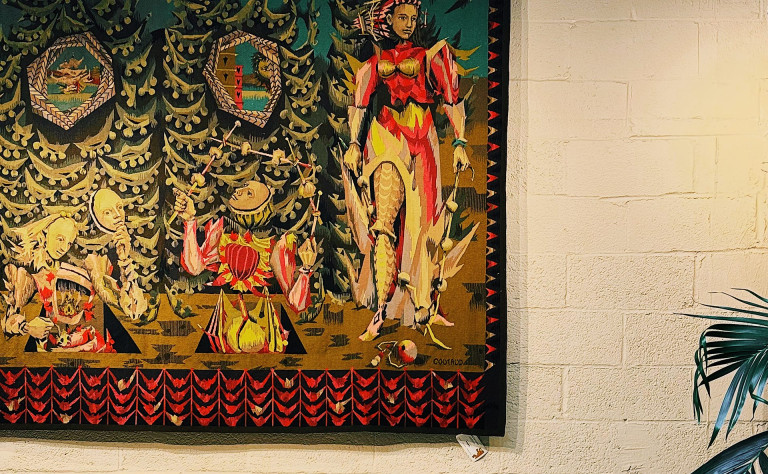
Rugs, Tapestries, and the Return of Sacred Interiors: The Fifth Wall of Heirloom Textiles
Enter a collector’s Renaissance salon, where gilded light grazes the shoulder of a Ghirlandaio Madonna and the stillness of a sculpted torso speaks in the silence. Amid this elegance, the floor carries more than weight—it carries narrative. Here lies not just a rug, but a woven fresco, steeped in geometry, texture, and time. It hums like a Savonnerie carpet, blooms like an Aubusson tapestry, and speaks with the visual rhythm of a Raphael altarpiece. At Rug & Kilim, we do not view rugs as mere furnishings. We position them as portable chapels of artistry, loom-born canvases that deserve their place among the highest expressions of fine art. Like the tapestries that once graced European castles and cathedrals, heirloom rugs were once sacred commissions—symbolic, status-laden, and spiritually charged. The time has come to restore their dignity, and to elevate them from décor to design doctrine.
Read the Feature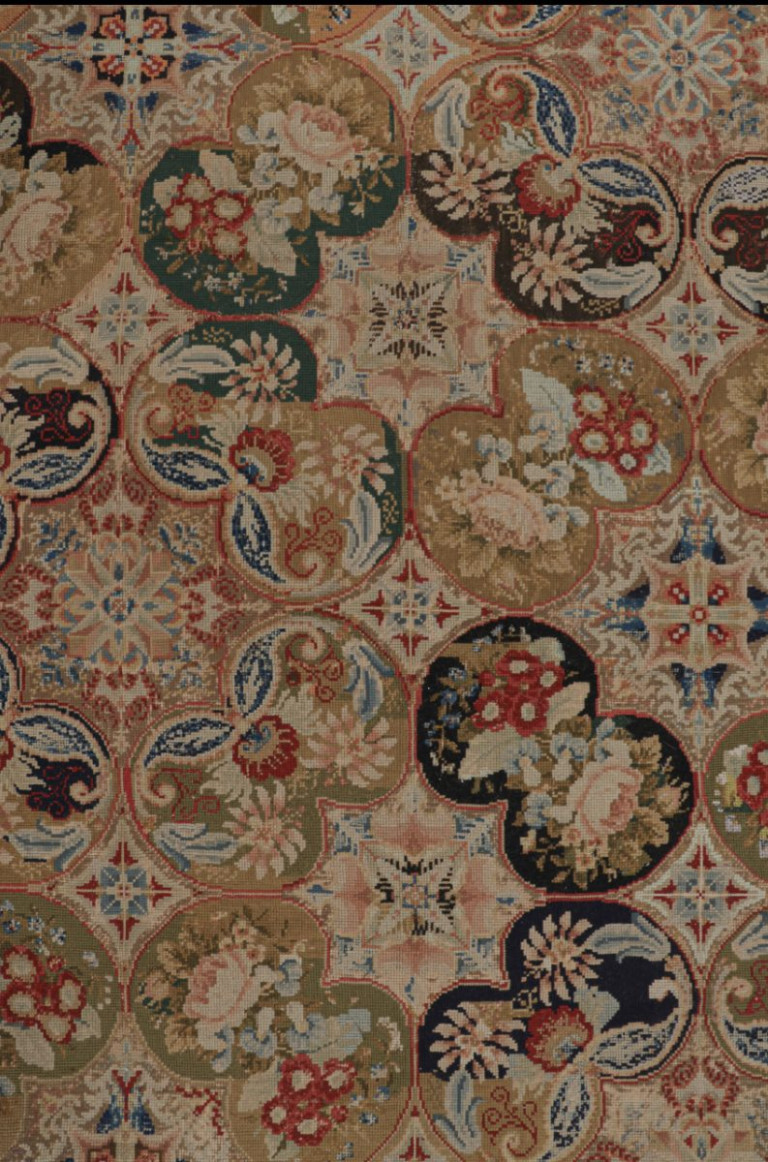
A Guide to Needlepoint Rugs: Aristocratic Art of European Textiles
In the realm of floor coverings, needlepoint rugs occupy a singular position. These laboriously hand-stitched masterpieces, with their characteristically tight petit point and gros point stitches, represent the intersection of European embroidery traditions and the decorative arts. Unlike their knotted or woven counterparts from the Orient, needlepoint rugs emerged from the drawing rooms of 17th and 18th century European nobility. The technique, an extension of tapestry-making traditions, involves working wool yarn through a canvas ground in small, diagonal stitches – creating surfaces of extraordinary definition and precision.
Read the Feature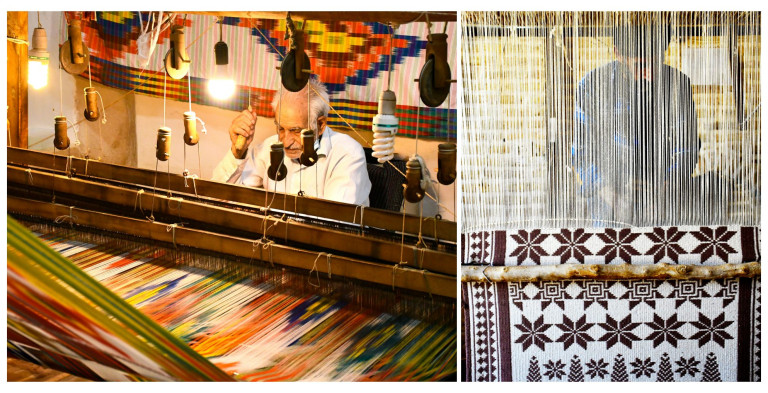
Ikat Textiles and Rugs – A Profile on History, Styles, Patterns and Weaving
The art of ikat weaving spans centuries and continents, producing textiles that range from intricately detailed to boldly abstract. Its blurred, feathered, or jagged patterns can be found across diverse regions—from Japan in the east to Central and South America in the west, encompassing vast areas of Southeast Asia, India, Central Asia, and the Middle East in between. These patterns continue to hold deep cultural significance in the traditional ikat-weaving communities, resonating with historical narratives and societal values. Ikat Samples from our Archive. Shop our 'Ikat' full pieces here >>
Read the Feature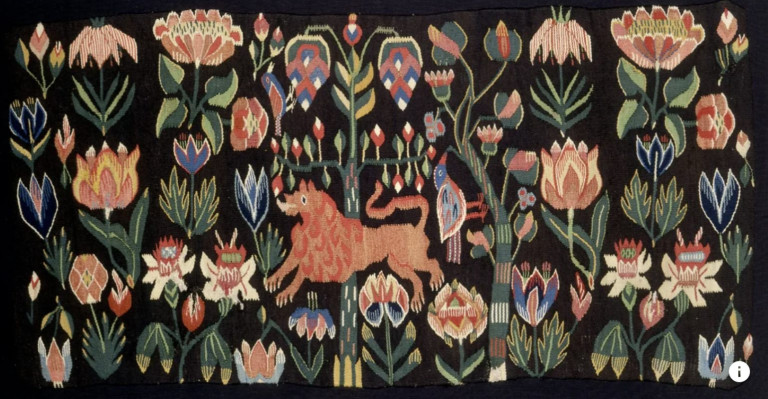
The Khalili Collection of Swedish Textiles: The Only Extensive Collection of Swedish Flatweaves Outside Scandinavia
The Khalili Collection of Swedish Textiles is a private assembly of textile art curated by the British-Iranian scholar, collector, and philanthropist Nasser D. Khalili. Developed over a span of 25 years, the collection encompasses 100 works, and it stands among eight other Khalili collections, each recognized as paramount in its respective field. Acknowledged in 2008 as "the only extensive collection of Swedish flatweaves outside the country," it predominantly features textiles originating from the Scania region in southern Sweden. The pieces predominantly date from the mid-18th to the mid-19th centuries, with a focus on a hundred-year period. Primarily crafted for wedding ceremonies, these textiles not only played a ceremonial role but also served as a testament to the artistic prowess and skill of the weavers. Often adorned with symbolic illustrations of fertility and longevity, the collection seeks to counter the undervaluation of art created by anonymous artisans, as noted by Khalili.
Read the Feature