


Turkey
5'0" X 6'9" (1.52 m x 2.06 m)
Available: Shipping As Soon As Tomorrow
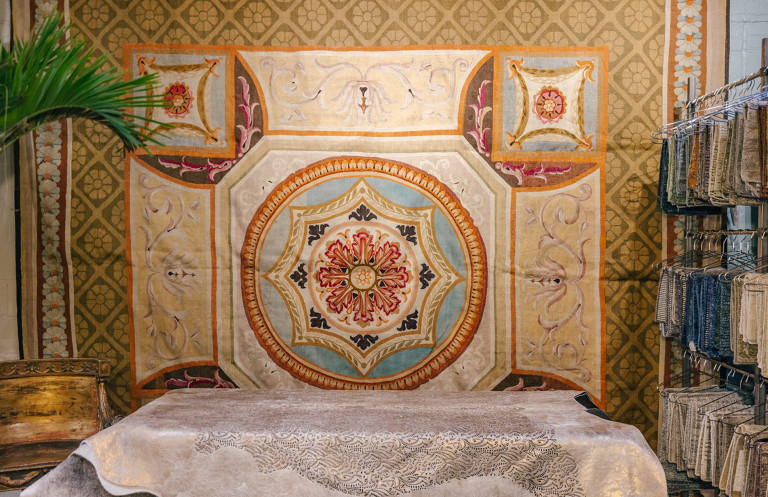
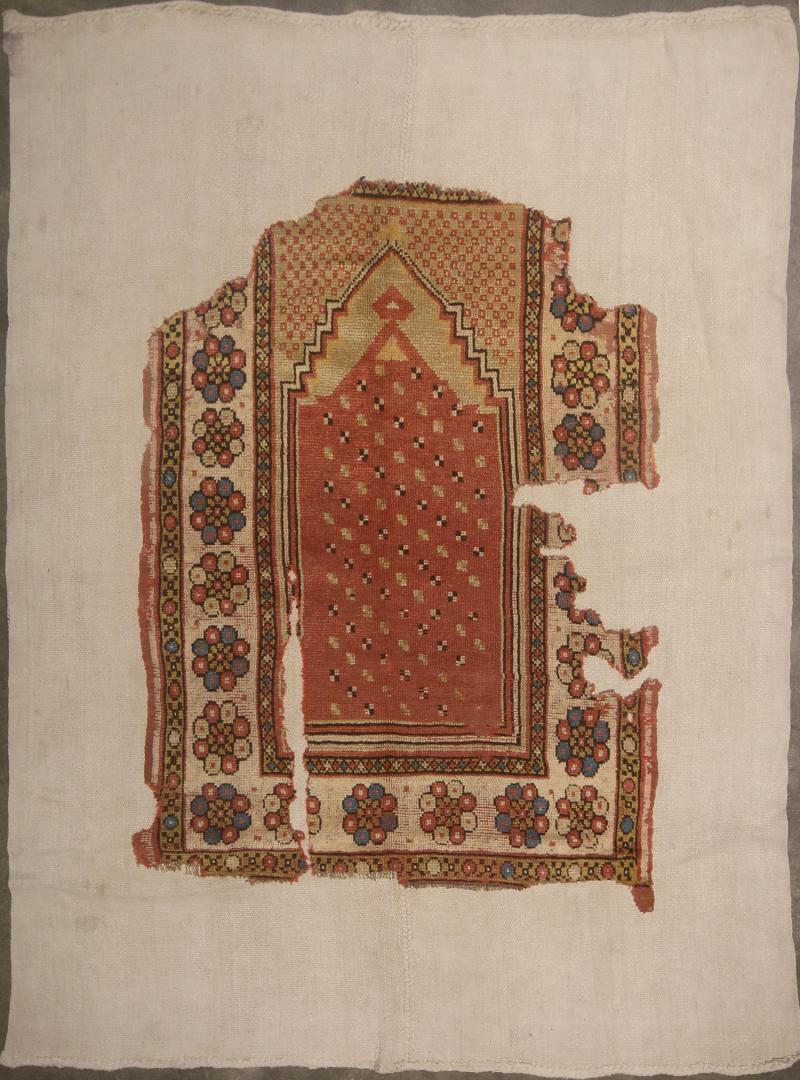
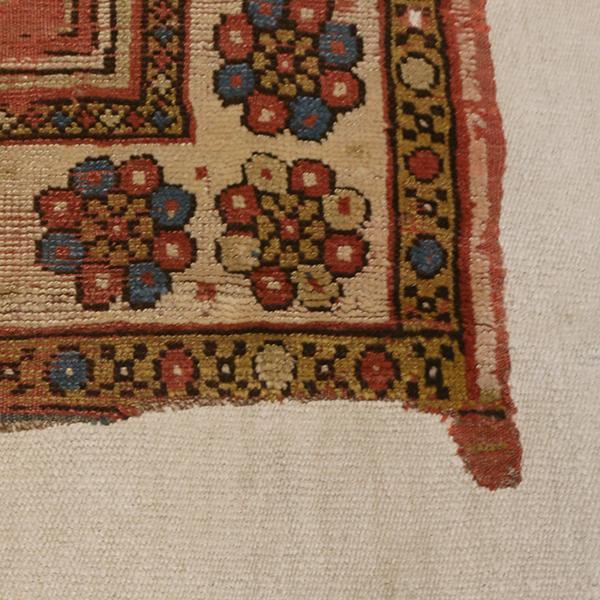
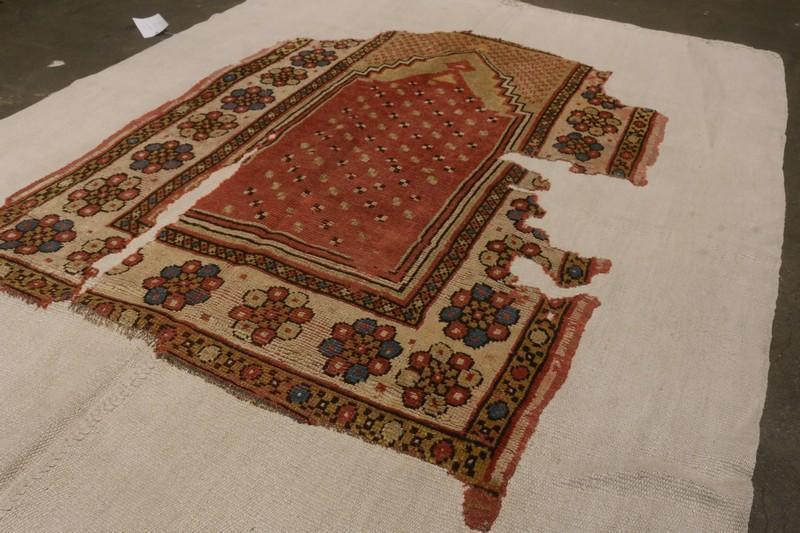
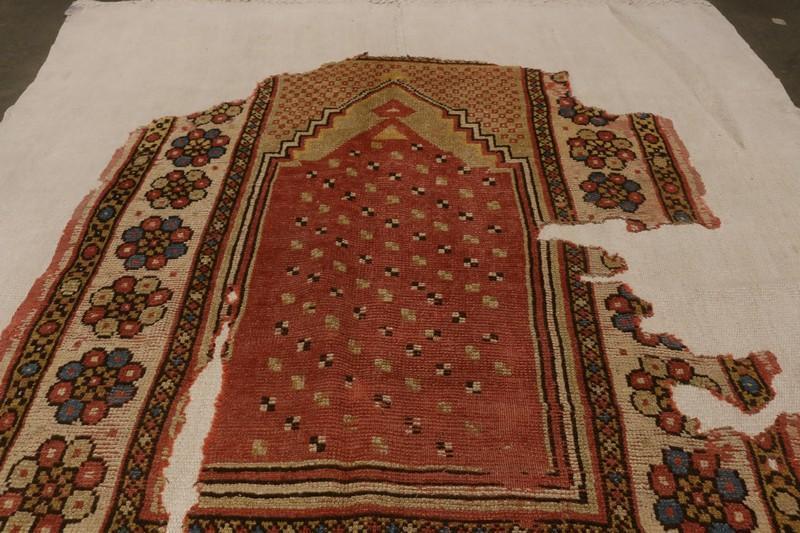
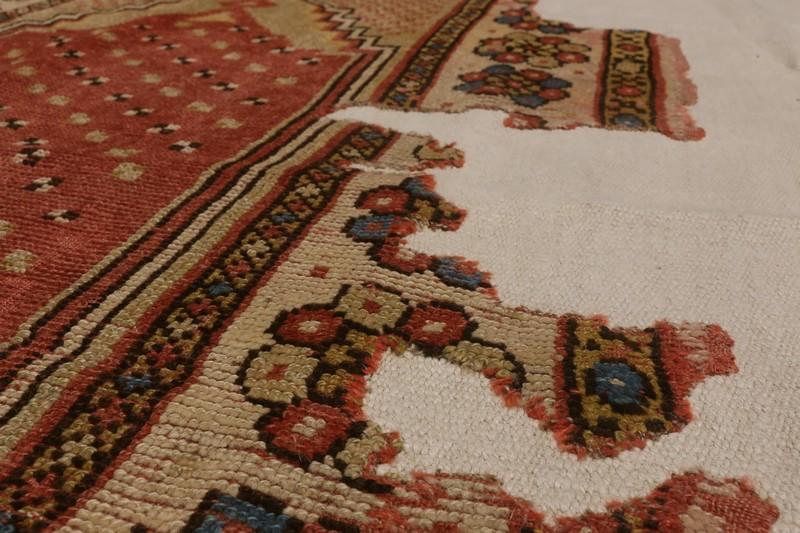
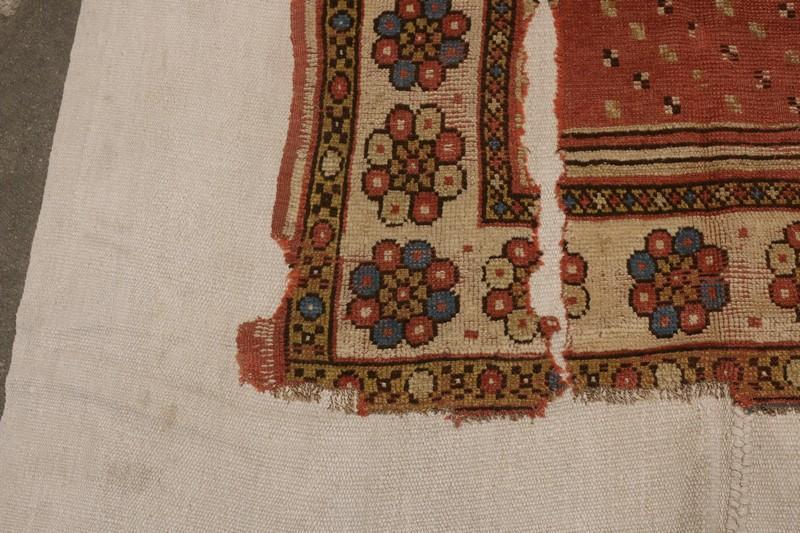
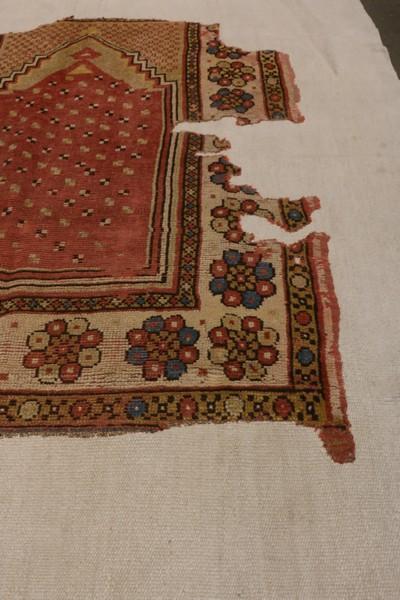
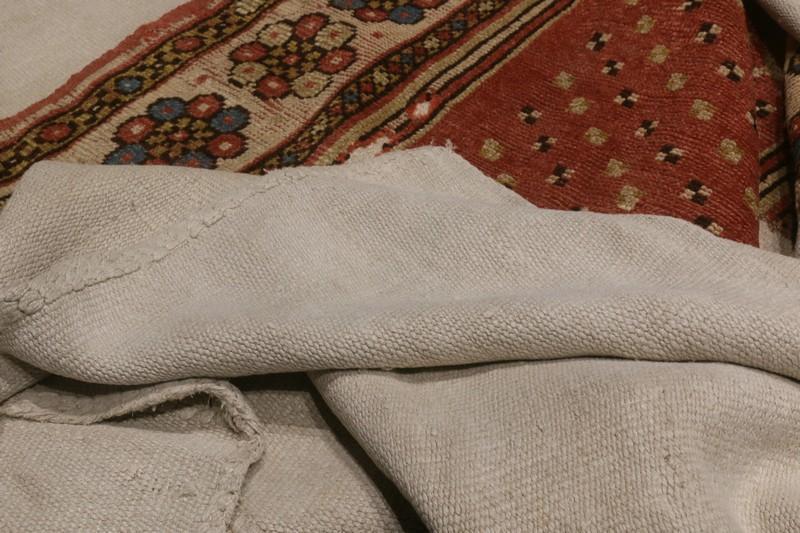
Vintage Geometric Floral Beige Gold and Red Wool Rug Fragment
"Rug & Kilim have been true collaborators in our projects. Their taste, and unmatched knowledge, have led us in unique and unexpected directions - the hallmark of a great partnership"
— Justin Capuco & Brittney Hart
A standard since our inception upheld across every acquisition,
transaction, and delivery.
45+ Year Old Institution
More than four decades of expertise and stewardship, under the leadership of our Principal, Jahanshah "Josh" Nazmiyal.
Favorable Return Policy
Our return policy is 48 hours upon receipt allowing you to confirm the purchase in your space with confidence.
Product Warranty
Each rug is hand selected or produced through the most reputable sources under the direct supervision of our Principal.
Trusted Global Delivery
Reliable worldwide delivery handled with care, precision and constant communication.
Exceptional Support
Attentive, knowledgeable guidance before and after purchase from our dedicated team of specialists.
Long Term Care
We stand behind every piece we place and remain a resource to our clients for the lifetime of their collection.
- Measurements: 5'0" x 6'9" ( 1.52 m x 2.06 m )
- Categories: Accessories, Kilim & Flat Weave, Vintage
- Classification: Classic/Traditional, Fragment, Geometric, Kilim/Flat Weave, Medallion, Tapestry/Textile/Wall Hanging
- Origin: Turkey
- SKU: 16058

Specifications:
Stories from the Accessories Collection
Essays, artist dialogues, and provenance notes drawn from Rug & Kilim’s editorial desk.
The Art of Bespoke Design by Rug & Kilim: How a Painting, a Fabric, or a Fragment Becomes a Custom Rug
Every custom rug begins with a question that sounds simple and is not: what does this room want to stand on? The answer, in the finest commissions, rarely arrives as a specification. It arrives as an object. A client brings in a painting they have loved for thirty years. A designer adores a length of antique silk, or lays down a sample of a document fabric, or produces a photograph of a fresco glimpsed on a wall in Ravenna. The brief is a feeling, held in another medium, waiting to be carried into wool or silk or sometimes, exotic fibres. This act of carrying is the true art of the custom rug, and it is far older and more serious than the word “custom” suggests. It is translation, in the fullest literary sense: the movement of meaning from one language into another, with everything gained and lost that translation implies. It is also, increasingly, the way the most celebrated interiors in the world are made. When AD100 designer Heidi Caillier needed flatweaves for a coastal retreat, when Fawn Galli reimagined a historic Beaux-Arts townhouse on the Upper West Side, when a Jacques Grange penthouse called for a hand-knotted silk carpet, the floor did not come off a shelf. It was translated into being, object by object, idea by idea.
Read the Feature
On Gift-Sized Rugs and the Art of Placing Them with Intention
There is a certain kind of design confidence that reveals itself not in the grand room but in the modest one. Anyone with means can lay a great carpet beneath a grand piano or across the floor of a double-height salon. The room does half the work; the scale flatters the object. It takes a far subtler eye to bring a jewel of a weaving into the kitchen, along the narrow run of a hallway, beneath the feet at a bedside, into the threshold where guests first stand, the working, in-between, unglamorous spaces of a home that most people surrender to practicality without a second thought. The designers whose interiors endure understand that these are precisely the spaces where taste declares itself most clearly. The small rug is the connoisseur's signature.
Read the Feature
The Artists Behind European Tapestry: A Guide to the Names Worth Knowing
There is a persistent misconception about tapestry, and it is worth correcting at the outset: that the weaving is the whole of the art. It is not. Behind every great European tapestry stands an artist, the author of the design from which the weavers worked, and the history of the medium is in large part the history of these figures. To collect tapestry seriously, or simply to understand it well, is to know their names. What follows is a guide to the artists who matter most, arranged as the tradition itself unfolded, from the royal workshops of the old regime to the modern revival that made tapestry, once again, one of the most ambitious art forms in the world.
Read the Feature
Provenance, Structure, Intelligibility: The Three Pillars of Serious Collecting
Anyone can acquire a rug. To collect one, to bring it into a serious collection with the confidence that it belongs there, requires a discipline, and that discipline rests on three questions. Across four decades of building one of the most significant archives in the country, this house has come to evaluate every object through the same three. They are the difference between buying and collecting, and they are worth setting down plainly, because they apply as readily to a Safavid fragment as to a signed Aubusson, and because they are the same three questions, at bottom, that a curator at the Metropolitan or a specialist at Christie's brings to any object of consequence.
Read the Feature
The Evolution of Floral Motifs in Antique Rugs and Kilims: Mapping the Pomegranate, Tulip, and Carnation
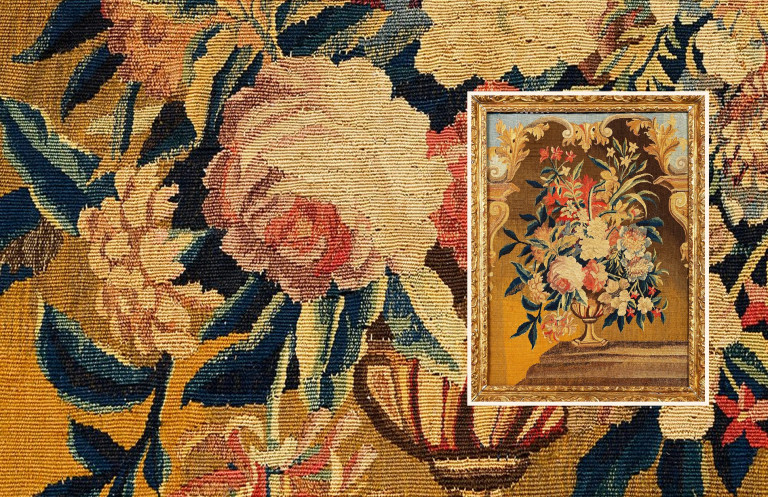
Antique 17th Century French Beauvais Tapestry with Floral Vase - Rug & Kilim, NO. 36829 We had a tapestry acquisition unfolding itself in the studio a while ago. Josh and the team just stood there, silently admiring the way the light caught the threads. This was the Antique French Beauvais Tapestry (SKU 36829). It was handwoven in wool, with natural silk accents, circa 1700. When you look at something like that, you do not just see fabric. What you see is the garden of wool and dreams. The precise interlacing of the wefts gives a picture of a gigantic floral vase placed atop an architectural entablature. The botanical imagery is absolutely mesmerizing. There is so much wealth and mystery to it all.
Read the Feature
A Glossary of Handmade Rugs and Kilims: Understanding Terms, Types and Techniques Past and Present
Referring to the art style characterized by using shape and color withdrawn from traditional repetition or realism. Abstract rugs — sometimes referred to as art rugs — capture an expressive nature that reads as a very modern style, though many abstract rugs draw inspiration from works of the same art style in the mid-century. One of the more widely known mid-century lineages of this style is abstract expressionism, named for the literal "expressionists" of the 1950s. Some of the most notable names behind this style include Jackson Pollock and Mark Rothko. Referring to a lineage of nomadic Persian rugs (sometimes referred to as “Avsar” in the alternate spelling). Afshar rugs hail from the eponymous tribe in the region of Northeastern Iran.
Read the Feature


R&K Image Studio
NEWThe R&K Image Studio is a new visual workspace designed to present the Rug & Kilim collection with clarity, restraint, and precision — in your space or any space you imagine.
This tool allows you to view, refine, and prepare imagery drawn directly from the pieces in our archive. They can be visualized cleanly, isolated thoughtfully, and adjusted for presentations, proposals, and private viewings, without altering the integrity of the original work.
Accessories
Turkey
5'0" X 6'9" (1.52 m x 2.06 m)
$5,080
Available: Shipping as Soon as Tomorrow
Vintage Geometric Floral Beige Gold and Red Wool Rug Fragment
"Rug & Kilim has been a pleasure to work with from the very start of our relationship. Not only is their service outstanding, their inventory of one of a kind vintage rugs is unparalleled."
— Alan Eckstein and Margaret Goddard, Somerset House
- Measurements: 5'0" x 6'9" ( 1.52 m x 2.06 m )
- Categories: Accessories, Kilim & Flat Weave, Vintage
- Classification: Classic/Traditional, Fragment, Geometric, Kilim/Flat Weave, Medallion, Tapestry/Textile/Wall Hanging
- Origin: Turkey
- SKU: 16058

