
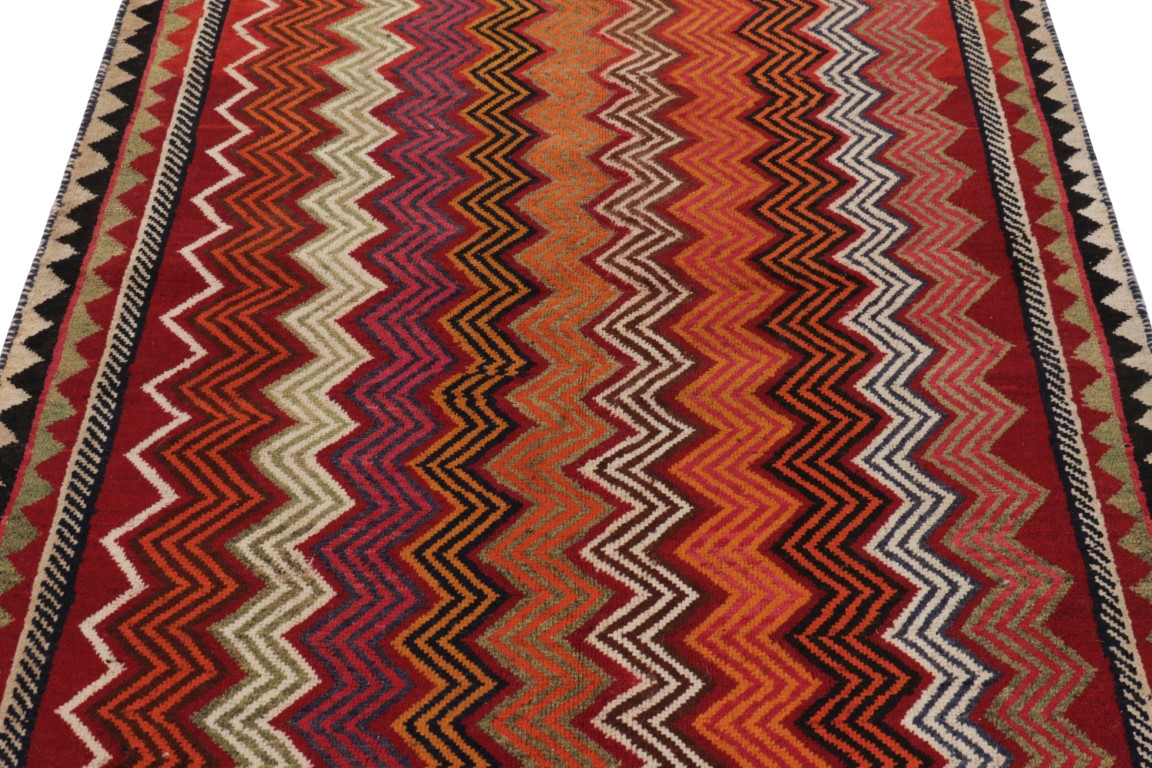
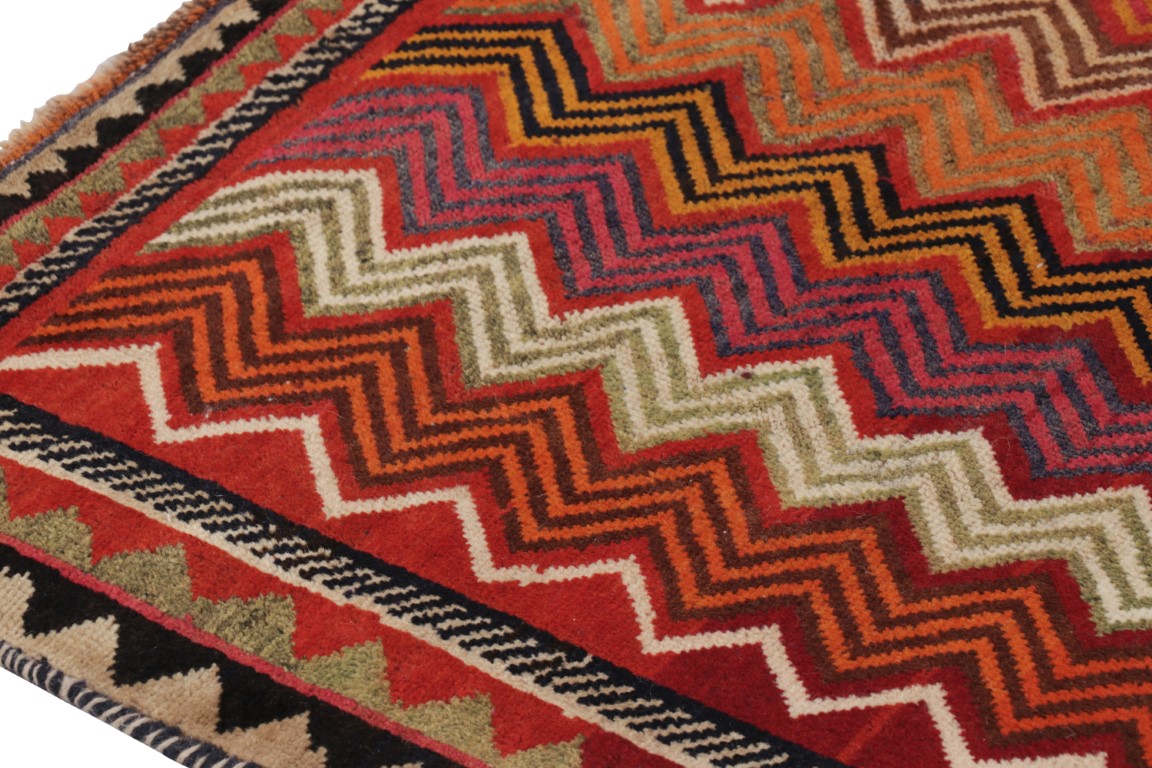
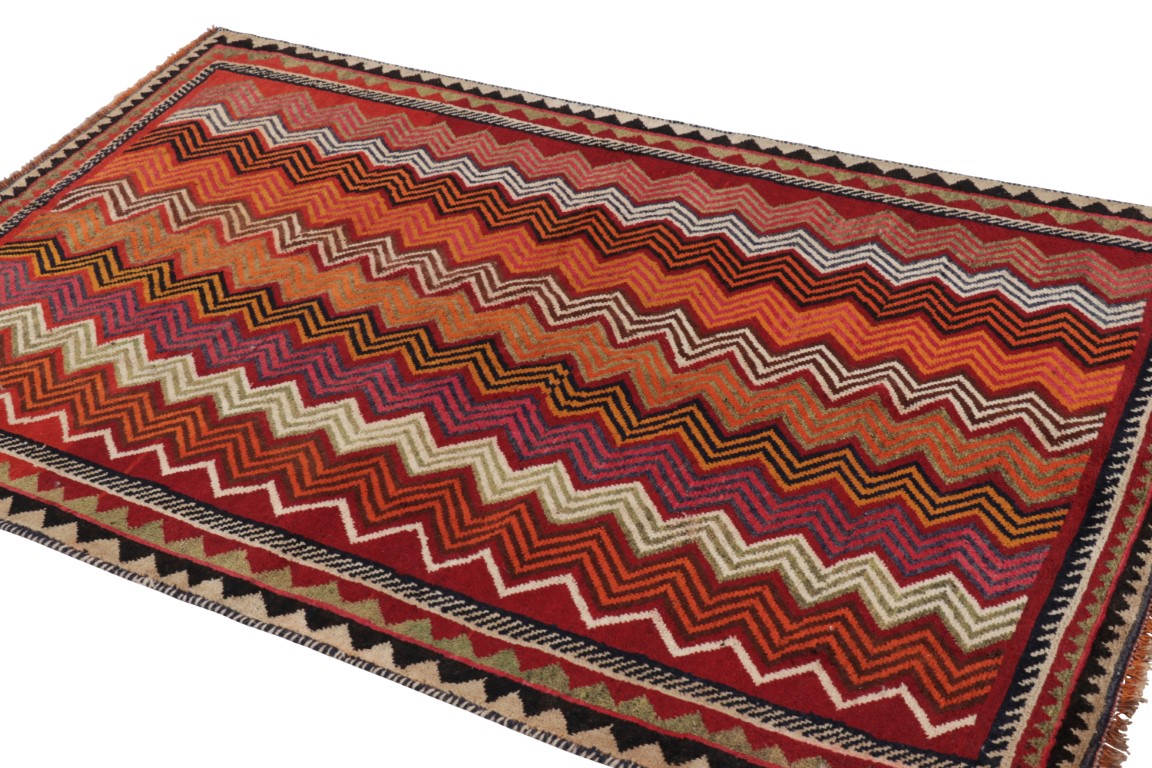
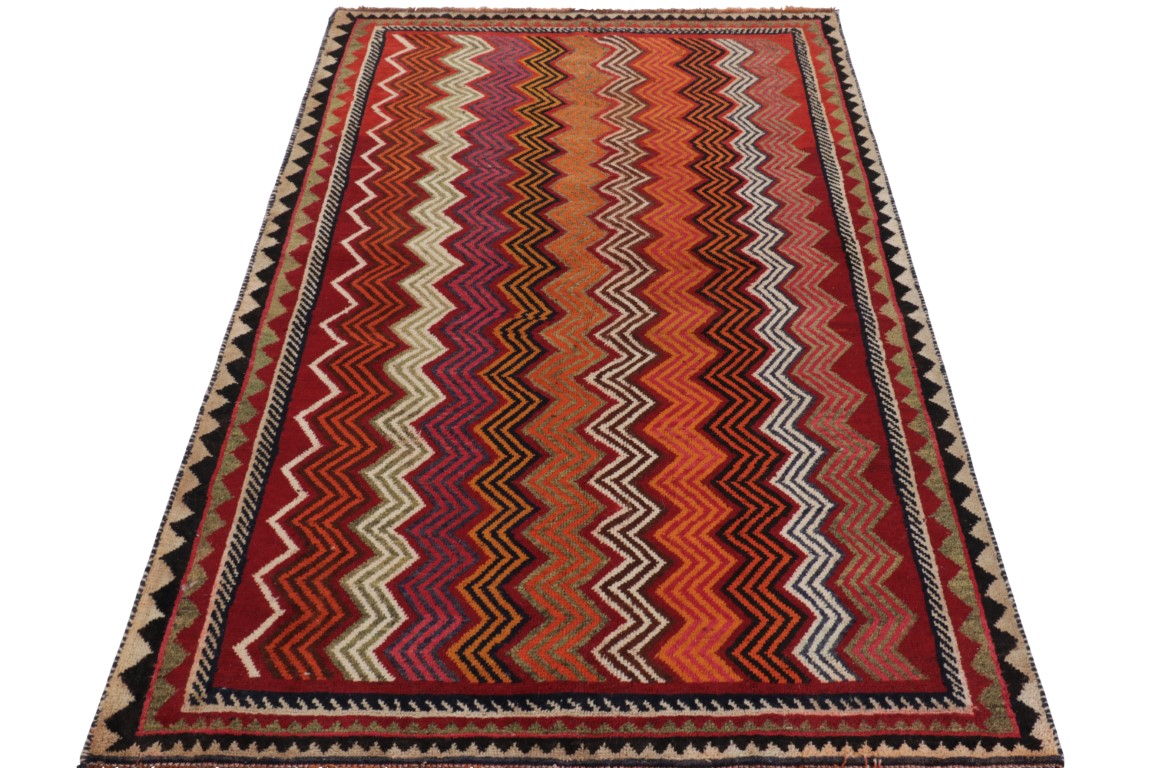
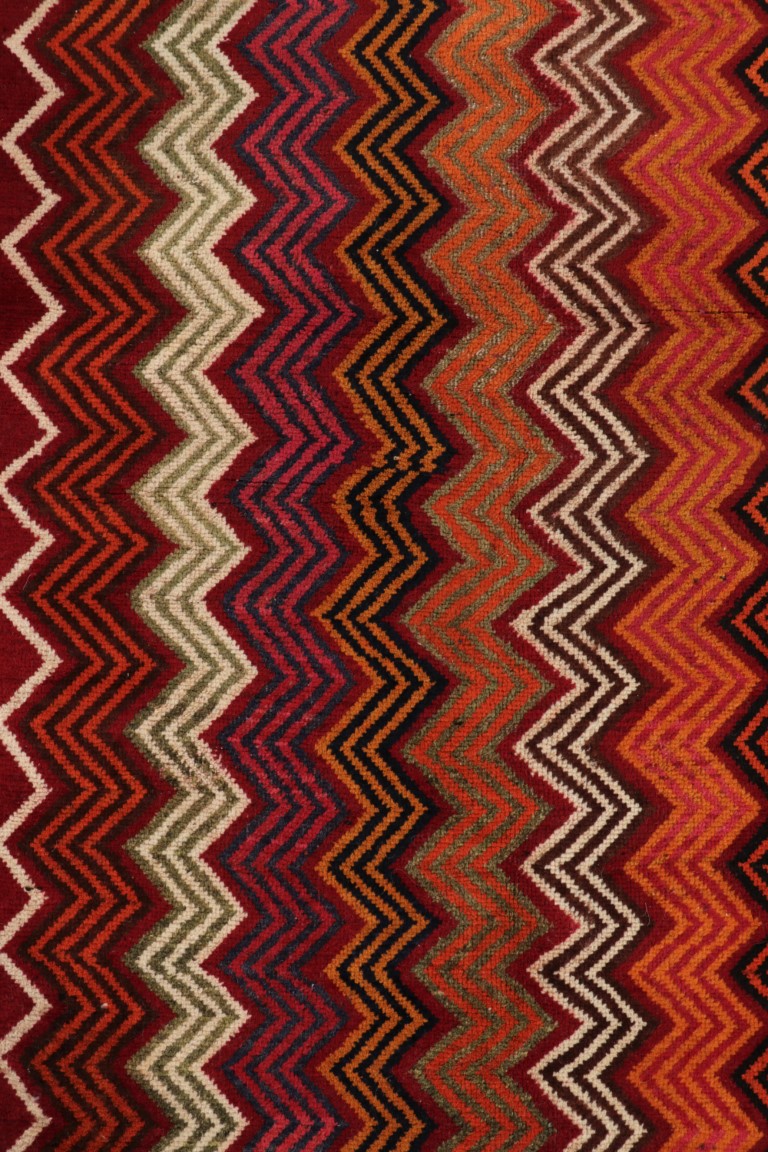
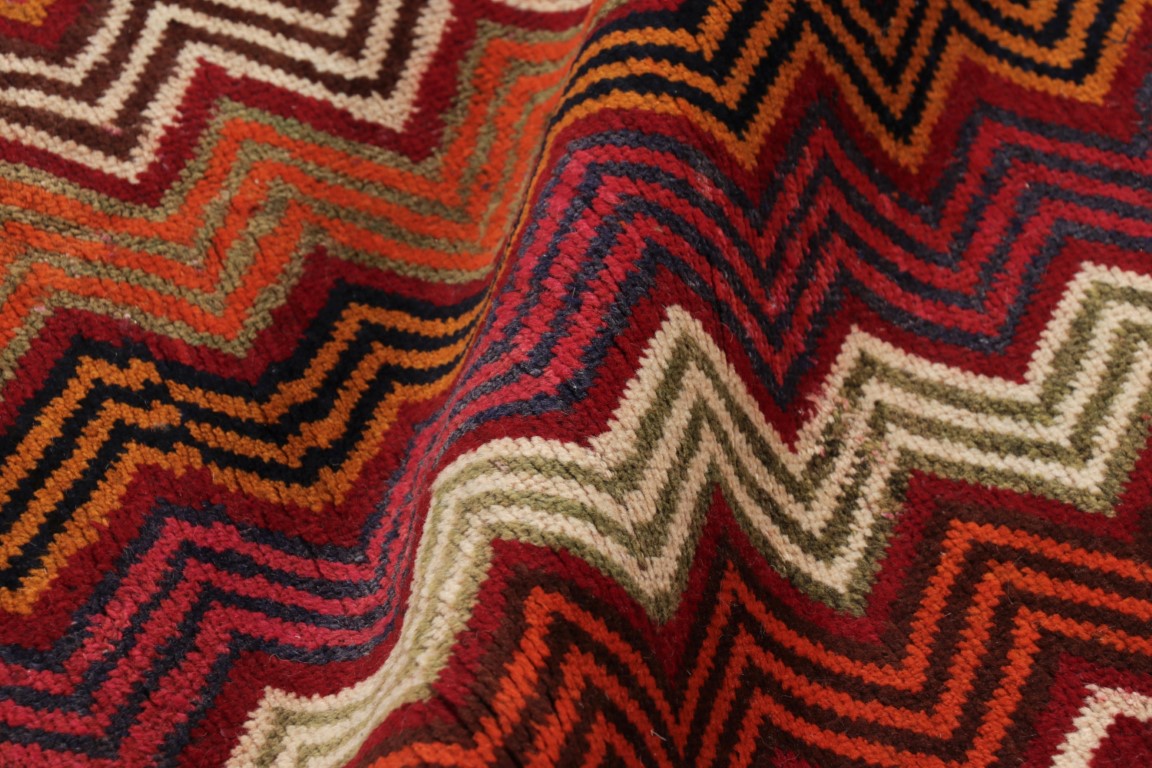
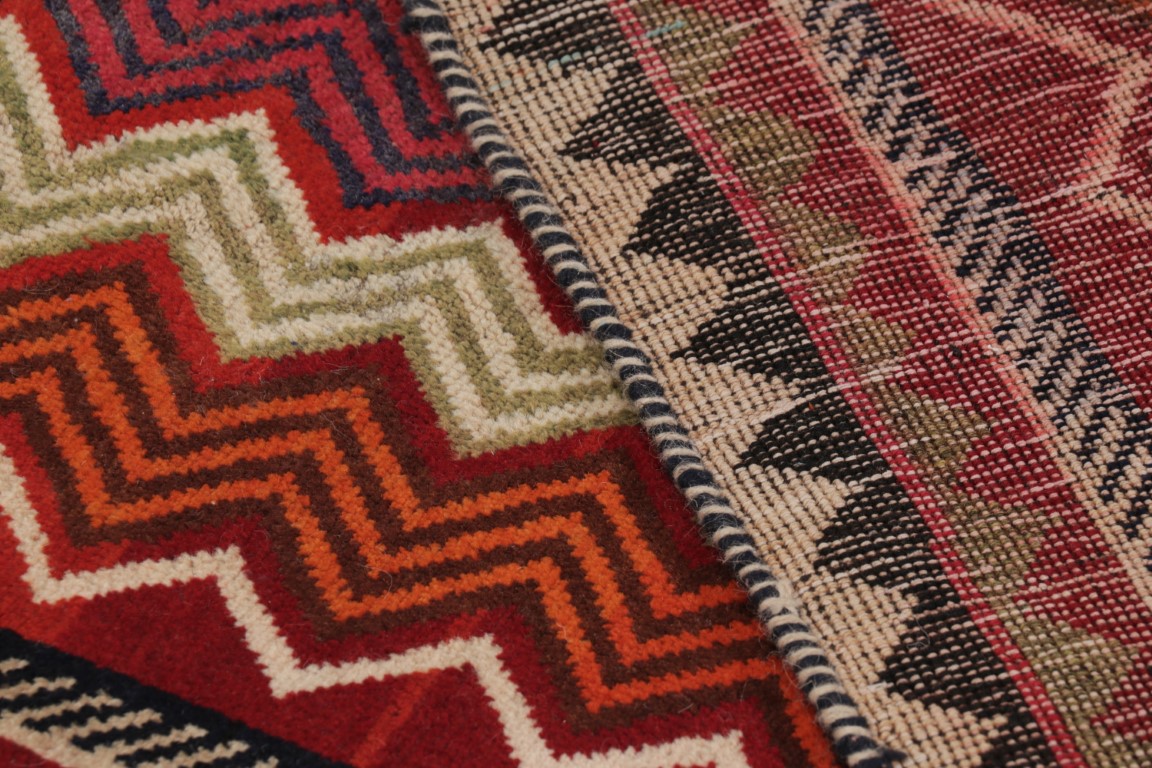
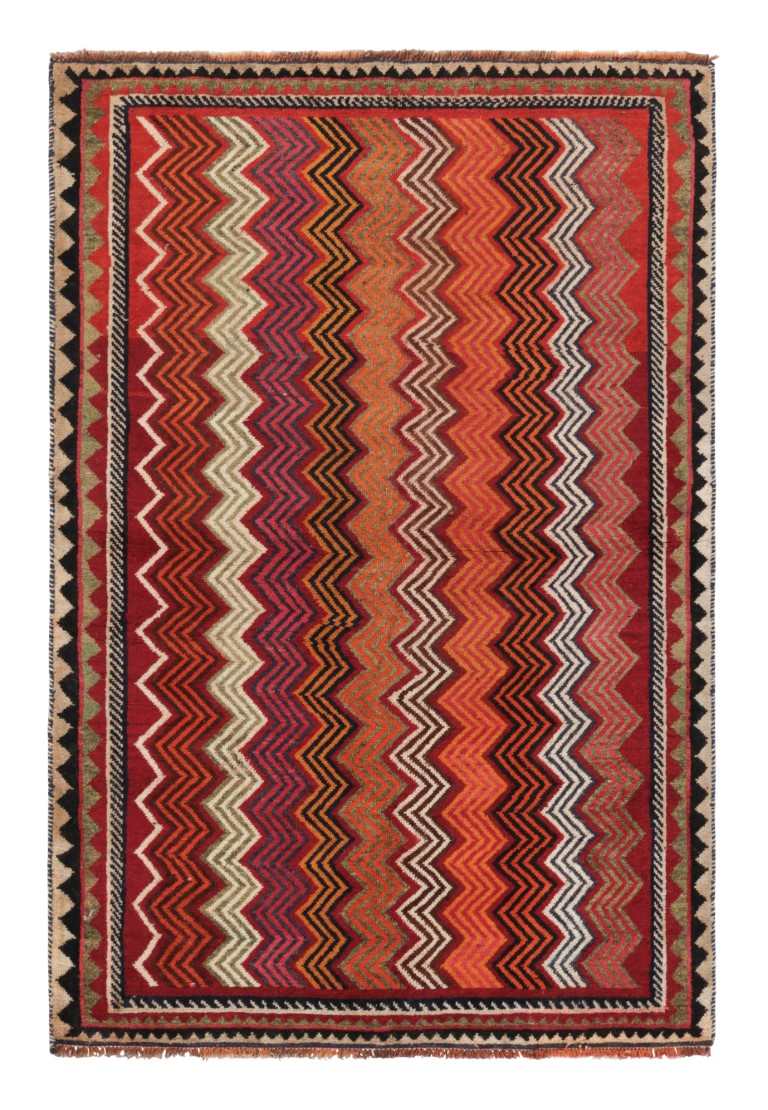
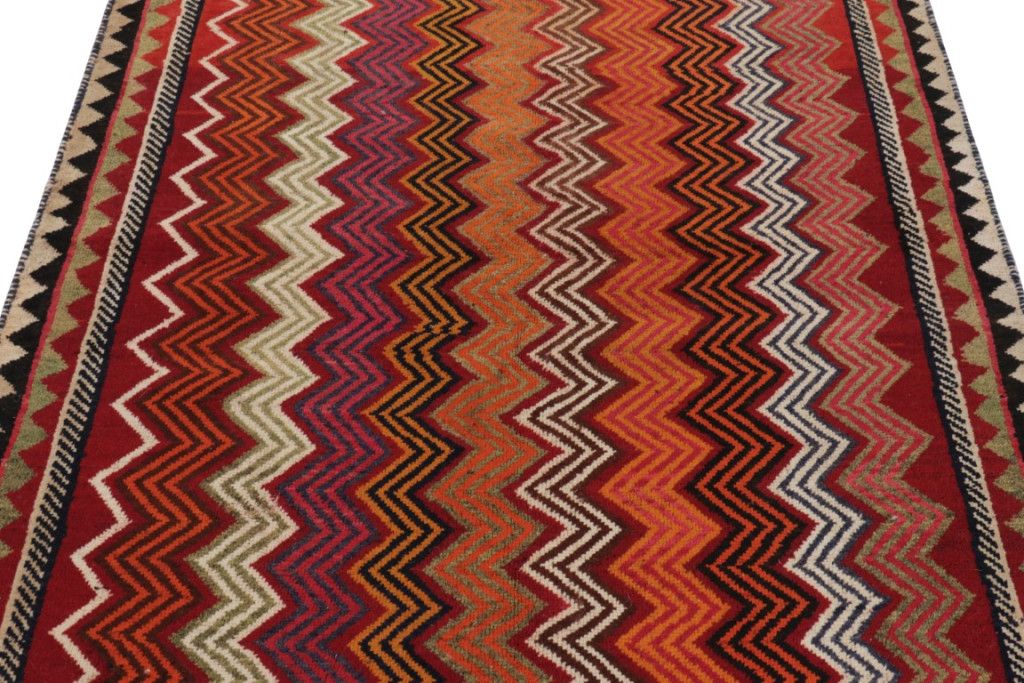
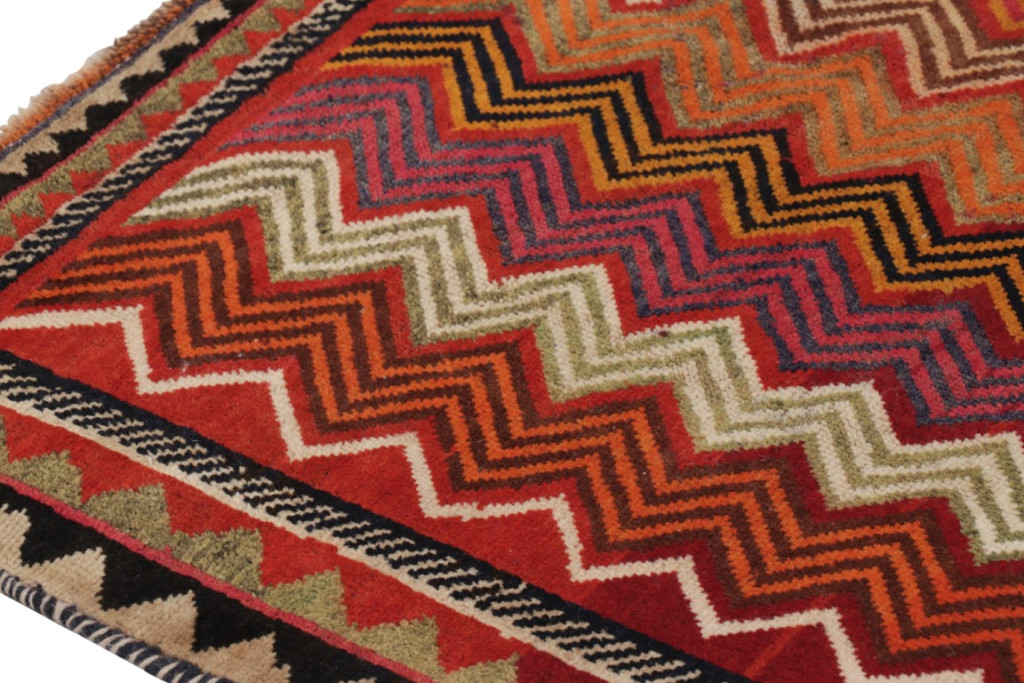
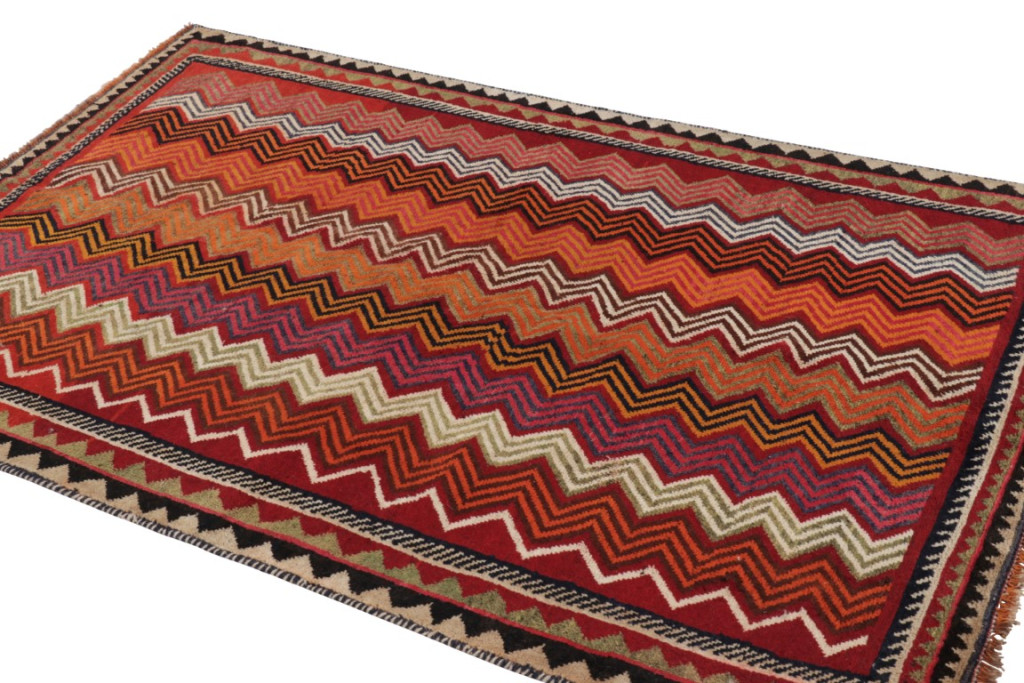
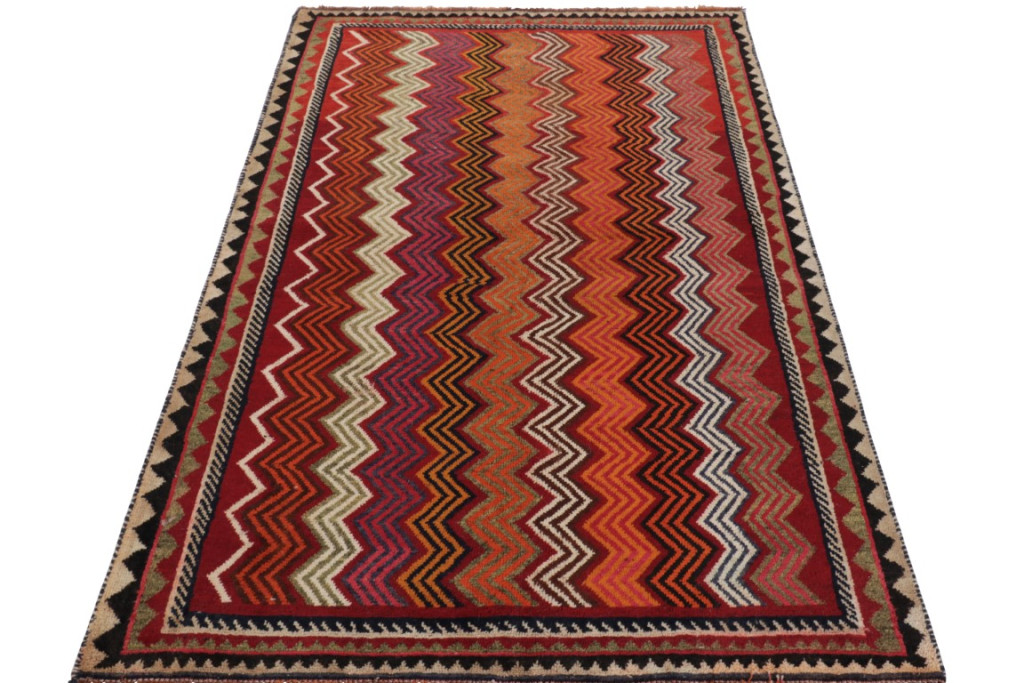
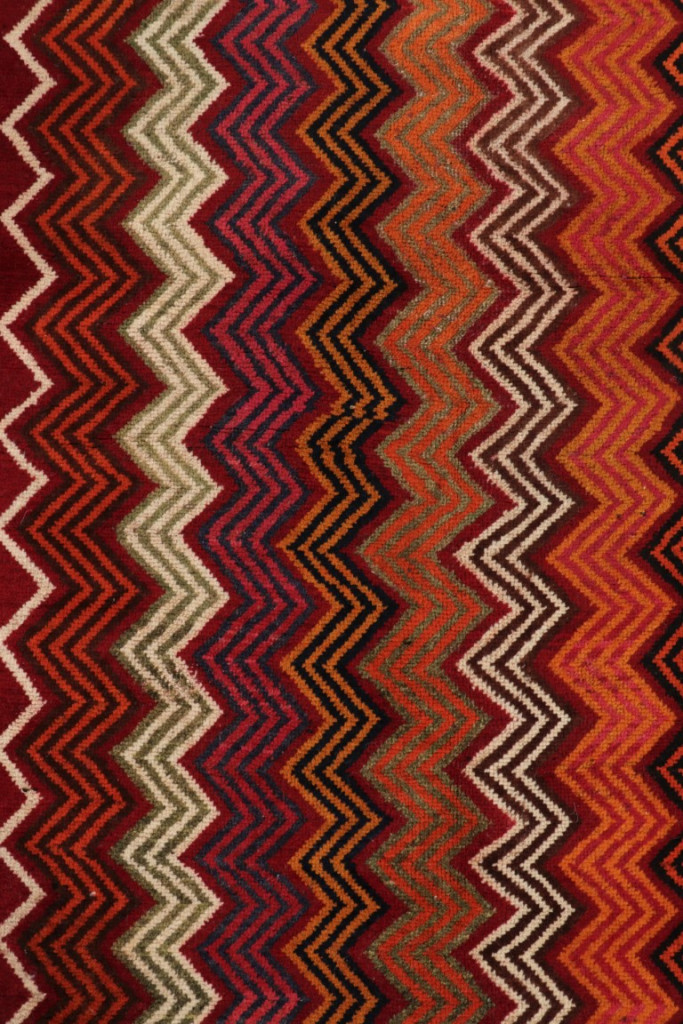
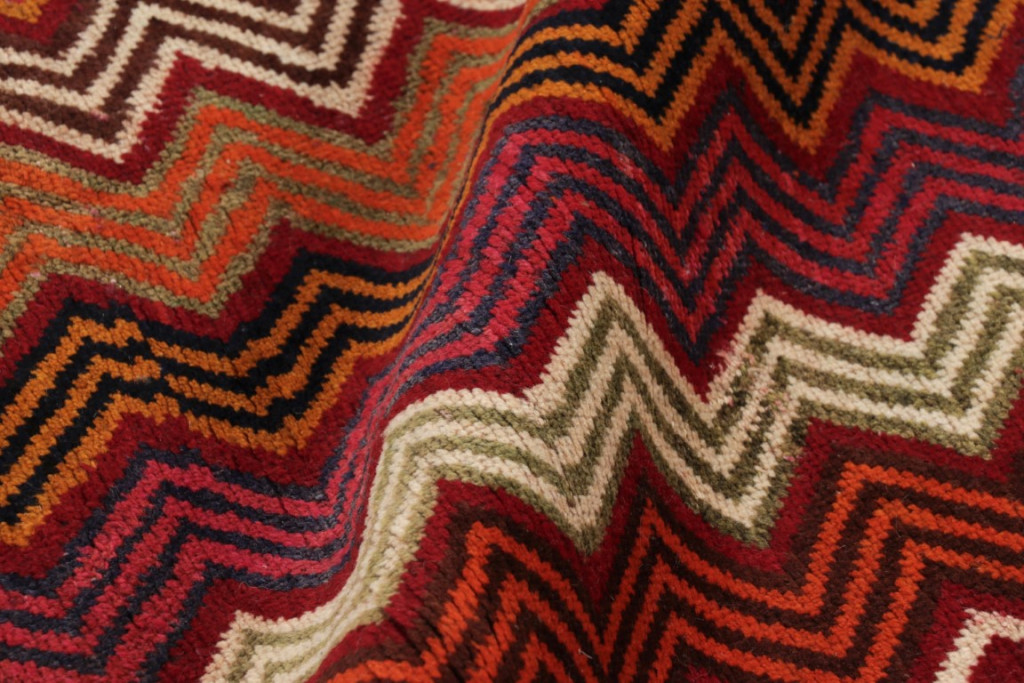
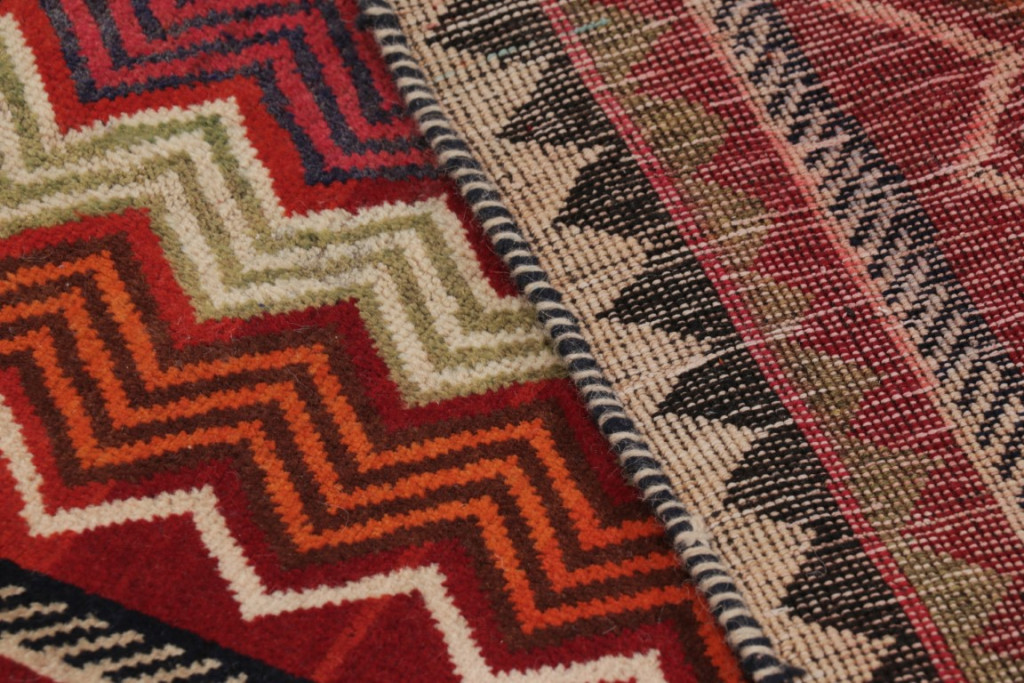
Wool
Persia, c. 1950-1959
4'1" X 6'4" (1.24 m x 1.93 m)
Available: Shipping As Soon As Tomorrow
Vintage Gabbeh Tribal Rug, Persian Rug in Red with Chevrons - Rug & Kilim
"Josh and his team have supported my interior design work, as well as my personal projects, for over 20 years. Their inimitable combination of creativity, personal attention, professionalism and joie de vivre are irresistible."
— Claire Fleming Peters, Fleming Peters
A standard since our inception upheld across every acquisition,
transaction, and delivery.
45+ Year Old Institution
More than four decades of expertise and stewardship, under the leadership of our Principal, Jahanshah "Josh" Nazmiyal.
Favorable Return Policy
Our return policy is 48 hours upon receipt allowing you to confirm the purchase in your space with confidence.
Product Warranty
Each rug is hand selected or produced through the most reputable sources under the direct supervision of our Principal.
Trusted Global Delivery
Reliable worldwide delivery handled with care, precision and constant communication.
Exceptional Support
Attentive, knowledgeable guidance before and after purchase from our dedicated team of specialists.
Long Term Care
We stand behind every piece we place and remain a resource to our clients for the lifetime of their collection.
Stories from the Vintage Collection
Essays, artist dialogues, and provenance notes drawn from Rug & Kilim’s editorial desk.
How U.S.–Iran Tensions Are Reshaping the World of Fine Rugs: From Safavid Courts to Sanction Regimes
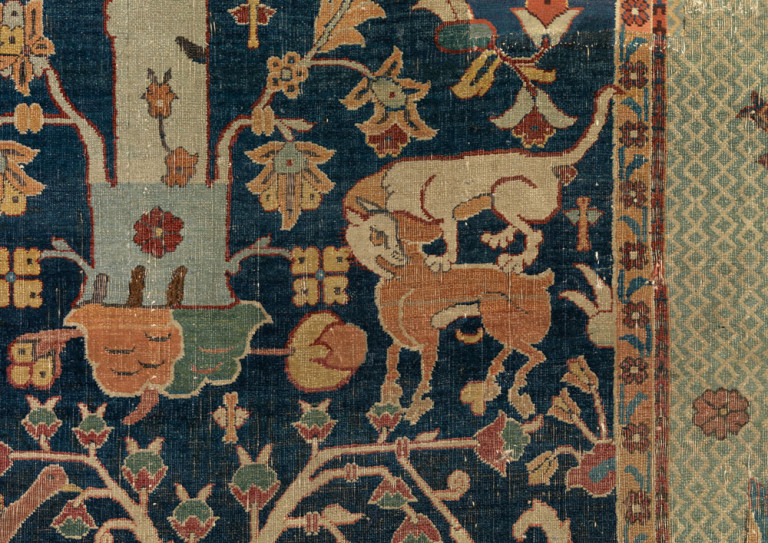
There is a room in the Metropolitan Museum of Art in New York where a sixteenth-century Persian carpet stops people mid-stride. Because something in the object itself; its scale, its silence, the particular authority of a thing that has already outlasted three empires makes the ordinary pace of a museum visit feel suddenly inappropriate. The Emperor's Carpet, as it is known, was commissioned in Safavid Iran, passed to Peter the Great of Russia, gifted to the Habsburg Emperor Leopold I in 1698, held by the Austrian Imperial House until 1921, acquired by the Met in 1941, and displayed publicly only twice in the following sixty years because its condition was too fragile to risk. It has survived more political systems than any collector alive today will ever witness. It knows something about geopolitics that no sanctions framework, no bilateral negotiation, no executive order has yet managed to articulate.
Read the Feature
Rug of the Week V: A 1920s Lion Mahal Rug and Persia’s Folk-Imperial Dialogue
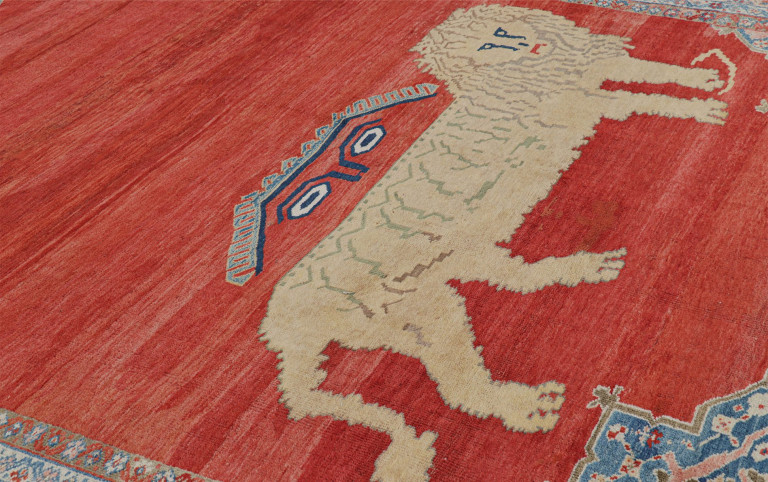
Not all rugs whisper beauty. Some confront, some provoke, and some stand strong of their age. This 1920–30 Persian Mahal lion carpet belongs emphatically to the latter. Its scale alone commands attention, but it is its audacity of imagery—two lions poised across a crimson ground, punctuated by talismanic eyes—that distinguishes it from its peers. What could have been another workshop carpet for export markets instead asserts itself as an emblem of power, politics, and folk poetics. It is not only a rug to be admired, but one to be read. The Provenance: Mahal as a Crossroads Mahal rugs occupy a fascinating place in Persian weaving history. Located in northwestern Iran, the Mahal region became particularly significant during the late 19th and early 20th centuries as European demand reshaped Persian textile production. Western markets craved large-scale carpets for townhouses and institutions, and Mahal—situated near Sultanabad, a major weaving hub—supplied. These rugs often combined refined city-border designs with the looser, more organic hand of village weavers.
Read the Feature
A Guide to Horse Pictorials in Persian and Caucasian Rugs
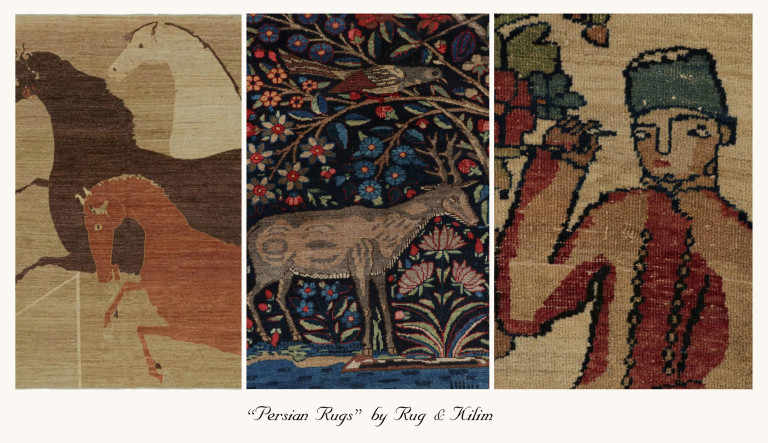
Pictorial rugs with animals are extremely collectible, as few remain today and each is a one-of-a-kind treasure. This Persian-style design depicting horses in a gallop is inspired by Gabbeh tribal rugs and similar, rare forms of Persian folk art. Its pictorials depict triplets of running horses in beige and brown, orange and pink tones on a beige field. Keen eyes will further admire the striae of yarns that achieves an abrashed, textural look in the field and pattern colorway. https://rugandkilim.com/product/modern-classics/persian-style-rug-in-beige-with-brown-and-orange-horse-pictorials/?objectID=233169-0&queryID=23e2ef8df7aa9e9adc59d00b052e4fe5
Read the Feature
A Comprehensive Collectors’ Guide to Antique and Vintage Persian Rugs
The legacy of Persian rugs stretches back millennia, with historical references dating to the 4th century B.C. Xenophon, the Greek historian, marveled at the "soft rugs on which the Persians sit," marking one of the earliest recorded appreciations of these masterpieces. Explore More >> Persian rugs, with their rich history have long been revered as the pinnacle of floor covering artistry. These exquisite textiles, steeped in centuries of tradition, continue to captivate collectors, designers, and connoisseurs worldwide, gracing the most prestigious spaces from opulent palaces to renowned museums. This ancient craft has evolved over centuries, with each era contributing to the styles and techniques that define Persian rugs today.
Read the Feature
A Profile on Bauhaus Master Anni Albers – The “Godmother of Textile Arts”
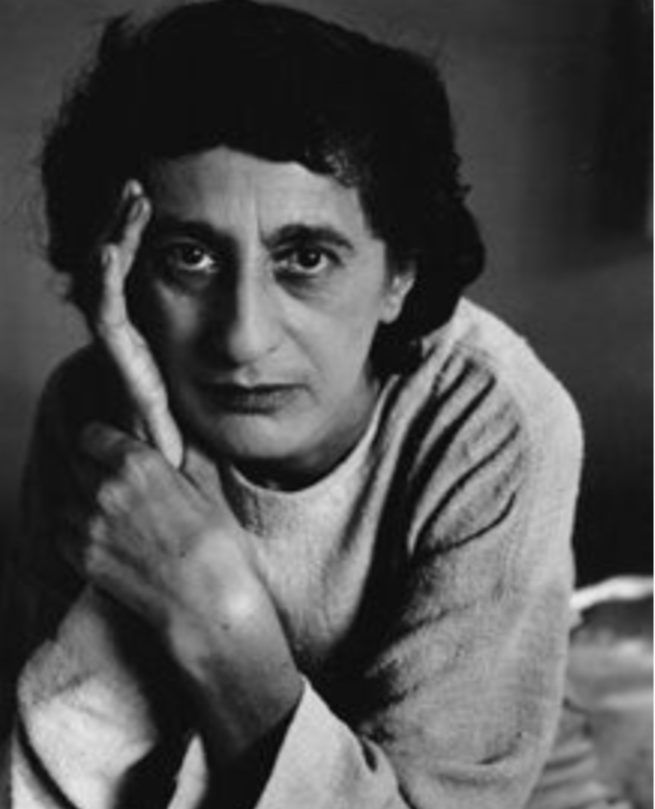
Anni Albers's significance lies in her transformative impact on textiles, elevating weaving to the status of an art form. At a time when early 20th-century Western fine art was largely confined to painting and sculpture created by men, Albers broke through the conventional boundaries and introduced textiles as a legitimate medium for artistic expression. Her groundbreaking influence became evident in 1949 when the Museum of Modern Art hosted an exhibition solely dedicated to Albers's work, titled "Anni Albers Textiles" This event marked the first instance of a textile artist being featured in a solo show at the prestigious institution. The exhibition, which showcased Albers's innovative and artistic approach to weaving, traveled to 26 museums across the United States and Canada. Albers coined the term "pictorial weaving" for her intricate woven abstractions, emphasizing thread as a carrier of meaning.
Read the Feature
Rug & Kilim Abroad: Convergence of Art and Sustainability at the Universal Youth Leadership Summit, Philippines
"Insecurities: Tracing Displacement and Shelter," an exhibition at the Museum of Modern Art, delves into the architecture of forced displacement, shedding light on the global refugee crisis. Curated to showcase the perspectives of architects, designers, and artists, the exhibit offers a multifaceted exploration of the complex challenges faced by displaced populations worldwide. As part of the broader "Citizens and Borders" initiative, which utilizes the museum's permanent collection to delve into themes of territories, migration, and borders, this exhibition serves as a poignant reminder of the urgent need for empathy, understanding, and innovative solutions in addressing displacement and shelter issues on a global scale. However, while artists may use displaced communities as subjects for their art, it's important to recognize the resilience and creativity of these communities themselves.
Read the Feature


R&K Image Studio
NEWThe R&K Image Studio is a new visual workspace designed to present the Rug & Kilim collection with clarity, restraint, and precision — in your space or any space you imagine.
This tool allows you to view, refine, and prepare imagery drawn directly from the pieces in our archive. They can be visualized cleanly, isolated thoughtfully, and adjusted for presentations, proposals, and private viewings, without altering the integrity of the original work.
Vintage
Wool
Persia, c. 1950-1959
4'1" X 6'4" (1.24 m x 1.93 m)
$3,600
Available: Shipping as Soon as Tomorrow
Vintage Gabbeh Tribal Rug, Persian Rug in Red with Chevrons - Rug & Kilim
"Josh has been able to dredge up some of the rarest and most beautiful carpets for our nerdy and stringent requirements. And we have had a grand time together assembling collections for clients."
— Ralph Harvard, Ralph Harvard Inc.