Inquire About this Volume
Learn more about this volume
by calling an expert on our team.
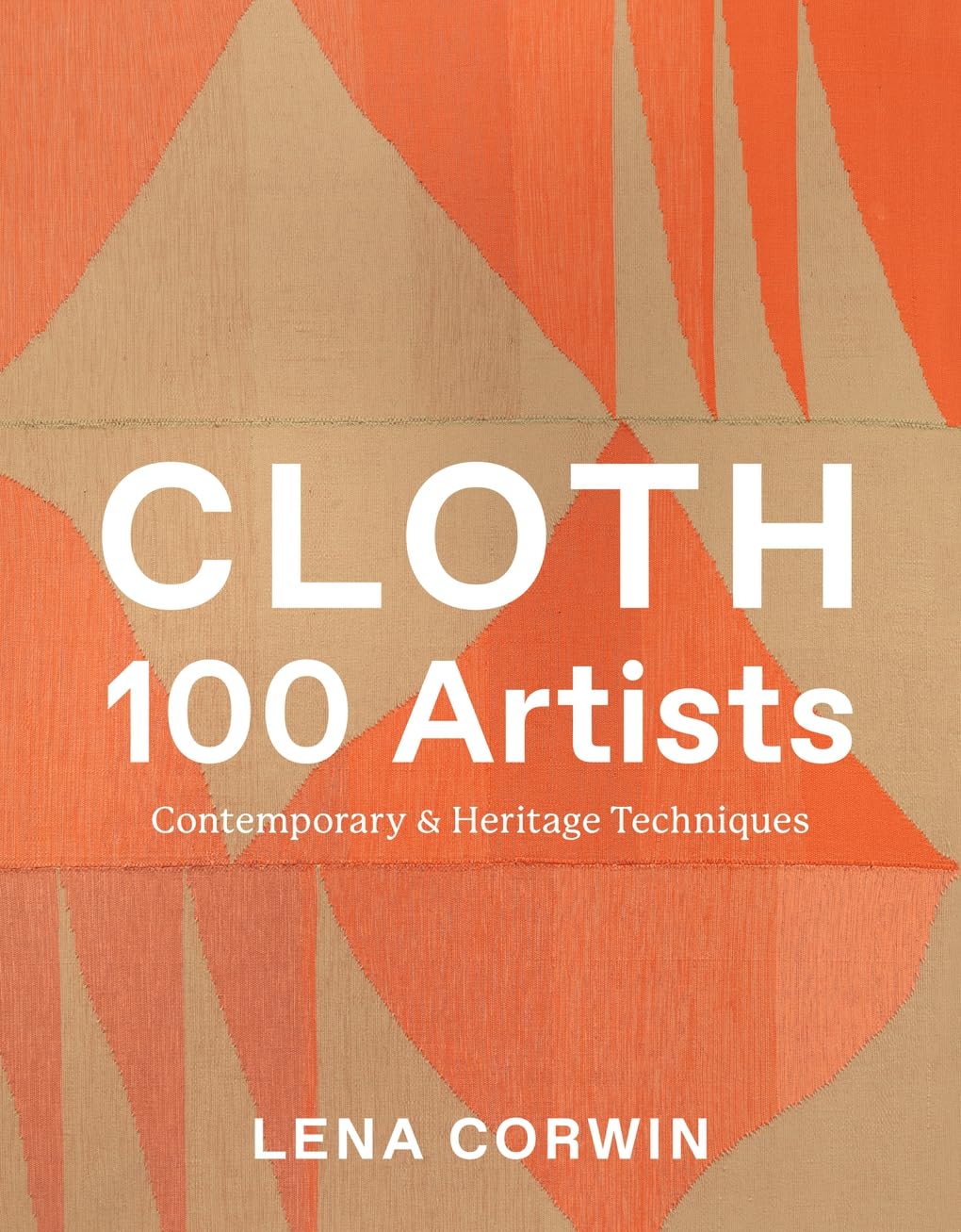
Cloth 100 Artists: Contemporary & Heritage Techniques
Lena Corwin
Preserved in our design reference library. Inquire to visit and use as a resource.
Harry N. Abrams, 2025
"Rug & Kilim is one of our favorite sources when looking for quality handmade rugs. Their team go above and beyond to find &/or make the rugs that fit our clients needs as well as their dreams."
— Becca Ford, Emily Lindberg Design
A standard since our inception upheld across every acquisition,
transaction, and delivery.
45+ Year Old Institution
More than four decades of expertise and stewardship, under the leadership of our Principal, Jahanshah "Josh" Nazmiyal.
Favorable Return Policy
Our return policy is 48 hours upon receipt allowing you to confirm the purchase in your space with confidence.
Product Warranty
Each rug is hand selected or produced through the most reputable sources under the direct supervision of our Principal.
Trusted Global Delivery
Reliable worldwide delivery handled with care, precision and constant communication.
Exceptional Support
Attentive, knowledgeable guidance before and after purchase from our dedicated team of specialists.
Long Term Care
We stand behind every piece we place and remain a resource to our clients for the lifetime of their collection.
Stories from the Volumes Collection
Essays, artist dialogues, and provenance notes drawn from Rug & Kilim’s editorial desk.
The Complete Guide to Oushak Rugs: History, Aesthetic Language, and Contemporary Design Use
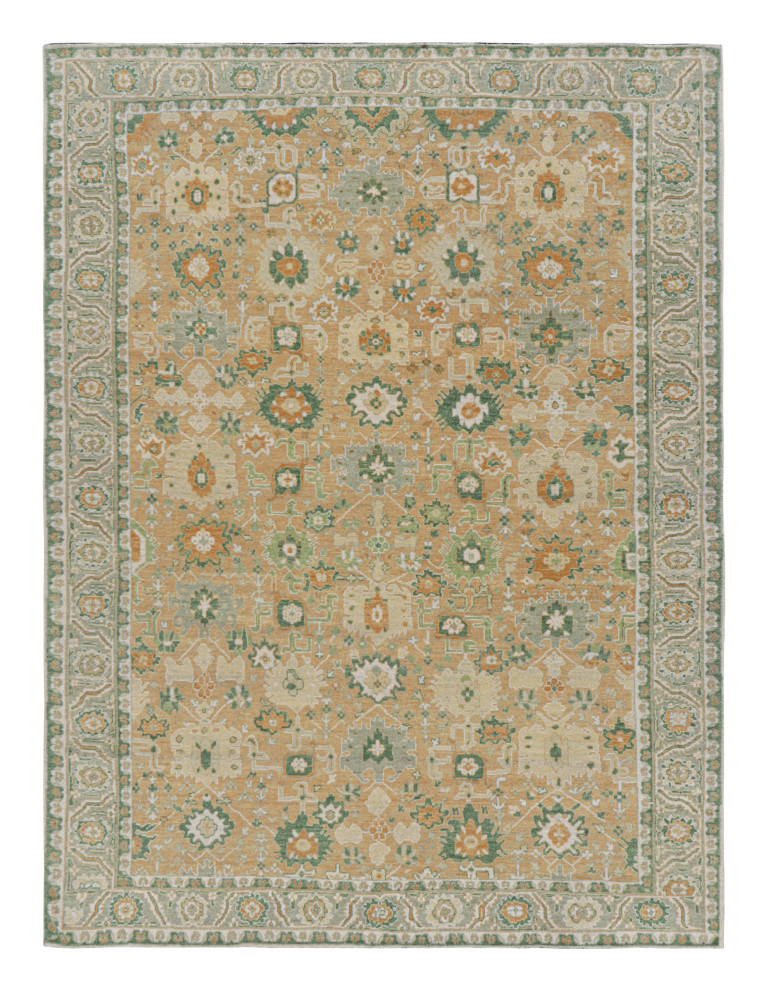
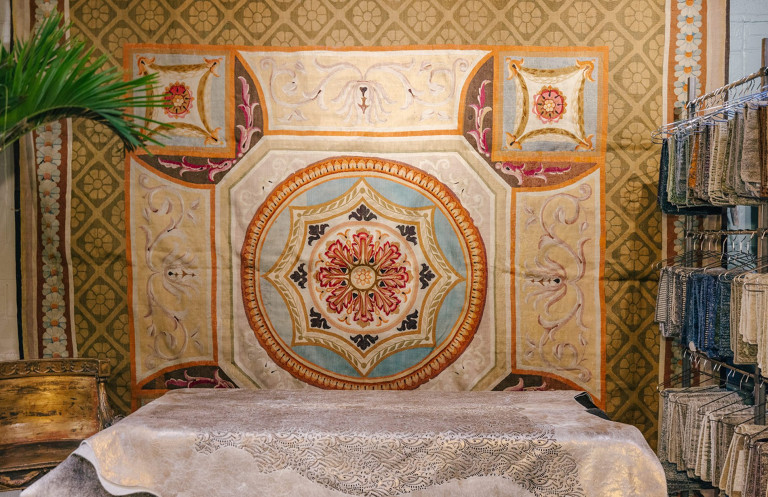
Oushak rugs, also spelled Uşak or Ushak, stand among the most influential textile traditions in the history of interior design. Originating in western Anatolia, in the historic weaving town of Uşak in present-day Turkey, these carpets are not merely decorative artifacts; they are architectural design elements, cultural documents, and artistic statements that have shaped interior aesthetics across centuries. From Ottoman imperial courts to Renaissance European palaces and today’s luxury residential, hospitality, and gallery spaces, Oushak rugs continue to define a visual language of soft geometry, spacious design, muted tonal harmony, and painterly abstraction. Their enduring relevance places them at the intersection of art history, textile heritage, and contemporary interior design innovation.
Read the Feature
The Long Life of a Green: On Celery, Color of the Year, and the Four Centuries of Weaving That Anticipated It
Every year, the color world makes its pronouncement, and every year the design world turns to see what it has been given. For 2027, Sherwin-Williams has named Celery; a light, airy, herbal green with a yellow undertone, chosen, in the company's words, for a moment that prizes wellness, balance, and connection. It is a soft color with a quiet glow and a faint edge; it pairs, its makers note, with white for something breezy, with cranberry red for something playful, with brown for something elevated. It is, by any measure, a beautiful and intelligent choice. It is also a color the great weavers of the world have understood for four hundred years.
Read the Feature
Navajo Rugs: History, Art, Design & the Legacy of Diné Weaving
Navajo rugs occupy a singular position within the history of American textile art. Woven by decorative tradition. They embody generations of knowledge surrounding sheep, wool, spinning, natural materials, color, geometry, landscape, community, and cultural continuity. simultaneously as cultural expression, design, craftsmanship, and fine art. the familiar geometric vocabulary. It means understanding the history of Diné weaving, the beyond their decorative presence. Our interest lies in the relationship between weaving tradition, material quality, design intelligence, cultural history and architectural application.
Read the Feature
Provenance, Structure, Intelligibility: The Three Pillars of Serious Collecting
Anyone can acquire a rug. To collect one, to bring it into a serious collection with the confidence that it belongs there, requires a discipline, and that discipline rests on three questions. Across four decades of building one of the most significant archives in the country, this house has come to evaluate every object through the same three. They are the difference between buying and collecting, and they are worth setting down plainly, because they apply as readily to a Safavid fragment as to a signed Aubusson, and because they are the same three questions, at bottom, that a curator at the Metropolitan or a specialist at Christie's brings to any object of consequence.
Read the Feature
What Makes Tibetan Wool the Gold Standard for Custom Rugs
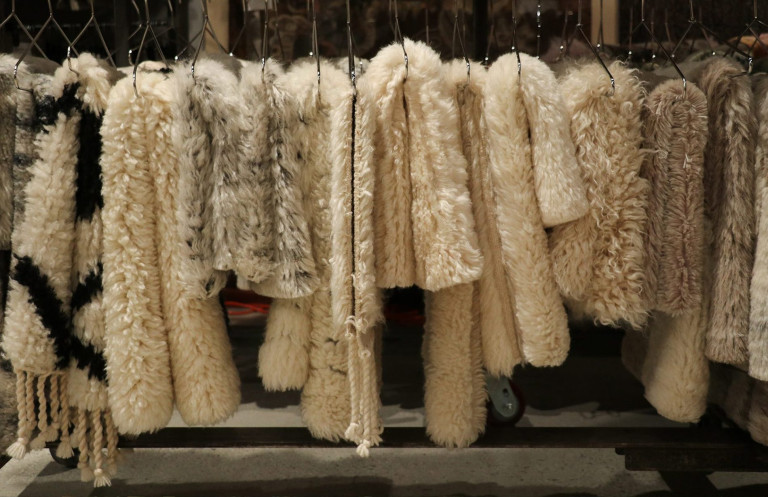
Every great rug begins long before the loom. It begins on the animal, in the place, in the particular conditions that made the fiber what it is. And among all the wools that have ever been spun into a carpet, few can rival the wool of the Tibetan highlands, a material whose superiority is not a matter of marketing but of altitude, climate, and the unhurried logic of the natural world. The sheep of the Tibetan plateau live at elevations that would defeat most living things, thin air, brutal cold, a growing season measured against a sky closer than it has any right to be. Nature's answer to that severity is the fleece. To survive the plateau, the animal must grow a wool of exceptional density and, crucially, of exceptional lanolin content; the natural oil that coats each fiber, repels water, resists soil, and lends the finished yarn a luster and resilience that lowland wools cannot approach. What is hardship for the animal is a gift to the weaver.
Read the Feature
A Profile on Zeruah H. Guernsey Caswell and her Embroidered American Carpets
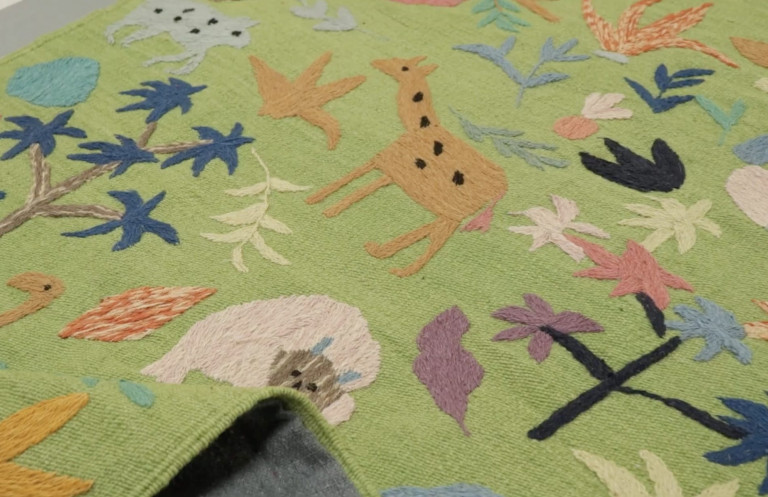
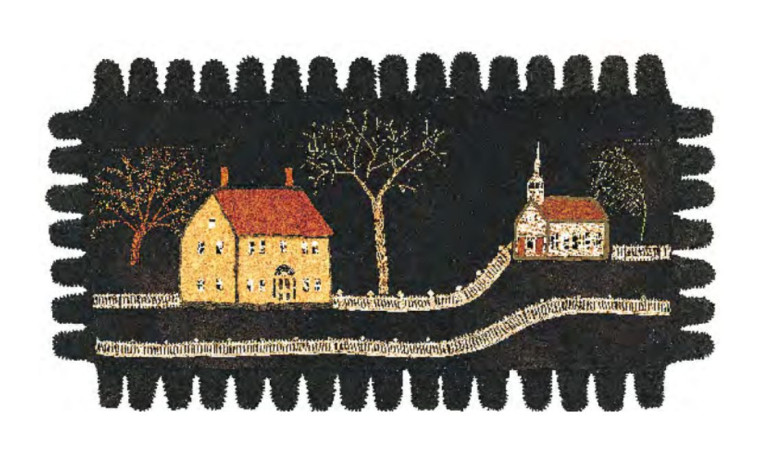
"The Great Cover-Up: American Rugs on Beds, Tables and Floors", an exceptional exhibition at the American Folk Art Museum, showcased the work of numerous talented artists, most of whom were women and often anonymous or labeled as "unidentified." Embroidered American Carpets Covering interior surfaces has historically served both utilitarian and decorative purposes. Early American rugs, crafted through methods such as yarn sewing, shirring, appliqué, and embroidery, often transcended their functional roles through the graphic power of their color and design. "The Great Cover-up: American Rugs on Beds, Tables, and Floors" showcases around 65 rugs spanning from the late 18th to the mid-20th century, including several monumental masterworks. Highlights include the museum’s impressive 13-foot Appliqued Carpet (c. 1860) and the magnificent Embroidered Carpet (1832–1835) by Zeruah H. Guernsey Caswell, from the collection of the Metropolitan Museum of Art.
Read the Feature
Cloth 100 Artists: Contemporary & Heritage Techniques
Lena Corwin
Preserved in our design reference library. Inquire to visit and use as a resource.
Harry N. Abrams, 2025
"Rug & Kilim's inventory spans the past four centuries and includes everything from ethnic and tribal patterns to European designs, as well as a host of Art Deco, abstract and understated tone-on-tone offerings, all in a vast array of materials, weaves and sizes."
— Tony Freund, 1stDibs Editorial Director