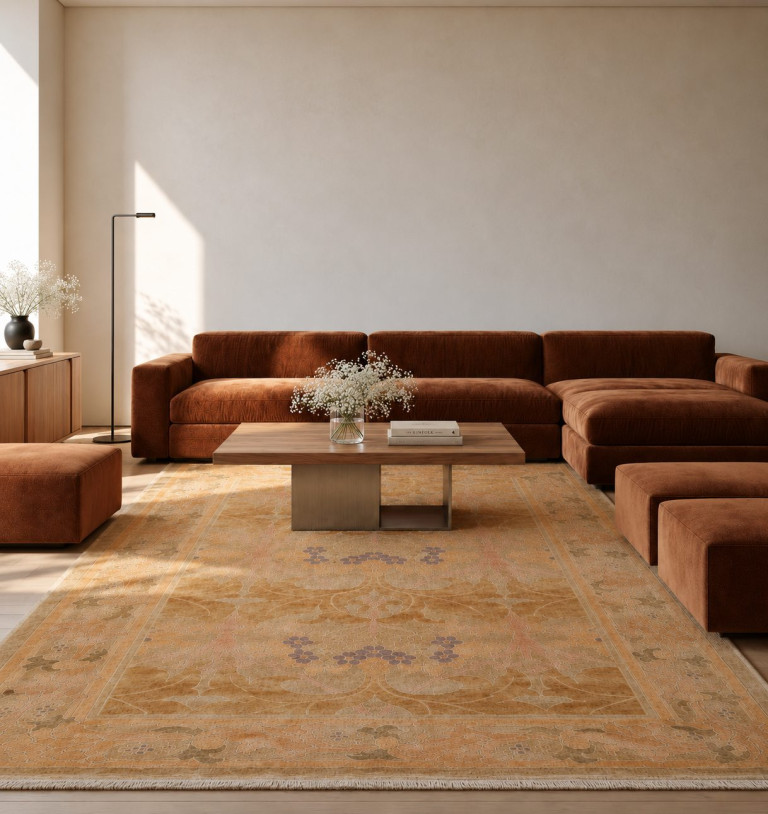
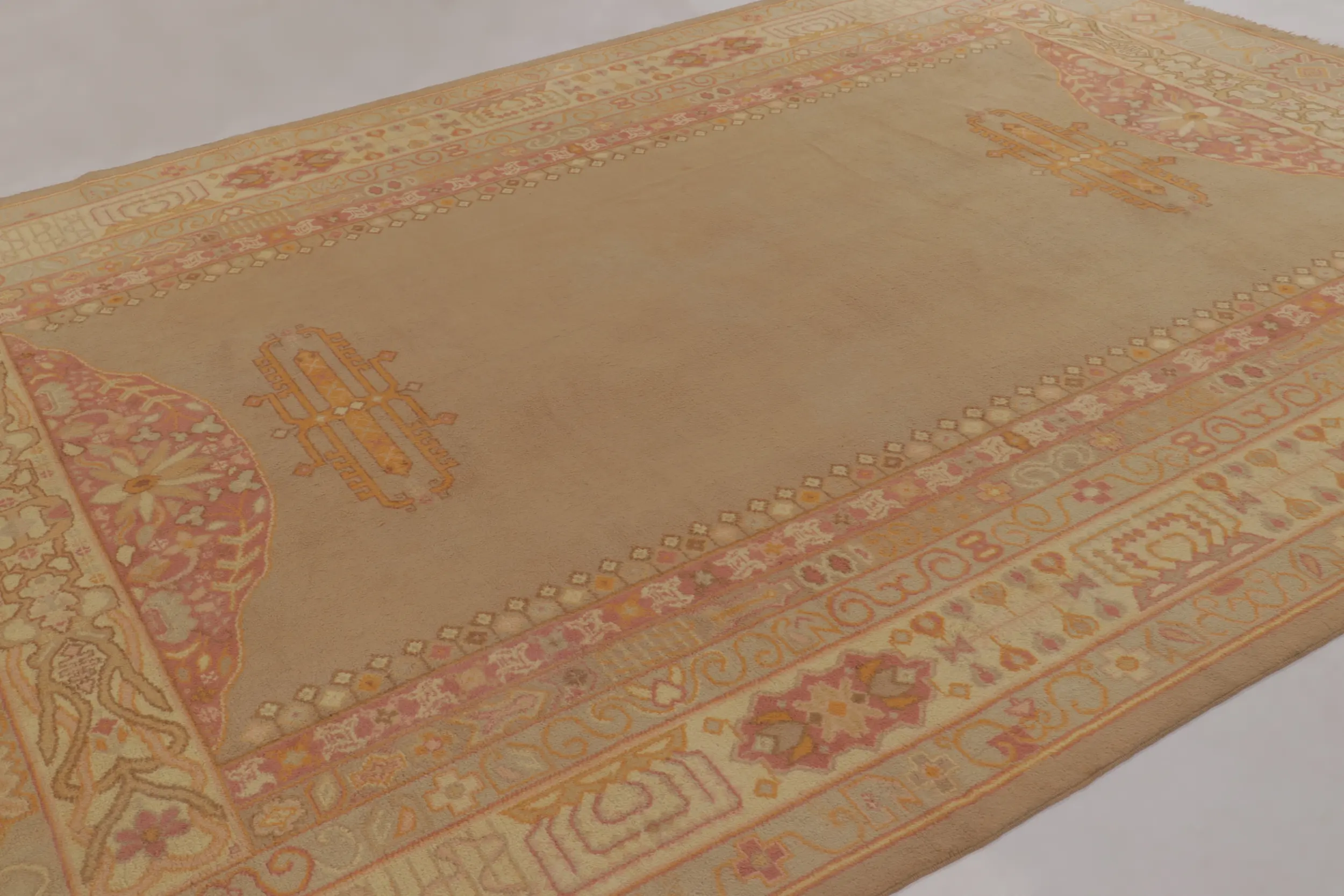
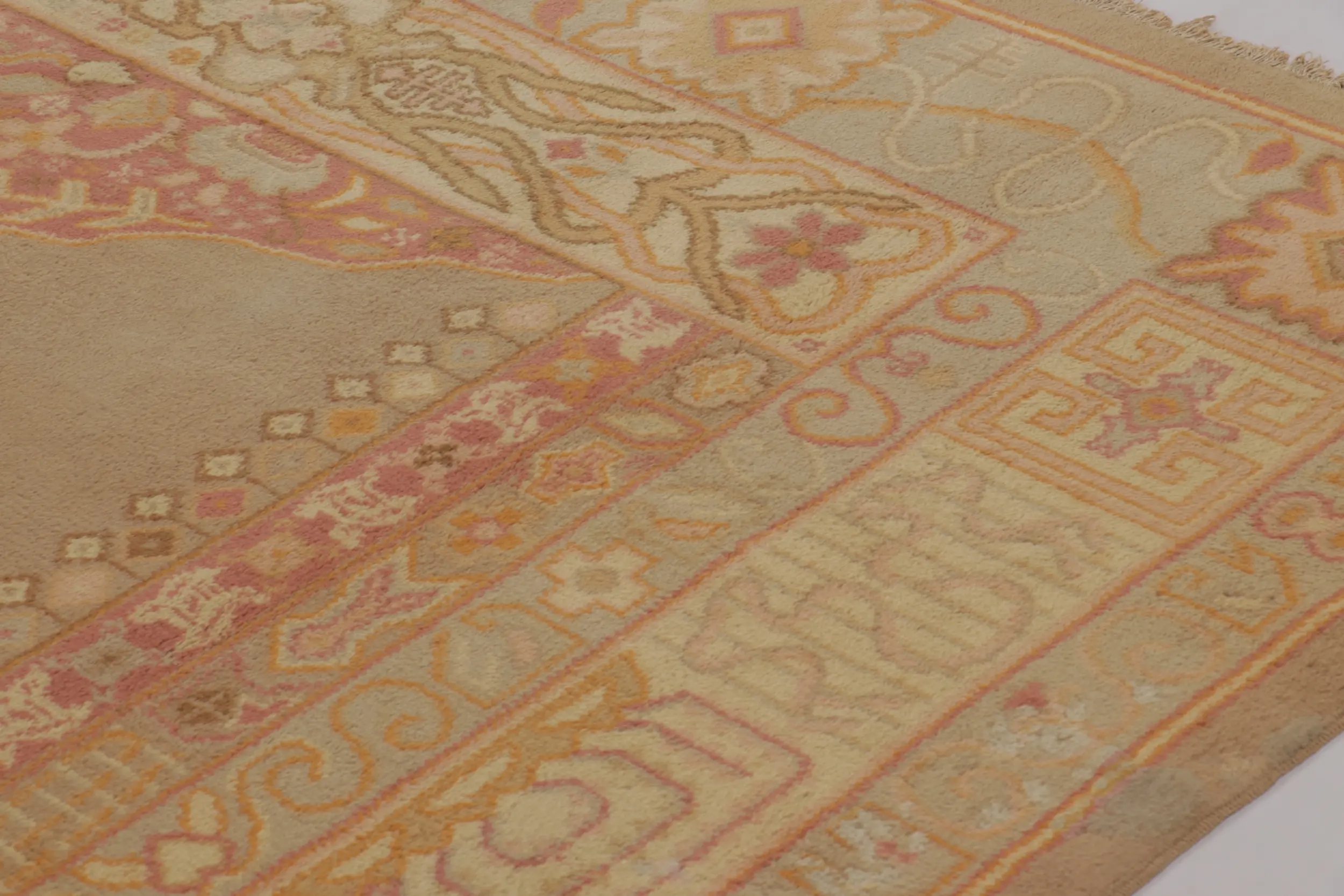
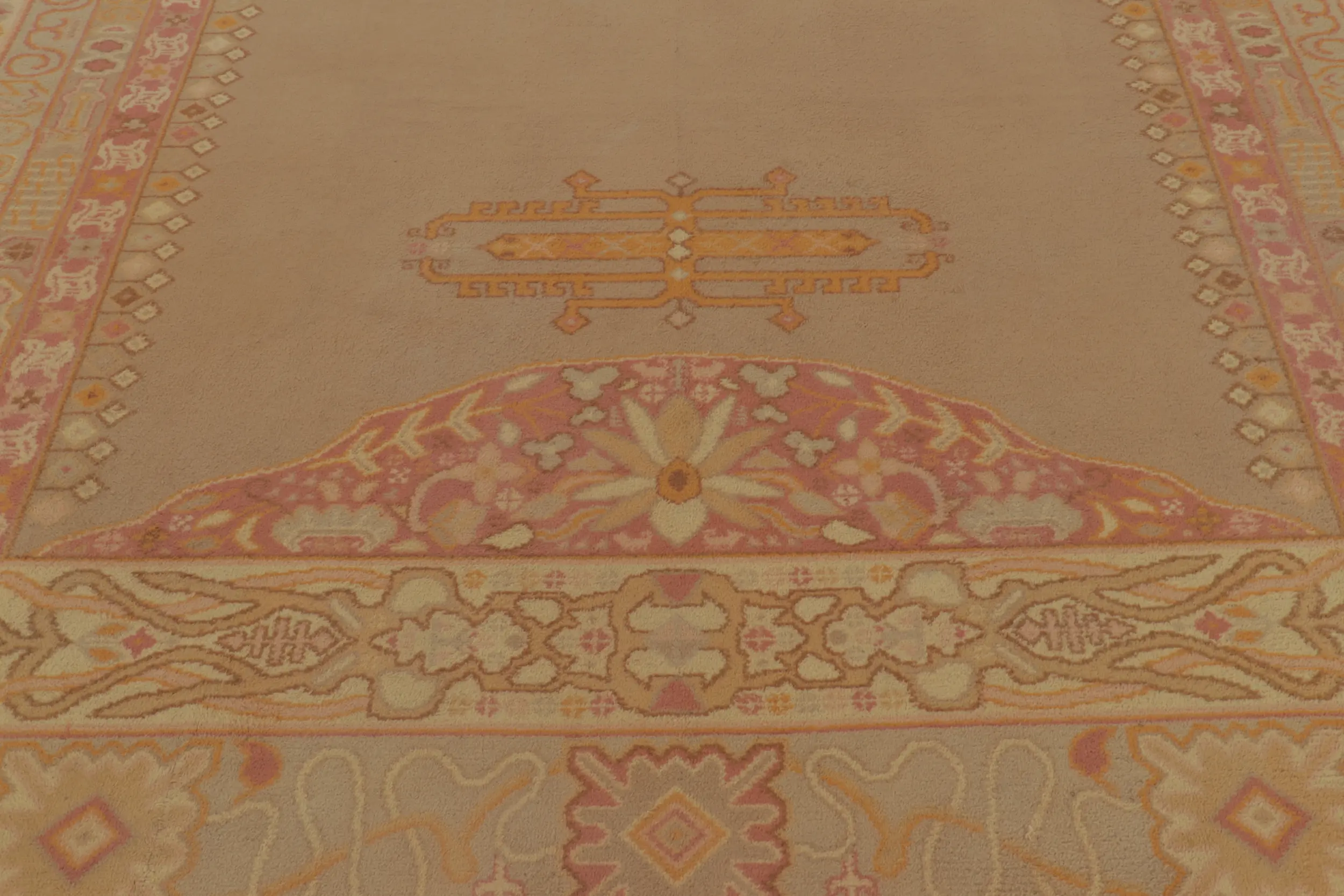
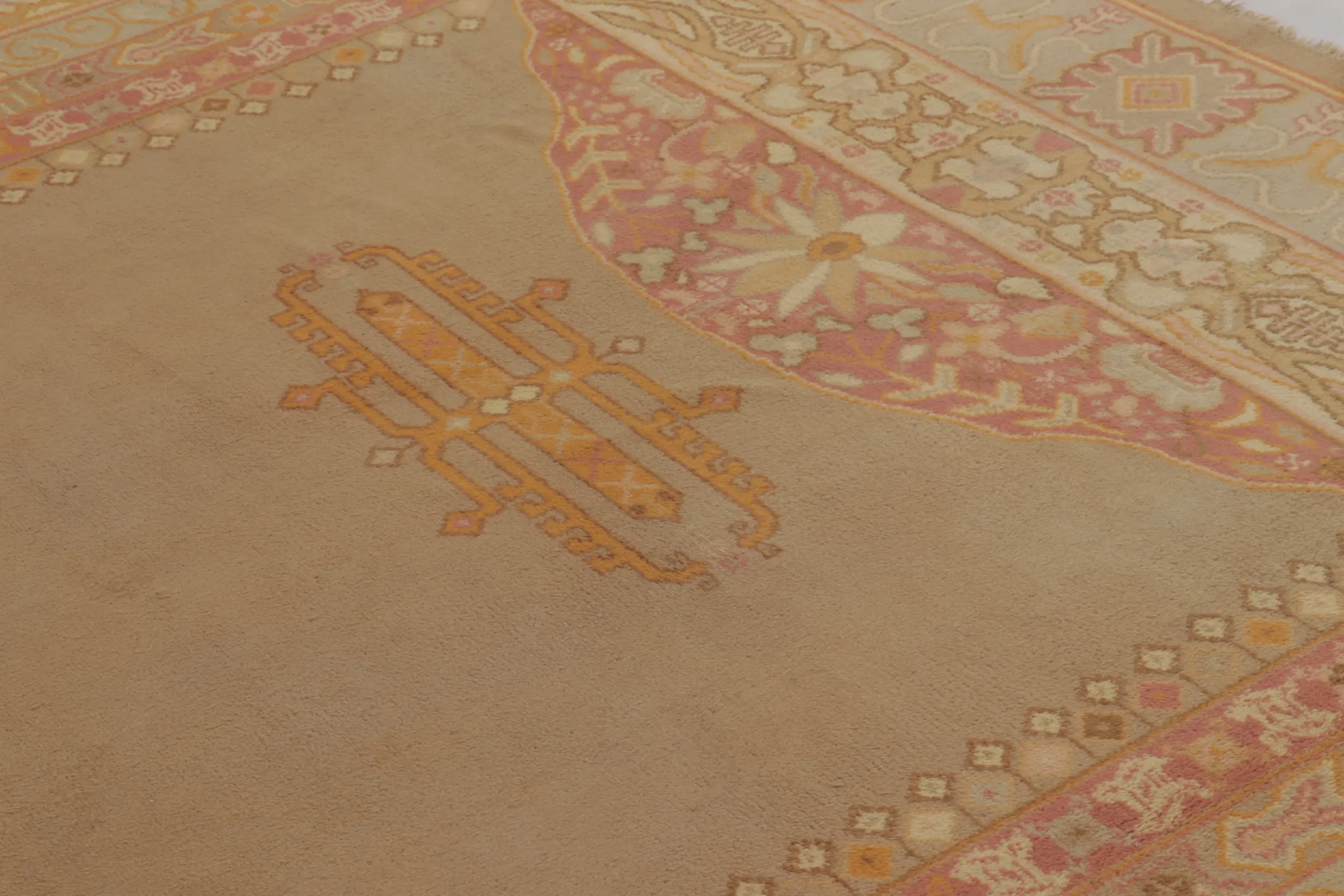
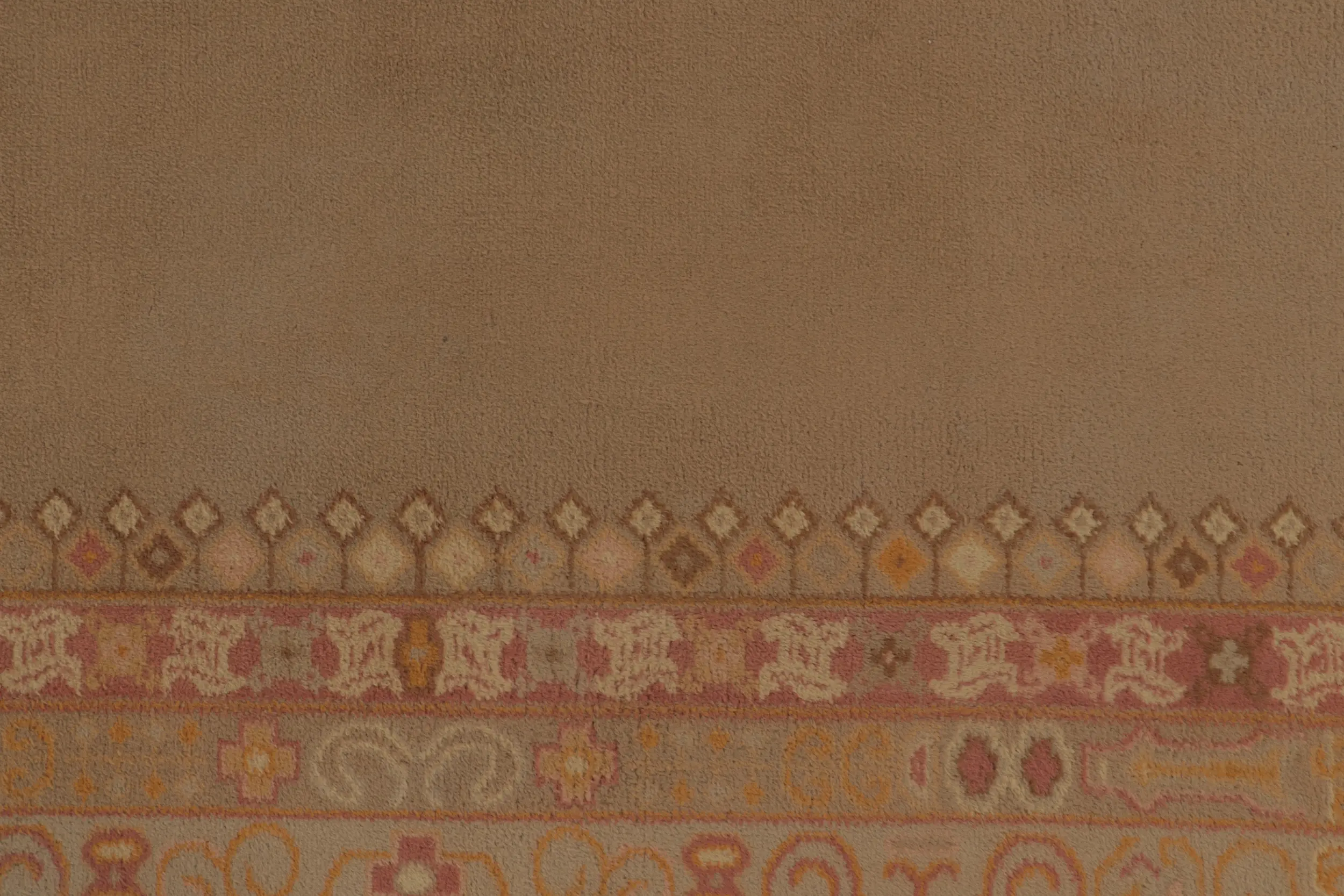
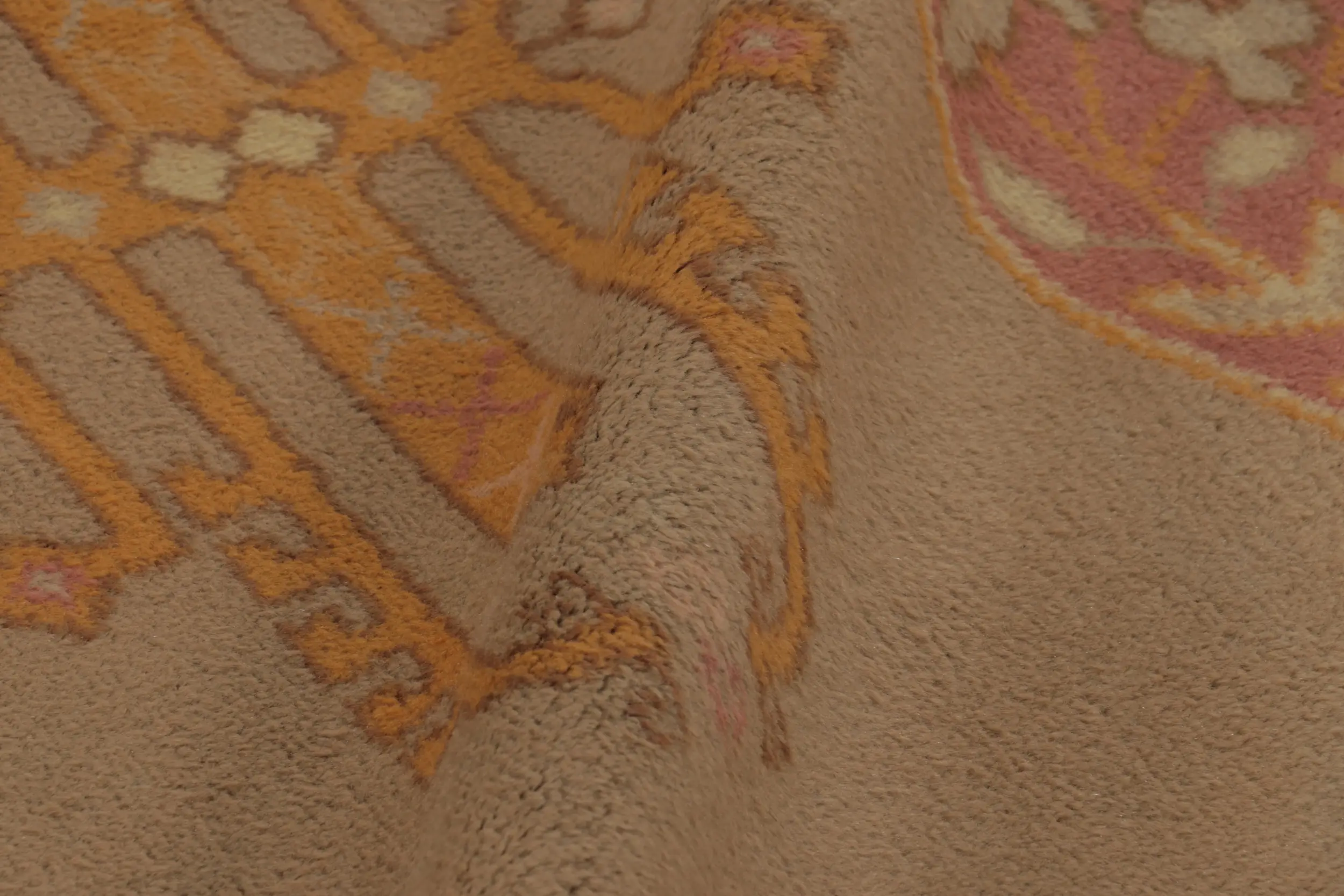
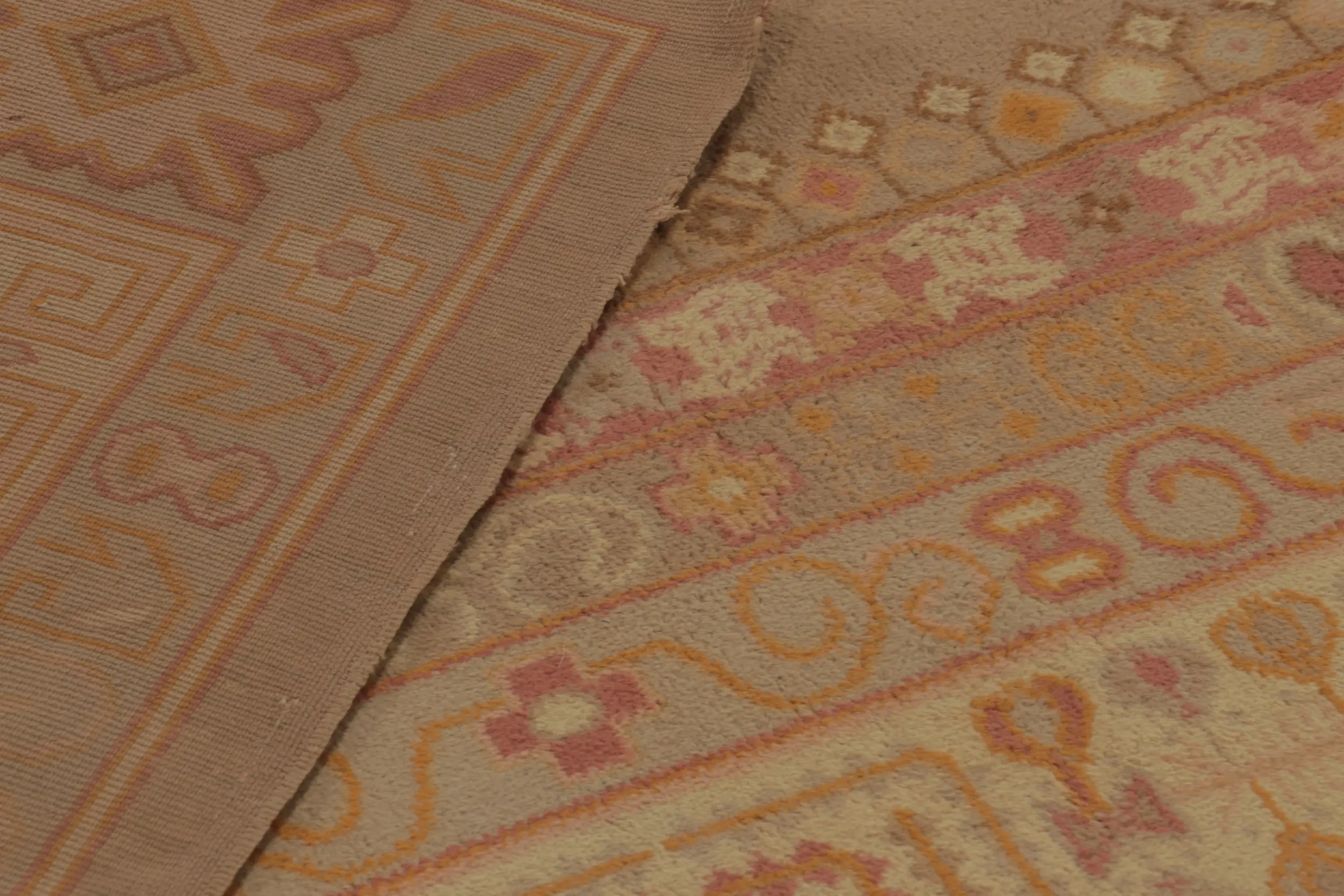
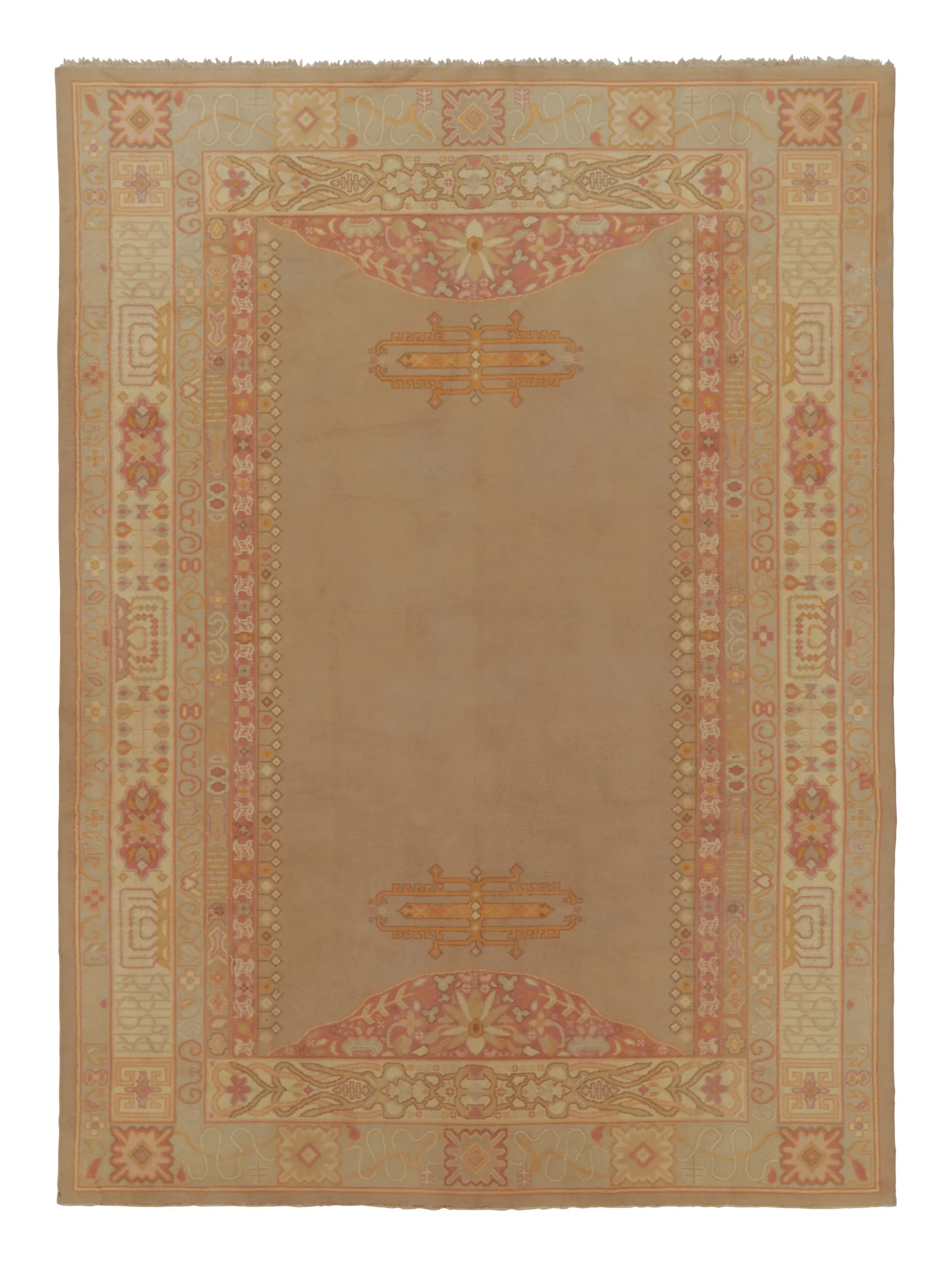
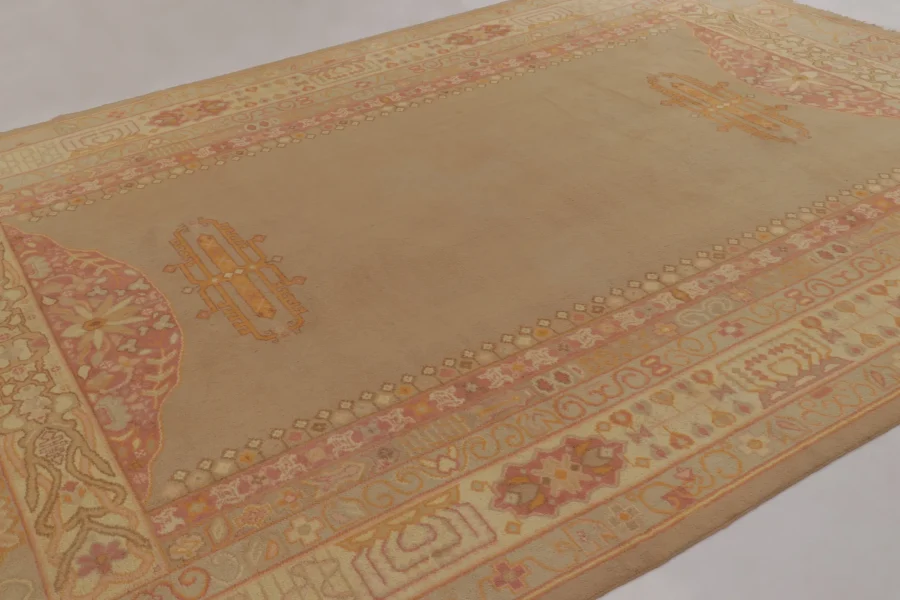
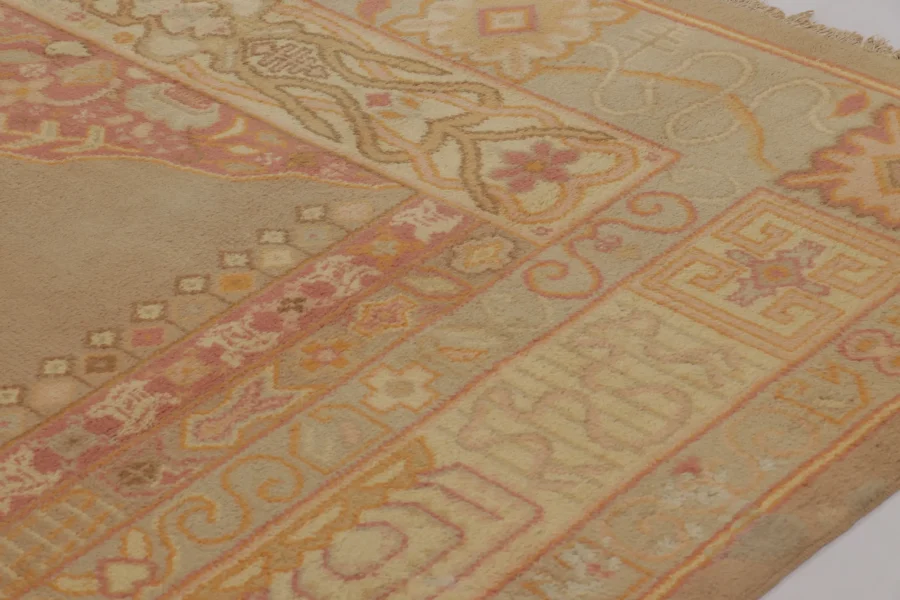
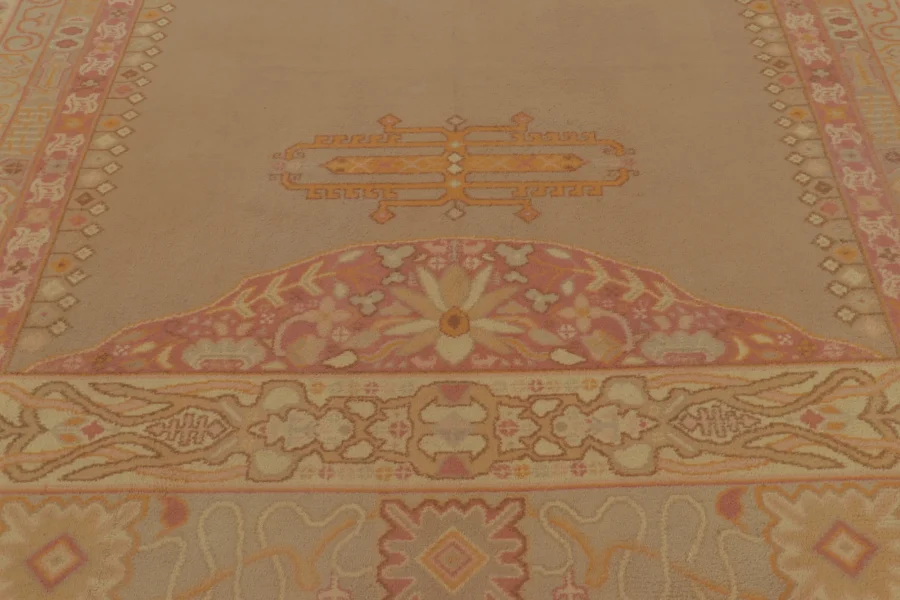
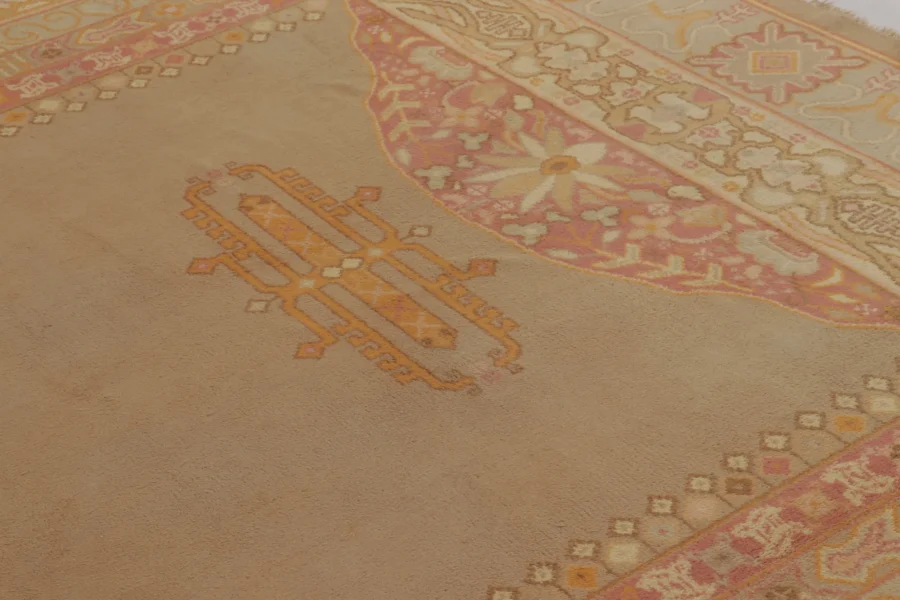
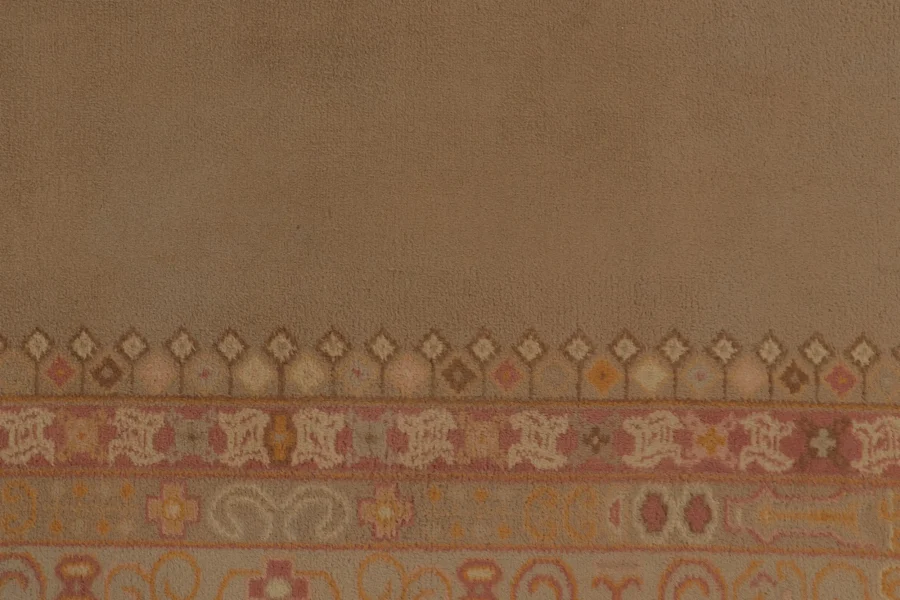
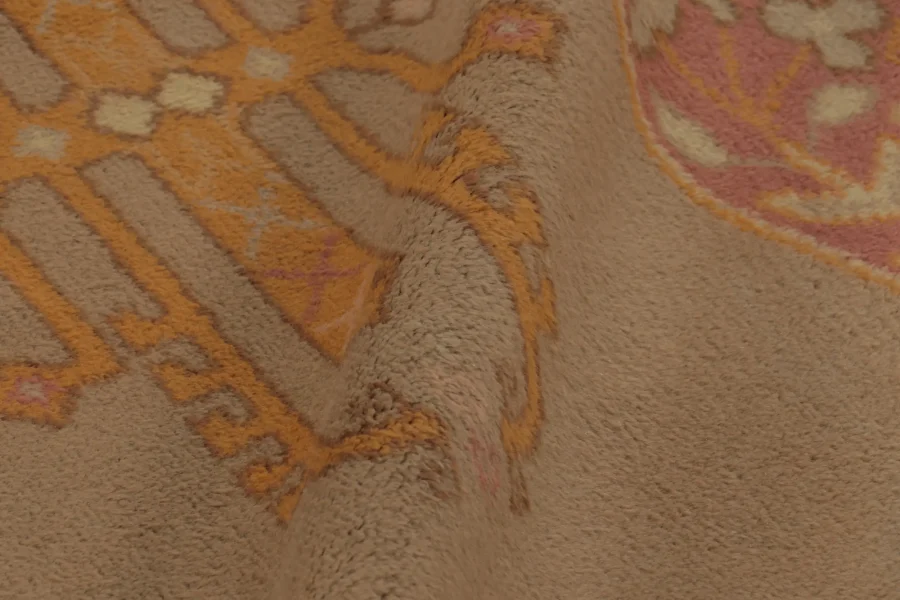
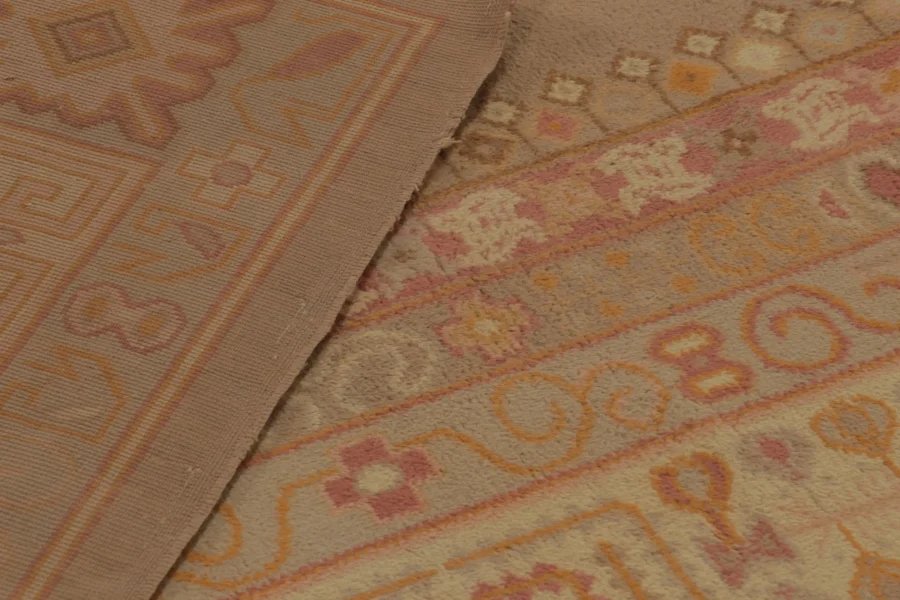
Made with hand-knotted circa 1910–1920, this 9x13 antique Indian rug is a rare and distinguished acquisition from the new unveilings in Rug & Kilim’s collection of the most exceptional and unusual pieces of celebrated provenance. This piece is a highly collectible example of an unusual provenance—specifically an Amritsar rug from India that masterfully blends traditional Eastern weaving with unique Western-inspired motifs.On the Design:This magnificent antique rug is a profound tapestry, weaving together a history told in saturated jewel tones and rare architectural forms. The field features a beige-brown open field, which provides a dramatic and serene stage for the complex artistry of the perimeter. Most notable is the rug's border design, which appears to be directly inspired by Egyptian architectural sensibilities.Admirers of the craft will appreciate the "saturated, delicious jewel tones" of pink, red, blue, and gold that flourish within the many floral and geometric patterns. These vibrant hues are layered into a series of intricate borders that achieve a remarkable sense of movement and depth. This piece is particularly collectible for its atypical elements, which are played together in a regal fashion rarely seen in early 20th-century Indian weaving. Softened by a century of time, the palette gives the rug a glowing quality that lends warmth and character to any high-end interior. It is an intentional and poetic contribution to the legacy of Amritsar artistry, where decorative refinement meets the enduring craftsmanship.Condition:This antique Amritsar rug further enjoys good condition for its age and origin.
"Rug & Kilim have been true collaborators in our projects. Their taste, and unmatched knowledge, have led us in unique and unexpected directions - the hallmark of a great partnership"
— Justin Capuco & Brittney Hart
The Rug & Kilim Standard
The Rug & Kilim Standard
A standard since our inception upheld across every acquisition, transaction, and delivery.
45+ Year Old Institution
More than four decades of expertise and stewardship, under the leadership of our Principal, Jahanshah "Josh" Nazmiyal.
Favorable Return Policy
Our return policy is 48 hours upon receipt allowing you to confirm the purchase in your space with confidence.
Product Warranty
Each rug is hand selected or produced through the most reputable sources under the direct supervision of our Principal.
Trusted Global Delivery
Reliable worldwide delivery handled with care, precision and constant communication.
Exceptional Support
Attentive, knowledgeable guidance before and after purchase from our dedicated team of specialists.
Long Term Care
We stand behind every piece we place and remain a resource to our clients for the lifetime of their collection.
The R&K Image Studio is a new visual workspace designed to present the Rug & Kilim collection
with clarity, restraint, and precision — in your space or any space you imagine.
This tool allows you to view, refine, and prepare imagery drawn directly from the pieces in our
archive. They can be visualized cleanly, isolated thoughtfully, and adjusted for presentations,
proposals, and private viewings, without altering the integrity of the original work.
Step 1Describe or upload your space, or use a preset
Made with hand-knotted circa 1910–1920, this 9x13 antique Indian rug is a rare and distinguished acquisition from the new unveilings in Rug & Kilim’s collection of the most exceptional and unusual pieces of celebrated provenance. This piece is a highly collectible example of an unusual provenance—specifically an Amritsar rug from India that masterfully blends traditional Eastern weaving with unique Western-inspired motifs.On the Design:This magnificent antique rug is a profound tapestry, weaving together a history told in saturated jewel tones and rare architectural forms. The field features a beige-brown open field, which provides a dramatic and serene stage for the complex artistry of the perimeter. Most notable is the rug's border design, which appears to be directly inspired by Egyptian architectural sensibilities.Admirers of the craft will appreciate the "saturated, delicious jewel tones" of pink, red, blue, and gold that flourish within the many floral and geometric patterns. These vibrant hues are layered into a series of intricate borders that achieve a remarkable sense of movement and depth. This piece is particularly collectible for its atypical elements, which are played together in a regal fashion rarely seen in early 20th-century Indian weaving. Softened by a century of time, the palette gives the rug a glowing quality that lends warmth and character to any high-end interior. It is an intentional and poetic contribution to the legacy of Amritsar artistry, where decorative refinement meets the enduring craftsmanship.Condition:This antique Amritsar rug further enjoys good condition for its age and origin.
"For years, R&K has been a favorite source for Kemble Interiors when we need antique, vintage, and custom designed rugs. Their inventory is deep and well displayed online and working in person is always such a pleasure too!"