
Our Top 10 Scandinavian Kilims: All-Time Favorites from the First-Ever Program by Rug & Kilim
July 26, 2024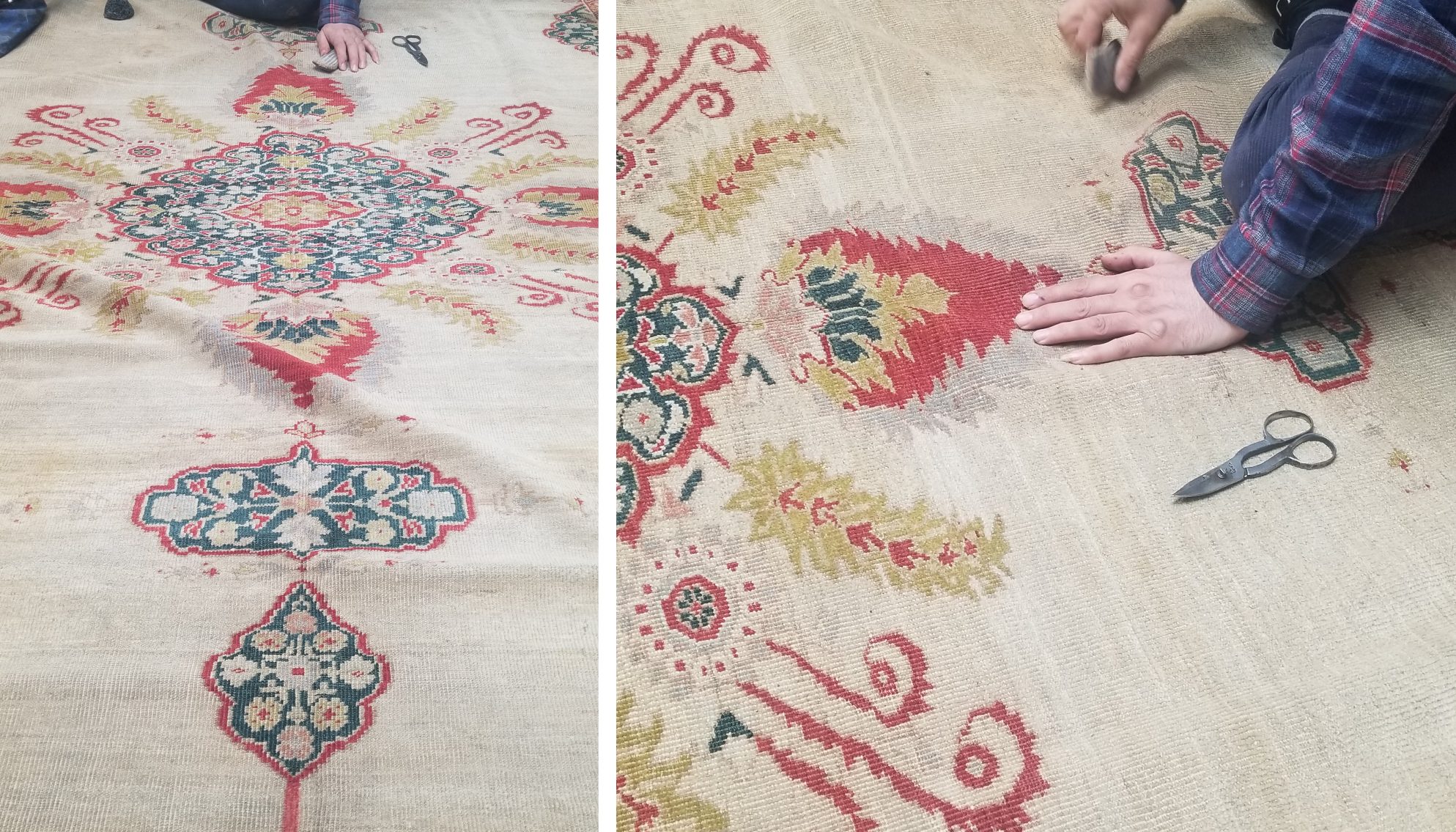
Why Do You Need Repair and Restoration For Your Rugs ?
August 1, 2024


Featured above is Paul Follot’s carpet featured in the Victoria & Albert Museum’s Textile Collection, crafted from hand-knotted wool in 1919-1920, showcasing a distinctive deco design characterized by clustered flower heads and arabesque motifs—typical elements of luxury objects in France during that era.
Follot, initially a French furniture designer rooted in the Art Nouveau style, demonstrated adaptability to the evolving tastes of the 1920s.
In 1923, he assumed the role of director at the Pomone design studio, affiliated with the Parisian department store Au Bon Marché. Transitioning into the Art Deco period, Follot collaborated with Serge Chermayeff in 1928, contributing to the creation of some of the earliest French Art Deco furniture.
Paul Follot’s (1877-1941) versatility as a French artist encompassed various artistic domains, including sculpture, furniture design, fabrics, and interior decoration. Born in 1877, Follot’s early artistic inclinations leaned toward medieval and Pre-Raphaelite art, laying the groundwork for his later endeavors. Joining La Maison Moderne in Paris in 1901, he collaborated with emerging art deco designers like Maurice Dufrêne, engaging in the intricate design of bronze, jewelry, and fabrics, that characterized art deco movement.
As one of the founding members of the decorative artist collective L’Art dans Tout, Follot embarked on an independent artistic career in 1904, showcasing a meticulous attention to detail, drawing inspiration from English-style carved decorations and 18th-century tapestries. However, his true artistic breakthrough occurred around 1909–10 when he embraced the emerging Art Déco style. Rather than merely following a trend, Follot sought “des architectures calmes“ or “tranquil architecture“ where beautiful materials and harmonious forms converged.
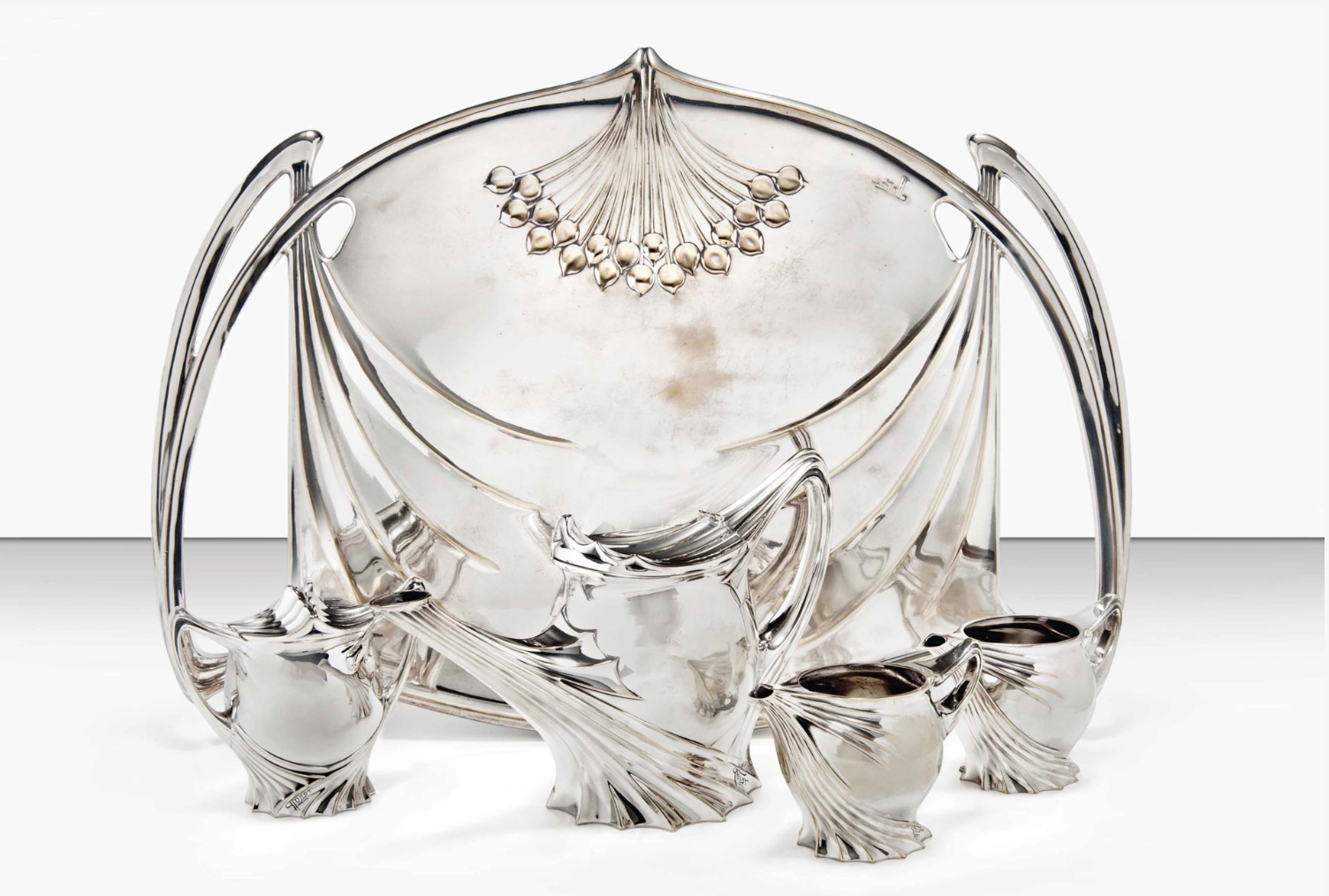
Featured above is Paul Follot’s circa 1902 silver tea service set signed “P. Follot”, auctioned by Christie’s.

Featured above are images of our French Art Deco Rug SKU 27957, building upon the 1920s design style of the Art Deco period. This rug enjoys a floral-geometric pattern in red, gold, green & blue. Connoisseurs will note the elegance in design – gracefully complementing the grandiose of the European sensibility.
Paul Follot made artistic choices marked by the extraordinary, using rare and exquisite materials along with highly refined techniques. In 1911, the prestigious Wedgwood commissioned him to design a ceramic line, but World War I delayed the project. This venture into ceramics showcased Follot’s adaptability and his willingness to explore diverse media.
Follot’s artistic endeavors were not solitary; he collaborated with various artists and craftsmen. His wife, Hélène Follot, contributed painted wall panels and pictures to their joint artistic ventures. Schenck manufactured rugs, Orfevrerie Christofle and Lapparra crafted silver designs in the 1920s, and artisans like Laurent Malclés and Harribey executed wood carving in his furniture. Each collaborator brought a unique set of skills, contributing to the richness of Follot’s versatile design portfolio.


Above is an original article from “The Connoisseur” 1980.
Paul Follot’s impact extended beyond the realm of individual artistry, reaching commercial spaces as well. The year 1923 marked a pivotal moment in Parisian design when the esteemed Au Bon Marché department store appointed a new artistic director for its Pomone studio. This visionary’s influence soon transcended retail, reshaping the aesthetics of public spaces across France.
His masterful touch graced the luxurious interiors of iconic ocean liners, most notably the SS Paris in 1921 and the SS Normandie in 1935. This appointment not only elevated commercial design but also set new standards for opulence in the public realm, forever altering French decorative arts.
Beyond being an artist, Follot served as an educator, taking on the position of a professor in advanced courses in Parisian decorative arts. He held strong opinions on design theory, differing from the proponents of “Le style 25.” Follot championed ornamentation and rejected the emerging trend of “mass-production art” in favor of an aristocratic tradition rooted in luxury.
Follot’s extensive body of work earned him a prominent place in numerous exhibitions, starting with his debut at the Société des Artistes Francais Salon in 1901. The 1925 Paris Exposition became a showcase for his diverse talents. His designs graced Pomone’s displays at Au Bon Marché, captured the essence of music in motifs for Maison Pleyel, and brought regional flair to the Pavillon de Roubaix-Tourcoing. This trifecta of contributions cemented his status as a versatile master of the decorative arts, influencing the very definition of modern design.
Paul Follot’s early interior designs bore the influence of the Gothic Revival, characterized by foliate motifs. Grasset influenced his appreciation for wooden motifs and carvings, and he frequently integrated stylized motifs like baskets of fruit or flowers, which artisans such as Laurent Malclès meticulously carved from solid wood.
Follot’s well-upholstered pieces featured gently curved and ornamented giltwood frames, showcasing a preference for rare materials, inlays of contrasting colors, and gilded bronze friezes. During this period, his furniture leaned towards the styles of Louis XVI or the Empire rather than contemporary Art Nouveau.
After 1910, Follot’s fine art designs underwent a transformation, becoming quieter and more classical as he gravitated towards Art Deco. At the 1912 Salon d’Automne, his groundbreaking dining room set emerged as a harbinger of Art Deco. Crafted from a blend of sycamore, ebony, and amaranth, this ensemble challenged prevailing design norms, foreshadowing the geometric elegance and material opulence that would define the movement in years to come. It adhered to the principles outlined by André Vera in his manifesto “L’Art décoratif” of January 1912.

Paul Follot was a pioneering figure in the world of art deco design, known for inventing and promoting works that were detached from historical reminiscences while maintaining a link with the tradition of the craft. His ability to traverse various eras and renew himself each time set him apart, earning recognition from his peers as a master. This work, drawing on unpublished family archives, provides new insights into the life and work of Paul Follot.
He is acknowledged as a master of Art Nouveau, credited with inventing the 1910 style, and gained attention at the 1925 Exposition Internationale des Arts Décoratifs et Industriels Modernes for his Art Deco creations. The book explores his contributions to design and sheds light on his innovative approaches that bridged tradition and modernity.
Hailed as an Art Deco purist, Follot’s creations exemplify an evolution of France’s rich design heritage. His works melded classical elegance with modern sensibilities, signalling towards the refined French aesthetics in the Art Deco era. His textiles and wallpapers, designed in both traditional and modern styles, reflected his versatility.
Follot’s design philosophy transcended mere functionality, championing the essential role of beauty in human existence. In 1928, he eloquently defended life’s finer pleasures, arguing that without such “superfluous” elements as music, flowers, and feminine charm, human experience would be impoverished. This ethos manifested in his interiors, which critic Gabriel Mourey lauded in Art et Décoration (1929) for their serene opulence. Mourey portrayed Follot’s spaces as sanctuaries of refined comfort, insulated from worldly chaos, where luxury and tranquility coexisted in perfect harmony.