

Renting Rugs and Kilims for Special Events and More
January 26, 2024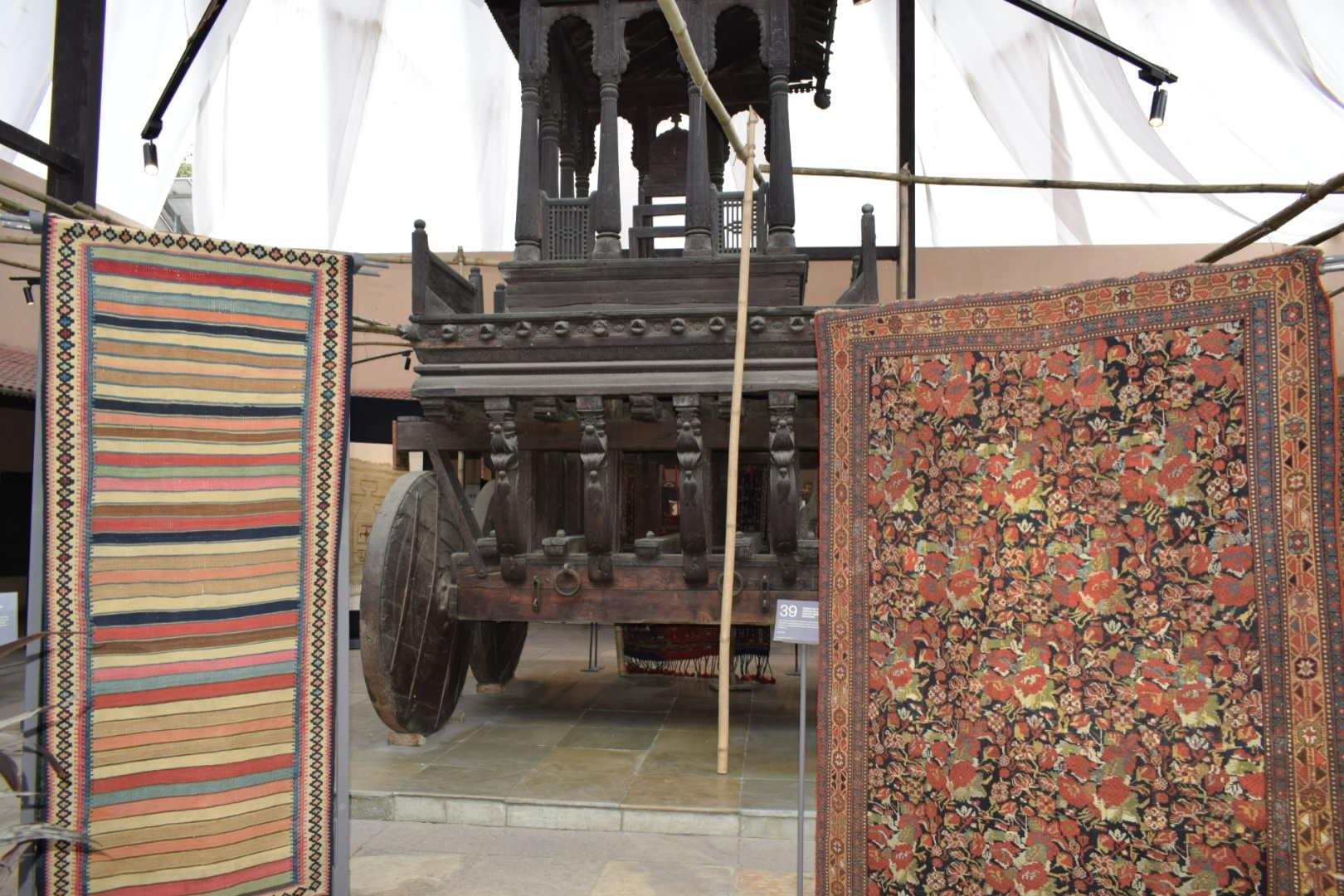
Rug & Kilim Abroad – “Nomad” Exhibition 2024: The Art of Tribal Weavers Across Borders from Anatolia to Tibet, New Delhi, India
February 16, 2024
[Featured Project: Above, the great room in a Southold, Long Island home by Emma Montgomery Design features a vintage Kilim from the Rug & Kilim collection. Photo courtesy of Zack DeZon, as featured in Northforker.]
Traditional Kilims & flatweaves are floor coverings with a pile-less constitution (or “zero pile” as some in our field say). These are woven with a special technique that not only makes them more durable but also easier to maintain. The finer body of most kilims won’t accumulate dirt and dust as easily or often as a pile rug, which reduces the frequency of between cleaning sessions. Still, it’s important to know how to care for these to maintain their longevity — it’s easier than you think!
How do I clean Kilims different than other rugs?
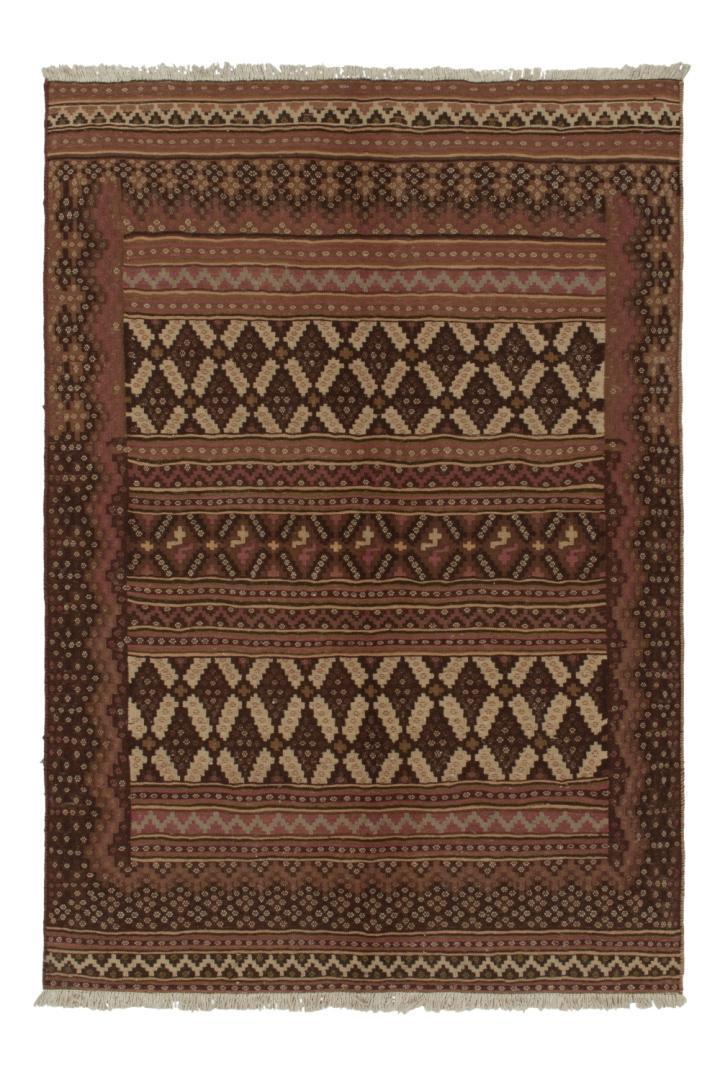
With Kilims in particular, it’s important to be more gentle with these kinds of weaves, and here are some tips to help care for Kilim and flatweave rugs as best as you can:
- Shake it off: Every few weeks, shake off your Kilim in the open to get rid of surface debris, just like any rug. This is very helpful in maintaining the air quality of the room, and it’s a good opportunity to rotate your piece.
- Vacuuming: You can vacuum clean flatweaves on both sides at least twice a week, so long as it’s on a bare floor setting/no suction. This means less unnecessary tugging at the finer-woven fibers, and alternatively, you can smear baking soda on the rug and let it stand for 15 minutes and then vacuum clean it gently on both sides. This particular method both removes loose particles and minimizes odors overtime like any rug.
- Washing: If you intend washing your flatweave at home, gently broom both sides first. Then, mix a gentle cleanser with water. Take a soft brush, dip it in this solution and gently rub it in horizontal and vertical directions. (Here you want to use just enough water to wash off the cleanser, since you don’t want to soak your Kilim without a professional that knows how to care for its dyes.) Now, put it on a flat surface and leave it to dry.
- Spills and Stains: For spot removal, blot the patch with a clean towel, avoiding aggressive scrubbing. Remember to blot towards the center to avoid spreading. Now, place a container under the Kilim, pass clean water through the stained area and collect in the container. You can repeat until the desired effects are achieved, unless more persistent stains requiring a professional cleaning remain.
Tips for Maintaining Kilims Over Time
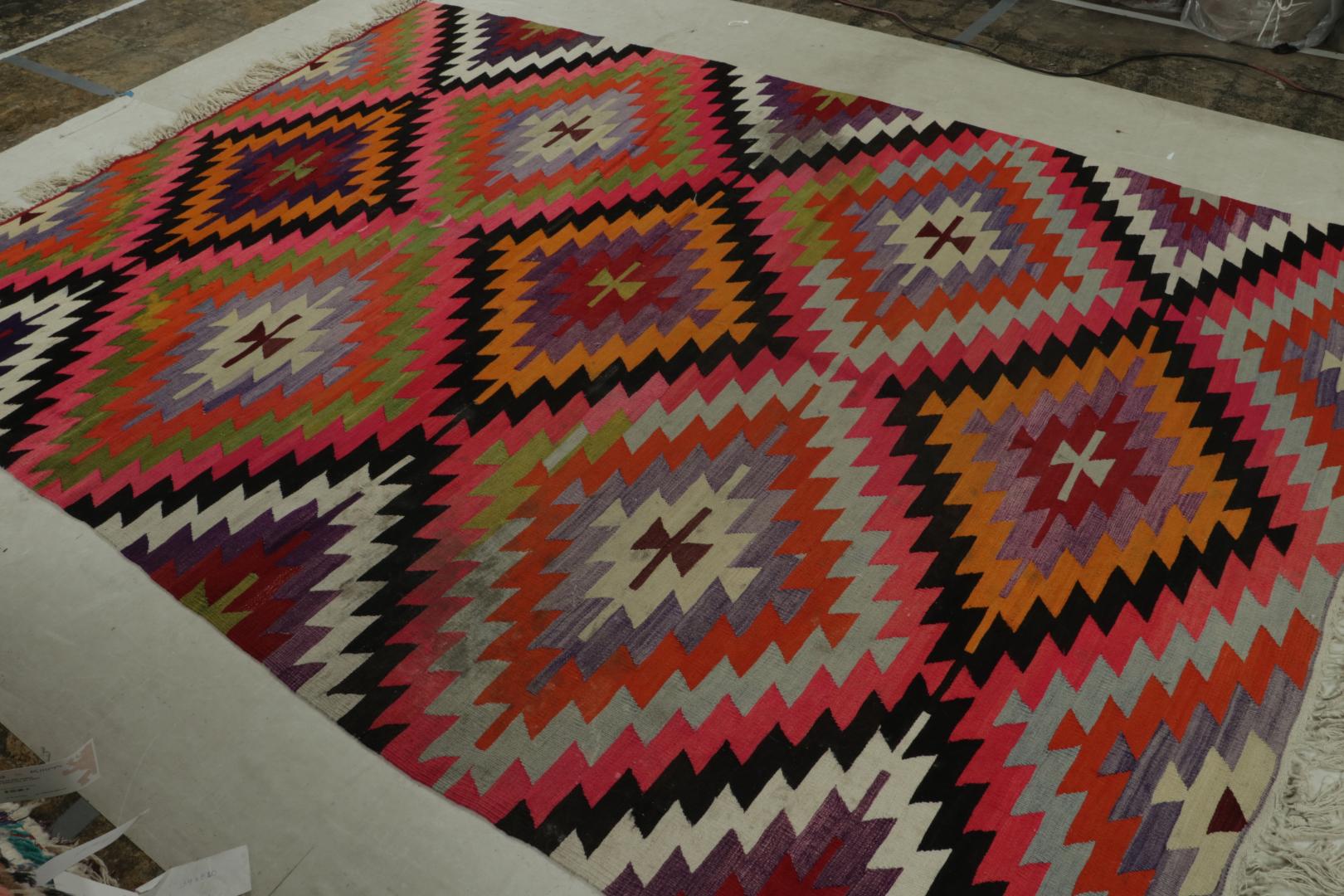
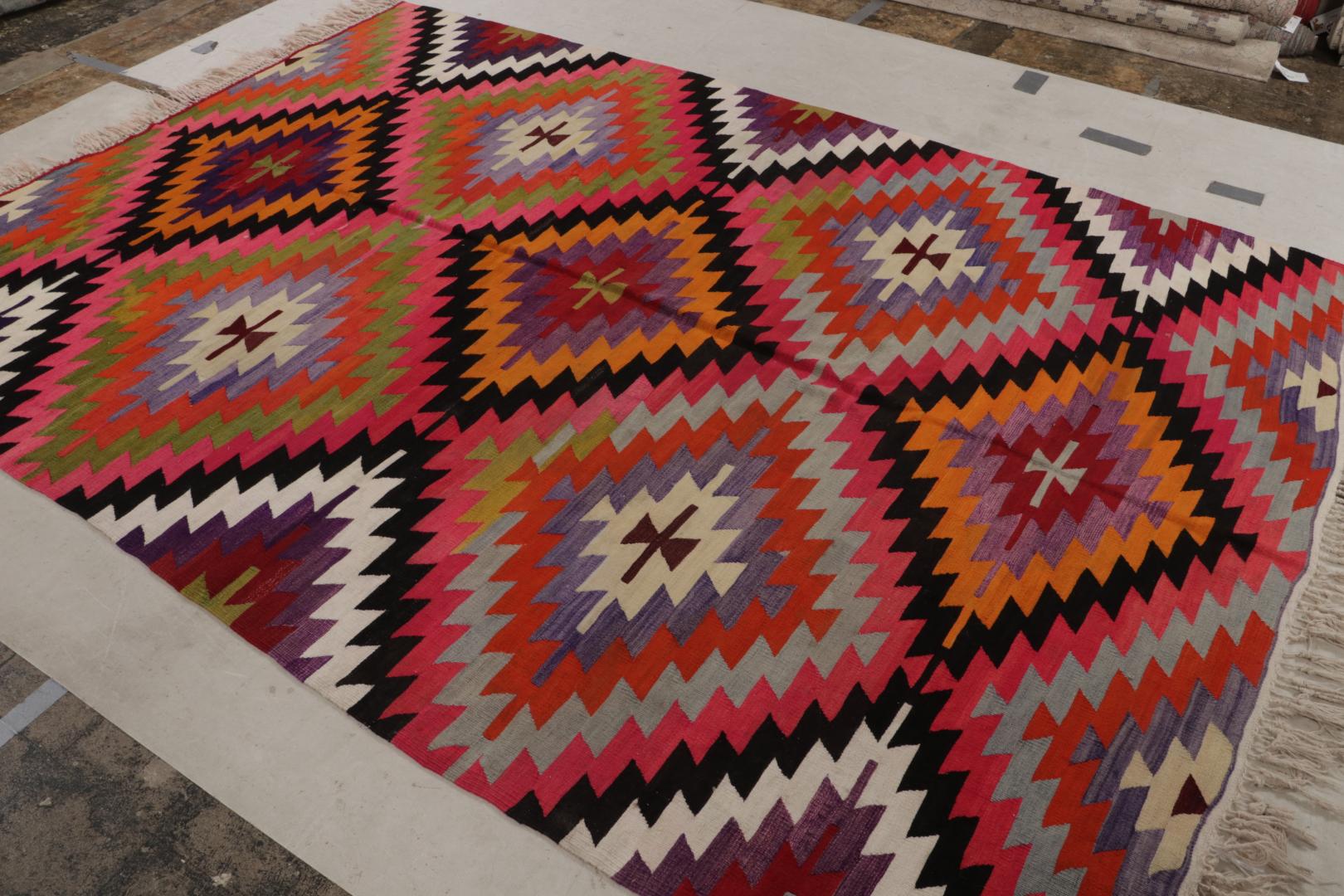
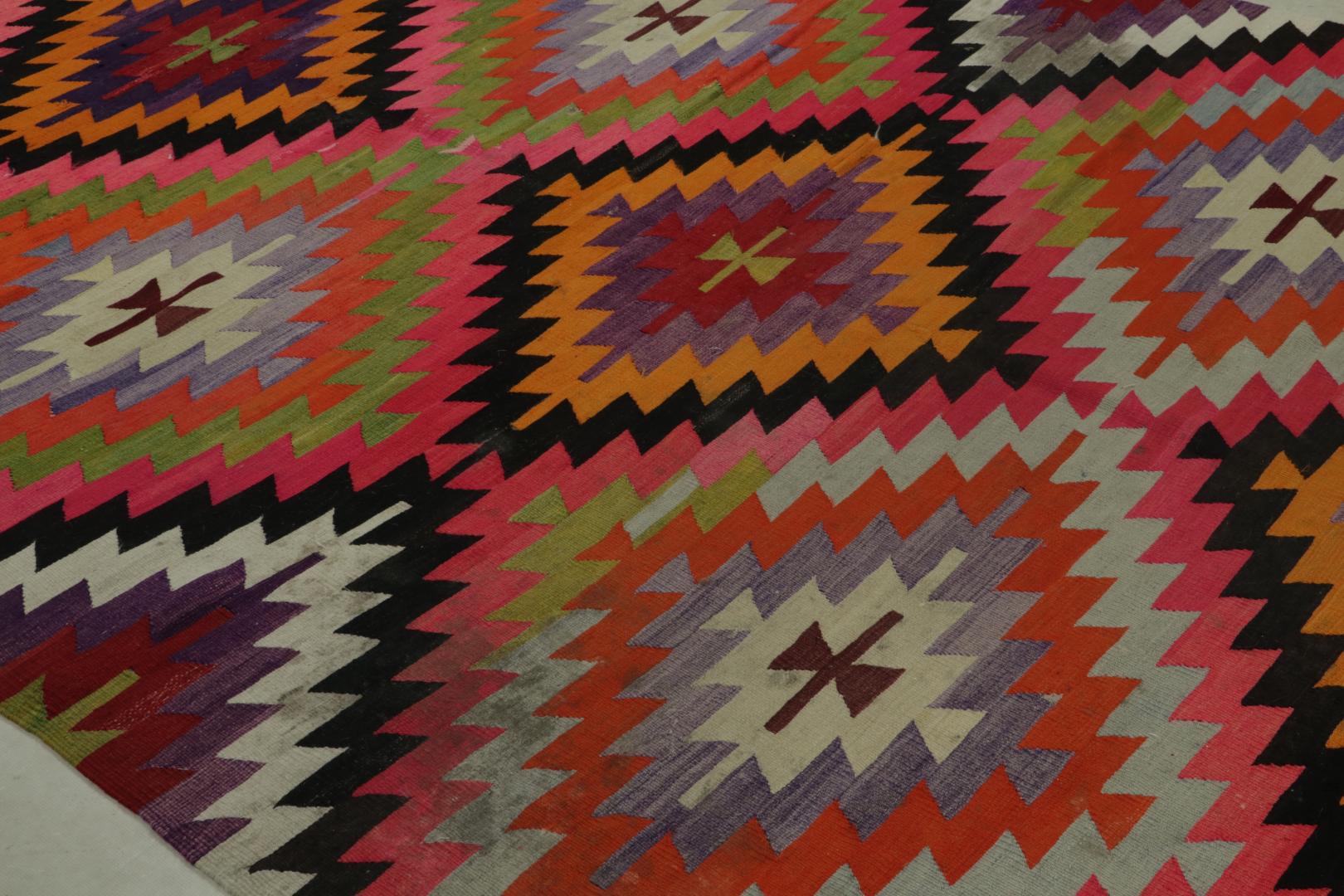
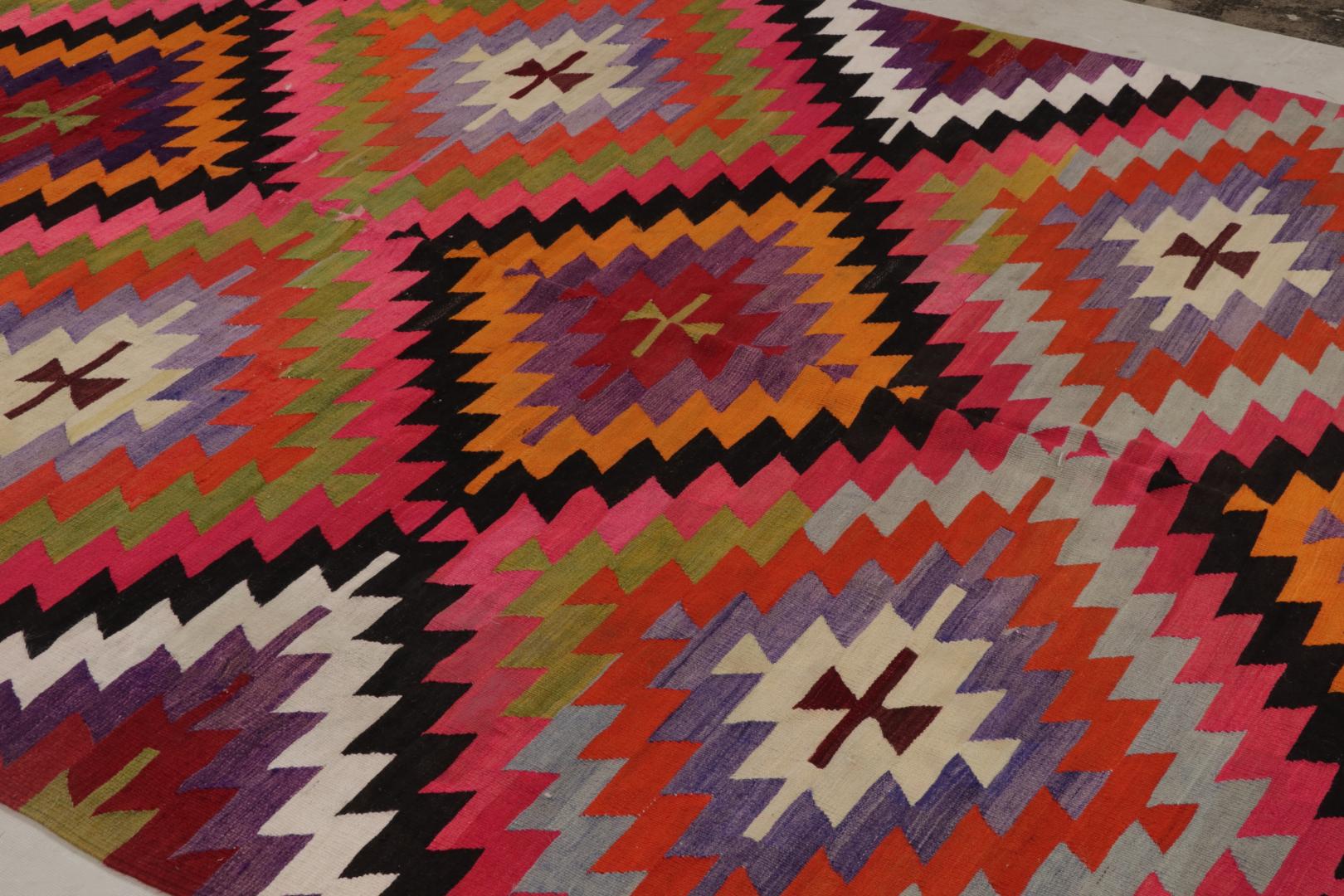
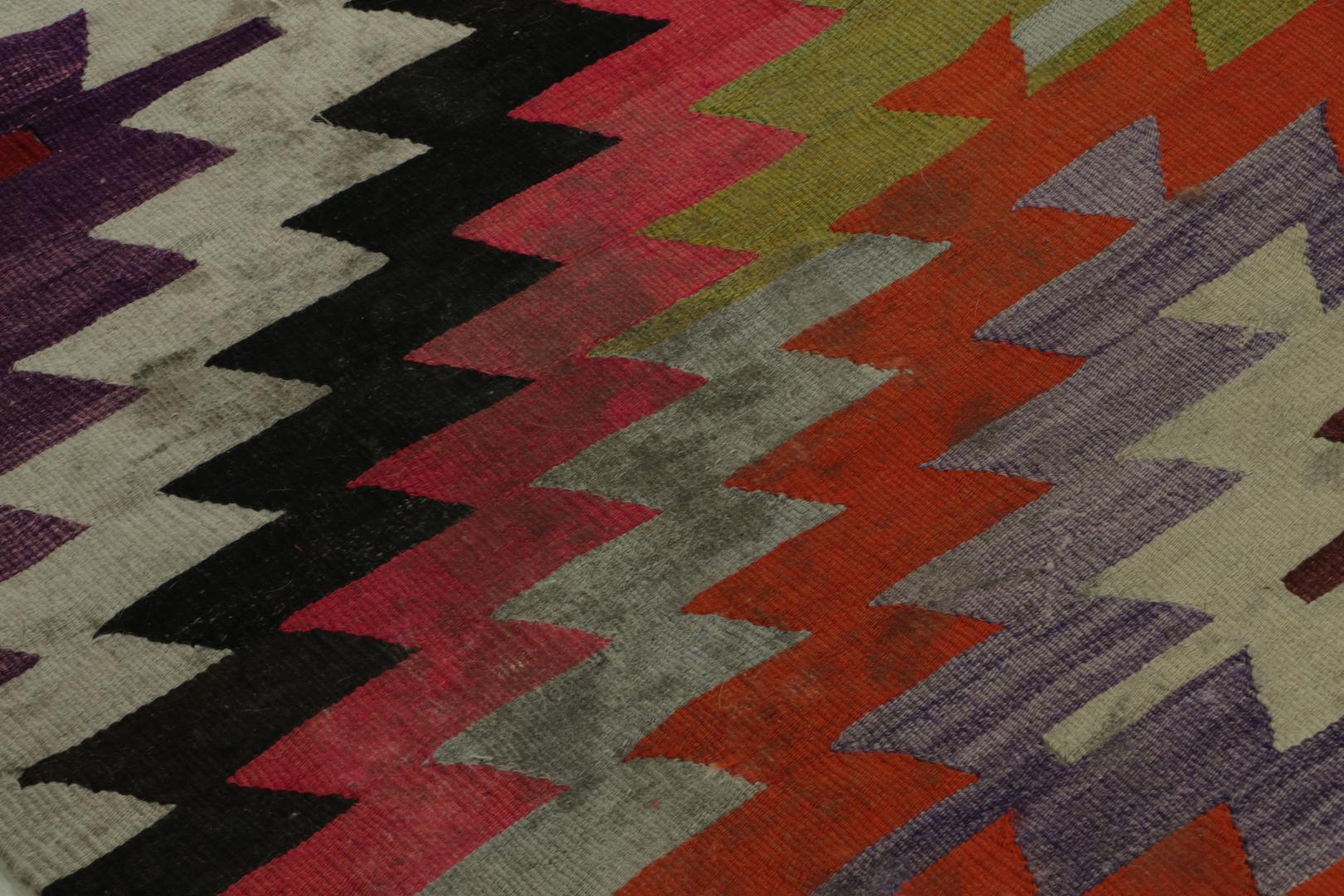
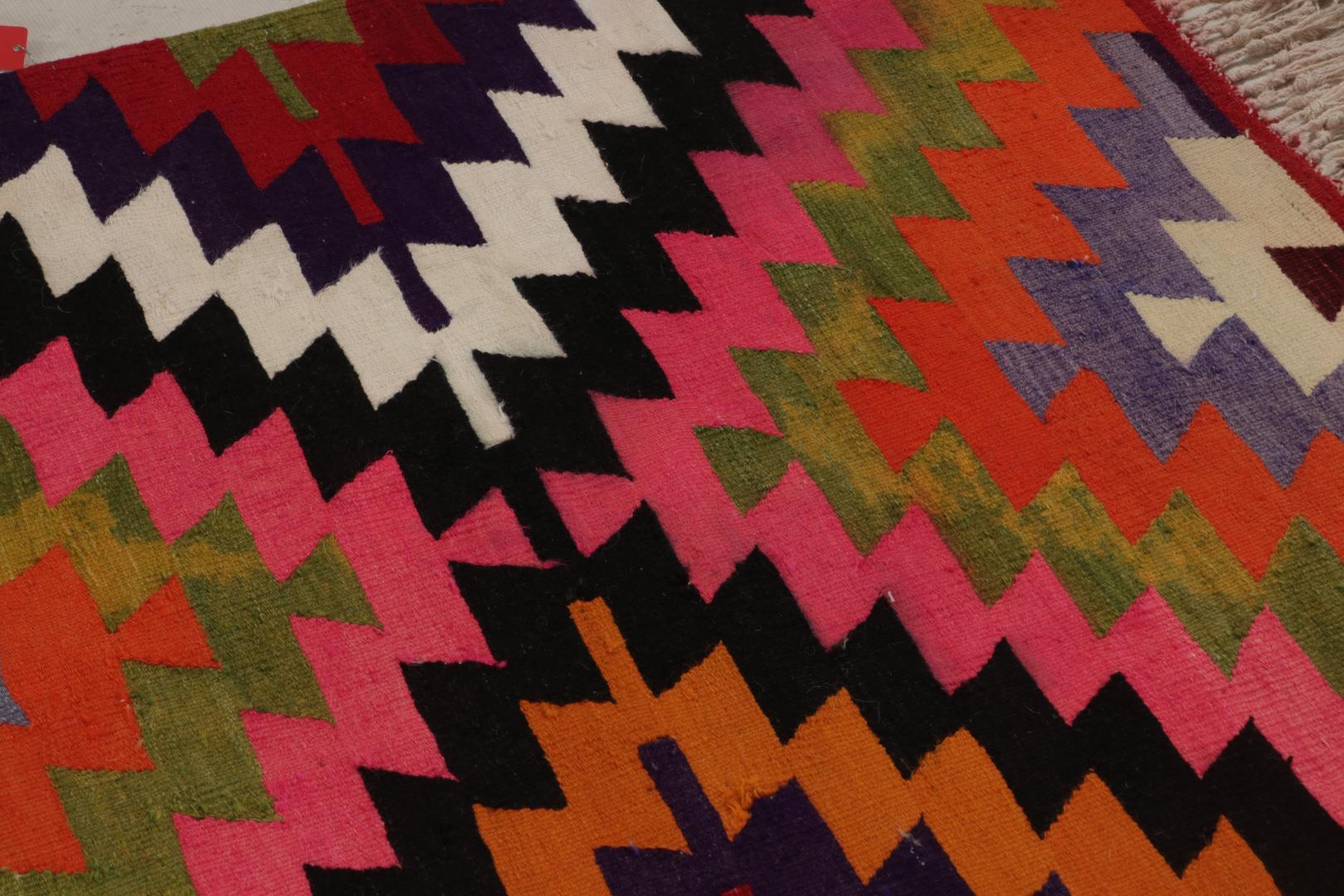
Above are before (left) and after (right) pictures from a recent Rug & Kilim cleaning, where a vintage Kilim was treated for oil stains, color run and fiber damage with great success.
A professional, in-depth white glove cleaning by a student of Kilims is always the best, but cleaning any rug regularly makes a big difference in its longevity. Preventative care is always the best way to care for handmade rugs and textiles before, and after, cleaning needs arise.
- Water Exposure: if a Kilim remains damp for a long time, it could damage the fiber.
- Washing Machines: washing kilims in a washing machine is a Big No!
- Sun Exposure: Excessive UV Rays can cause sun fading, even in Kilims with vegetable dye, so rotating Kilims every few weeks is an easy way to keep exposure even overtime.
- Use Gentle Cleansers: Opt for hand brooms and vacuum cleaners without a beater bar.
Need a professional rug cleaning? At Rug & Kilim, we employ a library of techniques to clean every piece with white glove service at every step. With more than 43 years of hands-on experience, Principal Josh Nazmiyal and his lead, Wilson Ojeda, offer the most informed high-end rug care.
Contact us at 212-829-9995 or email info@rugandkilim.com to request a cleaning quote.