
Understanding the Swedish Grace Movement of the 1920s: Origins of the “Scandinavian Rug”
November 27, 2023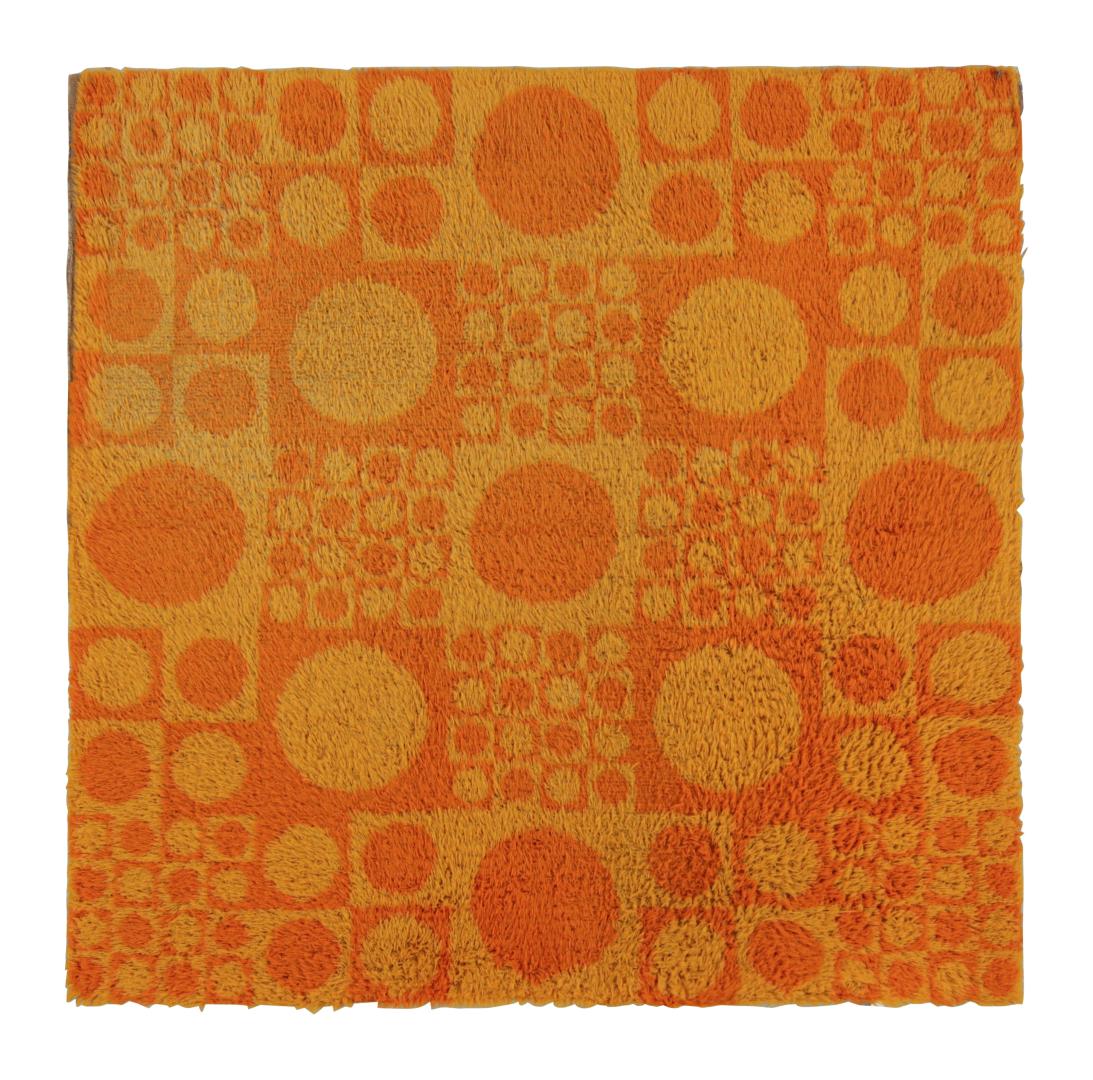
Ege Rya Rugs & Verner Panton’s Abstract Modernist Style
December 5, 2023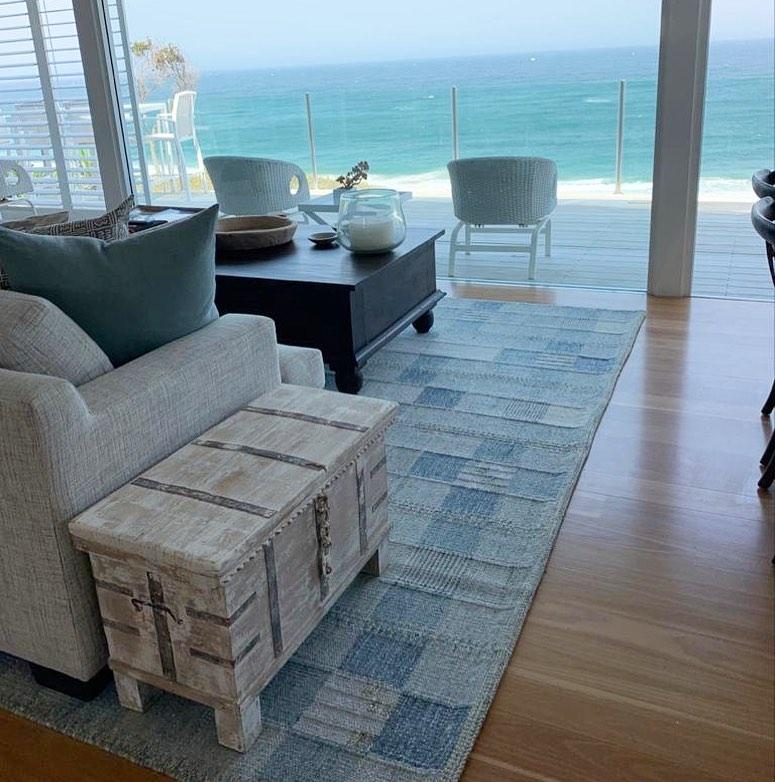
Above, a Palm Beach coastal home enjoys a custom Scandinavian rug by Rug & Kilim, inspired by Sigvard Bernadotte’s Swedish flatweave designs.

Sigvard Bernadotte, June 7, 1907- Feb. 04, 2002. Photo courtesy of Geneanet.
Sigvard Bernadote’s designs seamlessly blend traditional elements, simplifying them to the point of geometric abstraction, exemplifying his knack for marrying heritage with modernity in his artistic endeavors. Born in 1907, Sigvard Bernadotte held the position of a prince, standing as second in line to the Swedish throne. Despite his royal status, Bernadotte harbored aspirations of becoming a set designer, or perhaps even venturing into acting. Understandably, his career aspirations were met with resistance from the royal family. Rather than adhering to the expected royal protocol of seeking permission from both his father, the king, and Parliament at the time of his first marriage, he opted to marry without formal consent. This act of defiance greatly displeased King Gustav, leading to the removal of both his son’s prince title and his right of succession to the throne. Consequently, Prince Sigvard became Mr. Bernadotte.
During the 1950s, while still working in Denmark, Sigvard Bernadotte embarked on a foray into rug design for Nils Nessim’s Textile Atelier in Sweden. Bernadotte’s creations encompassed various styles, including flat-weave (rölakan) and pile rugs (flossa), as well as relief-pile rugs. Nils Nessim’s background was steeped in the rug trade, being the son of a Bulgarian merchant who introduced rugs at the 1914 Baltic fair in Malmö. Eventually, he settled in Malmö, establishing one of the initial companies dedicated to marketing oriental rugs in Sweden. Nessim himself evolved into a prosperous rug salesman and connoisseur, extending his expertise to antiques and, in his later years, Chinese antiquities. Post-war, he played an active role in cultivating a market for oriental rugs across Sweden. From the 1950s through the early 1970s, Nessim also undertook the production of rugs designed by a roster of Swedish artists, including Bernadotte, Aina Kange, Solveig Westerberg, and others. These rugs bore a distinctive blue and white NN label on the reverse side, featuring the name of the respective designer.
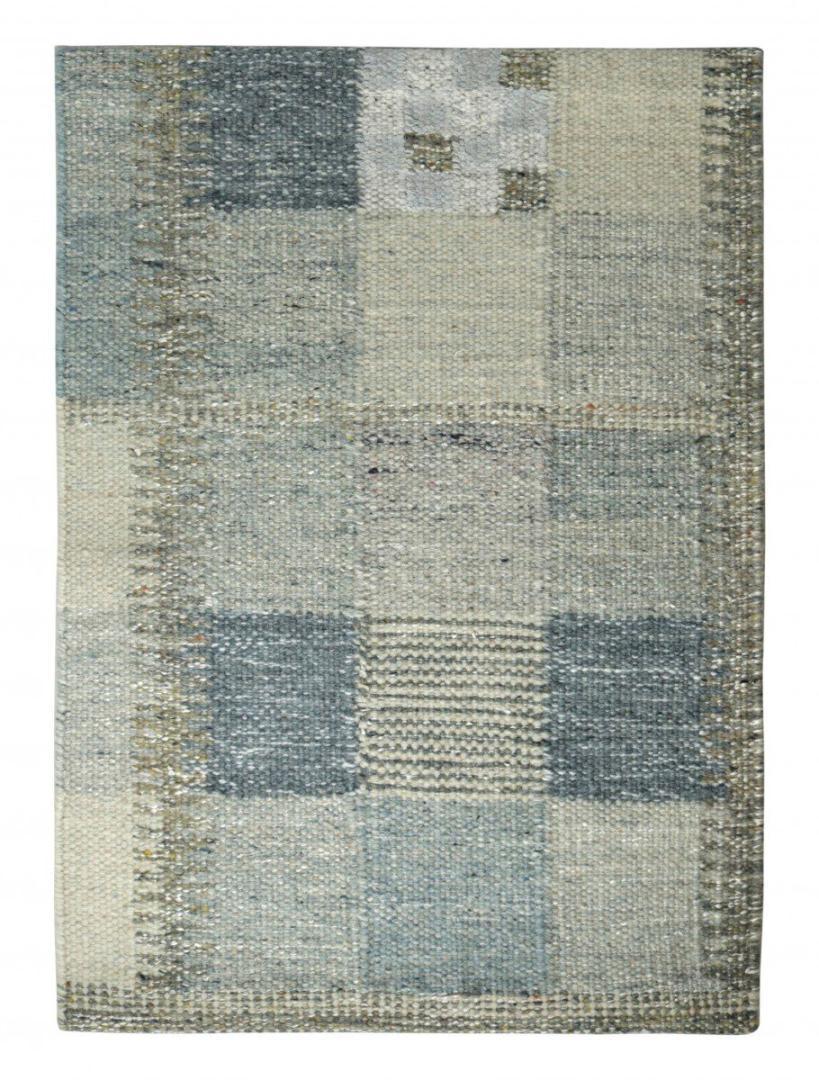
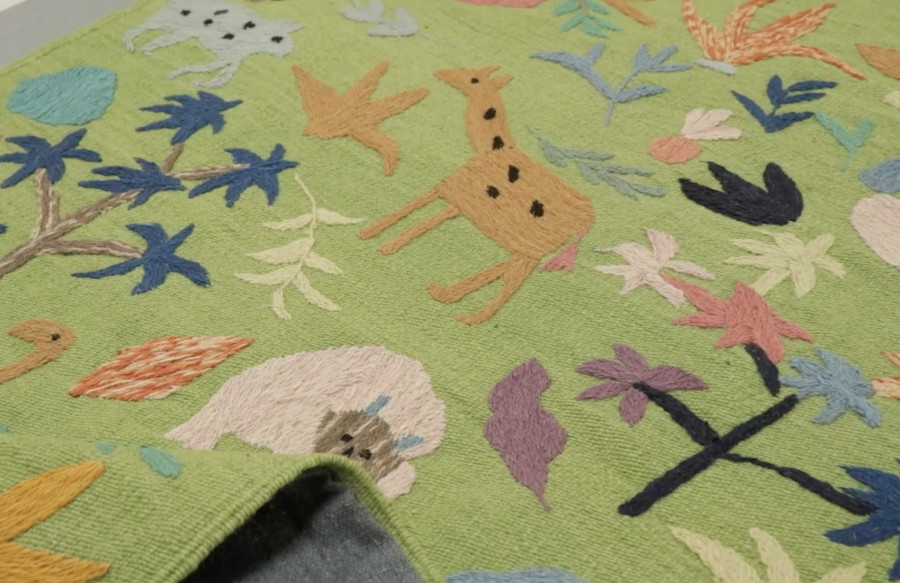
Custom Scandianvian Rug Sample 21675, as featured in the Palm Beach home above.
In February of 1950, Sigvard Bernadotte presented an impressive display of his rug designs, showcasing a remarkable collection of 100 pieces at the
prestigious Lord and Taylor in New York. Following this successful exhibition, the show embarked on a tour, making its way to prominent department stores in Chicago, Dallas, and Minneapolis, further establishing Bernadotte’s reputation as a distinguished rug designer.
In 1951, Schumacher, a leading interior showroom in New York, introduced Bernadotte’s “Celebration” rug. This creation presented an abstract reinterpretation of the classic tree-of-life design, showcasing Bernadotte’s innovative approach to traditional motifs. It appears that Bernadotte maintained a collaboration with Nissim well into the 1960s, as evidenced by the continuous publication of his rug designs in both American and British magazines during this period. Bernadotte’s rug designs mirror the same graphic equilibrium and dynamism that distinguish his silverwork and industrial designs.
Some of Sigvard Bernadotte’s most renowned contributions lie in his silver designs for the esteemed Danish company Georg Jensen. A significant number of these creations have earned status as twentieth-century design masterpieces, finding their place in the esteemed collections of institutions like the Metropolitan Museum of Art, the British Museum, and numerous other prestigious museums worldwide. Bernadotte’s legacy endures through these iconic pieces, which continue to be celebrated for their artistic and design excellence.
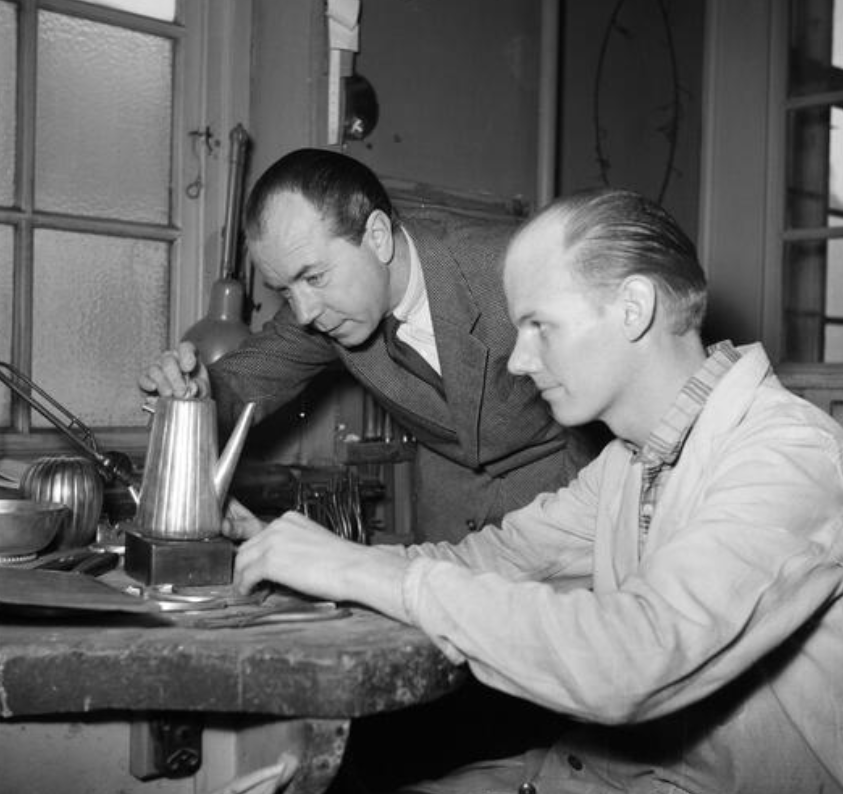
Sigvard Bernadotte, left, with a silversmith from Georg Jensen in March, 1954. Photo courtesy of Wikimedia Commons.
Following his role as the artistic director at Georg Jensen in Copenhagen, Bernadotte ventured to establish the design firm “Bernadotte and Björn Industridesign” alongside the Danish designer Acton Björn. In 1964, he made the move to Stockholm, where he founded “Bernadotte Design,” further solidifying his presence in the world of design and creativity. Designed by Sigvard Bernadotte in Sweden during the 1950s, this captivating flatweave rug boasts a distinctive pattern featuring geometric squares in a range of blue hues, separated by a crisp white grid. This contrast serves to enhance the interplay of various blue tones within the rug, creating a visually engaging textile.
“Spanning everything in decor from luxe tableware to fine textiles, Bernadotte was the epitome of a Renaissance Man in his time, both for his patronage of the arts and his progressive contributions in the ‘form follows function’ attitude of mid-century designs. While not the only man among the many women in this era, Bernadotte was arguably an embodiment of the Swedish Modernist attitude. Bernadotte’s rugs and flat weaves, too, embodied the clean, livable presence of Scandinavian minimalism that would endure long after his death in 2002. While all antique and vintage Scandinavian rugs and Kilims are particularly rare to find, Bernadotte’s favor of the mesmeric, yet never-monotonous pattern continues to stand out in his seldom-curated works.”
Explore more of Rug & Kilim’s tributes to Bernadotte and other legendary figures behind the Swedish textile renaissance in our Scandinavian rug collection, and enjoy some favorites inspired by Bernadotte works below.
-
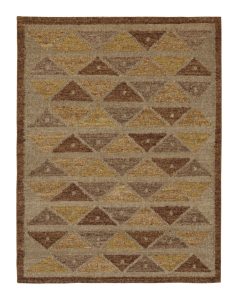
- SKU 27977 – 6×8
-
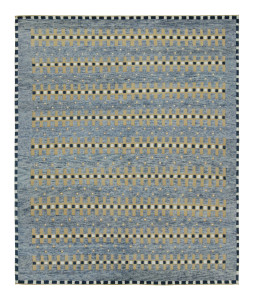
- 8×10 Scandinavian Rug 29998
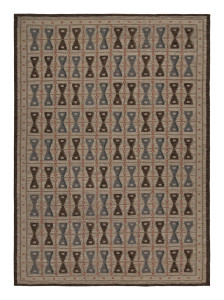
-
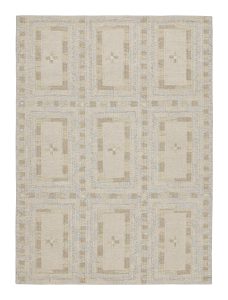
- 5×7 Scandinavian Rug 26973
-
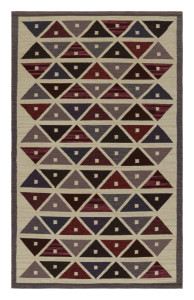
- 6×10 Scandinavian Rug 28876
-
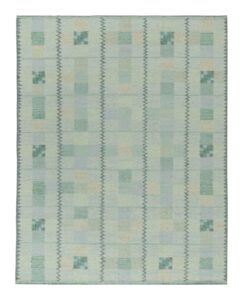
- 9×12 Scandinavian Rug 26587