

Why We Fell for the Floor: The Soul of Rug & Kilim
April 20, 2025
Deco Dreams and Contemporary Glamour: How Art Deco Inspires Modern Rug Design
April 29, 2025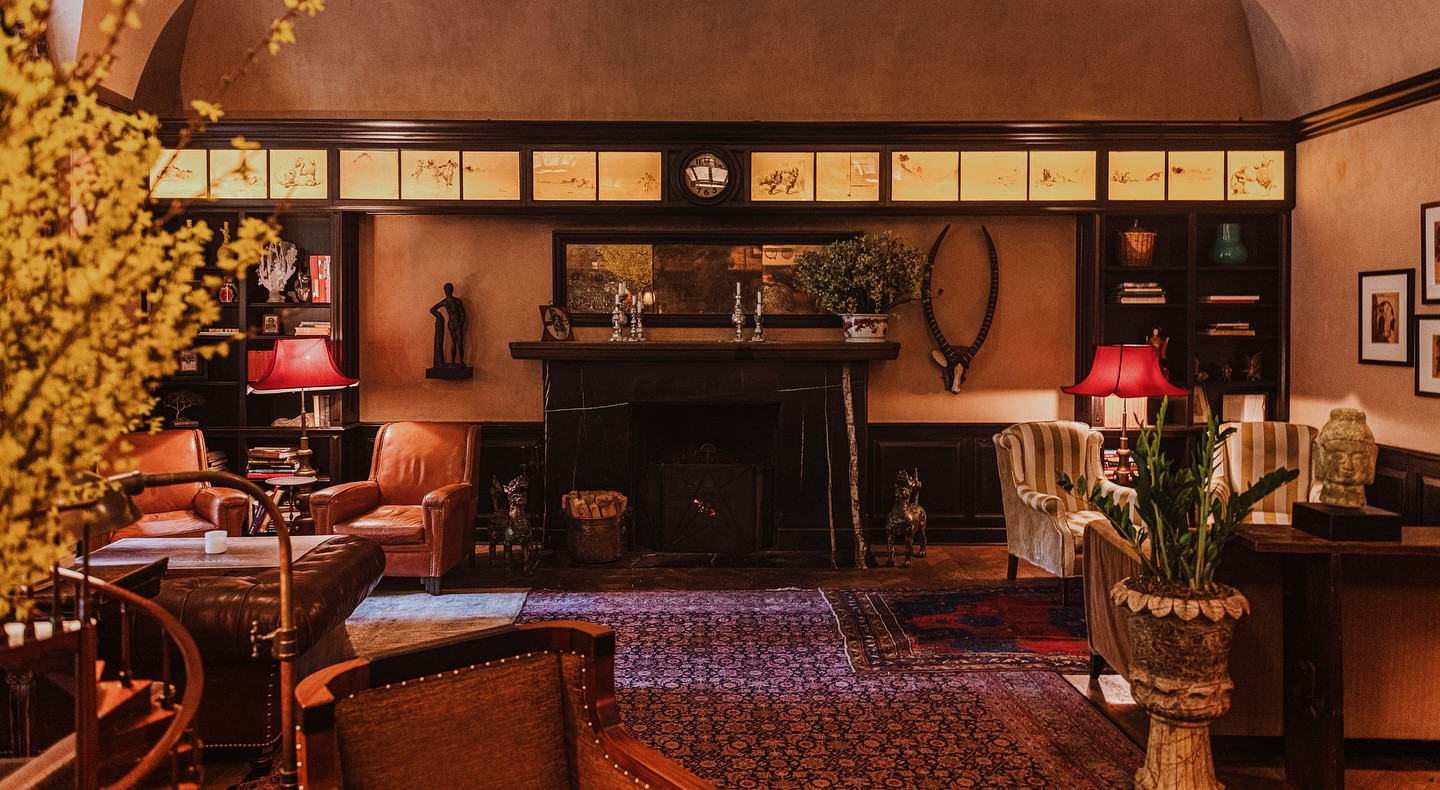
The Greenwich Hotel x Rug & Kilim
Long before the streamlined geometry of the Art Deco movement captured the world’s imagination in the 1920s, a quieter revolution had already unfurled on the looms of 19th-century Tabriz. In the urban heart of northwest Persia, the city’s master weavers—working under Qajar court patronage and propelled by a revivalist ambition—crafted rugs that presaged the ornamental modernism of the Deco era. These antique Tabriz rugs, often prized for their structural clarity and aesthetic restraint, offer an extraordinary glimpse into a proto-modern design vocabulary that feels startlingly contemporary.
The Artistic Renaissance of Late-Qajar Tabriz
By the mid-1800s, Tabriz had reasserted itself as a central hub of Persian art and intellectual life. With increased exposure to European tastes and an internal resurgence of pride in Persian classical heritage, weavers began refining both technique and pattern, transforming rugs from regional commodities into globally sought-after art pieces. The court patronage of the Qajar elite, especially in the late 19th century, inspired the development of sophisticated weaving workshops that treated rugs not merely as utilitarian floor coverings but as visual tapestries of architectural thought and cultural identity.
This period saw the reintroduction and reinterpretation of Safavid-era motifs—but with tighter execution, urbane elegance, and a calculated aesthetic harmony that set Tabriz apart. These were rugs made not just for palaces but for intellectual salons, bridging historical gravitas with emerging urban modernity.
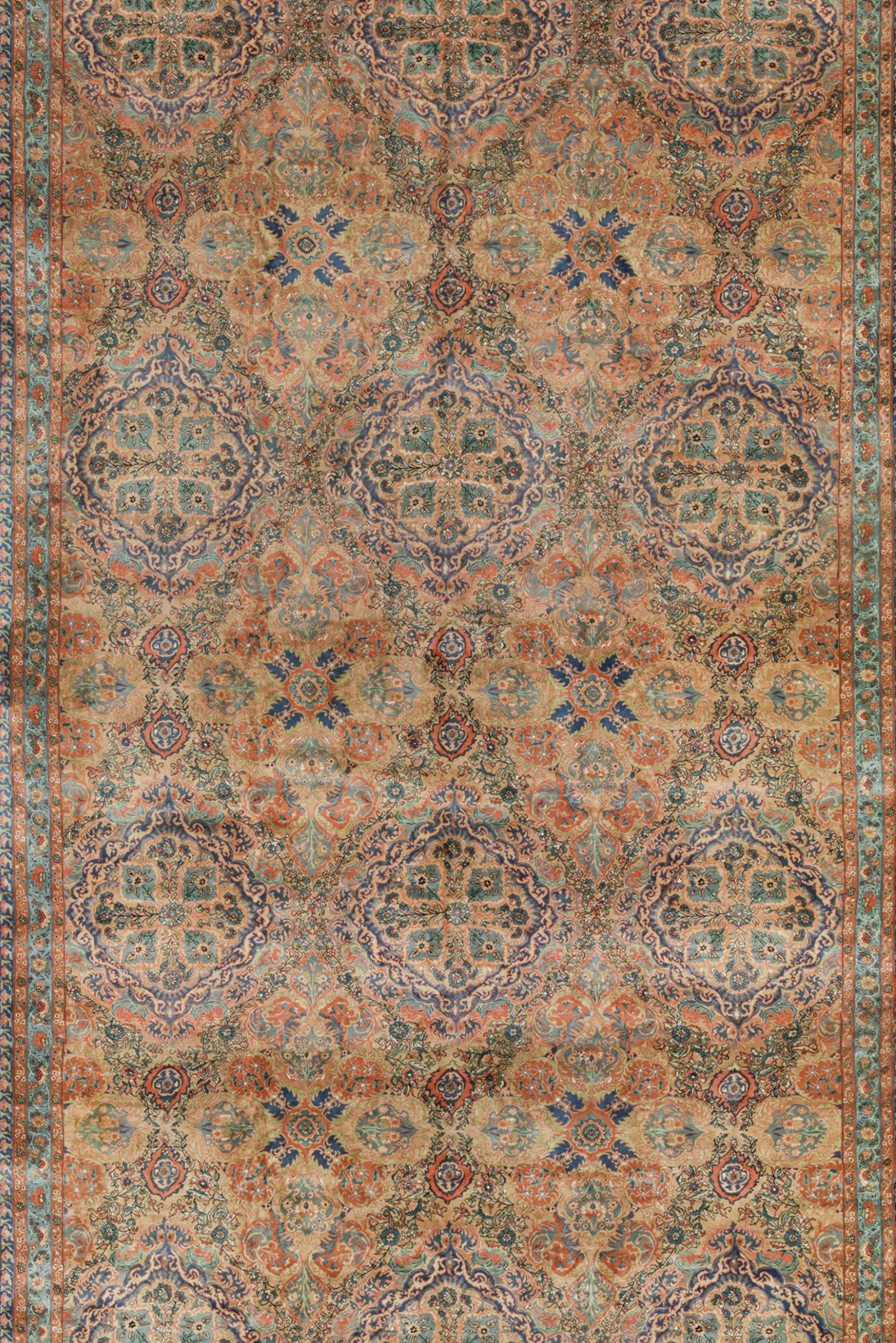
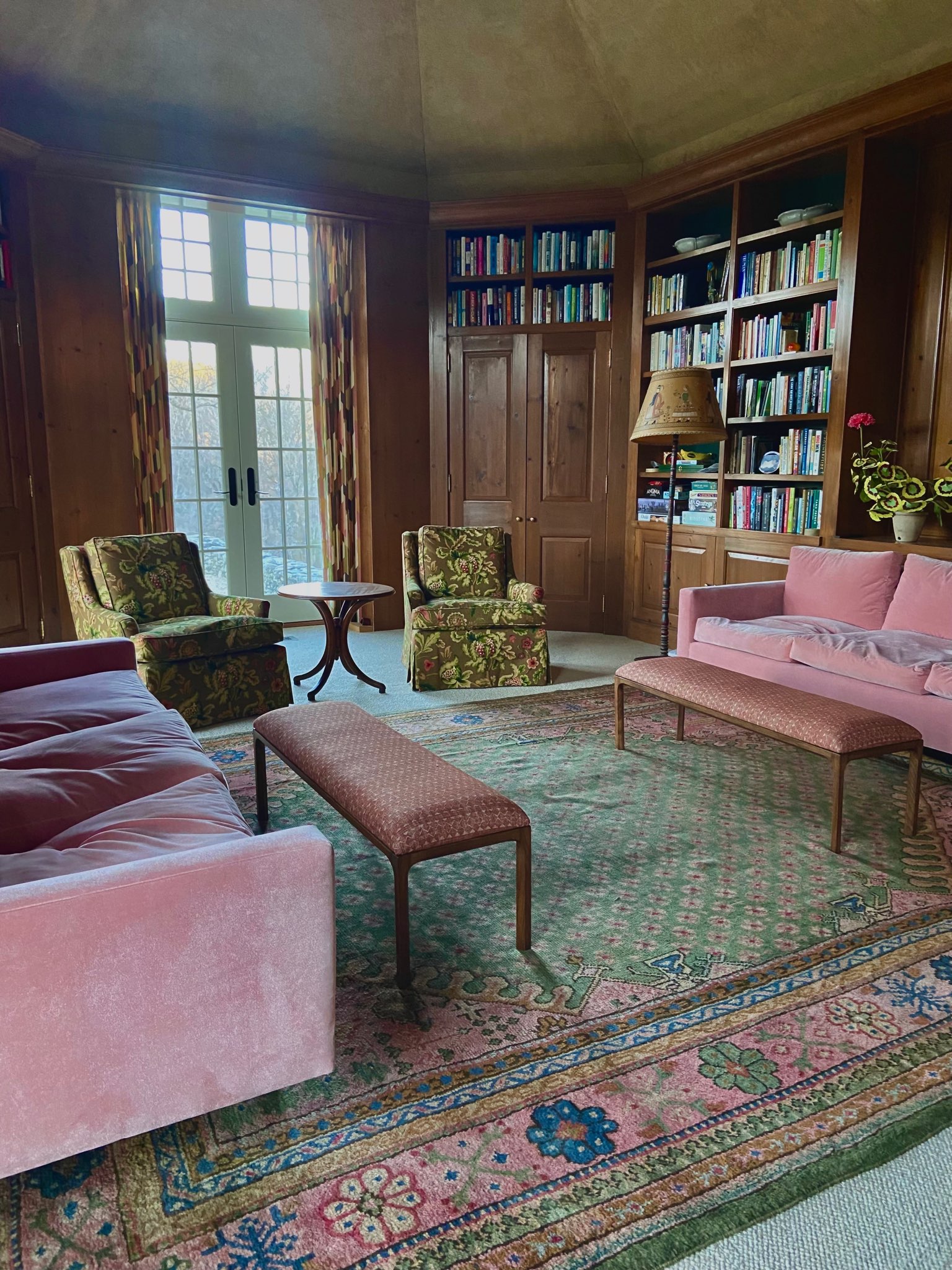
Antique Donegal Rug
The Architecture of the Tabriz Rug
Few textiles are as architectural in composition as the finest Tabriz rugs of the 19th century. Their geometry is crisp, never hesitant. Medallions—often octagonal or cruciform—are rendered with an almost mathematical balance. Lattice frameworks unfold across fields like blueprint sketches, articulated with such clarity that they could have been etched rather than knotted.
Layered symmetry governs the entire structure: a central axis anchors movement outward to mirrored pendants, and border motifs rhythmically repeat like architectural cornices. Color gradation becomes more than decoration—it becomes structure, used to modulate depth, shadow, and visual hierarchy. These painterly shifts in tonality anticipate the Deco fascination with surface modulation and ornamental layering, applied with a similar sense of modern restraint.
A Shared Visual Language: Tabriz and Deco
The parallels between 19th-century Tabriz and early 20th-century Deco design are not coincidental—they speak to a shared longing for order, refinement, and expressive geometry. One might find in a Tabriz corner bracket the same linear lyricism that would later define Ruhlmann furniture—delicate yet deliberate, formal but never fussy. Likewise, Émile-Jacques Ruhlé’s lighting fixtures, with their cascading symmetry and radial clarity, echo the medallion logic of Tabriz compositions.
Both movements are obsessed with control—of line, form, and the drama of ornamentation without excess. If Deco distills this into chrome, ivory, and lacquer, Tabriz does so in wool, silk, and vegetal dye. What unites them is an ornamental discipline: the ability to celebrate beauty while holding it in rigorous check.
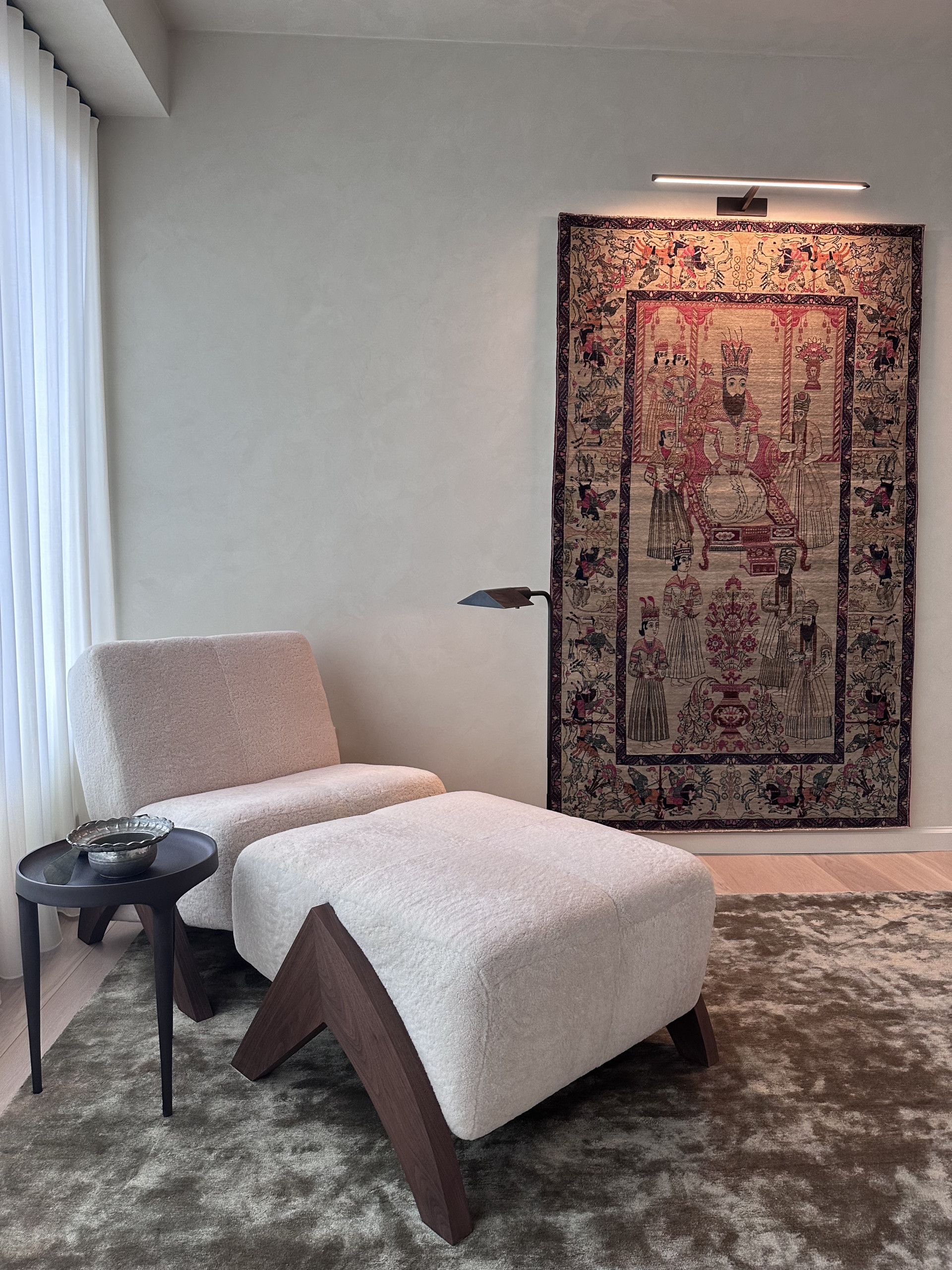
Elmo Studios x Rug & Kilim
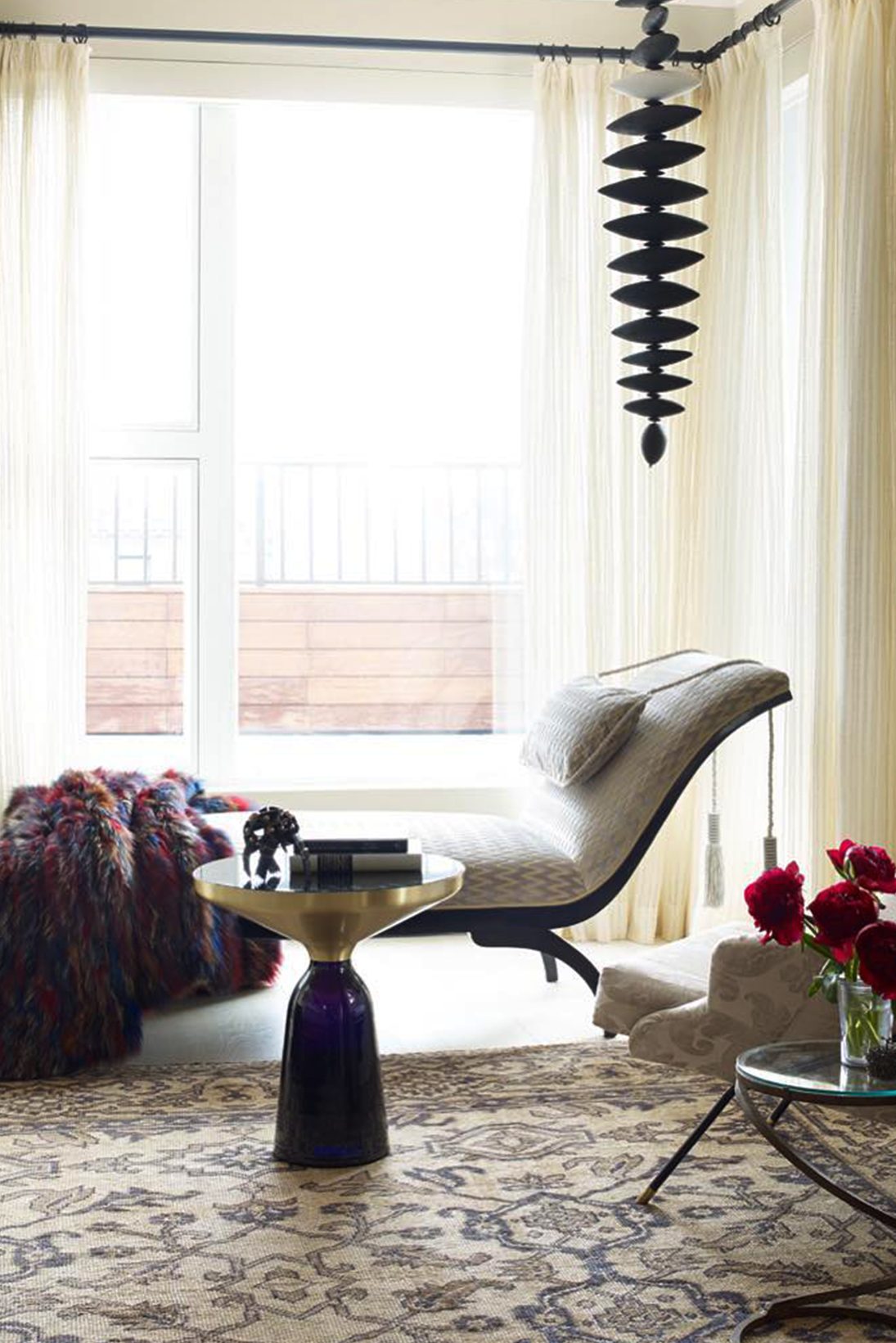
Wesley Moon Inc. x Rug & Kilim
Textile as Architecture: The Flat Elegance of Tabriz
Just as Deco architects like Eliel Saarinen and Raymond Hood built with a theatrical sense of plane and line, Tabriz weavers explored a kind of textile architecture, where “flatness” became elegance rather than limitation. The emphasis on two-dimensionality—balanced by deep pattern stratification—gives these rugs an uncanny ability to echo Deco interiors without competing with them.
In rooms defined by clean lines and high contrast, a Tabriz rug doesn’t clash—it converses. Its patterns create spatial logic beneath Deco furnishings, offering visual rhythm while avoiding excessive ornament. It is in this tension—between tradition and abstraction, opulence and restraint—that Tabriz quietly whispers the language of modernism.
Proto-Modernism in Persian Rug Design
To speak of proto-modernism in Tabriz is not to retrofit a Western narrative onto Persian craft. Rather, it is to recognize how Tabriz’s weavers engaged with emerging aesthetic ideas long before they became codified in Europe. Their rugs embody a philosophy of form that anticipates Bauhaus clarity, Deco grandeur, and even post-modern whimsy.
Look closely at a 19th-century Tabriz carpet and you’ll notice ornamental restraint where you might expect flourish. Linear embellishments serve the structure. Patterns breathe with confidence, not clutter. Even the drama feels curated—there is always a sense of the intentional, the architectural, the composed.
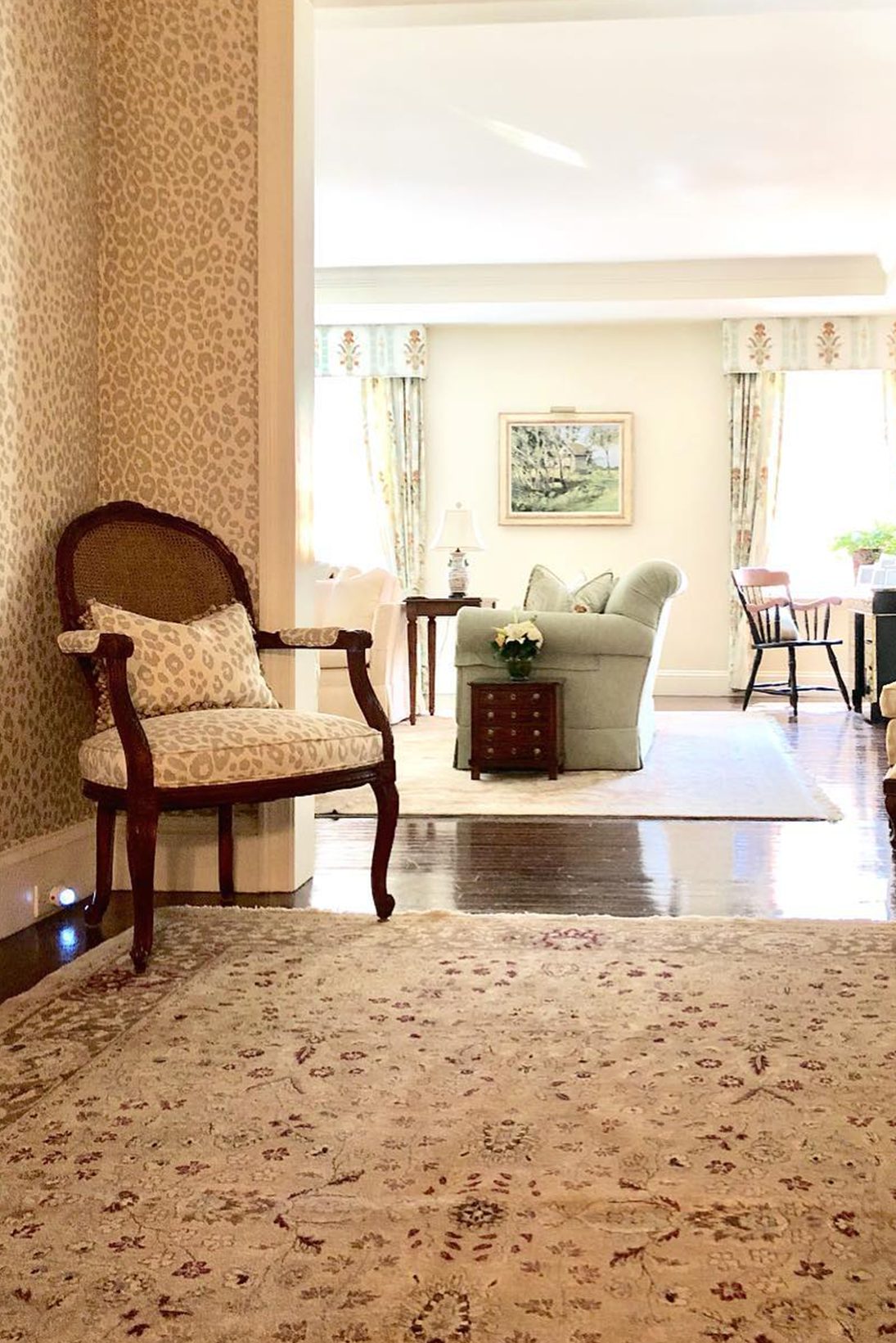
Wesley Moon Inc. x Rug & Kilim
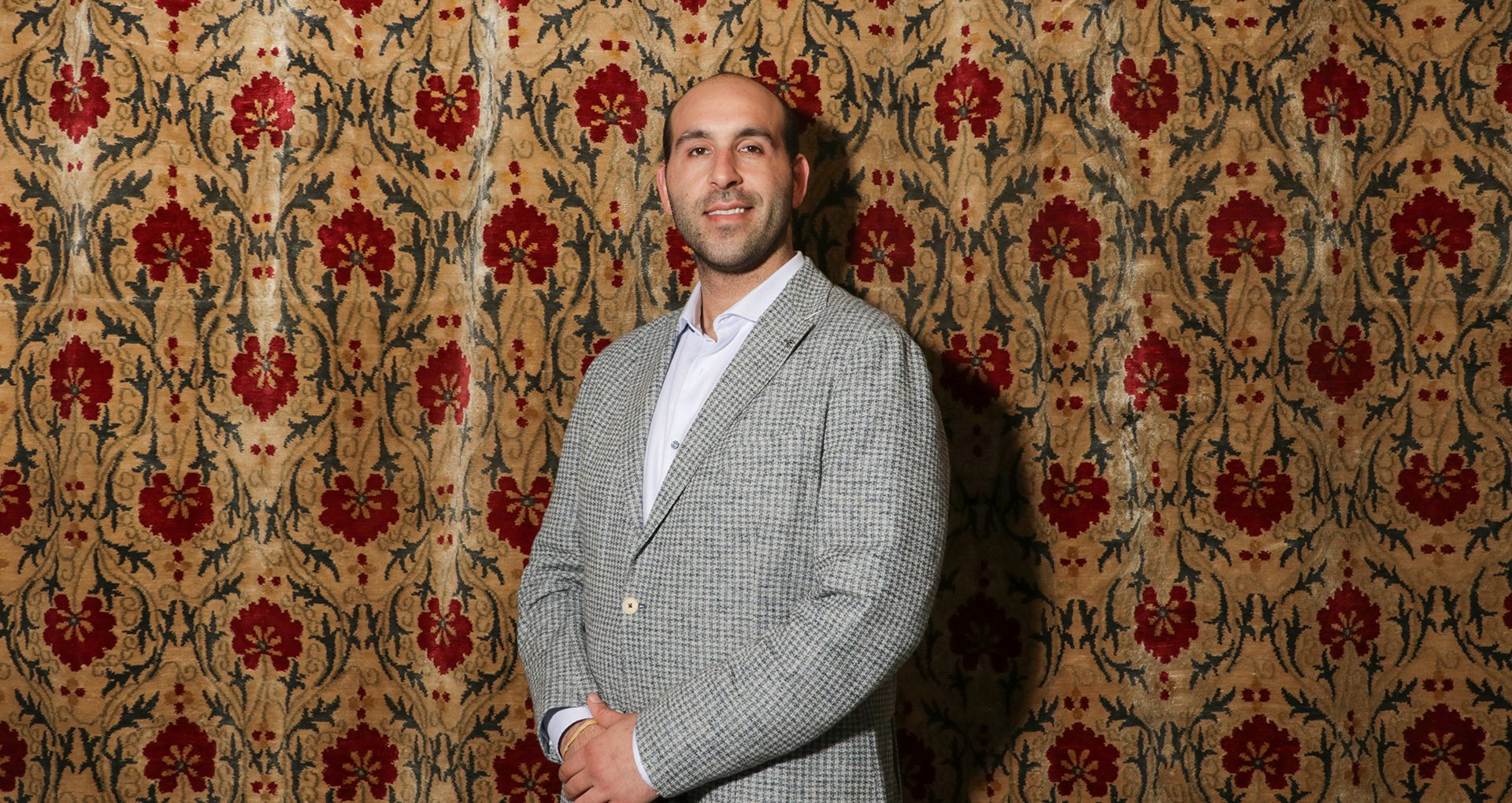
Sina Nazmiyal, Vice President at Rug & Kilim. Highlighting antique rugs, tapestries and textiles— @sinanazmiyal_rugandkilim
Collecting Tabriz: A Bridge Between Eras
Today, collectible Persian rugs—particularly Tabriz examples—serve as elegant bridges between historical richness and modern design. Interior designers often deploy these rugs to soften contemporary spaces or anchor transitional ones. Their ability to sit gracefully alongside both classical antiques and Art Deco furniture makes them indispensable for connoisseurs who seek cohesion without monotony.
In high-end interiors where Art Deco design history is referenced through lacquered consoles or stepped crown molding, a Tabriz rug doesn’t disrupt—it deepens. It offers provenance, warmth, and that rare sense of time travel: from a Persian workshop to a Parisian penthouse, from the hands of a Qajar craftsman to the vision of a modern designer.
In the story of design, antique Tabriz rugs represent more than craft—they represent a moment when tradition and innovation met in quiet, glorious balance. They are the unsung precursors to modernism’s most iconic forms, and in their knots and patterns, one can read the foreshadowing of an entire design era yet to come.
Tabriz bloomed before modernism. And perhaps, in doing so, it planted the seeds of Deco itself.
~~~