
A Profile on Gunta Stölzl – The First Female Master at Bauhaus
November 22, 2024
Why is Wool Material Considered Ideal for Rugs, Kilims and Flatweaves ?
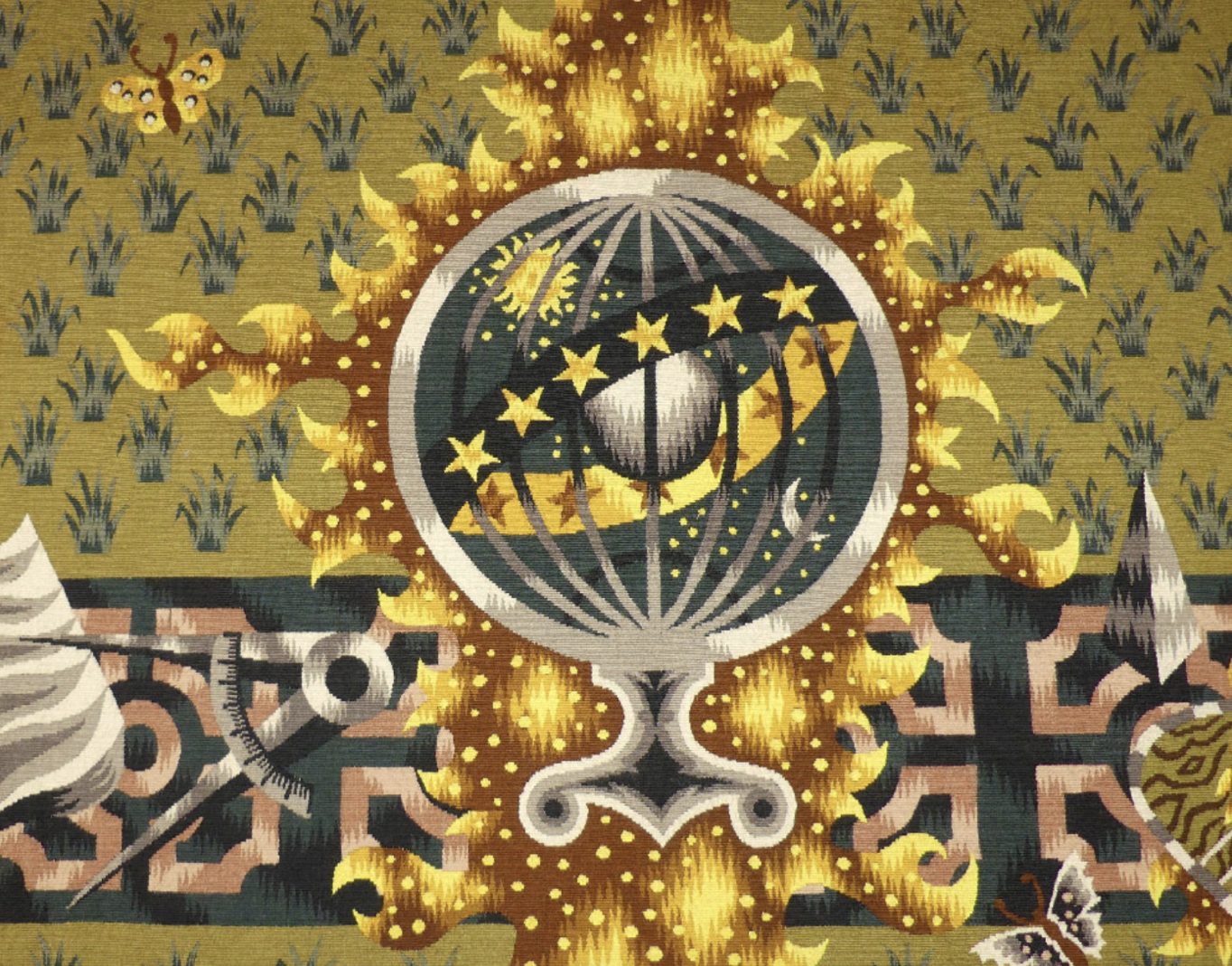
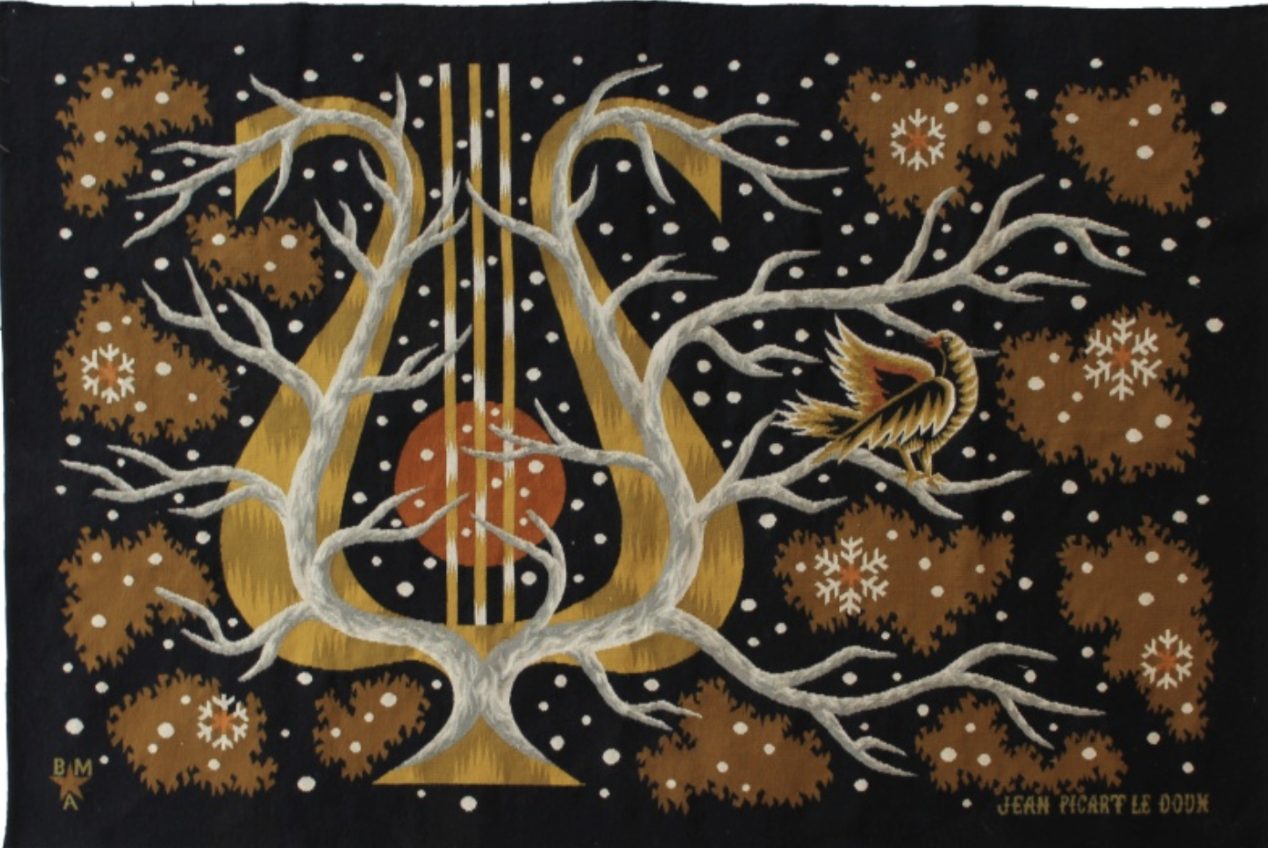
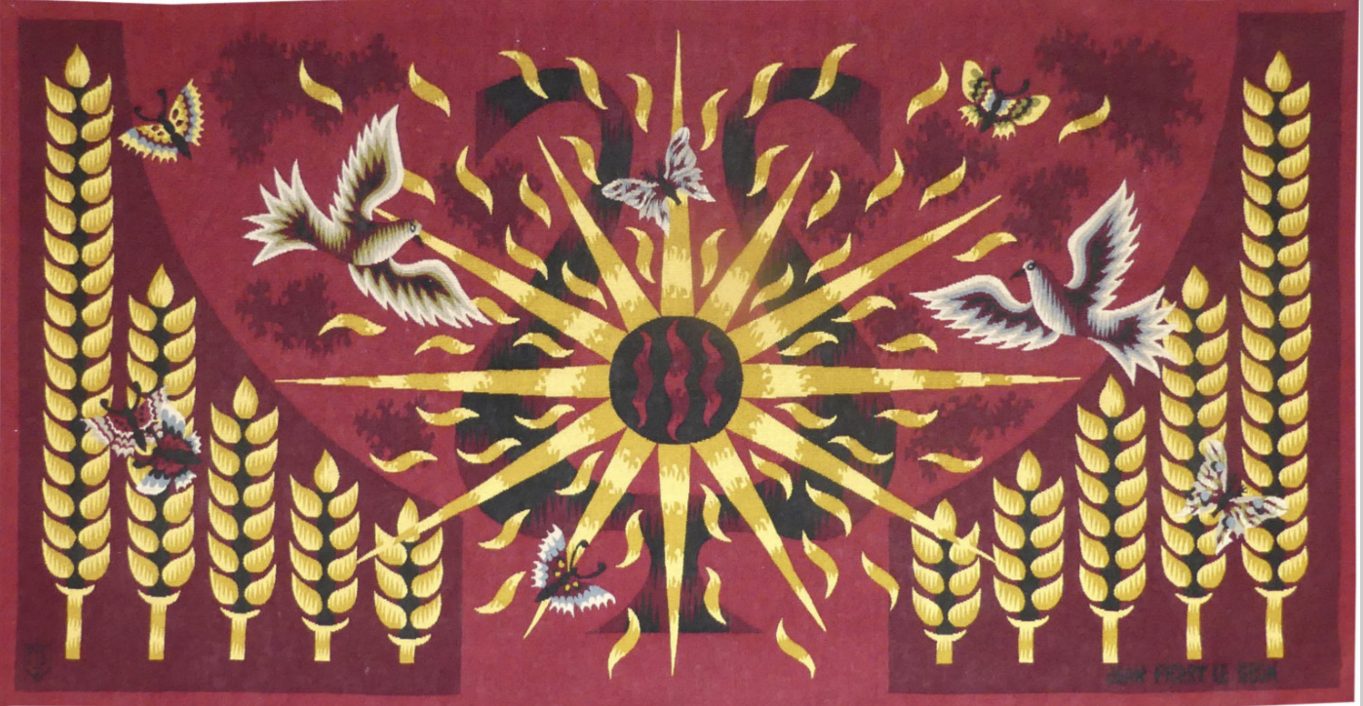
November 29, 2024Tapestries are experiencing a definitive renaissance in contemporary interiors. Contemporary French tapestry continues this dialogue between tradition and innovation. Modern works from the historic workshops of Aubusson and Gobelins especially by Jean Picart le Doux, speak in a voice that’s both ancient and startlingly current. They understand what their medieval predecessors knew: that a tapestry doesn’t just hang on a wall – it transforms the very nature of the space it inhabits.
The Modernist Evolution of French Tapestry
French tapestry underwent a radical transformation in the mid-20th century. The tradition, nearly extinct after centuries of declining relevance, found new life through a handful of modernist innovators who fundamentally reimagined its possibilities. This revolution centered on three key innovations: radical simplification of color palettes, emphasis on architectural scale, and integration with modernist aesthetics. Traditional tapestries used thousands of colors, making production nearly impossible. Jean Lurçat’s radical solution – limiting palettes to 40 colors – inadvertently created a new visual language. This restriction forced designers to think in bold shapes and strong contrasts, aligning perfectly with modernist sensibilities.
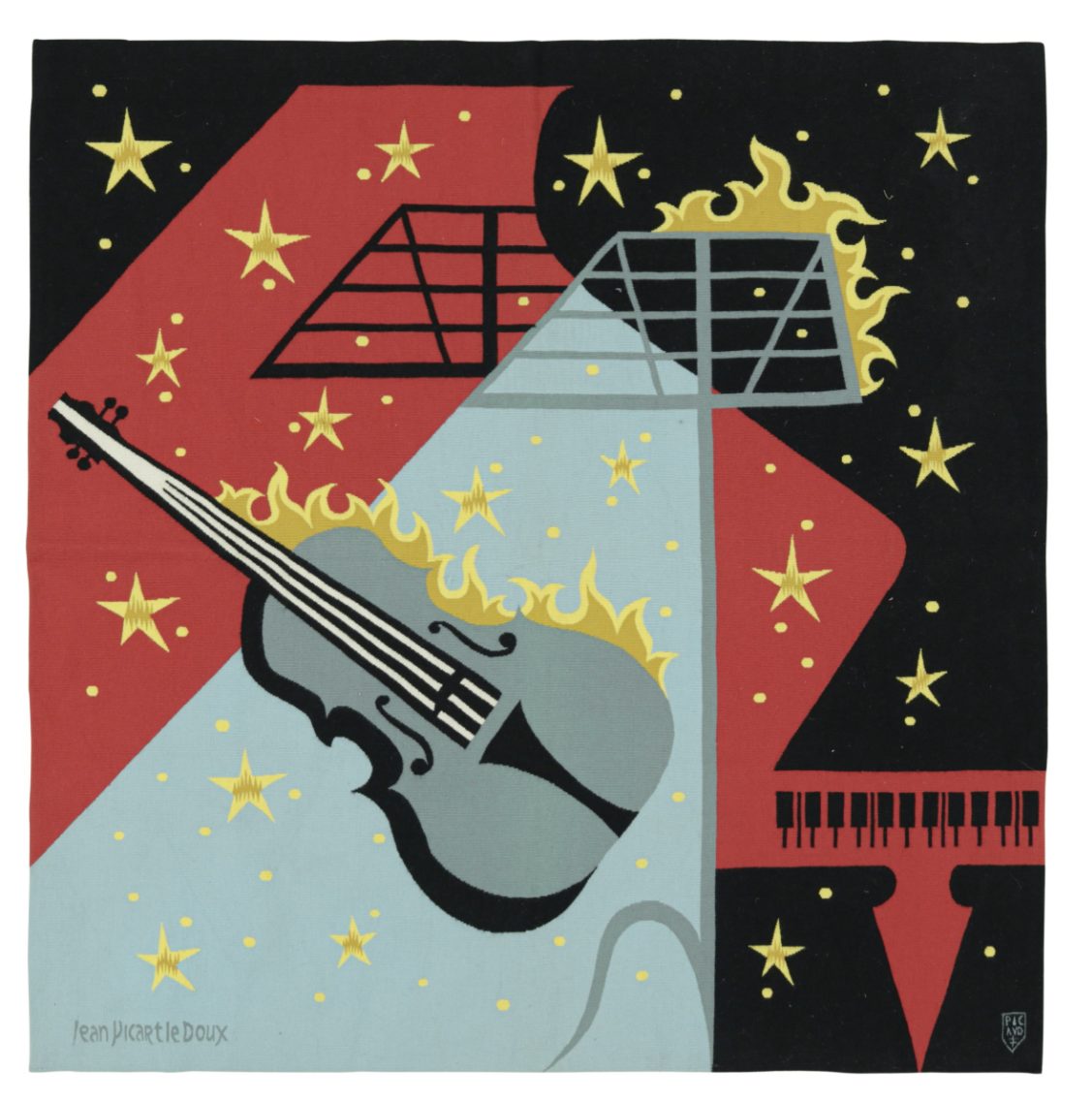
Le Doux emerged as a pivotal figure in this transformation. His background in graphic design proved crucial – he understood how to create impact through simplified forms and controlled palettes. Working primarily with Aubusson’s workshops from 1943 onwards, he developed a distinctive approach characterized by geometric abstraction and stylized natural forms.
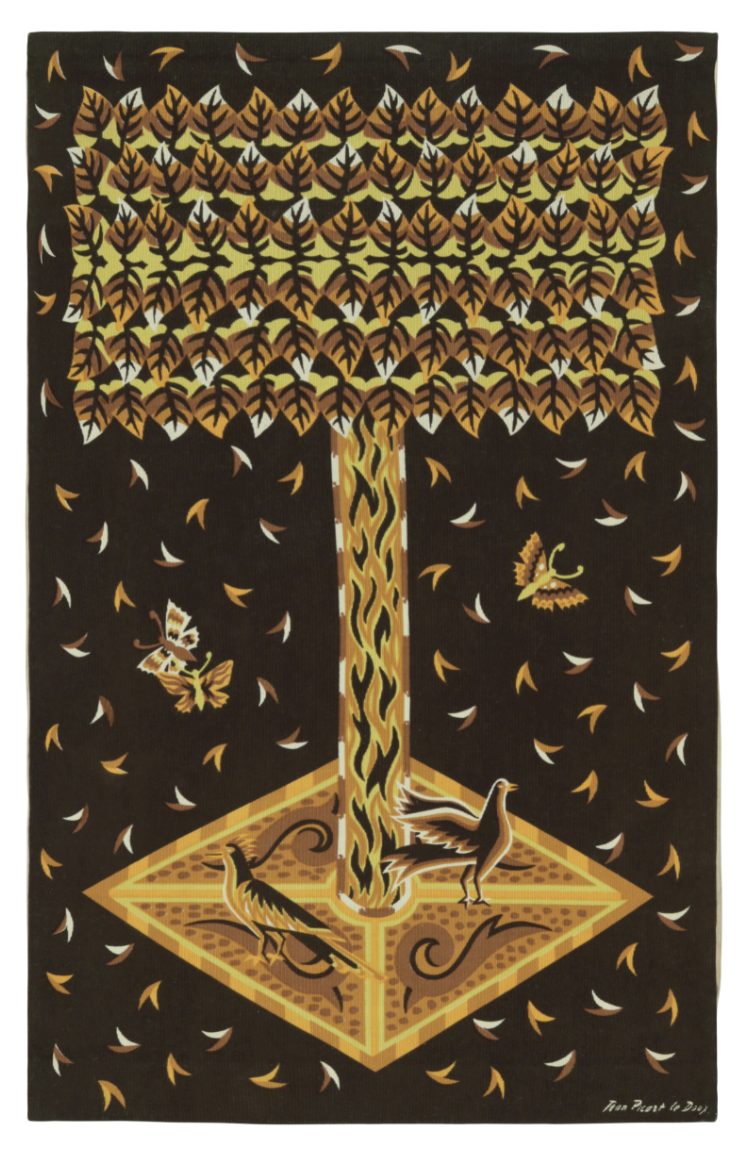
His compositions often featured interlocking geometric forms interrupted by organic elements – birds, leaves, celestial bodies. As co-founder of the Association des Peintres-Cartonniers de Tapisserie, he helped establish new standards for modern tapestry design. The association’s technical guidelines, emphasizing simplified cartoons and limited color ranges, made production economically viable while forcing artistic innovation. Le Doux’s legacy lies in proving tapestry could be both modern and monumental.
About Jean Picart le Doux (1902-1982)
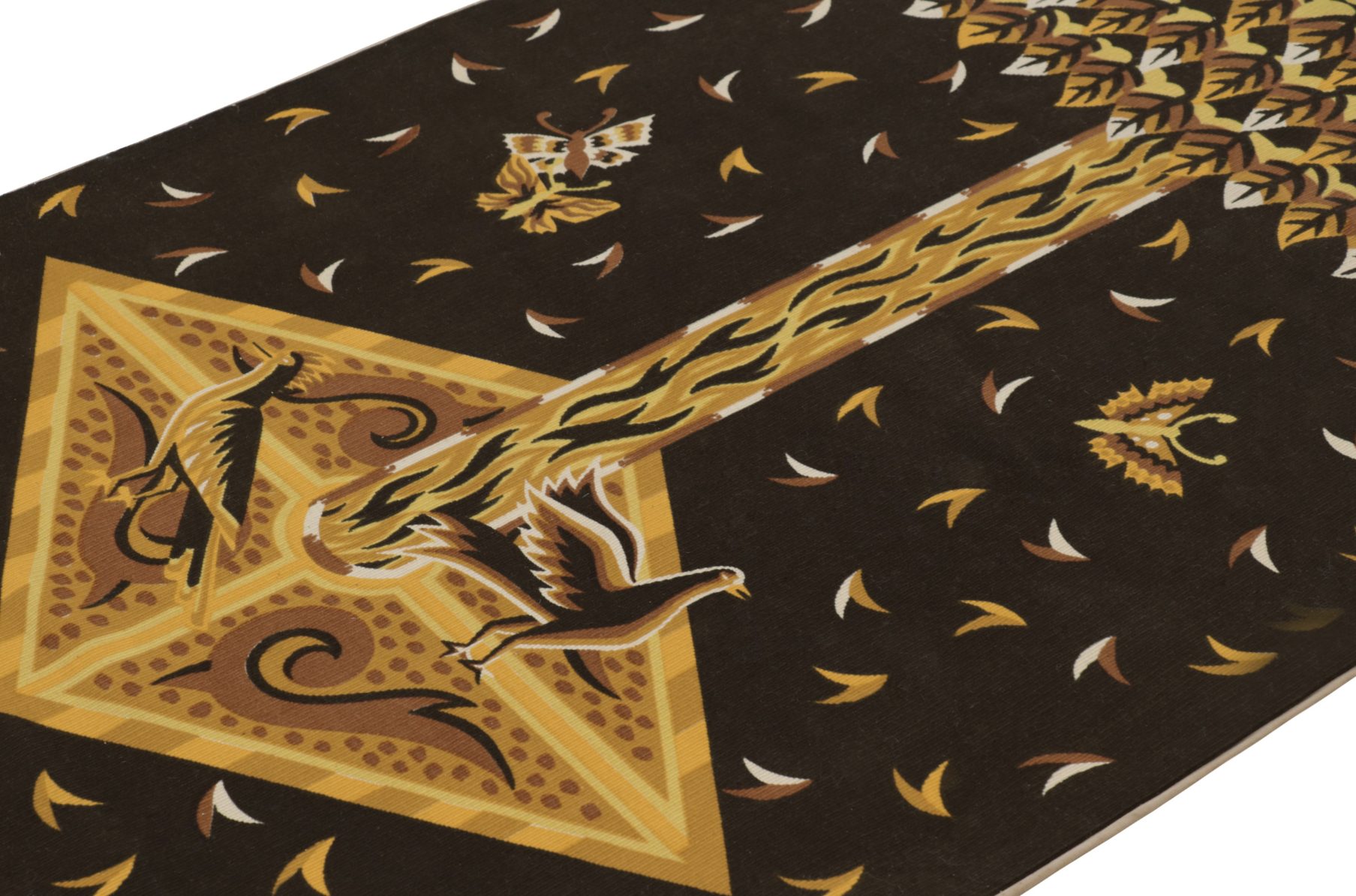
Jean Picart le Doux emerged as a pivotal figure in 20th-century French tapestry, bridging the gap between traditional weaving techniques and modernist aesthetics. While his contemporaries were abandoning tapestry for more contemporary mediums, le Doux recognized its untapped potential for abstract expression. Working closely with Aubusson’s master weavers, le Doux developed a distinctive visual language that emphasized bold geometrics and stylized natural forms.
Jean Picart le Doux’s journey into the world of art and tapestry started when he ventured into advertising and graphic arts, showcasing his first works in 1935. His foray into tapestry design commenced in 1943 after winning the grand prize for theater posters, marking the start of a prolific career in this medium.
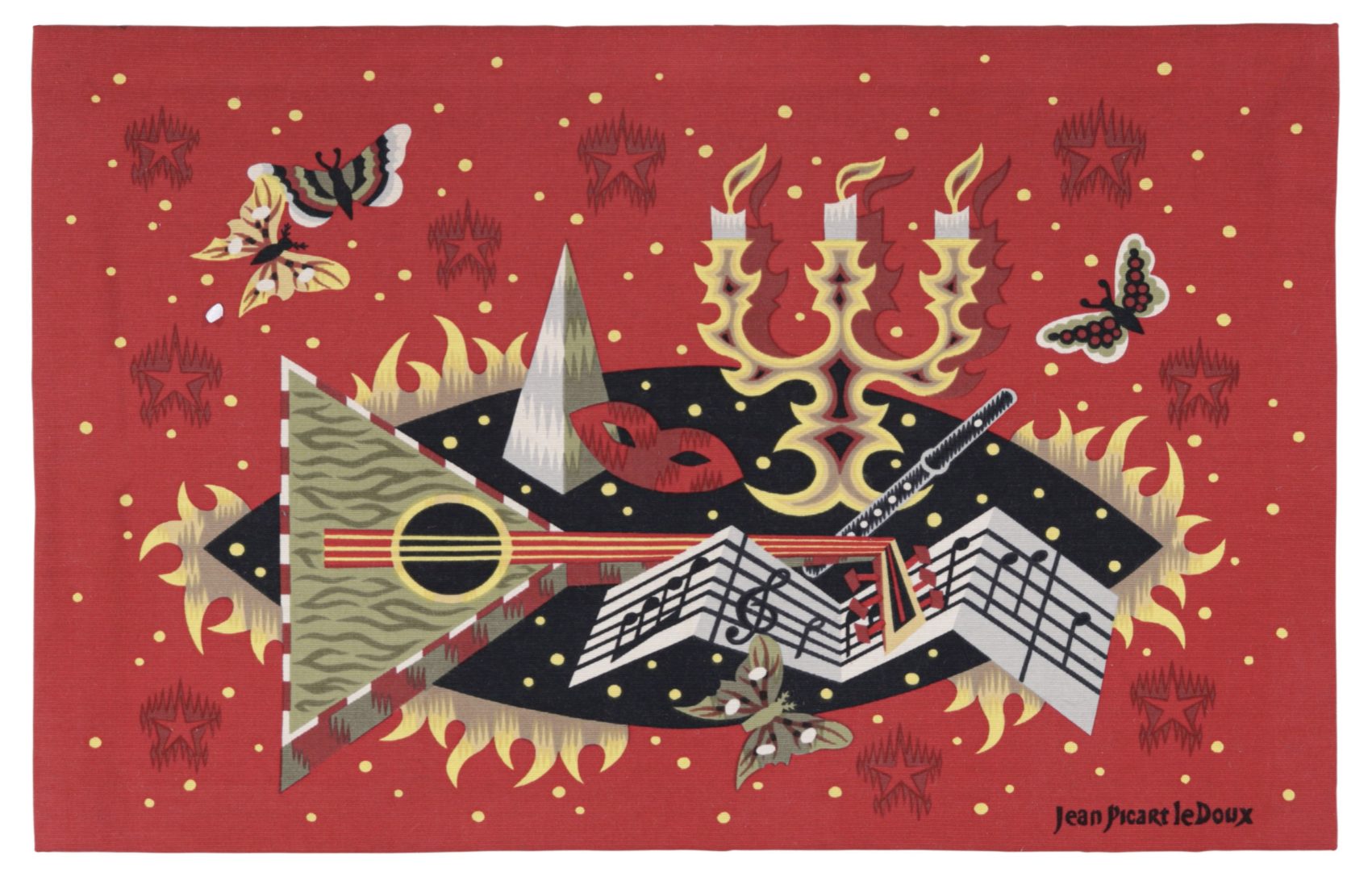
Alongside luminaries like Jean Lurçat and Marc Saint-Saëns, he co-founded the Association of Painters and Cartoners of Tapestry in 1947, demonstrating his commitment to advancing the art form. His international outlook led to the creation of the International Graphic Alliance (AGI) in 1952, with Picart le Doux serving as its inaugural president. His mastery of Aubusson tapestry is evident in the more than four hundred original works he produced, some of which adorned prestigious spaces like the ocean liner France. His contributions extended to the Société Nationale des Beaux Arts and various exhibitions, leaving a lasting legacy in the world of art and design.
Le Doux’s most significant contribution was his understanding of tapestry’s architectural relationship to space. Unlike his predecessors who treated tapestries as woven paintings, he designed specifically for the medium, embracing its inherent qualities – the texture of the weave, the interaction of threads, and the way light plays across the surface.
His proved that tapestry should be neither painting nor decoration, but an independent art form with its own rules and possibilities.
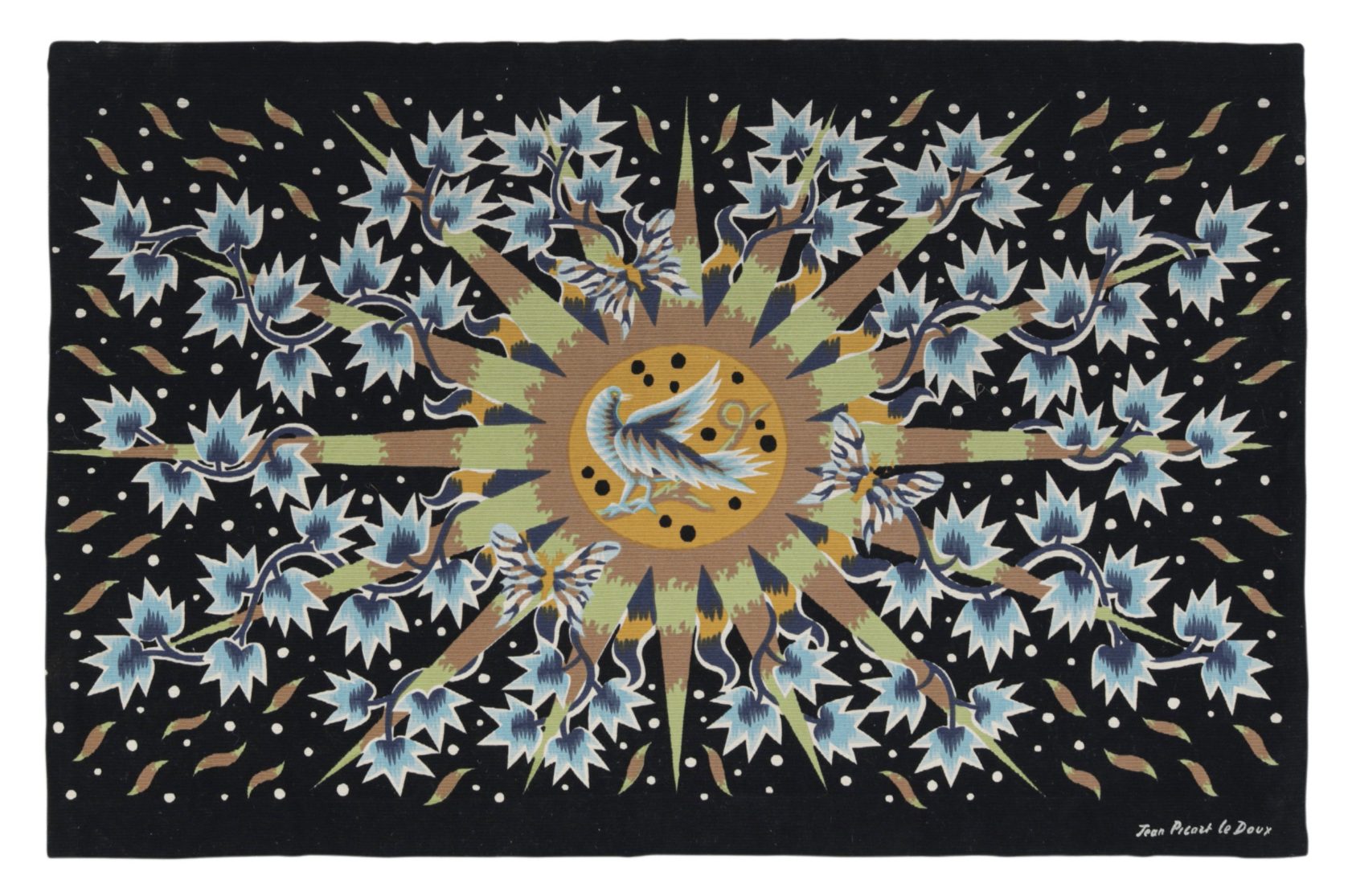
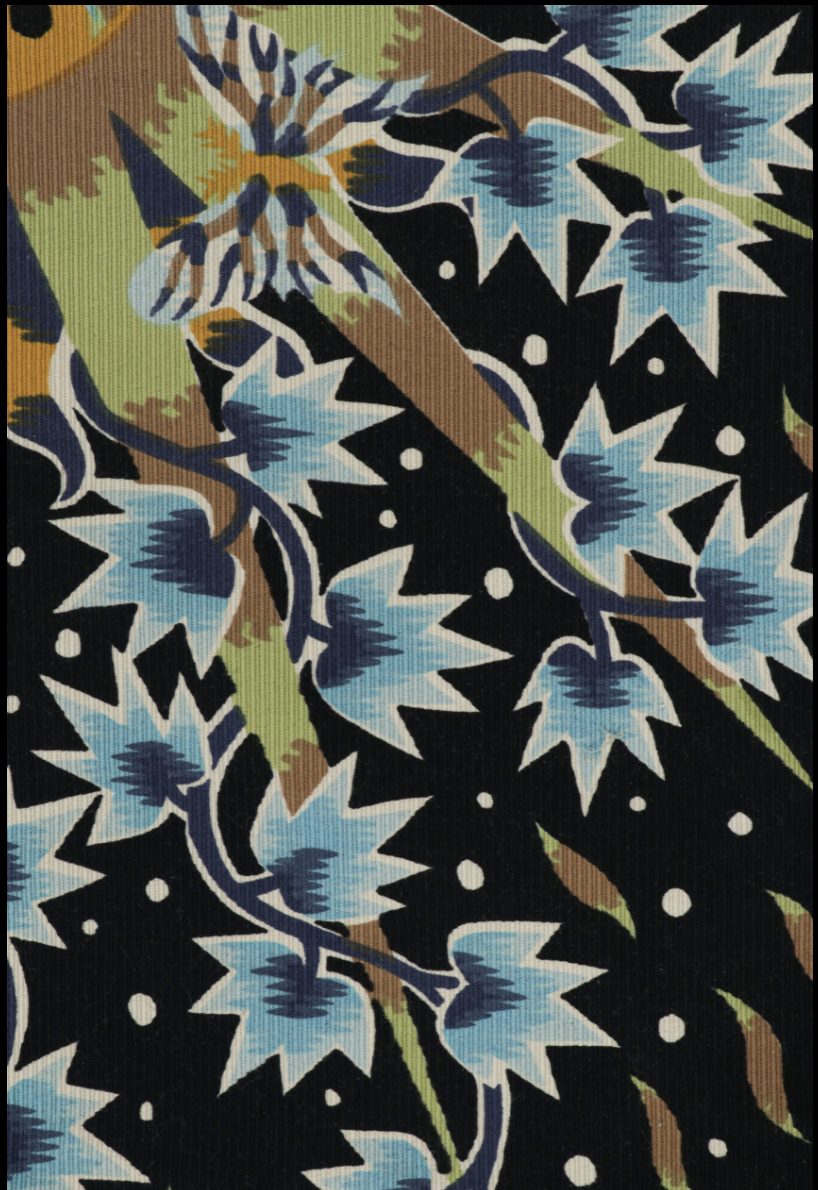
The market for le Doux’s works has seen steady appreciation, with major pieces commanding significant premiums at auctions. Contemporary designers continue to reference his innovative approach to scale and color, particularly his masterful use of limited palettes to create depth and movement. His legacy extends beyond individual works – le Doux fundamentally changed how we understand tapestry in modern interiors, proving that this ancient medium could speak eloquently to contemporary spaces and sensibilities.