
Hannah Ryggen’s Memories of Three Returns to the Market: Tapestries Redefining the Art of Interior
October 27, 2025
Autumn 2025: Rug & Kilim’s Five Picks for the Season of Warmth and Reverie
November 6, 2025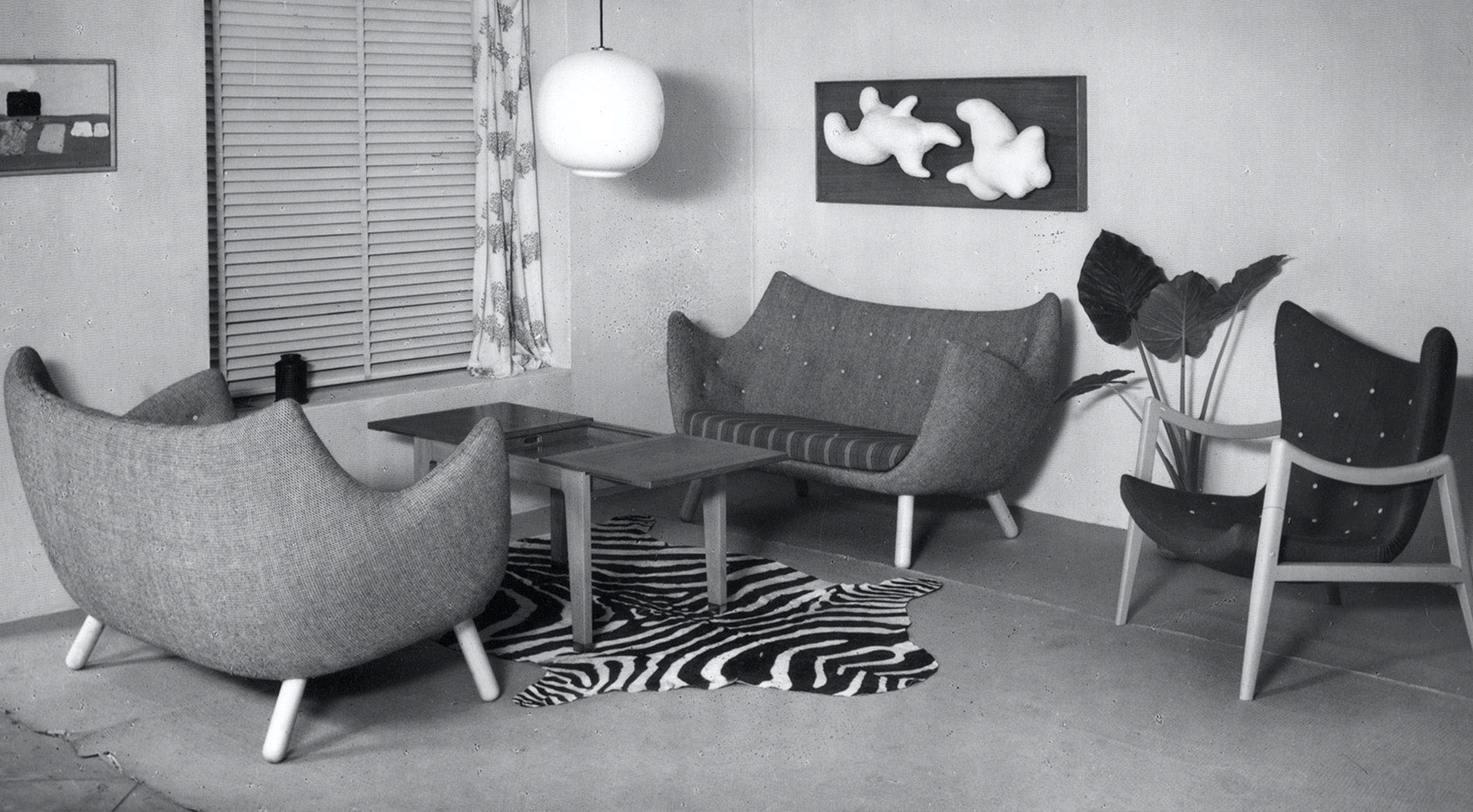
The Poet Sofa displayed at the Cabinetmakers’ Guild Exhibition in 1941.
Few relationships in design are as delicate—and as decisive—as the one between rugs and iconic furniture.
A Gio Ponti table, a Le Corbusier sofa, or a Hans Wegner chair is, in itself, a statement: an object of sculptural clarity and historic weight. Place such a piece on the wrong rug, however, and the dialogue falters. Proportion, materiality, and geometry can easily slip into competition rather than harmony. But when curated with care, rugs do not simply support these icons; they activate them, creating a layered conversation where textile and form enhance one another.
The Question of Proportion
Scale is the first language of dialogue.
Iconic furniture often carries bold silhouettes: the floating volume of Le Corbusier’s LC2, the broad organic arms of Finn Juhl’s Poet sofa, the structural lightness of Wegner’s Wishbone chair. A rug too small diminishes their presence, making the pieces appear adrift. Too large, and the furniture risks being swallowed in an ocean of pattern.
The most successful interiors treat rugs as framing devices, calibrating negative space with precision. Scandinavian designers of the mid-20th century understood this instinctively: Wegner’s light, open chairs found grounding not in heavy-piled carpets, but in rollakan flatweaves that defined their stage without encumbering their form. Proportion here is choreography—the rug sets the perimeter, the furniture performs within it.
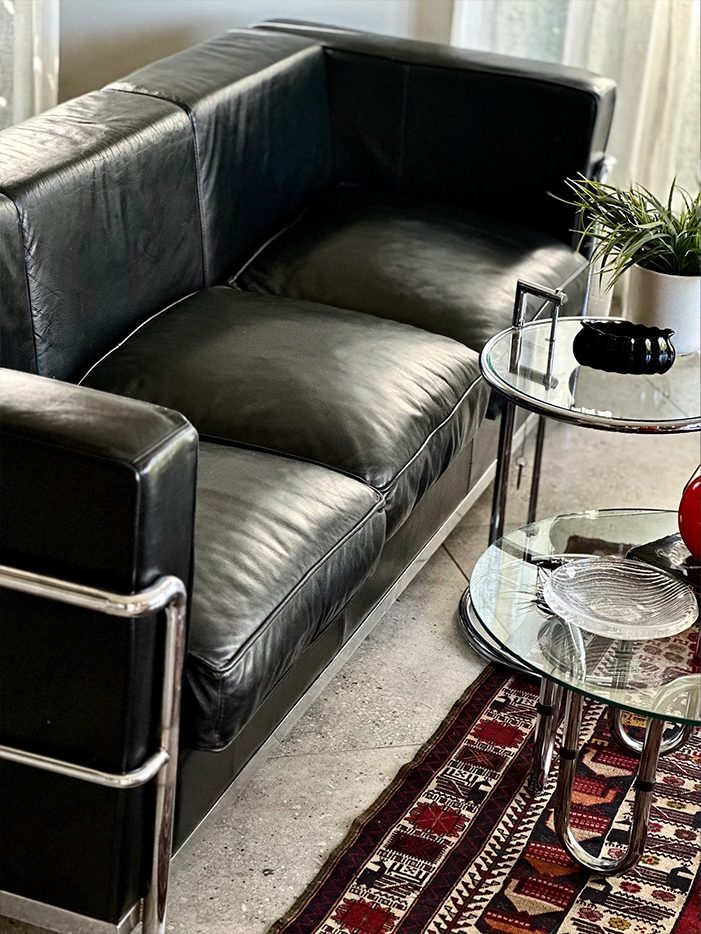
Le Corbusier’s LC2
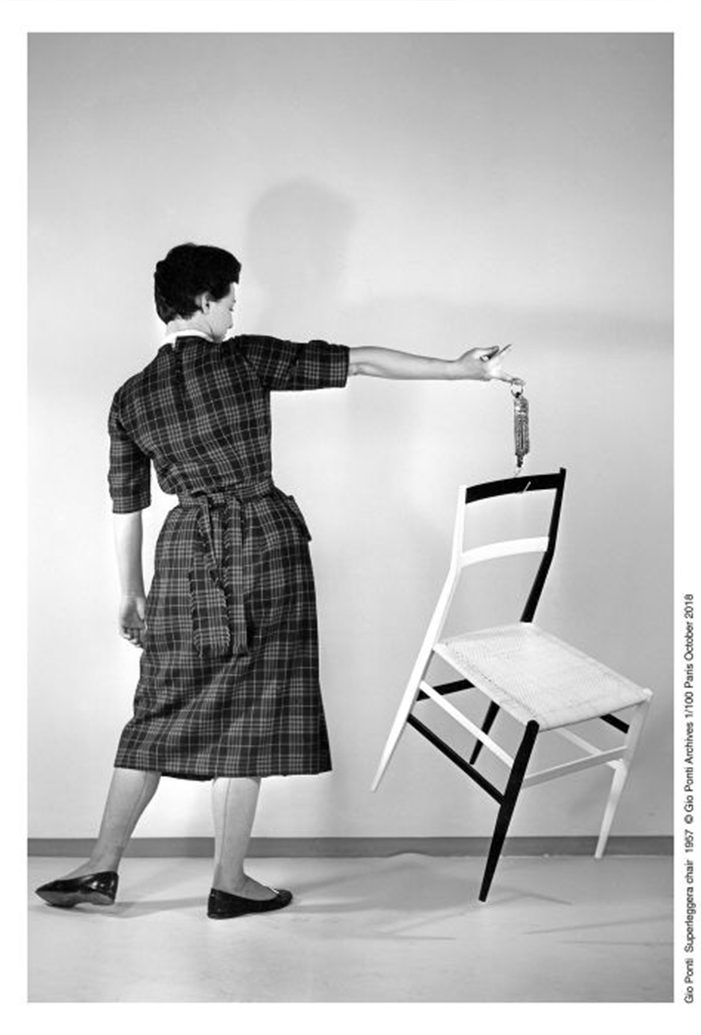
Gio Ponti’s Superleggera Chair.
Geometry in Conversation with Rugs
Pattern, like architecture, speaks through geometry. Rugs with strong motifs can either echo or counter the lines of a piece of furniture. The key is intention.
Gio Ponti’s Superleggera chair distilled structure into a rhythmic lattice of triangles and lines. Beneath such a piece, a geometric rug that repeats or amplifies angularity becomes not redundant but resonant, extending Ponti’s vocabulary across the floor plane. Conversely, Le Corbusier’s modular compositions demand restraint; a rug with softened edges or muted abstraction prevents his rectilinear rigor from turning oppressive.
The principle is reciprocity, not rivalry: a rug should never mimic so literally that it collapses into parody, nor contrast so violently that it fractures the space. Instead, geometry finds balance in counterpoint.
Material and Tactility
The modernist canon privileged hard surfaces—steel, glass, polished wood. These materials gave furniture its clarity but also introduced a risk of sterility. Rugs provide the necessary counterweight: wool against steel, pile against glass, warmth against austerity.
Hans Wegner’s chairs, often executed in oak or teak, achieve their fullest effect when paired with rugs that emphasize texture over ornament. A flatweave introduces a matte, tactile ground that highlights the wood’s natural grain. In contrast, Le Corbusier’s chrome-and-leather pieces benefit from deep-piled rugs that soften their industrial edge, tempering cool rationalism with underfoot luxury.
In this sense, rugs are not merely companions but mediators—bridging the tactile gap between furniture and the human body.
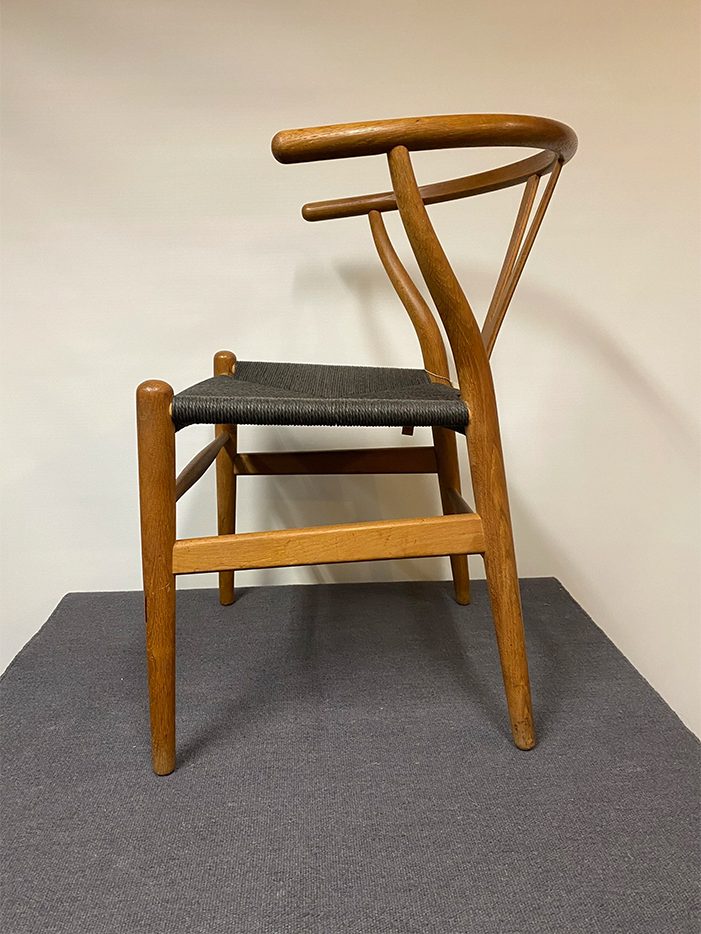
Hans J. Wegner’s Wishbone Chair CH24 (1950).
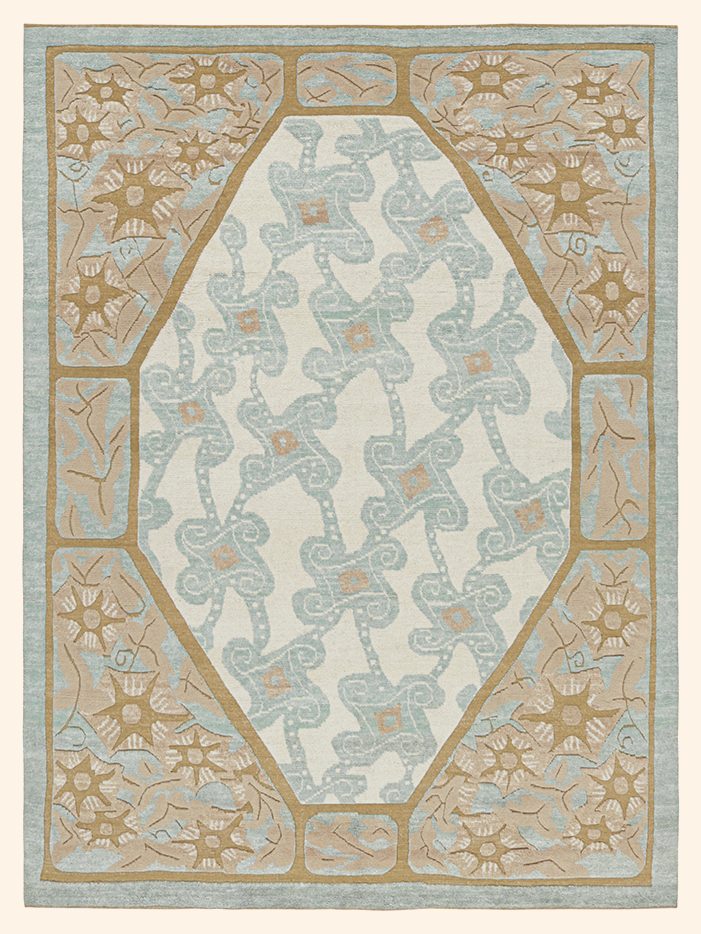
Color as Atmosphere
Modernist furniture often arrived in neutral tones: natural woods, black leathers, white laminates. Rugs introduce chromatic nuance, shifting the atmosphere of a space without compromising clarity.
Scandinavian textiles, with their muted palettes of greys, ochres, and indigos, exemplify this balance. When paired with Wegner or Mogensen, they enrich without overwhelming.
Meanwhile, the vivid colors of French Art Deco rugs—da Silva Bruhns’ bold reds, Leleu’s blues—find a natural home beneath Ponti or Prouvé, whose sculptural designs can absorb and reflect such intensity.
Color, then, becomes a dialogue not of dominance but of tone: a rug sets the key, the furniture plays the melody.
Lessons from the Collector’s Eye
Museums and auction houses provide compelling evidence of how rugs and furniture converse across disciplines.
Exhibitions at the Musée des Arts Décoratifs in Paris or the Vitra Design Museum often stage iconic chairs and tables on historically resonant rugs—not for mere practicality, but to underscore dialogue. A Ponti rug beneath a Ponti table illustrates continuity of vision; a tribal kilim beneath a Corbusier chaise highlights his fascination with non-Western geometries.
Collectors, too, curate these relationships. A Jean Royère sofa, exuberant in form, is frequently grounded by understated Moroccan rugs at auction, allowing one to shine while the other whispers. The lesson is not just aesthetic but strategic: rugs act as cultural anchors, framing furniture within broader histories of design.
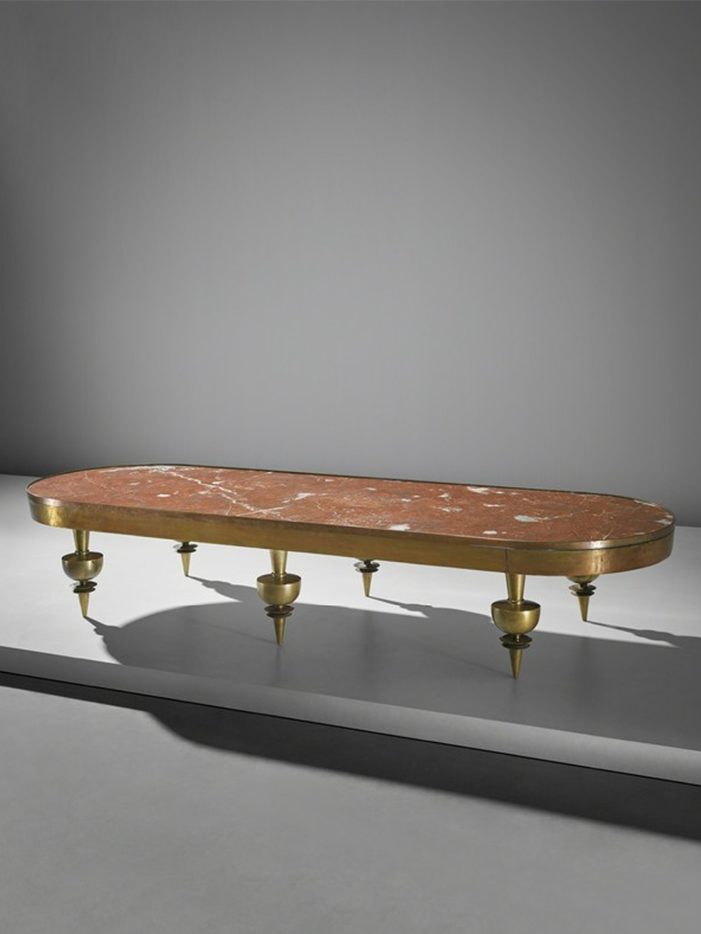
Gio Ponti, Important and rare low table, designed for the Contini Bonacossi residence, Quadreria Moderna, Villa Vittoria, Florence, 1927
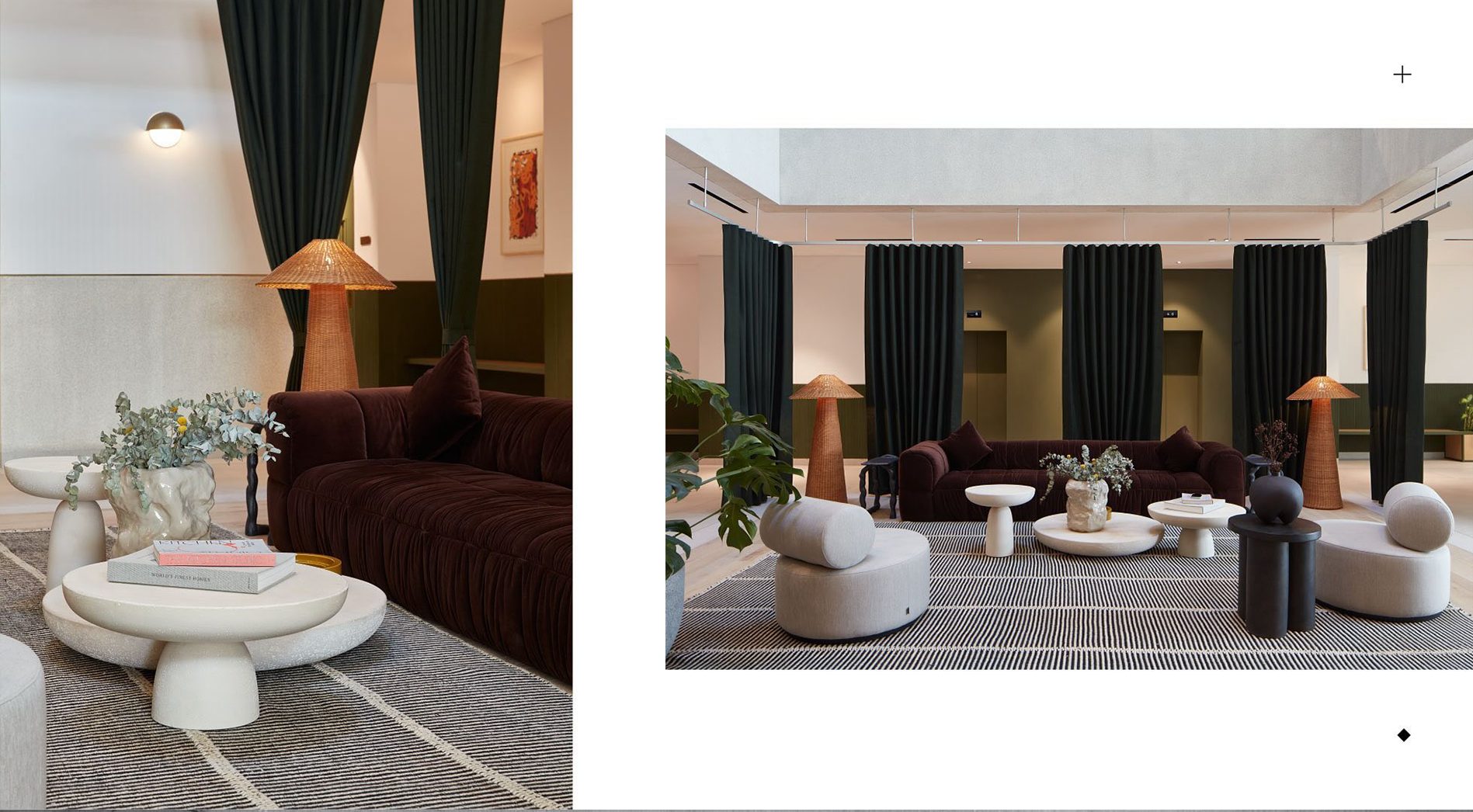
Featuring Rez Kilim by Rug & Kilim. Designed by Studio South (The Muse Hotel, Dubai)
Rugs as the Silent Partner
In the end, rugs rarely demand credit. They are silent partners, their success measured in how well they let other voices speak. But silence is not absence—it is presence exercised with restraint.
When rugs converse with furniture icons in proportion, geometry, material, and color, they do more than complete an interior. They create harmony, ensuring that the space reads not as a collage of objects but as a total composition, where each element knows its place in the symphony of design.
Designers who treat rugs as afterthoughts diminish both their interiors and their icons.
Those who approach them with authority create modernist masterpieces.
For in the dialogue between rug and furniture lies the true essence of timeless design: a balance of form, material, and meaning, where neither speaks alone.