
Why are Vintage Rugs the Best Choices for Modern Spaces?
November 13, 2024
A Profile on Gunta Stölzl – The First Female Master at Bauhaus
November 22, 2024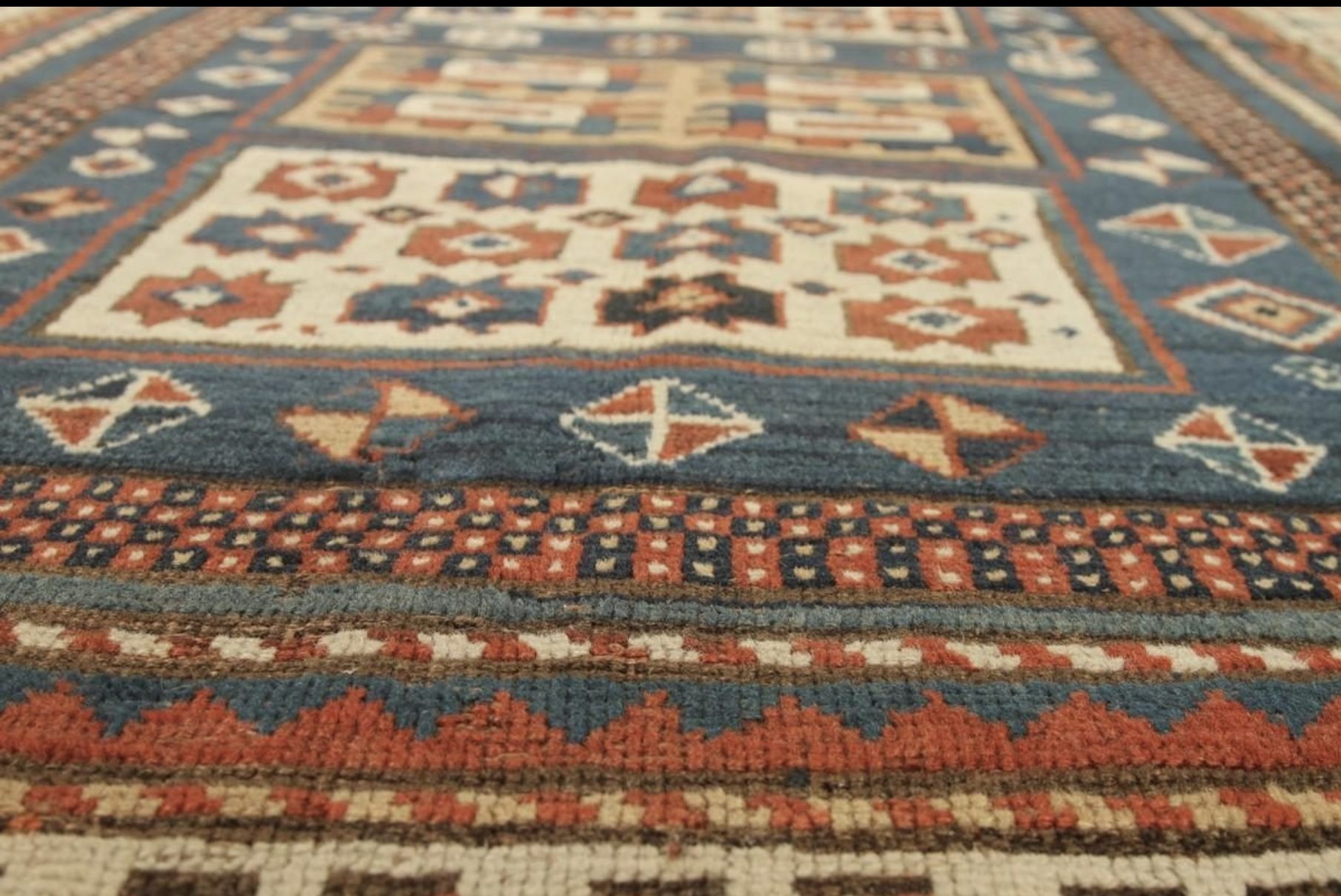
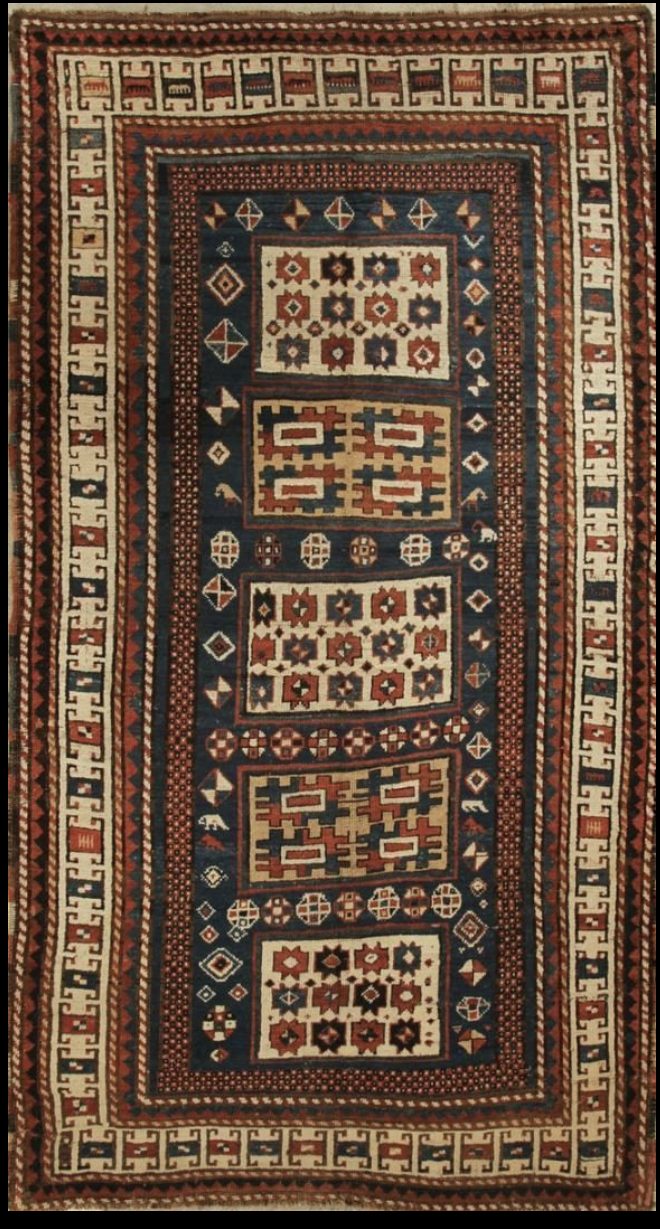
The resurgence of Kazak rugs in contemporary interiors isn’t surprising to those of us who’ve spent years studying these masterpieces. These distinctive carpets, originating from the Caucasus Mountains, continue to command attention in both high-end residential projects and prestigious auction houses.
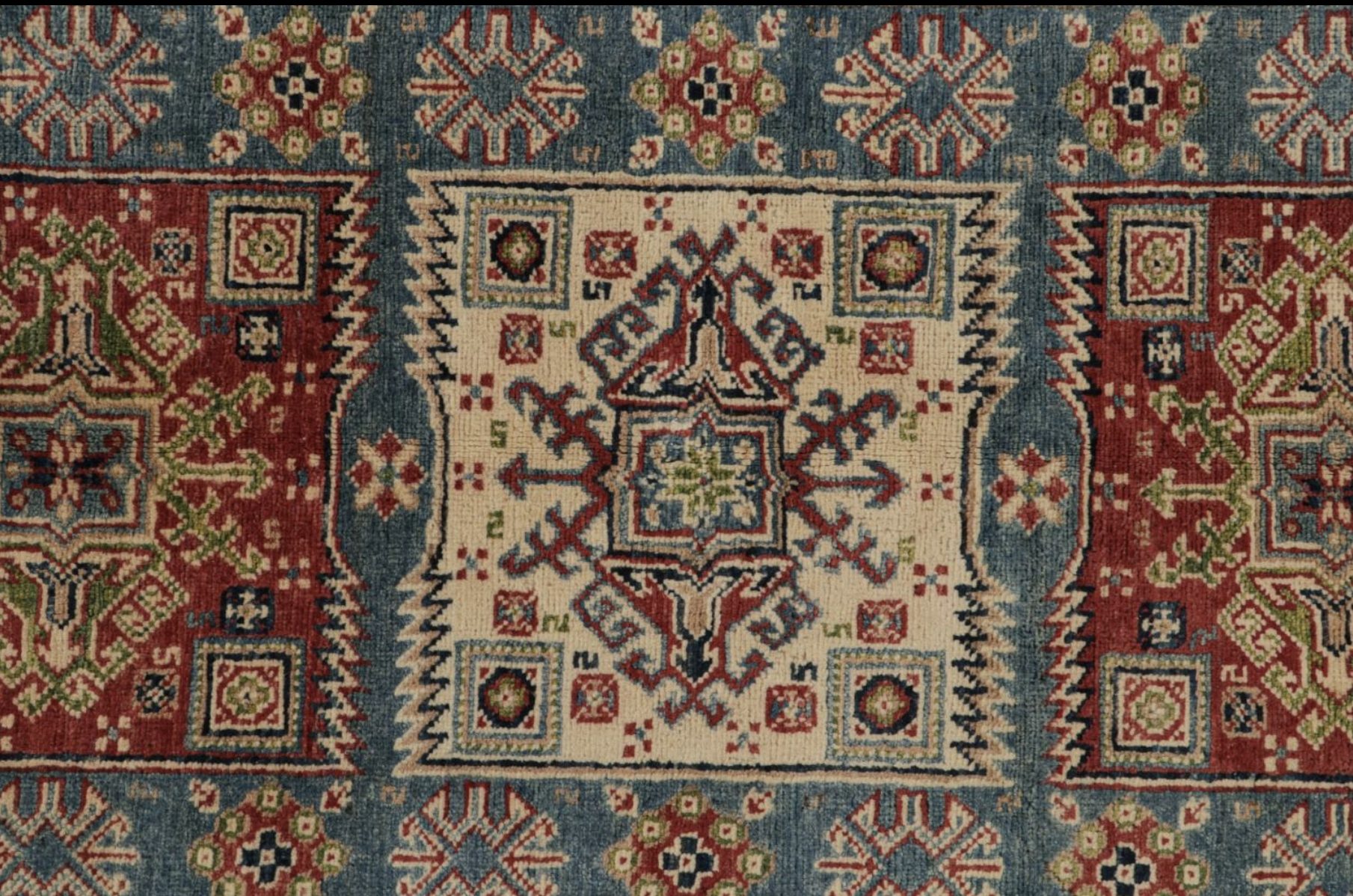
What sets authentic Kazaks apart is their bold geometric patterns and rich, saturated colors – particularly their signature reds derived from madder root and deep blues from natural indigo. The wool, sourced from highland sheep, provides an unmistakable luster that machine-made replicas simply cannot match.
History of Kazak Rugs
During the 19th century, Kazak Rugs held immense significance as status symbols, often woven with strands of gold integrated into their intricate designs. These opulent rugs adorned the floors of grand churches, palaces, and the residences of affluent individuals, symbolizing luxury and prestige. Beyond their utilitarian function as floor coverings, Kazak carpets were also displayed on walls as decorative artworks, adding a touch of elegance and sophistication to interior spaces. Additionally, these rugs contributed to creating a warm and inviting ambiance while absorbing sound, enhancing the overall comfort and aesthetics of the living environment.
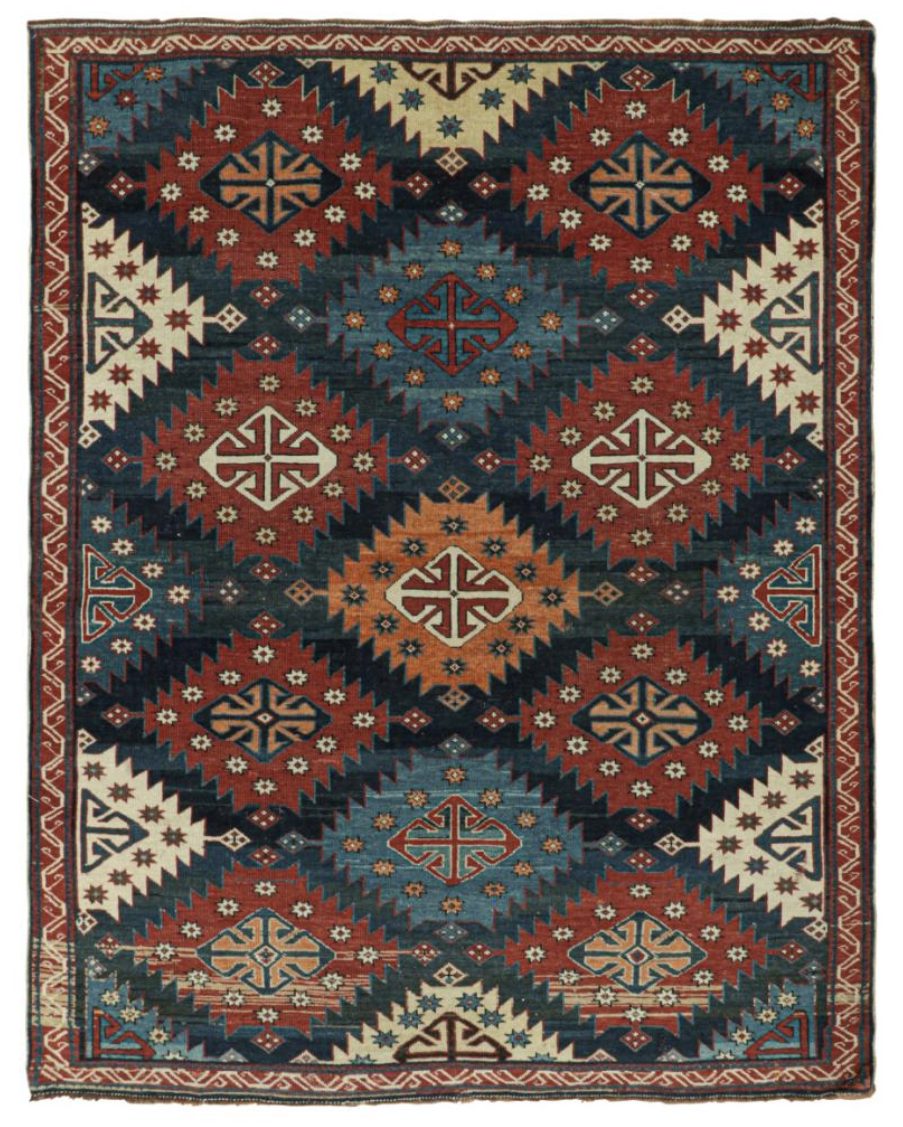
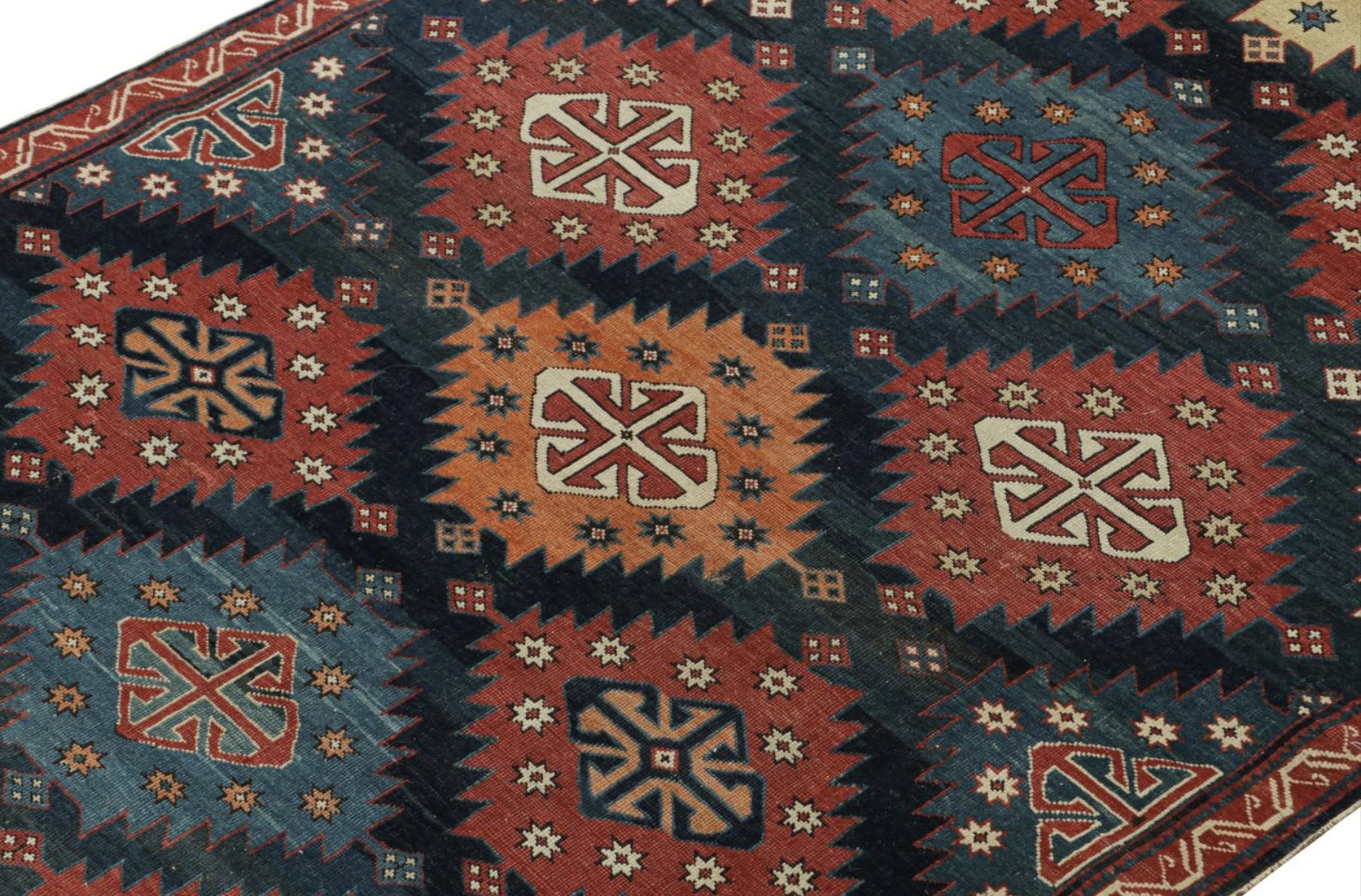
Kazak oriental rugs have a rich history that traces back to Armenian weavers who migrated to the region in the 11th century, alongside Azeri Turk groups from Turkey. Primarily woven by Armenian women, Kazak rugs are not tied to a specific tribe but rather to the geographical areas where they were crafted. The characteristic features of Kazak rugs include a coarse yet shiny wool pile adorned with large medallions in contrasting colors. Kazak oriental rugs originate from the Caucasus region, situated at the crossroads of Eastern Europe and Western Asia. This geographical area is bordered by the Caspian Sea to the east, the Black Sea to the west, Iran to the south, and Russia to the north.
Known for its incredible cultural diversity, the Caucasus region is home to over 50 distinct ethnic groups. The territory is shared among several countries, including Russia, Georgia, Azerbaijan, Armenia, and parts of Northwestern Iran and Northeastern Turkey. This blend of cultures and landscapes has significantly influenced the unique artistic and weaving traditions found in Kazak oriental rugs, making them a cherished treasure reflecting the rich heritage of the Caucasus. While the weaving tradition in the region dates back centuries, it wasn’t until the late 1800s that a more organized cottage industry was established by the government, leading to a significant growth in rug production.
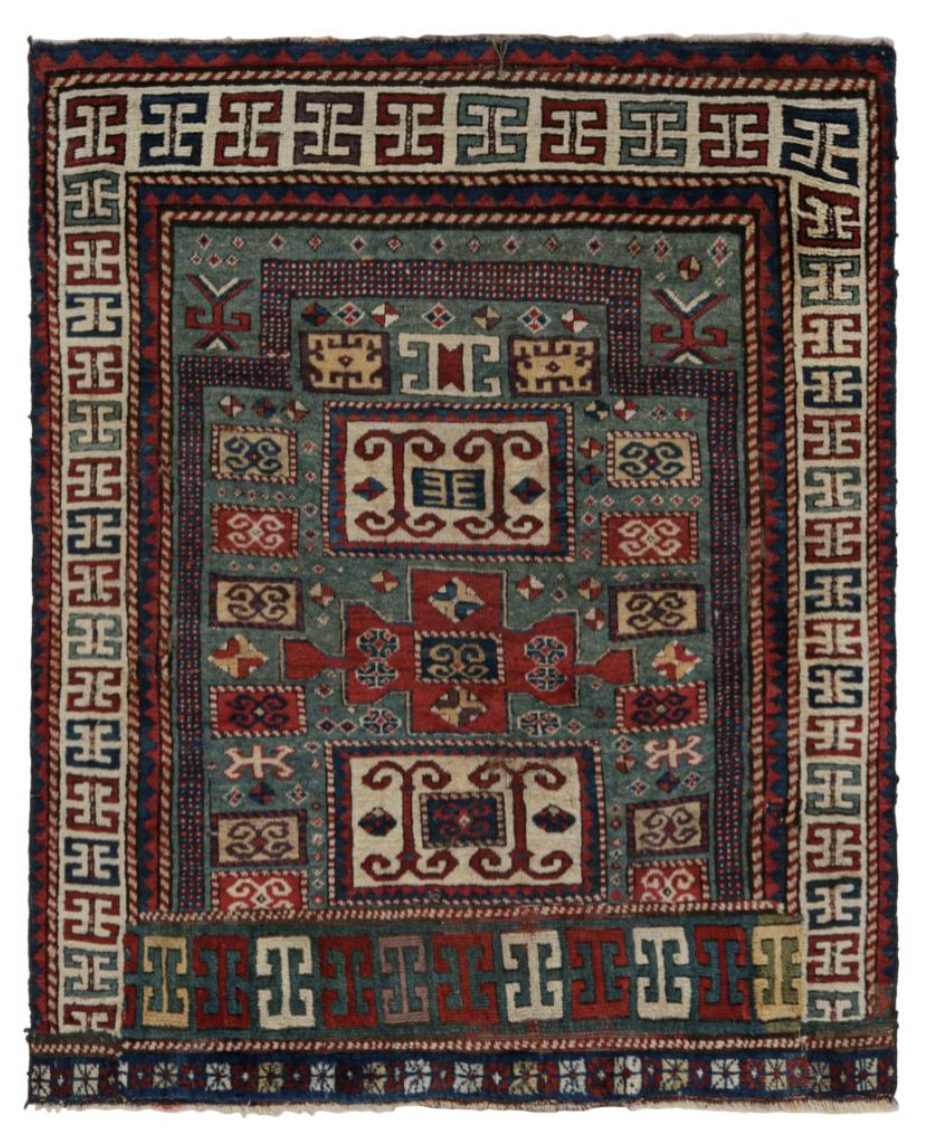
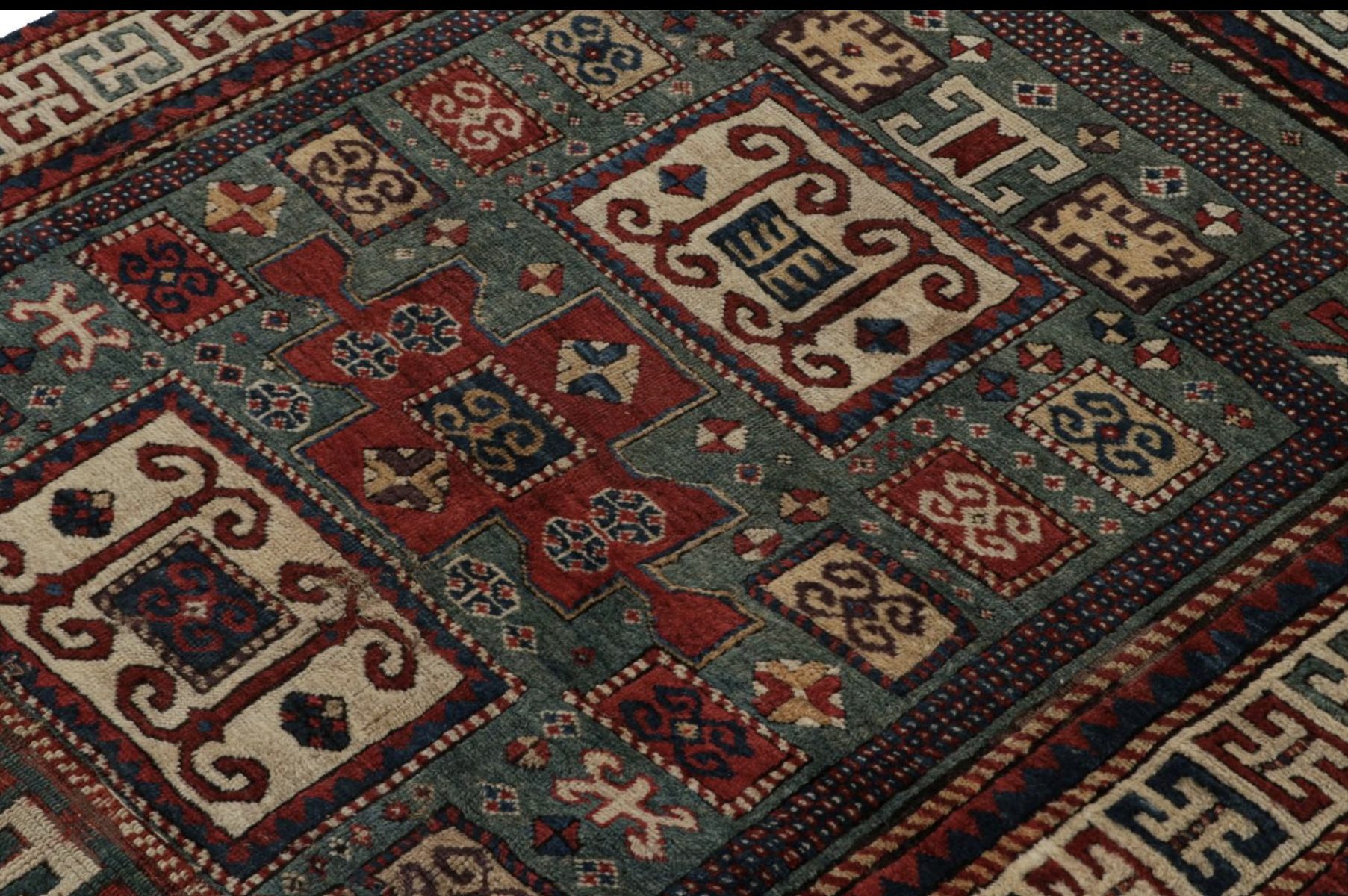
Among the Southern Caucasian rugs, Kazak rugs hold a prominent position alongside Karabagh, Gendje, Moghan, Talish, and Shirvan rugs. Karabagh rugs, in particular, exhibit finer patterns and are closer in style to Persian rugs. On the other hand, the major Northern Caucasian rugs include Kuba, Derbend, and Dagestan rugs, each showcasing unique designs and characteristics that reflect the diverse weaving heritage of the Caucasus region.
Styles and Patterns
Kazak carpets stand apart from other antique rug styles with their striking use of large archetypal motifs that dominate the field, creating a majestic and powerful visual impact. Woven in the Caucasus Mountains, these carpets exude a cosmological essence, symbolizing the harmonious relationship between the celestial and earthly realms. The geometric designs found in Kazak rugs are not mere patterns but profound symbols dating back to ancient times, such as Stars of Wisdom, Wheels of Life, Ram’s Horn, and Running Water, each contributing to the rug’s rich cultural narrative.
One of the distinctive features of Kazak rugs is their use of naturally lustrous, long-haired wool sourced from local sheep, meticulously dyed to achieve deep and vibrant colors that have endured centuries of exposure to sunlight. From vibrant scarlet to rich lapis lazuli, verdant fern green to warm goldenrod, Kazak rugs boast a breathtaking array of hues that captivate the eye and elevate any space they adorn. Beyond their visual grandeur, Kazak rugs are also notable for their substantial size, making them the largest tribal rugs originating from the Caucasus region. This combination of size, symbolic depth, and vibrant colors renders Kazak carpets as timeless masterpieces that continue to fascinate and inspire admirers around the world.
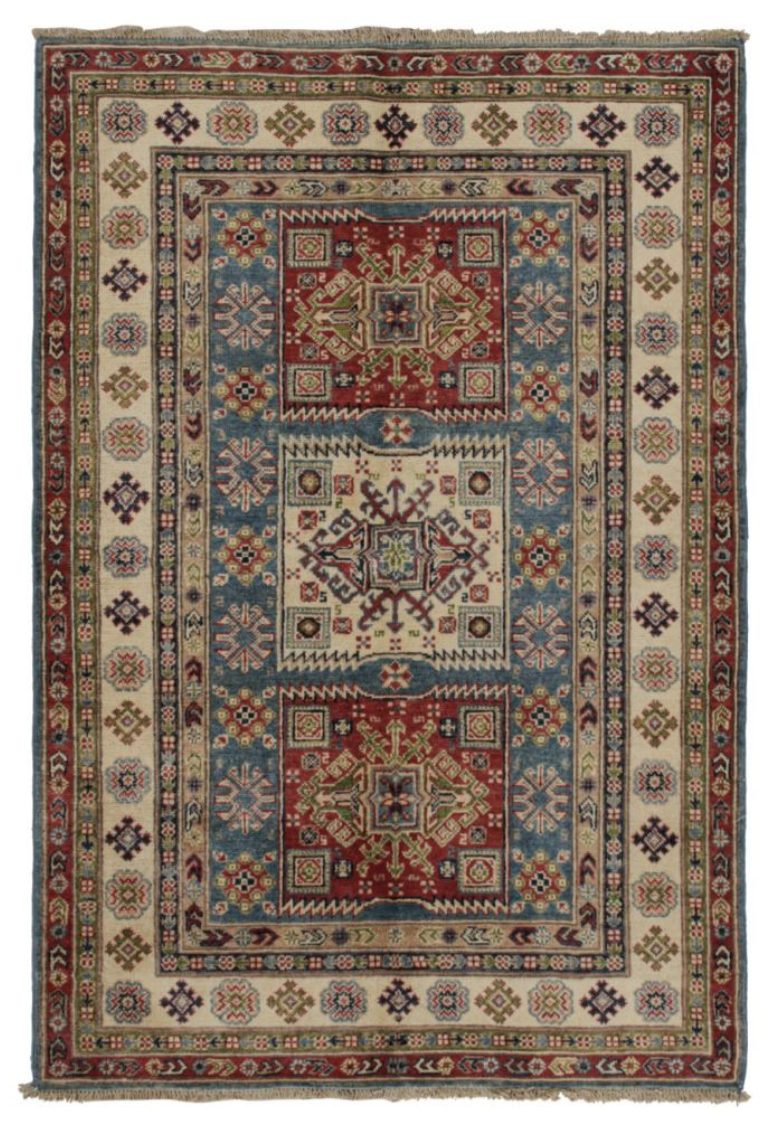
Kazak rugs from the western Transcaucasus have garnered significant attention from esteemed US specialist collector and scholar Raoul Tschebull. His notable contributions to the field include authoring a seminal exhibition catalogue titled “Kazak” in 1971, which remains a valuable resource for enthusiasts and scholars alike. His dedicated study and scholarly contributions have played a pivotal role in elevating the Western appreciation and understanding of Kazak rugs among collectors, researchers, and rug enthusiasts worldwide.