
Digitally Disrupted Rug Art – Traditional Rugs Deconstructed as Contemporary Artworks
May 3, 2024
An Abbreviated Guide to Kerman Lavar Rugs
May 3, 2024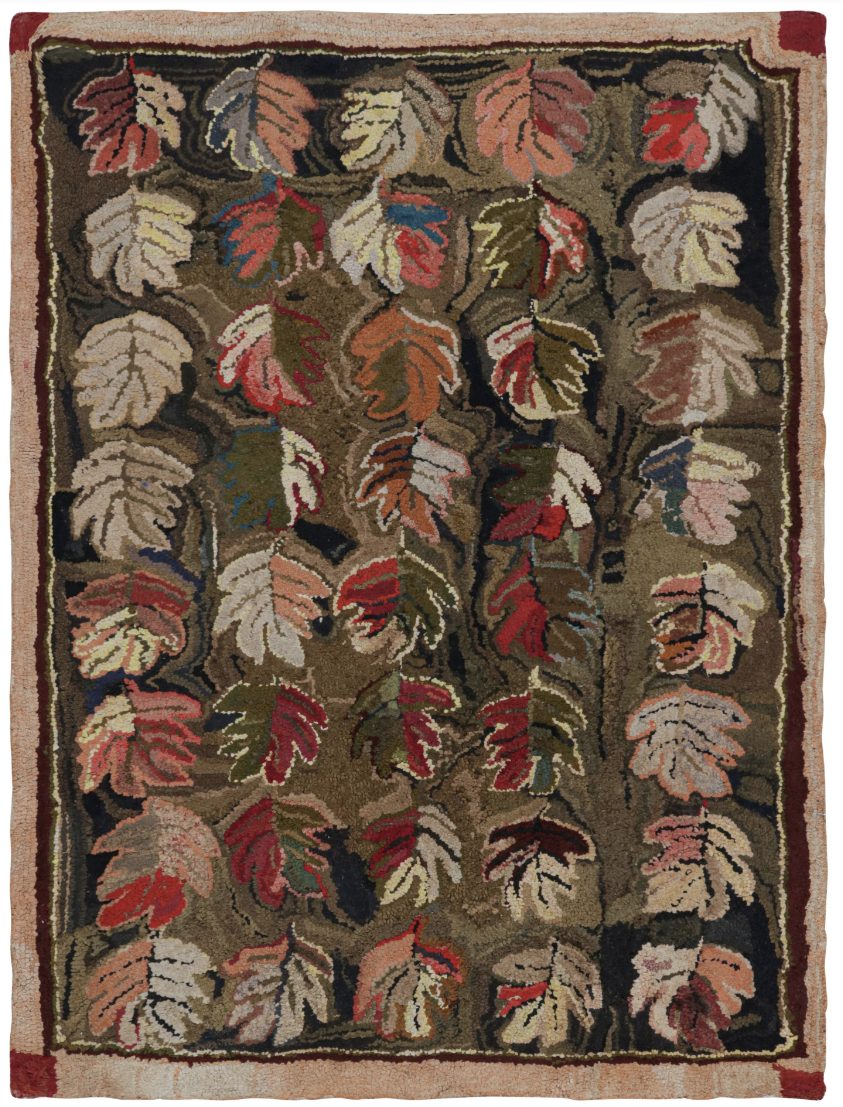
As the appreciation for Americana folk art experiences a resurgence, Antique Hooked rugs have garnered increased attention and demand. These rugs epitomize the fusion of artistry and functionality. Adorned with a charming array of local motifs, patriotic designs, and whimsical geometric patterns, American hooked rugs boast a distinctive New World style. The unique hand-hooking technique results in delightful textures and stylized patterns, characterized by nubby shoe-peg loops and marbled variegation that accentuate their rich visual appeal. Surprisingly direct in their execution and embracing free-form composition, antique hooked rugs have transcended mere utility to become cherished pieces of American folk art. From prestigious settings like the White House to the rustic estates of New England, these iconic rugs have adorned the nation’s floors, embodying quintessential American style at its finest.
The author William Winthrop Kent traced the earliest predecessors of hooked rugs back to floor mats crafted in Yorkshire, England, during the early 19th century. Workers in weaving mills would collect discarded thrums, pieces of yarn approximately 9 inches long, which were considered waste by the mills. Taking these thrums home, the weavers would pull them through a backing material to create mats. The term “thrum” has ancient roots, referenced even in Shakespeare’s Merry Wives of Windsor. However, according to Jenni Stuart-Anderson’s publication “Rag Rug Making,” recent research suggests that the technique of hooking wool loops through a base fabric was utilized by the Vikings, possibly introduced to Scotland by Viking families. Additionally, there are tangible examples at the Folk Museum in Guernsey, Channel Islands, indicating that similar rag rugs were produced off the coast of France using the same method.
Hooked rugs, originating in the northeastern United States and eastern provinces of Canada, marked a departure from traditional carpet construction methods. Crafted using burlap sourced from livestock feed bags or potato sacks, along with scrap fabrics salvaged from old clothing, drapery, or discarded yarn, these rugs epitomized resourcefulness and creativity. Unlike woven or hand-knotted carpets, hooked rugs employed a loose-woven, sturdy base fabric, complemented by a specialized tool known as a latch hook. This tool, featuring a hinged pin on one side, securely held yarn or fabric scraps in place, facilitating their insertion through the base canvas. As the craft evolved, artisans incorporated materials like hemp, linen, flax, and jute, enhancing both strength and artistic possibilities. This innovative approach granted artisans greater freedom to express their creativity while ensuring longevity and durability in their crafted pieces.
In the 19th century, as Americans spent more time at home and had greater disposable income for decoration, factory-made carpets emerged as a luxury for the wealthy after 1830. However, inaccessible prices prompted resourceful individuals, particularly women in less affluent households, to pioneer homemade floor coverings. This led to the development of hooked rugs, offering newfound avenues for beauty and creative expression in interior design. Despite its practicality and innovation, hooking faced societal stigma, perceived as an imitation of elite culture and relegated to the realm of “low class” craftsmanship during its early stages. Initially serving primarily as functional items for warming cold floors, early American hooked rugs featured simplistic designs and haphazard color palettes due to material constraints, earning them the moniker “rag rugs.”
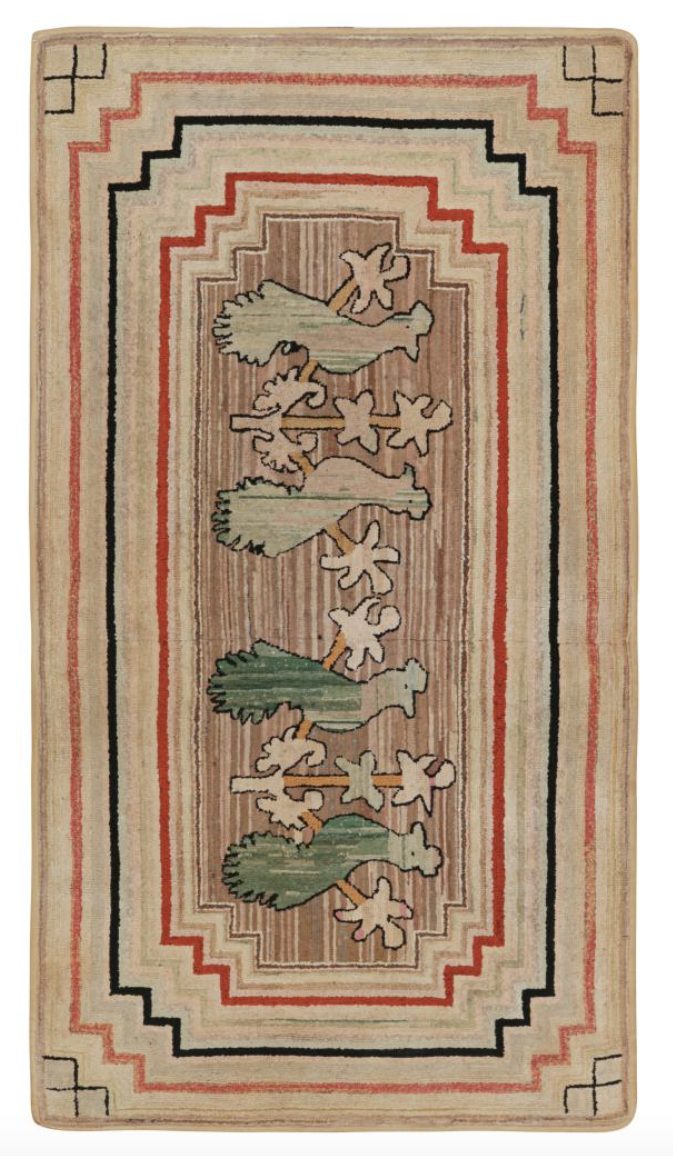
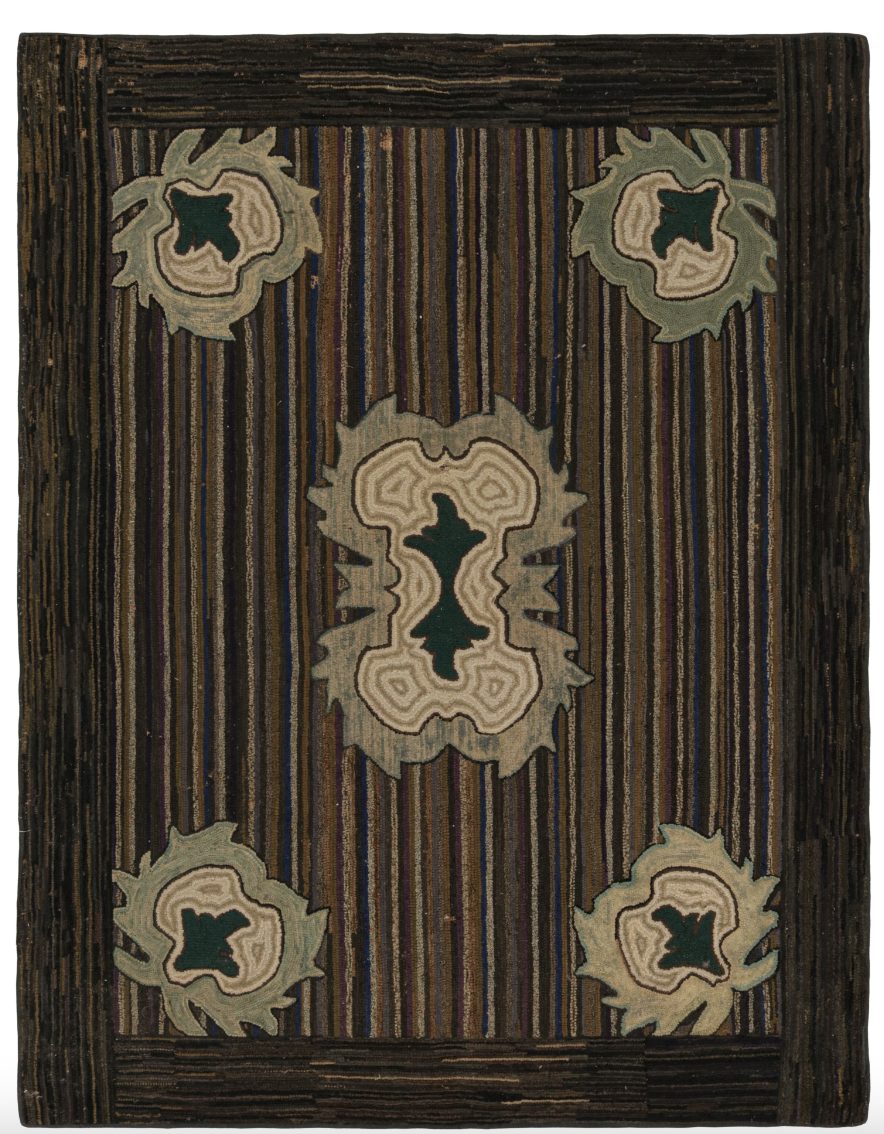
Hand-hooked rugs boast remarkable resilience and durability, owing to their meticulous handcrafted construction. Crafted by skillfully pulling yarns into tight loops and securely knotting them together, these rugs exhibit exceptional strength, with no loose ends that may unravel over time. Their flexibility makes them effortlessly adaptable to various placements and arrangements, allowing for seamless integration into any aesthetic or design scheme. Hand-hooked rugs crafted from wool offer additional benefits as natural insulation, providing both visual appeal and practical functionality. Traditionally cherished as elegant decor pieces, these rugs serve as enduring symbols of sophistication and refinement in homes. Available in a myriad of patterns and designs, hand-hooked rugs offer endless possibilities for customization, allowing individuals to tailor their selections to suit their personal preferences and tastes.
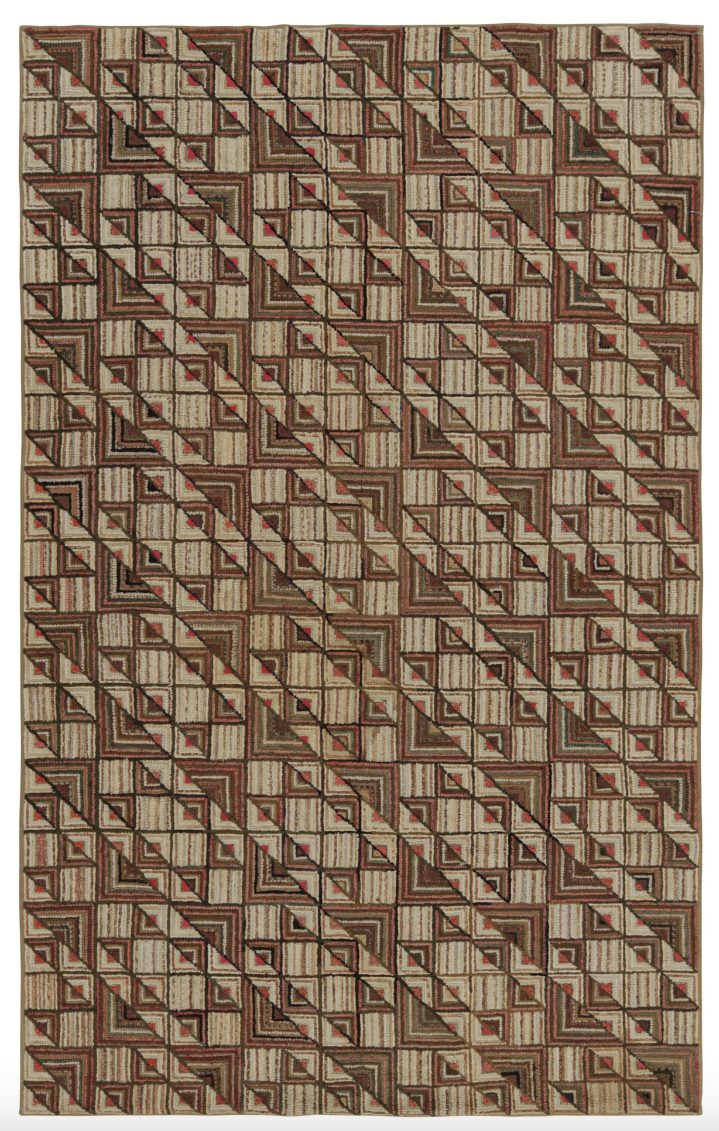
The Hooked Rug Museum of North America serves as a dedicated institution committed to the collection, exhibition, and preservation of the rich heritage of hand-hooked rugs and related artifacts integral to the creation of fiber art. Through meticulous research, the museum delves into the intricate history of this art form, ensuring its accurate portrayal and interpretation for present and future generations. By showcasing a diverse array of exhibits, the museum not only celebrates the legacy of hand-hooked rugs but also fosters an environment conducive to the ongoing evolution and innovation of this cherished craft.
The craft of rug hooking and its transformation into a revered fine art form trace back to the waterways where early colonies were established, particularly along the Atlantic coastline of North America. Variations in rug hooking techniques emerged along this expansive coastline, prompting museum researchers to organize a collaborative effort spanning both Canada and the United States to preserve this cherished heritage. The resilience of women in coastal communities during periods of colonial conflict is commemorated in the Founders’ Gallery of the museum, showcasing their courage and resourcefulness in defending their settlements against raids and military actions. Through meticulous hand-hooked rug art, volunteers from both nations pay tribute to these heroines and the art of survival they epitomized. Acadian rug hooking, rooted in the humble gardens of early settlers, utilized fibers from the flax plant to create homespun fabric, resulting in treasured burlap twine rugs that have gracefully aged into a rich and mellowed gold tone, serving as poignant reminders of the craft’s enduring legacy.
Admirers of the craft know that hooked rugs are among some of the richest, most collectible works of folk art and among the earliest forms of Americana in our field, each with one-of-a-kind beauty, rustic charm and a distinct texture that lives beautifully in modern spaces.
View Rug & Kilim’s rich collection of Antique Hooked Rugs here – https://rugandkilim.com/shop/?s=antique%20hooked