
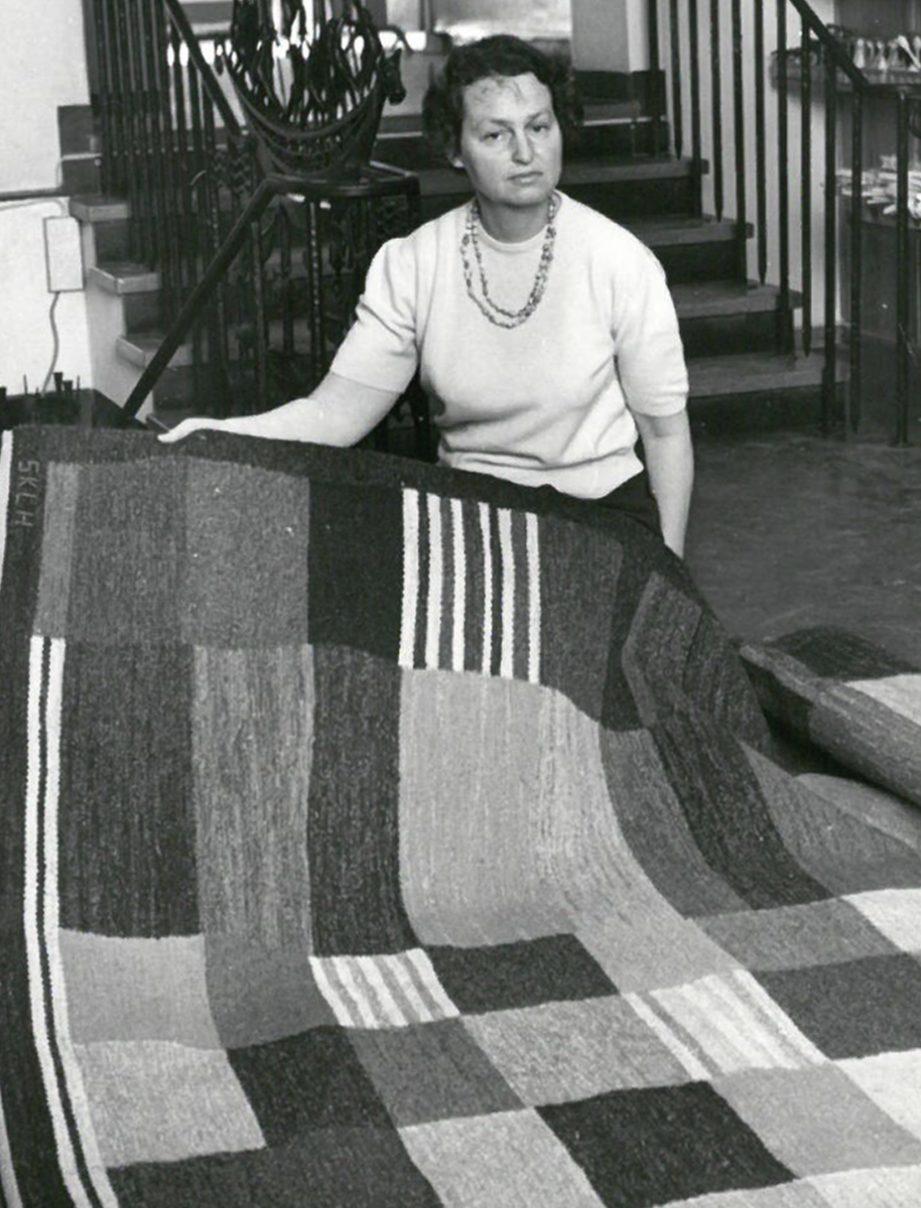
Kerstin Butler and her Swedish explorations of Patterns and Colors in Textile Design
March 28, 2024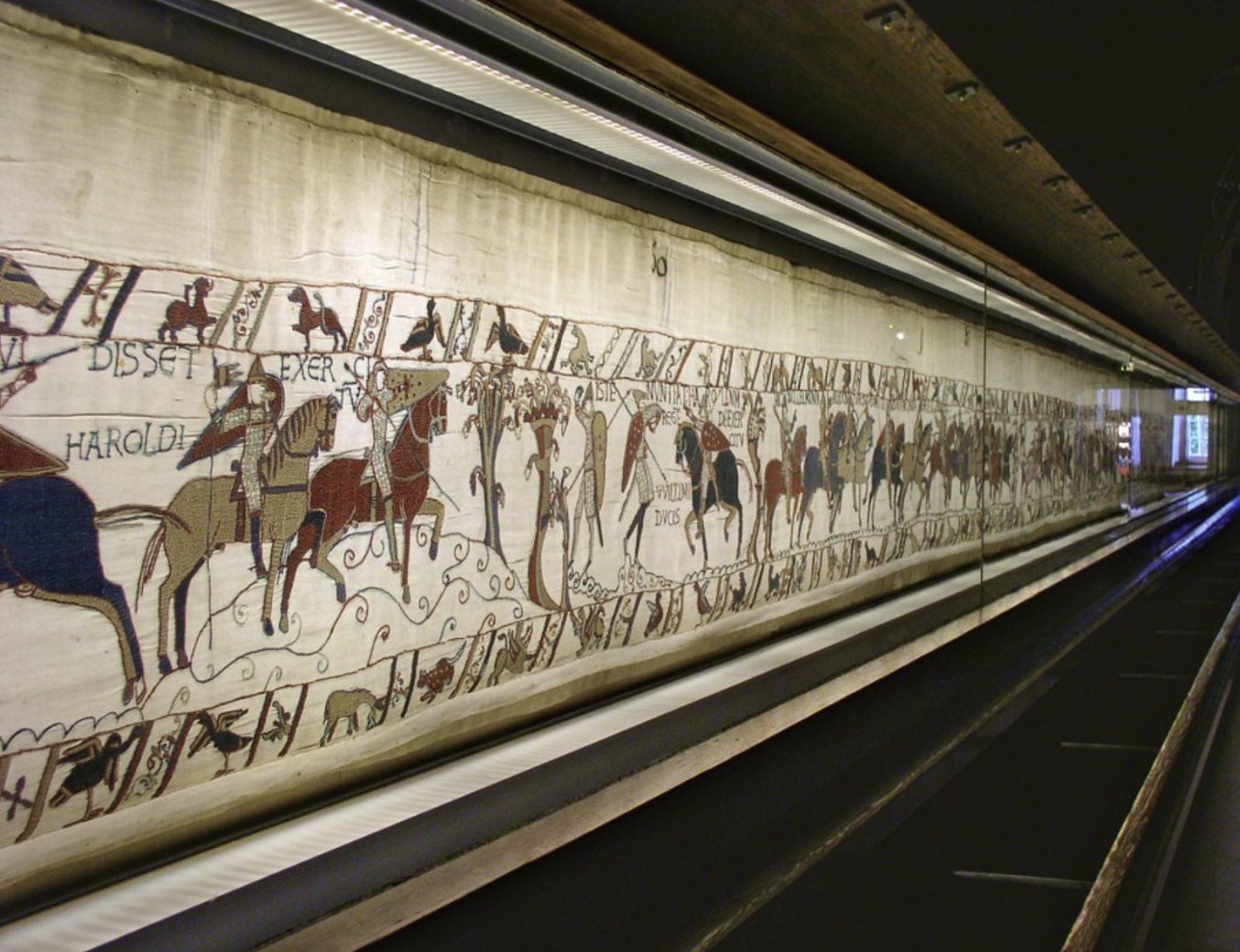
The Bayeux Tapestry: UNESCO’s European “Memory of the World”
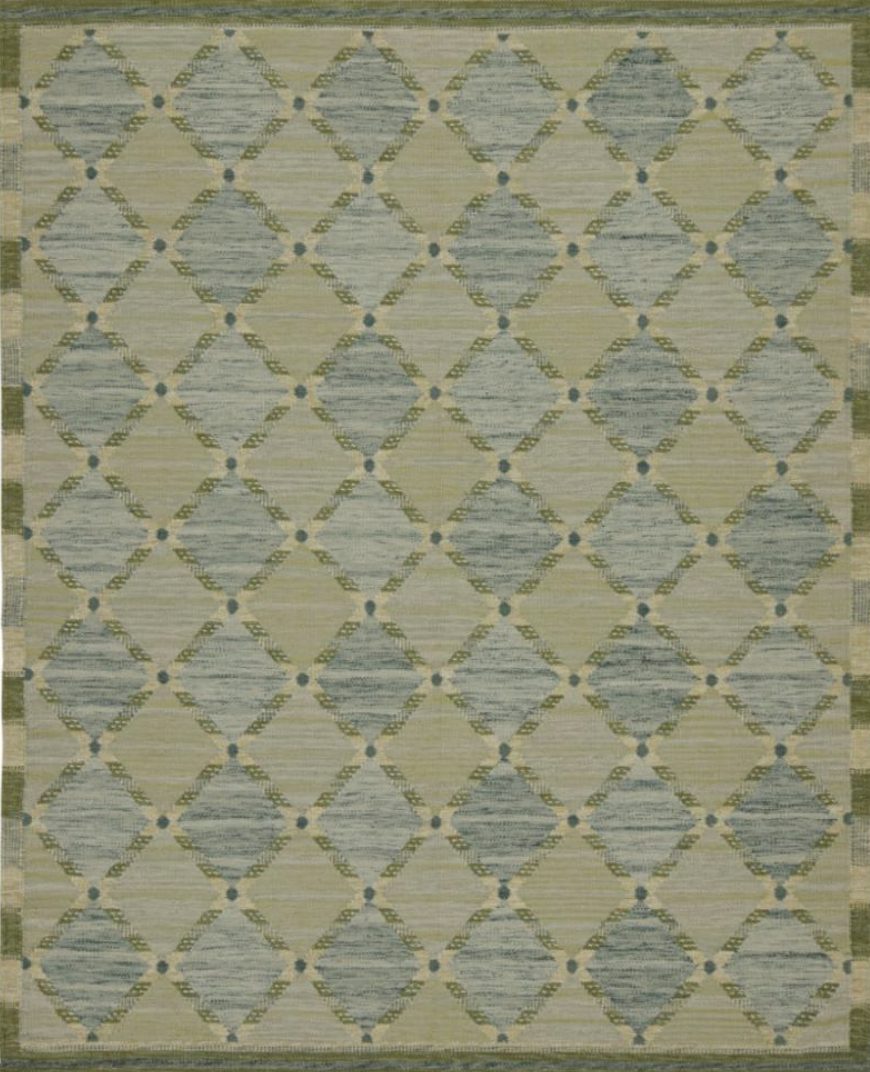
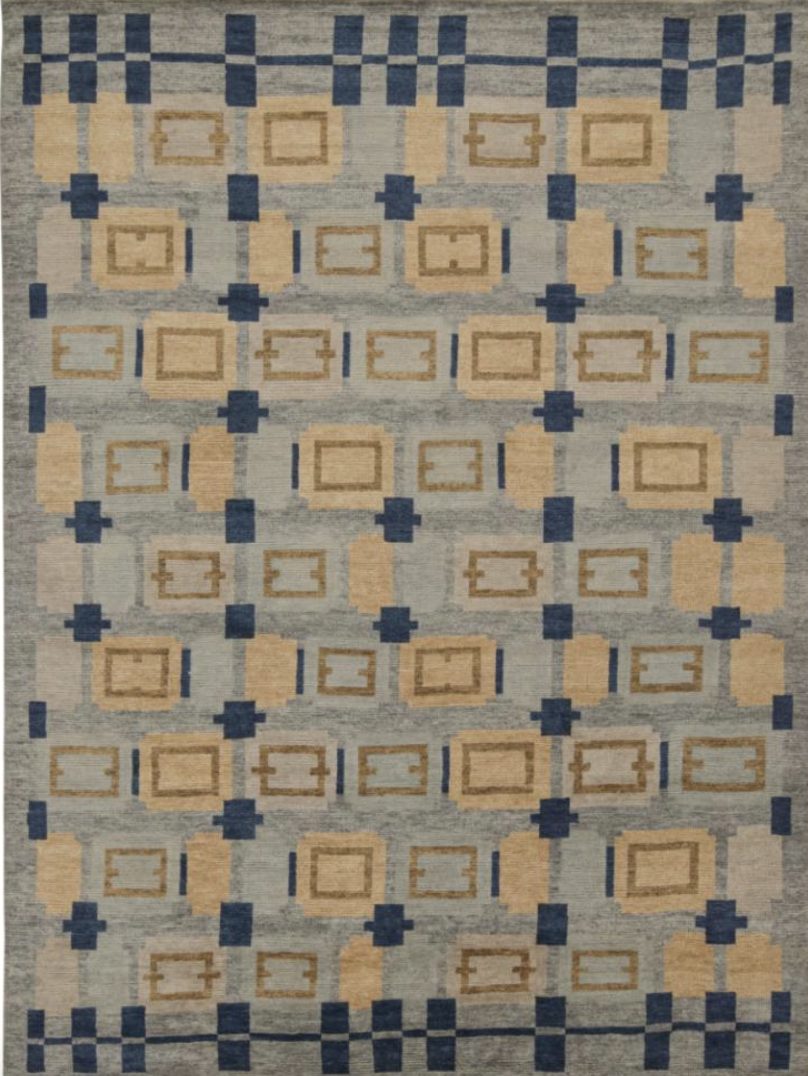
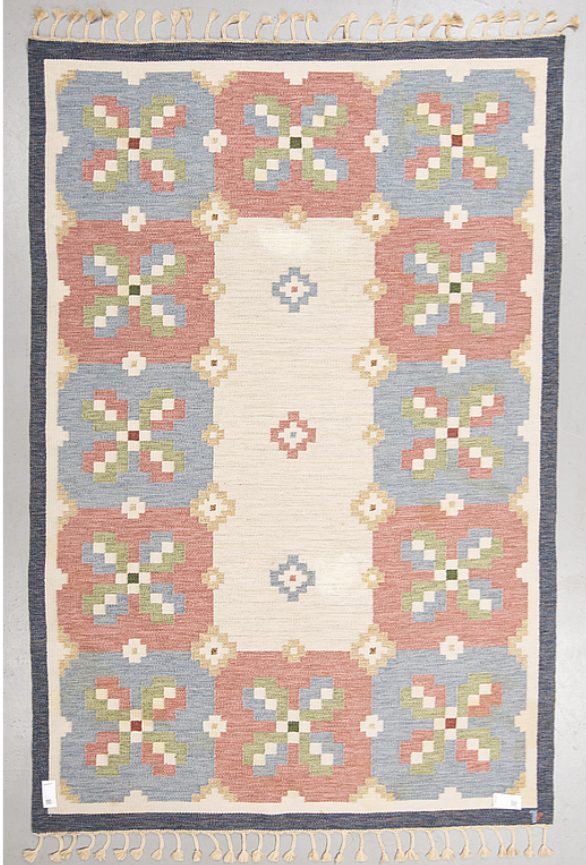
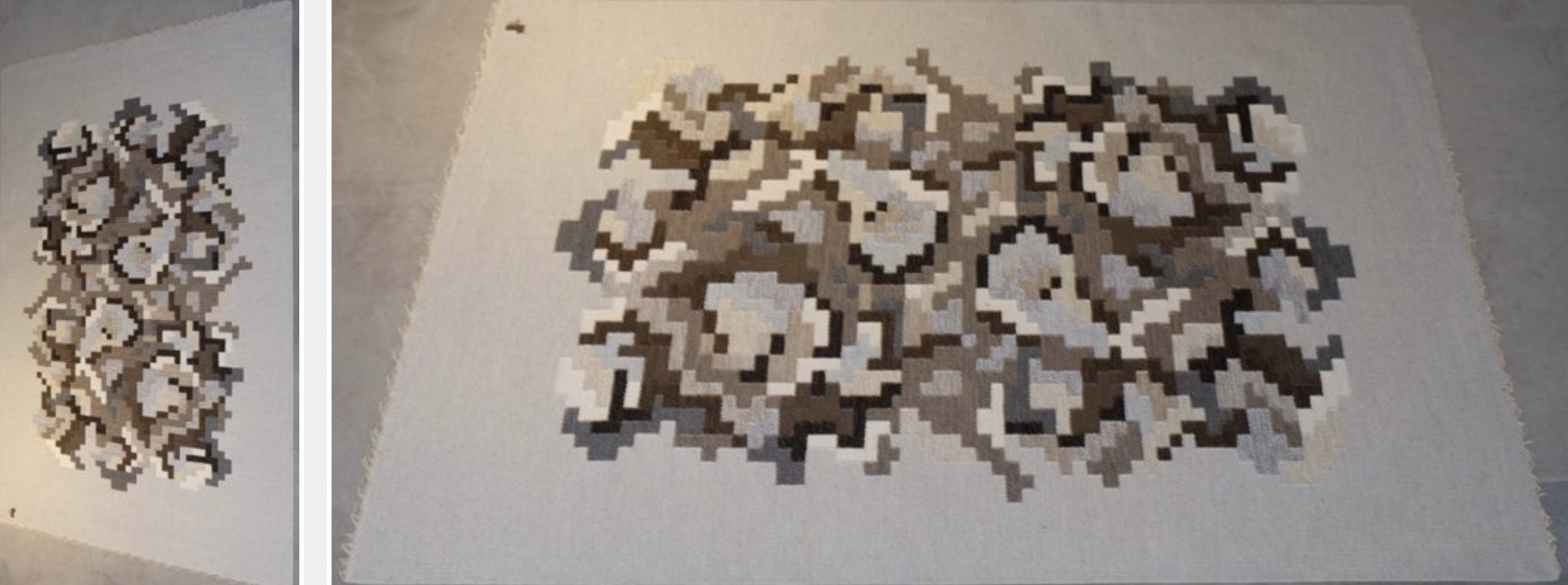
March 29, 2024Erik Lundberg’s rugs exhibit a diverse range of designs, incorporating both conventional bordered patterns and techniques that involve isolating traditional design elements and enlarging them on a larger scale. In the case of rugs like “Vemmenhög” and “Lister,” the inspiration is drawn from traditional patterns seen in southern Skåne weaving, but these elements are magnified to a much larger scale, creating a visually impactful effect. The supersizing of familiar forms adds a contemporary twist to the designs, giving them a modern and distinctive aesthetic.
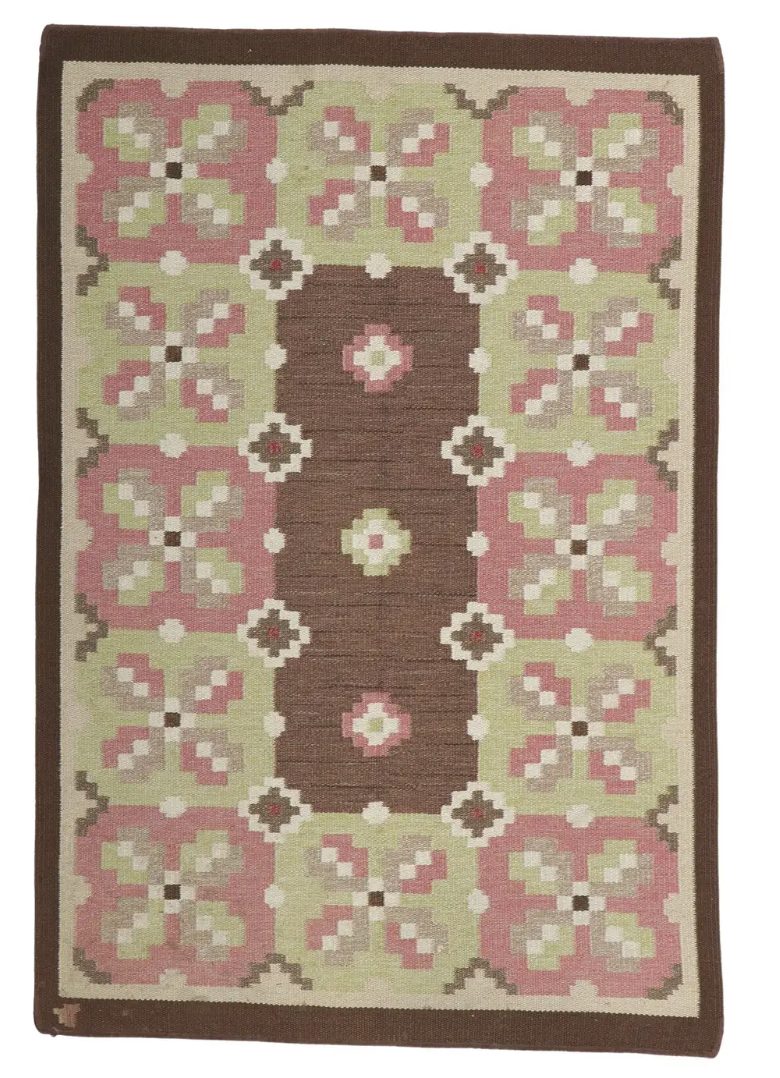
Colors play a significant role in Lundberg rugs, with traditional hues such as reds, blues, whites, and golds predominantly featured. This adherence to traditional color schemes contributes to the rugs’ connection to the cultural and artistic heritage of southern Skåne. Vävaregården, the manufacturing company, maintained a selection of standard patterns that were reproduced in various color variations, providing a consistent yet diverse range of options for customers. This approach allowed for both the preservation of traditional elements and the exploration of creative possibilities within a well-defined framework.
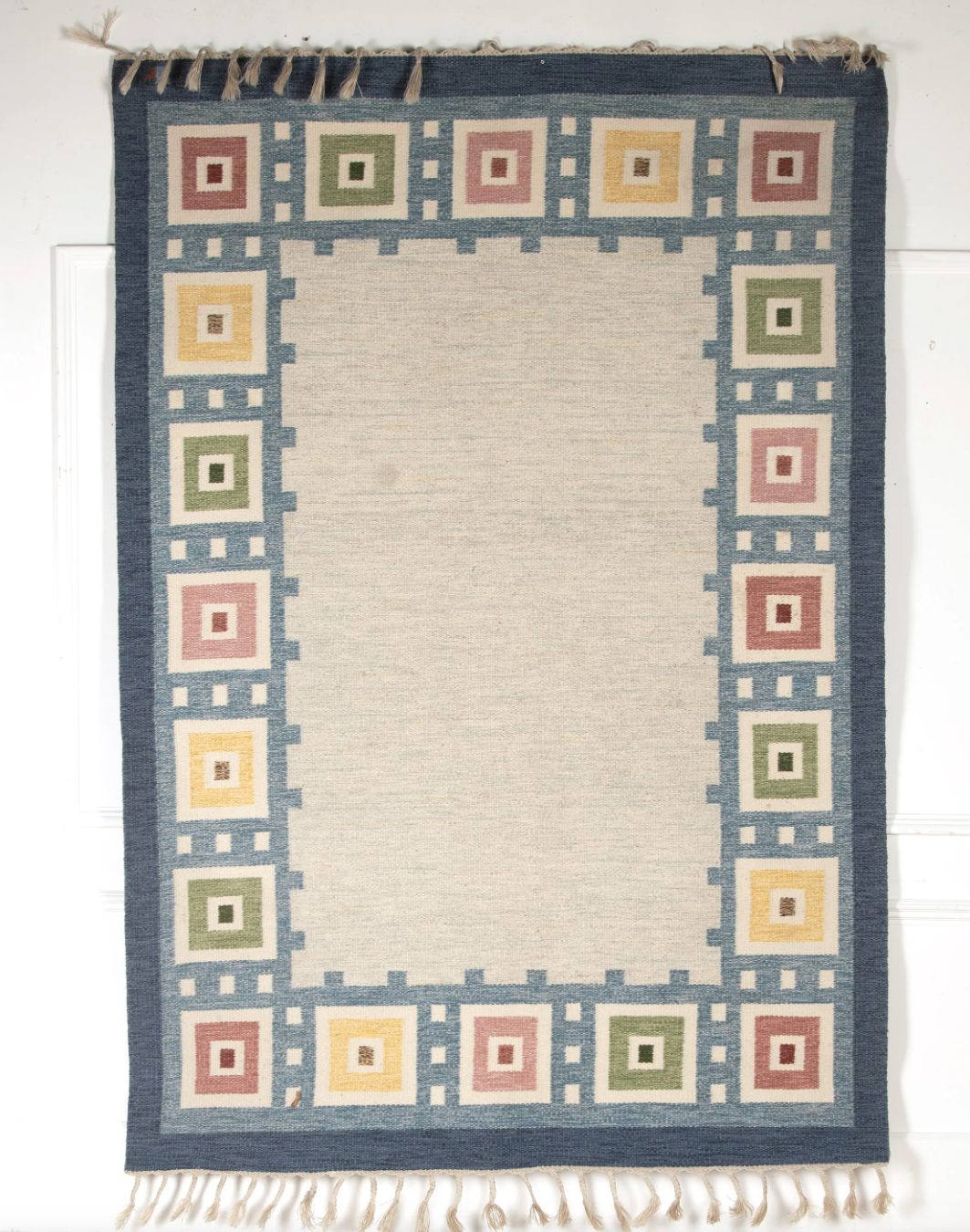
Lorfords Antiques
Modernity
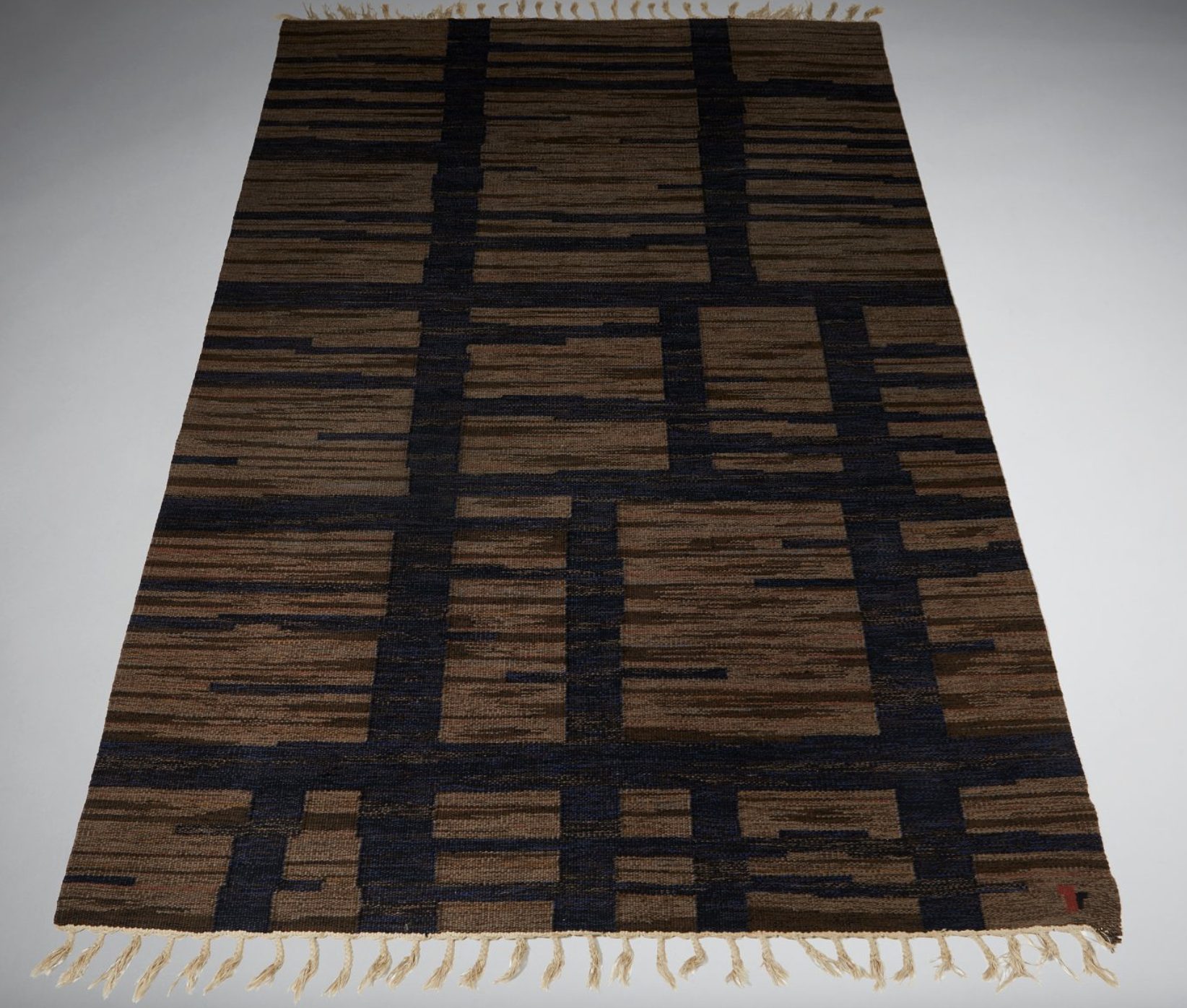
Erik Lundberg became associated with the production of hand-woven flat-weave “rölakan” rugs in Malmö during the 1960s. In the late 1960s, Lundberg’s venture caught the attention of Svängsta Mattor AB, a nearby firm already engaged in the production of rya rugs. Svängsta Mattor AB acquired Lundberg’s firm in 1967 and relocated it to Eringsboda, a small town approximately 30 kilometers north of Karlskrona. The firm’s symbol, often referred to as a “V,” is more accurately described as a two-toned T shape, with one arm of the T higher than the other. This distinctive symbol is woven in colors that match each rug, resulting in a unique appearance for each piece. The origin of this symbol is said to be derived from the shape of a tree observed outside a studio window.
Bukowskis
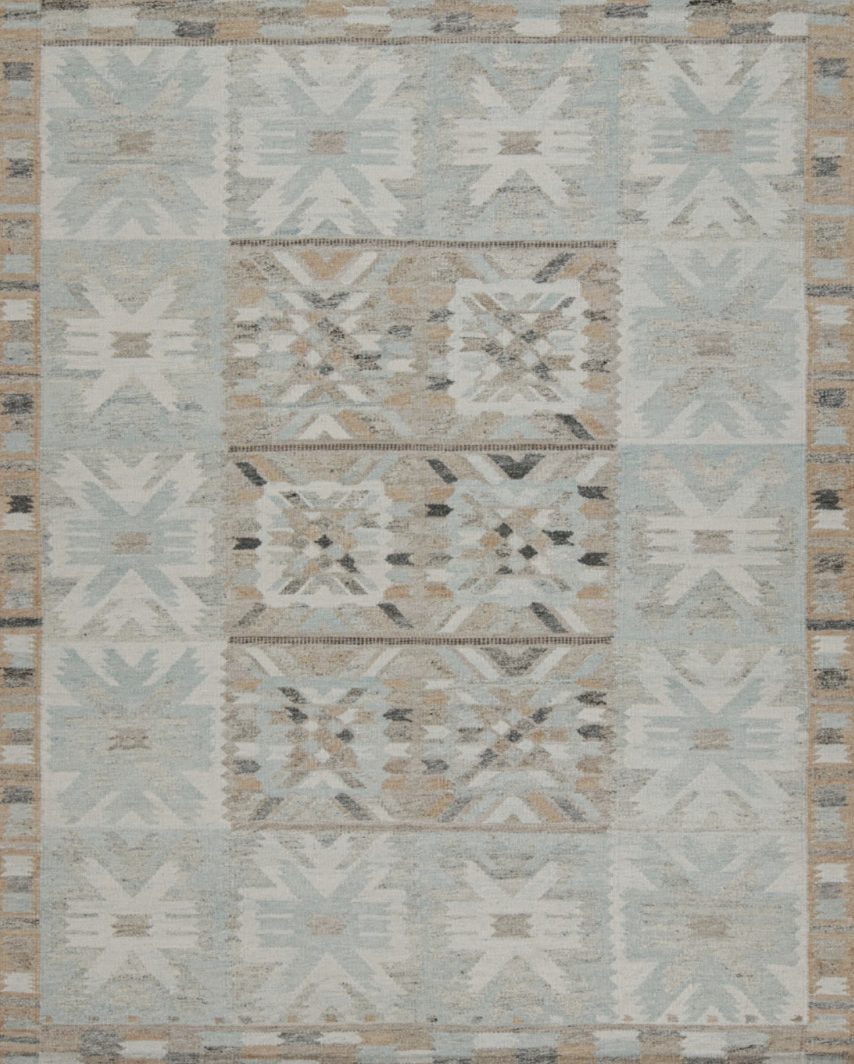
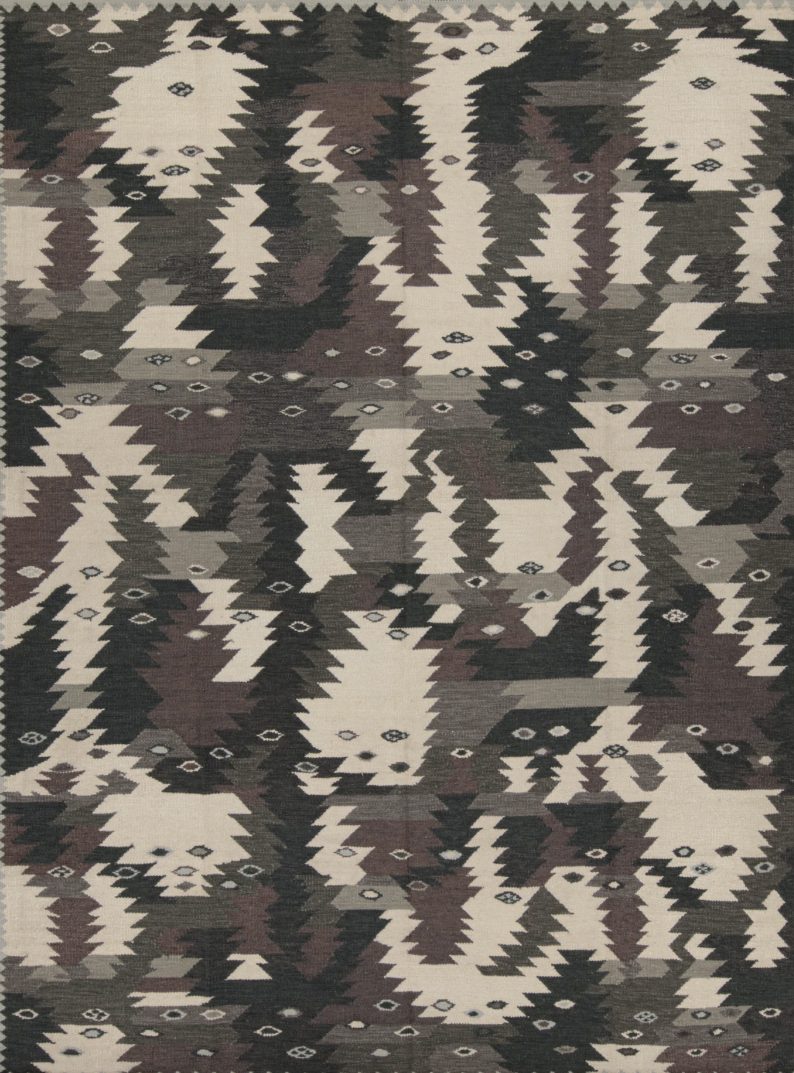
In general, the designs of the Lundberg line of rugs draw inspiration from traditional patterns of southern Skåne. This regional influence is reflected in the aesthetic elements, motifs, and designs incorporated into their hand-woven rugs. By infusing traditional patterns from southern Skåne into their creations, the Lundberg line pays homage to the rich cultural and artistic heritage of the region while offering a contemporary expression through their unique interpretation and craftsmanship. The rich tradition of Scanian traditional patterns has endured and continues to resonate in Sweden. Lilli Zickerman’s extensive project in the early 20th century to document and preserve these traditional folk textile patterns played a crucial role in their survival. Throughout the 20th century, weaving students and home weavers have drawn inspiration from these designs, leading to the perpetuation of Scanian patterns in various forms.
The appeal of Scanian tapestry images seems timeless, with thousands of copies found in homes across Sweden. While the rugs attributed to Erik Lundberg and Vävaregården may not possess the same level of refinement as hand-embroidered cushions in Scanian designs, they tap into a shared sense of nostalgia for a past when textiles were exclusively handcrafted. These rugs allow contemporary users to experience and enjoy the beauty of traditional patterns in their own homes, providing a connection to Sweden’s cultural and artistic heritage.
Pamono
1stDibs
View Rug & Kilim’s Scandinavian Rugs and Kilims as inspired by Lundberg’s designs –