
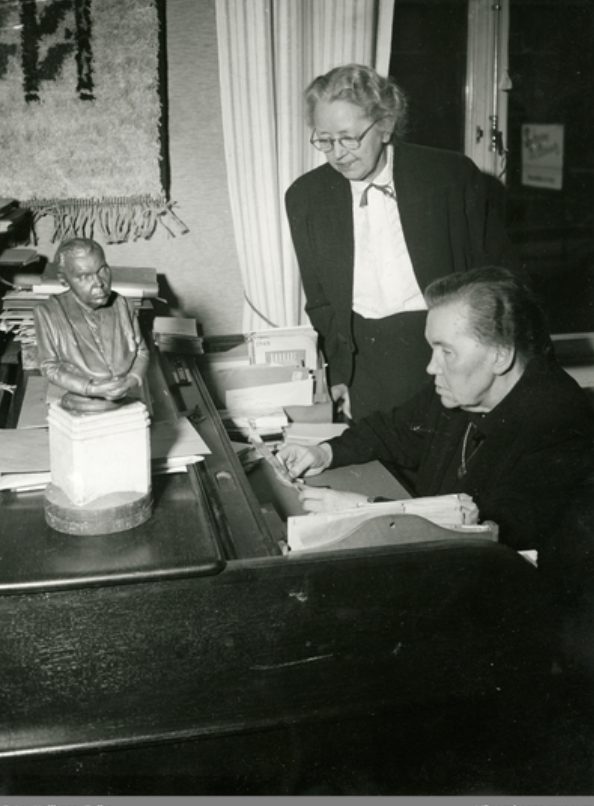
Hildegard Dinclau and her Contributions to Swedish Rug and Textile Designs
March 28, 2024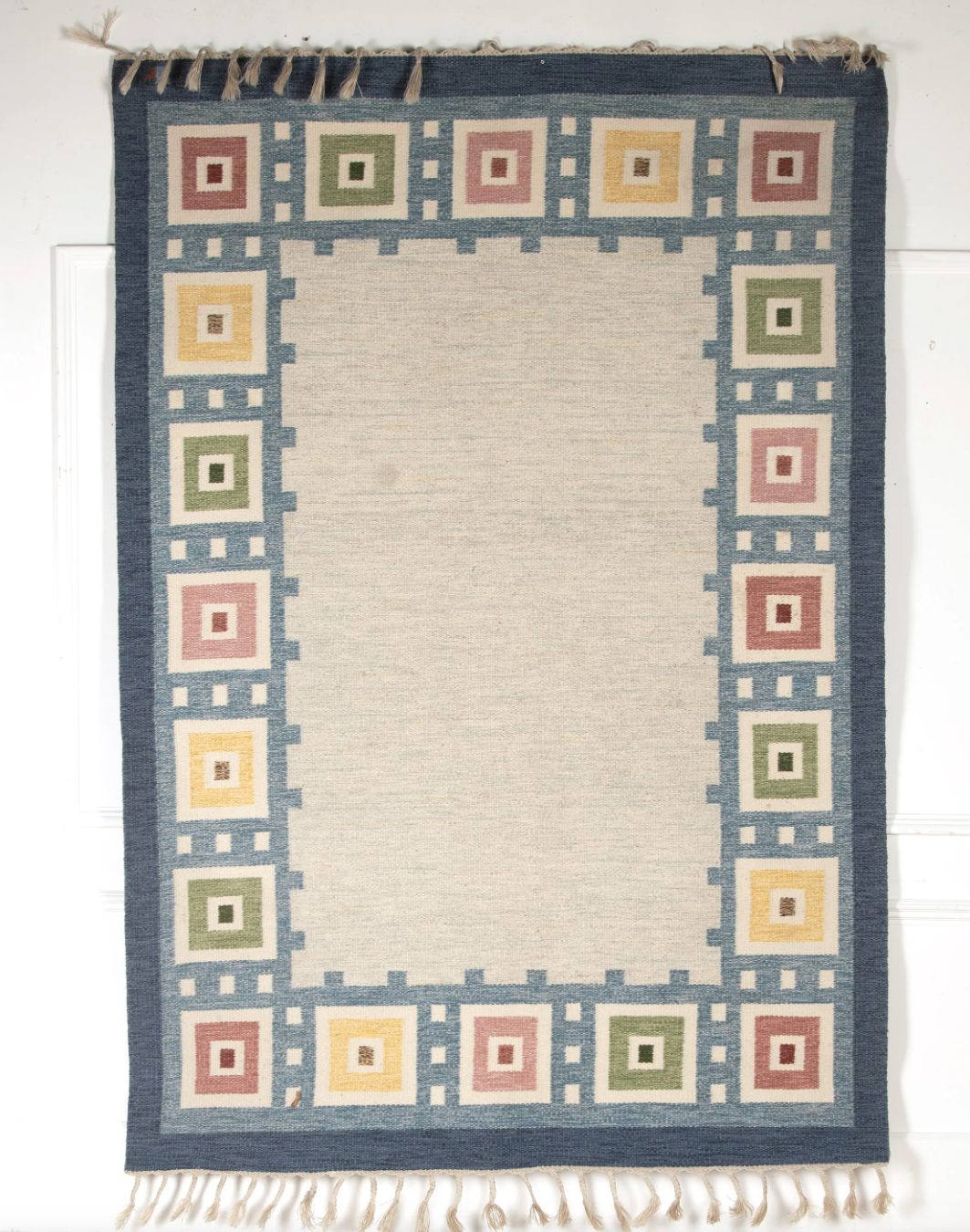
Erik Lundberg and his Traditional Rug Patterns Inspired from Skåne Weaving
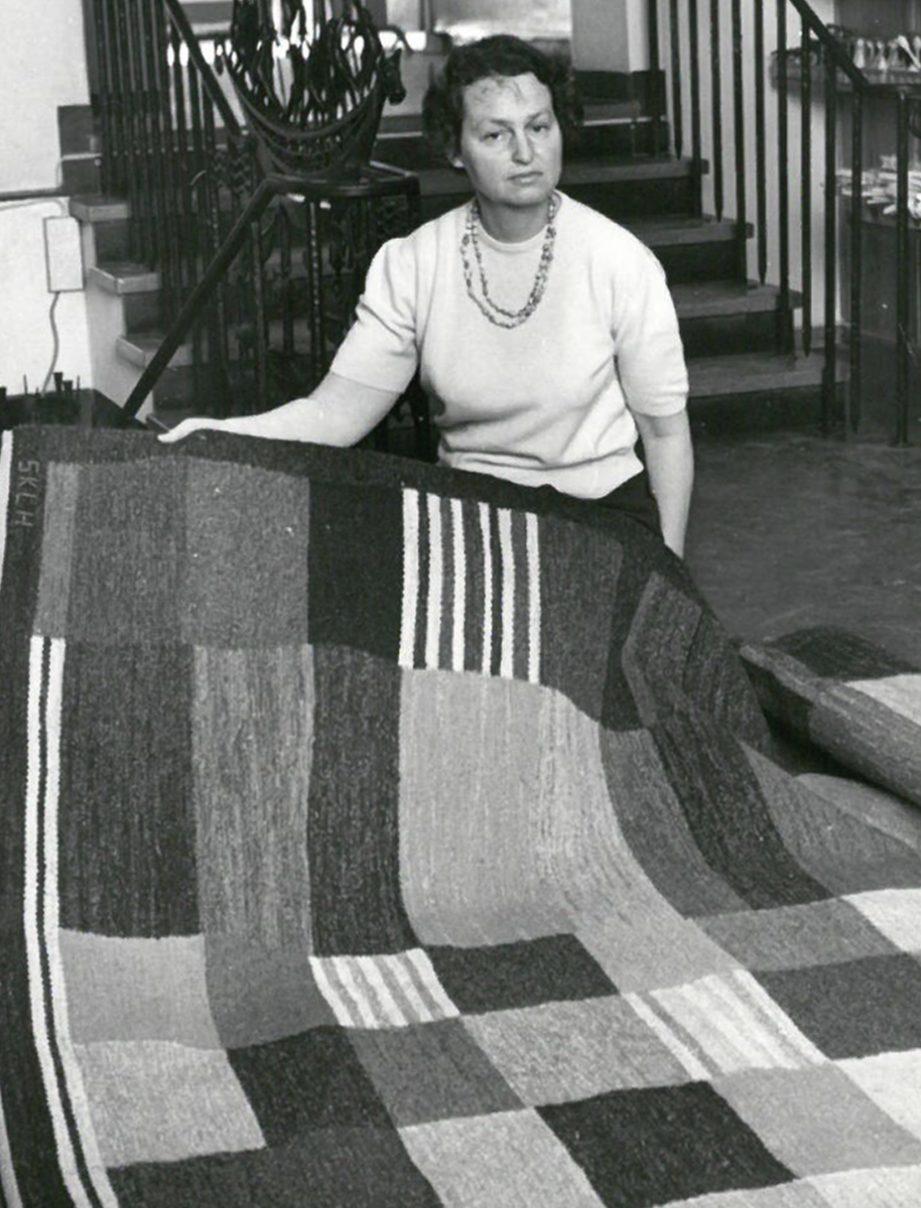
March 28, 2024Kerstin Butler, born in 1923 in the Gothenburg area, brought a vibrant and determined spirit to the world of textile design. Trained in Stockholm at both the Friends of Handcrafts School (Handarbetets Vänner) and Konstfack under the guidance of Barbro Nilsson, Butler’s artistic journey unfolded with a commitment to creativity and innovation. In 1961, she made a significant move to Kalmar, joining Södra Kalmar läns hemslöjd just after the departure of Anna Maria Hoke. This marked the beginning of Butler’s long and impactful association with the organization, where she became a consistent and vital member. Kalmar became her lifelong home, and from 1961 to 1969, she contributed significantly to the county craft association, leaving an indelible mark with her fresh designs for flat-weave (rölakan) rugs.
Agneta Gefors
Known for her determination and energy, Butler worked on a series of designs on a theme, akin to the process of painters. Exploring patterns of stripes, checks, and other elements of interest, she played with subtle variations in color and pattern. Her mature style produced rugs that were quiet and understated yet brimming with life and nuanced color nuances. In 1969, Butler received the Kalmar Culture Prize, a recognition of her significant contributions to the cultural landscape. That same year, she departed from the Southern Kalmar Craft Association to establish her freelance business. Beyond her individual pursuits, she engaged in weaving as art therapy for a local hospital, showcasing her commitment to the broader community.
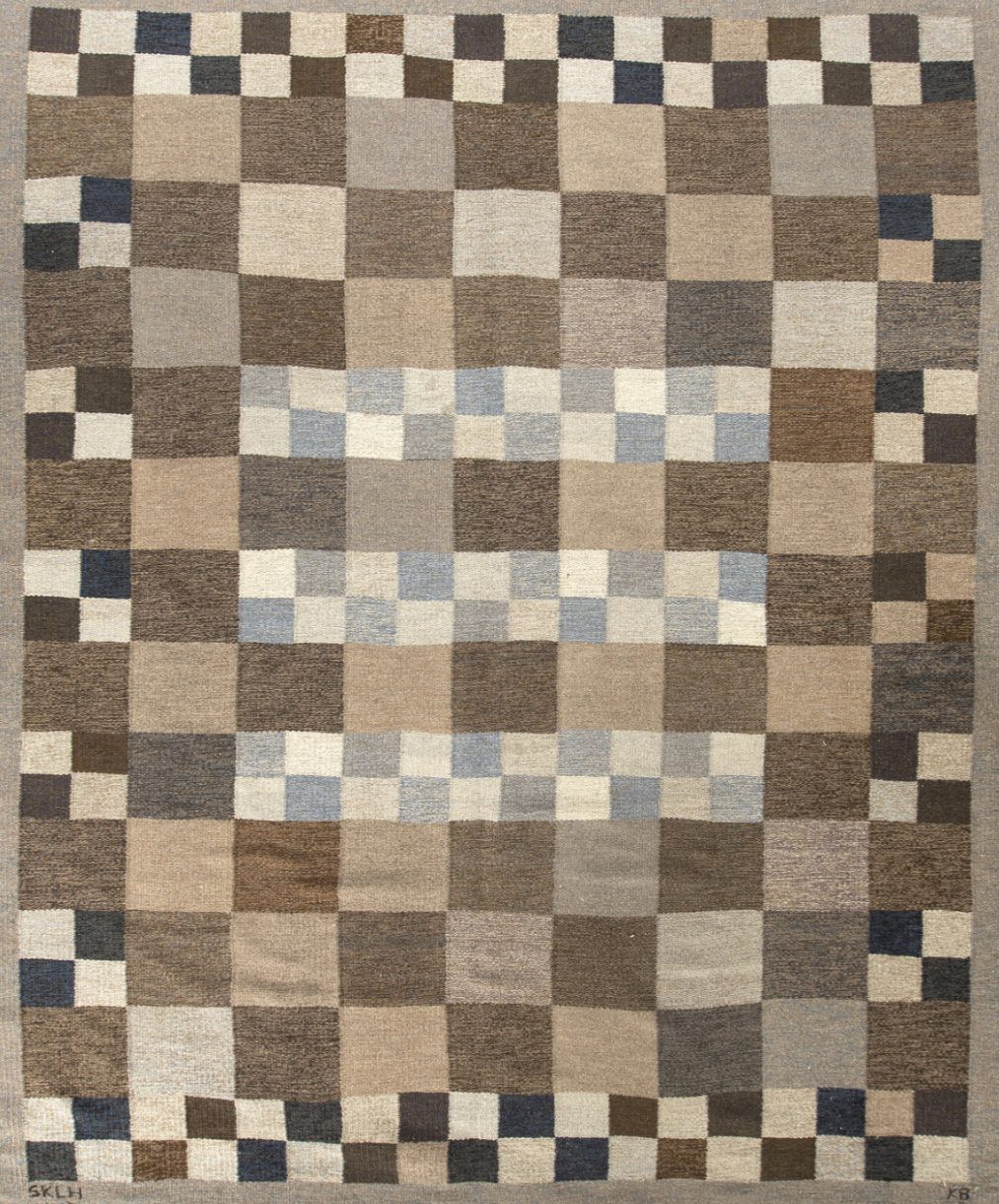
It’s noteworthy that Butler’s association with county craft associations can be distinguished by signatures on the rugs. Rugs with KLH and KB were from her time at Kronoberg läns hemslöjd early in her career, and rugs with SKLH and KB were from her long association with Södra Kalmar. Rugs with just KB were crafted in her own atelier after leaving SKLH. The rug below, part of a series of checked rugs designed between 1964-6, is a brown variation on Butler’s “Blue Mosaic” rug, highlighting her ability to explore themes with artistic flair.
The evolution of a series of three rugs designed for the Southern Kalmar County Craft Association by Kerstin Butler provides a fascinating glimpse into her creative process. While no online sketches are available for these specific rugs, the Designarkivet in Kalmar, Sweden, holds numerous sketches by Butler, offering insights into her design iterations.
The first rug, dated 1962, exudes a quiet and neutral aesthetic, featuring narrow striped borders at both ends and side borders composed of alternating stripes and small triangles. The triangles, though subtle, stand out as distinctive elements, adding a touch of excitement to the overall design.
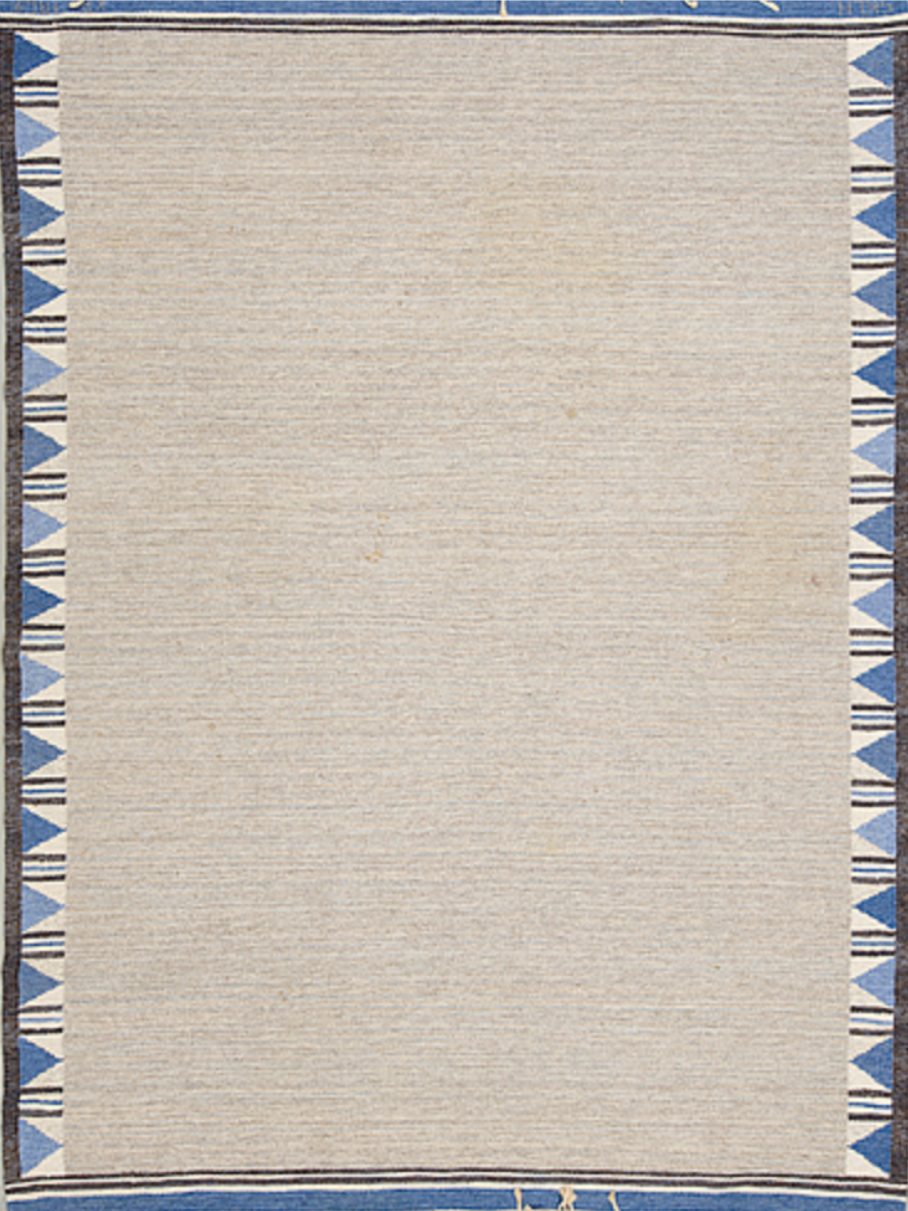
Kerstin Butler, flat weave rug (rölakan), 212.5 x296 cm, initialed SKLH and KB 1962, has fringe, designed for Södra Kalmar lans hemslöjd. Sold at Bukowskis
The second rug, unsigned and undated, builds upon the initial design with simple yet impactful tweaks. Butler extends a series of parallel lines across the rug, introduces richer greens and browns, and refines the side borders by simplifying one (reducing it to a single color) and adding complexity to another. The interplay of colors in the borders also contributes to providing tones to the neutral part of the rug.
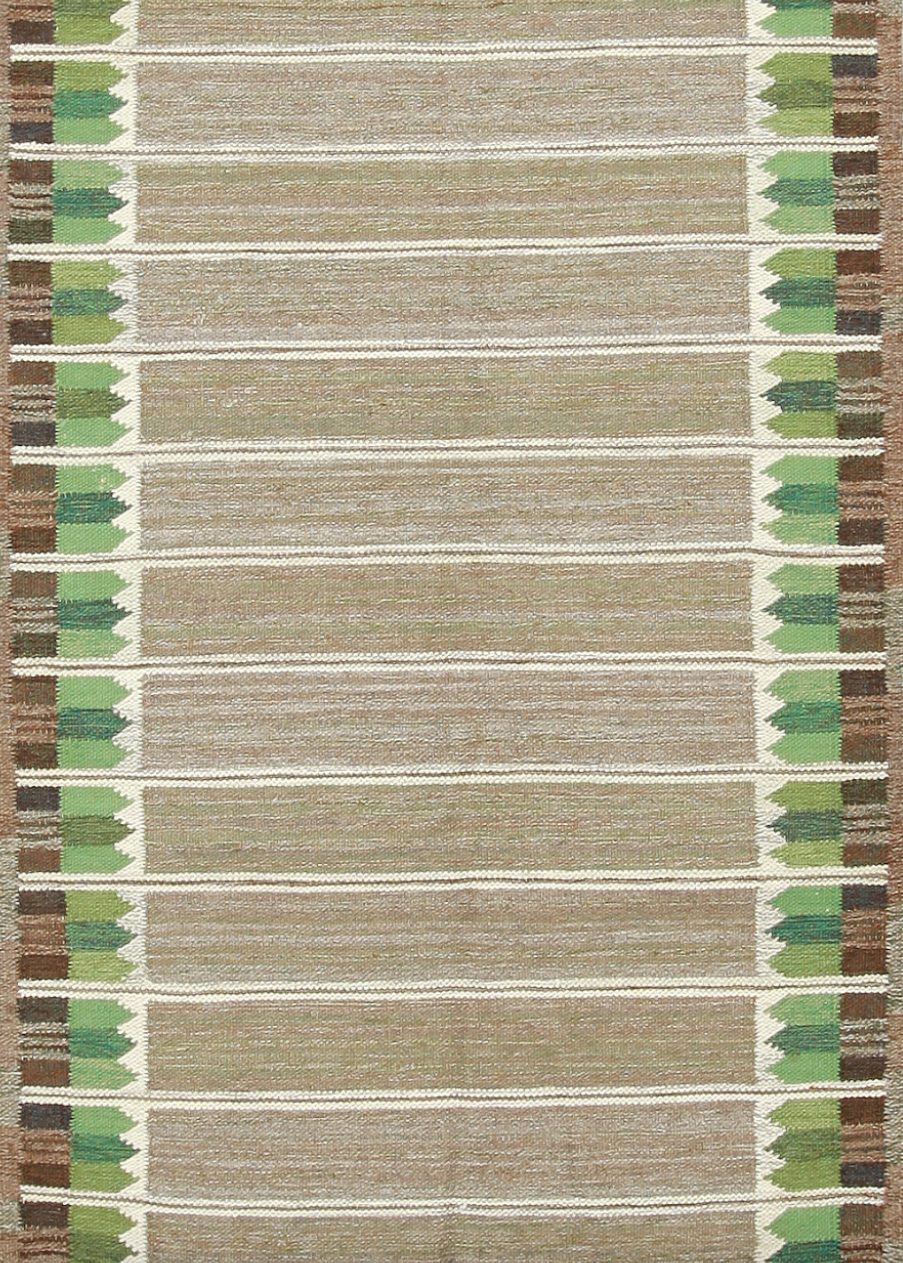
Kerstin Butler, flat weave rug (rölakan), 125 x193 cm, unsigned and undated but almost certainly made between 1962-1966 for Södra Kalmar lans hemslöjd. Sold Bukowskis
The third rug, from 1966, known as “Christmas Tree Lights,” exhibits a further refinement of the design. Butler retains the double border from the second rug but introduces variations in colors. Two additional bands of these borders are incorporated as vertical stripes, elevating the visual excitement without overwhelming the design. In this iteration, Butler introduces variations in the tones of the neutral squares, with some leaning more towards blue than others, adding an extra layer of complexity and interest.
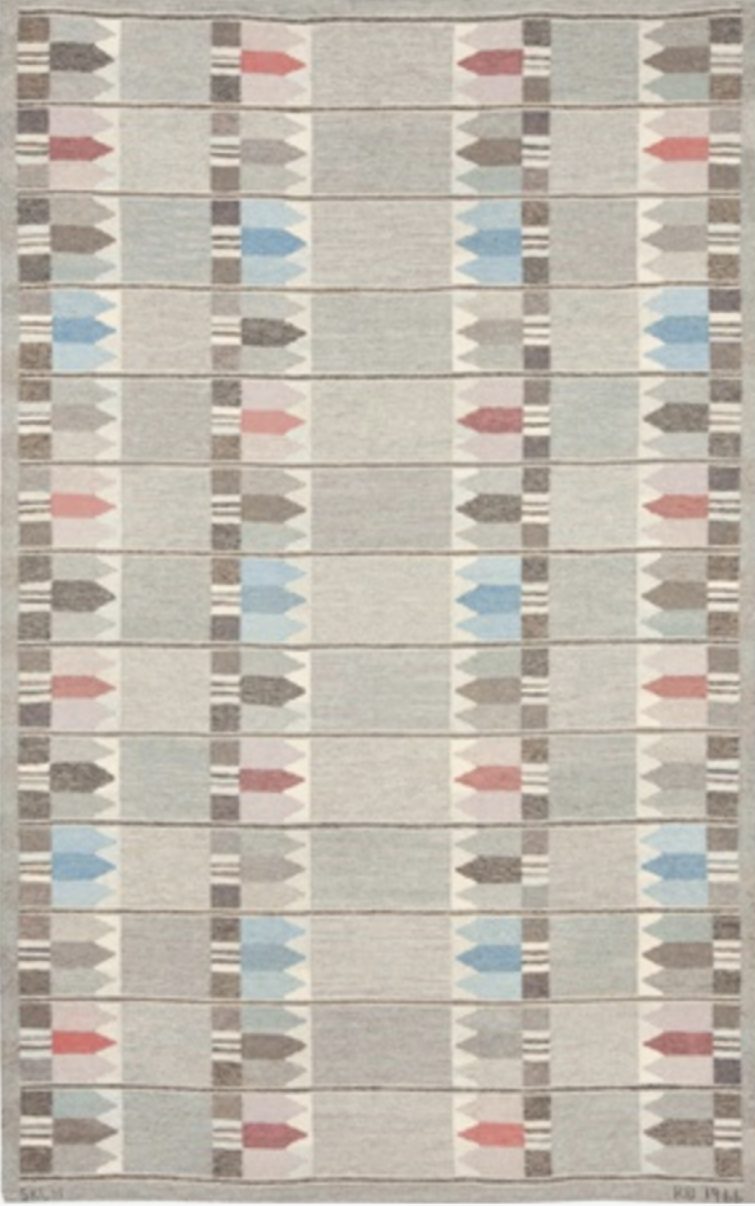
Kerstin Butler, flat weave rug (rölakan), 202 x 310 cm, initialed SKLH and KB 1966, designed for Södra Kalmar lans hemslöjd. Without fringe. Sold at Stockholms Auktionsverket
Through this series, Kerstin Butler demonstrates her ability to take a relatively modest initial design and refine it through successive iterations, incorporating subtle changes that enhance the complexity and attractiveness of the final rugs. The Designarkivet in Kalmar serves as a valuable resource for exploring the sketches that document this creative journey.