
Swedish Designer Ethel Halvarsson and her Traditional Persian Garden Motifs in Scandinavian Rugs
March 28, 2024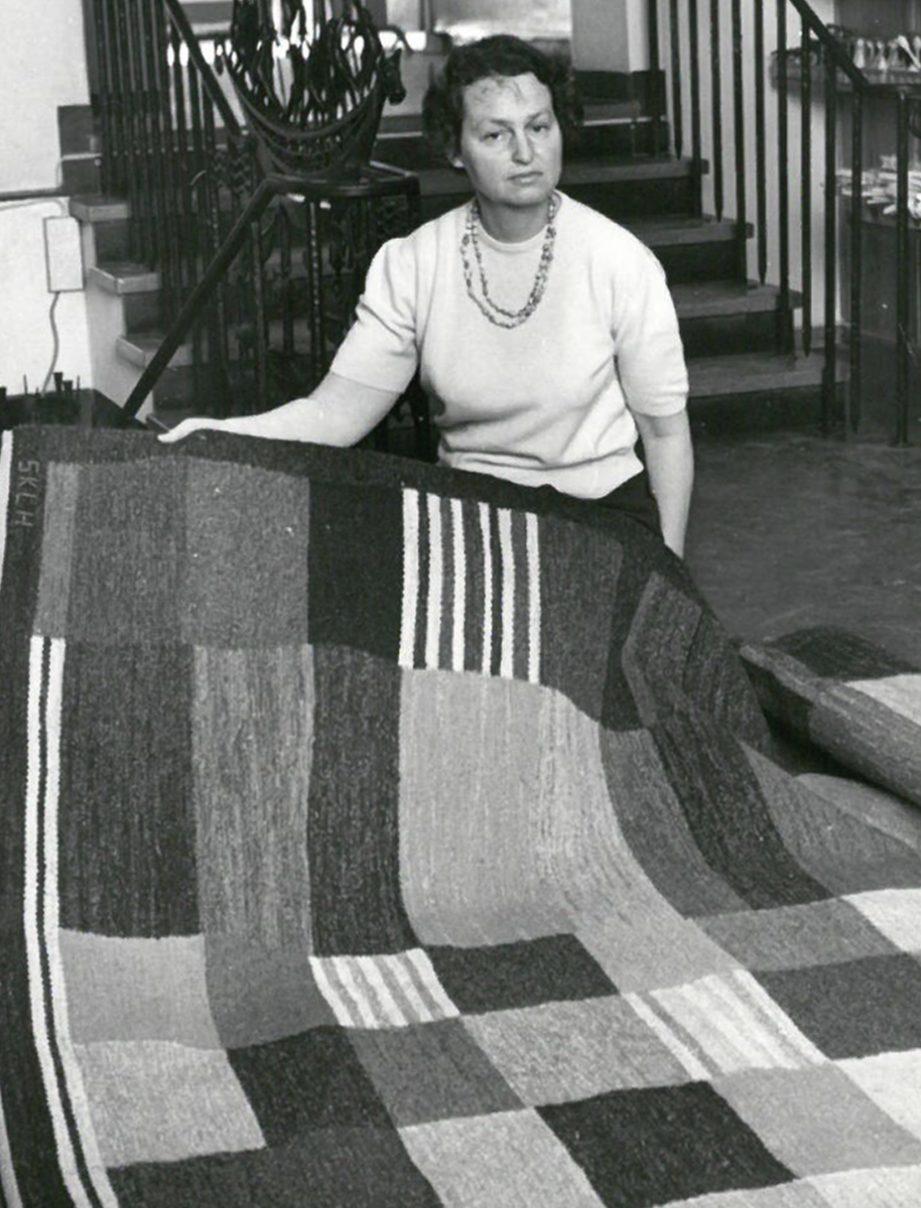
Kerstin Butler and her Swedish explorations of Patterns and Colors in Textile Design
March 28, 2024The Southern Kalmar County Craft Association, established in 1908, underwent a transformative merger in 1973 when it absorbed Norra Kalmar läns hemslöjd, situated approximately 80 meters north in Västervik. This amalgamation gave rise to a new entity, the Kalmar läns hemslöjd (KLH), which continued its operations from the city of Kalmar. Prior to this integration, rugs crafted for the Southern Kalmar County Craft Association were labeled as SKLH. Hildegard Dinclau pursued professional training and ventured abroad to enrich her artistic perspectives. Additionally, she dedicated herself to the study of drawing and, at various points in her career, engaged in teaching.
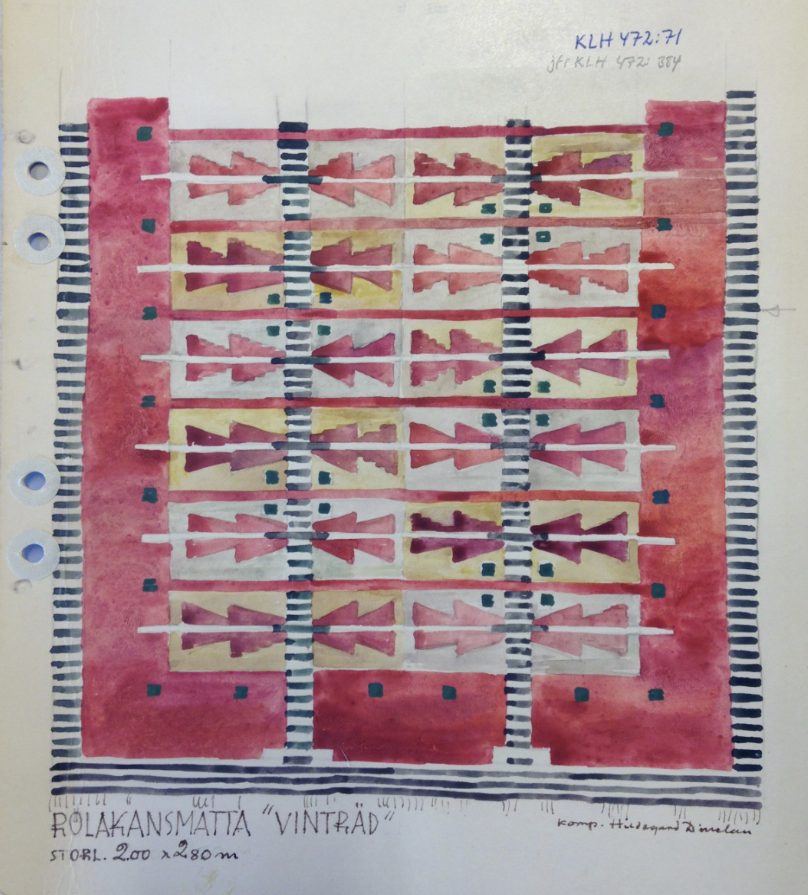
Hildegard Dinclau, Watercolor (partial) sketch for flat-weave rug called Vintrad (Vine)
Hildegard Dinclau, while predominantly known for her teaching career, concurrently exhibited her own work both in Sweden and on the international stage. Notably, Dinclau and Anne Marie Hoke gained international recognition, representing Sweden in exhibitions worldwide. Hoke’s contributions extended to multiple county craft associations across Sweden, while Butler’s focus remained within the geographic confines of Kalmar and Växjö. Throughout the mid-century, she achieved notable acclaim in Sweden, solidifying her positions as an influential figure in the artistic landscape of their time.
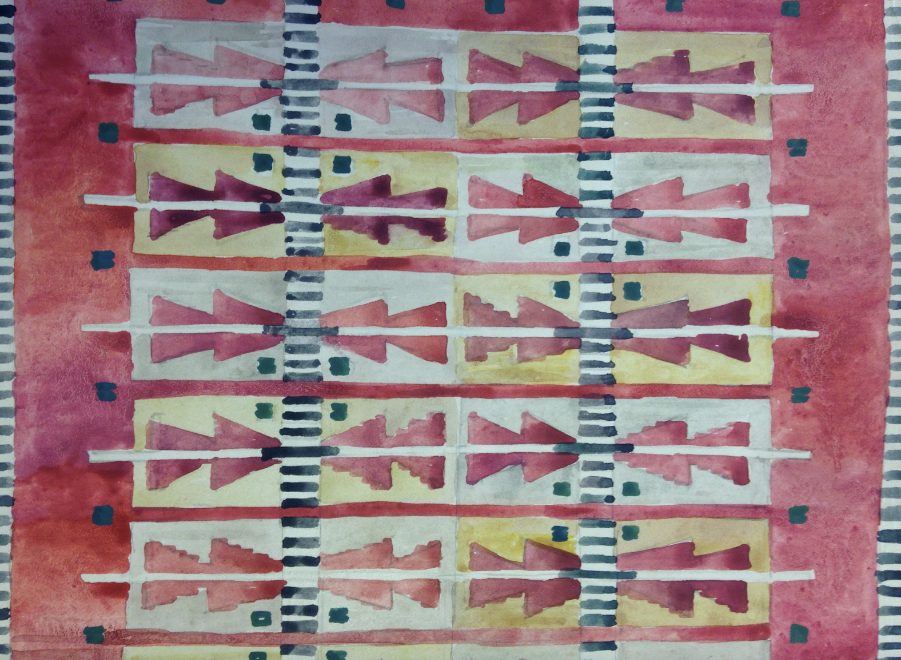
Hildegard Dinclau, Watercolor (partial) sketch for flat-weave rug called Vintrad (Vine)
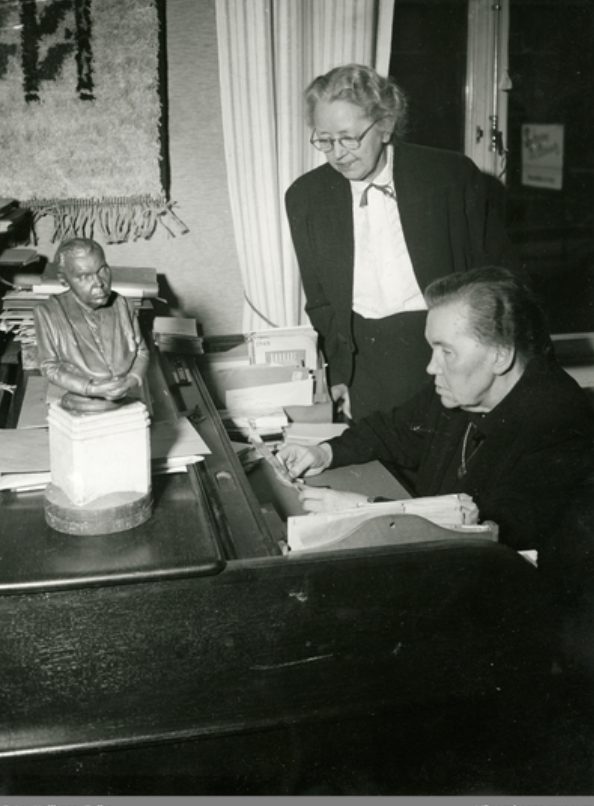
Hildegard Dinclau, the inaugural designer in this group, distinguished herself as the elder stateswoman of the cohort, born in 1890 in Stockholm. Hailing from a German noble family, the von Dinclaus, who settled in Sweden after the Franco-Prussian War in 1871, Hildegard’s heritage added a layer of cultural richness to her artistic journey. In the early stages of her career, circa 1916-17, Dinclau contributed her talents to the Institute for Cultural Handicrafts (Kulturens Konstslöjdsanstalt), the craft-teaching branch of Lunds Museum. Her prowess was internationally acknowledged when she became one of ten Swedes selected to showcase carpets at the 1925 Paris World Exhibition. This marked the beginning of her enduring presence in international exhibitions, a trajectory she maintained throughout her illustrious career. In the early 20th century, Dinclau stood as a prominent figure in the realm of Swedish crafts.
OMNIA
Dinclau’s skills extended beyond rug design; she excelled in crafting damask woven fabric and demonstrated a deep understanding of historical weaving. Noteworthy was her ability to infuse her designs with a contemporary flair that evolved with the changing times and artistic styles, showcasing both her adaptability and enduring creativity. At the age of 66, Hildegard Dinclau demonstrated a timeless creativity in the rug she designed for SKLH. The design, featuring a simple yet striking double arrow shape, showcases her ability to infuse a sense of freshness and balance into her work. The alternating use of color and the addition of small dark squares contribute to an animated and well-orchestrated pattern.
Noteworthy are the edges and two vertical bands of the rug, which are skillfully composed of woven black and white stripes. The rug, aptly named “Vine” and set against a rosy pink ground, exudes a vibrant aesthetic. While the woven rug may exhibit a slightly different color tone, perhaps more brick-like, it remains a testament to Dinclau’s design prowess. The indicated size on the sketch, 200 x 280 cm, closely aligns with the actual measurements of the rug, which is 196 x 297 cm (inclusive of fringe). This alignment suggests that despite the sketch’s unfinished state, the essence and intention of the rug’s pattern were successfully captured, showcasing Dinclau’s ability to translate her artistic vision seamlessly from concept to realization.
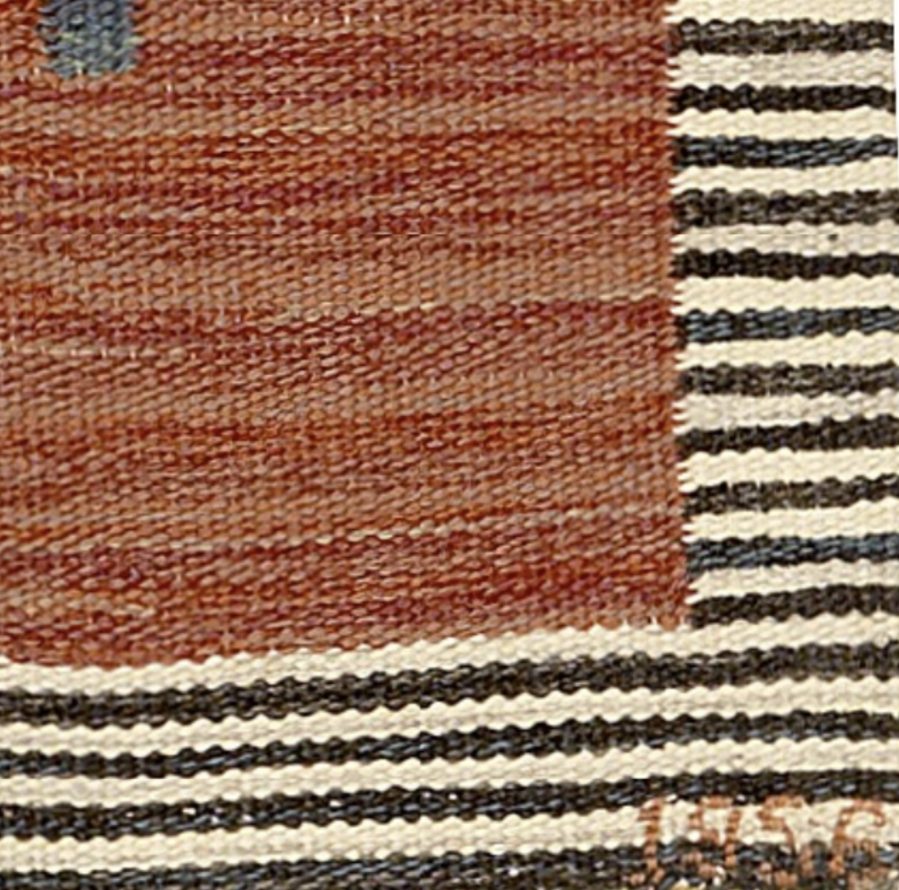
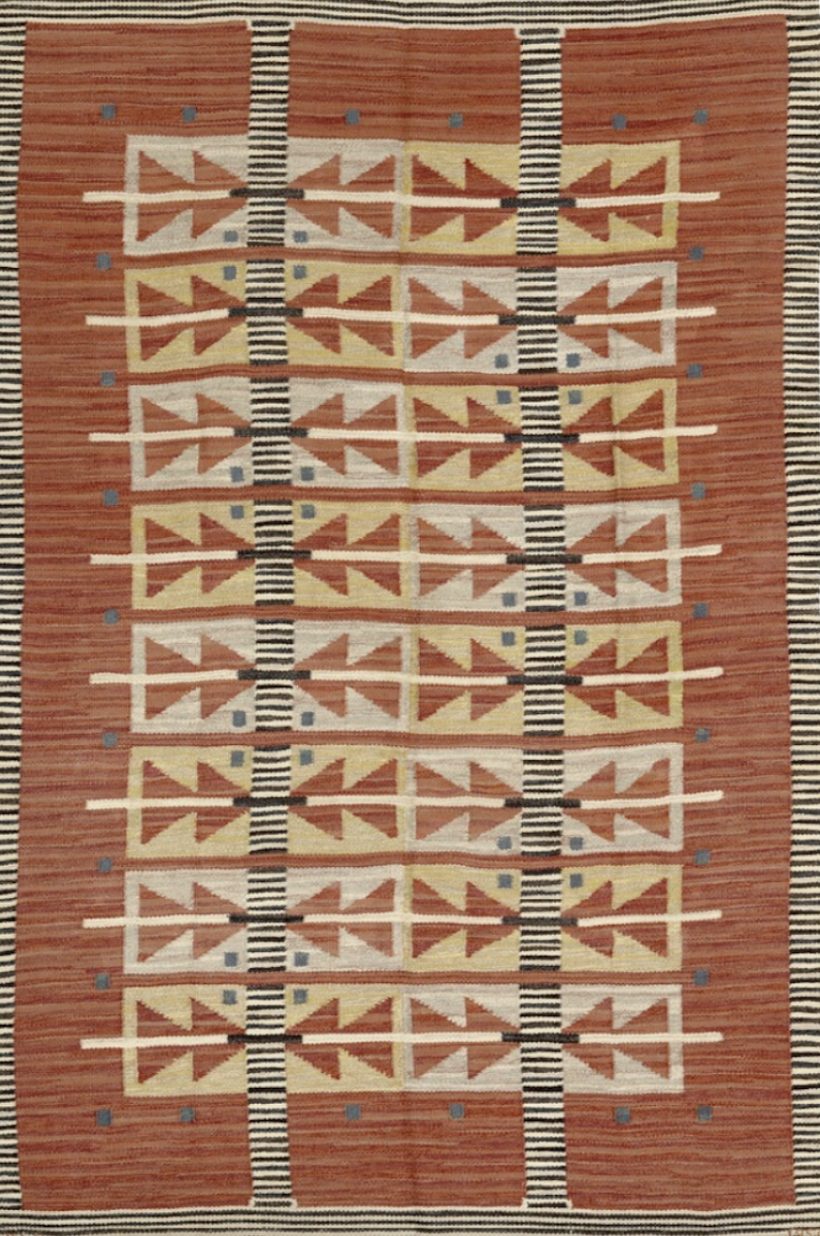
Hildegard Dinclau, Flat-weave (rölakan) rug, signed SKLH 1956
Her professional journey led her to various county craft associations, where she lent her design expertise to rugs and church textiles, notably with Jämtslöjd and Västernorrland läns hemslöjd. The apex of her teaching career spanned an impressive 26 years, and during this period, she crossed paths with Anna Maria Hoke, who joined as a young teaching colleague. From 1923 to 1958, Hildegard Dinclau held the position of Artistic Director at Johanna Brunsson’s School of Weaving in Stockholm. In this role, her responsibilities extended to running courses, organizing exhibitions, and overseeing the school’s display at the 1930 Stockholm Exhibition. This display showcased a diverse array of works, including Dinclau’s own upholstery fabrics and rugs, one notable piece being the imaginative flossa rug named “Takterassen,” measuring 140 by 260 centimeters. “Takterassen” demonstrated Dinclau’s artistic flair, blending modern asymmetrical shapes with classical forms that incorporated abstract vines, reminiscent of ancient rock carvings.
Her rugs reflected her ability to draw inspiration from a fusion of styles, creating a visually captivating and harmonious composition. Dinclau’s artistic legacy is preserved in the Stockholm National Museum, where her works continue to be displayed, showcasing the enduring impact of her contributions to the world of textile art. Additionally, her hand-made sketches can be found within the Jämtland-Härjedalen Handicrafts Association pattern collection, providing a glimpse into the creative process of this influential designer.
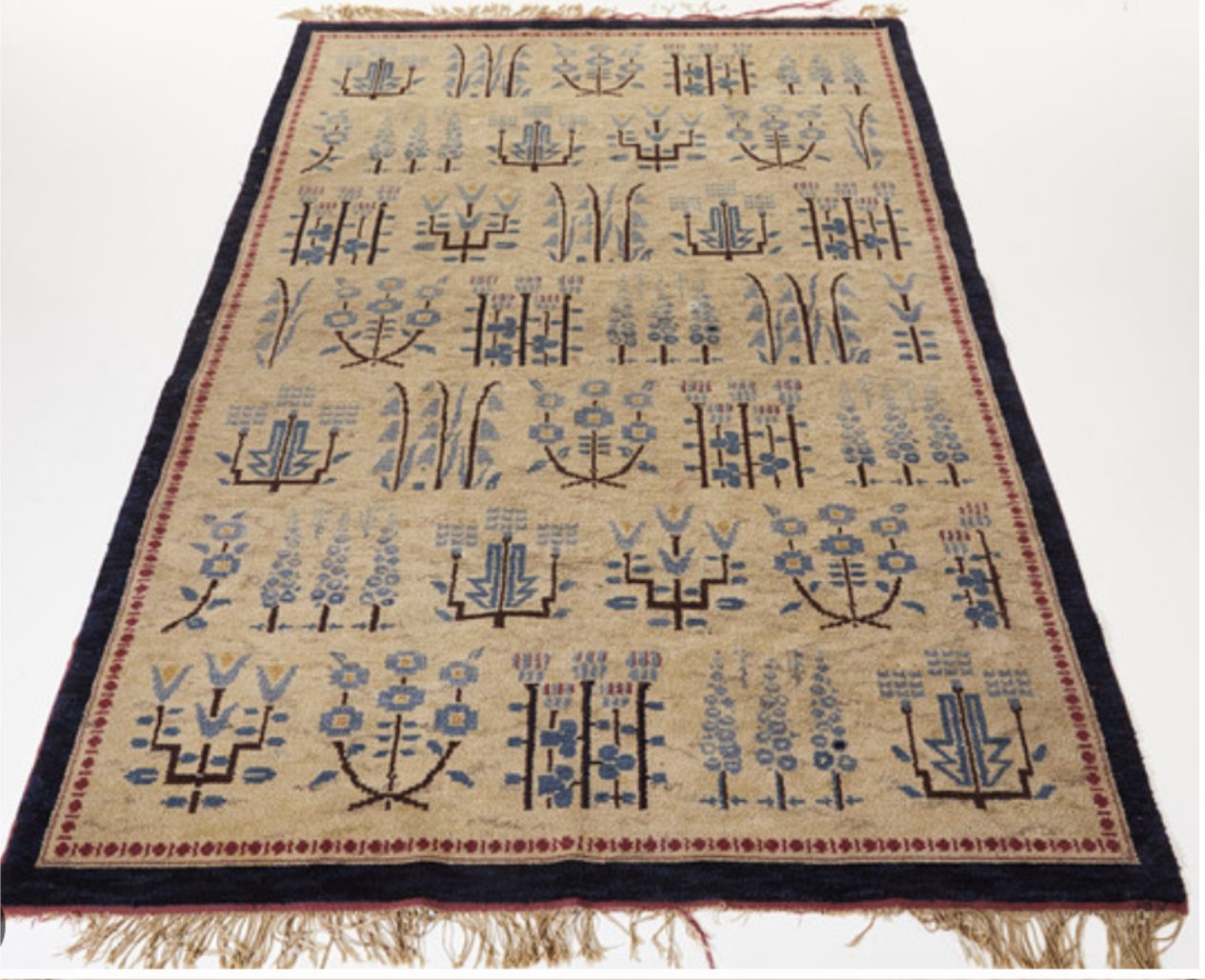
HILDEGARD DINCLAU (1890-1974). CARPET, felt, 1940s, monogram signed and dated JBV (Johanna Brunsson’s Weaving School) AuctionNet
National Museum of Sweden