
A Guide to History and Significance of Moroccan Berber Azilal Rugs
July 22, 2024
Rug & Kilim’s Scandinavian Rug Projects of 2023: Favorites from Designers to Watch
July 26, 2024The legacy of mid-century modernism continues to influence contemporary design, celebrating the creativity and optimism of a generation that looked to the future with hope and ambition.
In the aftermath of World War II and amid the tensions of Cold War politics, design emerged as a crucial element in the reconstruction of economies and the redefinition of national identities. Governments, organizations, companies, and individuals sought to introduce modern design to a public that had endured years of deprivation and rationing since the 1930s Depression.
The introduction of new materials and manufacturing processes, along with original forms and inventive imagery, created exciting new visions of domestic spaces and their furnishings. These innovations offered the possibility of a brighter future for everyone, fueling the optimism of the era.
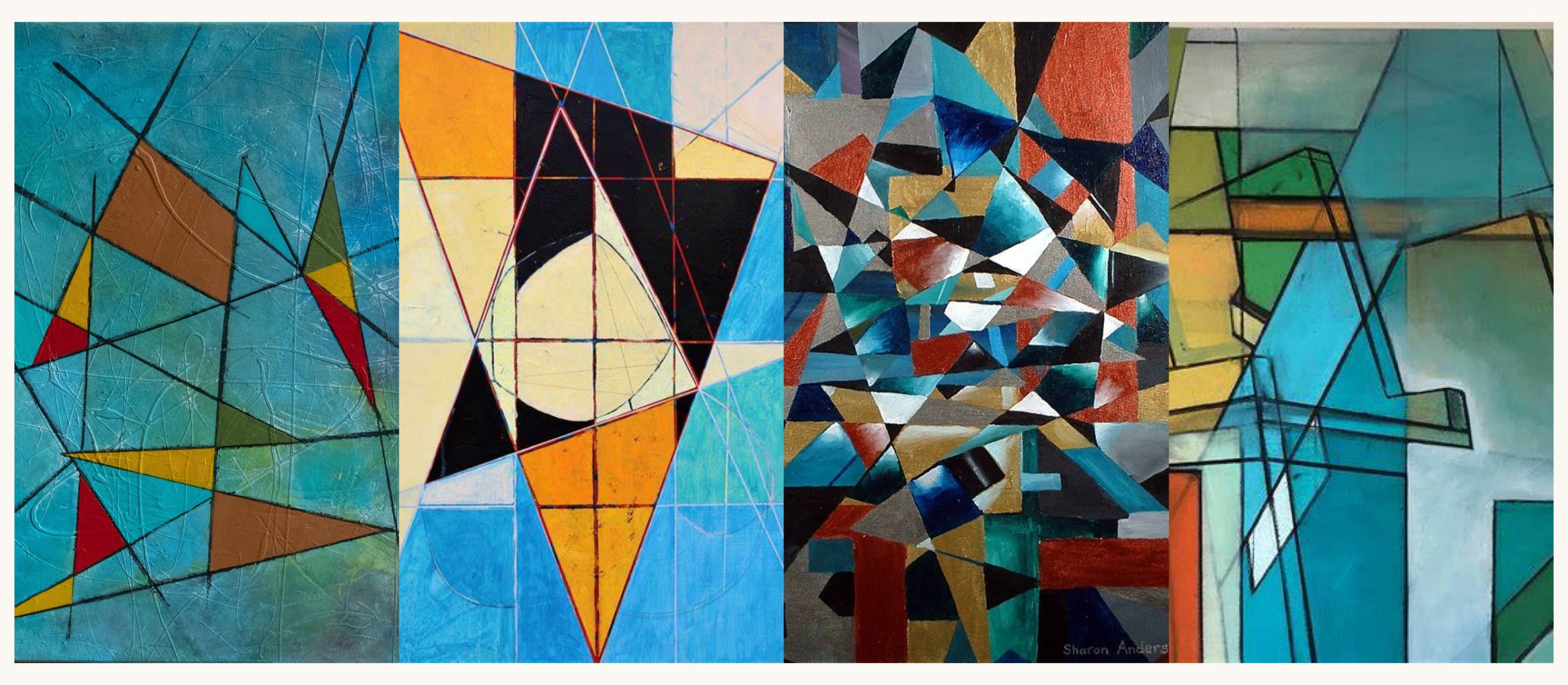
Key figures in this movement included german expressionist Ernst Ludwig Kirchner, Charles and Ray Eames, whose innovative furniture designs became iconic symbols of modernity; Oskar Kokoschka, Wassily kandinsky, Gio Ponti, Vincent Van Gogh, Eero Saarinen, who seamlessly blended traditional craftsmanship with contemporary aesthetics; Hans Wegner, renowned for his minimalist yet functional furniture; Robin and Lucienne Day and Egon Schiele, whose designs combined bold patterns with practicality; Timo Sarpaneva, a master of glass and metalwork; and Tapio Wirkkala, whose versatility spanned various materials and forms.

Companies such as Iittala and Arabia in Finland, Venini in Italy, and Herman Miller and Knoll in the United States played significant roles in developing the ‘new look’ of mid-century modern design. These entities not only produced innovative products but also helped to popularize the modernist aesthetic, making it accessible to a broader audience.
Design history characterizes this 20th century period with its forward-thinking approach and belief in design as a tool for societal improvement.


Designers and Art Historians consider Mid-Century modern design a subset of modern design, which became popular in the early 1900s. Unlike traditional modern design, which typically emphasizes an understated, utilitarian, and industrial aesthetic, avant garde movement, mid-century modern design incorporates a retro flair. This style often features a color palette of bright accent colors that highlight its playful and nostalgic elements.
While both styles share a commitment to clean lines and functional forms, mid-century modern design stands out for its bold use of color and its embrace of organic shapes, creating a distinctive and timeless appeal. Few periods of design command as much interest and affection as Mid-Century Modern. The houses, interiors spaces of dining rooms, living rooms, second homes, country homes, furniture, natural materials, and decorative pieces from the 1950s and 1960s exude a spirit of warmth and playfulness while showcasing groundbreaking innovation in form, materials, and color.
The charming and pioneering essence of post-war design remains fresh and relevant today, with numerous Mid-Century classics seamlessly integrating into contemporary interiors. Modern designers and expressionist artists continually find vibrant sources of inspiration in the work of masterful innovators from this era, keeping the legacy of Mid-Century Modern design alive and influential.
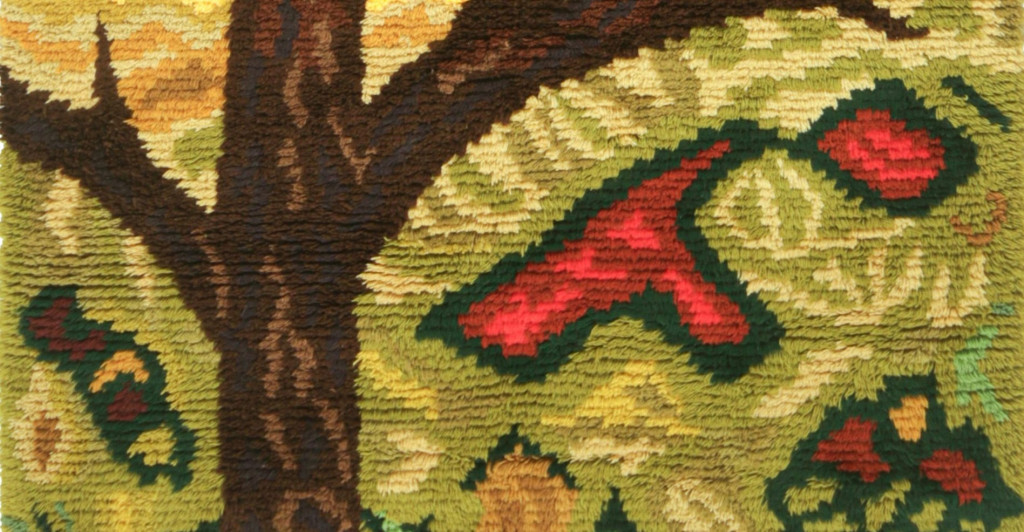
Rug & Kilim’s Mid-Century Modern collection showcases the iconic 1950s aesthetic in modern design, presenting it in a unique way not seen before in the luxury rug industry. The collection is the product of several years of research and refinement. This is our approach to large-scale drawing, texture, color, and pattern in art contemporary rugs, post-war, post-modernist, expressionist art, and atomic-age design sensibilities.
With blends of wool, all-natural silk, and exotic yarns, our archive of Mid-Century Modern rugs promises to be a resource for designers looking for art rugs, maximalist abstract rugs, and bold new graphic rugs with timeless appeal—fully custom capable.

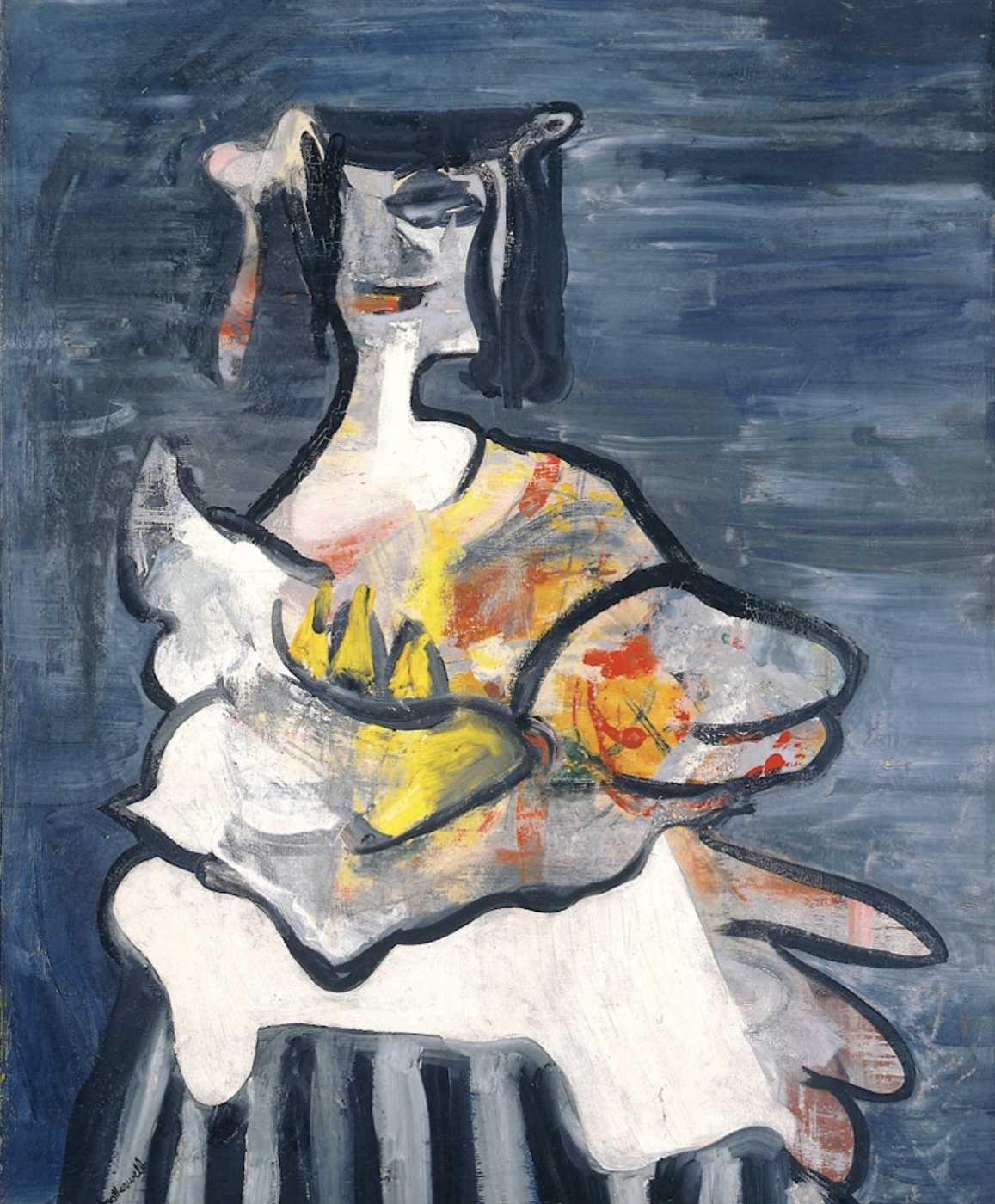
Robert Motherwell and Mid-Century Modern Design
Robert Motherwell’s contributions to Mid-Century Modern design are widely celebrated, encompassing painting, printmaking, and collage. His artistic vision merged gestural abstraction with a deep exploration of the human psyche, creating a new visual language that conveyed profound emotions through simple yet powerful means. Inspired by Henri Matisse, Motherwell aimed to break free from the constraints of descriptive art, emphasizing the expressive potential of color and line.
Throughout his body of work, Motherwell engaged in dialogues between European modernist traditions and an innovative American approach to art. His pieces often oscillate between pure abstraction and figuration, blending formal elements with emotional depth. This synthesis of diverse art movement influences and artistic approaches defines the unique and enduring legacy of Robert Motherwell in the realm of modern art.

Robert Motherwell, born in Aberdeen, Washington, on January 24, 1915 completed his education in California, graduating from Stanford University with majors in philosophy and literature in 1937. He pursued graduate studies in philosophy at Harvard University and spent the 1939-40 academic year in France. Upon moving to New York in 1940, he briefly studied at Columbia University, where Meyer Schapiro encouraged him to focus on painting instead of scholarship.
A pivotal moment came in 1941 during a trip to Mexico with Surrealist painter Matta, inspiring Motherwell to dedicate himself fully to painting. This period marked the beginning of his “automatic” drawings and the creation of his initial mature artworks.
In the following years, Motherwell’s presence in the art world grew significantly. He started exhibiting his work in New York in 1943, and by 1944, he held his first solo exhibition at Peggy Guggenheim’s “Art of This Century” Gallery. By the mid-1940s, Motherwell emerged as a prominent figure advocating for avant-garde art in America.
He regularly showcased his art at the Samuel M. Kootz Gallery and participated in group exhibitions across various U.S. museums. Motherwell also delivered numerous lectures on abstract painting and played a pivotal role in founding and editing the Documents of Modern Art series.
His famous theme, the Elegy to the Spanish Republic, became a central focus of his artistic expression starting in 1948, evolving continuously throughout his career. Additionally, from 1950 to 1959, Motherwell taught painting at Hunter College and contributed extensively to art literature, editing significant publications like The Dada Painters and Poets: An Anthology, published in 1951.


In 1958, Motherwell gained recognition through inclusion in “The New American Painting” exhibition at the Museum of Modern Art. This year also marked the beginning of his Iberia series, inspired by his travels to Spain and France. Throughout the 1960s, Motherwell continued to exhibit extensively in both America and Europe, culminating in a significant retrospective at the Museum of Modern Art in 1965, one of the first of his generation to receive such recognition.
In 1967, Motherwell embarked on his austere Open series, exploring new dimensions in his artistic expression. By 1970, he had relocated to Greenwich, Connecticut, where he delved deeply into printmaking. The 1970s saw him honored with retrospective exhibitions in several major European cities, further solidifying his international reputation. In 1977, he received a significant mural commission for the new wing of the National Gallery of Art in Washington, D.C., marking a high point in his career.
During the 1980s, Robert Motherwell delved into monumental paintings, including The Hollow Men series and The Grand Inquisitor, which introduced new motifs alongside his iconic Elegy paintings. His exploration of these themes marked a significant phase in his artistic journey. In 1983-84, a major retrospective exhibition of his work toured various American cities, showcasing the depth and evolution of his artistic vision.
Robert Motherwell’s commitment to producing significant art persisted until the end of his life, leaving behind a legacy of creativity and innovation.


Rug & Kilim Mid-Century Modern Rugs – View Full Collection >>
Rug & Kilim x Jenn Ski Beige Mid-Century Modern Rug with Geometric Pattern
Rug & Kilim x Jenn Ski Mid-Century Modern Rug with Geometric Patterns
Rug & Kilim’s Mid-Century Modern Rug with Green & Gray Geometric Patterns
Rug & Kilim’s Mid-Century Modern Rug with Abstract Geometric Patterns
Rug & Kilim’s Mid-Century Modern Rug with Geometric Patterns
Rug & Kilim’s Mid-Century Modern Rug in Beige-Brown Geometric Pattern
Rug & Kilim’s Mid-Century Modern Rug in Gray with Red Pictorials