
The House of Continuity: How Rug & Kilim Designs Legacy Across Generations
November 13, 2025
The Museumification of Rugs: How Institutions Decide What Becomes “Art”
December 1, 2025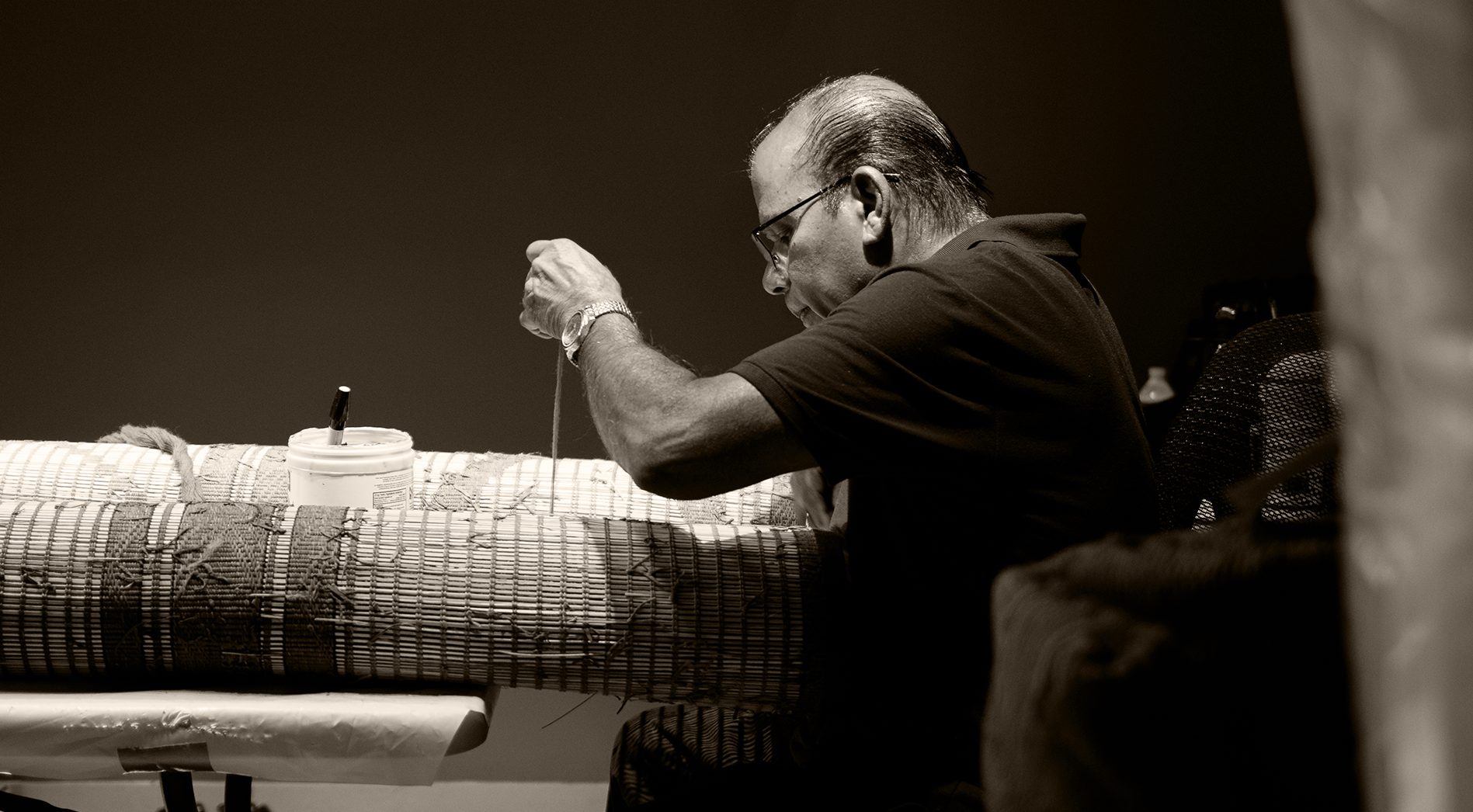
Rug & Kilim Showroom
In every generation of art, there emerges an atelier not merely producing objects, but shaping the very language of its discipline. In New York—where painting found its Abstract Expressionists, fashion found its cutting-edge minimalists, and architecture found its postmodern provocateurs—textiles, too, found such an atelier. For over four decades, Rug & Kilim has served as the intellectual, cultural, and artistic nucleus of a movement now rightly recognized as Urban Craft Modernism.
This is not a revival of an old-school weaving tradition.
This is the emergence of a New York School of Weaving—a philosophy, a practice, a collective of minds—and Rug & Kilim stands at its center.
The Urban Origins of a Modern Textile Philosophy
New York does not lend itself to slow nostalgia. The city is kinetic, conceptual, unsentimental, and profoundly interdisciplinary. It rewards experimentation. It rewards ideas.
Rug & Kilim was born into that context—and from its inception, the atelier refused the role of a passive importer of traditional craft. Instead, it became a translator—reinterpreting global weaving traditions through the lens of metropolitan modernism. What emerged was a philosophy distinct to the house:
Textures as architectural surfaces
Motifs as graphic abstractions
Color as a reflection of fashion, art, and skyline
Technique as a form of intellectual inquiry
This was informed by the city’s pace, rigor, and visual spontaneity.
Anatolian myths, Persian ornamentation and Mid-century Scandinavian structure could coexist with the modern studio improvisation. It is New York’s creative metabolism, rendered in fiber.
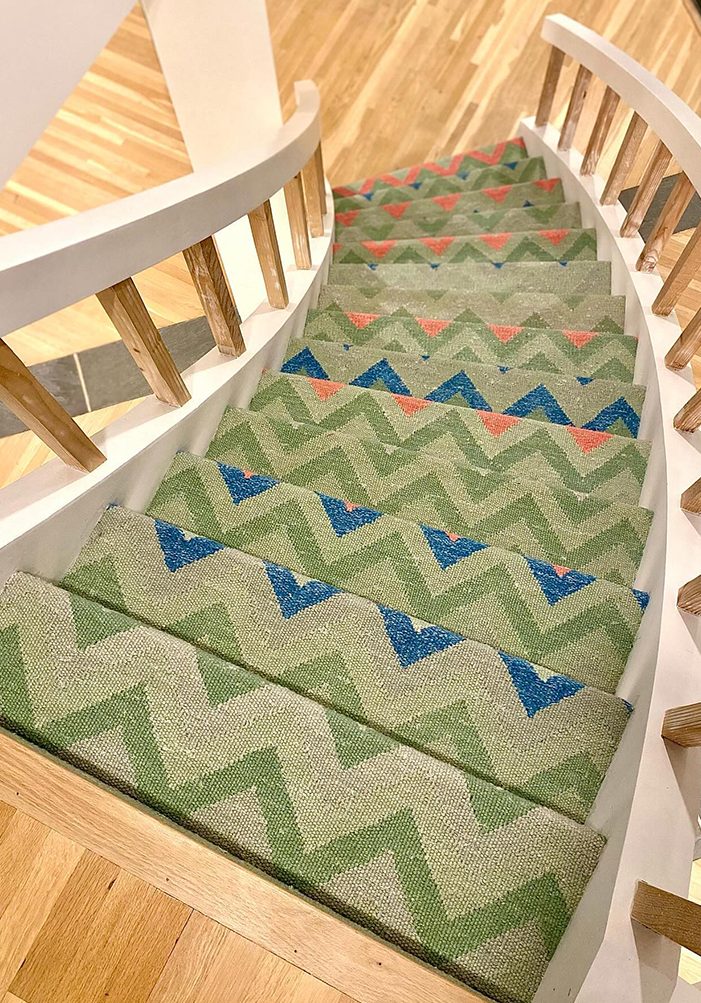
Rug & Kilim’s Scandinavian (Staircase Custom)
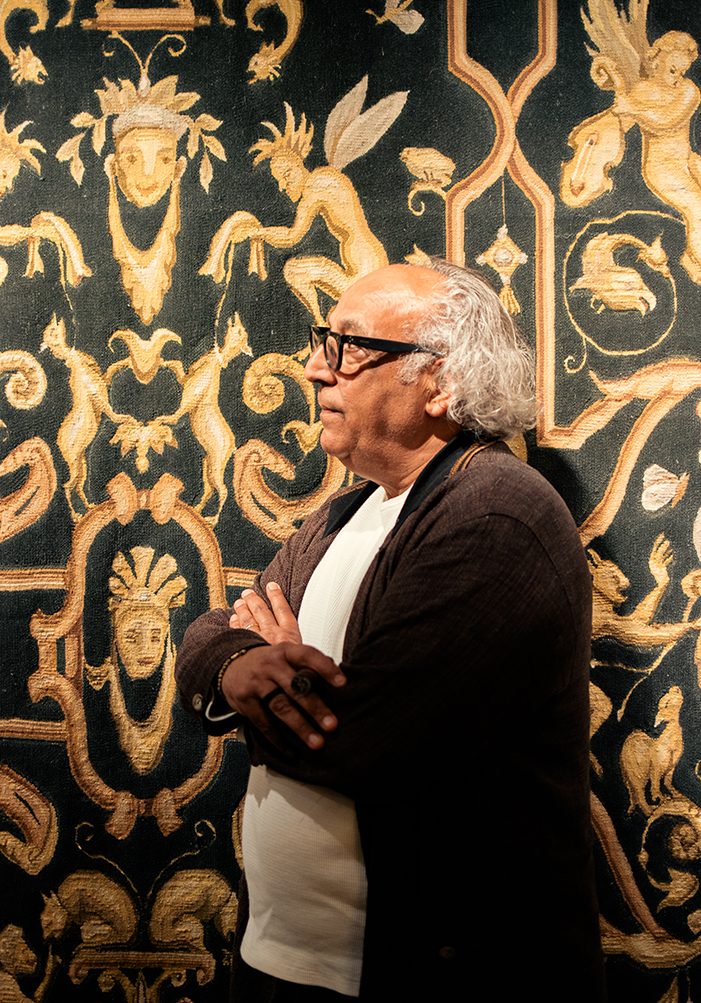
Rug & Kilim’s Principal, Jahanshah Josh Nazmiyal
A Global Heritage Reimagined, Not Repeated
Rug & Kilim’s archive is encyclopedic—Anatolian village weavings, French tapestry traditions, Scandinavian modernism, Caucasian pieces, tribal iconography, and more. But unlike many dealers, the house does not treat these categories as fixed museum compartments.
Instead, they become languages—vocabularies to be recomposed.
A Swedish Deco geometry may reappear in a modern rug, but exaggerated to architectural scale.
A Persian medallion may be reinterpreted as an abstracted shadow instead of a literal symbol.
A Caucasian lattice might be re-drawn with Manhattan’s grid subtly embedded.
To understand Rug & Kilim’s design ethos is to understand that originality is not in the motif—it is in the method of thinking applied to the motif.
This is why, over time, the studio’s work began to feel less like “products” and more like artworks in conversation with history.
The Studio as an Intellectual and Artistic Laboratory
What defines a movement—what allows something to be called a “school”—is not the volume of work produced, but the depth of thought behind its creation.
Rug & Kilim’s studio, long before the design lab became fashionable, operated as a scholarly workshop where:
hand-sketching sessions
text studies
archive references
cross-disciplinary dialogues
material debates
texture trials
and color theory research
formed the daily rhythm.
The atelier is a thinking environment—a place where craft becomes theory, and theory becomes textile.
Apprentices, designers, colorists, weavers, and collaborators engage in a constant, rigorous exchange. Much like the New York School of painters who debated spontaneity, gesture, and form, the Rug & Kilim team debates density, scale, weave tension, dye behavior, and chromatic architecture.
This culture of inquiry is the hallmark of an artistic school.
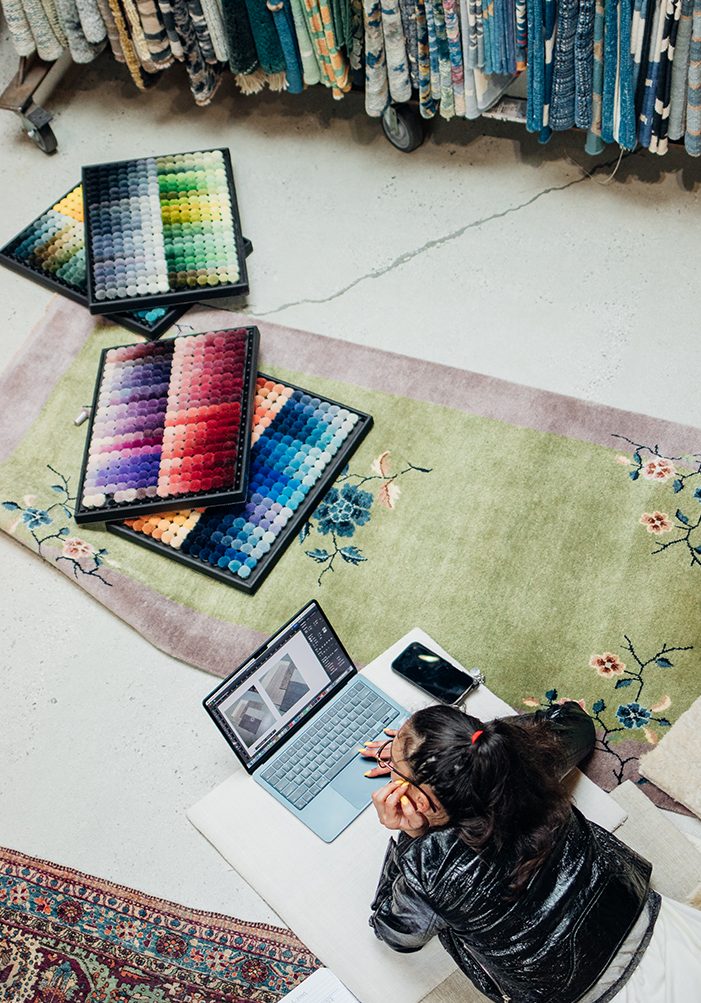
Rug & Kilim’s Creative Den
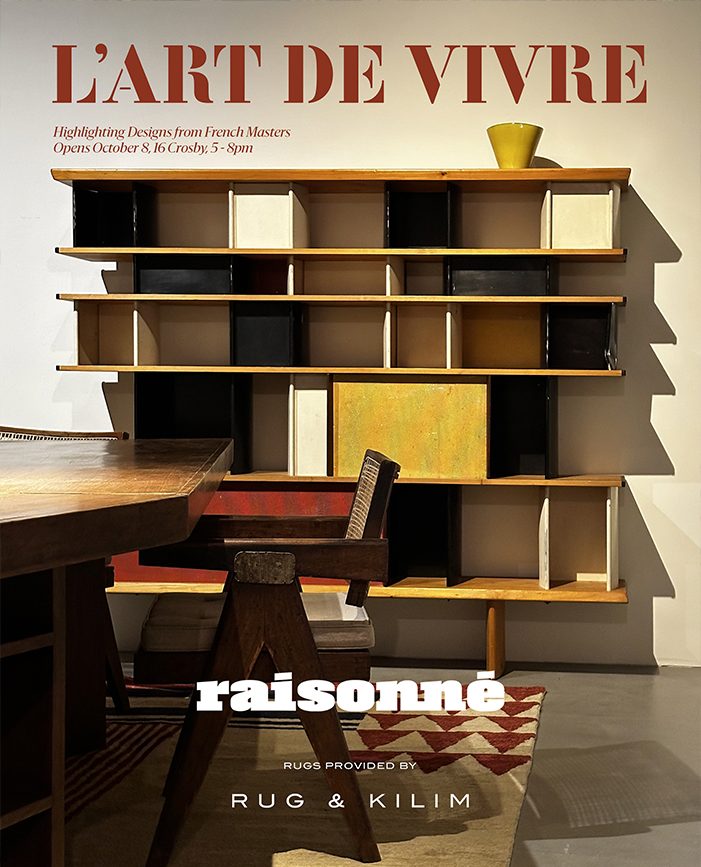
Raisonné x Rug & Kilim
The City’s Art Scene as a Silent Collaborator
New York’s creative identity is not confined to one neighborhood. And neither is Rug & Kilim’s inspiration.
Chelsea’s abstractions influence R & K’s modernist geometry.
SoHo’s sculptural minimalism informs the studio’s reductionist compositions.
Brooklyn’s painterly rebellion echoes in R & K’s color experiments and textural spontaneity.
The Lower East Side’s conceptual art finds its analogue in R & K’s boundary-pushing textile constructions.
Fashion Week’s seasonal palettes filter directly into chromatic decisions for contemporary lines.
Rug & Kilim’s work is not inspired by New York; it is shaped by it, metabolizing the city’s cultural energy into material form.
This is why our rugs are “urban artifacts”—objects that feel alive with the city’s rhythm.
What Truly Makes It a School: A Philosophy Recognizable Across Collections
A movement becomes a school when its principles become identifiable—when the hand, the mind, and the ethos reveal themselves across categories. Rug & Kilim’s philosophy is recognizable not because it repeats itself, but because it thinks in a consistent key:
material honesty
structural innovation
cultural dialogue
bold reinterpretation
fearless chromatic language
and a profoundly New York sense of confidence
In the same way that one can identify a New York School painting without seeing the signature, one can identify a Rug & Kilim creation without seeing the label.
This is the mark of identity.
This is the mark of an atelier that has become a movement.
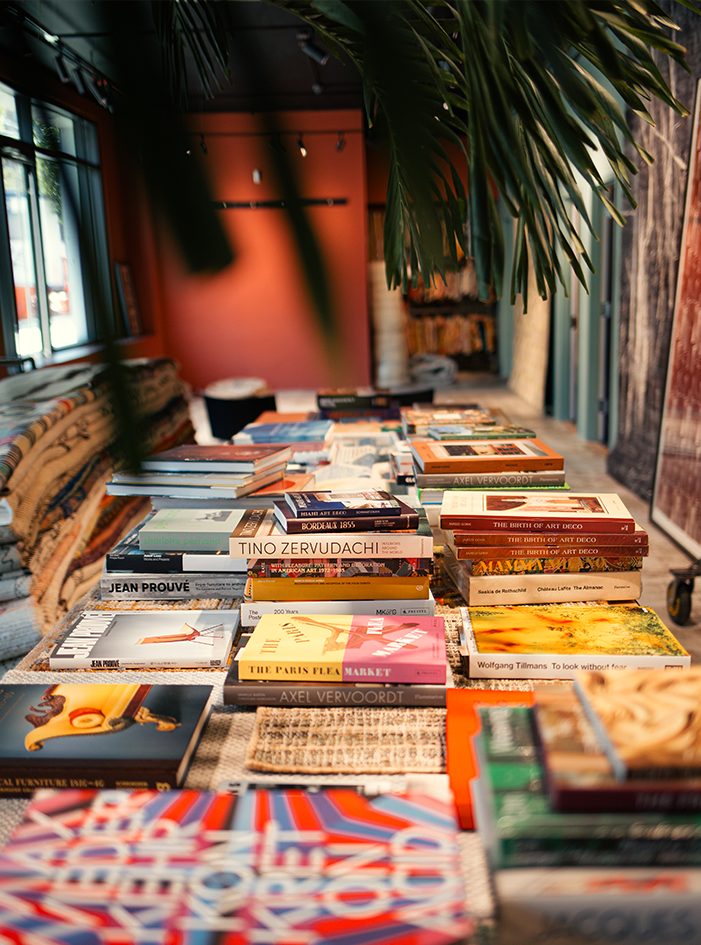
Volumes by Rug & Kilim
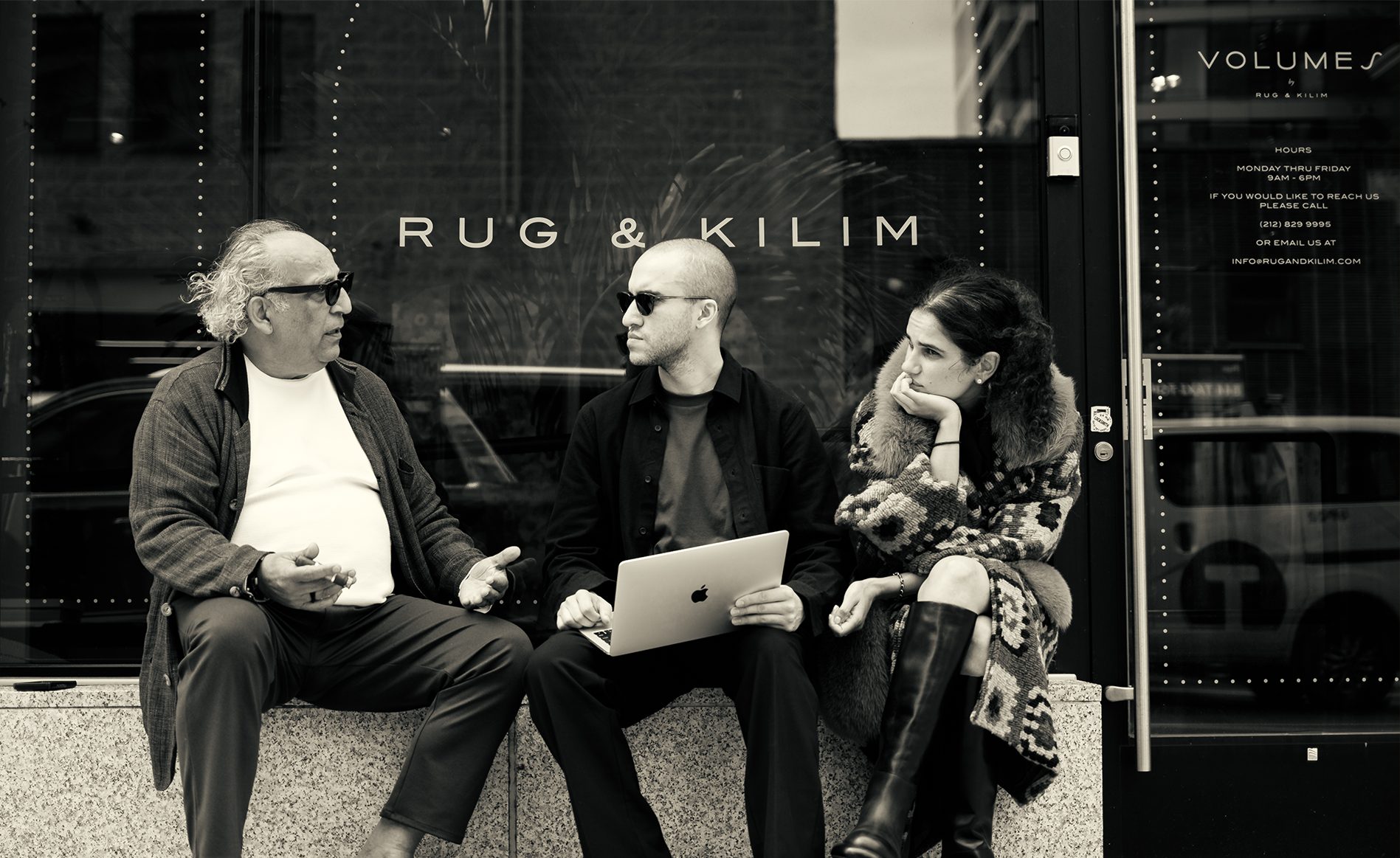
The Atelier That Built a Cultural Identity
To call Rug & Kilim “a brand” is to misunderstand the scope of its influence. The house is a creative force, a school of textile thought, and a cornerstone of New York’s craft revival. For forty years, it has proven that weaving is not merely heritage—it is an evolving art, capable of absorbing the city’s energy and projecting new possibilities outward into the world.
The New York Style is not a theoretical concept.
It is a lived reality.
It is a movement in motion.
And Rug & Kilim is its artist.