
Rug & Kilim’s Royal Collection: The Politics of Pattern and the Poetry of Power
November 10, 2025
Rug & Kilim and the Making of New York’s Modern Textile Language
November 27, 2025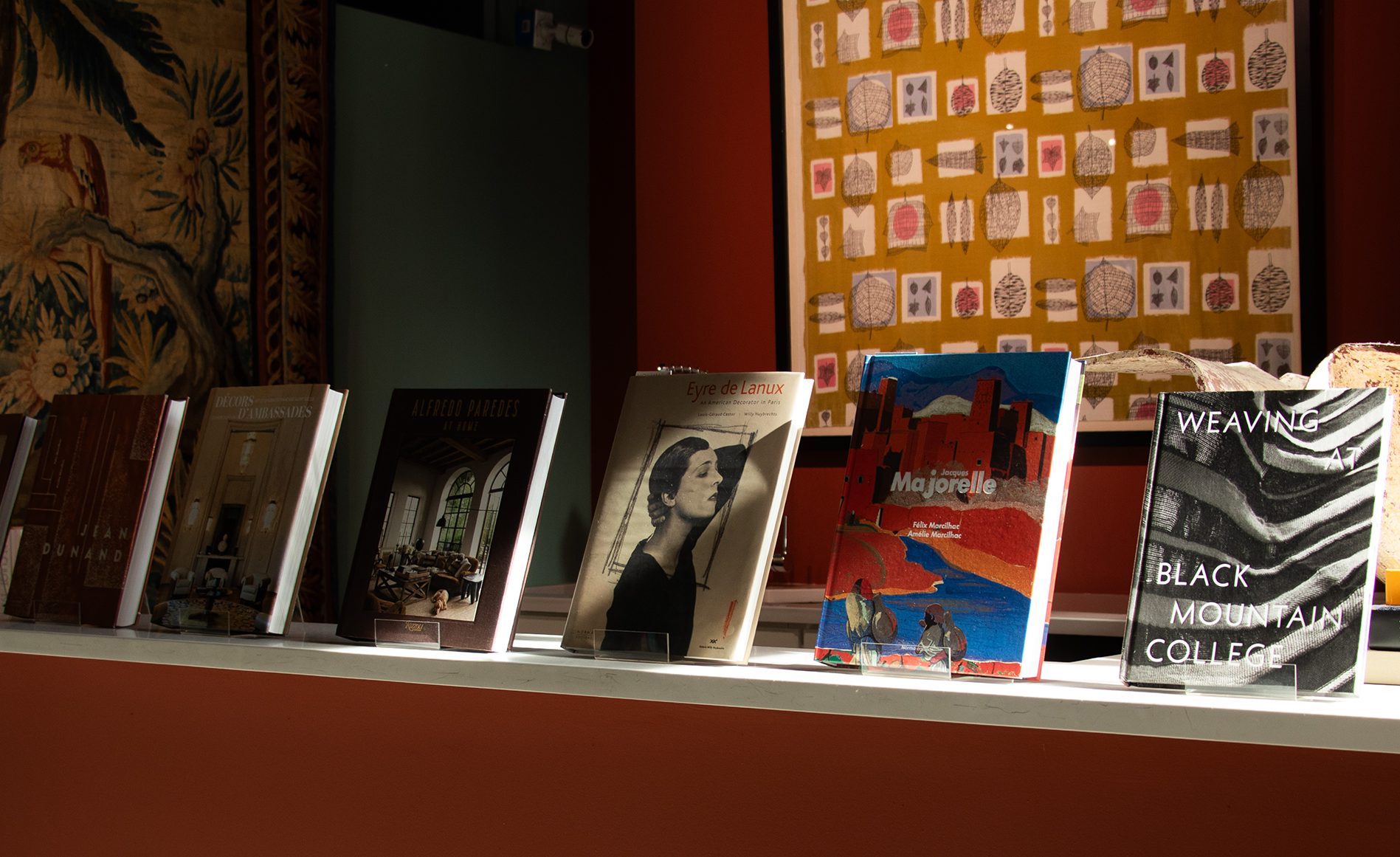
Continuity is a word easily spoken in design, yet rarely earned. For over four decades, Rug & Kilim has built a legacy not through repetition, but through reinvention—honoring the continuum between past and present, between the woven traditions of centuries and the new visual languages of modern design.
At the heart of this continuity is a conviction: that rugs and tapestries are not static artifacts, but living documents—each one a negotiation between time, place, and imagination. It is an act of will — of scholarship, instinct, and vision across time. Since 1980, under the direction of Principal Jahanshah Josh Nazmiyal, Rug & Kilim has built one of the most respected and multifaceted houses in the world — a studio-archive where connoisseurship and creation exist in dialogue.
From Weaving to Worldview
Rug & Kilim’s story begins in the antique markets of New Jersey, when Nazmiyal — already a devoted student of kilims and classical weaving — sought not merely to trade in rugs, but to understand their intelligence. From those beginnings, Rug & Kilim became an epicenter for textile scholarship and collecting in New York, bridging the knowledge of past centuries with the ambitions of a contemporary atelier.
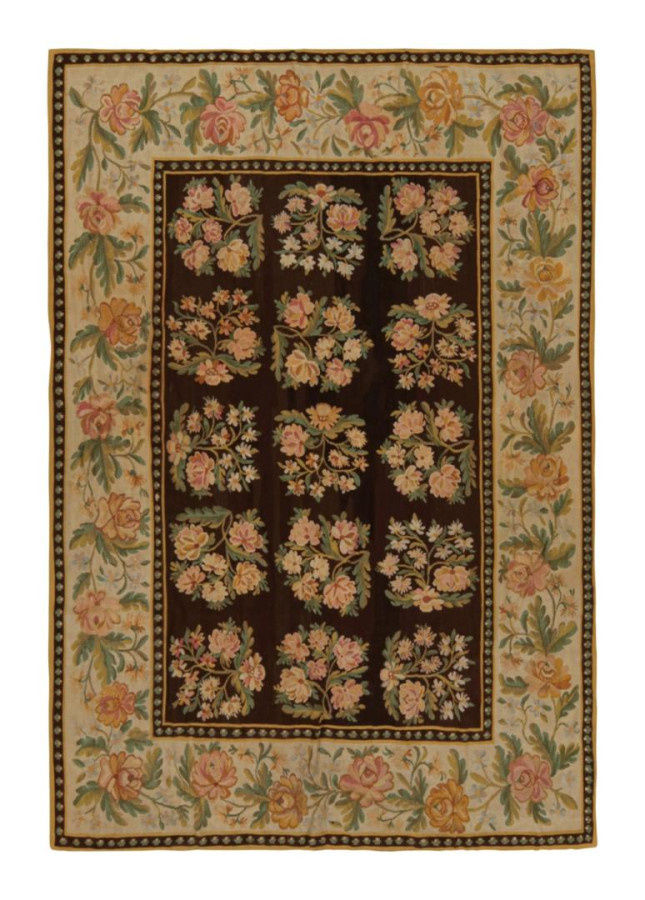
Today, its archives and modern collections trace the evolution of weaving from the tribal looms of Persia and Anatolia to the European ateliers of Beauvais, Aubusson, and Savonnerie, and further into the 20th century’s reimaginings of form and color. The team’s mastery of yarn, weave, and construction allows the house to interpret every piece as a chapter in a longer aesthetic lineage — a dialogue between material, maker, and meaning.
From early antique acquisitions to the atelier’s modern commissions, every piece is studied not just for its motif, but for its gesture: the way a thread bends, the density of the pile, the rhythm of its texture. In a single gallery, a mid-century Aubusson tapestry by Jean Lurçat—its mythic, humanist figuration glowing might hang beside a modernist graphic piece inspired by El Gato Gomez’s “Atomic Age” surrealism, or a lyrical abstraction echoing the biomorphic rhythms of Zeki Müren. The effect is not eclecticism, but coherence—an unbroken conversation between centuries of artistic inquiry.
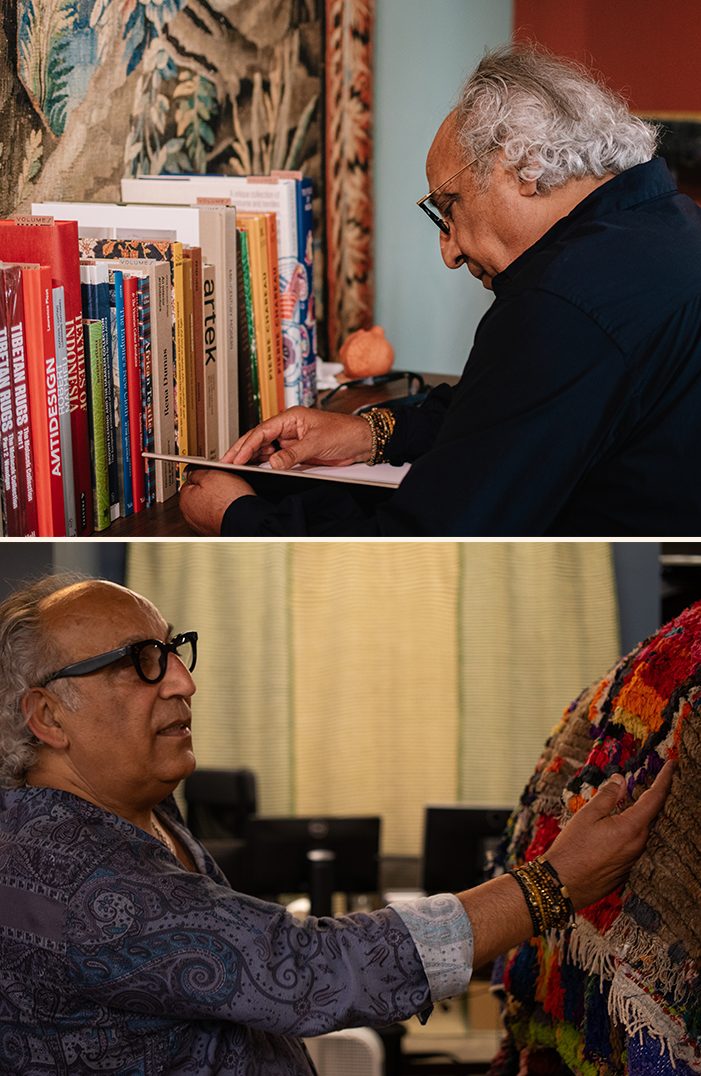
Rug & Kilim’s Principal, Jahanshah Josh Nazmiyal in his element
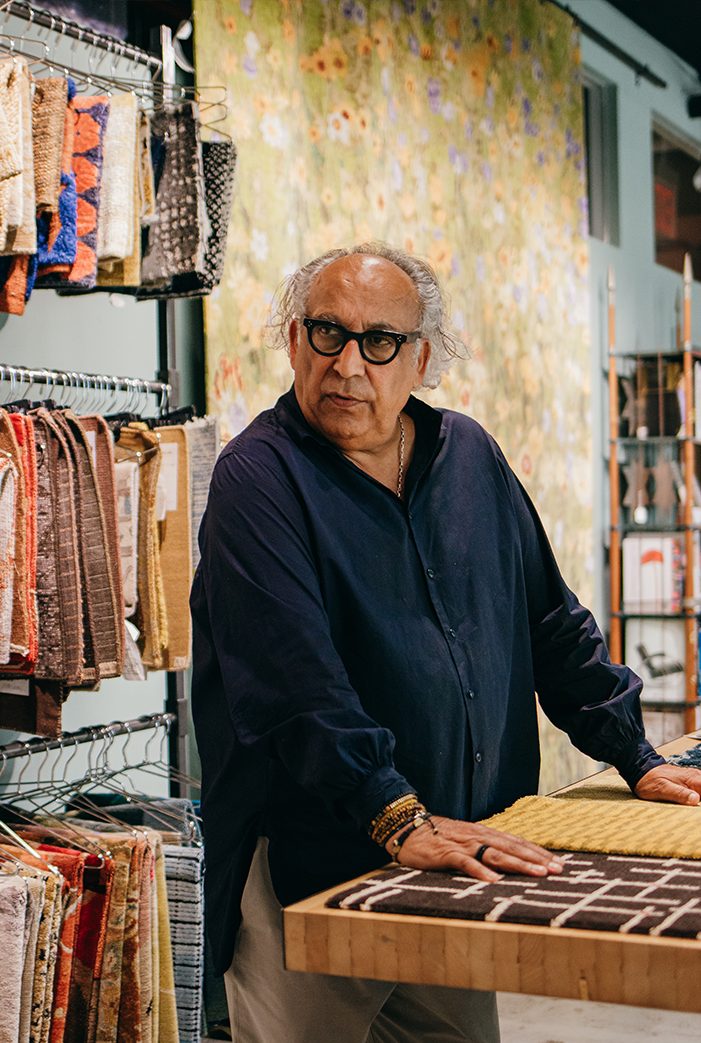
Jahanshah Josh Nazmiyal
The Continuum of Modern Masters
Rug & Kilim’s modern and mid-century collections stand as a curatorial benchmark for how textile art bridges craft and modernism. The house’s holdings encompass pivotal artists and workshops who redefined the loom as a medium of expression after the Second World War — a period when weaving reclaimed its place in the hierarchy of fine art.
Among the most renowned is Jean Lurçat, whose postwar philosophy positioned tapestry as a humanist art form — monumental yet moral, tactile yet intellectual. His L’Homme (c. 1950) embodies that vision: a meditation on man and nature rendered in luminous golds and earth tones.
René Perrot, by contrast, infused modern tapestry with a lyrical sense of fantasy. Works such as Paradis Aviaire — rich with avian forms and botanical exuberance — speak to postwar France’s return to beauty as a language of resilience.
Dom Robert’s pastoral modernism, René Fumeron’s abstract geometries, and Da Silva Bruhns’ sensuous Art Deco modernity all find kinship in Rug & Kilim’s curation, illustrating the diversity of voices that shaped 20th-century European tapestry. Leleu’s bold compositions and Zeki Müren’s Anatolian modernism further expand that lineage, linking French and Turkish avant-garde movements through shared design intelligence.
Each of these figures embodies a principle that guides Rug & Kilim’s own design philosophy: that a woven surface is not a reproduction, but a re-creation — the translation of vision into fiber, and of era into form.
The atelier’s growing dialogue with contemporary artists continues this tradition, most notably in its collaboration with Italian surrealist El Gato Gomez on the Atomic Age collection — a revival of postwar surrealist symbolism through modern craftsmanship. In El Gato’s rugs, alchemy, science, and mythology coalesce in visual fables of rebirth, weaving together whimsy and philosophical inquiry.
Together, these collections form not just an archive, but a living museum of artistic inquiry — a visual continuum from the handwoven tapestries of mid-century Europe to the creative experimentations of the present.
The Philosophy of Continuity
At Rug & Kilim, continuity is not about imitation — it is about coherence. It means treating every piece, whether 17th-century Persian or 21st-century modern, as part of a single cultural ecosystem. The atelier’s curatorial team studies weaving techniques, pigment chemistry, and symbolic lexicons with the same rigor that an art historian brings to painting or sculpture.
This devotion to understanding the material vocabulary of rugs — warp tension, wool density, dye oxidation — is what enables Rug & Kilim to transcend the boundaries between collector, conservator, and creator.
It is why the house is as deeply respected among museum curators and scholars as it is among architects and interior designers.
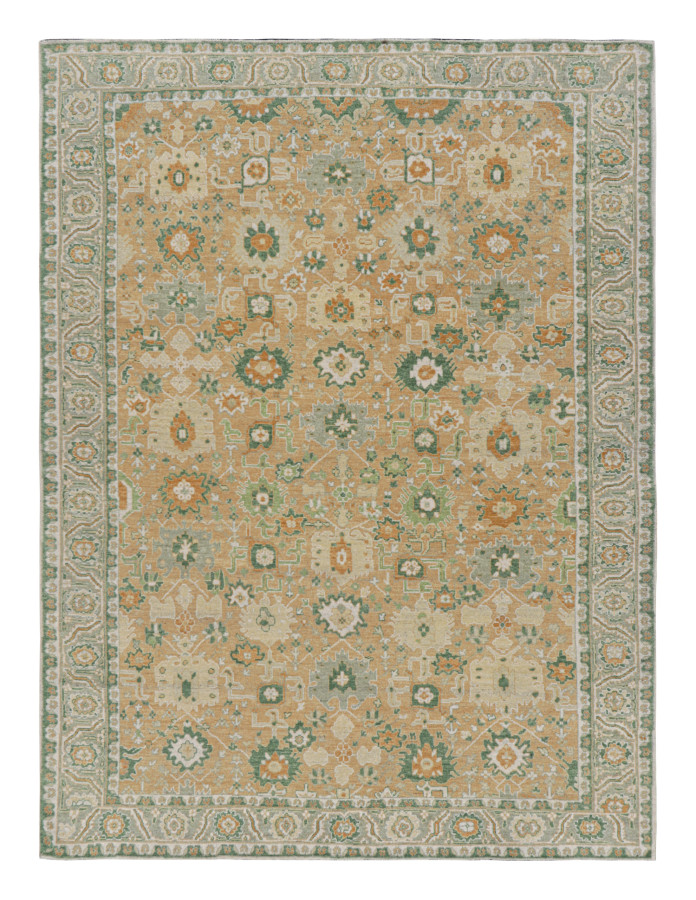
The brand’s curatorial philosophy could be likened to that of a great museum, yet its practice is distinctly that of a studio. Works are studied, contextualized, and restored not only to preserve their physical integrity but to maintain their place in the living language of design. Whether reinterpreting Scandinavian modernism, Art Deco refinement, or Anatolian tribal symbology, Rug & Kilim’s vision is guided by a belief that craftsmanship is both an art and an archive.
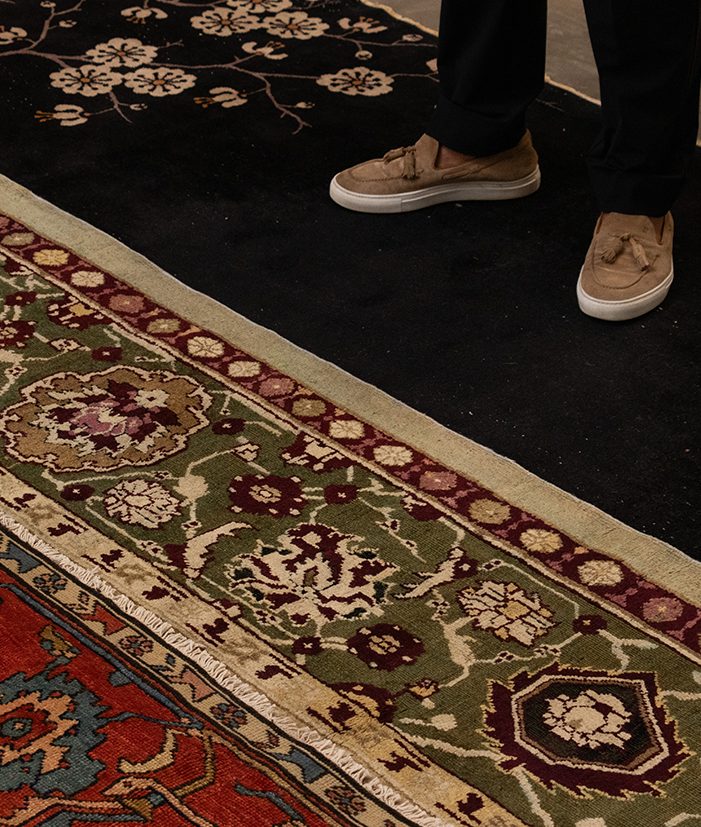
Rug & Kilim Showroom in LIC, NY
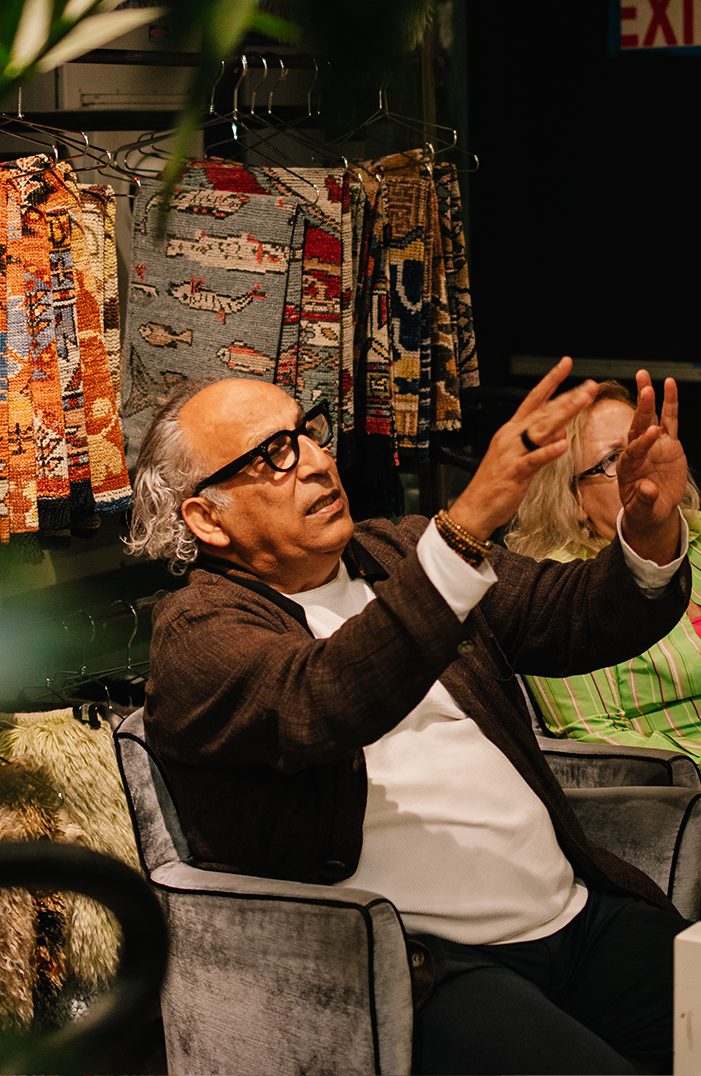
Jahanshah Josh Nazmiyal
Rug & Kilim in the Design Landscape
In the contemporary design landscape, Rug & Kilim holds a position that few others occupy: it is at once a resource, an atelier, and a cultural interlocutor. Its collection functions not as inventory but as discourse — a place where French royal tapestries converse with Anatolian tribal works, and where Art Deco dialogues with contemporary minimalism.
For today’s designers, Rug & Kilim provides more than material; it provides context. Its rugs, kilims, and tapestries are chosen for their ability to anchor space — to create interiors that are not only beautiful, but historically literate. Whether placed in a Park Avenue library, a Hamptons salon, or a Los Angeles modernist home, these works resonate because they carry with them a century-spanning conversation about what luxury truly means.
As Cyrus and Sina Nazmiyal carry the house into its next generation, Rug & Kilim continues to redefine what a rug atelier can be: a center of study, creation, and design diplomacy. Here, a 17th-century Turkish kilim may converse with a minimalist Moroccan modern, and both will find kinship in the shared pursuit of beauty with meaning.
Designers working with Rug & Kilim understand that to select a piece here is to participate in that conversation — to design not just a room, but a lineage.
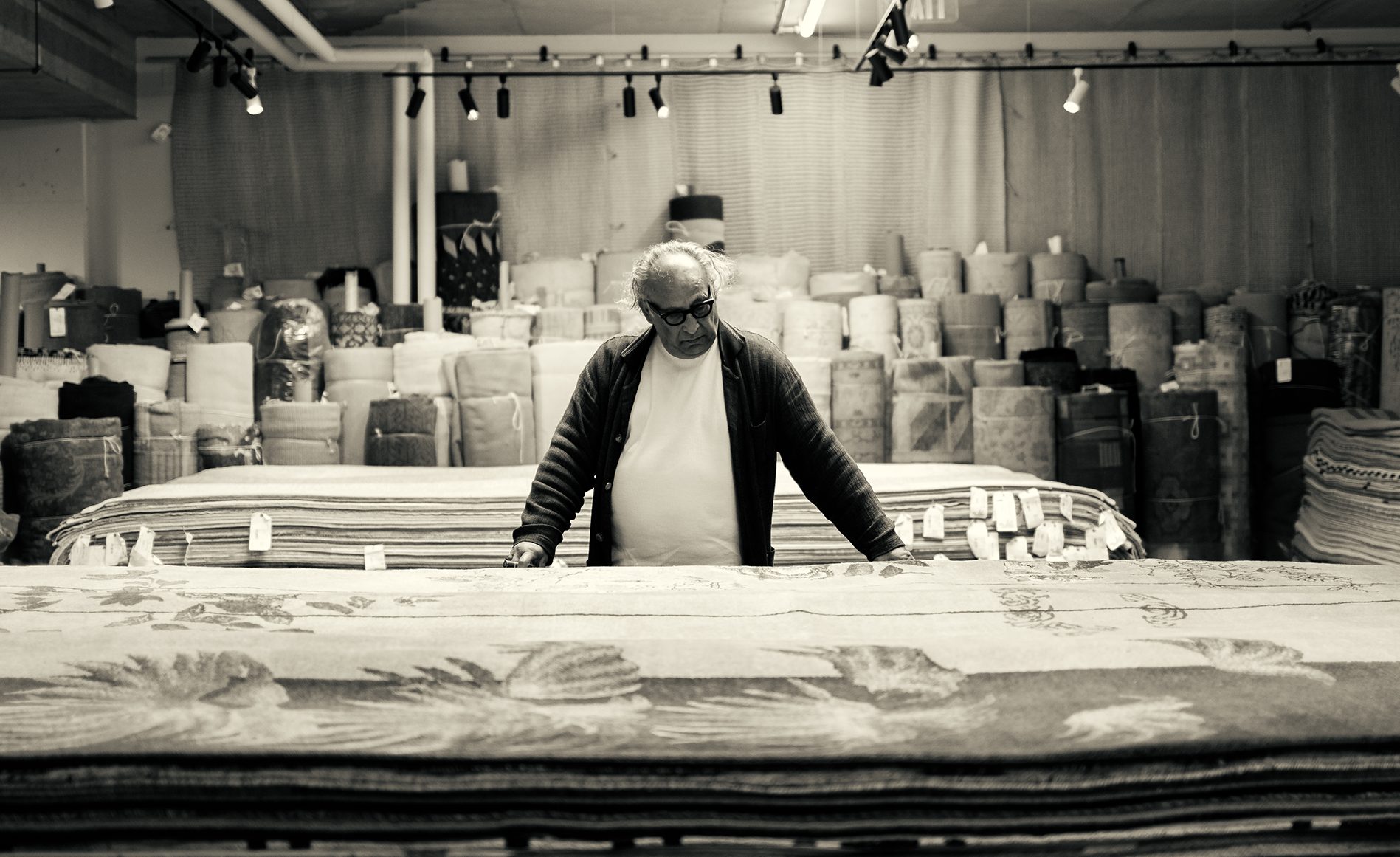
Jahanshah Josh Nazmiyal
The Future of Legacy
Each new collaboration, each archival discovery, each modern commission adds another dimension to continuity — one that stretches from the courts of Europe to the ateliers of today.
Rug & Kilim continues to make a case for patience — for the enduring relevance of the handwoven, for the dignity of craftsmanship, and for the belief that art and design, when treated with intellect and humility, are forms of permanence.
For those who understand that legacy is not given but designed, Rug & Kilim carries the weight of history and the promise of what’s next.