
A Collector’s Guide to Antique Swedish Rollakan Tapestries
March 3, 2025
Curatorial Perspectives: Suzani Rugs and Kilims as Cultural Heritage
March 12, 2025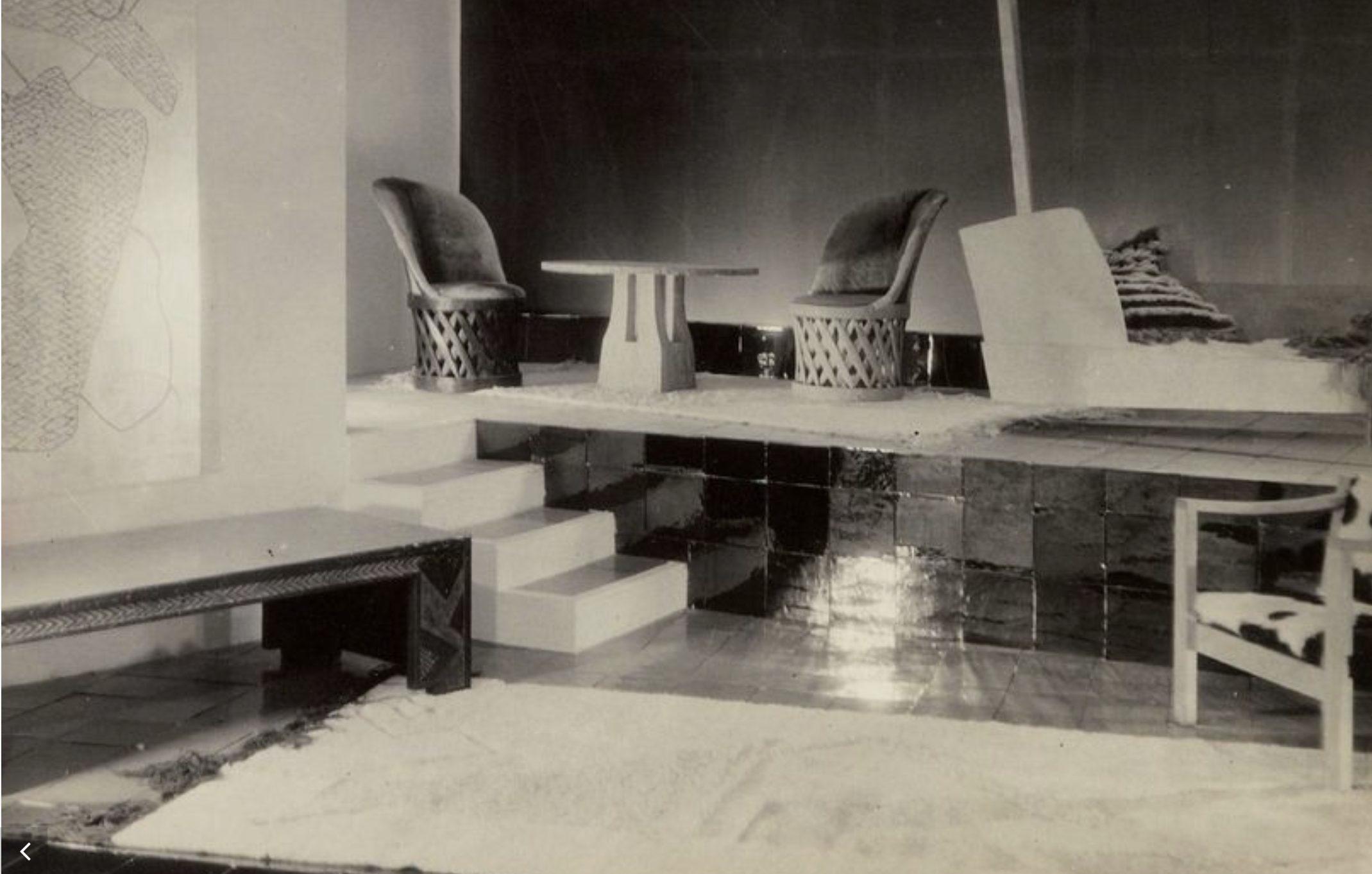
Man Ray: Interior Terrace of the South by Evelyn Wyld and Elizabeth Eyre de Lanux, Autumn Salon, 1929 | Silver Print | Photography
To create is to breathe life into hidden dreams and forgotten spaces.
As collectors and curators who have spent decades immersed in the world of fine rugs and textiles, We’ve encountered many overlooked talents whose brilliance deserves resurrection from the shadows of art history.
Perhaps none is more deserving of this reverence than Eyre de Lanux, the American-born designer whose multidisciplinary genius spanned furniture, interiors, rugs, and literary contributions during the vibrant artistic explosion of interwar Paris.
The Formative Years of the Modernist
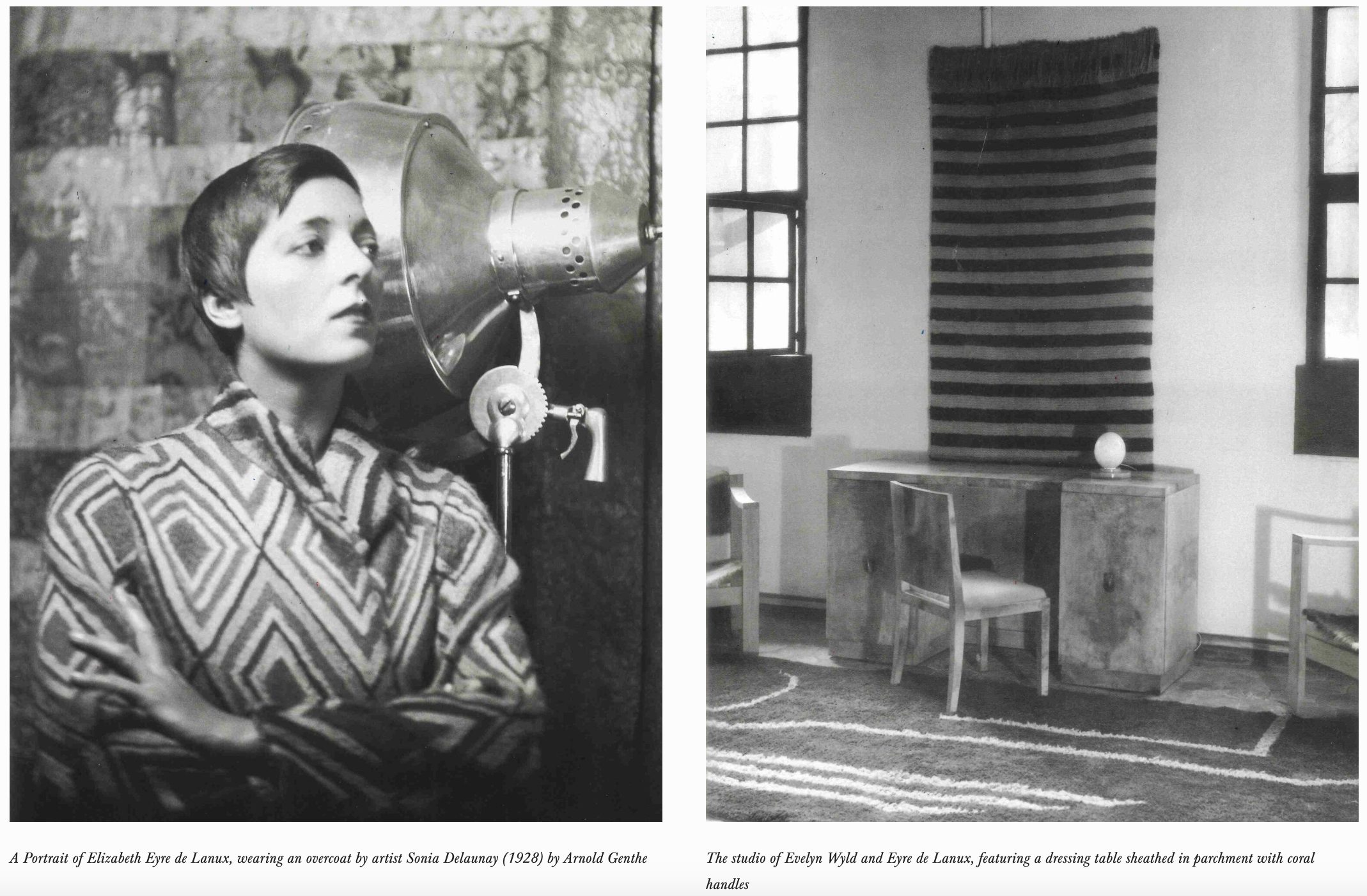
Elizabeth Eyre de Lanux, who would come to be known professionally as simply “Eyre de Lanux,” emerged as a multidisciplinary creative force during the vibrant artistic revolution of interwar Paris.
Born March 20, 1894, to a prominent American family with artistic connections—her uncle was the noted Philadelphia architect Wilson Eyre, and her aunt was sculptor Louisa Lear Eyre—she defied conventional expectations for women of her station by pursuing a life dedicated to creative expression across multiple disciplines.
After studying at the Art Students League in New York from 1912-1915, de Lanux’s life took a decisive turn when she met and married French diplomat Pierre Combret de Lanux in 1918. The couple’s move to Paris positioned her at the epicenter of modernist innovation, where she continued her artistic education at the Académie Ranson under Maurice Denis and at the Académie Colarossi with Paul Sérusier.
Though initially focused on painting and drawing—exhibiting her “Outlines of Women” series at New York’s Kingore Galleries in 1921—de Lanux’s creative trajectory expanded dramatically during the mid-1920s.
Her 1926 solo exhibition of frescoes at the Galerie Aux Quatre Chemins marked her growing reputation within Parisian artistic circles, where she moved among luminaries including Constantin Brancusi, who later guided her deeper exploration of fresco techniques.
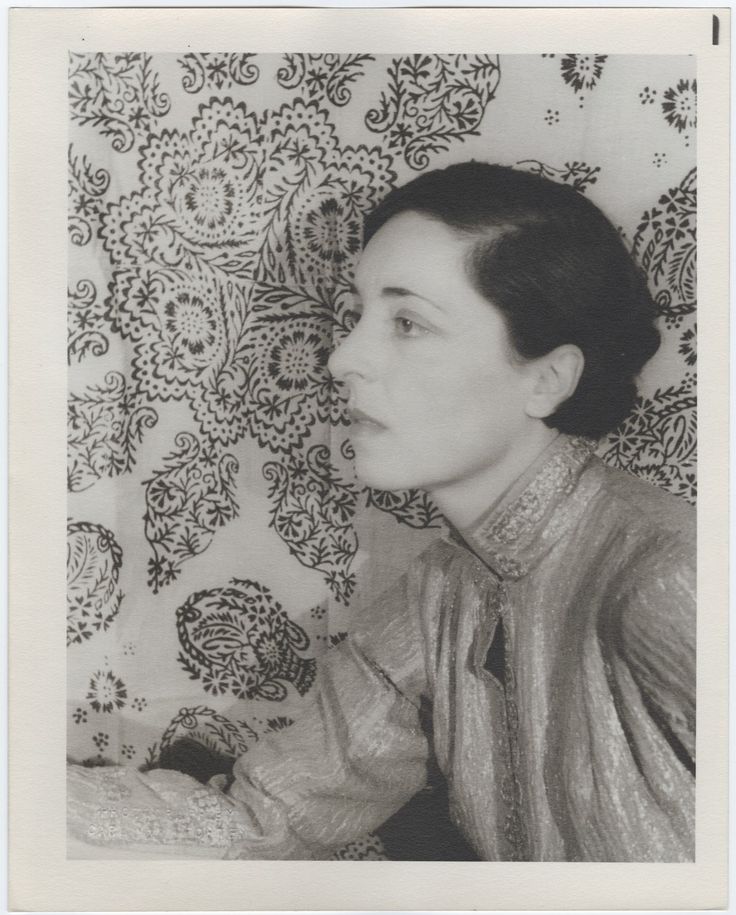
Elisabeth Eyre de Lanux, an Amazon in Paris. Published on March 2, 2022 By Patrick de LANUX
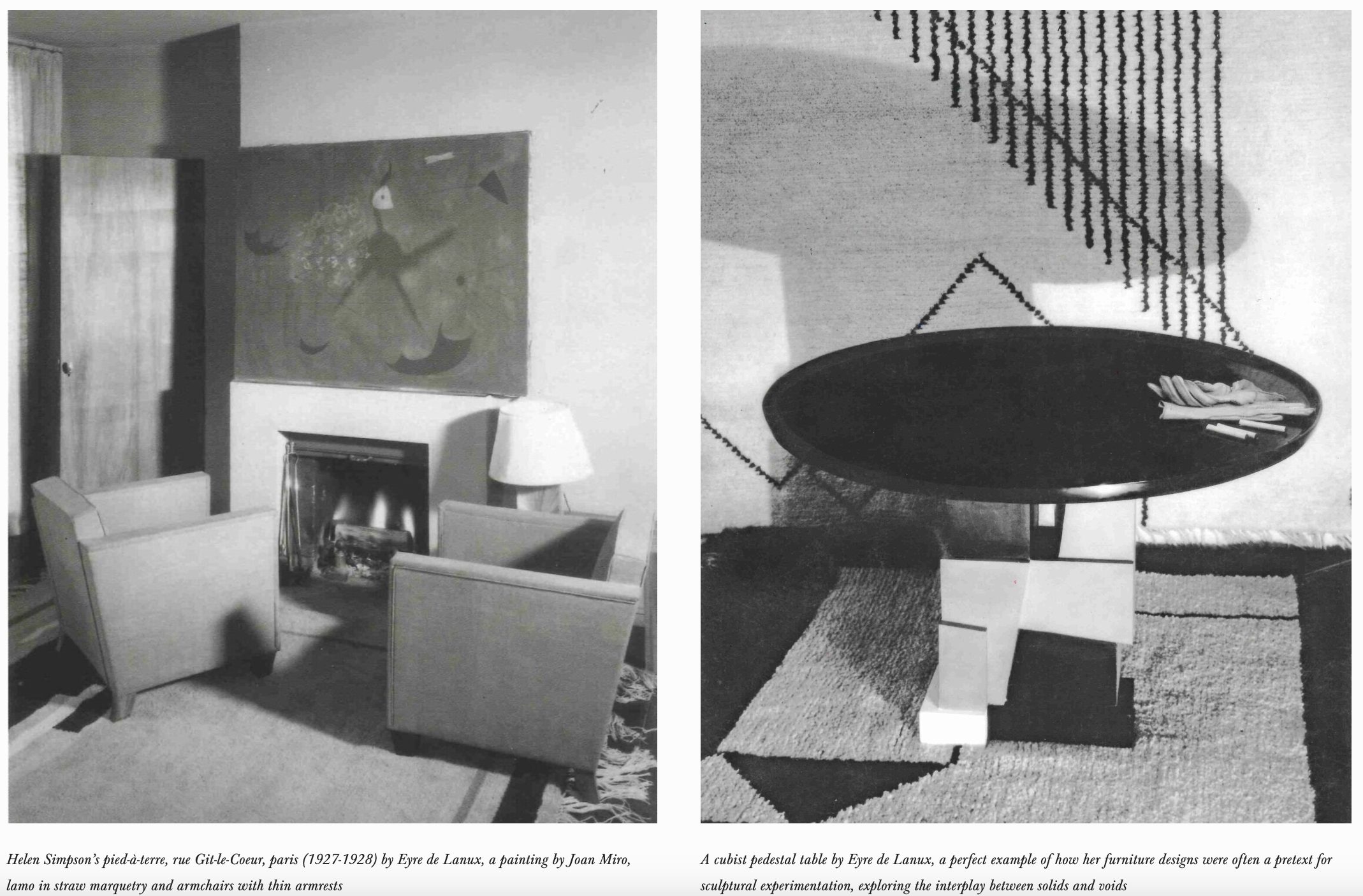
The most significant chapter in de Lanux’s design career began in 1927 when she formed a professional partnership with British carpet designer Evelyn Wyld. Together, they created modernist furniture incorporating glass, cowhide, wood, and lacquer, exhibiting their distinctive interiors at the prestigious annual showings of the Artistes-Décorateurs in 1928 and 1929, and at the first exhibition of the forward-thinking Société Union des Artistes Modernes in 1930.
Their bold aesthetic sensibility, characterized by clean lines and unconventional material combinations, exemplified the Art Deco movement’s rejection of ornate historicism in favor of geometric precision and functional elegance.
In 1932, de Lanux and Wyld opened Décor, a furniture gallery in Cannes, though the venture unfortunately fell victim to declining demand following the 1929 stock market crash and closed the following year. During this period, de Lanux also undertook interior design commissions, including a dining room for William and Isabelle Clow in Lake Forest, Illinois, in collaboration with architect David Adler.
I am not interested in making statements for posterity. I am interested in creating spaces where the mind can both wander and find its center.
This philosophy permeated her approach to textile design, where her rugs became not mere floor coverings but intellectual landscapes that invited both meditation and conversation.
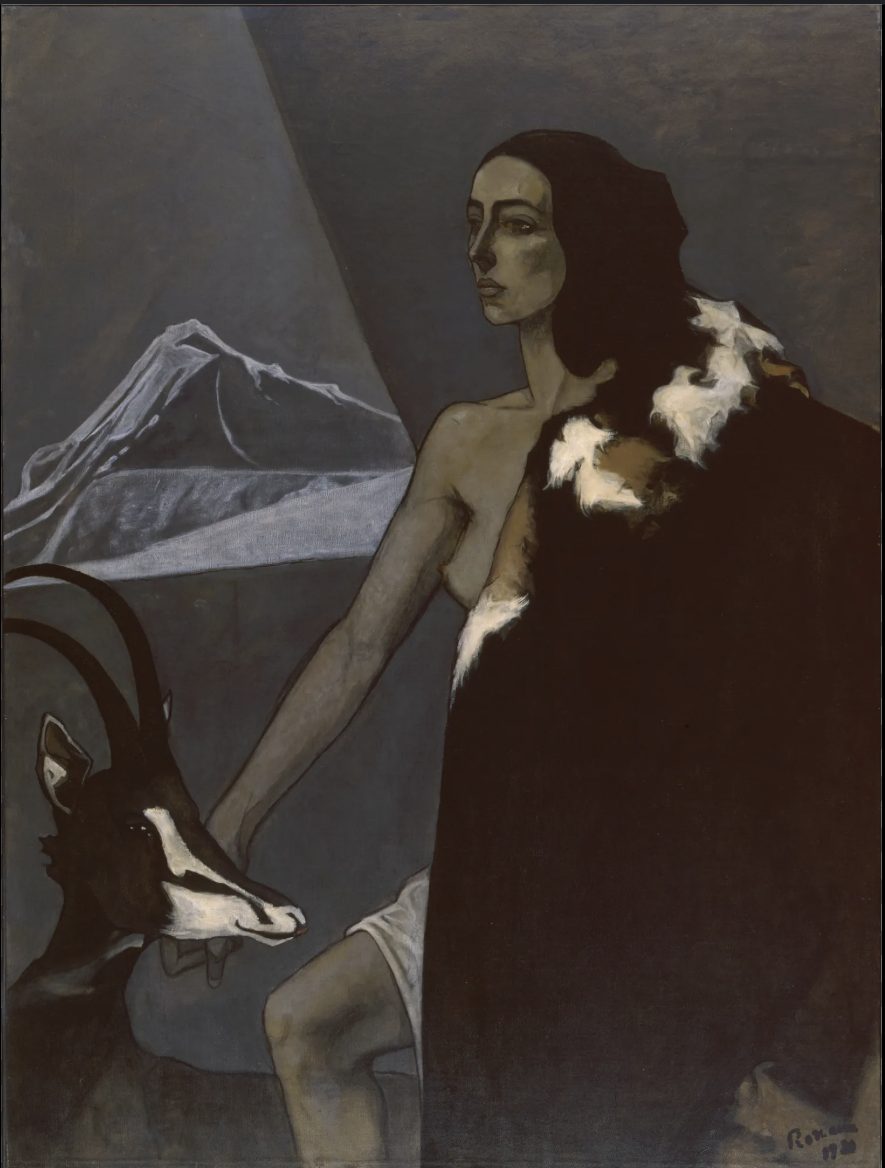
Romaine Brooks’s 1920 painting Chasseresse is a portrait of Eyre de Lanux, age 26, as a classical huntress. Image courtesy Smithsonian American Art Museum
De Lanux’s Revolutionary Textile Approach
What distinguished de Lanux’s rug designs was her remarkable ability to synthesize seemingly contradictory influences. Her designs merged rigorous geometric precision with an almost intuitive sense of organic flow. Working primarily with French and Moroccan aesthetic, she developed distinctive techniques that produced textural depth rarely seen in contemporaneous works.
A rug is not simply walked upon. It is the foundation of a room’s intellect, the canvas upon which all other design elements must harmonize or intentionally rebel.
Her most celebrated designs featured bold, architectural motifs rendered in unexpected color combinations—midnight blues against copper, deep charcoal paired with pale ivory, and her signature aubergine that seemed to change hue as one moved around the room.
Her designs commanded attention at the 1925 Exposition Internationale des Arts Décoratifs et Industriels Modernes, establishing her reputation among the Parisian elite.
De Lanux moved through the most illustrious creative circles of her time. Her salon attracted figures including Man Ray, Constantin Brancusi, and Jean Cocteau. Her decade-long romance with the poet Natalie Barney placed her at the center of Paris’s influential lesbian intellectual community.
Meanwhile, her friendship with Eileen Gray, another pioneering woman designer, resulted in a creative dialogue that pushed both artists to experimental heights.
Between Eyre and myself, there existed a silent understanding that we were engaged in a revolution of form that our male counterparts could appreciate but never fully comprehend.
This perspective informed de Lanux’s approach to her textile works, which often incorporated subtle narrative elements that revealed themselves only to the most attentive observers.
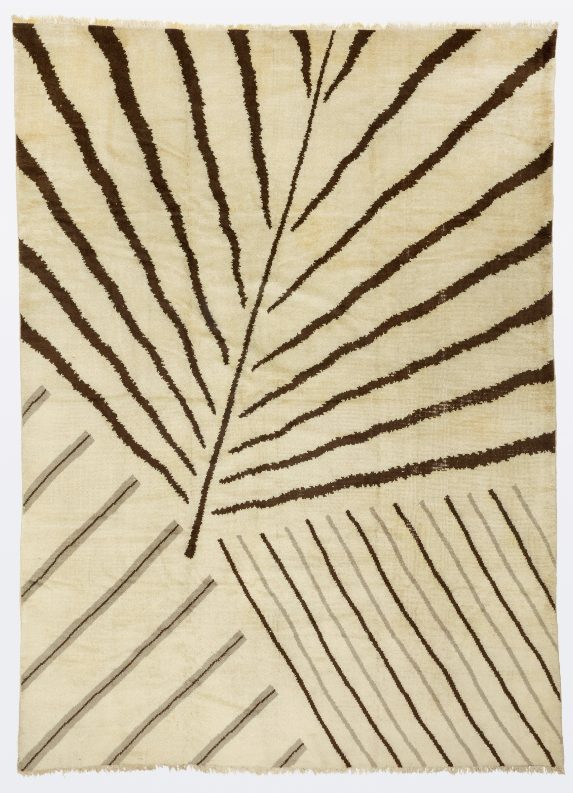
Eyre de Lanux and Evelyn Wyld
Rug; circa 1930
What continues to distinguish de Lanux’s textile works from her contemporaries is their philosophical underpinning. While many Art Deco designers created patterns merely to please the eye, de Lanux’s compositions invited intellectual engagement.
A pattern is not decoration but a proposition. Every line must question the one before it, and together they must suggest something beyond what is merely visible.
Despite her significant contributions, de Lanux’s work fell into obscurity after World War II. When she returned to New York in the 1950s, her modernist aesthetic had been eclipsed by new movements. She continued to create, though primarily as a painter and writer, until her death in 1996 at the remarkable age of 102.
Fashion in design is meaningless. What matters is integrity of vision. The rest is merely temporary approval.
This integrity is precisely what makes her work so valuable to contemporary collectors and scholars. Each of her textile designs represents not merely a decorative object but a complex aesthetic statement that continues to reward close study.
This truthfulness resonates through her body of work, challenging us to reconsider not only de Lanux’s place in design history but also our understanding of modernism itself.
Her textiles weren’t merely decorative objects but intellectual propositions woven into the very fabric of modern life—assertions that continue to provoke and inspire nearly a century after their creation.
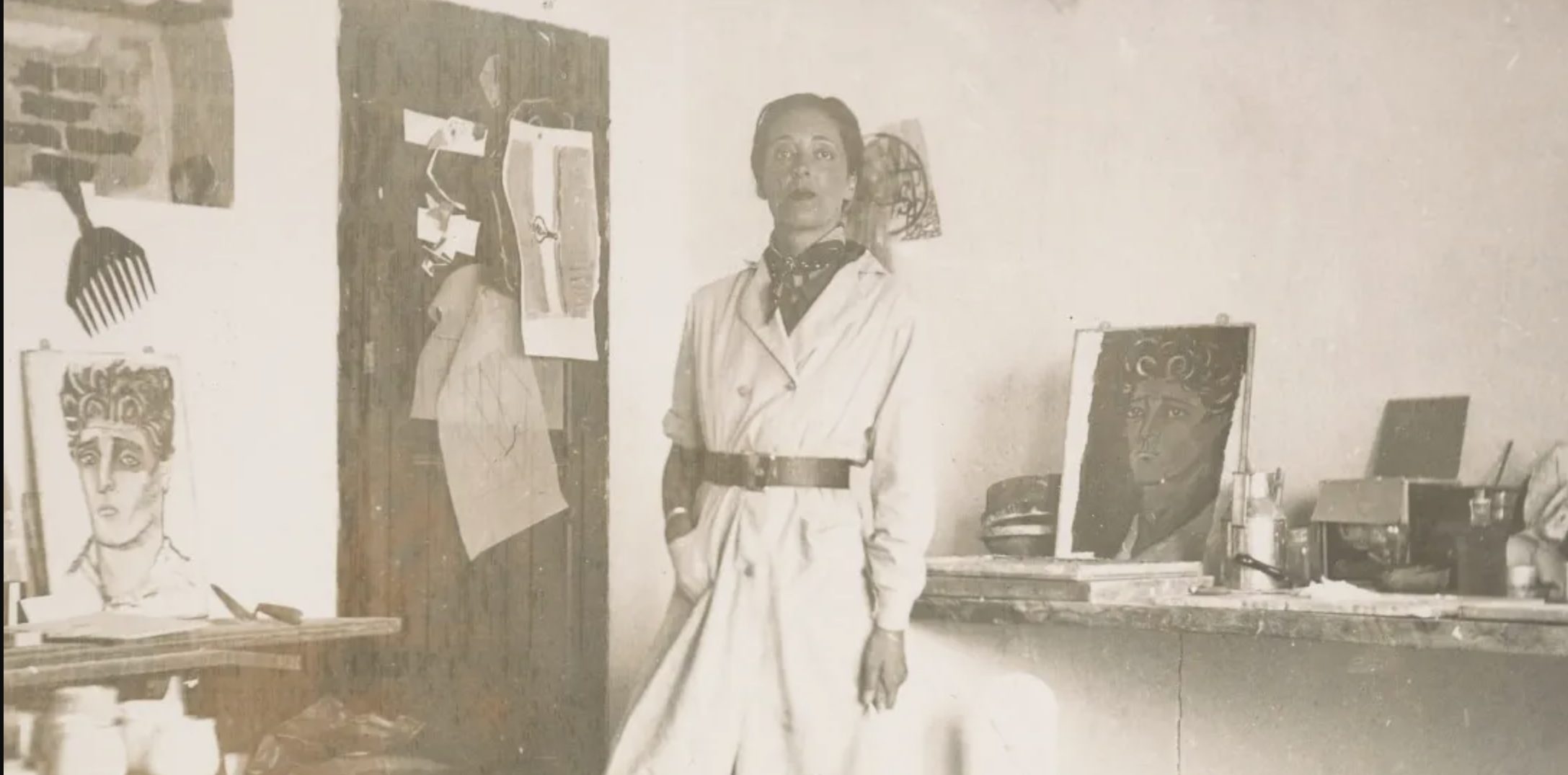
Eyre de Lanux in her studio, around 1950. Image courtesy Archives of American Art, Smithsonian Institution, Eyre de Lanux papers, 1865-1995