
German Tetex Rugs: The Complete Collector’s Guide
February 28, 2025
The Extraordinary Design Legacy of Eyre de Lanux: Art Deco to Modernist Furniture
March 10, 2025Design is not just what it looks like and feels like. Design is how it works.
This sentiment evidently resonates deeply when contemplating Swedish Rollakan tapestries. Their beauty is inseparable from their function, their aesthetics from their purpose.
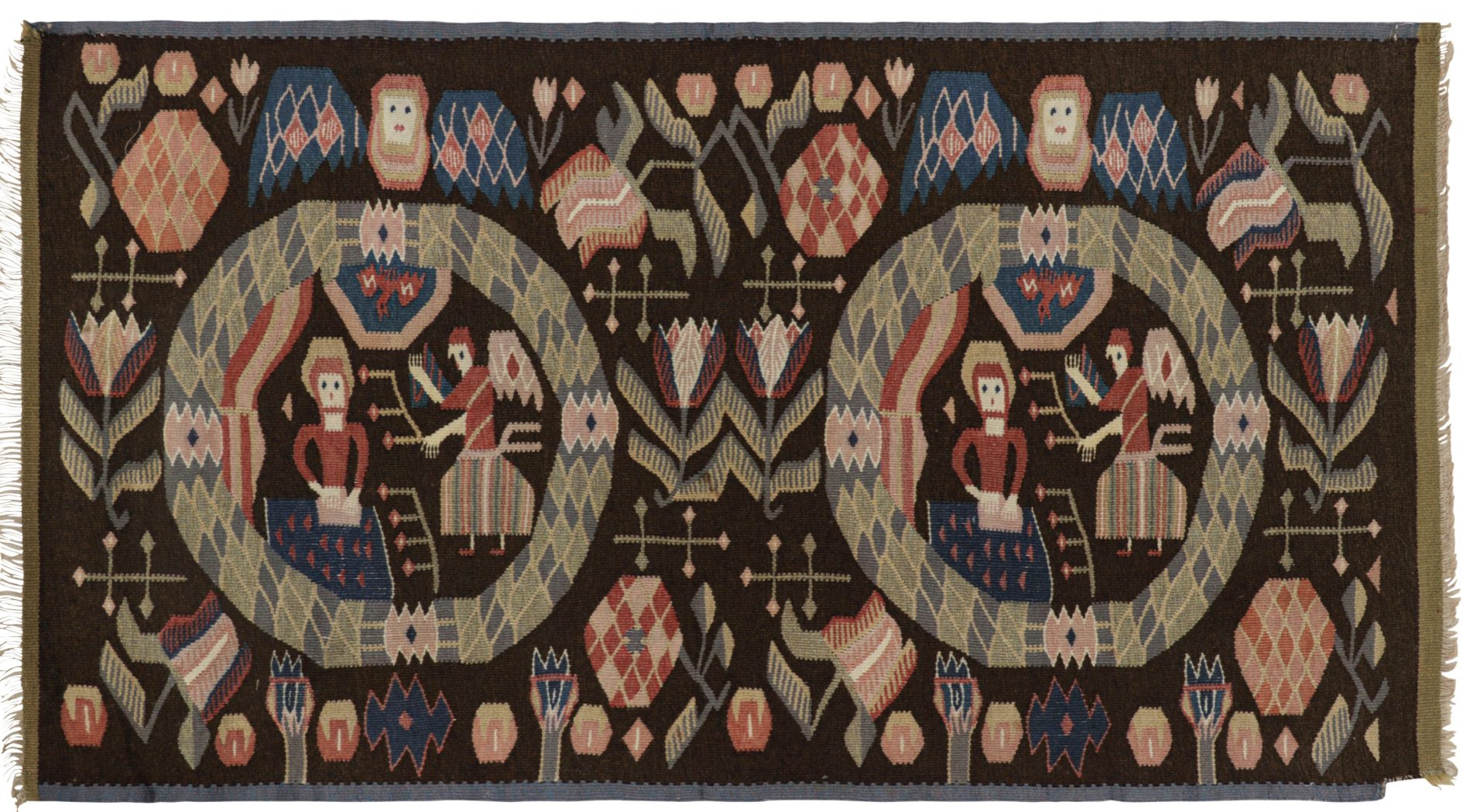
Origins in Necessity
The rollakan (or “rolakan”) technique emerged from Sweden’s rural traditions, primarily in the southern regions of Skåne and Småland during the 17th and 18th centuries.
These flat-woven textiles developed as practical responses to the harsh Nordic winters—dense, durable constructions designed to insulate peasant homes against biting cold.
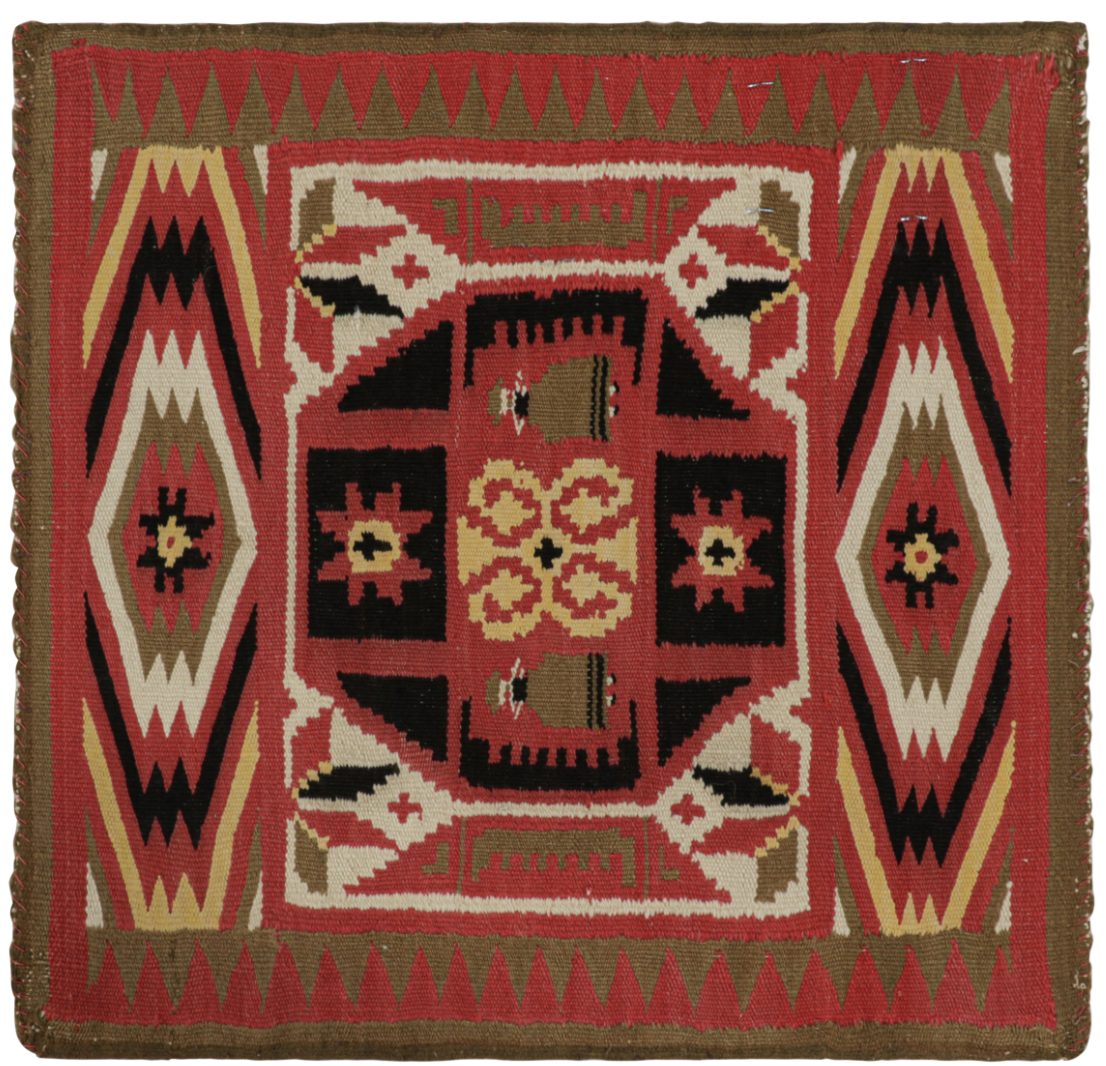
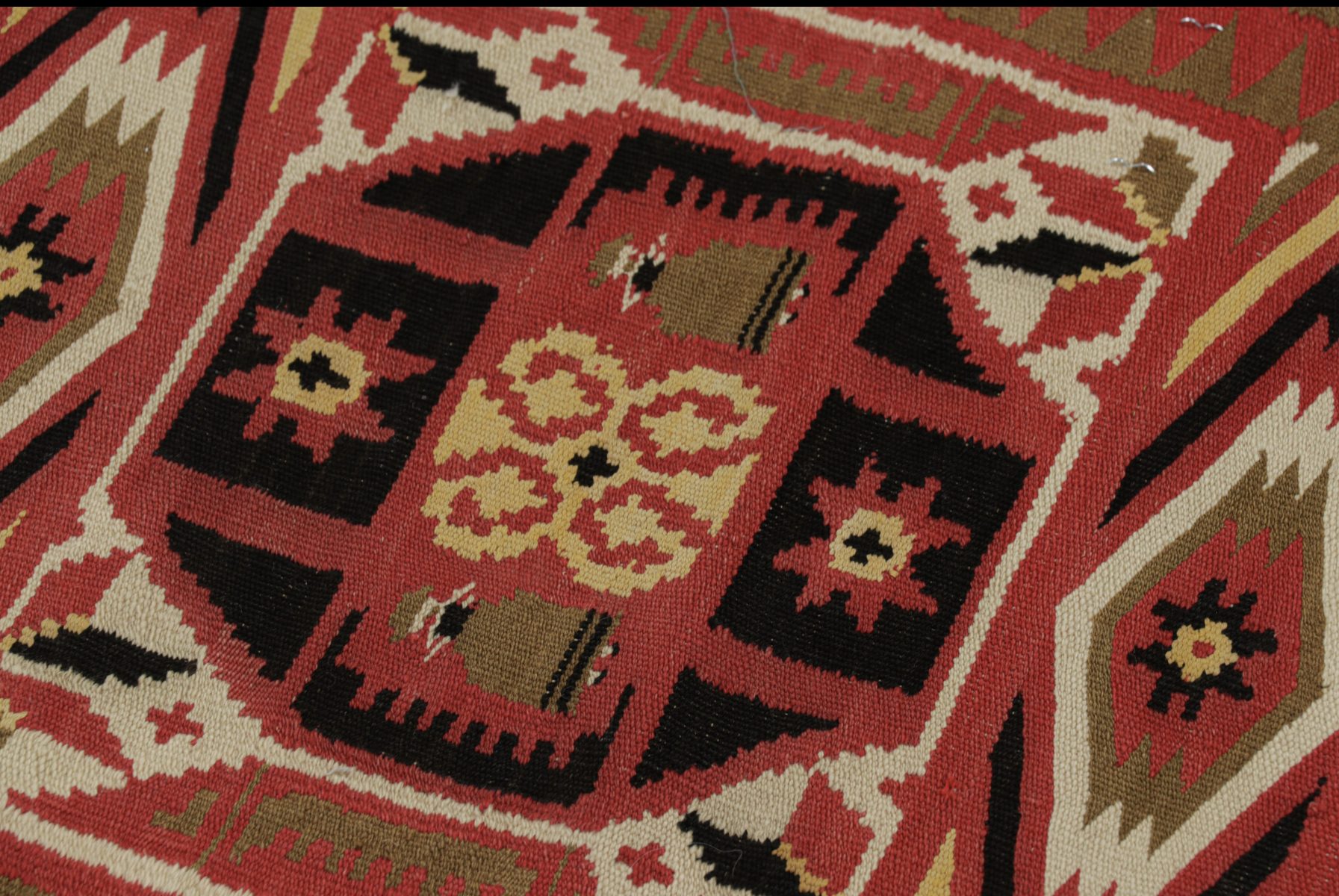
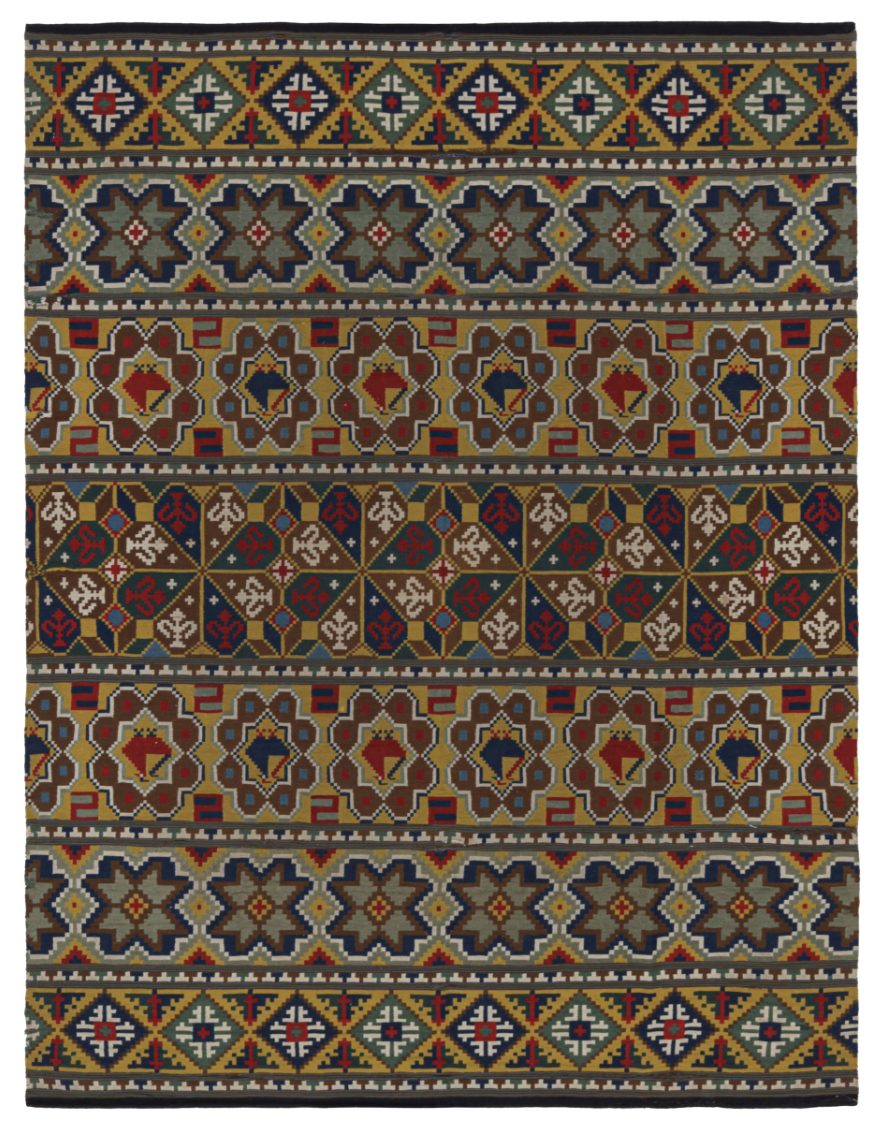
Primarily, what distinguishes the rollakan is its distinctive technique. A flat-weave method where weft threads completely cover the warp, creating reversible textiles with identical patterns on both sides.
The word itself derives from the Swedish “rölakan,” with etymological roots pointing to ancient weaving practices.
Comfort and beauty must come from the same source. Indeed, rollakans emerged from this perfect marriage of necessity and aesthetic expression.
The Visual Significance
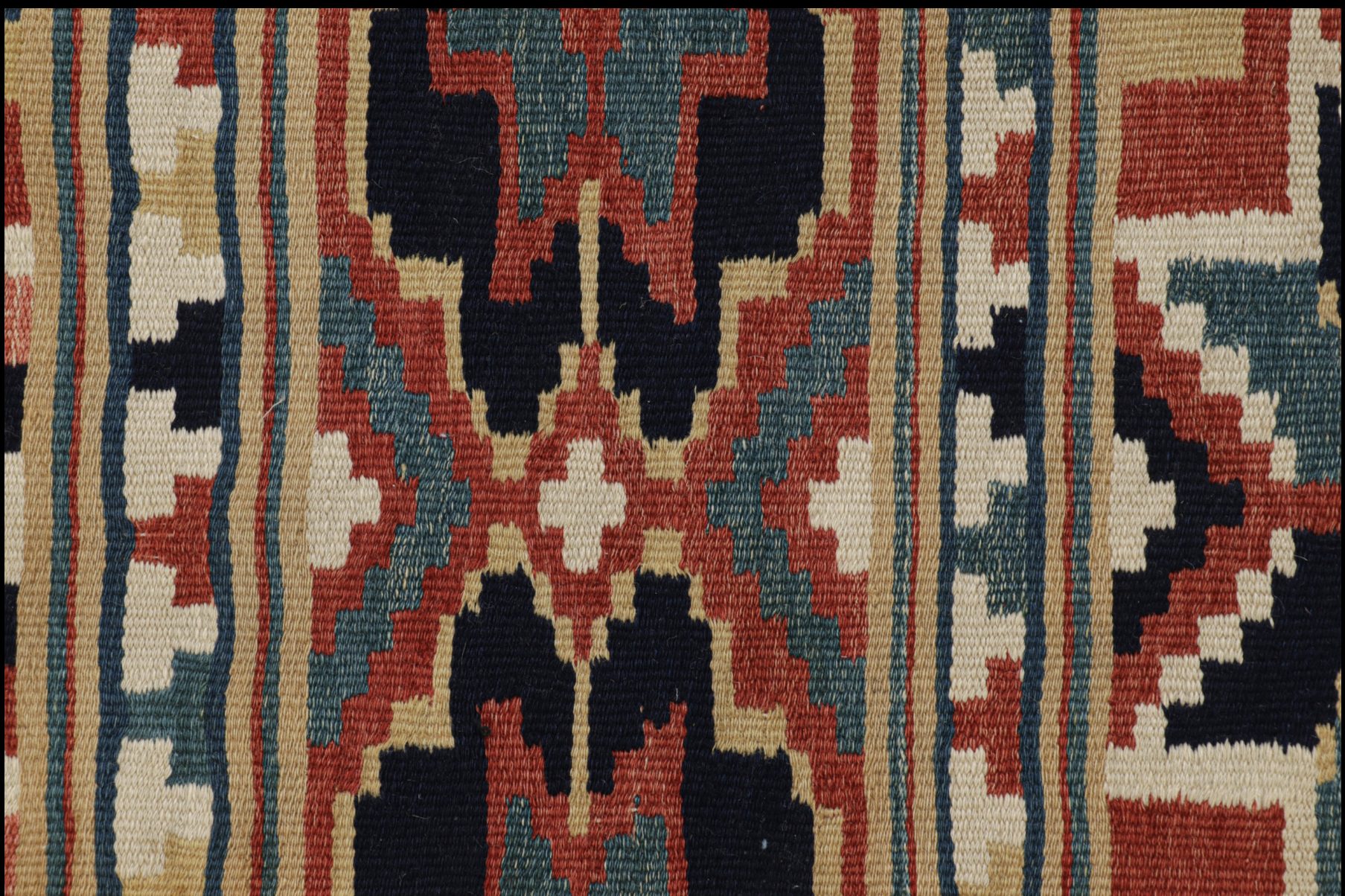
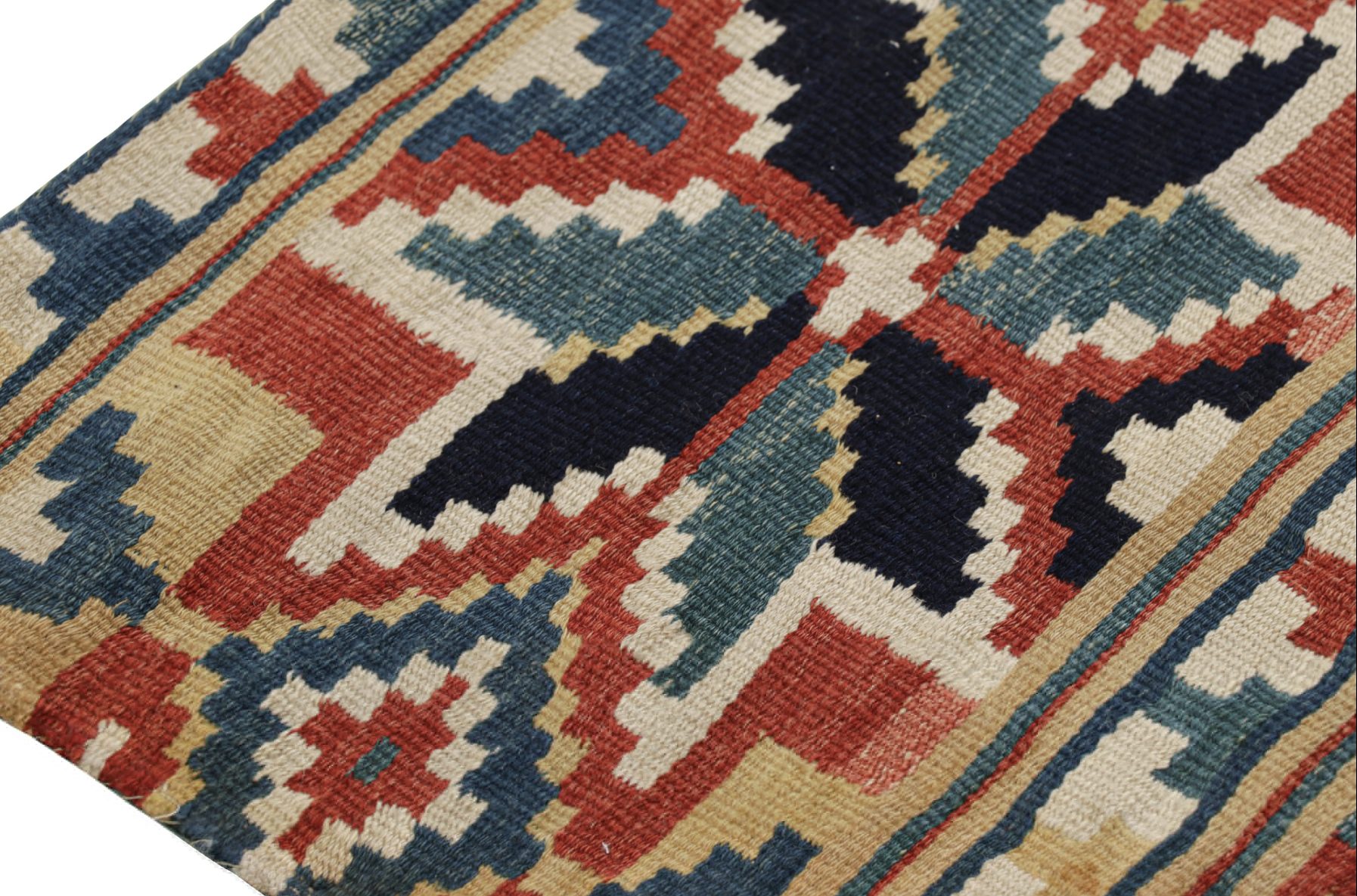
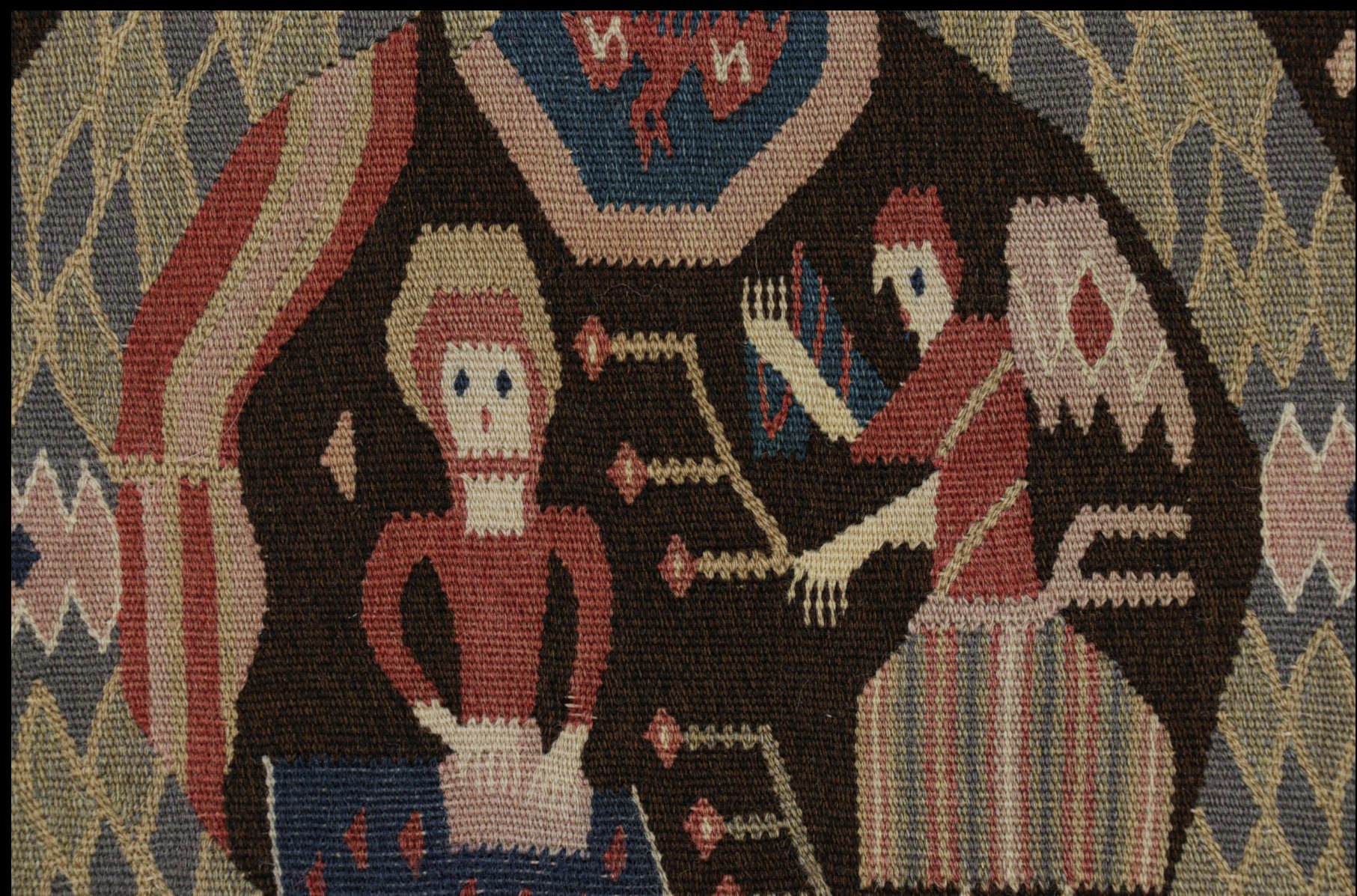
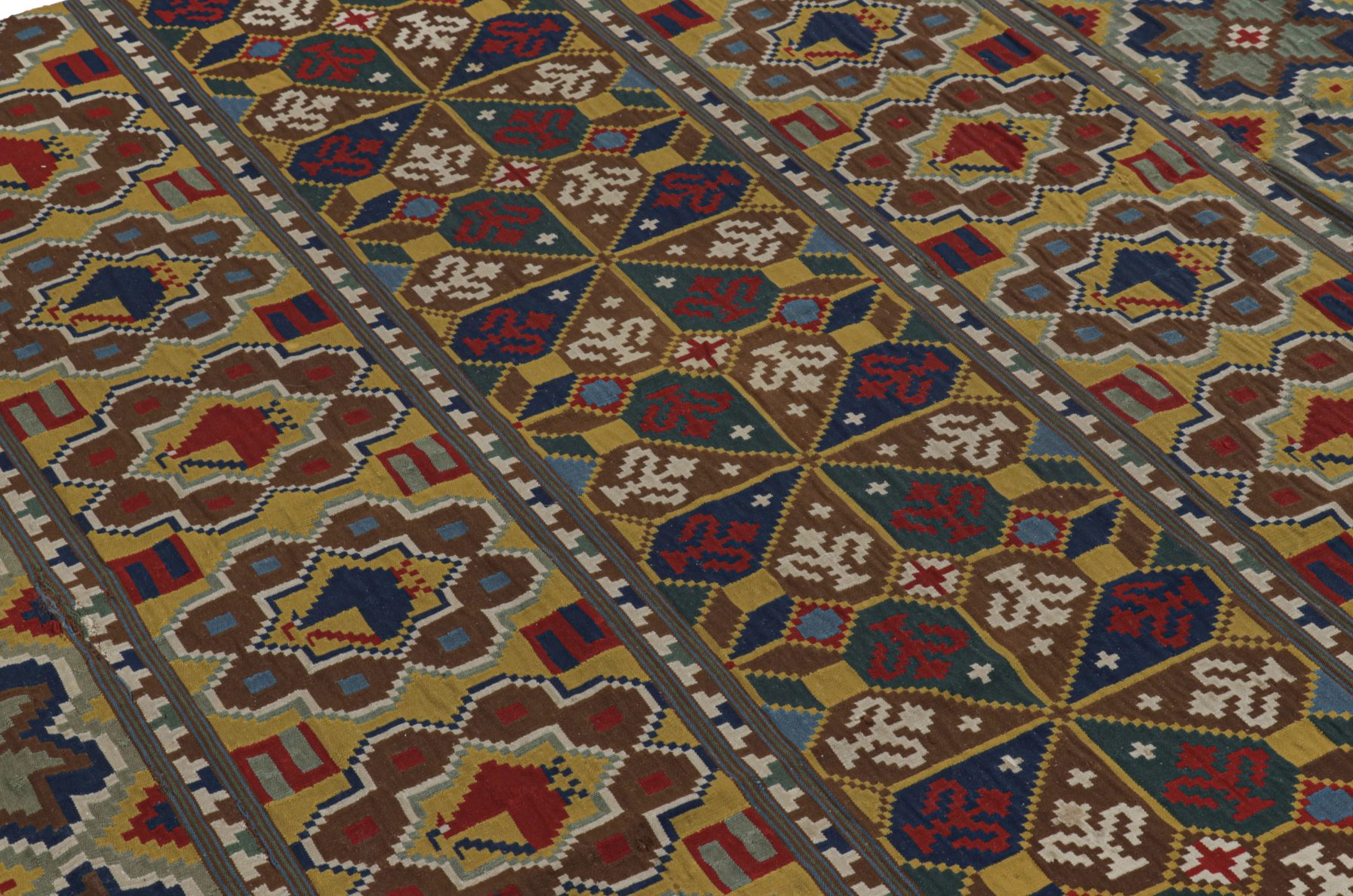
The rollakan’s visuals speaks through geometric patterns—diamonds, stars, stylized flowers, and regimented borders orchestrated in mesmerizing symmetry.
Additionally, their palettes draw from nature’s very own: indigo extracted from woad plants, warm reds from madder root, golden yellows from birch leaves, and earthy browns from walnut husks.
We are often struck by how rollakans prefigure modernist art movements. Their bold geometries anticipate Kandinsky’s abstractions; their rhythmic patterns foreshadow the optical vibrations of Bridget Riley.
Yet they emerged centuries before, woven by rural women with no formal artistic training, guided only by tradition and intuitive understanding of form.
Tradition is not the worship of ashes, but the preservation of fire.
Each weaver maintained ancestral patterns while subtly evolving the tradition through personal interpretation.
Cultural Significance of Swedish Rollakan Tapestries
What many fail to appreciate is how rollakans functioned as intimate historical records.
Like medieval tapestries narrating royal conquests, these humble textiles documented peasant life through symbolic language.
Certain motifs conveyed protection; others celebrated fertility or marked important transitions like marriages.
The Swedish art historian Ingegerd Henschen documented how specific patterns were passed through female lineages, creating regional “dialects” in the visual language of weaving.
A collector learns to read these subtleties—the distinctive star formations of Skåne distinct from the more angular geometries of Halland province.
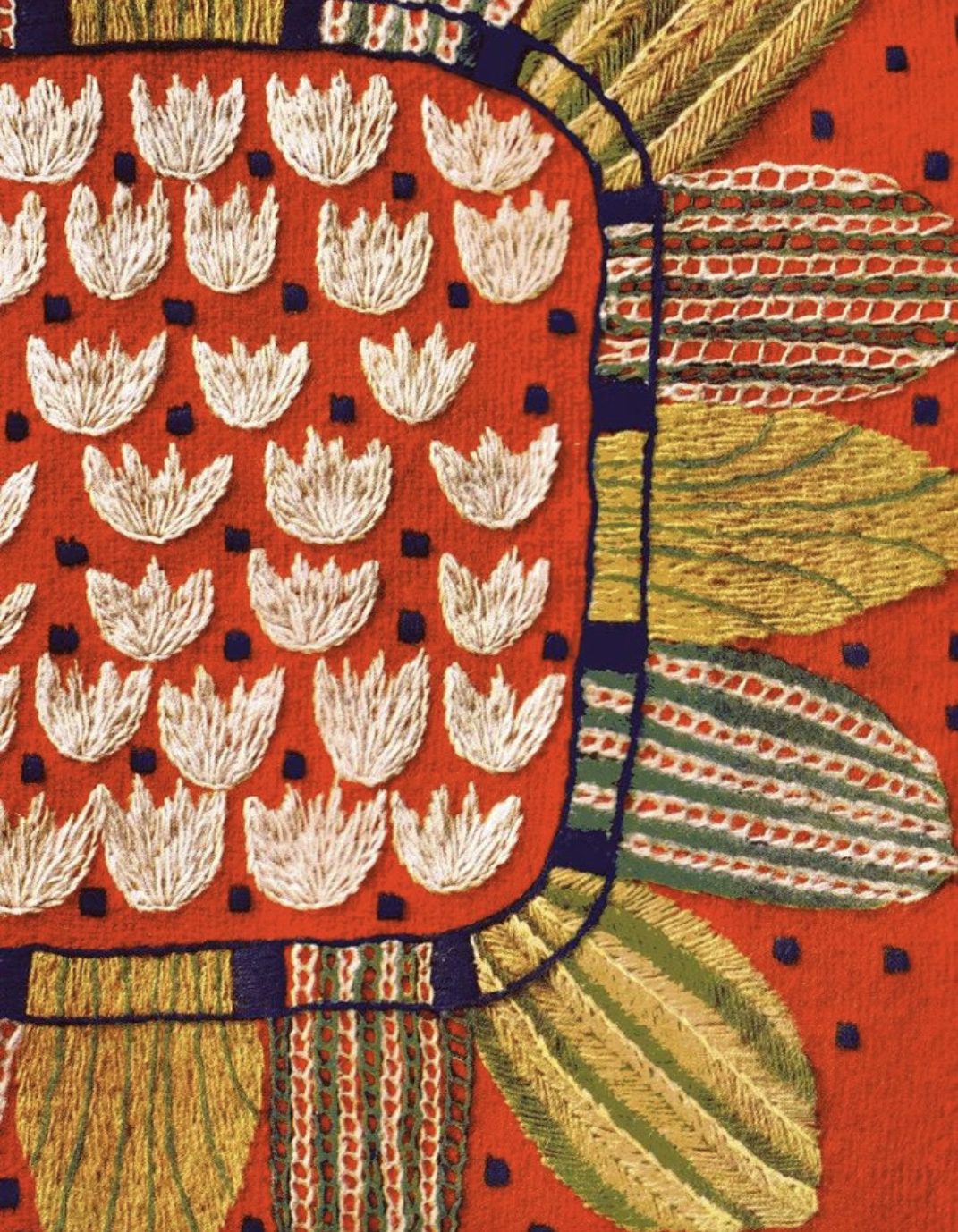
Anni Albers, the pioneering textile artist who bridged craft and fine art, observed that weaving is an example of a craft which is many sided.
Besides surface qualities, such as rough and smooth, dull and shiny, hard and soft, it also includes color, and, as the dominating element, texture.
Swedish Rollakan Tapestries, however, exemplify this multidimensionality, rewarding close study with layers of cultural meaning.
The Renaissance of Appreciation
The early 20th century witnessed a critical reevaluation of these textiles.
The Swedish Society of Crafts and Design (Svenska Slöjdföreningen) championed them as expressions of national identity during a period of intense industrialization.
Figures like Ellen Key argued for their relevance in modern interiors, seeing in their geometric clarity a proto-modernist sensibility.
Josef Frank, whose designs would revolutionize Swedish interiors, drew inspiration from traditional textiles, noting that every object should tell a story.
Rollakans told stories of agrarian cycles, of feminine creativity circumscribed by tradition yet flourishing within those constraints.
Collecting and Preserving
To collect is to gather your thoughts through objects. Indeed, our Swedish Rollakan Tapestries’ collection has become an external organization of our interior fascinations—with cultural persistence, with feminine artistic expression, with the dialogue between tradition and innovation.
Swedish Rollakan Tapestries in Contemporary Spaces
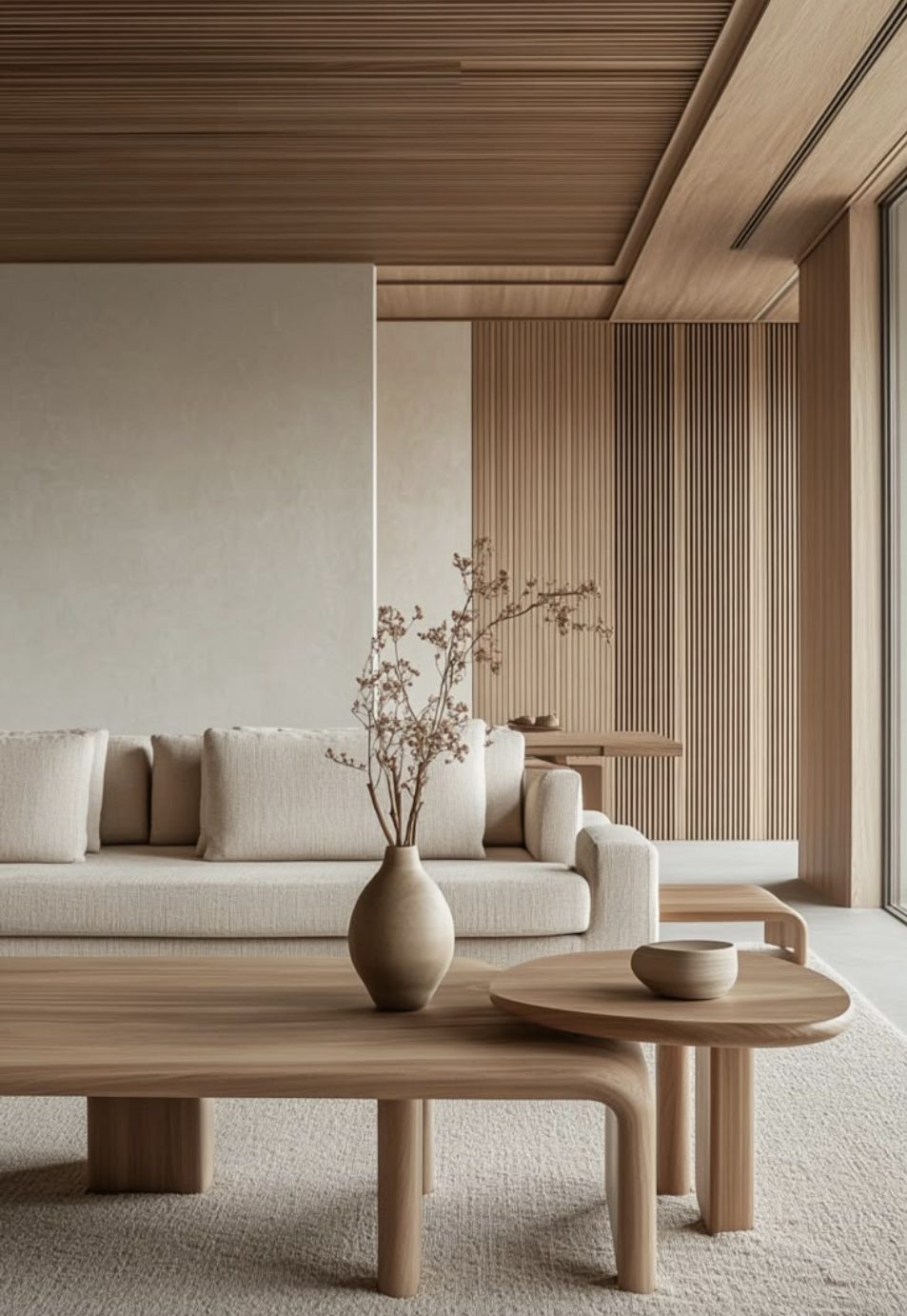
Today, these historical textiles resonate powerfully in contemporary interiors. Their geometric discipline provides counterpoint to organic forms; their handcrafted imperfections humanize minimal spaces.
A rollakan beneath a Noguchi table creates a dialogue across centuries; placed against a wall, it becomes a textile painting in conversation with contemporary art.
True luxury is living with things that have soul.
Few objects possess more soul than textiles created by anonymous women whose names are lost but whose artistic vision endures in every precisely placed thread.
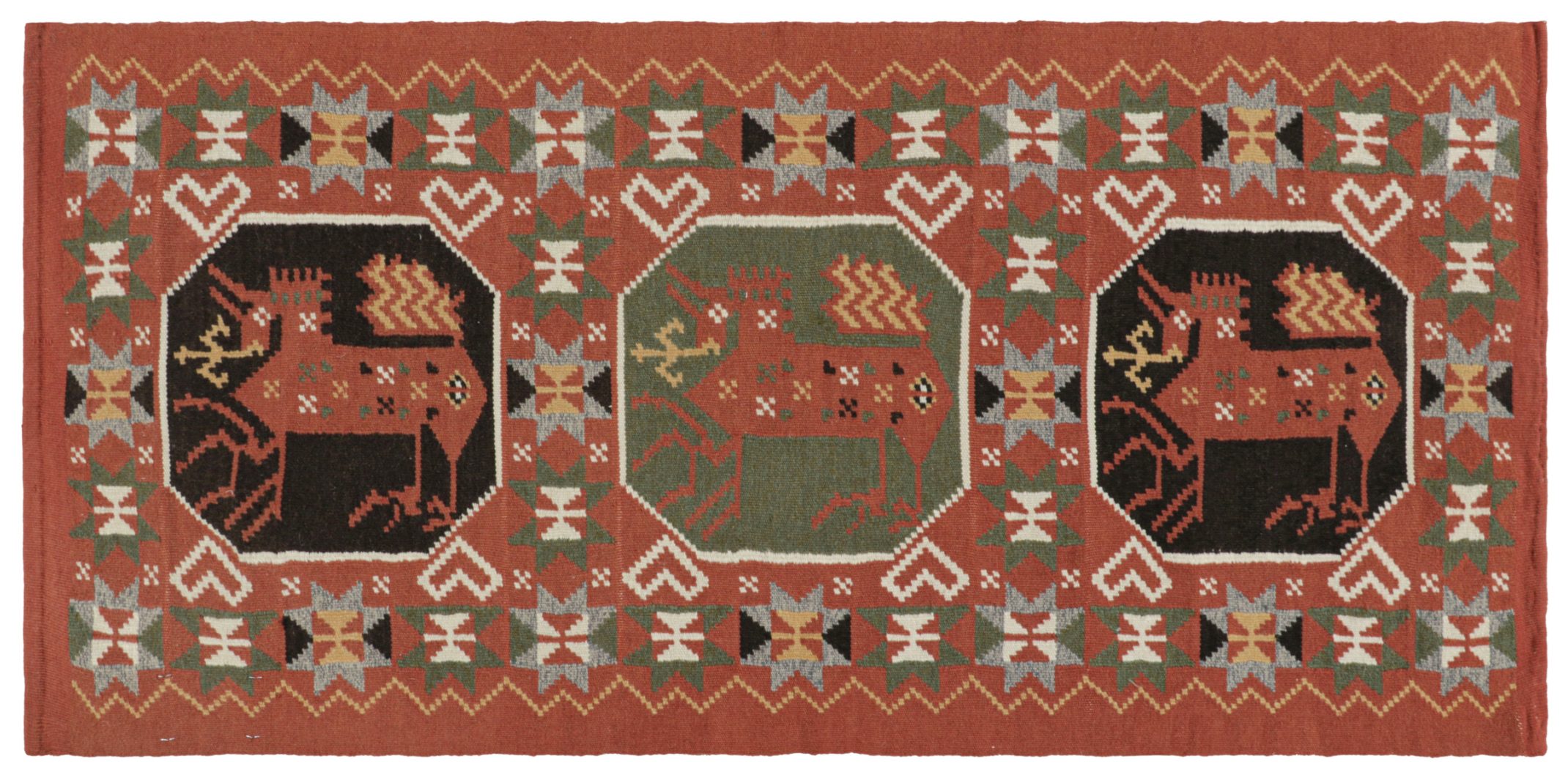
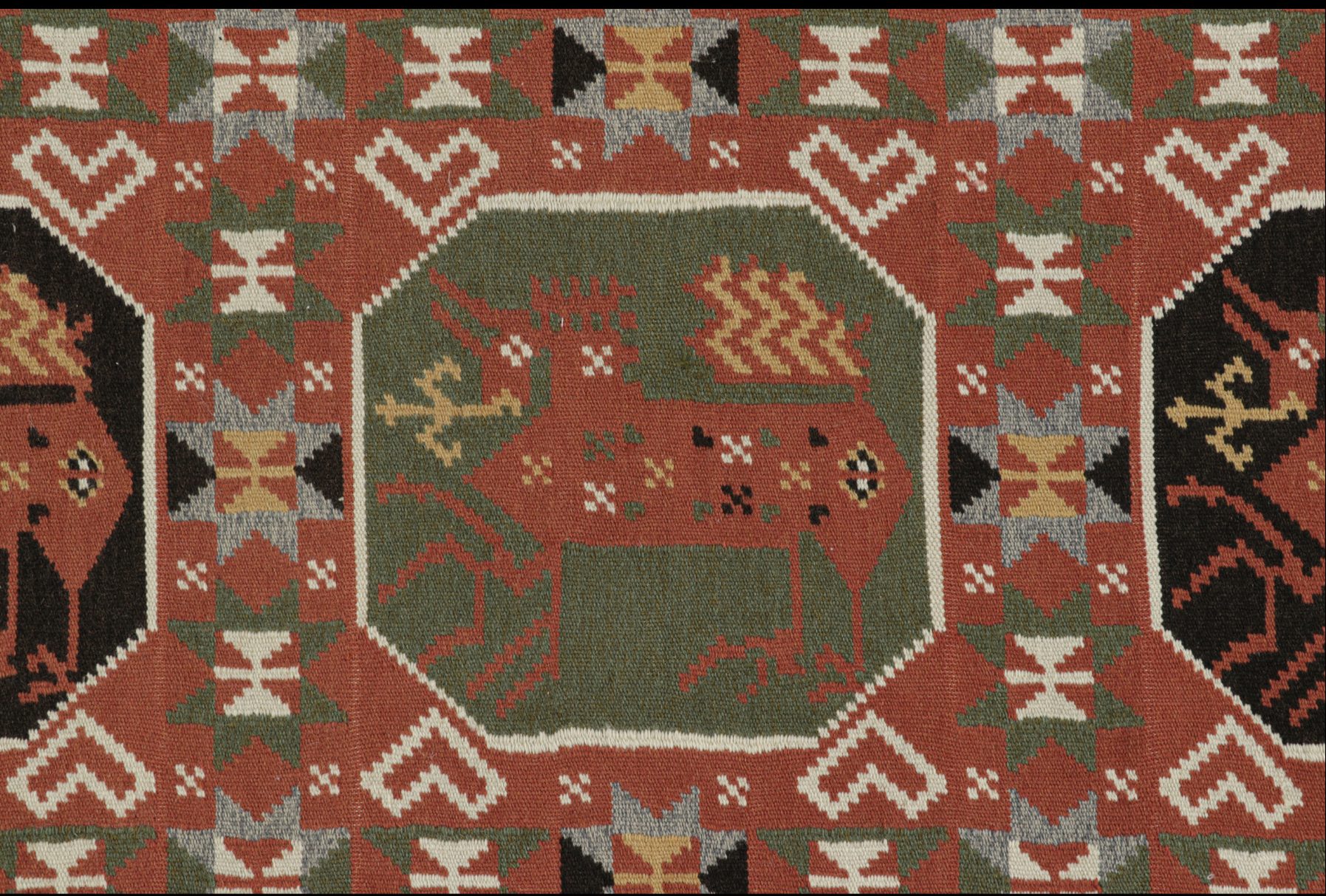
Therefore, these weavings remind us that the boundaries between fine art and craft are modern constructions. The rollakan weaver, like the painter, organized color and form to create visual harmony.
Both worked within limitations—the canvas’s rectangle, the loom’s structure—finding freedom through constraint.
The details are not the details; they make the product.
In rollakans, every choice of color, every subtle variation in pattern, constitutes not mere decoration but essential expression.
Moreover, as we face an increasingly digital future, these analog artifacts ground us in material reality and cultural continuity.
Their presence in our homes connects us to generations of makers whose creativity found expression through thread and loom. In conclusion, they remind us that meaningful design transcends time, speaking across centuries with undiminished clarity.