
The Essential Guide to Scandinavian Rugs for Contemporary Living
March 25, 2025
René Perrot’s Tapestries and the Post-War Revival of French Decorative Arts
March 28, 2025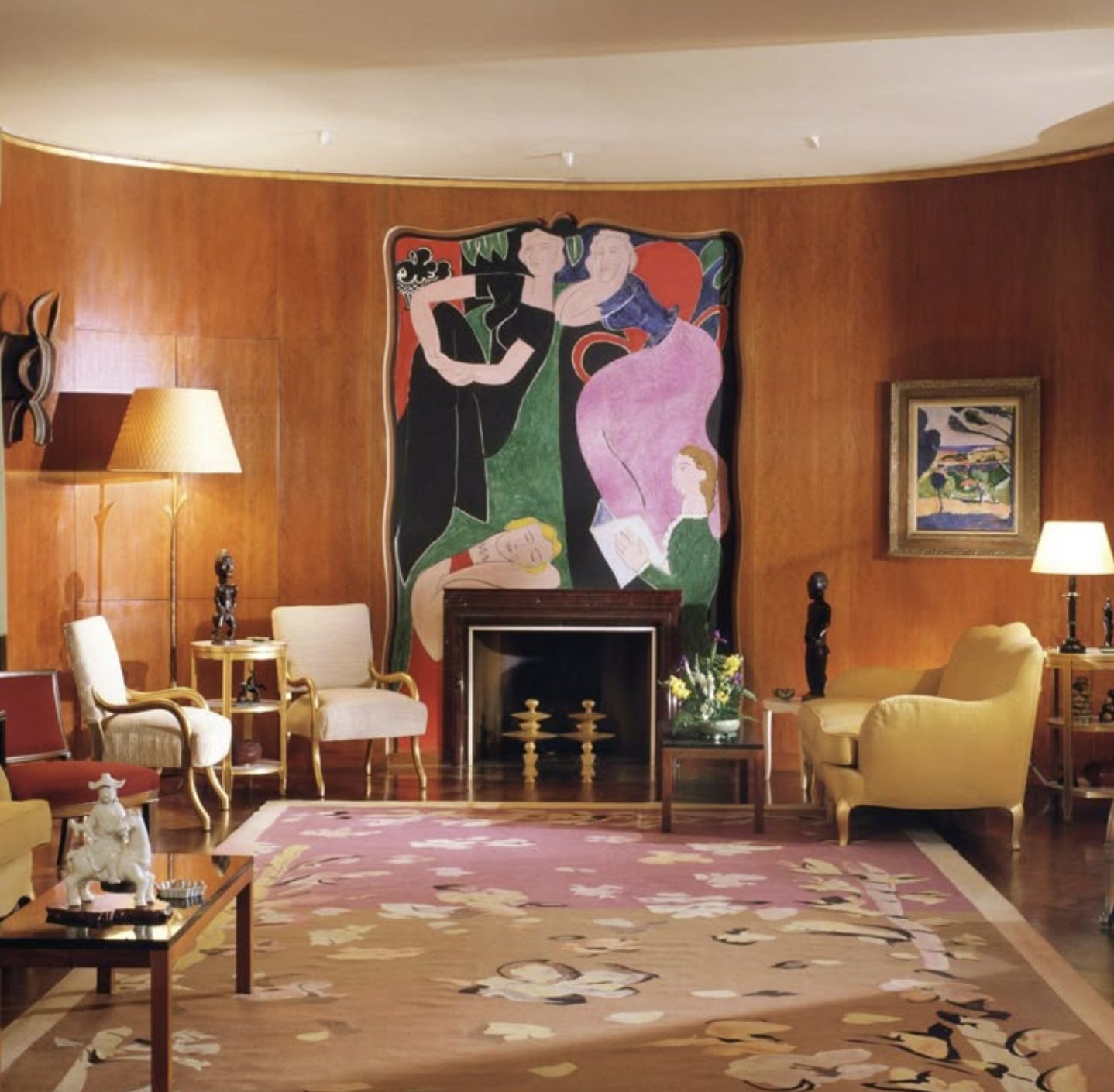
Jean-Michel Frank and Nelson Rockefeller Upper East Side
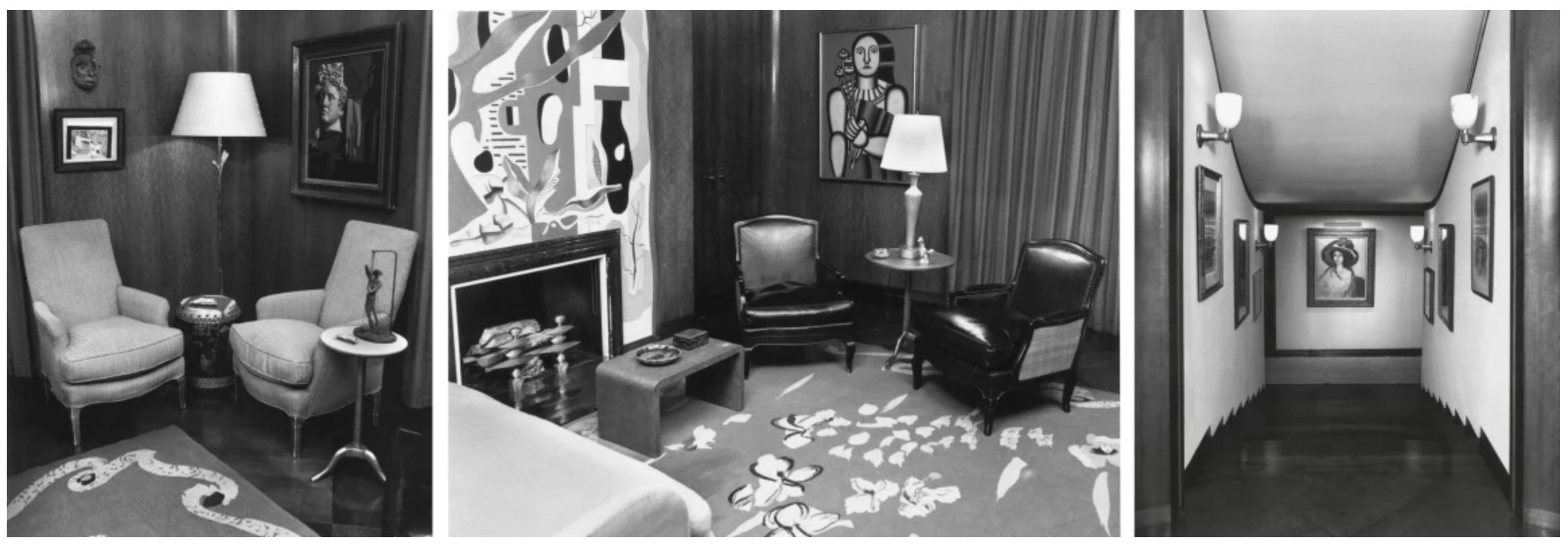
INTERIOR VIEWS OF THE ROCKEFELLER APARTMENT. PHOTOS COURTESY OF THE ROCKEFELLER ARCHIVE CENTER
In the realm of 20th-century design, few figures cast a shadow as long or as nuanced as Jean-Michel Frank.
Often misunderstood as a mere minimalist, Frank was in fact a revolutionary who transformed the very language of luxury during the interwar period, creating a aesthetic of restrained opulence that continues to echo through contemporary design.
“You can furnish a room very luxuriously by unfurnishing it.”
This paradoxical statement encapsulates Frank’s genius—his ability to strip away excess while simultaneously elevating what remained to a state of sublime refinement. Where his contemporaries might have relied on ornate embellishment, Frank discovered luxury in reduction and material innovation.
The Paradox of Luxe Pauvre
Frank’s signature “luxe pauvre” (poor luxury) aesthetic emerged as a direct response to the overwrought decorative tendencies of late 19th century design. In a post-World War I Europe grappling with profound social change, his vision offered a new definition of elegance—one that whispered rather than shouted, that found richness in restraint.
“The noble frames that came to us from the past can receive today’s creations. The house that we build now can welcome ancient things of beauty.”
This philosophy of temporal integration allowed Frank to transcend stylistic boundaries, creating spaces that were both timeless and unmistakably modern.
The 1926-27 design for the Noailles hôtel particulier at Place des États-Unis became the definitive statement of Frank’s early vision. The now-legendary salon, with its parchment-paneled walls, blocky white seating, and quartz lamps, created a temple-like atmosphere of contemplative luxury.
What many fail to recognize when viewing Man Ray’s iconic photographs is that this room was designed as a canvas for the couple’s cutting-edge art collection. The space was not intended to remain in monastic emptiness but to frame and elevate works by Dalí, Balthus, and their contemporaries.
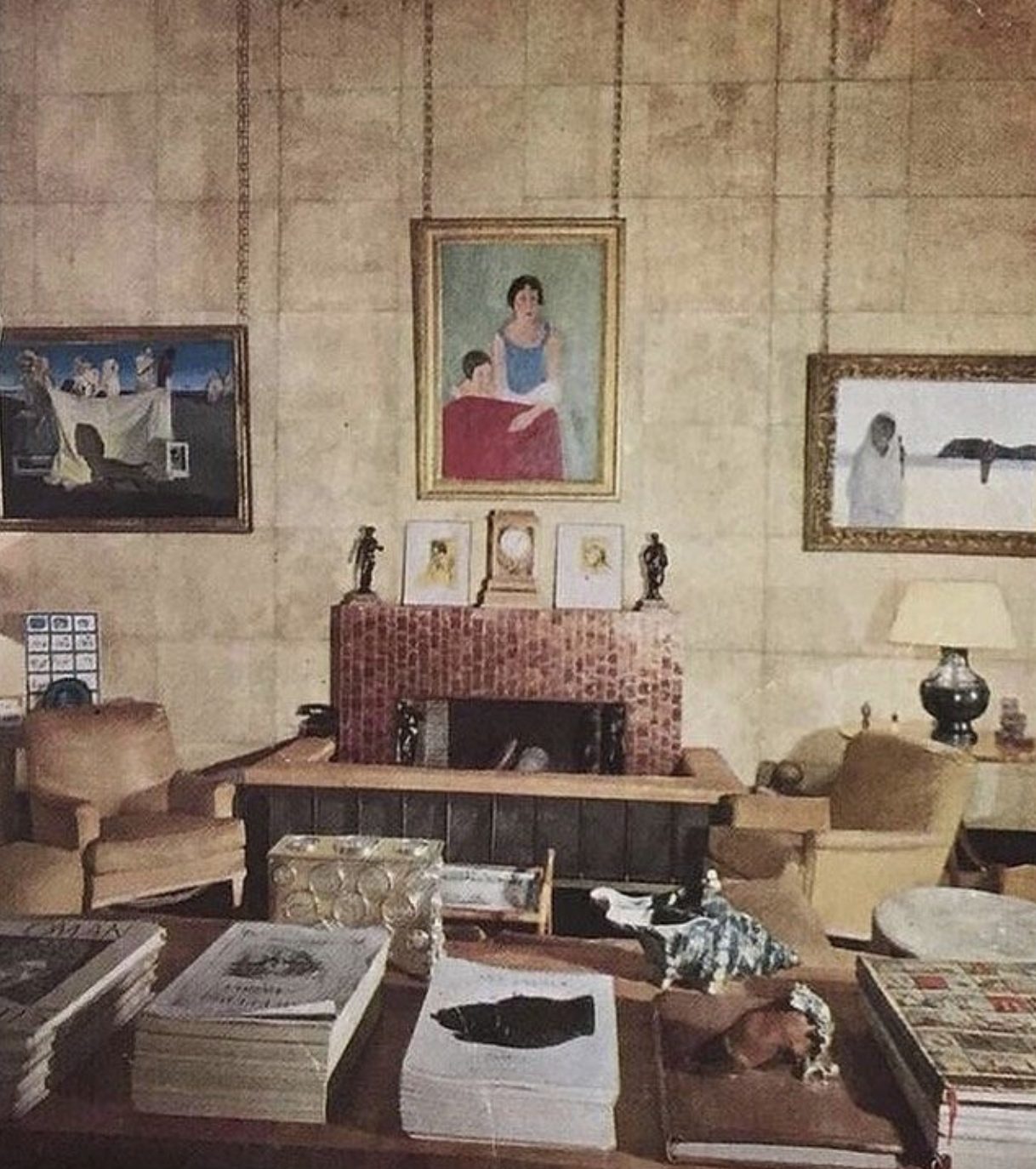
Le grand salon premier chez de Noailles, decorated in 1925 by Jean-Michel Frank, as it appeared in Paris Vogue in September, 1950.
Design Inspirations
Frank’s genius lay not merely in what he removed but in his revolutionary approach to materials. Like the Abstract Expressionists who would later find emotional truth in the elemental qualities of paint, Frank discovered the soulful potential in humble substances.
His exploration of straw marquetry—an almost forgotten 17th century technique—transformed this pedestrian material into surfaces of shimmering sophistication. Similarly, his experiments with shagreen, parchment, mica, obsidian, and plaster elevated these materials beyond their utilitarian origins.
The obsidian table lamps created circa 1925 exemplify this transformative approach—volcanic glass formed by rapidly cooled lava became sculptural elements that transcended mere functionality. That these lamps now command prices upwards of $200,000 at auction speaks to the enduring power of Frank’s material alchemy.
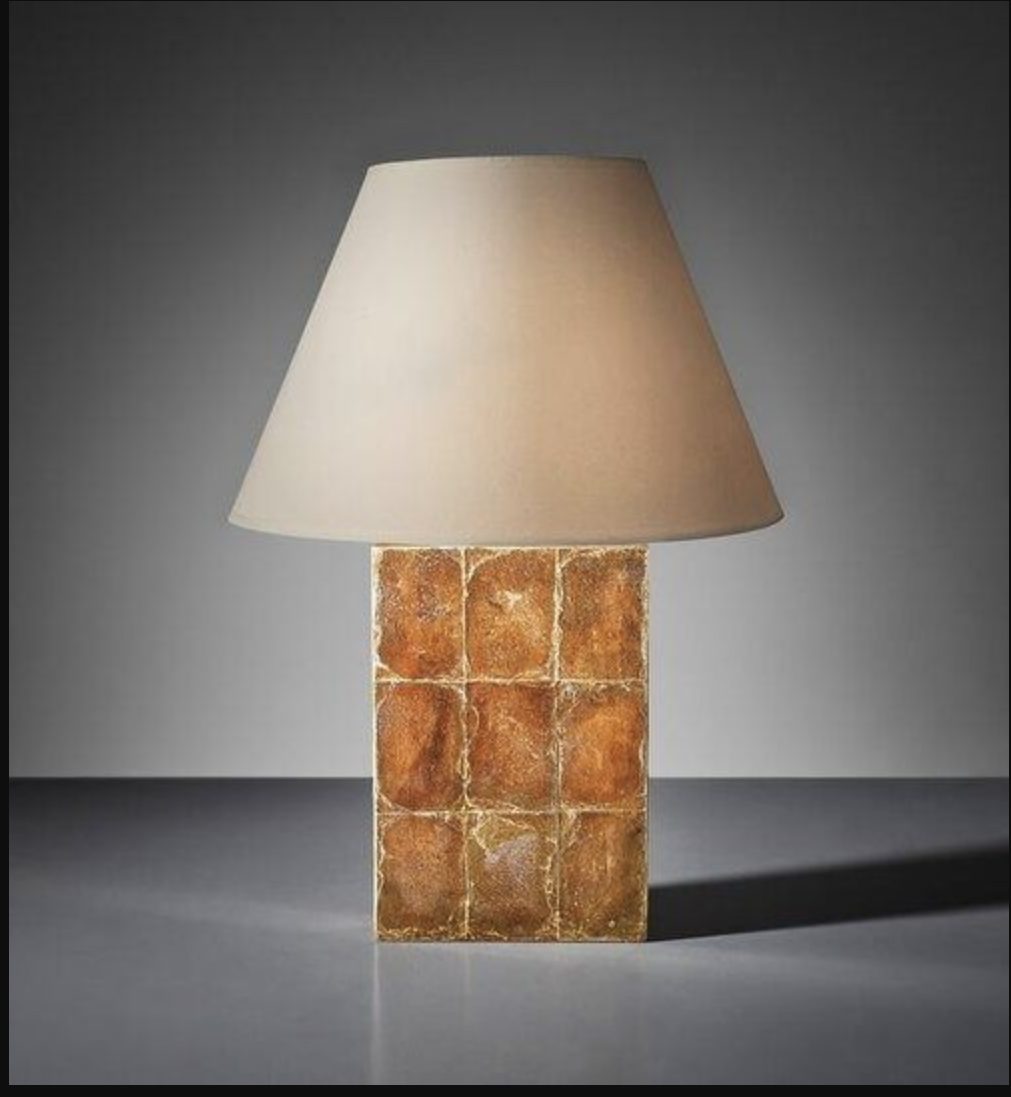
Designs by Jean-Michel Frank
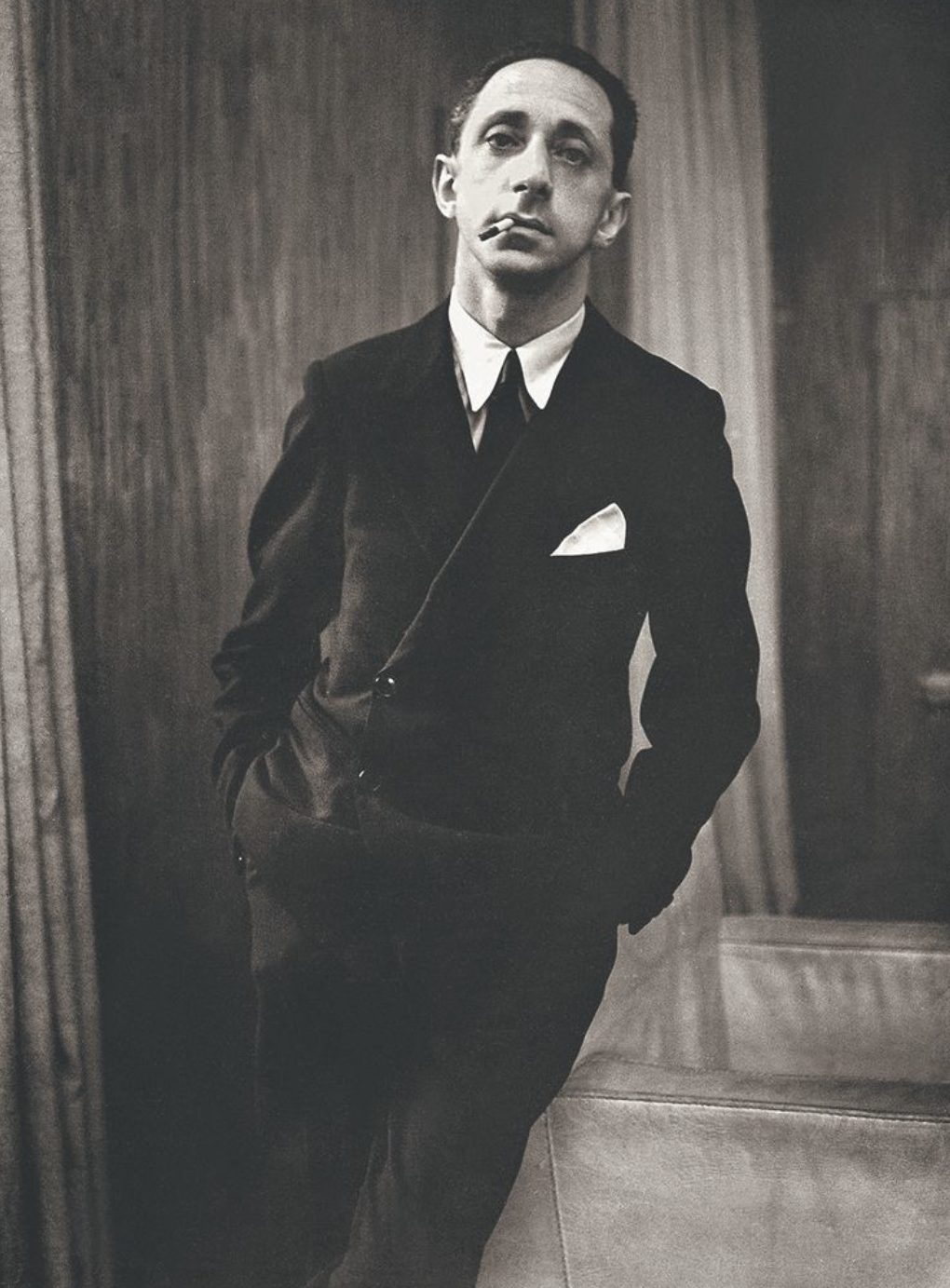
Portrait of Jean-Michel Frank
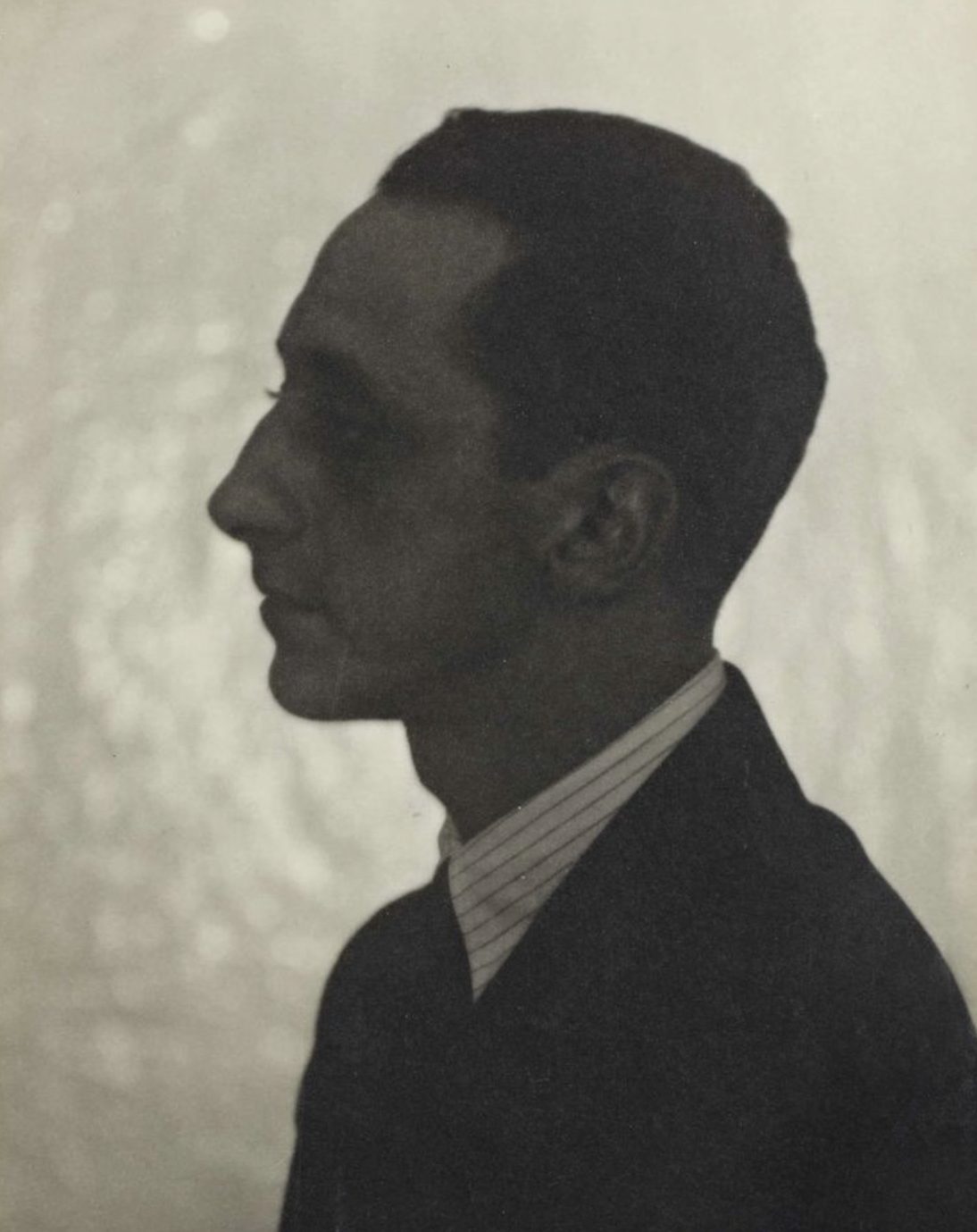
Portrait of Jean-Michel Frank
Beyond Beige: The Color Palette Evolution
The popular conception of Frank’s work as exclusively beige betrays a superficial understanding of his creative journey. His alliance with fashion iconoclast Elsa Schiaparelli marked a pivotal expansion of his palette.
Their collaboration yielded interiors that embraced vibrant color and playful surrealism—orange leather sofas juxtaposed with black rubber draperies, dining spaces with quilted blue chintz banquettes.
“I wish one could more often see artists collaborating in arranging houses. The result would be, at the very least, something of our time, and alive.”
Frank’s admiration for the collaborative spirit of Sergey Diaghilev’s Ballets Russes informed his own practice of creative partnership.
His work with Alberto and Diego Giacometti, Christian Bérard, and Emilio Terry anticipated the cross-disciplinary approach that would later become fundamental to contemporary design.
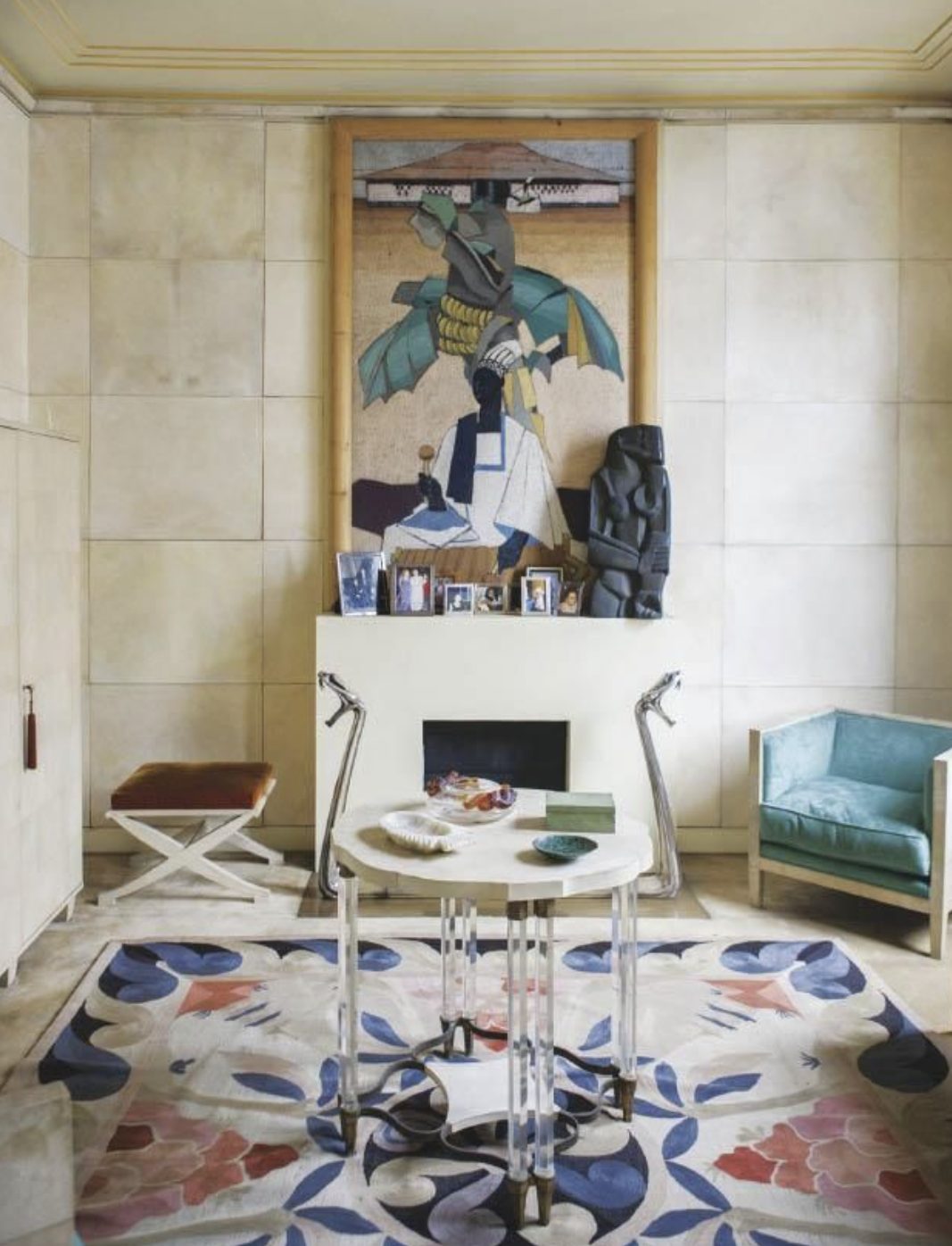
Interiors by Jean-Michel Frank
The American Period
The commission from Nelson Rockefeller in the late 1930s represents Frank’s synthesis of classical references and modernist principles. Working over two years, Frank created interiors that harmonized Louis XV inspirations with Rockefeller’s passion for contemporary art.
The resulting spaces—complete with gilt accents and vibrant hues—demonstrate Frank’s mature vision of integrated design, where historical references and avant-garde art coexist in elegant dialogue.
“I believe that a less severe principle can be found—the mixing of styles.”
This statement from 1935 reveals Frank’s prescient understanding of what would become a cornerstone of postmodern design decades later.
His ability to synthesize seemingly contradictory elements—historical and contemporary, minimal and sensual, subdued and bold—places him squarely in the intellectual lineage that connects the Bauhaus to Memphis Milano to contemporary eclecticism.
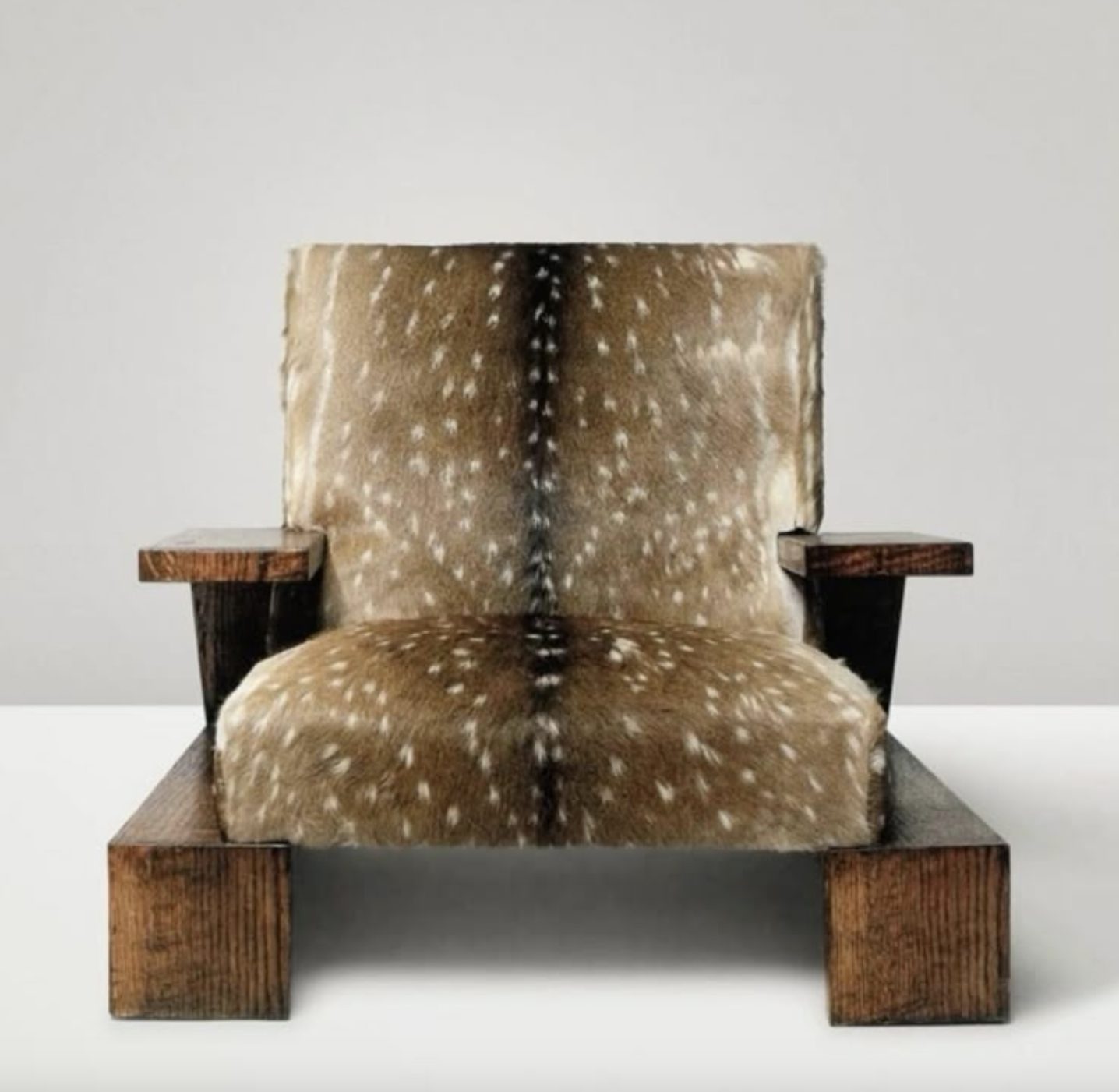
Designs by Jean-Michel Frank
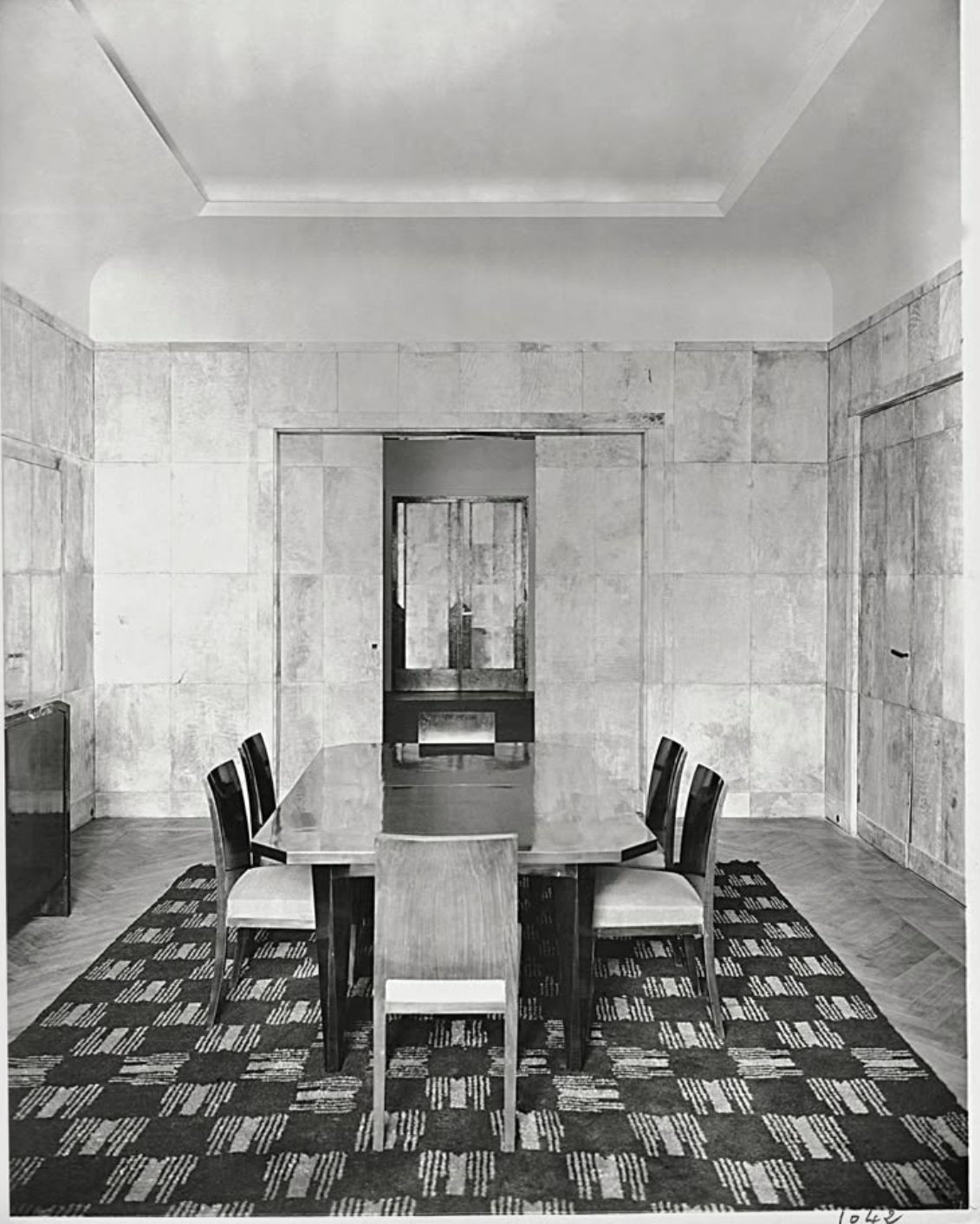
Templeton Crocker penthouse, circa 1929, designed by Jean-Michel Frank,
Jean Michel Frank’s Legacy of Influence
The Parsons table—arguably Frank’s most widely recognized design—epitomizes his enduring relevance. This deceptively simple form, developed in conjunction with Joseph B. Platt around 1936, has become one of the most versatile and widely adapted furniture archetypes of the modern era. Its stripped-down rectilinear form could be finished in mother-of-pearl, parchment, lacquer, or ivory to “give it a great elegance”—a perfect embodiment of Frank’s ability to find luxury in essential forms.
The tragic end to Frank’s life—suicide in Manhattan in 1941 after fleeing Nazi-occupied France—cut short a brilliant trajectory. Yet his influence remains vibrantly alive in contemporary design. Today’s leading designers continue to reference and reinterpret Frank’s principles of material richness, sculptural restraint, and contextual sensitivity.
In an era obsessed with maximalism and minimalism as opposing poles, Frank’s nuanced middle path offers particular relevance.
His rooms were never austere galleries nor opulent showcases but rather sophisticated containers for living. As he pragmatically inquired, in spaces of “perfect taste,” where would one play the gramophone?
Frank’s legacy reminds us that true luxury resides not in ostentation but in the poetic dialogue between absence and presence, between history and innovation, between the hand and the material.
In this lies the timeless relevance of his contribution to the language of modern design.