
Swedish MMF Atelier’s Brown Coffee Rug Collection of Scandinavian Rugs
December 4, 2024
A Guide to Rollakan and Rya Swedish Rug Weaving Techniques
December 9, 2024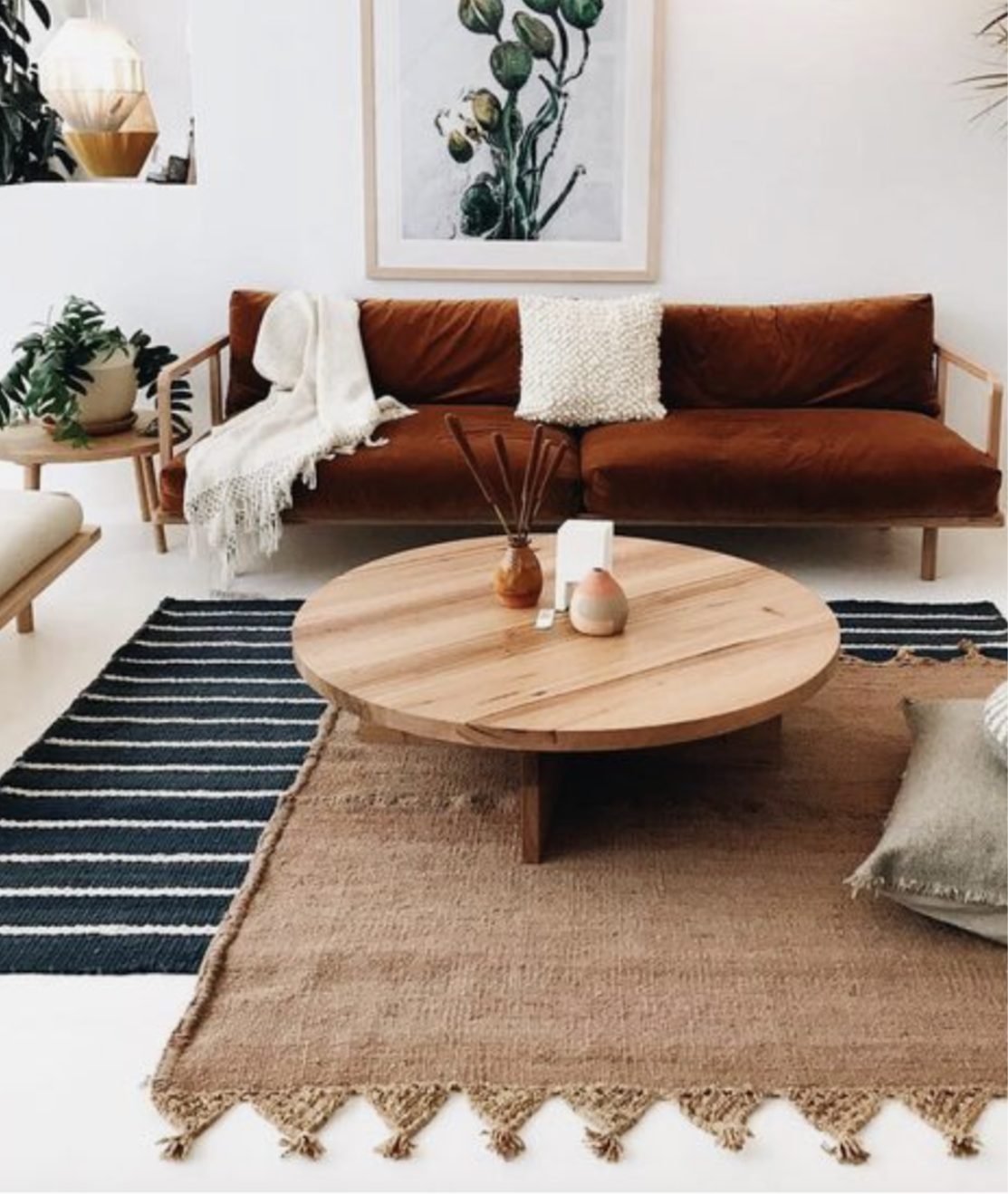
Layering rugs is not a new concept; it has been a part of various traditional design styles for centuries.
Nomadic cultures, in particular, have used layered rugs to insulate their living spaces and enhance the warmth and comfort of their homes. However, it is the contemporary design world that has reimagined and elevated this practice into an art form.
Interior designers began experimenting with layering rugs as a creative way to break away from the conventional single-rug arrangements. They recognized the potential of combining different textures, patterns, and sizes to add depth, visual interest, and personality to rooms. As a result, the trend gained momentum, and layering rugs became a widely embraced technique in interior design.
The fundamentals of rug layering begin with understanding that this technique isn’t merely about stacking carpets—it’s about creating visual depth, defining spaces, and adding textural complexity to modern interiors.
Today, layering rugs is celebrated for its versatility and ability to complement a range of design aesthetics. Whether used to create cozy corners in large spaces or to define separate areas within a room, layering rugs offers endless possibilities for adding style and character to interior spaces. It has become a popular design choice embraced by homeowners and designers alike for its ability to transform and enhance living spaces with charm and sophistication.
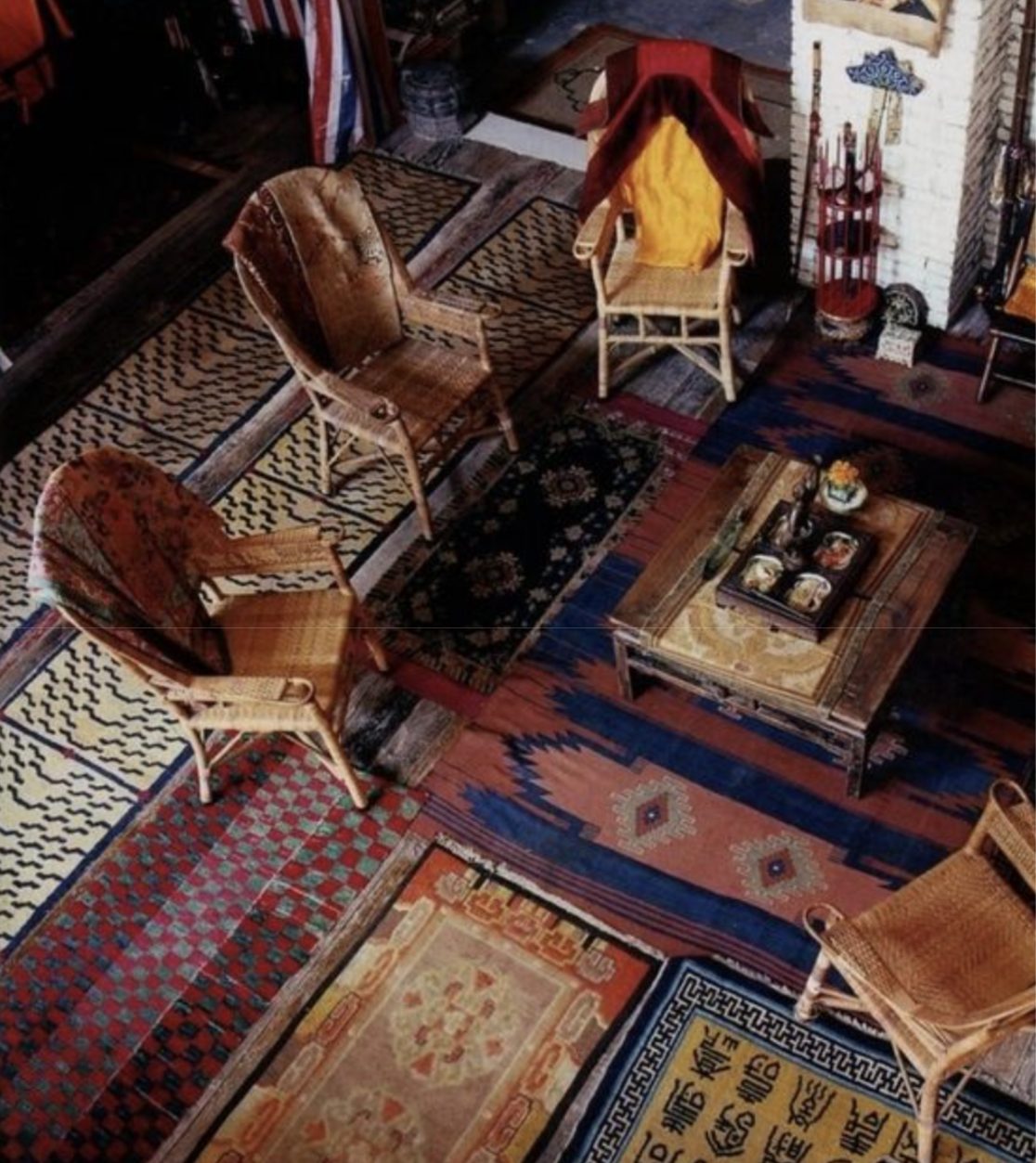
Layering rugs is a fantastic way to add texture and dimension to a room while embracing the trend of pattern-mixing. Whether placed on carpet or hardwood floors, layering rugs can instantly cozy up a space and inject personality into your decor.
While it may seem daring at first, the key is to choose patterns and colors that complement each other while still offering enough contrast to create visual interest.
Rug & Kilim’s Tips to Layering Rugs in Modern Spaces –
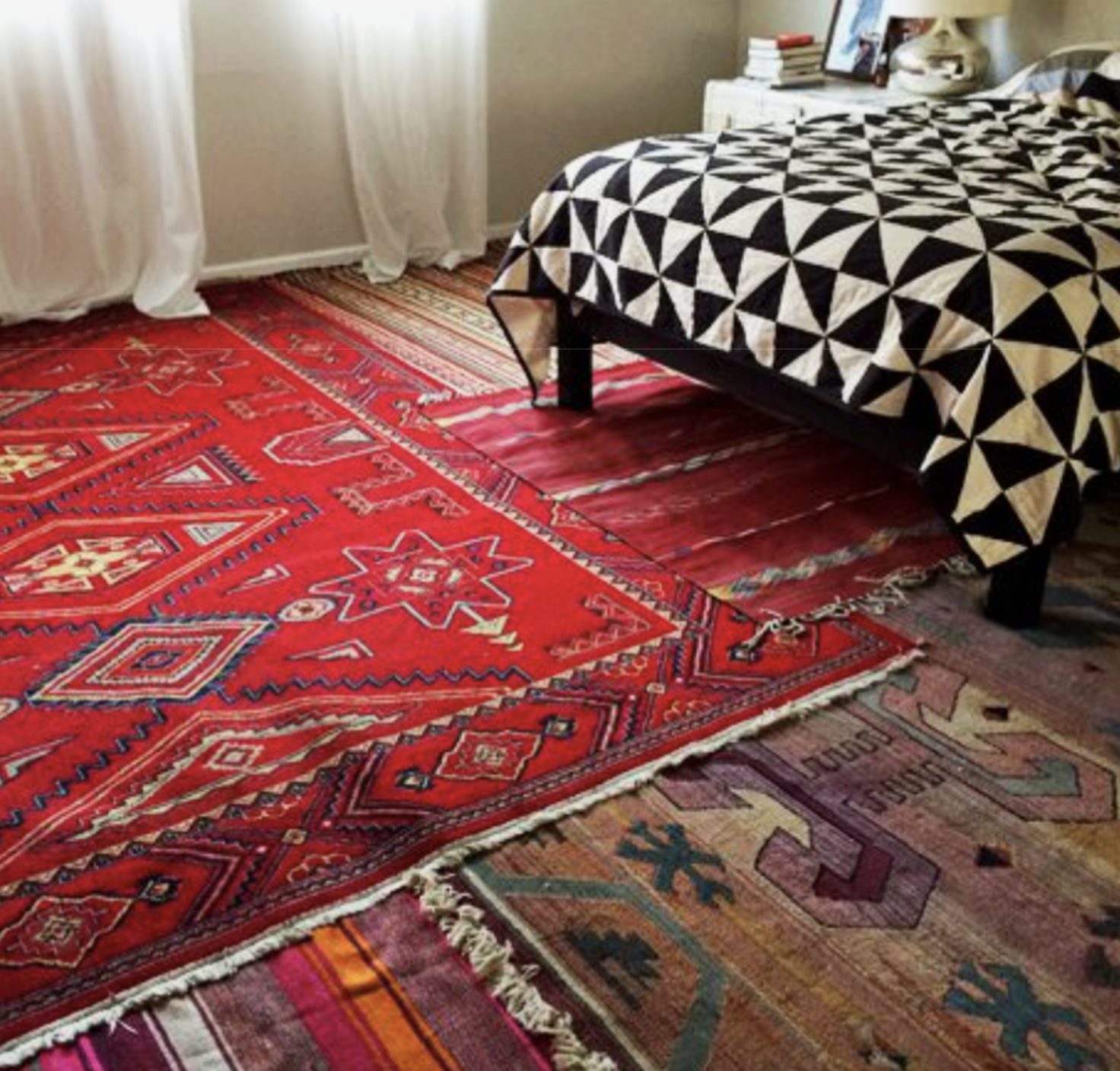
Mix and Match: Experiment with combining rugs of different styles, such as a traditional Oriental rug layered over a modern geometric rug, to create a unique and eclectic look. Choose one dominant pattern, texture, or shape as the focal point of the room, and then layer other elements around it to create balance and harmony.
Contrast Textures: Pair a plush, high-pile rug with a flat-weave or jute rug to add dimension and tactile interest to your floor space. By layering rugs, you can introduce additional patterns, colors, and textures that complement or contrast with the existing carpet. This can help break up the monotony of a large carpeted area and add visual interest to the room.
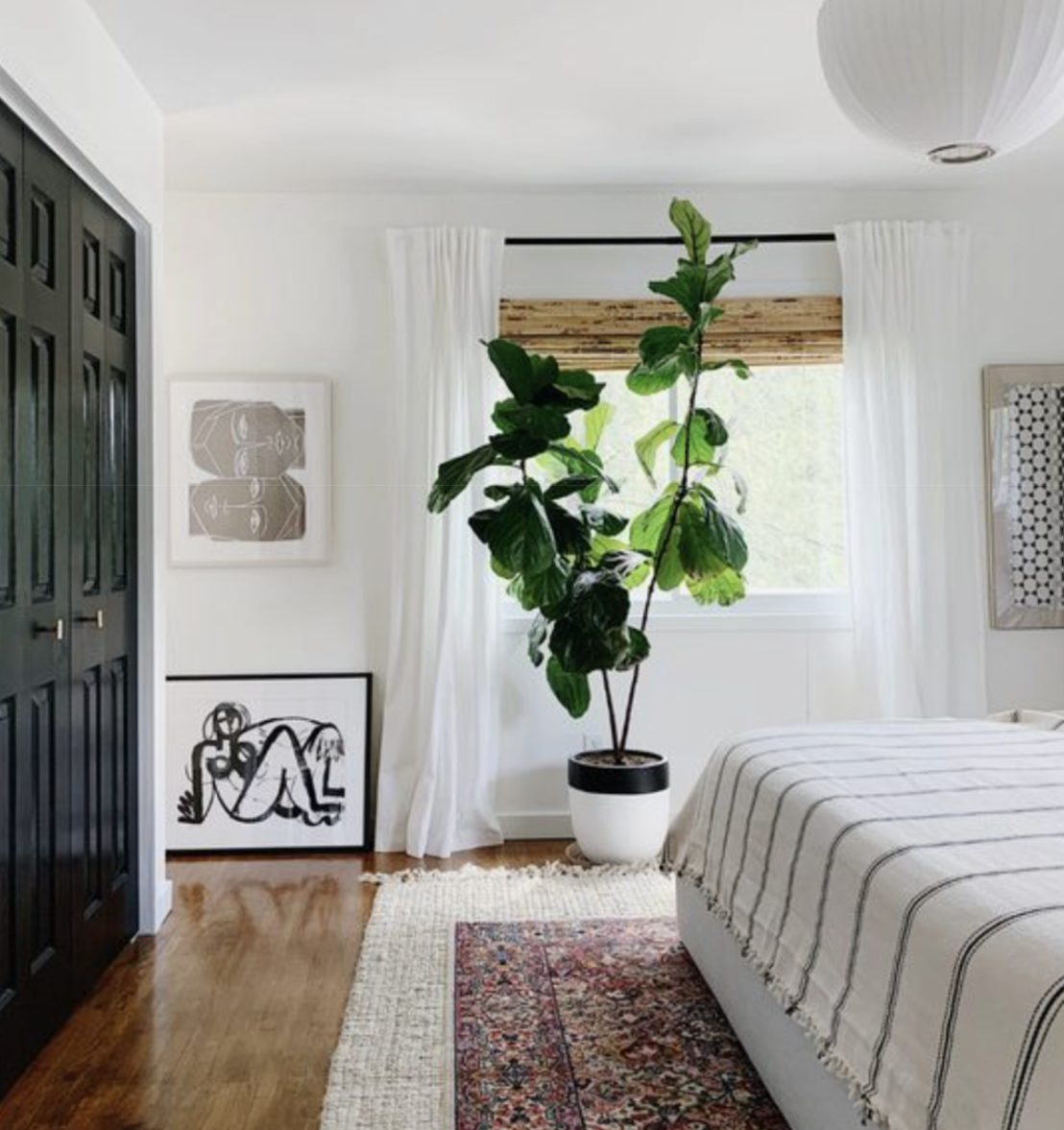
Play with Patterns: Combine rugs with different patterns, such as stripes, florals, or geometric designs, to create a dynamic and visually engaging composition. Opt for complementary colors to make a bold statement, or select rugs with similar hues for a cohesive look.
Define Spaces: Use layered rugs to delineate different areas within an open-concept room, such as a seating area or dining area, helping to create distinct zones and visual separation. Start by selecting a larger rug as the base layer to anchor the room and provide a foundation. The second rug, usually smaller, can be placed on top of the base rug. Experiment with different placements, such as centering the top rug or positioning it off-center for asymmetry.
Anchor Furniture: Layering rugs can also help anchor furniture groupings within a room, providing a cohesive foundation for sofas, coffee tables, and chairs.
Use of Rug Pads: Consider using rug pads between the layers to prevent slipping, provide cushioning, and ensure the rugs stay in place, especially if they are placed on hard flooring surfaces.
Don’t forget about shape: Incorporate different shapes, such as geometric, organic, or abstract, to add variety and movement to the space. Mix and match shapes to create an eclectic and visually stimulating environment.
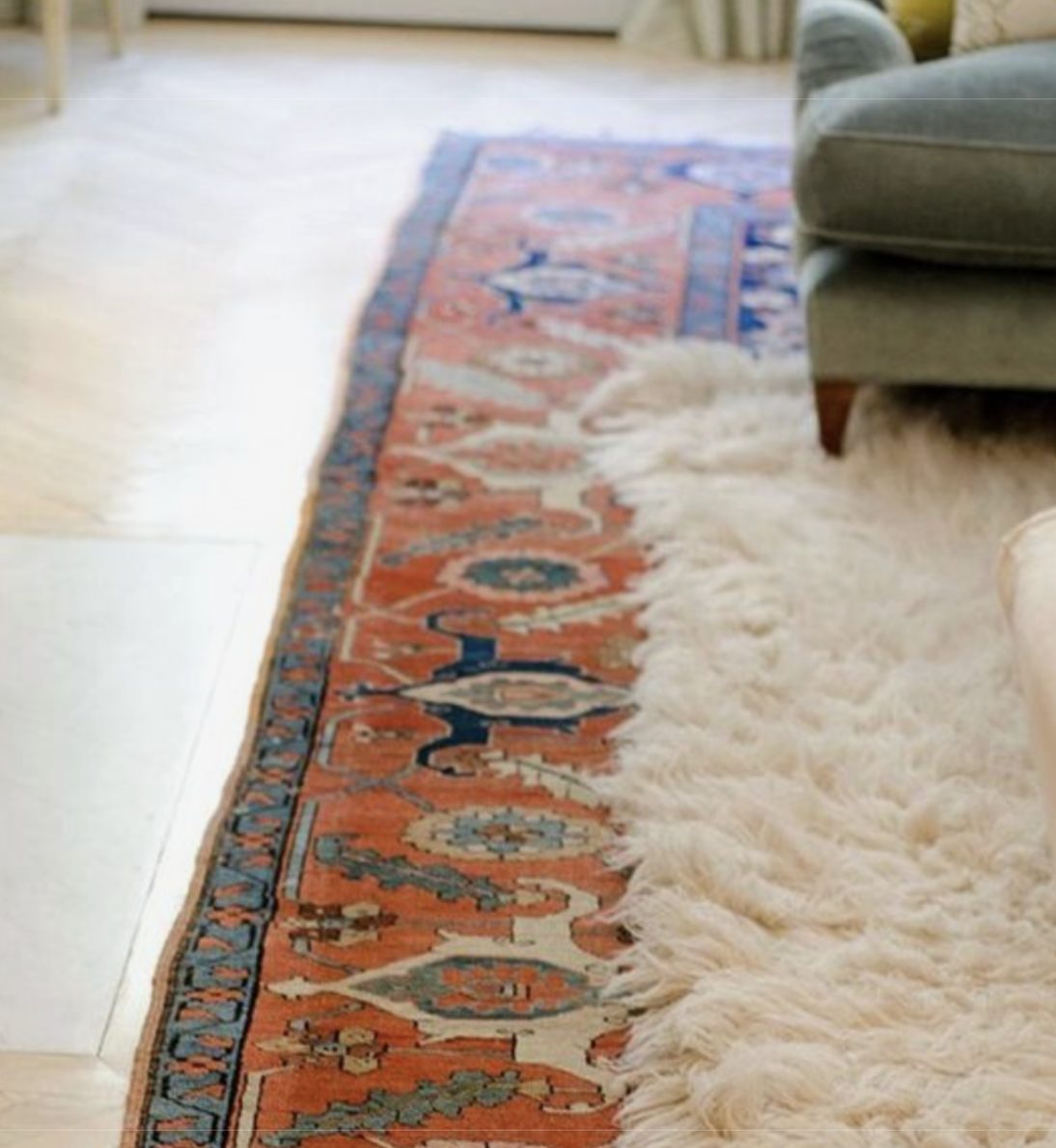
Layering in Modern Spaces
Choosing a vintage patterned rug, such as a Persian rug, combined with a natural woven rug like jute, can indeed create a stylish and balanced layered look. This approach allows for a harmonious blend of textures and patterns without overwhelming the space.
Layering rugs not only anchors furniture in large spaces but also offers several other benefits, such as creating distinct vignettes and defining separate areas within a room.
By layering rugs strategically, you can effectively divide a large open space into smaller, more intimate sections, each serving its own purpose. For example, in an oversized family room, you can use a large base rug to cover most of the floor space, providing a cohesive foundation for the room. Then, you can layer a smaller rug underneath a sofa and a pair of chairs at one end of the room to create a separate seating area or conversation nook.
This helps to visually delineate different zones within the larger room, making it feel more organized and purposeful.
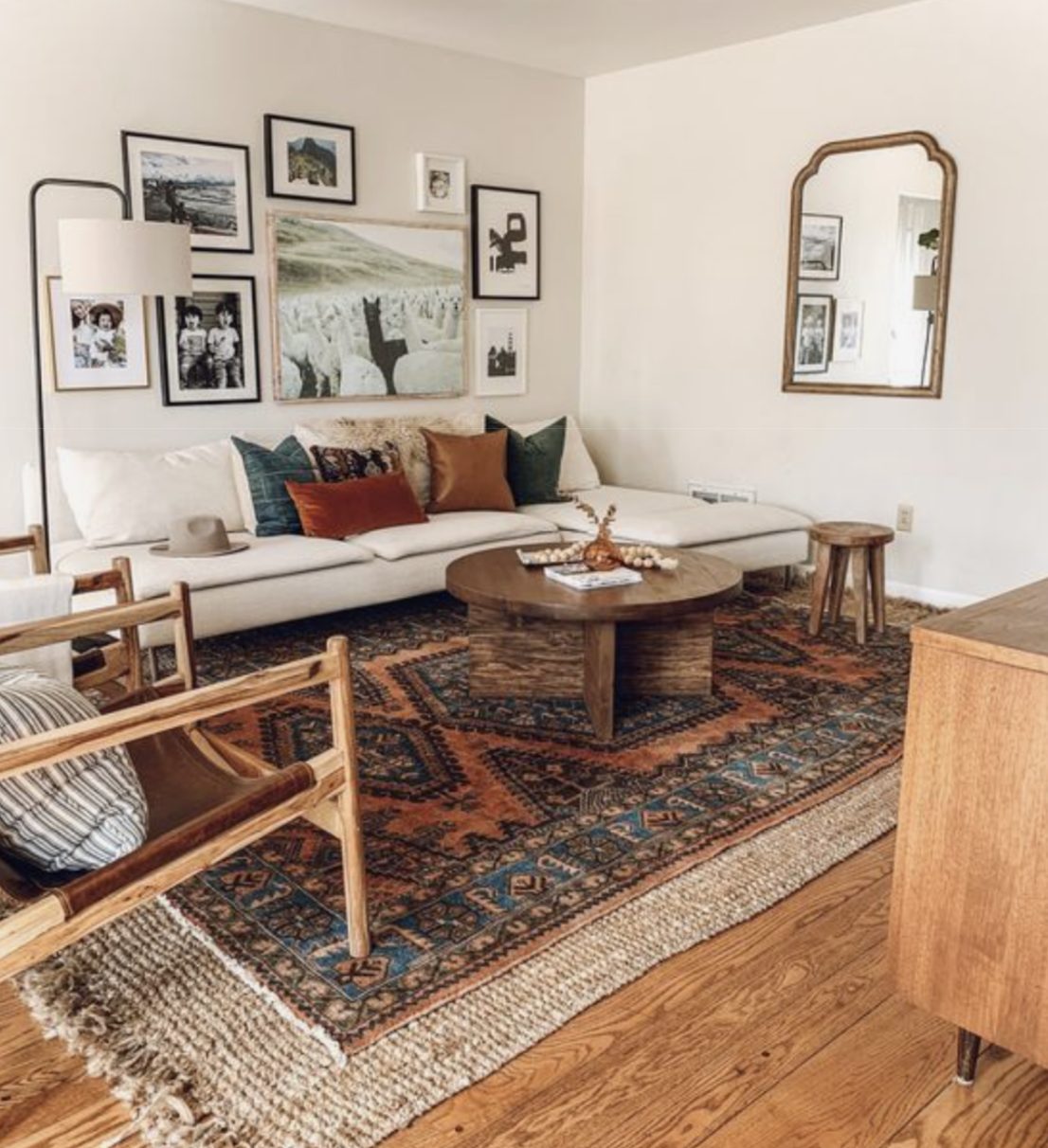
Area rugs play a crucial role in dictating and signaling the various spaces within a room, allowing you to design a layout that suits your needs and enhances the functionality of the space.
Whether you’re looking to create cozy seating areas, define a dining space, or establish a reading corner, layering rugs can help you achieve your desired layout and ambiance with style and versatility.