
1920s on the Diagonal: Art Deco Rugs Complementing Tamara De Lempicka & Erté
June 17, 2025
Palatial Rugs as Centerpieces in Salons, Galleries & Embassy Homes
June 20, 2025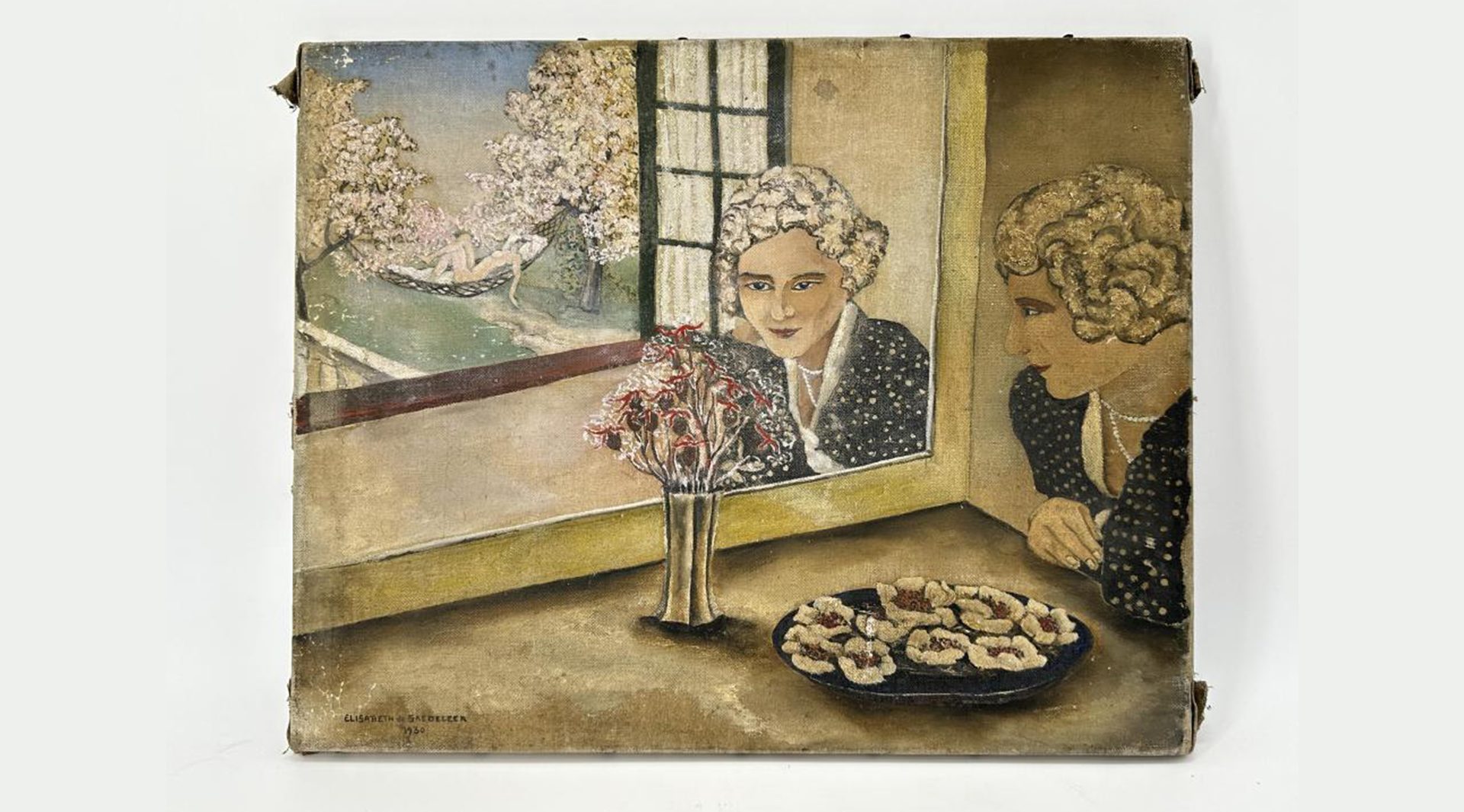
Elisabeth de Saedeleer’s Art
In Belgian Art Deco, there lies a hushed but resonant style and thought, one created by Elisabeth De Saedeleer, a weaver whose contemplative works shaped the aesthetics of early 20th-century textile art. Her oeuvre, rooted in geometric subtlety and spiritual calm, bridges the stylistic clarity of Art Deco with the mystical undercurrents of Symbolism. As a key figure in Belgian textile history, De Saedeleer’s legacy exemplifies how feminine abstraction, craftsmanship, and spiritual modernism coalesced in quiet resistance to industrial noise.
The Latem School and Artistic Stillness
De Saedeleer’s artistic language was deeply influenced by her formative years at the Latem School of Art, a community that rejected industrial capitalism’s chaos in favor of an aesthetic monasticism. The Latem School’s second wave in particular emphasized simplicity, spirituality, and return to nature—all of which are deeply embedded in De Saedeleer’s woven worlds.
Here, she was mentored not only by artists but also by a philosophy—an ethos that valued craftsmanship, introspection, and the sacred rhythm of material. Her father, painter Valerius De Saedeleer, was a foundational figure in the Latem movement, and Elisabeth internalized both his reverence for medieval mysticism and the symbolist quietude that ran through the region’s artistic identity.
Her tapestries reflect this education—not in overt iconography, but in symbolic geometry, stylized motifs, and a profound sense of order. There is a serenity in her patterns, an echo of spiritual modernism that aligns her more with Clara Porset or Anni Albers than with the harder lines of machine-age Deco.
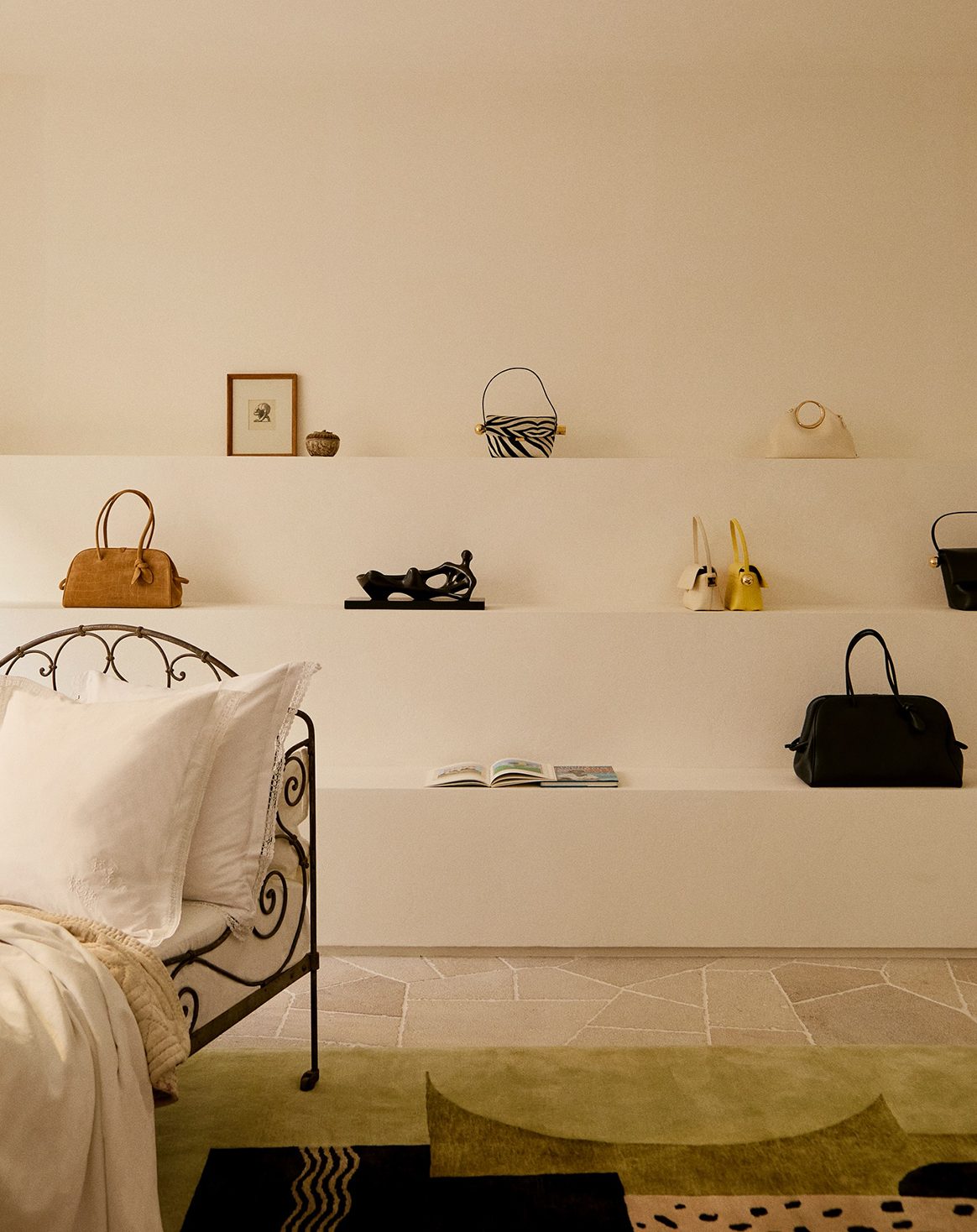
Jacquemus x Rug & Kilim
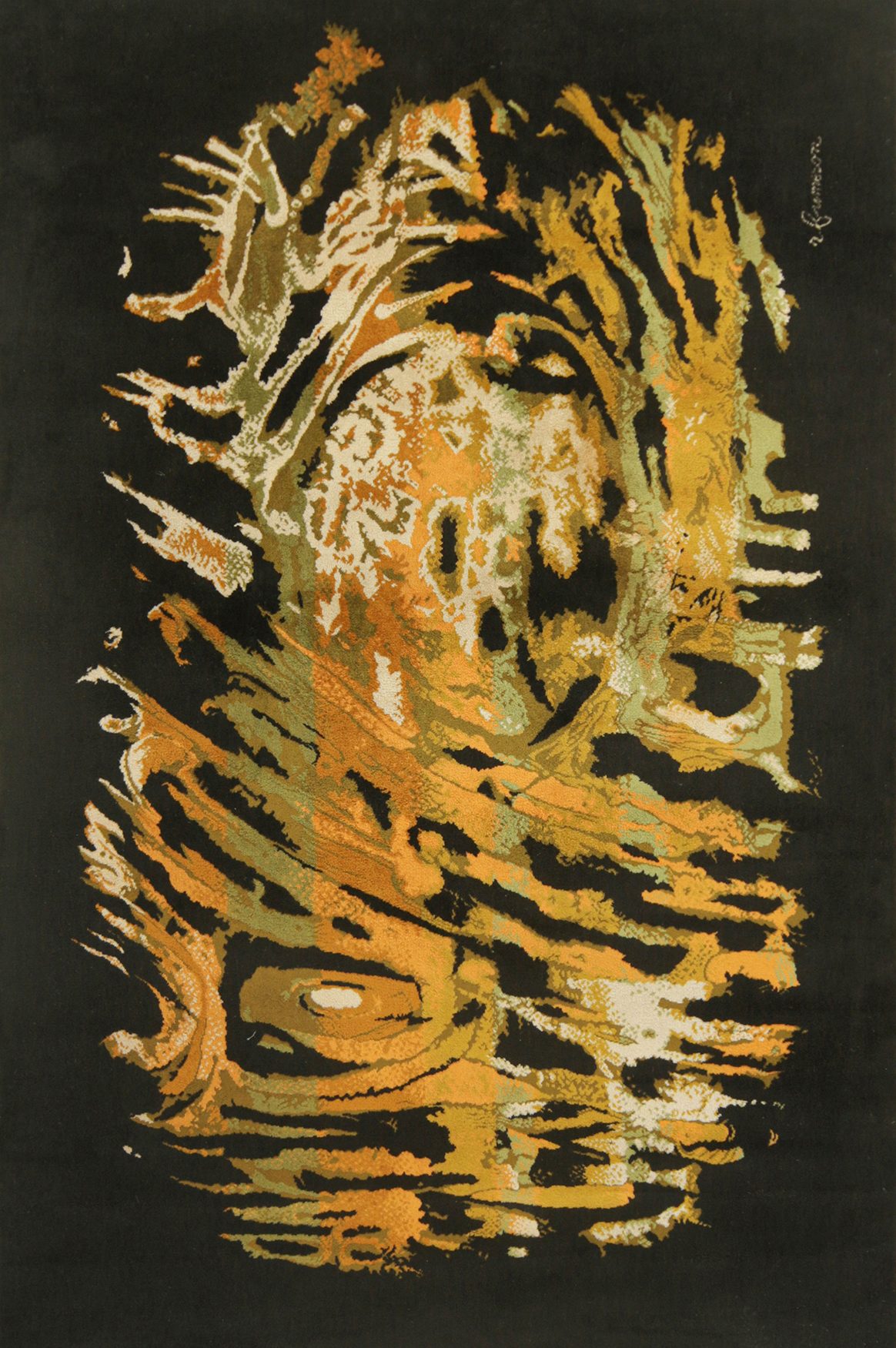
Feminine Abstraction and a Quiet Radicalism
Where the monumentalism of male artists dominated the avant-garde, De Saedeleer’s work brought a soft resistance. Her textiles do not shout; they hum. Her approach to Art Deco tapestry art reframed abstraction through a distinctly feminine lens—less about domination of form, more about its meditation.
This feminine modernism is most evident in her use of earthy palettes, recurring motifs from nature, and modular patterning that calls to mind ritual repetition rather than mass production. De Saedeleer’s handwoven rugs and tapestries speak of time as a spiritual process. In each warp and weft, there is a monastic rhythm, a form of devotion.
In this, she becomes an early representative of feminine voices in modernism, quietly challenging the binaries of form and function, art and craft, feminine and universal.
Belgian Art Deco
Where French Art Deco leaned into luxury and exuberance, Belgian Art Deco possessed a more introspective soul. Elisabeth’s textiles stand at this intersection—marrying the structured clarity of Deco with the Symbolist aesthetics of her homeland. Her compositions recall the spiritual geometry of sacred spaces: orderly yet open, structured yet serene.
Motifs found in her work—abstracted leaves, stylized birds, and angular florals—echo not just nature but the interior life. These aren’t mere decorative flourishes but symbols of inner landscapes, drawn through the loom with reverence.
Her tapestries, thus, became modern icons—sacred weavings in an age of secular acceleration.
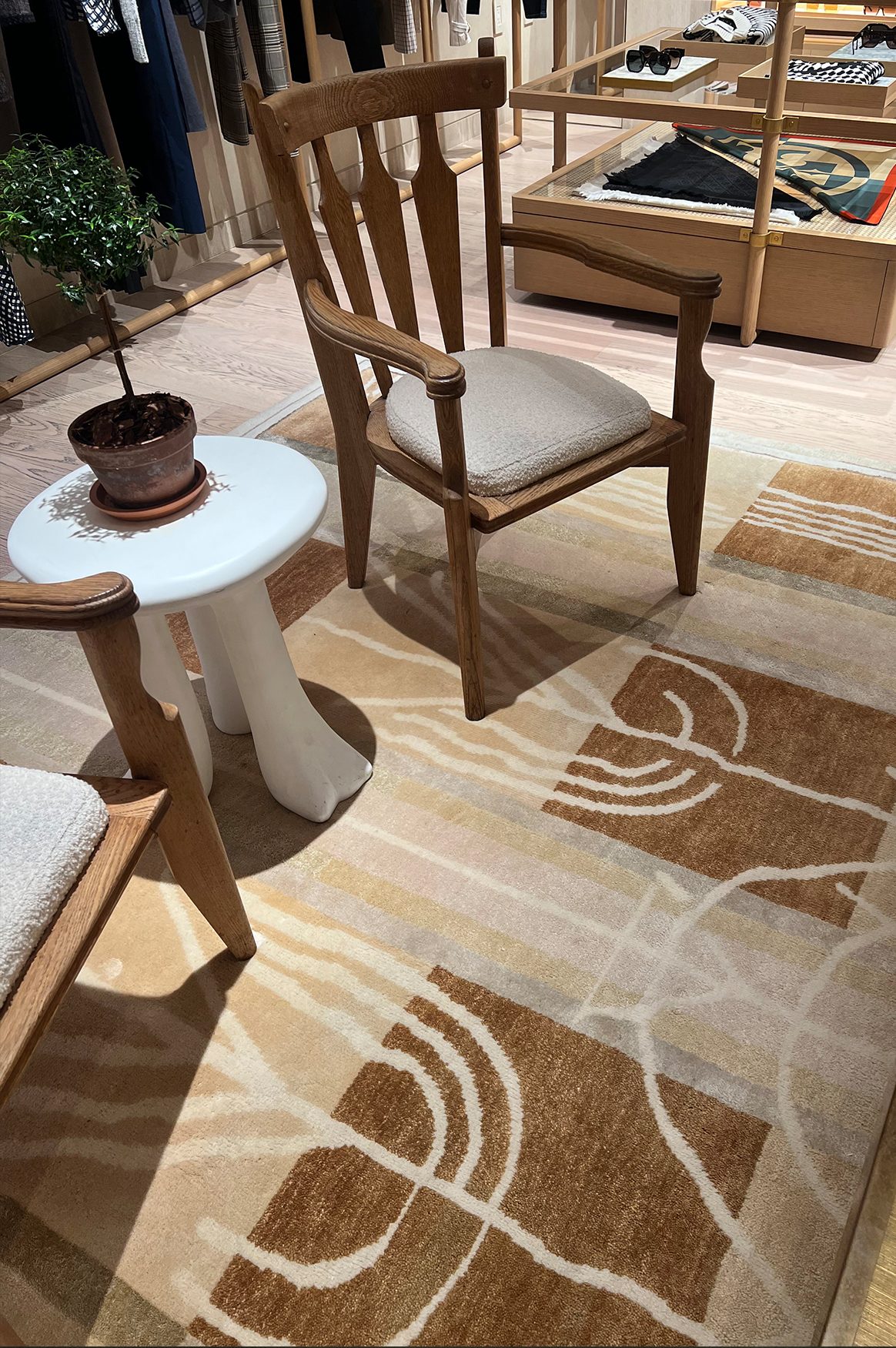
Rug & Kilim’s French Deco at Tory Burch (Flagship, Mercer Street)
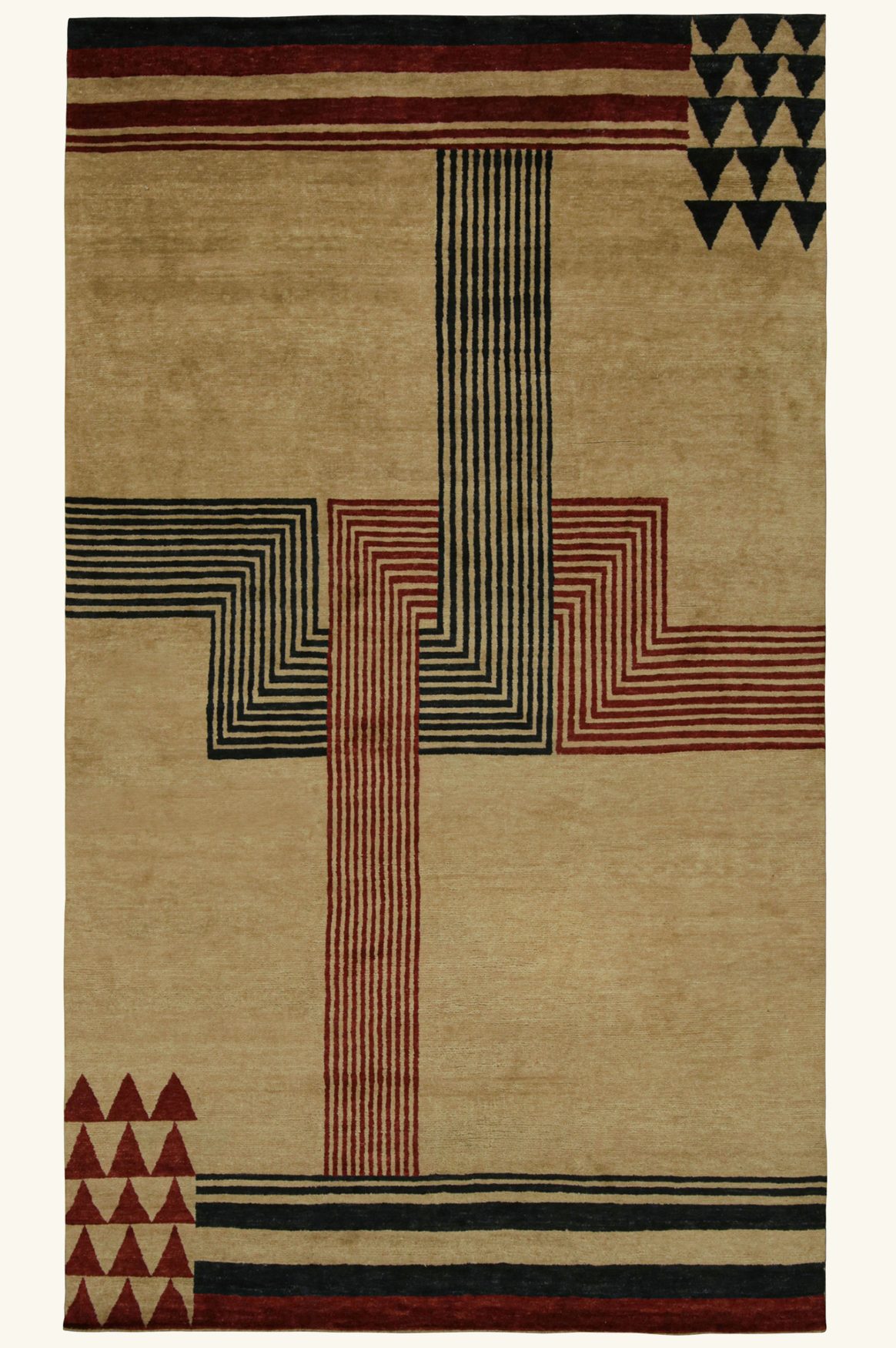
Rugs in Monastic Modernism
Today, Elisabeth De Saedeleer rugs can serve as sublime anchors in contemporary interiors that yearn for tranquility. Whether styled in monastic modernist spaces, minimalist ateliers, or quiet reading nooks, these textiles resonate beyond their historical period. Their neutral tones, muted geometry, and tactility bring emotional depth to a room.
To emulate the soul of her aesthetics:
Pair neutral Art Deco rugs with natural plaster walls, unfinished wood, or raw linen.
Introduce Belgian-style austerity—clean lines, spiritual minimalism, and a palette inspired by moss, ash, and flax.
Let the rug be the contemplative centerpiece—like a floor-bound icon or a soft portal into stillness.
In a design world often overrun by digital trends and bold maximalism, these works offer a return to tactile introspection, where the soul of a space is felt, not flaunted.
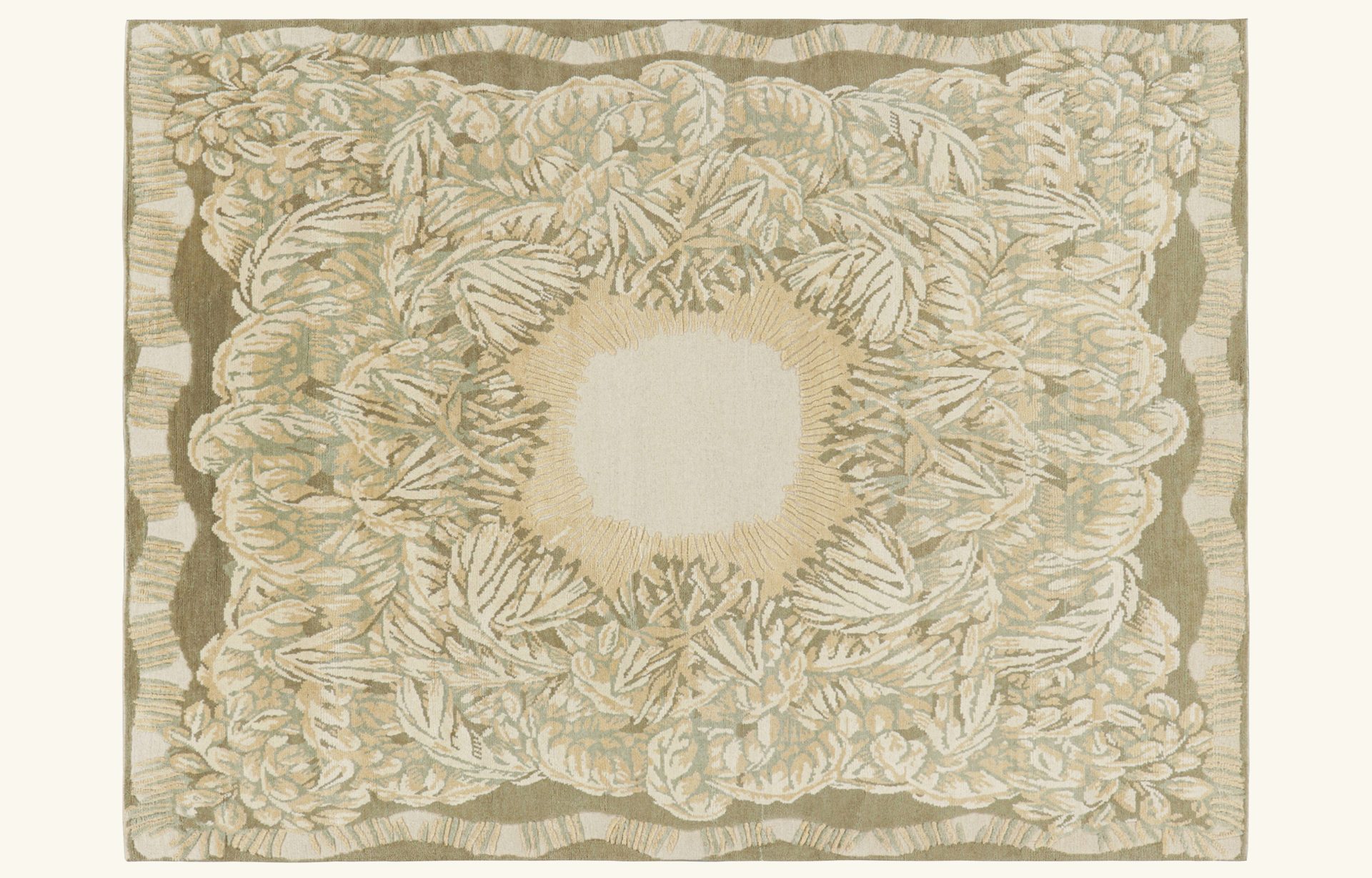
Elisabeth De Saedeleer’s Legacy
Her contribution to Belgian textile history is not one of loud innovation but of quiet evolution. Her artistry, born from Symbolist Belgium, matured through the Latem School, and blossomed into a personal mythology of textile modernism. She forged a path where female spirituality, handwork, and abstraction met in woven unity.
At a time when machines were replacing hands and grand narratives were erasing subtler voices, De Saedeleer’s work reminds us of the value in slowness, softness, and silence.
Her textiles whisper stories that still need hearing—stories of women, of spirit, of a woven world beyond words.
~~~