

The Enduring Influence of Swedish Deco: How Women Wove a Nation’s Modern Aesthetic
August 1, 2025
What Makes Qashqai Kilims Unique? Inside the World of Persian Tribal Rugs and Flatweaves
August 7, 2025
From Rug & Kilim’s trip to Italy’s palazzi and museums
There are a few moments in a designer’s life when the past speaks with such authority that it stills the noise of our modern age. On our recent visit to Italy, we found ourselves standing in hushed awe before one of design history’s most overlooked masterworks: the tapestry. As part of our curatorial philosophy at Rug & Kilim, we believe great design doesn’t begin in studios. It begins in the field—in spaces where material history still breathes.
We usually traverse geographies and genres, not to converse with spaces and history, but to also interact with narratives of faith, empire, gender, and place. In Italy, it was the tapestry that spoke to us most lucidly.
In Italy’s palazzi and museums, one finds memory on walls. From the Vatican’s Raphael Rooms to Palazzo Pitti in Florence, tapestries are seen as an exemplar of power, identity, and iconography. It was in these spaces—under vaulted ceilings that have held centuries of power, belief, and beauty—that our editorial team found itself immersed. To experience a tapestry in its native habitat is to encounter meaning in their most entangled form.
As editors, curators, and admirers of the craft, our practice is not confined to desks or screens. We move through the world, mapping culture through design and art.
This recent journey through Italy was a return. A return to slowness. To tactility. To history.
The Tapestry as an Intervention
To the uninitiated, a tapestry may appear as a mere decorative wall hanging with medieval charm. But to the keen eyes, these are environments in themselves. At once portable and monumental, tapestries redefined interiors before even murals did. They brought color into the palatial gloom, insulated vast stone chambers, and conveyed power before a single word was spoken.
During our stop at the Palazzo Ducale in Mantua, it was impossible not to notice the way tapestries framed space—not only physically, but psychologically. They directed attention and interrupted symmetry. For interior designers seeking to build not just rooms but resonant atmospheres, there is something uniquely instructive here. The tapestry is not hung—it is composed into a space.
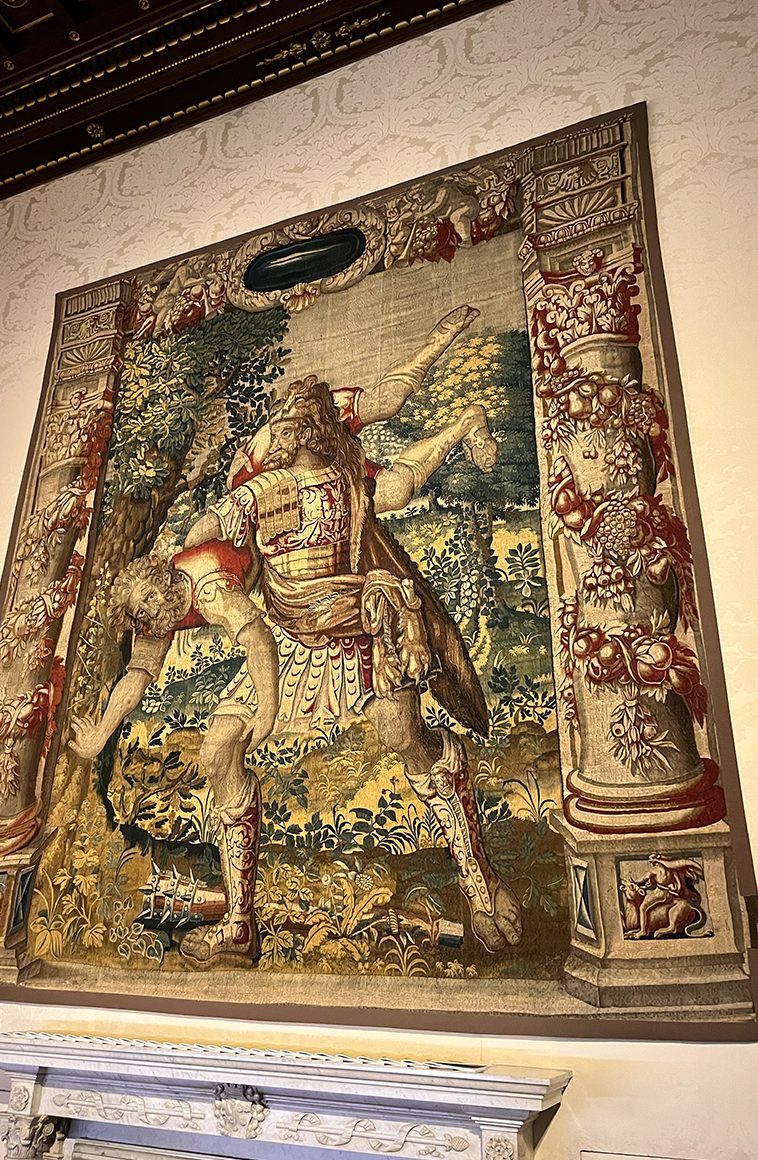
Palazzo Ducale in Mantua
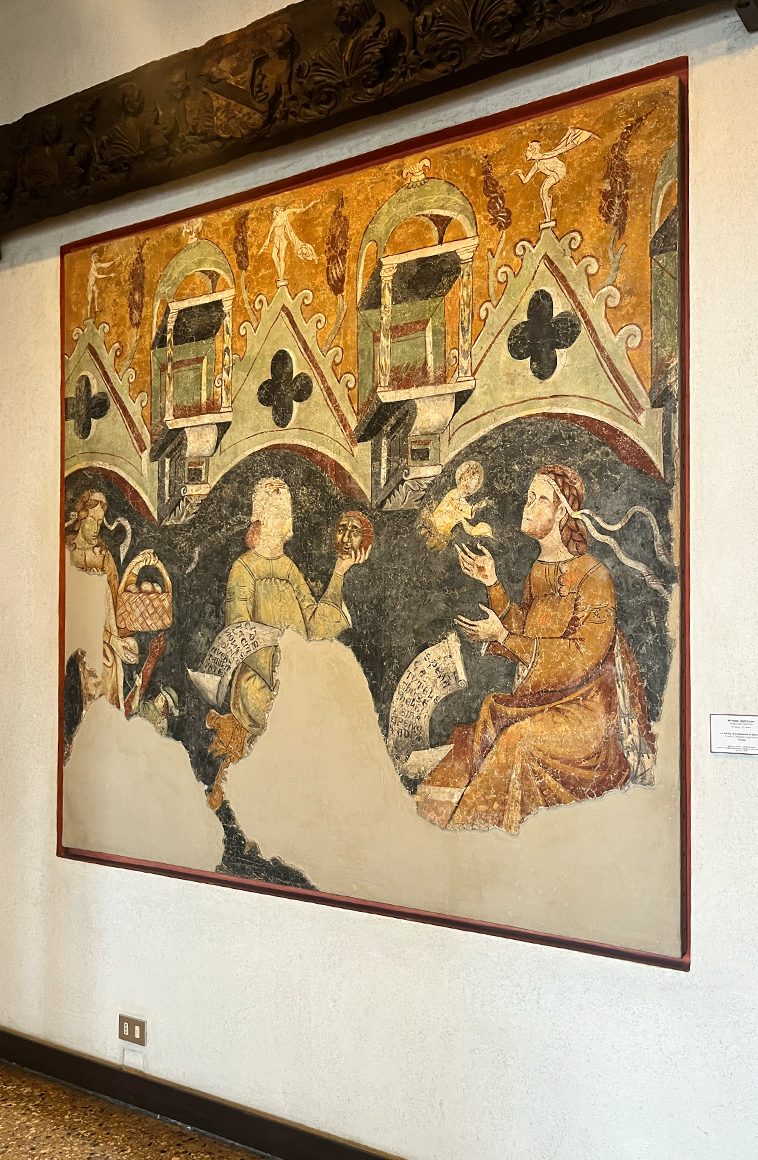
Tapestry as Political Art
Tapestry as Political Art
In the 15th and 16th centuries, the tapestry as commissioned by popes, monarchs, and merchants were portable expressions of identity and influence. To display a tapestry was to claim not only wealth but literacy, faith, and allegorical fluency.
The great courts of Europe—particularly those of Burgundy, France, and the Papal States—were embroiled in a silent rivalry to produce the most intricate textile narratives. And while Flanders (notably Brussels) became the gold standard for technical virtuosity, it was Italy that framed them—literally and ideologically—within architecture.
In Rome’s Vatican Museums, our team member stood before the famous Acts of the Apostles series, designed by Raphael and woven in Brussels by master artisans of the van Aelst workshop. They were commissioned by Pope Leo X in 1515 and later installed in the Sistine Chapel as woven counterparts to Michelangelo’s frescoes. The juxtaposition wasn’t accidental—it was an assertion of theology.
Each piece is vast in scale and profound in narrative. The illusionistic borders—featuring grotesques, floral urns, and coiling vines framed apostolic drama.
Aubusson and the Aesthetics of Stillness
Further along our itinerary, as we traced the route of tapestries across collections and ecclesiastical spaces, we reflected on the contrast offered by French Aubusson tapestries—another touchstone for today’s designers and collectors.
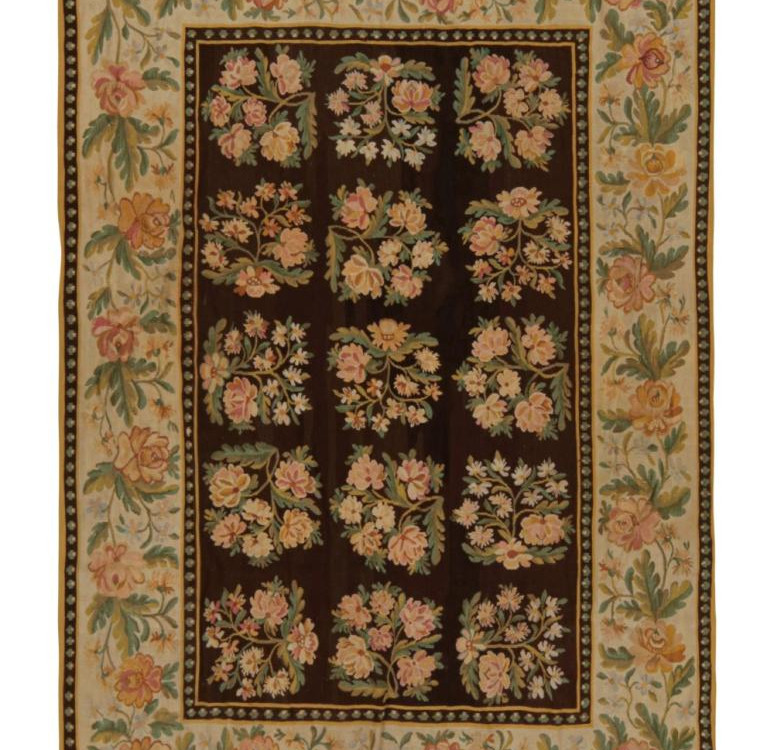
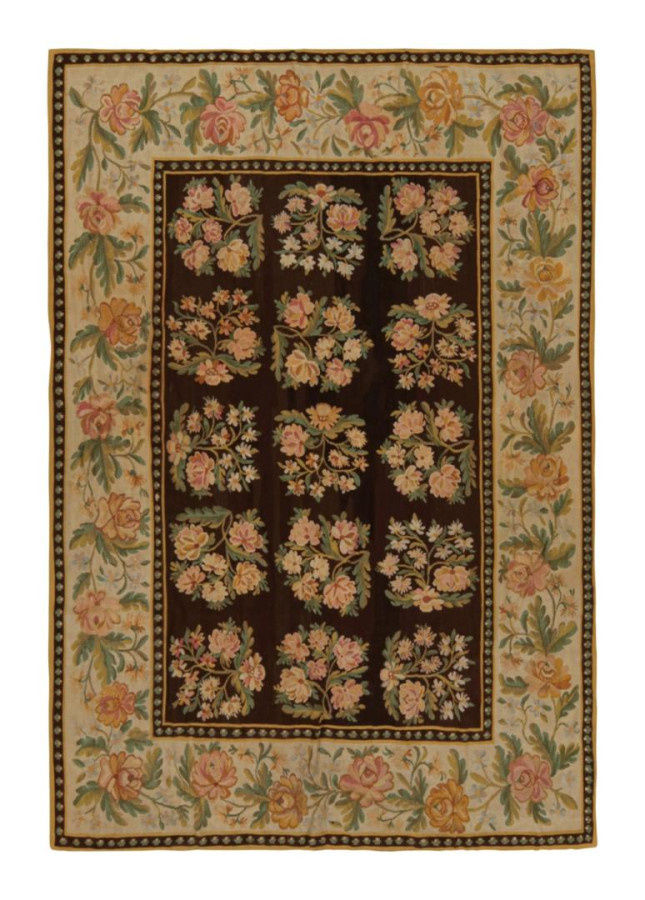
While Flemish tapestries often thrived on drama, Aubusson works—produced in central France from the 17th century onward—cultivated a different design genre. These panels embraced pastoral calm, architectural symmetry, and a Rococo elegance that appealed to royal and aristocratic patrons alike.
What struck us most in comparison was the Aubusson command of negative space—the quiet between motifs. Serpentine vines, urns, and neoclassical garlands often floated on pale, parchment-toned grounds, letting light and fabric breathe. In Rome, we viewed several Aubusson panels in private galleries that had once graced the walls of European diplomatic salons.
Today, their influence persists in modern interiors that honor balance, quietude, and narrative subtlety. For designers curating spaces of repose, an Aubusson tapestry offers tempo.
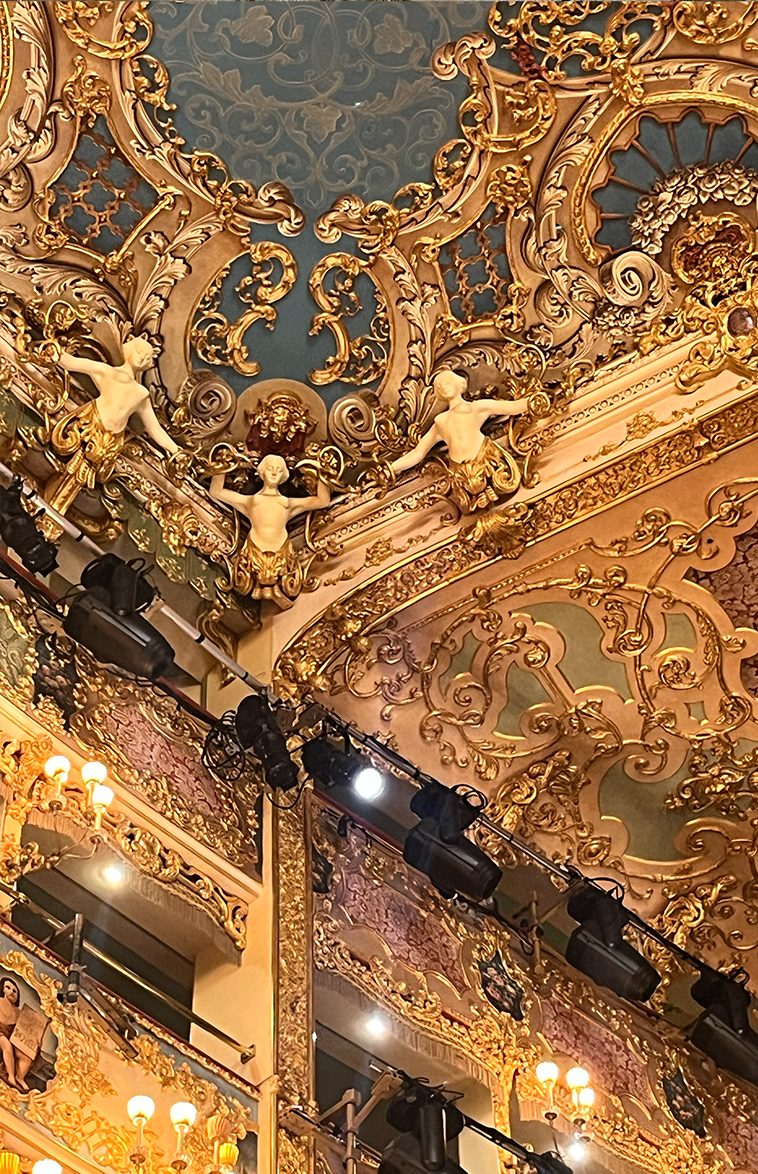
Aubusson Aesthetics
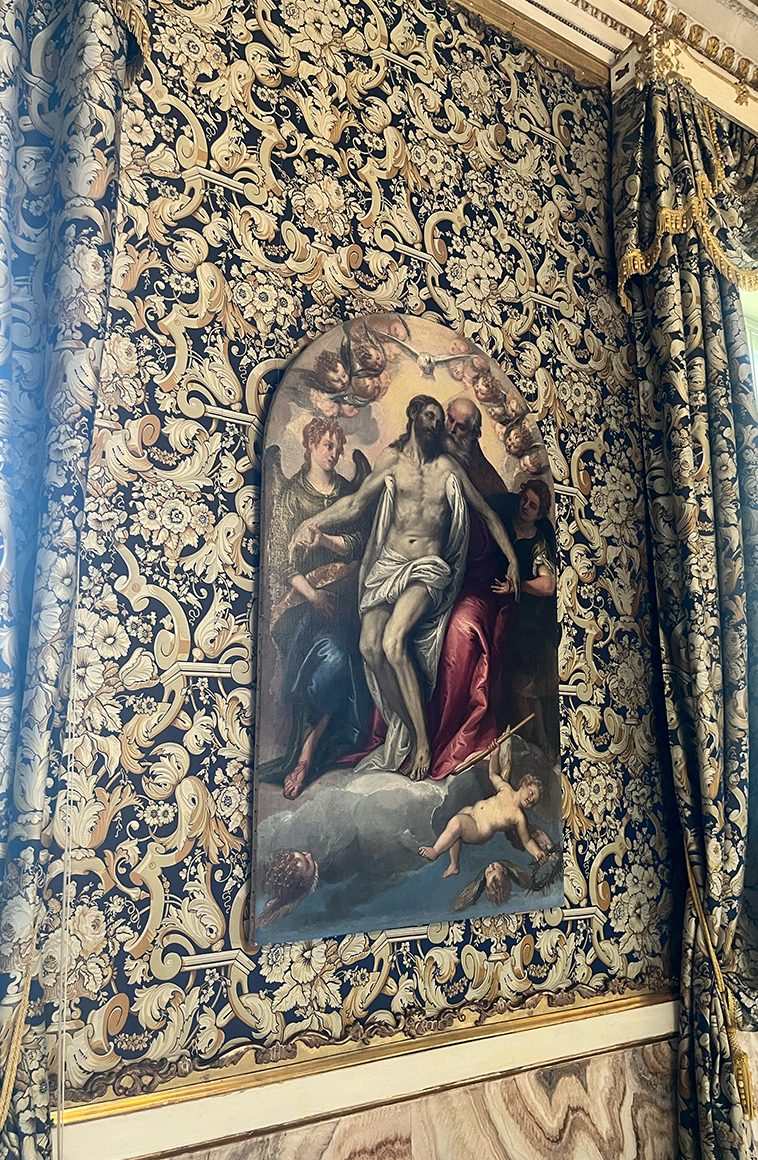
Italian Tapestries
Italy’s Own Loomed Legacy
While the centers of Flemish and French tapestry production often dominate scholarship, Italian tapestries—particularly from Florence and Ferrara—developed a highly distinctive art. These were often woven not just for spectacle, but for scholarship. Italian tapestries merged the spiritual with the civic.
One of the defining characteristics of Italian pictorial tapestries is their integration with Renaissance ideals of perspective, human anatomy, and classical proportion. In the Palazzo Vecchio in Florence, the Medici commissions, based on cartoons by Bronzino and Vasari, exemplify how Italian patrons demanded not just craft, but conceptual sophistication.
We viewed several fragments of such works at the Palazzo Colonna in Rome—wool and silk blended with gold-wrapped threads, depicting Roman military victories, framed in architectural trompe l’oeil. They acted within the space, augmenting political theatre, civic memory, and divine right.
Lessons for the Contemporary Interior
Tapestries ask us to consider process, permanence, and place. They take time. They tell time.
For today’s designers, these woven works remind us that walls can do more than divide—they can communicate. A well-placed tapestry doesn’t just anchor a room visually. It adds gravitas, acoustic softness and a historical conversation.
Our visit to Rome was a layered step forward—into a design future informed by memory and storytelling. Because at Rug & Kilim, we don’t just work with rugs and textiles. We walk among them, listen to them, and carry their stories back into the spaces we help shape.
Rug & Kilim’s team visits cities not just to gather souvenirs but to absorb history and art. We view textiles not just to assess texture, but to listen to the labor and meaning that shaped them.
To witness a tapestry in situ—hung within its architectural and historical context—is to engage in a dialogue with gesture and symbolism. These are lessons our designers can translate into the modern interior: the power of narrative layering, the discipline of restraint, the invocation of myth within a modernist space.
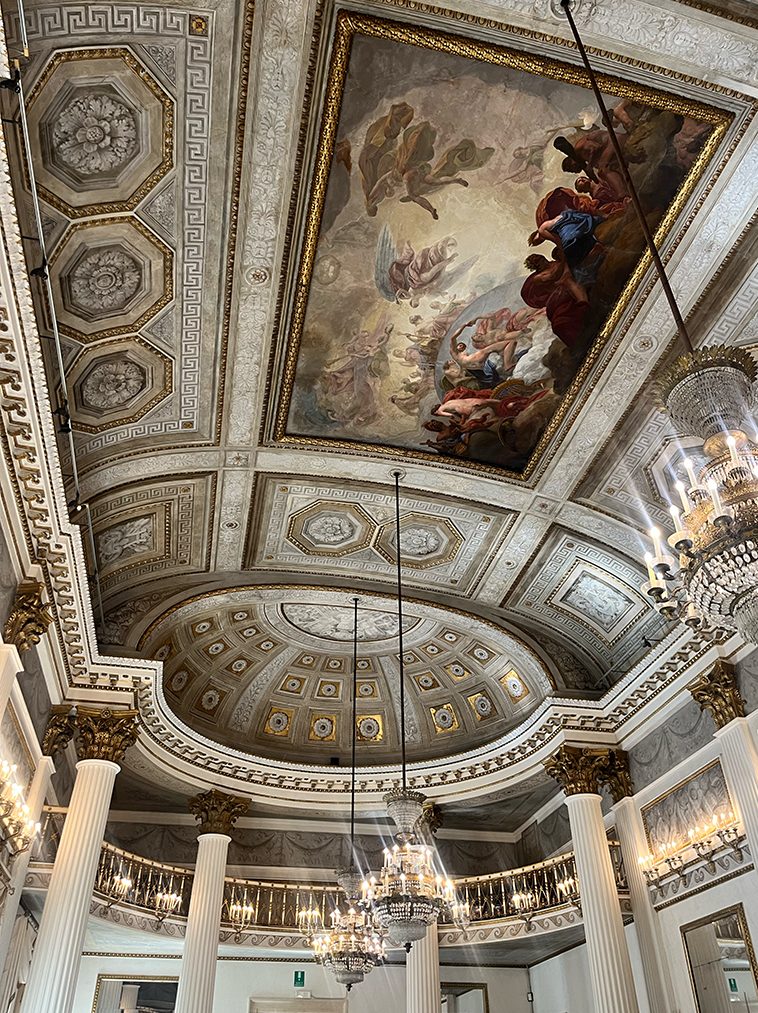
Storytelling Through Tapestry, As Seen In Situ
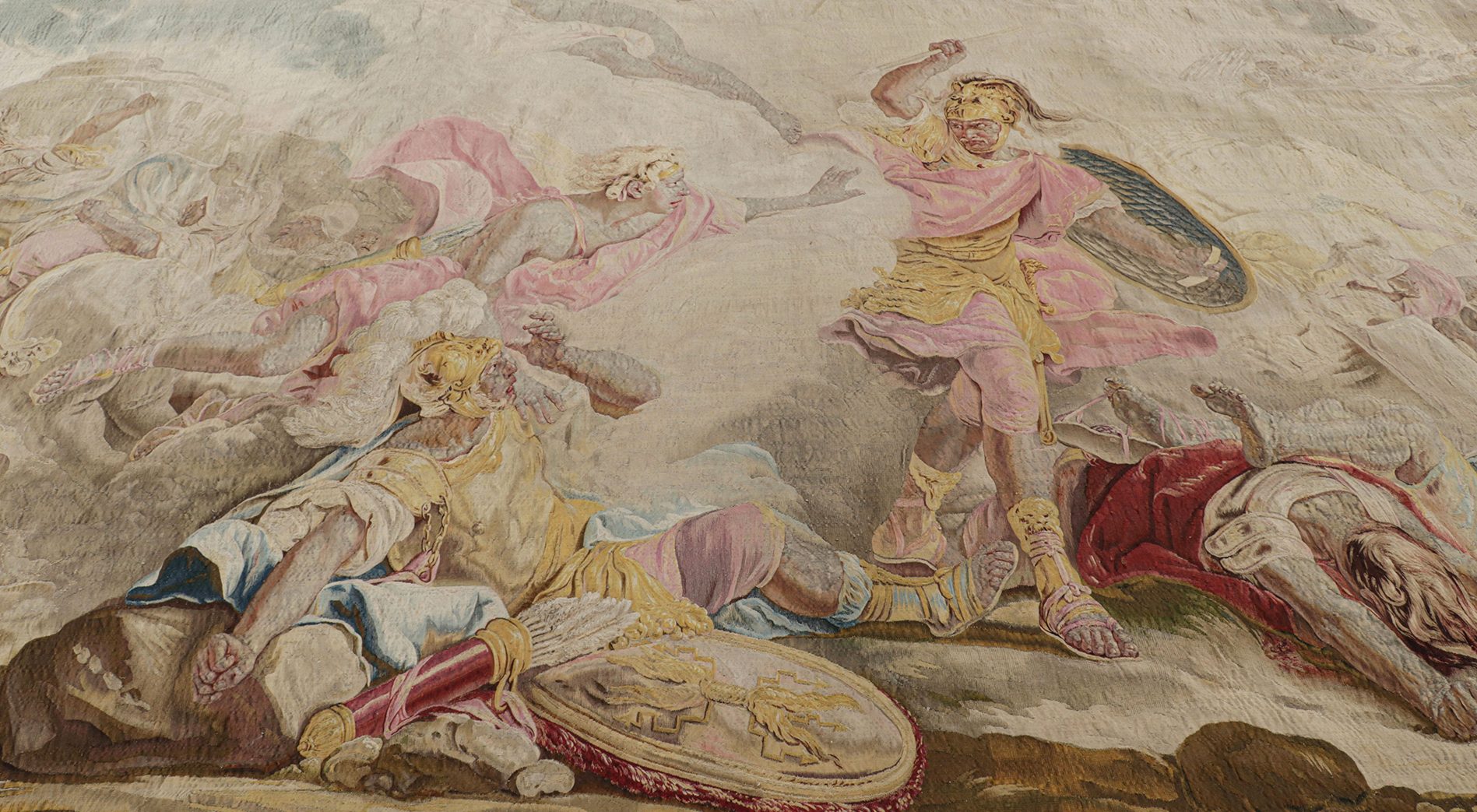
Today, as the design world moves toward more storied, intentional, and ethical practices, the relevance of the tapestry is only increasing. It represents a medium that is slow, deliberate, and dialogic—woven by hands, lived in by generations, and reinterpreted by curators, historians, and now, contemporary designers.
Our travels reaffirm what we have long believed: that design is not merely a practice, but a presence. And our editorial presence—rooted in global movement, deep scholarship, and an affinity for craftsmanship—will always lead us to such intersections.
In the end, tapestries show us how beauty was once integrated into governance, devotion, and daily life. They remind us that a wall can carry a worldview.
And in the rooms we will design, the stories we will write, and the textures we will curate—those tapestries will live on.