
A Guide to Sanguszko Safavid Carpets: Oldest Surviving Carpets from Kerman, Iran
June 7, 2024
A Profile on Jules Leleu and Paule Leleu and their Contributions to the Art Deco Movement
June 12, 2024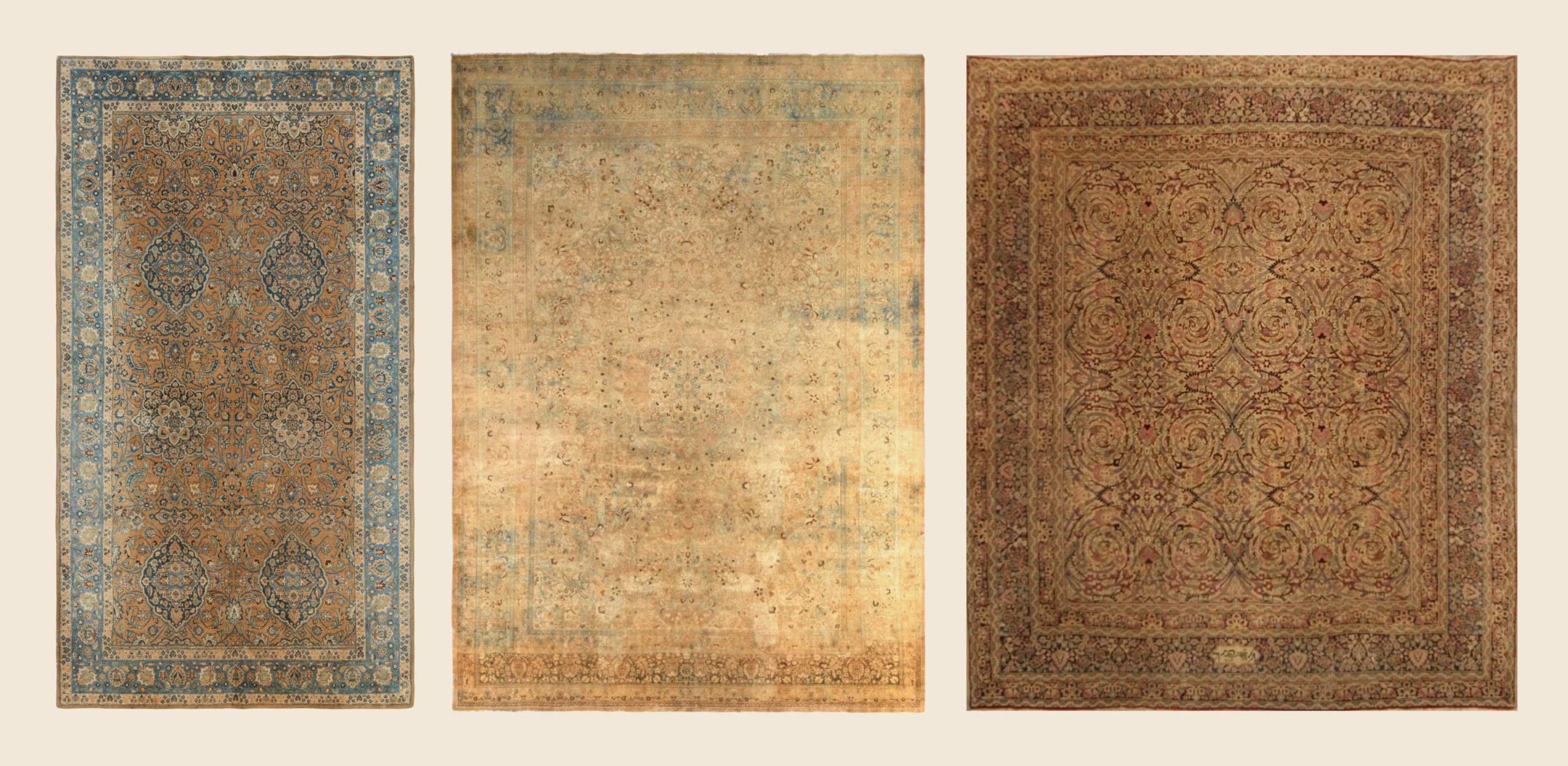
The UNESCO World Heritage site Imam Reza Shrine in Mashad, Iran, boasts one of the most exceptional collections of Antique Iranian carpets globally. This antique collection holds immense historical significance as it has been accumulated over centuries through devout contributions, including Persian Safavid and Mughal carpets bestowed by influential patrons like Shah Abbas I (1571-1629) and subsequent rulers. Despite its remarkable nature, this extraordinary collection has yet to be extensively documented and published for wider appreciation and scholarly exploration.
More about Mashhad –
Mashhad, the capital city of Khorasan, holds significant religious importance as the site of the revered shrine of Imam Ali Reza. With a rich history dating back to the Persian Safavid dynasty (1502-1736), Mashhad has been a prominent center for antique carpet production since the 1500s. It serves as a major hub for the antique carpet market, drawing producers from nearby towns and villages.
More about Antique Persian Mashad Carpets –
The antique carpets crafted in Mashhad predominantly feature floral designs, often showcasing either a central medallion or an allover pattern. While red and blue hues are prevalent in these carpets, other color combinations are also available. The wool used in Mashhad carpets is known for its softness, luster, and durability, making these carpets resistant to wear and highly sought-after. Among the many exquisite Antique Mashhad carpets produced during the 20th century, some stand out as exemplary pieces of artistry and craftsmanship.
Mashhad remains a prominent hub for the production of large Persian carpets featuring medallion motifs, commonly branded as Mashhad carpets. The city’s rich carpet-making tradition, which began with its oldest workshop, Soltan Ibrahim Mirza, continues to flourish with newer companies like the Amoghli (also known as Amoughli, Amu-oghli, or Emoghli) workshop. Mashhad’s reputation for high-quality carpets extends globally, and carpet enthusiasts may recognize the names of other renowned workshops founded by master weavers, including Abbasgholi Saber, Khamenei, Khadivy, Zarbaf, Zarrineh, and Makhmalbaf. This thriving industry underscores Mashhad’s significant role in carpet exports and its enduring legacy in the world of fine Persian carpet weaving.
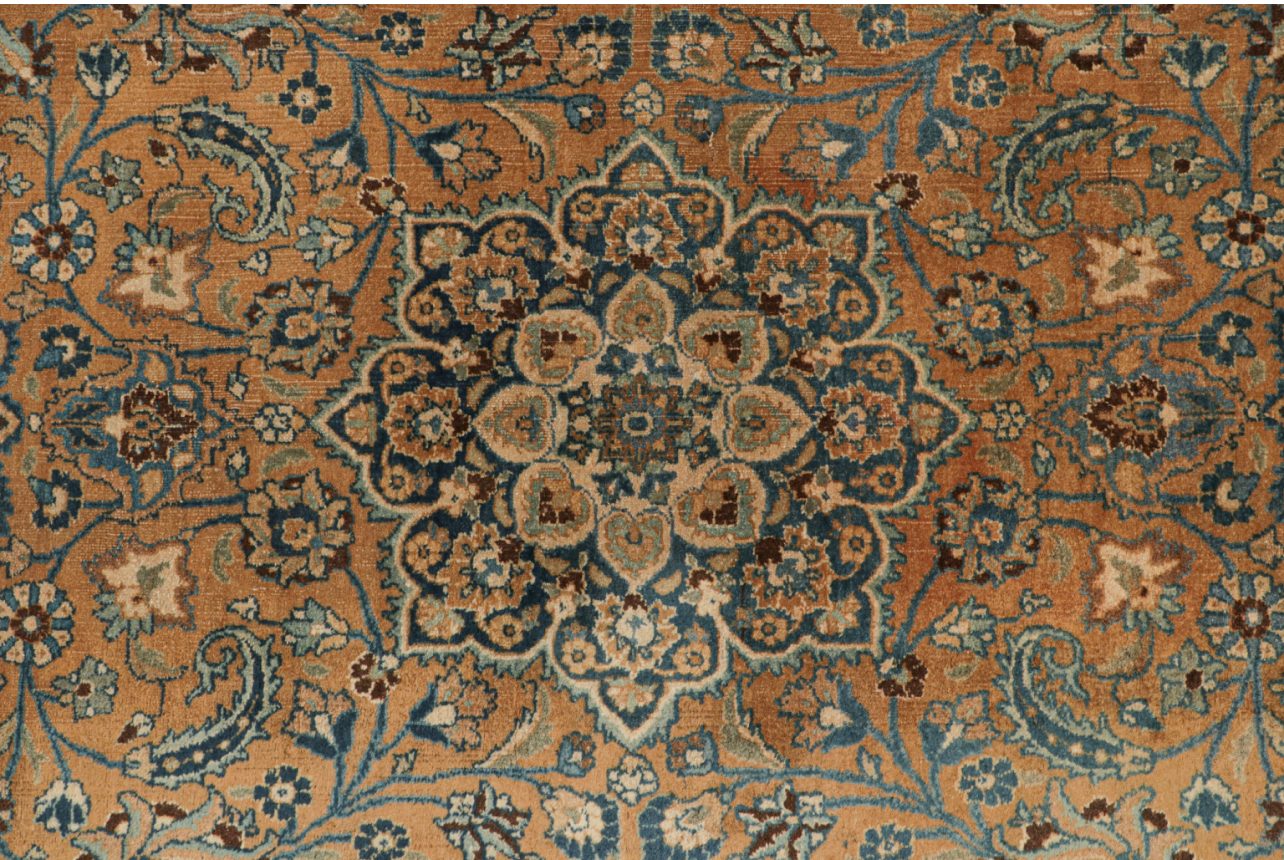
History of Persian Mashad carpets –
The Amoghli brothers, Abdul Mohammad Amoghli and Ali-Khan Amoghli, originally from Tabriz, are renowned for their exceptional rug craftsmanship during the early 20th century. Their workshop in Mashhad produced some of the most exquisite Persian rugs of their time, ranging from the 1900s to the 1940s. These rugs were highly sought after, especially by the last Pahlavi Royal family of Persia and other aristocrats of that era. As a result, many Amoghli carpets adorned the palaces of the Shah and the grand mosques of Iran, showcasing their intricate designs and superior quality.
Among Persian rug masters like Habibian Nain and Seyrafian Isfahan, the Amoghli rugs are considered the pinnacle of Persian weaving art in the 20th century.
Their rugs exemplify the peak of creativity and craftsmanship, representing a period of resurgence and innovation in Persian rug making. Only the carpets produced during the 17th century Safavid dynasty (1502-1736) under Shah Abbas of Persia can compare to the masterpieces created by the Amoghli brothers. Due to their exceptional artistry and craftsmanship, Amoghli carpets are highly coveted by collectors and are rarely available on the general market. These exquisite antique pieces are typically acquired through renowned auction houses or well-established carpet galleries.
More about Persian Amoghli Carpets –
An Amoghli carpet can be identified by its distinctive 3-5 centimeter wide border with finely worked endings. These Persian carpets also feature the highest knot density produced in Mashhad, with some reaching up to 1360 knots per square inch (approximately 2 million knots per square meter), though most are around 900 knots per square inch. The higher density weaves usually employ silk for both warp and weft, while less fine pieces use cotton. Regardless of the weave, all Antique Amoghli carpets boast the highest quality wool and/or silk in their pile, contributing to their enduring beauty and value.
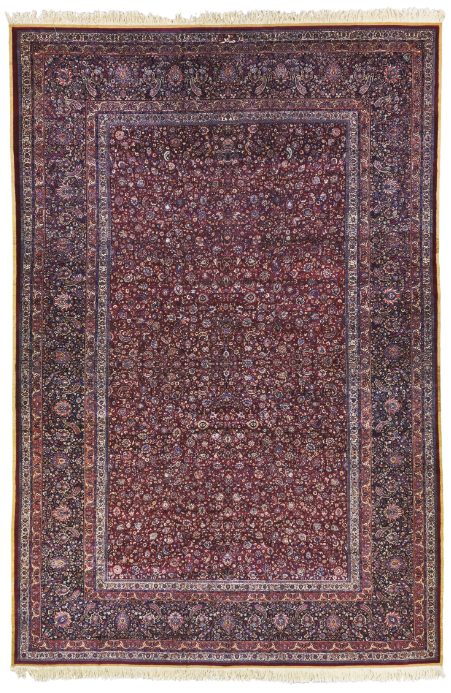
https://www.sothebys.com/en/auctions
This fine Saber Mashhad carpet, bearing the Saber inscription, was auctioned by Sotheby’s in London on November 1, 2017 for £2,50,000.00. With a silk foundation, this piece was part of the Abdi Roubeni Collection, highlighting the lasting legacy and high demand for Saber’s extraordinary works. At the turn of the 20th century, there was a resurgence of grand, highly refined carpet weaving in Mashhad. Abbas-qoli Saber, a master weaver and former student of the great Amoghli, played a pivotal role in this revival. Renowned for his exceptional skill, Saber completed commissions for both Eastern and Western officials. The carpets produced under his guidance are noted for their rich color palettes and the finest wool, drawing inspiration from classical masterpieces of the past.
Read more about our profiles on Antique Mughal and Persian Safavid textiles –
Antique Mughal Rugs –
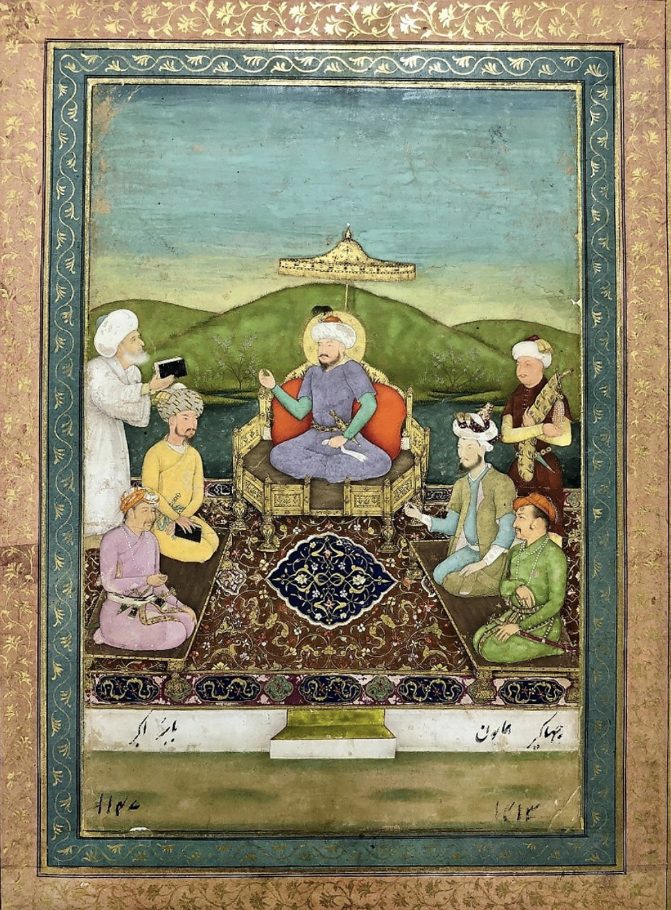
Under Mughal rule, Indian carpet weavers blended Persian Islamic and Chinese designs with uniquely Indian elements, creating a distinct style that thrived for over 300 years. Mughal carpets were not intended for walking on; instead, they functioned more like furniture, serving as seats of honor within the royal court. This practice highlighted the symbolic and functional importance of carpets in Mughal court culture, where they played a dual role as both decorative elements and practical seating arrangements for dignitaries and important guests. Read more about Mughal carpets and their historical significance here – https://rugandkilim.com/blogs/oriental-antique-mughal-rugs-history-and-significance-of-court-carpets/
Antique Safavid Persian Rugs –
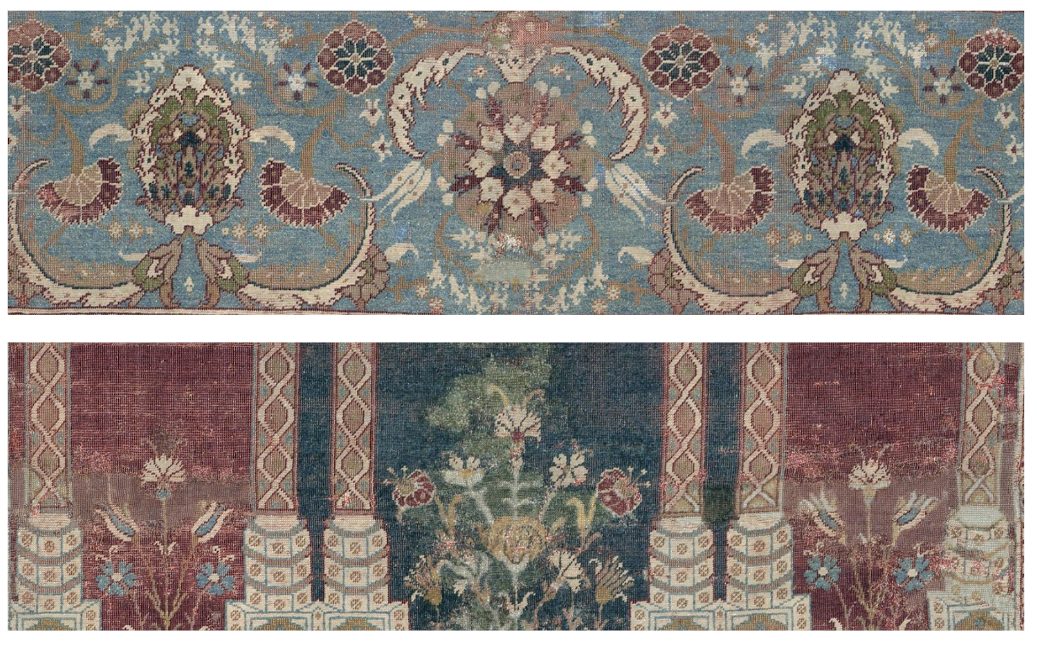
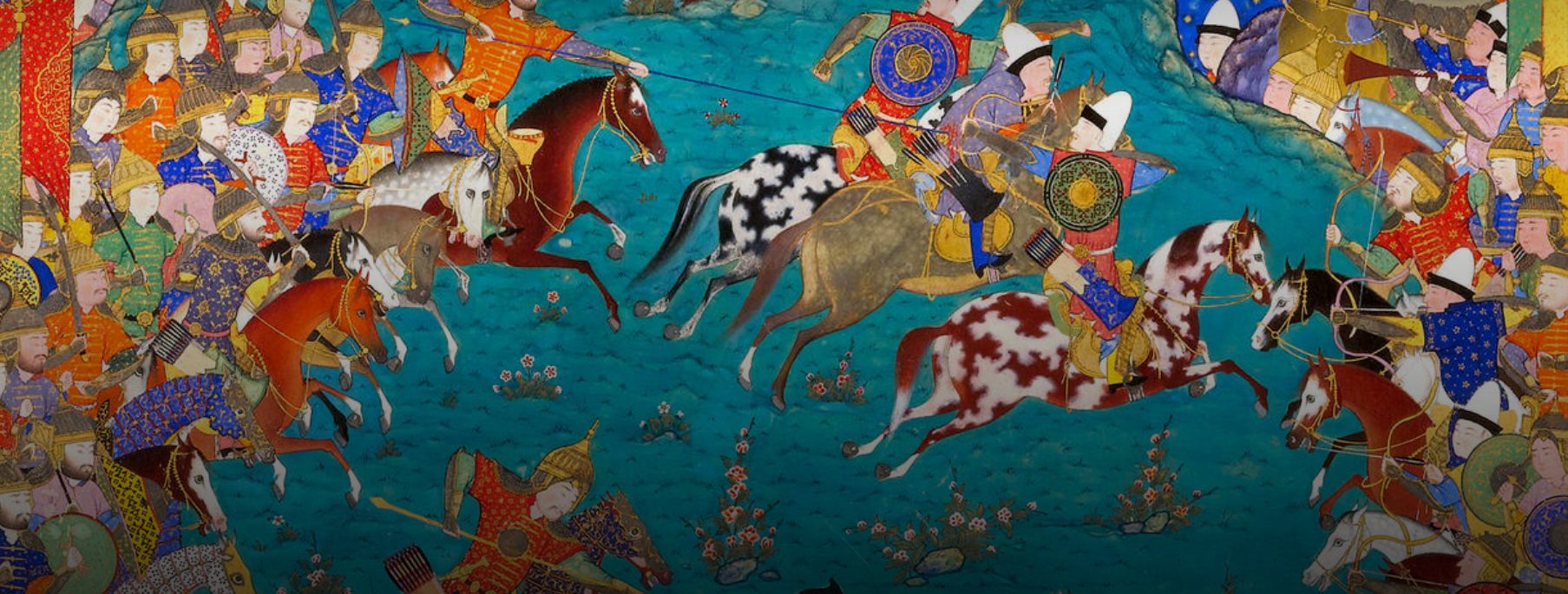
The Safavid dynasty (1501-1739) marked the pinnacle of Persian carpet design and production. Royal patronage played a crucial role, with court designers influencing production across various levels. Additionally, the widespread availability of locally sourced and imported materials and dyes contributed to the quality and diversity of carpets. Shah ‘Abbas I (1587–1629) played a pivotal role in the seventeenth century by centralizing the Iranian economy. He established a state monopoly over the silk trade, focusing on controlling production in the Caspian provinces, which were major raw material suppliers. Figural designs in Safavid textiles drew significant inspiration from manuscript illustrations, both in composition and subject matter. These designs often depicted idealized scenes such as hunting, falconry, or poetry reading in garden settings, reflecting contemporary artistic trends.
Notably, during Shah ‘Abbas’s reign, figural silks showcased characters from popular literature, including the lovers Khusrau and Shirin, and Layla and Majnun from Nizami’s Khamsa. Additionally, battle scenes referencing Rustam from Firdausi’s Shahnama were also prominent in these textiles, showcasing a blend of literary and artistic influences. Read more about Safavid court weaving and Shah Abbas’s role in solidifying their global presence here – https://rugandkilim.com/blogs/history-and-significance-of-safavid-court-weaving-and-their-persian-antique-rugs/
ANTIQUE RUGS – VIEW COLLECTION