
Tuareg Textiles and Design: History, Tribal Craft, and Contemporary Influence
February 11, 2026
An Abbreviated Guide to Antique and Vintage Karabagh Rugs
February 19, 2026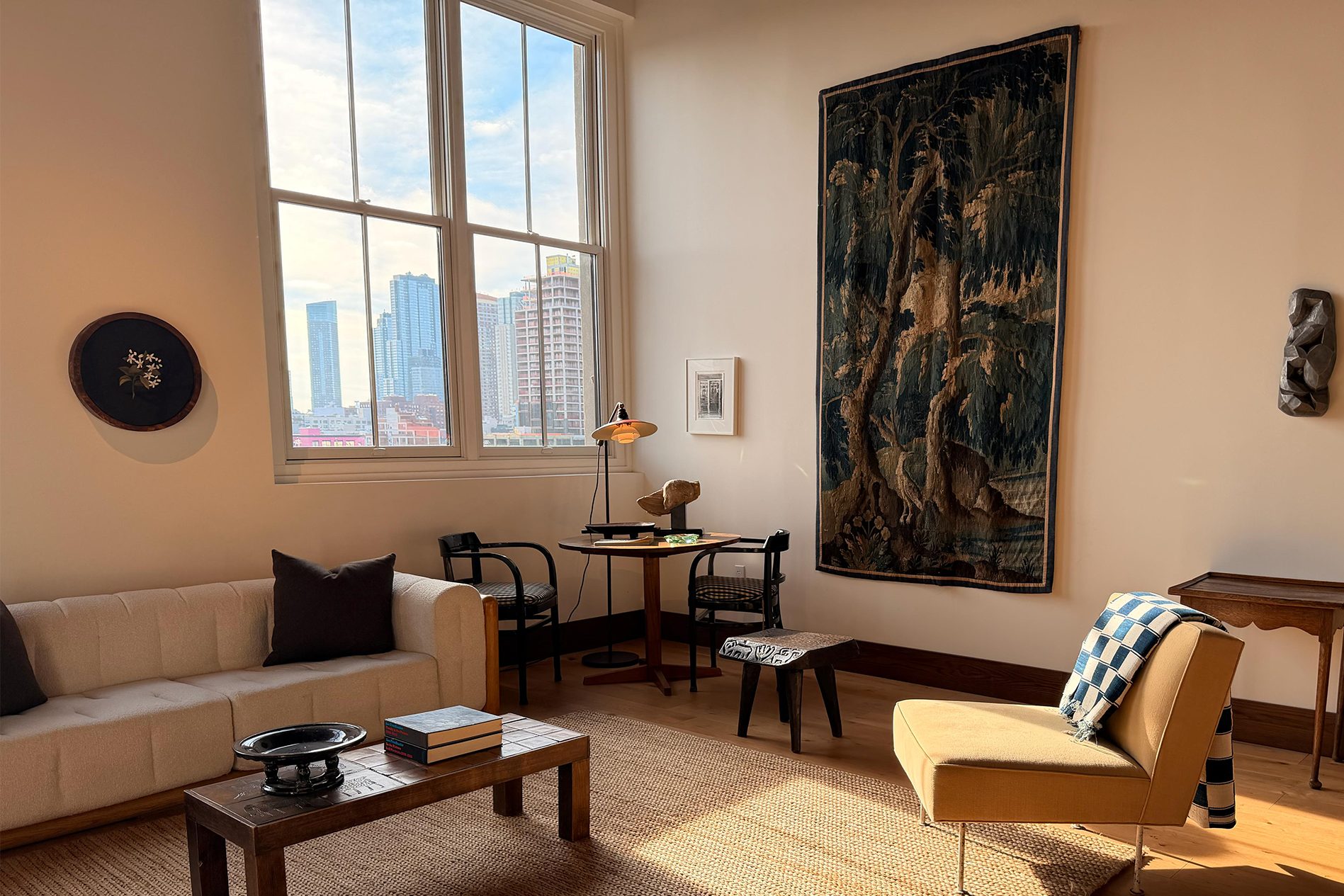
The Somerset House x Rug & Kilim
Tapestry is the oldest form of spatial storytelling.
Before wallpaper became political, before murals were democratized, before art was framed, taxed, traded, or speculated upon, power was woven.
Tapestries were the original soft architecture of authority—portable walls for empires on the move, visual treaties between monarchs, and declarations of taste that traveled more freely than armies. They insulated cold stone halls, softened acoustics for diplomacy, and—perhaps most importantly—controlled the narrative. In a world without screens, tapestries were the screens: projecting mythology, ideology, lineage, and aspiration in wool, silk, and gold thread.
It is worth remembering that for centuries, tapestries were never “decorative.” They were strategic.
Today, the return of tapestry is not nostalgic—it is intentional. Connoisseurs and artists are once again reaching for objects that slow the eye, anchor the room, and speak in a language that cannot be scrolled past. To place a tapestry in a space is to declare that the room is not just styled, but considered.
At Rug & Kilim, we approach tapestries not as wall hangings, but as cultural instruments—works that sit at the intersection of art, architecture, fashion, and politics.
We believe that tapestries are not secondary to painting. Historically, they were its equal—often its superior. Royal workshops such as Beauvais and Aubusson were not decorative studios; they were state institutions. Their works carried allegory, diplomacy, theology, and power across borders. Tapestries were designed to move, to travel, to speak.
In contemporary interiors, tapestry offers what few mediums can: authority without hardness, richness without excess, presence without noise. It slows the eye in a culture of acceleration. It asserts continuity where so much is temporary.
If rugs ground us, tapestries address us.
A Living Archive: Tapestries as Spatial Chronicles
Historically, tapestries represented the apex of artistic collaboration. Workshops in Flanders, Beauvais, and Aubusson operated with the same hierarchical rigor as royal ateliers of painting and architecture. Designs were authored by court artists, translated into cartoons, and realized by master weavers whose technical intelligence rivaled any painter of their age.
A tapestry was never smaller than its context. It defined rooms, shaped ceremony, and codified worldview.
Rug & Kilim’s tapestry archive—assembled over the last many years—reflects this lineage with precision. From classical European allegorical works to mid-century modernist compositions, each piece is selected not only for beauty, but for its capacity to shape space. When introduced into contemporary interiors—whether a Fifth Avenue residence, a Bel Air estate, or a private European villa—these works do not decorate walls. They activate memory.
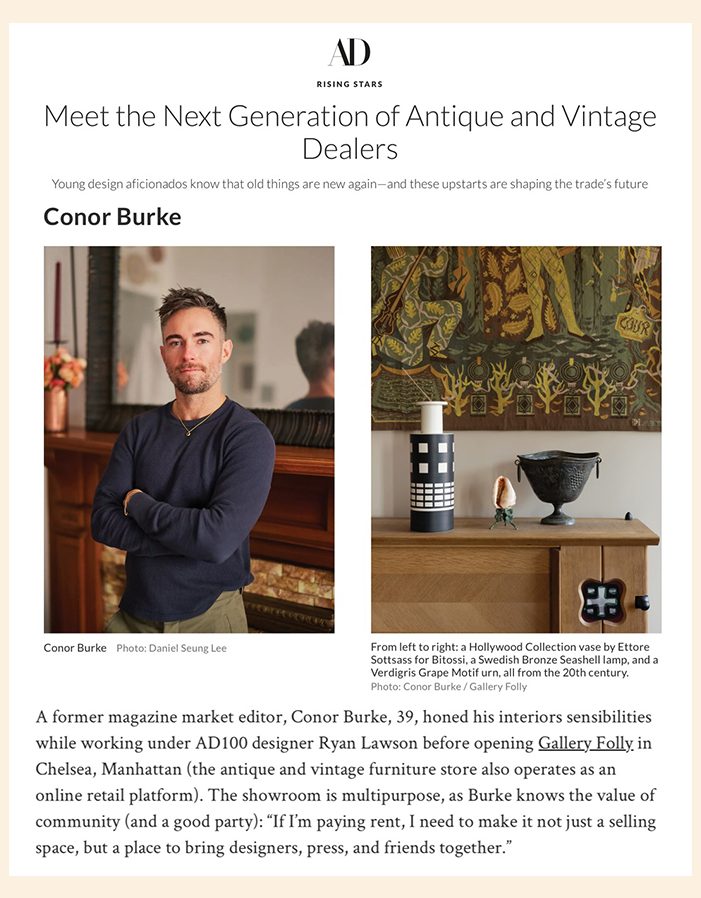
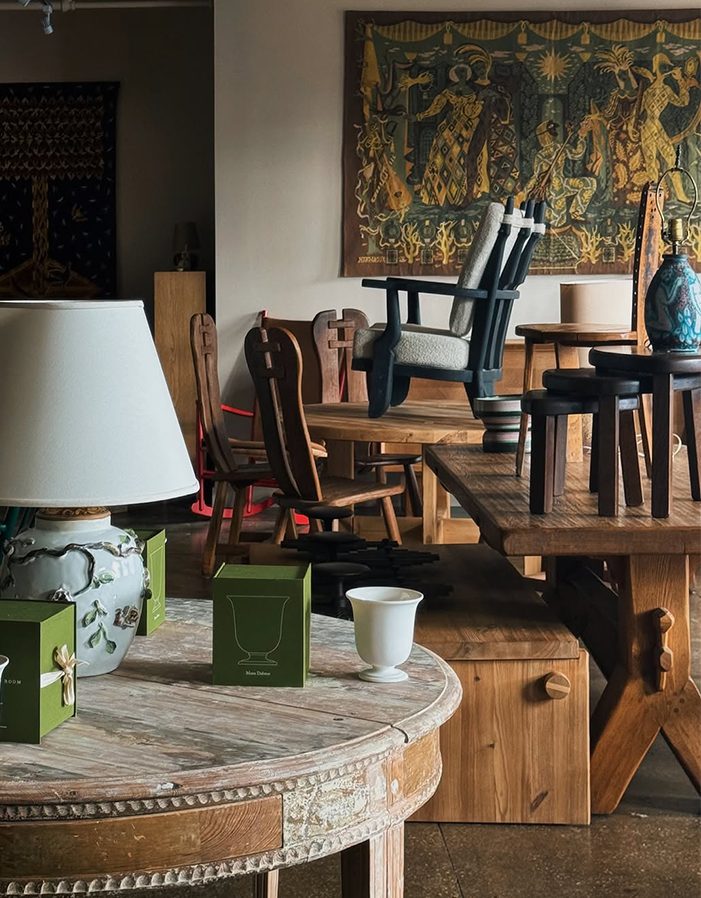
Gallery Folly x Rug & Kilim
The Tapestry as the Fifth Wall
Art often speaks of floors, ceilings, and light. Tapestries demand recognition as the fifth wall—one that absorbs sound, modulates scale, and introduces material depth impossible to replicate with paint or framed art.
Unlike paintings, which sit on a wall, tapestries become the wall.
Their surface is never static. Wool and silk absorb light differently throughout the day; the room changes as the tapestry breathes. In dining rooms, they temper acoustics. In libraries, they lend gravity. In bedrooms, they introduce warmth without softness becoming sentimentality.
To underestimate a tapestry’s architectural role is to misunderstand its entire history
Choosing Tapestries for Space
Scale — the dialogue between the size of an artwork and the architecture that surrounds it — is not a matter of measurement but of authority.
~ In great rooms and salons, tapestries command walls in proportions that mirror their historical counterparts. Think of compositions that occupy 60–75% of the available vertical field, anchoring grand spaces without overwhelming them.
~ In intimate studies or libraries, slightly smaller works can become equivalent focal points — almost architectural alcoves of narrative and texture.
~ In corridors and galleries, series installations bring cinematic rhythm to procession, inviting movement through narrative rather than interruption.
The tapestry’s scale must be felt, not measured.
Styling Tapestries: An Interdisciplinary Practice
The tapestry does not exist in isolation. Its highest expression arises through intentional dialogue with furniture, rugs, artwork, and light.
Art Pairings
A tapestry can form a triadic constellation with other artworks:
~ Pair classical tapestries with sculptural modernists — a marble torso or a minimalist bronze — to highlight contrasts in medium and era.
~ Combine mid-century pictorial tapestries with abstract or color-field paintings, allowing the wall to speak in layered visual languages.
The most compelling rooms resist uniformity. A Jean Lurçat or Jean Picart Le Doux tapestry gains potency when paired with:
~ a Giacometti bronze,
~ a Calder mobile,
or a single, disciplined Rothko-style abstraction.
The contrast sharpens both.
An antique French or Flemish tapestry pairs beautifully with:
~ a restrained Persian Heriz,
~ a custom modern Rug & Kilim textural fine weave,
~ or a minimalist Scandinavian flatweave that allows the wall to lead.
Repetition dulls. Dialogue elevates.
Tapestries favor restraint in furnishings:
Jean-Michel Frank–inspired sofas,
Pierre Jeanneret armchairs,
bronze, travertine, or cerused oak surfaces.
Low seating preserves breathing room. Tapestries dislike competition.
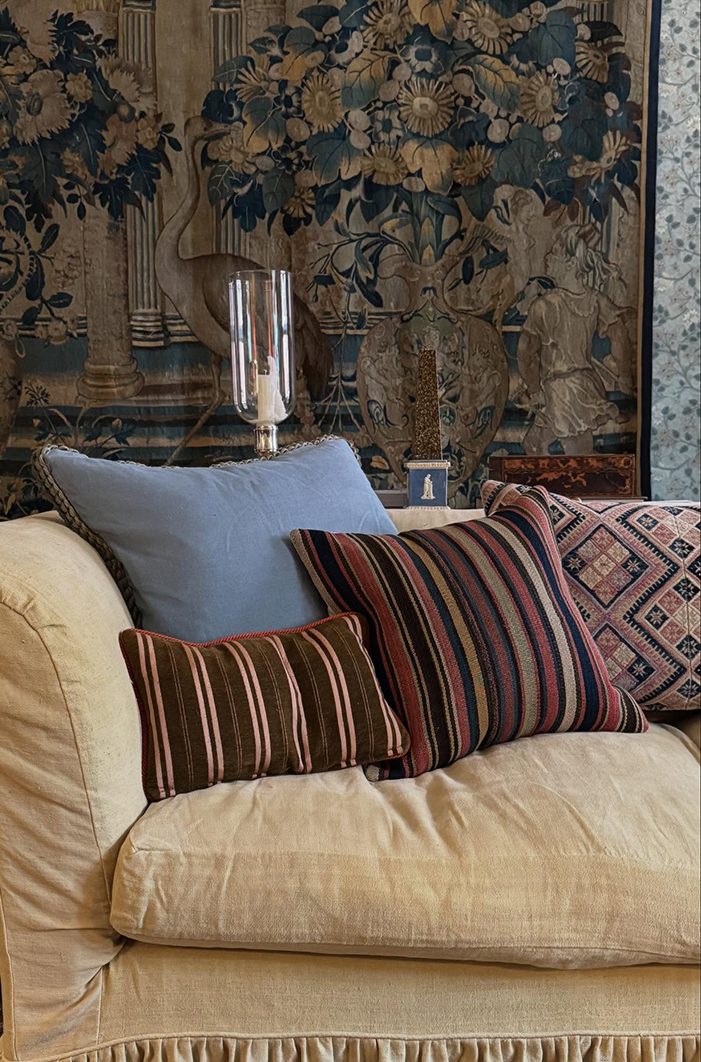
Bean Pentreath Studio x Rug & Kilim
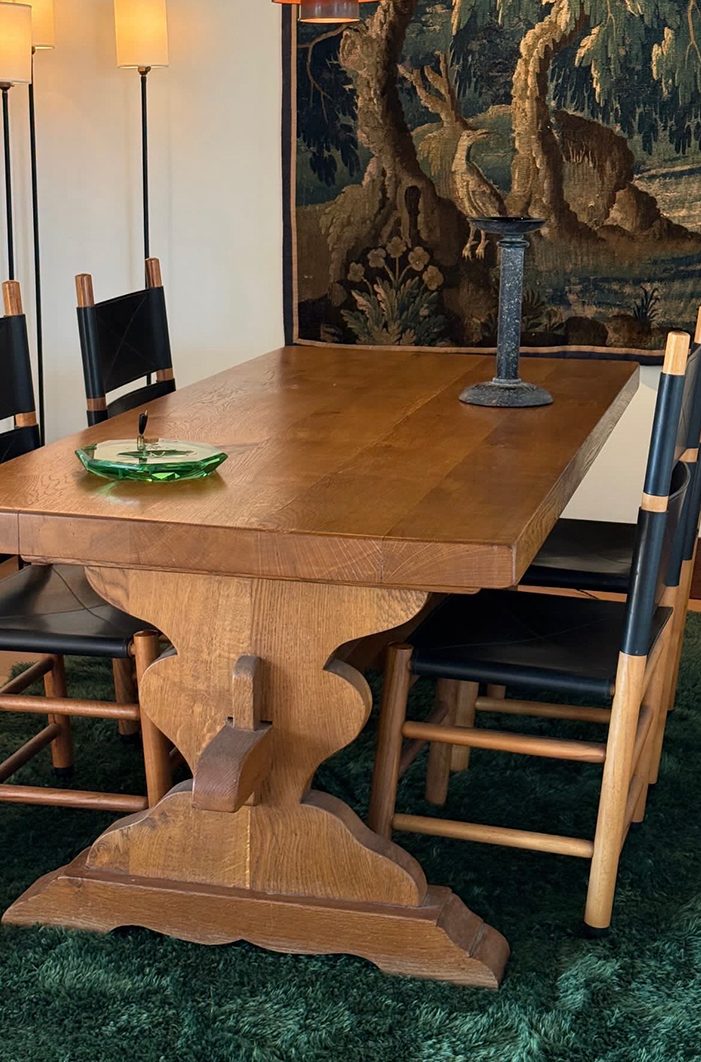
The Somerset House x Rug & Kilim
Rugs as Anchors
The poetic symmetry between wall and floor is one of design’s most powerful moves:
~ In salons where an antique French atelier tapestry dominates, an equally disciplined antique or custom rug grounds the space in temporal continuity.
~ For modern tapestries, consider bold, textural rugs that echo weave movement, not pattern, allowing conversation between vertical and horizontal fields.
Furniture and Materiality
A tapestry’s material presence — whether wool, silk, or blended fiber — suggests complementary fabrics and finishes:
~ Pair heavy-warp tapestries with refined wood or bronze — surfaces that emphasize contrast without discord.
~ Use low, sculptural seating to create visual breathing room between floor and wall, reinforcing the tapestry’s authority without visual competition.
Color and Atmosphere
Tapestries give designers a chromatic foundation:
~ Deep ochres, moss greens, and burnished reds in tapestry fields invite material palettes — limestone, aged oak, patinated brass — that feel both warm and timeless.
~ Subtle neutrals in tapestry grounding permit more daring adjacent accents — lapis upholstery or cerulean ceramics — creating a living palette that resonates across textiles and surfaces.
In each pairing, the objective is not symmetry but harmonic tension — a spatial conversation in which the tapestry leads with composure and nuance.
Narrative as Structure
Every tapestry tells a story—even abstract ones.
From medieval allegories like The Lady and the Unicorn to postwar modernists such as Jean-Claude Bissery or René Fumeron, tapestries operate as spatial narratives. They are not backgrounds; they are protagonists.
A room designed around a tapestry is a room with a plot.
Tapestries and the Future of Interiors
Where paintings remain objects and murals remain fixed, tapestries inhabit both and transcend them. They:
mediate scale
shape acoustics
determine mood
articulate narrative
bridge art history and contemporary design
For designers engaged in multi-layered spatial thinking — where architecture, landscape, and experience interlock — tapestries become indispensable.
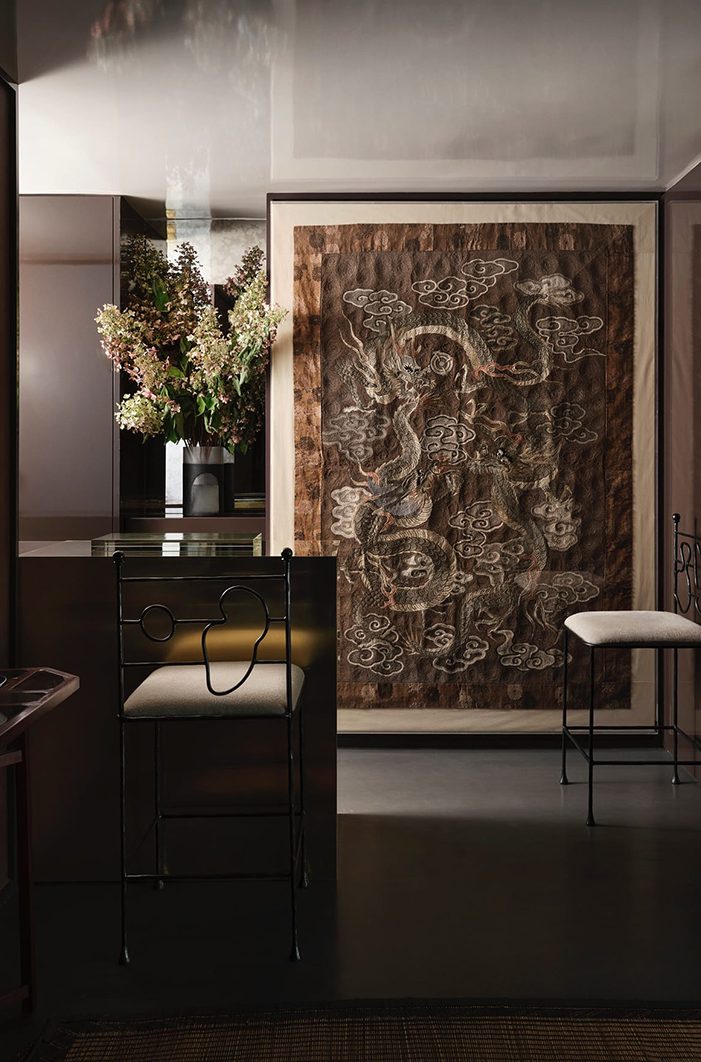
Olivia Williams Studio x Rug & Kilim
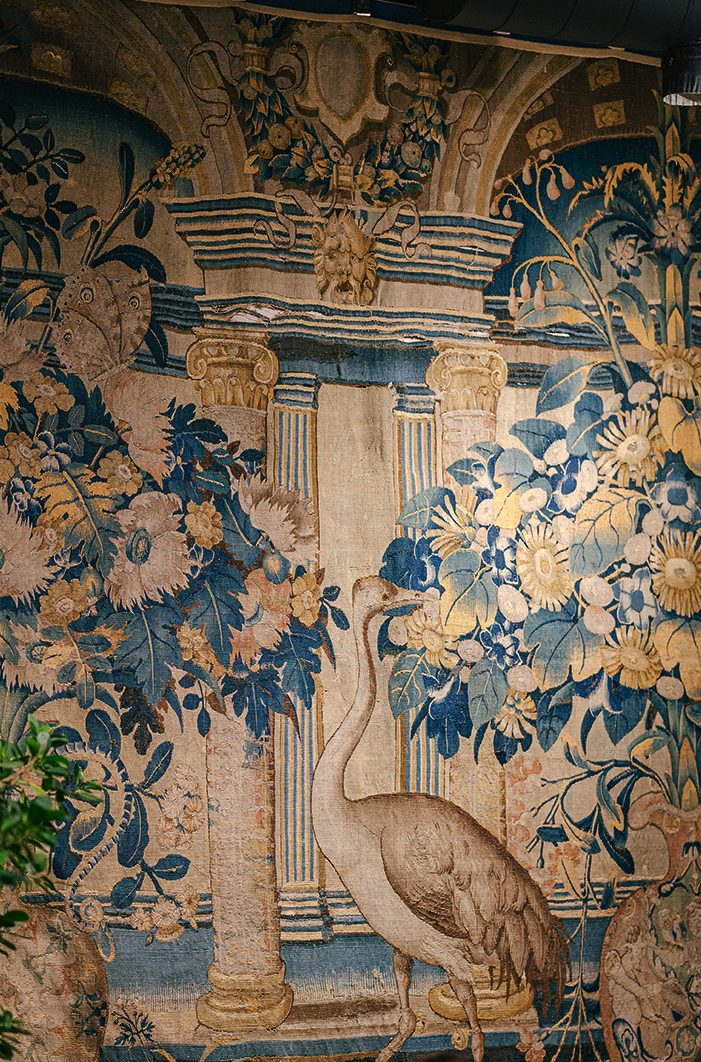
Rug & Kilim Showroom
Rug & Kilim’s Tapestries: Where Histories Converse
At Rug & Kilim, tapestries are treated not as decorative textiles but as living archives — repositories of technique, iconography, and spatial intelligence spanning centuries. Our distinctive collection includes:
Antique Flemish and Neoclassical European tapestries — embodiments of cultivated narrative and courtly discourse.
Mid-century signed works by masters such as Jean Lurçat, Jean Picart Le Doux, Jean-Claude Bissery, and René Fumeron — pieces that bridge artisanal craft with post-war modernism.
Rare and museum-caliber historic textiles and pictorial weaves — each selected for compositional integrity, contextual resonance, and material distinction.
We believe tapestry belongs wherever design is taken seriously:
in libraries and salons, where thought gathers;
in dining rooms, where conversation lingers;
in entry halls, where arrival matters;
in bedrooms, where softness must still possess gravity.
A tapestry should converse with sculpture, with furniture, with rugs—never imitate them. Vertical and horizontal textiles must acknowledge one another without repetition. The most successful rooms allow tension, contrast, and silence.
Tradition, for us, is not the opposite of modernity.
The tapestry’s potency lies not in decoration but in architectural agency. It is an object that conditions space, invites reflection, and interacts with design intention at every scale.
In the hands of the discerning designer, tapestry is not an afterthought — it is a first principle.
Not merely for walls, but for minds.
Not merely for rooms, but for narratives.
Not merely for interiors, but for histories that live.
We do not just curate tapestries. We place them—into rooms, into conversations, into the future
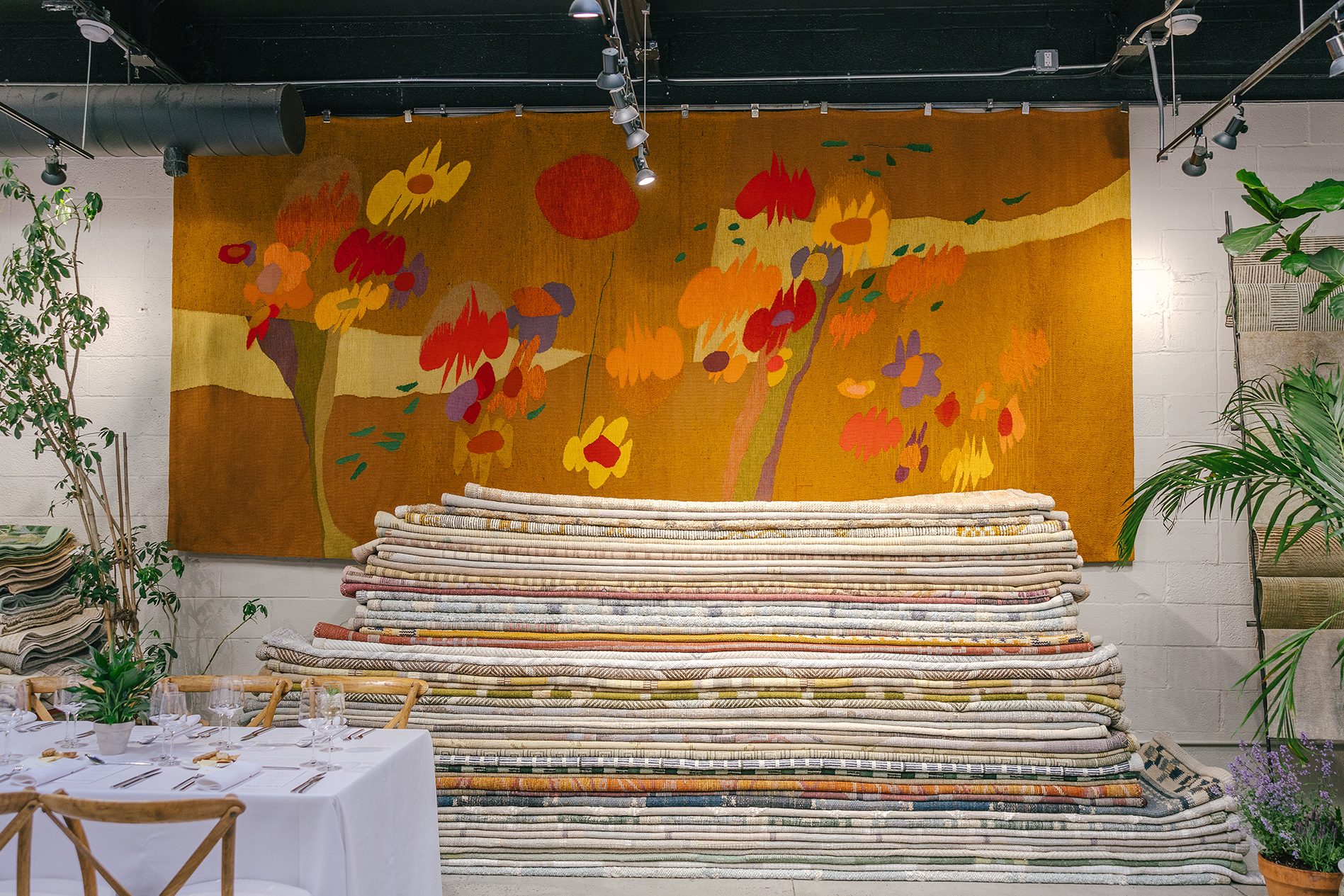
Rug & Kilim Showroom
In design, the most revealing questions are rarely about taste—they are about intention. Below, we address the questions we hear most often.
Is a tapestry an artwork or an architectural element?
It is both—and this is precisely the point.
A tapestry occupies a category that predates modern distinctions. It behaves like architecture (modulating acoustics, scale, and atmosphere), functions like art (narrative, abstraction, authorship), and performs like fashion (texture, drape, material intelligence). To reduce it to one category is to misunderstand its power.
Where does a tapestry belong in a contemporary home?
Modernism has always loved tapestry—Le Corbusier certainly did.
Grand living rooms, libraries, stair landings, long corridors, primary bedrooms, and dining rooms benefit most—spaces where walls are not merely boundaries but participants. Increasingly, we see tapestries used in entry halls as statements of arrival, or behind dining tables where conversation is meant to linger.
Can a tapestry coexist with modern or minimalist interiors?
Not only can it—it often completes them.
Minimalism, at its best, is not emptiness but restraint. A tapestry introduces depth without clutter, complexity without noise. In stark interiors, it becomes the emotional center of gravity. Think of it not as contrast, but as counterweight.
Should a tapestry match the rug in the room?
Matching is the enemy of good design.
The most successful rooms allow tapestries and rugs to converse, not coordinate. A tapestry may echo a color note, a rhythm, or a conceptual idea—but it should never repeat. Vertical and horizontal textiles should feel related by intelligence, not imitation.
Are tapestries too traditional for today’s design language?
Tradition is not the opposite of modernity—it is its raw material.
Many of the most radical modernists, from Jean Lurçat to Le Corbusier, embraced tapestry precisely because it allowed abstraction at an architectural scale. What feels dated is not tapestry itself, but the failure to understand how to place it.
Do tapestries carry political meaning today?
All serious art does.
Historically, tapestries narrated conquest, lineage, theology, and statecraft. Today, they speak more subtly—about permanence in a disposable age, about labor in a digital economy, about material truth in a virtual world. Choosing a tapestry is a quiet but firm stance against the idea that interiors should be temporary or superficial.
How does Rug & Kilim approach tapestries differently?
We do not treat tapestries as accessories.
Our tapestry collection—spanning historic European works, mid-century French modernism, and rare signed pictorial pieces—is curated with the same rigor as our rugs: attention to provenance, composition, technique, and relevance. Each piece is selected for its ability to function intellectually, architecturally, and emotionally within a space.
At Rug & Kilim, tapestries are not about nostalgia. They are about continuity.